Dizzitam
ItalyTable of Contents
- Package leaflet: Information for the user
- DIZZITAM 200 mg/ml oral and injectable solution for intravenous use
- 1. What DIZZITAM is and what it is used for
- 2. What you need to know before using DIZZITAM
- 3. How to take DIZZITAM
- 4. Possible side effects
- 5. How to store DIZZITAM
- 6. Package contents and other information
Package leaflet: Information for the user
DIZZITAM 200 mg/ml oral and injectable solution for intravenous use
Piracetam
Generic medicine
Please read all of this leaflet carefully before taking this medicine because it contains important information for you.
- Keep this leaflet. You may need to read it again.
- If you have any questions, ask your doctor or pharmacist.
- This medicine has been prescribed for you only. Do not give it to other people, even if their symptoms are the same as yours, as it may be harmful.
- If you experience any side effects, including those not listed in this leaflet, talk to your doctor or pharmacist. See section 4.
Contents of this leaflet
- What DIZZITAM is and what it is used for
- What you need to know before using DIZZITAM
- How to take DIZZITAM
- Possible side effects
- How to store DIZZITAM
- Contents of the pack and other information
1. What DIZZITAM is and what it is used for
DIZZITAM contains the active substance piracetam, which belongs to a group of medicines known as
psychostimulant and nootropic agents. These medicines work by improving oxygen supply to the brain or
by stimulating the nervous system.
DIZZITAM, used alone (monotherapy) or in combination with other medicines, is indicated for the treatment
of movement disorder caused by brain problems and characterized by brief and sudden muscle contractions
(cortical myoclonus), a condition in which muscles, especially in the arms and legs, begin to contract
abruptly and uncontrollably.
Consult your doctor if you do not feel better or if you feel worse.
2. What you need to know before using DIZZITAM
Do not use DIZZITAM
- If you are allergic to piracetam, or to other pyrrolidone derivatives, or to any of the other ingredients of this medicine (listed in section 6);
- If you have cerebral hemorrhage;
- If you have end-stage kidney disease;
- If you have Huntington's chorea (a genetic neurodegenerative disease).
Warnings and precautions
Talk to your doctor or pharmacist before using DIZZITAM.
In particular:
If you have or have had severe bleeding, if you are at risk of bleeding such as in cases of gastrointestinal
ulcer, if you have blood coagulation disorders (hemostasis), if you have had a problem with blood vessels
in the brain (hemorrhagic cerebrovascular accident), if you are undergoing major surgery, including
dental surgery, if you are taking medications to reduce blood clotting (anticoagulants or antiplatelet
drugs, including low-dose aspirin).
This is because piracetam has effects on platelet aggregation.
If you suffer from renal impairment, as piracetam is eliminated via the kidneys (see
section: “How to use DIZZITAM”).
If you are an elderly patient, as, in case of long-term treatment, creatinine clearance monitoring may be
required to allow your doctor to assess, if necessary, dose adjustment (see section: “How to use DIZZITAM”).
If you suffer from myoclonus (brief, sudden involuntary muscle contractions), you should avoid
abrupt discontinuation of treatment, as this may trigger a sudden relapse or withdrawal crisis.
Other medicines and DIZZITAM
Inform your doctor or pharmacist if you are taking, have recently taken, or might take any
other medicines.
Interactions between piracetam and other medicines are unlikely.
The use of piracetam does not alter the activity of other antiepileptic drugs (carbamazepine, phenytoin,
phenobarbital, valproate).
You should exercise caution if you are taking:
- Thyroid hormones (thyroid extracts (T3 + T4)) concomitantly with piracetam, as you may experience confusion, irritability, and sleep disturbances.
- Acenocoumarol; piracetam may reduce its effectiveness.
- Medicines to reduce blood clotting (anticoagulants, antiplatelet drugs, including low-dose aspirin); concomitant use may increase the risk of bleeding.
DIZZITAM and alcohol
Concomitant administration of alcohol did not affect piracetam blood levels, and alcohol levels were not
altered by an oral dose of 1.6 g of piracetam.
Pregnancy and breastfeeding
If you are pregnant, suspect you may be pregnant, planning a pregnancy, or breastfeeding, consult your
doctor or pharmacist before using this medicine.
Pregnancy
Piracetam crosses the placental barrier; therefore, it should not be used during pregnancy unless your doctor
clearly determines it is necessary.
Breastfeeding
Piracetam is excreted in breast milk; therefore, during breastfeeding, you should either avoid treatment
with this medicine or discontinue breastfeeding.
The decision whether to stop breastfeeding or to stop therapy with piracetam should be made by your doctor,
taking into account the benefits of breastfeeding for the child and the benefits of piracetam therapy for you.
Driving and using machines
Piracetam may affect your ability to drive or operate machinery.
DIZZITAM contains sodium (as Sodium acetate trihydrate)
This medicine contains less than 1 mmol (23 mg) of sodium per 24 g of piracetam, i.e., essentially ‘sodium-free’.
3. How to take DIZZITAM
Take this medicine exactly as directed by your doctor or pharmacist. If you
have any doubts, consult your doctor or pharmacist.
The recommended initial dose is 7.2 g per day, divided into two or three doses, which may be
increased by 4.8 g every three or four days up to a maximum of 24 g.
Once started, treatment with piracetam should be continued for as long as the original condition persists.
If you are taking other anti-myoclonic medicines, your doctor will instruct you to maintain the same dosage.
Your doctor may reduce the dosage following assessment of the clinical benefit achieved.
If you experience an acute episode, contact your doctor, who will evaluate whether to reduce or discontinue
treatment.
Elderly patients
If you are an elderly patient and have kidney problems, your doctor will adjust your dosage. In the case of long-term
treatment, your doctor will regularly monitor your kidney function values and, if necessary,
consider adjusting the dosage.
Patients with renal impairment
Your doctor will adjust your daily dose according to your renal function.
Patients with hepatic impairment
If you have hepatic impairment alone, dosage adjustment is not required. However, if you have both
renal and hepatic impairment, your doctor will adjust your dose.
Method of administration
Take this medicine by oral route.
You may take DIZZITAM with or without food.
Take the daily dose of DIZZITAM divided into equal doses 2 to 4 times daily.
If parenteral administration becomes necessary (for example, in case of swallowing difficulties or unconsciousness),
DIZZITAM may be administered intravenously at the same recommended daily dose.
The injectable solution in vials must be administered intravenously by injection over several minutes.
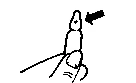
To open, hold the vial vertically, ensuring the coloured spot is in the position shown in the figure.
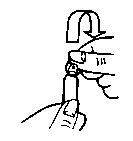
Apply pressure with your thumb placed over the coloured spot as shown in the figure.
If you take more DIZZITAM than you should
In case of accidental ingestion/overdose of DIZZITAM, contact your doctor immediately or go to the nearest hospital.
If you forget to take DIZZITAM
If you forget to take DIZZITAM, take it as soon as you remember, then continue as usual.
Do not take a double dose to make up for the forgotten dose.
If you stop taking DIZZITAM
If you have any doubts about using this medicine, consult your doctor or pharmacist.
4. Possible side effects
Like all medicines, this medicine can cause side effects, although not everyone experiences them.
Common side effects (may affect up to 1 in 10 people):
- nervousness
- hyperactivity
- weight gain
Uncommon (may affect up to 1 in 100 people):
- depression
- drowsiness
- fatigue
Rare (may affect up to 1 in 1,000 people):
- inflammation of superficial veins leading to thrombosis (thrombophlebitis, for injectable form only)
- low blood pressure (hypotension, for injectable form only)
- injection site pain (for injectable form only)
- pyrexia (for injectable form only)
Not known (frequency cannot be estimated from the available data):
- bleeding disorder
- anaphylactoid reaction, hypersensitivity
- agitation, anxiety, confusion, hallucinations
- loss of muscle coordination (ataxia), disturbance in balance, increased frequency of epileptic seizures (worsening of epilepsy), headache, insomnia
- dizziness
- abdominal pain, upper abdominal pain, diarrhoea, nausea, vomiting
- swelling of the skin, mucous membranes and submucosal tissues (angioedema), dermatitis, pruritus, urticaria
Reporting of side effects
If you experience any side effect, including those not listed in this leaflet, talk to your doctor or pharmacist.
You can also report side effects directly via the national reporting system at http://www.aifa.gov.it/content/segnalazioni-reazioni-avverse
By reporting side effects, you can help provide more information on the safety of this medicine.
5. How to store DIZZITAM
Keep this medicine out of the sight and reach of children.
Do not use this medicine after the expiry date which is stated on the packaging after "Exp".
The expiry date refers to the last day of that month.
This medicine does not require any special storage conditions. Do not freeze.
Do not dispose of any medicine via wastewater or household waste. Ask your pharmacist how to dispose of medicines you no longer use. This will help protect the environment.
6. Package contents and other information
What DIZZITAM contains
- The active substance is piracetam. One 10 ml vial contains 2 g of piracetam. One 5 ml vial contains 1 g of piracetam.
- The other components are: Sodium acetate trihydrate, Glacial acetic acid, Water for injections
Description of the appearance of DIZZITAM and contents of the pack
Oral and injectable solution for intravenous use. 5 ml and 10 ml vials. Pack of 10 vials.
It is possible that not all pack sizes are marketed.
Marketing Authorization Holder
Farma Group SRL
Via N. Strampelli, 18
63074, San Benedetto del Tronto (AP)
Italy
Manufacturer
AS KALCEKS
Krustpils iela 71E
Rīga, LV-1057
Latvia