Disteomin
ItalyTable of Contents
- Patient Information Leaflet
- DISTEOMIN 10,000 IU/mL oral drops, solution
- 1. What DISTEOMIN is and what it is used for
- 2. What you need to know before taking DISTEOMIN
- 3. How to take DISTEOMIN
- 4. Possible side effects
- 5. How to store DISTEOMIN
- 6. Pack contents and other information
- Package leaflet: Information for the patient
- DISTEOMIN 25,000 IU/2.5 ml oral solution
- 1. What DISTEOMIN is and what it is used for
- 2. What you need to know before taking DISTEOMIN
- 3. How to take DISTEOMIN
- 4. Possible side effects
- 5. How to store DISTEOMIN
- 6. Package contents and other information
- Package leaflet: Information for the patient
- DISTEOMIN 50,000 IU/2.5 ml oral solution
- 1. What DISTEOMIN is and what it is used for
- 2. What you need to know before taking DISTEOMIN
- 3. How to take DISTEOMIN
- 4. Possible side effects
- 5. How to store DISTEOMIN
- 6. Package contents and other information
Patient Information Leaflet
DISTEOMIN 10,000 IU/mL oral drops, solution
Colecalciferol (vitamin D)
Please read this leaflet carefully before taking this medicine because it contains important information for you.
- Keep this leaflet. You may need to read it again.
- If you have any questions, ask your doctor or pharmacist.
- This medicine has been prescribed for you. Do not give it to others, even if their symptoms are the same as yours, because it could be harmful.
- If you experience any side effects, including those not listed in this leaflet, contact your doctor or pharmacist. See section 4.
Contents of this leaflet
- What DISTEOMIN is and what it is used for
- What you need to know before taking DISTEOMIN
- How to take DISTEOMIN
- Possible side effects
- How to store DISTEOMIN
- Contents of the pack and other information
1. What DISTEOMIN is and what it is used for
DISTEOMIN contains the active substance colecalciferol (vitamina D). The main function of vitamin D is to ensure adequate calcium absorption in the intestine and to promote proper bone mineralization.
DISTEOMIN oral drops, solution is used to prevent vitamin D deficiency in adults, adolescents, and children who are at identified risk of vitamin D deficiency, and to treat vitamin D deficiency.
DISTEOMIN oral drops, solution may also be used in addition to specific medicinal products for the treatment of bone mass loss.
2. What you need to know before taking DISTEOMIN
Do not take DISTEOMIN
- if you are allergic to the active substance or to any of the other ingredients of this medicine (listed in section 6);
- if your calcium levels in the blood (hypercalcemia) or in the urine (hypercalciuria) are high;
- if you have kidney stones (renal calculi) or suffer from severe kidney problems;
- if you have high levels of vitamin D in the blood (hypervitaminosis D).
Warnings and precautions
Talk to your doctor or pharmacist before taking DISTEOMIN:
- if you have imbalances in parathyroid hormone levels (pseudohypoparathyroidism).
Inform your doctor if you are already taking other products containing calcium or vitamin D (including vitamin D metabolites or analogues), vitamin D-fortified foods or milk, as vitamin D accumulates in the body and excessive doses may cause toxic effects.
For this reason, it is important that you do not exceed the recommended dose.
Your doctor will monitor you and may request blood and/or urine tests if you
- have had kidney stones;
- suffer from kidney problems;
- are an elderly patient being treated with cardiac glycosides or diuretics;
- suffer from sarcoidosis or other granulomatous diseases.
Other medicines and DISTEOMIN
Inform your doctor or pharmacist if you are taking, have recently taken, or might take any other medicines. The effect of DISTEOMIN may be influenced by other medicines. Inform your doctor if you are taking:
- medicines used to treat epilepsy;
- barbiturates (used in anaesthesia or as sleeping pills);
- rifampicin, isoniazid (antibiotics);
- thiazide diuretics (medicines that promote urinary excretion, such as hydrochlorothiazide);
- glucocorticosteroids (used to treat inflammation);
- medicines containing digitalis (used to treat heart problems);
- antacids containing aluminium;
- magnesium-containing preparations;
- medicines used to lower blood cholesterol levels (such as cholestyramine or colestipol);
- certain weight-loss medicines that reduce the amount of fat absorbed by the body (e.g. orlistat);
- certain laxatives (such as liquid paraffin);
- actinomycin (a medicine used to treat certain forms of cancer) and imidazole antifungals (e.g. clotrimazole and ketoconazole, medicines used to treat fungal diseases). These medicines may interfere with how your body processes vitamin D.
Pregnancy and breastfeeding
If you are pregnant, think you may be pregnant, are planning a pregnancy, or are breastfeeding, consult your doctor or pharmacist before taking this medicine.
Vitamin D deficiency is harmful to both mother and child.
DISTEOMIN should be used during pregnancy and breastfeeding only under medical prescription. Vitamin D overdose must be avoided during pregnancy, as prolonged hypercalcemia may lead to physical and mental retardation, supravalvular aortic stenosis, and retinopathy in the child.
Driving and using machines
There is no information available on possible effects of this medicine on your ability to drive.
3. How to take DISTEOMIN
Take this medicine exactly as directed by your doctor. If you have any doubts, consult your doctor or pharmacist.
Shake well before use.
It is preferable to take DISTEOMIN during a full meal.
This medicine has an olive oil flavour. It may be taken alone or by mixing the prescribed number of drops with a spoonful or a small amount of cold or lukewarm food immediately before use. Make sure you take the entire dose.
Recommended dose
Use in adults
The recommended dose is:
- For prevention of vitamin D deficiency: 3–4 drops (600 IU–800 IU) daily.
- As an adjunct to specific medication for the treatment of bone mass loss (osteoporosis): 3–4 drops (600 IU–800 IU) daily. According to national guidelines and clinical judgment, the doctor may increase the dose up to 5 drops (1,000 IU) daily.
For treatment of vitamin D deficiency, the usual dosage is 4 drops (800 IU) daily.
Higher dosages should be adjusted according to the desired serum levels of 25-hydroxycholecalciferol (25(OH)D), the severity of the condition, and the patient’s response to treatment. The daily dose must not exceed 4,000 IU (20 drops per day).
Use in children and adolescents
For prevention of vitamin D deficiency in children (0–11 years) at identified risk, the recommended dose is 2 drops (400 IU) daily.
From the second year of life, in cases of multiple risk factors according to clinical judgment, the doctor may increase the dose up to 4 drops (800 IU) daily.
For prevention in adolescents (12–17 years) at identified risk, administration of 3–4 drops (600–800 IU) daily is recommended.
For treatment of vitamin D deficiency in children (0–11 years) and adolescents (12–17 years), the dose should be adjusted according to the desired serum levels of 25-hydroxycholecalciferol (25(OH)D), the severity of the condition, and the patient’s response to treatment. The daily dose must not exceed 1,000 IU for children under 1 year of age, 2,000 IU for children aged 1 to 10 years, and 4,000 IU for adolescents.
In children, DISTEOMIN may be mixed with a small amount of baby food, yoghurt, milk, cheese, or other dairy products. Do not mix this medicine in a bottle with milk or in a container of soft food, as the child may not consume the entire portion and therefore would not receive the complete dose. Ensure that the full dose is taken. Children who are no longer breastfed may receive the prescribed dose with a full meal.
Do not store any product or food mixture containing DISTEOMIN for later use or for a subsequent meal.
Use during pregnancy and breastfeeding
The recommended dose ranges from 400 to 600 IU/day (2–3 drops). Higher doses may be required once vitamin D deficiency has been confirmed, but you should not take more drops than those recommended by your doctor.
Vitamin D and its metabolites are excreted in breast milk. This should be taken into account when administering additional vitamin D to the infant.
Instructions for use
The package contains 1 bottle with a dropper. The bottle is sealed with a child-resistant plastic cap. Shake the bottle before use and follow the instructions below:
a. To open the bottle, press down on the plastic cap while unscrewing it (see Figure 1);
b. Collect the prescribed number of drops onto a spoon;
c. Screw the cap back on to close the bottle;
d. Place the bottle back into the original cardboard box.
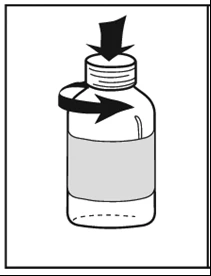
Figure 1
If you take more DISTEOMIN than you should
If you accidentally take an excessive dose of DISTEOMIN, contact your doctor immediately or go to the nearest hospital.
In case of overdose, elevated levels of calcium in the blood and urine may occur, with the following symptoms: nausea, vomiting, thirst, polydipsia, polyuria, constipation, dehydration.
Increased calcium levels in maternal blood may also lead to suppression of parathyroid function in newborns, resulting in reduced blood calcium levels, muscle cramps and spasms (tetany), and seizures (see section “Pregnancy and breastfeeding”).
If you forget to take DISTEOMIN
Do not take a double dose to make up for the missed dose. Skip the forgotten dose and continue your treatment as usual.
If you stop taking DISTEOMIN
Do not stop taking DISTEOMIN on your own initiative. If you have any doubts about using this medicine, consult your doctor or pharmacist.
4. Possible side effects
Like all medicines, this medicine can cause side effects, although not everybody will get them.
Not known: frequency cannot be estimated from the available data:
- allergic reactions (hypersensitivity);
- weakness, loss of appetite (anorexia), thirst;
- drowsiness, confusion;
- headache;
- constipation, flatulence, abdominal pain, nausea, vomiting, diarrhoea, metallic taste, dry mouth;
- excessive calcium deposition in the kidneys (nephrocalcinosis), increased volume of urine excreted, renal failure;
- high levels of calcium in the blood and in the urine.
Reporting of side effects
If you experience any side effect, including those not listed in this leaflet, talk to your doctor or pharmacist. You can also report side effects directly via the national reporting system at https://www.aifa.gov.it/content/segnalazioni-reazioni-avverse. Reporting side effects can help provide more information on the safety of this medicine.
5. How to store DISTEOMIN
Keep this medicine out of the sight and reach of children.
Do not use this medicine after the expiry date stated on the packaging after the word EXP.
The expiry date refers to the last day of that month.
The medicine must be discarded 5 months after first opening, even if not completely used.
Keep this medicine in the original packaging to protect it from light.
Do not freeze.
Do not dispose of any medicine via wastewater or household waste. Ask your pharmacist how to dispose of
medicines you no longer use. This will help protect the environment.
6. Pack contents and other information
What DISTEOMIN contains
- The active substance is colecalciferol (vitamin D). 1 ml contains: 0.25 mg colecalciferol (equivalent to 10,000 IU); 1 drop contains: 200 IU colecalciferol.
- The other component is: refined olive oil.
Description of the appearance of DISTEOMIN and contents of the pack
Clear, light yellow, odourless solution.
DISTEOMIN is available in packs containing 1 amber glass bottle with 10 ml of solution,
closed with a child-resistant polyethylene cap and equipped with a built-in dropper.
Marketing Authorisation Holder and Manufacturer
Marketing Authorisation Holder
O.P. Pharma S.r.l., Via Monte Rosa, 61 - 20149 Milan
Manufacturers
MIPHARM S.p.A., Via Quaranta 12 - 20141 Milan
Lachifarma S.r.l. Laboratorio Chimico Farmaceutico Salentino, S.S.16 Zona Industriale 73010 Zollino - Lecce
Package leaflet: Information for the patient
DISTEOMIN 25,000 IU/2.5 ml oral solution
Colecalciferol (vitamin D )
For use in adults
Please read this leaflet carefully before taking this medicine because it contains important information for you.
- Keep this leaflet. You may need to read it again.
- If you have any questions, ask your doctor or pharmacist.
- This medicine has been prescribed for you. Do not give it to other people, even if their symptoms are the same as yours, as it may be harmful.
- If you experience any adverse reactions, including those not listed in this leaflet, consult your doctor or pharmacist. See section 4.
Contents of this leaflet
- What DISTEOMIN is and what it is used for
- What you need to know before taking DISTEOMIN
- How to take DISTEOMIN
- Possible side effects
- How to store DISTEOMIN
- Contents of the pack and other information
1. What DISTEOMIN is and what it is used for
DISTEOMIN contains the active substance colecalciferol (vitamin D). The main function of vitamin D is to ensure adequate absorption of calcium in the intestine and to promote proper bone mineralization.
DISTEOMIN oral solution is used for the initial treatment of clinically relevant vitamin D deficiency in adults.
2. What you need to know before taking DISTEOMIN
Do not take DISTEOMIN
- if you are allergic to the active substance or to any of the other ingredients of this medicine (listed in section 6);
- if your calcium levels in the blood (hypercalcemia) or in the urine (hypercalciuria) are high;
- if you have kidney stones (renal calculi) or suffer from severe renal insufficiency;
- if you have high levels of vitamin D in the blood (hypervitaminosis D).
Warnings and precautions
Talk to your doctor or pharmacist before taking DISTEOMIN.
Inform your doctor if you are already taking other products containing vitamin D, or foods or milk fortified with vitamin D,
as vitamin D accumulates in the body and excessive doses may cause toxic effects.
For this reason, it is important that you do not exceed the recommended dose.
Your doctor will monitor you and may request blood and/or urine tests if you
- have previously suffered from kidney stones;
- have kidney problems;
- are an elderly patient being treated with cardiac glycosides or diuretics;
- suffer from sarcoidosis or other granulomatous diseases.
Children and adolescents
Administration to children and adolescents under 18 years of age is not recommended.
Other medicines and DISTEOMIN
Inform your doctor or pharmacist if you are taking, have recently taken, or might take any other medicines.
The effect of DISTEOMIN may be influenced by other medicines. Inform your doctor if you are taking:
- medicines used to treat epilepsy;
- barbiturates (used in anaesthesia or as sleeping pills);
- rifampicin (an antibiotic);
- thiazide diuretics (medicines that promote urinary excretion, such as hydrochlorothiazide);
- glucocorticosteroids (used to treat inflammation);
- medicines containing digitalis (used to treat heart problems);
- aluminium-containing antacids;
- magnesium-containing preparations;
- medicines used to reduce cholesterol levels in the blood (such as cholestyramine or colestipol); 0}
- certain weight-loss medicines that reduce the amount of fat absorbed by the body (e.g. orlistat);
- certain laxatives (such as liquid paraffin);
- actinomycin (a medicine used to treat certain forms of cancer) and imidazole antifungals (e.g. clotrimazole and ketoconazole, medicines used to treat fungal diseases). These medicines may interfere with how your body processes vitamin D.
Pregnancy and breastfeeding
During pregnancy and breastfeeding, an adequate intake of vitamin D is necessary. If you are pregnant, suspect you may be pregnant, are planning a pregnancy, or are breastfeeding, consult your doctor or pharmacist before taking this medicine.
The use of a high-dose formulation is not recommended during pregnancy and breastfeeding, and it is preferable to use a product with a lower dosage.
Driving and using machines
There is no information available on possible effects of this medicine on your ability to drive.
3. How to take DISTEOMIN
Take this medicine exactly as directed by your doctor. If you have any doubts, consult your doctor or pharmacist.
Shake before use.
It is preferable to take DISTEOMIN during a meal.
This medicine has an olive oil flavour. It can be taken directly from the bottle or, to facilitate administration, the solution may be mixed with a small amount of cold or lukewarm food immediately before use. Make sure you take the entire dose.
Recommended dose
Adult use
The recommended dose is 1 bottle (25,000 IU) per week during the first month; your doctor will determine the appropriate dose for you.
Paediatric population
Administration of DISTEOMIN in children and adolescents under 18 years of age is not recommended.
Pregnancy and breastfeeding
Administration of DISTEOMIN is not recommended.
If you take more DISTEOMIN than you should
If you accidentally take an excessive dose of DISTEOMIN, contact your doctor immediately or go to the nearest hospital.
In case of overdose, increased levels of calcium in the blood and urine may occur, with the following symptoms: nausea, vomiting, thirst, polydipsia, polyuria, constipation, dehydration.
Overdose during the first 6 months of pregnancy may have toxic effects on the foetus. There is a correlation between excessive intake or extreme maternal sensitivity to vitamin D during pregnancy and delayed physical and mental development in the child, supravalvular aortic stenosis, and retinopathy. Elevated calcium levels in maternal blood may also lead to suppression of parathyroid function in newborns, resulting in reduced blood calcium levels, muscle cramps and spasms (tetany), and seizures.
If you forget to take DISTEOMIN
Do not take a double dose to make up for the missed dose. Skip the forgotten dose and continue your treatment as usual.
If you stop taking DISTEOMIN
Do not stop taking DISTEOMIN on your own initiative. If you have any doubts about using this medicine, consult your doctor or pharmacist.
4. Possible side effects
Like all medicines, this medicine can cause side effects, although not everybody will experience them.
Not known: frequency cannot be estimated from the available data:
- allergic reactions (hypersensitivity);
- weakness, loss of appetite (anorexia), thirst;
- drowsiness, confusion;
- headache;
- constipation, flatulence, abdominal pain, nausea, vomiting, diarrhoea, metallic taste, dry mouth;
- skin rash, itching, urticaria;
- excessive deposition of calcium in the kidneys (nephrocalcinosis), increased urine output, renal failure;
- high levels of calcium in blood and urine.
Reporting of side effects
If you experience any side effect, including those not listed in this leaflet, talk to your doctor or pharmacist. You can also report side effects directly via the national reporting system at https://www.aifa.gov.it/content/segnalazioni-reazioni-avverse. By reporting side effects, you can help provide more information on the safety of this medicine.
5. How to store DISTEOMIN
Keep this medicine out of the sight and reach of children.
Do not use this medicine after the expiry date stated on the packaging after the word EXP.
The expiry date refers to the last day of that month.
Store this medicine in the original packaging to protect it from light.
Do not freeze.
Do not dispose of any medicine via wastewater or household waste. Ask your pharmacist how to dispose of
medicines no longer in use. This will help protect the environment.
6. Package contents and other information
What DISTEOMIN contains
- The active substance is colecalciferol (vitamin D), 2.5 ml contain: 0.625 mg colecalciferol (equivalent to 25,000 IU),
- The other component is: refined olive oil.
Description of the appearance of DISTEOMIN and contents of the pack
Clear, light yellow, odourless solution.
DISTEOMIN 25,000 IU/2.5 ml oral solution is available in packs containing 1, 2 or 4 single-dose containers made of amber glass, each containing 2.5 ml of solution, closed with a cap made of polypropylene.
Not all pack sizes may be marketed.
Marketing Authorisation Holder and Manufacturer
Marketing Authorisation Holder
O.P. Pharma Srl, Via Torino 51 – 20123 Milan
Manufacturers
MIPHARM S.p.A., Via Quaranta 12 - 20141 Milan
Lachifarma S.r.l. Laboratorio Chimico Farmaceutico Salentino, S.S.16 Zona Industriale 73010 Zollino - Lecce
Package leaflet: Information for the patient
DISTEOMIN 50,000 IU/2.5 ml oral solution
Colecalciferol (vitamin D )
For use in adults
Please read this leaflet carefully before taking this medicine because it contains important information for you.
- Keep this leaflet. You may need to read it again.
- If you have any questions, ask your doctor or pharmacist.
- This medicine has been prescribed for you. Do not give it to other people, even if their symptoms are the same as yours, as it could be harmful.
- If you experience any side effects, including those not listed in this leaflet, contact your doctor or pharmacist. See section 4.
Contents of this leaflet
- What DISTEOMIN is and what it is used for
- What you need to know before taking DISTEOMIN
- How to take DISTEOMIN
- Possible side effects
- How to store DISTEOMIN
- Contents of the pack and other information
1. What DISTEOMIN is and what it is used for
DISTEOMIN contains the active substance colecalciferol (vitamin D). The main function of vitamin D is to ensure adequate calcium absorption in the intestine and to promote proper bone mineralization.
DISTEOMIN oral solution is used for the initial treatment of clinically relevant vitamin D deficiency in adults.
2. What you need to know before taking DISTEOMIN
Do not take DISTEOMIN
- if you are allergic to the active substance or to any of the other ingredients of this medicine (listed in section 6);
- if your calcium levels in the blood (hypercalcemia) or in the urine (hypercalciuria) are high;
- if you have kidney stones (nephrolithiasis) or suffer from severe renal insufficiency;
- if you have high levels of vitamin D in the blood (hypervitaminosis D).
Warnings and precautions
Talk to your doctor or pharmacist before taking DISTEOMIN:
- if you have imbalances in parathyroid hormone levels (pseudohypoparathyroidism).
Inform your doctor if you are already taking other products containing vitamin D, or foods or milk fortified with vitamin D,
as vitamin D accumulates in the body and excessive doses may cause toxic effects.
For this reason, it is important that you do not exceed the recommended dose.
Your doctor will monitor you and may request blood and/or urine tests if you
- have previously suffered from kidney stones;
- have kidney problems;
- are an elderly patient being treated with cardiac glycosides or diuretics;
- suffer from sarcoidosis or other granulomatous diseases.
Children and adolescents
Administration to children and adolescents under 18 years of age is not recommended.
Other medicines and DISTEOMIN
Inform your doctor or pharmacist if you are taking, have recently taken, or might take any
other medicines.
The effect of DISTEOMIN may be affected by other medicines. Inform your doctor if you are taking:
- medicines used to treat epilepsy;
- barbiturates (used in anesthesia or as sedatives);
- rifampicin (an antibiotic);
- thiazide diuretics (medicines that promote urinary excretion, such as hydrochlorothiazide);
- glucocorticosteroids (used to treat inflammation);
- medicines containing digitalis (used to treat heart conditions);
- antacids containing aluminium;
- magnesium-containing preparations;
- medicines used to reduce cholesterol levels in the blood (such as cholestyramine or colestipol);
- certain weight-loss medicines that reduce fat absorption in the body (e.g. orlistat);
- certain laxatives (such as liquid paraffin);
- actinomycin (a medicine used to treat certain forms of cancer) and imidazole antifungals (e.g. clotrimazole and ketoconazole, medicines used to treat fungal infections). These medicines may interfere with how your body processes vitamin D.
Pregnancy and breastfeeding
An adequate intake of vitamin D is necessary during pregnancy and breastfeeding. If you are pregnant, suspect you may be pregnant, planning a pregnancy, or breastfeeding, consult your doctor or pharmacist before taking this medicine.
The use of a high-dose formulation is not recommended during pregnancy and breastfeeding, and it is preferable to use a lower-dose product.
Driving and using machines
There is no information available on possible effects of this medicine on your ability to drive.
3. How to take DISTEOMIN
Take this medicine exactly as instructed by your doctor. If you have any doubts, consult your
doctor or pharmacist.
Shake before use.
It is preferable to take DISTEOMIN during a meal.
This medicine has an olive oil flavour. It can be taken directly from the vial, or, to facilitate administration,
the solution may be mixed with a small amount of cold or lukewarm food immediately before use. Make sure you take the entire dose.
The recommended dose is:
Use in adults
Your doctor may consider lower doses for the initial treatment of clinically relevant vitamin D deficiency.
In such cases, other pharmaceutical products currently available should be used.
If higher doses are required, the following dosage regimen may be considered under medical supervision:
- 50,000 IU (one vial) once weekly for up to a maximum of 6 weeks.
Your doctor will determine the appropriate dose for you.
Paediatric population
Administration of DISTEOMIN in children and adolescents under 18 years of age is not
recommended.
Pregnancy and breastfeeding
Administration of DISTEOMIN is not recommended.
If you take more DISTEOMIN than you should
If you accidentally take an excessive dose of DISTEOMIN, contact your doctor immediately or go to the
nearest hospital.
In case of overdose, elevated levels of calcium in the blood and urine may occur, with the following symptoms:
nausea, vomiting, thirst, polydipsia, polyuria, constipation, dehydration.
Overdose during the first 6 months of pregnancy may have toxic effects on the fetus; there is a
correlation between excessive vitamin D intake or extreme maternal sensitivity to vitamin D during pregnancy and delayed physical and mental development in the child, supravalvular aortic stenosis, and retinopathy. Elevated calcium levels in maternal blood may also lead to suppression of parathyroid function in newborns, resulting in reduced blood calcium levels, muscle cramps and spasms (tetany), and seizures.
If you forget to take DISTEOMIN
Do not take a double dose to make up for the missed dose. Skip the missed dose and continue your treatment as usual.
If you stop taking DISTEOMIN
Do not stop taking DISTEOMIN on your own initiative. If you have any doubts about using this medicine,
consult your doctor or pharmacist.
4. Possible side effects
Like all medicines, this medicine can cause side effects, although not everybody will experience them.
Not known: frequency cannot be estimated from the available data:
- allergic reactions (hypersensitivity);
- weakness, loss of appetite (anorexia), thirst;
- drowsiness, confusion;
- headache;
- constipation, flatulence, abdominal pain, nausea, vomiting, diarrhoea, metallic taste, dry mouth;
- excessive calcium deposition in the kidneys (nephrocalcinosis), increased amount of urine excreted, renal failure;
- high levels of calcium in blood and urine.
Reporting of side effects
If you experience any side effect, including those not listed in this leaflet, talk to your doctor or pharmacist.
You can also report side effects directly via the national reporting system at https://www.aifa.gov.it/content/segnalazioni-reazioni-avverse.
By reporting side effects, you can help provide more information on the safety of this medicine.
5. How to store DISTEOMIN
Keep this medicine out of the sight and reach of children.
Do not use this medicine after the expiry date stated on the packaging after the word EXP.
The expiry date refers to the last day of that month.
Store this medicine in the original packaging to protect it from light.
Do not freeze.
Do not dispose of any medicine via wastewater or household waste. Ask your pharmacist how to dispose of medicines no longer required. This will help protect the environment.
6. Package contents and other information
What DISTEOMIN contains
- The active substance is colecalciferol (vitamin D). 2.5 ml contain: 1.25 mg of colecalciferol (equivalent to 50,000 IU).
- The other component is: refined olive oil.
Description of the appearance of DISTEOMIN and package contents
Clear, light yellow solution, odourless.
DISTEOMIN 50,000 IU/2.5 ml oral solution is available in packs containing 1, 2 or 4 single-dose containers made of amber glass, each containing 2.5 ml of solution, closed with a cap made of polypropylene.
Not all pack sizes may be marketed.
Marketing Authorisation Holder and Manufacturer
Marketing Authorisation Holder
OP Pharma S.r.l., Via Monte Rosa, 61 - 20149 Milan, Italy
Manufacturers
MIPHARM S.p.A., Via Quaranta 12 - 20141 Milan, Italy
Lachifarma S.r.l. Laboratorio Chimico Farmaceutico Salentino, S.S.16 Zona Industriale 73010 Zollino - Lecce, Italy