Dimethyl fumarate Sandoz
Italy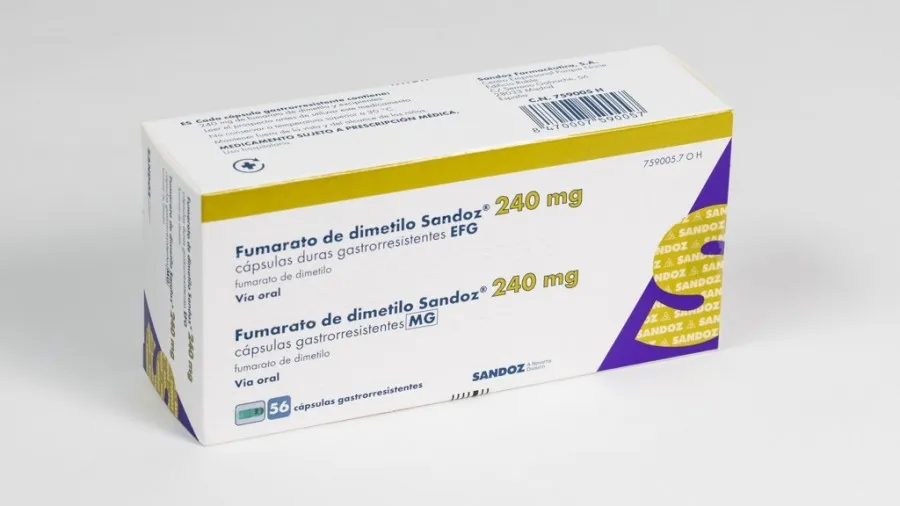
Table of Contents
- Patient Information Leaflet
- Dimetilfumarato Sandoz 120 mg gastro-resistant hard capsules, 240 mg gastro-resistant hard capsules
- 1. What Dimetilfumarato Sandoz is and what it is used for
- 2. What you should know before taking Dimetilfumarato Sandoz
- 3. How to take Dimetilfumarato Sandoz
- 4. Possible side effects
- 5. How to store Dimetilfumarato Sandoz
- 6. Package contents and other information
Patient Information Leaflet
Dimetilfumarato Sandoz 120 mg gastro-resistant hard capsules, 240 mg gastro-resistant hard capsules
Equivalent medicine
Please read all of this leaflet carefully before you start taking this medicine because it contains important information for you.
- Keep this leaflet. You may need to read it again.
- If you have any questions, ask your doctor or pharmacist.
- This medicine has been prescribed for you only. Do not give it to other people, even if they have the same symptoms as you, because it may be harmful.
- If you experience any side effect, including those not listed in this leaflet, talk to your doctor or pharmacist. See section 4.
Contents of this leaflet:
- What Dimetilfumarato Sandoz is and what it is used for
- What you need to know before taking Dimetilfumarato Sandoz
- How to take Dimetilfumarato Sandoz
- Possible side effects
- How to store Dimetilfumarato Sandoz
- Contents of the pack and other information
1. What Dimetilfumarato Sandoz is and what it is used for
What Dimetilfumarato Sandoz is
Dimetilfumarato Sandoz is a medicine that contains the active substance dimethyl fumarate.
What Dimetilfumarato Sandoz is used for
Dimetilfumarato Sandoz is used to treat relapsing-remitting multiple sclerosis (MS)
in patients aged 13 years and older.
Multiple sclerosis is a chronic disease affecting the central nervous system (CNS), that is, the brain and spinal cord. Relapsing-remitting multiple sclerosis is characterized by repeated attacks (relapses) of neurological symptoms. Symptoms vary from patient to patient but generally include walking difficulties, feelings of imbalance, and vision problems (e.g. blurred or double vision). These symptoms may completely disappear when a relapse resolves, but some deficits may persist.
How Dimetilfumarato Sandoz works
Dimetilfumarato Sandoz appears to work by preventing the body's immune system from damaging the brain and spinal cord. This may also help delay future worsening of the disease.
2. What you should know before taking Dimetilfumarato Sandoz
Do not take Dimetilfumarato Sandoz
- if you are allergic to dimethyl fumarate or to any of the other ingredients of this medicine (listed in section 6).
- if a rare brain infection called progressive multifocal leukoencephalopathy (PML) is suspected or if the diagnosis of PML has been confirmed.
Warnings and precautions
Dimetilfumarato Sandoz may affect the number of white blood cells in your blood, your kidneys, and your liver.
Before you start taking Dimetilfumarato Sandoz, your doctor will perform a blood test to check your white blood cell count and to ensure that your kidneys and liver are functioning properly. Your doctor will carry out periodic tests during treatment. If your white blood cell count decreases during treatment, your doctor may consider further testing or discontinuation of therapy.
Contact your doctor before taking Dimetilfumarato Sandoz if you have:
- severe kidney disease
- severe liver disease
- a disease of the stomach or intestines
- a serious infection (such as pneumonia)
Cases of herpes zoster infection (shingles) may occur during treatment with Dimetilfumarato Sandoz. In some cases, serious complications have occurred. Contact your doctor immediately if you suspect you have any symptoms of herpes zoster infection.
If you think your MS is worsening (for example, if you experience weakness or changes in vision) or if you notice new symptoms, contact your doctor immediately, as these could be signs of a rare brain infection called PML. PML is a serious condition that may lead to severe disability or death.
With a medicine containing dimethyl fumarate in combination with other fumaric acid esters, used for the treatment of psoriasis (a skin disease), a rare but serious kidney disorder called Fanconi syndrome has been observed. If you notice increased urination, increased thirst and fluid intake, muscle weakness, or experience fractures or pain, contact your doctor as soon as possible so that appropriate investigations can be carried out.
Children and adolescents
Do not give this medicine to children under 10 years of age, as data are not available in this age group.
Other medicines and Dimetilfumarato Sandoz
Tell your doctor or pharmacist if you are taking, have recently taken, or might take any other medicines, especially:
- medicines containing fumaric acid esters (fumarates) used for the treatment of psoriasis
- medicines that affect the immune system, including chemotherapeutic agents, immunosuppressants, other medicines used for the treatment of multiple sclerosis
- medicines that affect the kidneys, including certain antibiotics (used to treat infections), diuretics, certain types of analgesics (such as ibuprofen and other similar anti-inflammatory drugs and medicines purchased without a doctor's prescription), and medicines containing lithium
- taking Dimetilfumarato Sandoz together with certain types of vaccines (live vaccines) could cause you to develop an infection and should therefore be avoided. Your doctor will advise you whether other types of vaccines (non-live vaccines) should be administered.
Dimetilfumarato Sandoz and alcohol
Consumption of alcoholic beverages with high alcohol content (more than 30% alcohol by volume, e.g. spirits) in amounts exceeding a small quantity (more than 50 ml) should be avoided within one hour of taking Dimetilfumarato Sandoz, as alcohol may interact with this medicine. This could cause inflammation of the stomach (gastritis), particularly in individuals already prone to gastritis.
Pregnancy and breastfeeding
If you are pregnant, think you may be pregnant, are planning to become pregnant, or are breastfeeding, consult your doctor or pharmacist before taking this medicine.
Pregnancy
There is limited information on the effects of this medicine on the unborn child when used during pregnancy. Do not use Dimetilfumarato Sandoz during pregnancy unless you have discussed it with your doctor and the medicine is clearly necessary for you.
Breastfeeding
It is not known whether the active substance of Dimetilfumarato Sandoz passes into breast milk. Your doctor will advise you whether you should discontinue breastfeeding or the treatment with Dimetilfumarato Sandoz. This decision will take into account the benefit of breastfeeding for your child versus the benefit of therapy for you.
Driving and using machines
Dimetilfumarato Sandoz is not expected to affect your ability to drive or use machines.
Dimetilfumarato Sandoz contains sodium
Dimetilfumarato Sandoz contains less than 1 mmol of sodium (23 mg) per gastro-resistant hard capsule, i.e. it is practically sodium-free.
3. How to take Dimetilfumarato Sandoz
Take this medicine exactly as your doctor has told you. If you are not sure, consult your doctor.
Starting dose:
120 mg twice daily.
Take this starting dose for the first 7 days, then switch to the regular dose.
Regular dose:
240 mg twice daily.
Dimetilfumarato Sandoz is for oral use.
Swallow each capsule whole with some water. Do not split, crush, dissolve, suck or chew the capsule, as this may increase the risk of certain side effects.
Take Dimetilfumarato Sandoz with food – this may help reduce some of the more common side effects (listed in section 4).
If you take more Dimetilfumarato Sandoz than you should
If you have taken too many capsules, contact your doctor immediately . You may experience side effects similar to those described in section 4 below.
If you forget to take Dimetilfumarato Sandoz
If you miss or forget a dose, do not take a double dose .
You may take the missed dose if there is at least 4 hours between doses. Otherwise, wait until your next scheduled dose.
If you have any doubts about how to use this medicine, consult your doctor or pharmacist.
4. Possible side effects
Like all medicines, this medicine can cause side effects, although not everybody gets them.
Serious side effects
Dimetilfumarato Sandoz may reduce levels of lymphocytes (a type of white blood cell). Persistently low levels of white blood cells may increase the risk of infections, including the risk of a rare brain infection called progressive multifocal leukoencephalopathy (PML). PML can lead to severe disability or death. PML has occurred after 1–5 years of treatment, so your doctor must continue to monitor your white blood cells throughout the duration of treatment. Pay close attention to any potential symptoms of PML, as described below. The risk of PML may be higher if you have previously taken medicines that impair the immune system.
Symptoms of PML may resemble those of a multiple sclerosis relapse. Symptoms may include the onset or worsening of weakness on one side of the body; clumsiness; changes in vision, thinking, or memory; or confusion, personality changes, or difficulty with language and communication lasting more than a few days. Therefore, if you feel your MS is worsening or if you notice any new symptoms during treatment with Dimetilfumarato Sandoz, it is very important to contact your doctor as soon as possible. Also inform your partner or caregiver about your treatment, as symptoms may occur that you may not notice yourself.
- If you experience any of these symptoms, call your doctor immediately.
Serious allergic reactions
The frequency of serious allergic reactions cannot be determined from the available data (not known).
Flushing (redness of the face or body) is a very common side effect. However, if flushing is accompanied by red rash or hives and you have any of the following symptoms:
- swelling of the face, lips, mouth, or tongue (angioedema)
- shortness of breath, difficulty breathing, or breathlessness (dyspnea, hypoxia)
- dizziness or loss of consciousness (hypotension)
this may indicate a serious allergic reaction (anaphylaxis).
- Stop taking Dimetilfumarato Sandoz and call a doctor immediately.
Other side effects
Very common (may affect more than 1 in 10 people)
- redness of the face or body, sensation of warmth, intense heat, burning, or itching (flushing)
- loose stools (diarrhea)
- feeling of imminent vomiting (nausea)
- stomach ache or stomach cramps
Taking the medicine with food may help reduce the above-mentioned side effects.
The presence of substances called ketones, which are naturally produced by the body, is very commonly detected in urine tests during treatment with Dimetilfumarato Sandoz.
Contact your doctor for advice on managing these side effects. Your doctor may reduce your dose. Do not reduce the dose unless your doctor tells you to.
Common (may affect up to 1 in 10 people)
- inflammation of the intestinal lining (gastroenteritis)
- feeling unwell (vomiting)
- indigestion (dyspepsia)
- inflammation of the stomach lining (gastritis)
- gastrointestinal disorder
- burning sensation
- hot flush, feeling of warmth
- itching
- skin rash
- pink or red spots on the skin (erythema)
- hair loss (alopecia)
Side effects that may be detected in blood or urine tests
- low levels of white blood cells (lymphopenia, leukopenia) in the blood. A reduction in white blood cells may mean you are less able to fight infections effectively. If you develop a serious infection (such as pneumonia), contact your doctor immediately
- presence of protein (albumin) in the urine
- increased levels of liver enzymes (alanine aminotransferase, ALT and aspartate aminotransferase, AST) in the blood
Uncommon (may affect up to 1 in 100 people)
- allergic reactions (hypersensitivity)
- reduced platelet count in the blood
Not known (frequency cannot be determined from the available data)
- inflammation of the liver and increased liver enzyme levels (ALT or AST in combination with bilirubin)
- herpes zoster infection (shingles), with symptoms such as blisters, burning, itching, or skin pain, usually on one side of the torso or face, and other symptoms such as fever and weakness in the early stages of infection, followed by numbness, red or itchy spots with severe pain
- runny nose (rhinorrhea)
Children (aged 13 years and older) and adolescents
The side effects listed above also apply to children and adolescents. Some side effects have been reported more frequently in children and adolescents than in adults, such as headache, stomach ache or stomach cramps, vomiting, sore throat, cough, and painful menstruation.
Reporting of side effects
If you get any side effects, including those not listed in this leaflet, talk to your doctor or pharmacist. You can also report side effects directly via the national reporting system at https://www.aifa.gov.it/content/segnalazioni-reazioni-avverse. By reporting side effects, you can help provide more information on the safety of this medicine.
5. How to store Dimetilfumarato Sandoz
Keep this medicine out of the sight and reach of children.
Do not use this medicine after the expiry date stated on the blister and carton after
"Exp.". The expiry date refers to the last day of that month.
Do not store above 30 ºC.
Do not dispose of medicines via wastewater or household waste. Ask your pharmacist how to
dispose of medicines no longer required. This will help protect the environment.
6. Package contents and other information
What Dimetilfumarato Sandoz contains
- The active substance is dimethyl fumarate.
Dimetilfumarato Sandoz 120 mg gastro-resistant hard capsules
Each gastro-resistant hard capsule contains 120 mg of dimethyl fumarate.
Dimetilfumarato Sandoz 240 mg gastro-resistant hard capsules
Each gastro-resistant hard capsule contains 240 mg of dimethyl fumarate.
Other components are:
- Capsule contents: croscarmellose sodium (E468), anhydrous colloidal silica (E551), sodium stearate fumarate (E470A), methacrylic acid - methyl methacrylate copolymer (1:1), methacrylic acid - ethyl acrylate copolymer (1:1) dispersion 30%, talc (E553B), triethyl citrate (E1505), polysorbate 80 (E443), glycerol monostearate 40-55;
- Capsule shell: gelatin (E441), titanium dioxide (E171), iron oxide yellow (E172), brilliant blue FCF (E133);
- Capsule ink: shellac ~ 45% (20% esterified) (E904), iron oxide black (E172), propylene glycol (E1520), ammonium hydroxide 28%.
Description of the appearance of Dimetilfumarato Sandoz and package contents
Gastro-resistant hard capsule
Dimetilfumarato Sandoz 120 mg gastro-resistant hard capsules
White-bodied, light green-capped gelatin hard capsules, printed with “120 mg” on the body, approximately 19 mm in length and 9 mm in width.
Dimetilfumarato Sandoz 240 mg gastro-resistant hard capsules
Light green gelatin hard capsules, printed with “240 mg” on the body, approximately 23 mm in length and 9 mm in width.
Dimetilfumarato Sandoz is packaged in aluminum/PVC/PVDC blisters, calendar blister packs, or unit-dose divisible blisters.
Dimetilfumarato Sandoz 120 mg gastro-resistant hard capsules
Pack sizes:
- Blister packs containing 14 gastro-resistant hard capsules
- Calendar blister packs containing 14 gastro-resistant hard capsules
- Unit-dose divisible blister packs containing 14 x 1 gastro-resistant hard capsules
Dimetilfumarato Sandoz 240 mg gastro-resistant hard capsules
Pack sizes:
- Blister packs containing 56 gastro-resistant hard capsules
- Calendar blister packs containing 56 gastro-resistant hard capsules
- Unit-dose divisible blister packs containing 56 x 1 and 168 x 1 gastro-resistant hard capsules
Not all pack sizes may be marketed.
Marketing Authorization Holder
Sandoz S.p.A.,
Viale Luigi Sturzo, 43
20154 Milan
Italy
Manufacturer
Lek Pharmaceuticals d.d.
Verovskova Ulica 57
1526 Ljubljana, Slovenia
Zakłady Farmaceutyczne Polpharma S.A.
ul. Metalowca 2
39-460 Nowa Dęba, Poland
This medicinal product is authorized in the European Economic Area countries under the following names:
Austria Dimethylfumarat Sandoz 120 mg magensaftresistente Hartkapseln
Dimethylfumarat Sandoz 240 mg magensaftresistente Hartkapseln
Belgium Dimethyl fumarate Sandoz 120 mg harde maagsapresistente capsules
Dimethyl fumarate Sandoz 240 mg harde maagsapresistente capsules
Bulgaria Dimethyl fumarate SANDOZ 120 mg gastro-resistant hard capsule
Dimethyl fumarate 240 mg gastro-resistant hard capsule
Croatia Dimetilfumarat Sandoz 120 mg tvrde želučanootporne kapsule
Dimetilfumarat Sandoz 240 mg tvrde želučanootporne kapsule
Cyprus Dimethyl fumarate/EBEWE 120 mg
Dimethyl fumarate/EBEWE 240 mg
Czech Republic Dimethyl fumarate SANDOZ
Estonia Dimethyl fumarate SANDOZ
Germany DIMETILFUMARATO 1 A Pharma 120 mg magensaftresistente Hartkapseln
DIMETILFUMARATO 1 A Pharma 240 mg magensaftresistente Hartkapseln
Greece Dimethyl fumarate/EBEWE
France DIMETHYL FUMARATE SANDOZ 120 mg, gélule gastrorésistante
DIMETHYL FUMARATE SANDOZ 240 mg, gélule gastrorésistante
Italy Dimetilfumarato Sandoz
Latvia Dimethyl fumarate Sandoz 120 mg zarnās šķīstošās cietās kapsulas
Dimethyl fumarate Sandoz 240 mg zarnās šķīstošās cietās kapsulas
Lithuania Dimethyl fumarate 120 mg skrandyje neirios kietosios kapsulės
Dimethyl fumarate 240 mg skrandyje neirios kietosios kapsulės
Malta DIMETHYL FUMARATE SANDOZ 120 mg gastro-resistant hard capsule
DIMETHYL FUMARATE SANDOZ 240 mg gastro-resistant hard capsule
Poland Dimethyl fumarate SANDOZ
Romania Dimethyl fumarate 120 mg Capsule gastrorezistente
Dimetilfumarato Sandoz 240 mg Capsule gastrorezistente
Slovakia Dimethyl fumarate SANDOZ 120 mg
Dimethyl fumarate SANDOZ 240 mg
Slovenia Dimethyl fumarate 120 mg gastrorezistentne trde kapsule
Dimethyl fumarate 240 mg gastrorezistentne trde kapsule