Difosfonal
Italy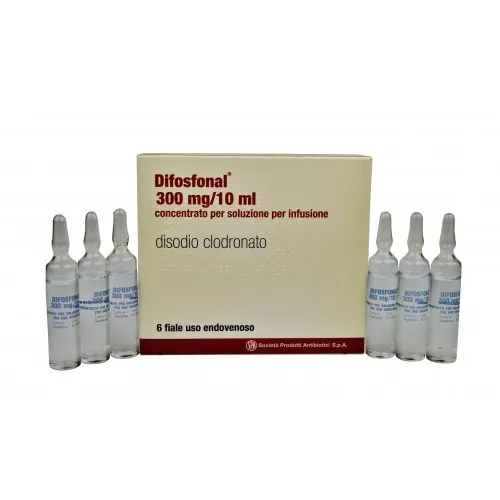
Table of Contents
- DIFOSFONAL 300 mg/10 ml concentrate for solution for infusion
- 1. What DIFOSFONAL is and what it is used for
- 2. What you should know before using DIFOSFONAL
- 3. How to use DIFOSFONAL
- 4. Possible side effects
- 5. How to store DIFOSFONAL
- 6. Package contents and other information
- THE FOLLOWING INFORMATION IS INTENDED EXCLUSIVELY FOR PHYSICIANS OR
- DIFOSFONAL 400 mg hard capsules
- 1. What DIFOSFONAL is and what it is used for
- 2. What you need to know before taking DIFOSFONAL
- 3. How to take DIFOSFONAL
- 4. Possible side effects
- 5. How to store DIFOSFONAL
- 6. Package contents and other information
| Renal impairment degree: Creatinine clearance, ml/min | Dosage reduction, % |
| 50-80 | 25 |
| 12-50 | 25-50 |
| <12 | 50 |
Package leaflet: Information for the patient
DIFOSFONAL 300 mg/10 ml concentrate for solution for infusion
Clodronic acid
Please read all of this leaflet carefully before you start using this medicine because it contains important information for you.
- Keep this leaflet. You may need to read it again.
- If you have any questions, ask your doctor, pharmacist, or nurse.
- This medicine has been prescribed for you only. Do not give it to other people, even if their symptoms are the same as yours, as it may be harmful.
- If you experience any side effect, including those not listed in this leaflet, contact your doctor, pharmacist, or nurse. See section 4.
Contents of this leaflet:
- What DIFOSFONAL is and what it is used for
- What you need to know before using DIFOSFONAL
- How to use DIFOSFONAL
- Possible side effects
- How to store DIFOSFONAL
- Contents of the pack and other information
1. What DIFOSFONAL is and what it is used for
DIFOSFONAL is a medicine containing clodronic acid, an active substance belonging to a group of drugs used to treat bone diseases, called bisphosphonates.
DIFOSFONAL is used in adults to treat:
- bone weakening due to cancer (tumour-induced osteolysis);
- cancer of the bone marrow (multiple myeloma);
- overactivity of the parathyroid glands (primary hyperparathyroidism).
2. What you should know before using DIFOSFONAL
Do not use DIFOSFONAL
- If you are allergic to clodronic acid or to any of the other ingredients of this medicine (listed in section 6).
- If you are taking other bisphosphonates, medicines similar to DIFOSFONAL.
Warnings and precautions
Talk to your doctor or pharmacist before using DIFOSFONAL.
Before and during treatment, your doctor will ask you to undergo blood tests to monitor kidney and liver function (see section 4. Possible side effects). It is important that you drink an adequate amount of fluids during treatment with this medicine, especially if you have kidney problems (see section 3. How to use DIFOSFONAL).
In particular, inform your doctor:
- If you have high levels of calcium in your blood.
- If you suffer from kidney disease (renal insufficiency).
- If you are being treated with DIFOSFONAL for cancer and are currently undergoing dental treatment or need to undergo dental surgery. Also inform your dentist that you are being treated with DIFOSFONAL (see section 4. Possible side effects), as preventive dental treatment may be necessary.
- If you suffer from liver disease.
- If during treatment you experience weakness or pain in the thigh, hip, or groin, as this could be an early sign of a possible femoral fracture (see section 4. Possible side effects).
Children and adolescents
The safety and efficacy of this medicine in pediatric patients have not been established.
Other medicines and DIFOSFONAL
Inform your doctor or pharmacist if you are taking, have recently taken, or might take any other medicines.
This is particularly important if:
- You are taking other bisphosphonates, medicines used to treat bone diseases, since concomitant use of DIFOSFONAL with other bisphosphonates is contraindicated (see section 2. Do not use DIFOSFONAL);
- You are taking non-steroidal anti-inflammatory drugs (NSAIDs), medicines used to treat inflammation (especially diclofenac), as kidney problems may occur;
- You are taking aminoglycosides, medicines used to treat infections, as calcium levels in the blood may decrease (hypocalcemia);
- You are taking estramustine, a medicine used to treat prostate cancer (a gland in men that produces seminal fluid), as blood concentrations of estramustine may increase;
- You are receiving intravenous solutions containing bivalent cations (e.g.: Ringer's solution).
Pregnancy, breastfeeding, and fertility
If you are pregnant, think you might be pregnant, planning to become pregnant, or breastfeeding, ask your doctor or pharmacist for advice before being given this medicine.
Pregnancy
Avoid using DIFOSFONAL during pregnancy and if you are of childbearing age and not using effective contraception (medicines used to prevent pregnancy).
Breastfeeding
It is not known whether clodronic acid passes into breast milk. Therefore, during treatment with DIFOSFONAL, discontinue breastfeeding.
Fertility
It is not known whether clodronic acid has effects on human fertility.
Driving and using machines
DIFOSFONAL may cause visual disturbances that could affect your ability to drive or operate machinery.
If you experience one or more of the symptoms listed in section 4 or if you use more DIFOSFONAL than you should, avoid driving and operating machinery.
DIFOSFONAL contains sodium
DIFOSFONAL concentrate for solution for infusion contains 49.1 mg of sodium (the main component of table salt) per vial. This corresponds to 2.45% of the maximum daily recommended dietary intake for an adult.
This should be taken into consideration in individuals with impaired renal function.
3. How to use DIFOSFONAL
Use this medicine exactly as directed by your doctor, who will determine the correct dose based on the severity of your condition and the duration of treatment. This medicine will be administered by a doctor or nurse (see the section DOSAGE, METHOD AND DURATION OF ADMINISTRATION at the end of this Patient Information Leaflet).
Clodronic acid is primarily eliminated via the kidneys. Therefore, during treatment with clodronic acid, you must drink an adequate amount of fluids.
This is particularly important when DIFOSFONAL is administered intravenously:
- if you have high levels of calcium in the blood
- if you have kidney disease (renal insufficiency).
Method of administration
DIFOSFONAL 300 mg/10 ml concentrate for solution for infusion is for intravenous use only and must be diluted before infusion. It will be administered slowly (over 2–3 hours) directly into a vein.
If you use more DIFOSFONAL than you should
In case of accidental overdose, contact your doctor or the nearest hospital immediately.
Symptoms of overdose may include:
- increased creatinine levels in the blood and kidney disease (renal dysfunction) (with high doses of clodronate administered intravenously)
- elevated blood nitrogen levels (uraemia)
- liver damage
- low calcium levels in the blood (hypocalcaemia).
Treatment
Your doctor will manage symptoms with appropriate supportive therapy.
If you forget to use DIFOSFONAL
Do not take a double dose to make up for the missed dose.
If you stop using DIFOSFONAL
If you have any doubts about using this medicine, consult your doctor or pharmacist.
4. Possible side effects
Like all medicines, this medicine can cause side effects, although not everyone gets them.
If you experience any eye or vision problems during treatment, STOP the treatment immediately and consult an ophthalmologist.
Inform your doctor immediately if you experience:
- pain or sores in the mouth or jaw and/or maxilla (two facial bones), as these may be early signs of serious problems (bone necrosis of the jaw and/or maxilla), usually associated with tooth extraction and/or local infection (see section 2. Warnings and precautions).
The possible side effects are listed below according to frequency:
Common (may affect up to 1 in 10 people)
- decrease in blood calcium levels without symptoms (asymptomatic hypocalcaemia);
- diarrhoea, nausea, vomiting (usually mild in intensity);
- increased levels of transaminases in the blood (a test to assess liver function), usually within normal limits.
Rare (may affect up to 1 in 1,000 people)
- decrease in blood calcium levels with symptoms (symptomatic hypocalcaemia);
- increased levels of parathyroid hormone (a hormone that regulates calcium levels in the blood) associated with low blood calcium;
- increased levels of alkaline phosphatase in the blood (a test to assess bone and liver condition);
- increased levels of transaminases in the blood (a test to assess liver function) more than twice the upper normal limit, without other abnormalities in liver function;
- allergic reactions manifesting as skin reactions;
- atypical femur fracture (long bone of the leg), particularly in patients receiving long-term treatment for osteoporosis. Contact your doctor if you experience pain or weakness in the thigh, hip, or groin, as this could be an early sign of a possible femoral fracture.
Very rare (may affect less than 1 in 10,000 people)
- consult your doctor if you experience ear pain, ear discharge, and/or ear infection. These episodes could be symptoms of bone damage in the ear.
The following side effects may also occur, for which the frequency cannot be estimated from the available data:
-
Effects related to the eyes
- inflammation of the conjunctiva, the membrane covering the eye and the inner surface of the eyelids (conjunctivitis);
- eye inflammation (episcleritis, scleritis, and uveitis). Episcleritis and scleritis have been reported with other medicines belonging to the same class as clodronic acid (a class adverse reaction of bisphosphonates).
-
Effects related to the lungs
- breathing problems in patients with aspirin-sensitive asthma (a medicine used to treat fever, pain, and inflammation);
- allergic reactions manifesting as respiratory disorders.
-
Effects related to the kidneys and urinary tract
- kidney disease (renal failure), severe kidney damage. Rarely, and especially in association with NSAIDs (medicines used to treat inflammation and pain), renal failure has led to death (more frequently with diclofenac). See section 2. Other medicines and DIFOSFONAL.
-
Effects related to bones and muscles
- severe bone, joint, and muscle pain. The onset of symptoms varies from days to several months after starting treatment with DIFOSFONAL;
- pain or sores in the mouth or jaw and/or maxilla (two facial bones). These may be early signs of serious problems (bone necrosis of the jaw and/or maxilla), usually associated with tooth extraction and/or local infection (see section 2. Warnings and precautions). In most cases, this has occurred in patients with cancer.
-
Effects at the injection site
- pain or tenderness at the injection site, particularly with prolonged treatment duration.
Reporting of side effects
If you get any side effects, including any not listed in this leaflet, talk to your doctor, pharmacist, or nurse. You can also report side effects directly via the national reporting system at https://www.aifa.gov.it/content/segnalazioni-reazioni-avverse.
By reporting side effects, you can help provide more information on the safety of this medicine.
5. How to store DIFOSFONAL
This medicine does not require any special storage conditions.
Keep this medicine out of the sight and reach of children.
Do not use this medicine after the expiry date which is stated on the carton after Exp.
The expiry date refers to the last day of that month.
Do not dispose of any medicine via wastewater or household waste. Ask your pharmacist how to
dispose of medicines you no longer use. This will help protect the environment.
6. Package contents and other information
What DIFOSFONAL contains
- The active substance is Clodronate disodium (the disodium salt of clodronic acid) 300 mg
- The other components are sodium bicarbonate (see section 2. DIFOSFONAL contains sodium), water for injections.
Description of the appearance of DIFOSFONAL and package contents
Concentrate for solution for infusion for intravenous use. Carton pack containing 6 or 12 vials.
It is possible that not all pack sizes are marketed.
MARKETING AUTHORISATION HOLDER
SPA - Società Prodotti Antibiotici S.p.A.
Via Biella, 8
20143 Milan, Italy
MANUFACTURER
ABIOGEN PHARMA S.p.A. - Manufacturing site at Via Meucci, 36 – Ospedaletto – Pisa, Italy
THE FOLLOWING INFORMATION IS INTENDED EXCLUSIVELY FOR PHYSICIANS OR
HEALTHCARE PROFESSIONALS
This medicinal product is for intravenous use only.
Must be diluted before administration.
The solution is incompatible with alkaline solutions or oxidizing solutions.
DOSAGE, METHOD AND DURATION OF ADMINISTRATION
Tumoral osteolysis. Multiple myeloma. Primary hyperparathyroidism.
The following dosage regimen is indicative and may therefore be adjusted according to the individual patient's needs.
a) Initial treatment phase
DIFOSFONAL 300 mg/10 ml concentrate for solution for infusion.
300 mg/day as a single daily intravenous slow infusion for 3–8 days, depending on the clinical and laboratory parameters (serum calcium, hydroxyprolinuria, etc.).
Clodronate is administered as a slow intravenous infusion of 300 mg (one 10 ml vial) per day, diluted in 500 ml of 0.9% sodium chloride solution (sodium chloride 9 mg/ml) or in 5% glucose solution (50 mg/ml). This solution must be administered by slow intravenous infusion over a period of at least two hours.
b) Maintenance phase
DIFOSFONAL 100 mg + 33 mg injectable solution with lidocaine
100 mg/day administered intramuscularly for 2–3 weeks. For further information on DIFOSFONAL 100 mg + 33 mg injectable solution with lidocaine, refer to the corresponding Summary of Product Characteristics and Package Leaflet.
or alternatively,
DIFOSFONAL 400 mg hard capsules, 4 capsules/day (1600 mg of clodronate sodium). If necessary, the dose may be increased, but must not exceed a maximum of 8 capsules/day (3200 mg of clodronate sodium).
For further information on DIFOSFONAL 400 mg hard capsules, refer to the corresponding Summary of Product Characteristics and Package Leaflet.
The duration of treatment, usually long-term, depends on the progression of the disease.
Periodic re-evaluation of bone resorption parameters is recommended as a guide to assess the need for continuing therapy.
Special populations
- Children The safety and efficacy of the drug in pediatric patients have not been established.
- Elderly There are no specific dosage recommendations for the elderly. Clinical studies have included patients over 65 years of age and no age-specific adverse events have been reported in this age group.
- Patients with renal impairment Clodronate is predominantly eliminated via the renal route. Therefore, it should be used with caution in patients with renal impairment.
Parenteral administration
It is recommended to reduce the clodronate dosage as follows:
| Renal impairment degree: Creatinine clearance, ml/min | Dosage reduction, % |
| 50-80 | 25 |
| 12-50 | 25-50 |
| <12 | 50 |
Clodronate should be administered before haemodialysis, the dose should be reduced by 50% on dialysis-free days, and the treatment schedule should be limited to 5 days. It should be noted that peritoneal dialysis removes clodronate poorly from the circulation. Intravenous administration of doses considerably higher than those recommended may cause severe renal damage, especially if the infusion rate is too high.
Dilute before administration.
Intravenous administration must be performed by slow infusion (2–3 hours) in 0.9% sodium chloride or 5% glucose solution.
Clodronate forms poorly water-soluble complexes with bivalent cations. Therefore, clodronate must not be administered intravenously with solutions containing bivalent cations (e.g.: Ringer's solution).
Patient Information Leaflet: Information for the patient
DIFOSFONAL 400 mg hard capsules
Clodronic acid
Please read this leaflet carefully before taking this medicine because it contains
important information for you.
- Keep this leaflet. You may need to read it again.
- If you have any questions, ask your doctor or pharmacist.
- This medicine has been prescribed for you only. Do not give it to others, even if their symptoms are the same as yours, as it could be harmful.
- If you experience any adverse reactions, including those not listed in this leaflet, contact your doctor or pharmacist. See section 4.
Contents of this leaflet:
- What DIFOSFONAL is and what it is used for
- What you need to know before taking DIFOSFONAL
- How to take DIFOSFONAL
- Possible side effects
- How to store DIFOSFONAL
- Contents of the pack and other information
1. What DIFOSFONAL is and what it is used for
DIFOSFONAL is a medicine containing clodronic acid, an active substance belonging to a group of drugs used to treat bone diseases, called bisphosphonates.
DIFOSFONAL is used in adults for the treatment:
- of bone weakening due to tumour (tumour-induced osteolysis);
- of bone marrow tumour (multiple myeloma);
- of overactivity of the parathyroid glands (primary hyperparathyroidism). It is also indicated in women for the prevention and treatment of bone weakening (osteoporosis) after the menopause (the period of permanent cessation of menstrual cycles).
2. What you need to know before taking DIFOSFONAL
Do not take DIFOSFONAL
- If you are allergic to clodronic acid or to any of the other ingredients of this medicine (listed in section 6).
- If you are taking other bisphosphonates, medicines similar to DIFOSFONAL.
Warnings and precautions
Talk to your doctor or pharmacist before taking DIFOSFONAL.
Before and during treatment, your doctor will ask you to undergo blood tests to monitor kidney and liver function (see section 4. Possible side effects). It is important that you drink an adequate amount of fluids during treatment with this medicine, especially if you have kidney problems (see section 3. How to take DIFOSFONAL).
In particular, inform your doctor:
- If you have high levels of calcium in your blood.
- If you have a kidney disease (renal insufficiency).
- If you are being treated with DIFOSFONAL for cancer or osteoporosis and are currently undergoing dental treatment or need to undergo dental surgery. You should also inform your dentist that you are being treated with DIFOSFONAL (see section 4. Possible side effects), as preventive dental treatment may be necessary.
- If you have a liver disease.
- If during treatment you experience weakness or pain in the thigh, hip, or groin, as this may be an early sign of a possible femur fracture (see section 4 “Possible side effects”).
- If you or someone in your family has or has had disorders of the esophagus (the tube connecting the throat to the stomach) causing delayed passage of food and delayed stomach emptying, or if you suffer from stomach disorders. Your doctor will ask you to pay close attention to the administration instructions and to watch for any signs or symptoms indicating a possible esophageal reaction. If you develop symptoms of esophageal irritation (e.g., difficulty swallowing [dysphagia], painful swallowing, retrosternal pain, or onset/worsening of heartburn), contact your doctor immediately.
- If you have difficulty remaining upright for at least 30 minutes after taking the capsule.
Children and adolescents
The safety and efficacy of this medicine in children and adolescents have not been established.
Other medicines and DIFOSFONAL
Inform your doctor or pharmacist if you are taking, have recently taken, or might take any other medicines.
This is particularly important if:
- You are taking other bisphosphonates, medicines used to treat bone diseases, as concomitant use of DIFOSFONAL with other bisphosphonates is contraindicated (see section 2 “Do not take DIFOSFONAL”);
- You are taking non-steroidal anti-inflammatory drugs (NSAIDs), medicines used to treat inflammation (especially diclofenac), as kidney problems may occur;
- You are taking aminoglycosides, medicines used to treat infections, as levels of calcium in the blood may decrease (hypocalcemia);
- You are taking estramustine, a medicine used to treat prostate cancer (a gland in men that produces seminal fluid), as blood concentrations of estramustine may increase;
- You are taking medicines containing bivalent cations (e.g., mineral supplements, antacids, or iron-containing preparations). In such cases, your doctor will instruct you to take DIFOSFONAL at least 2–3 hours apart.
DIFOSFONAL with food and drinks
Inform your doctor or pharmacist if you are consuming foods or drinks containing bivalent cations (e.g., foods or drinks containing iron, magnesium, aluminum, calcium) (see section 3 “How to take DIFOSFONAL”). DIFOSFONAL must be taken at least 2–3 hours apart from foods and/or drinks containing bivalent cations.
Pregnancy, breastfeeding, and fertility
If you are pregnant, think you might be pregnant, are planning to become pregnant, or are breastfeeding, consult your doctor or pharmacist before taking this medicine.
Pregnancy
Avoid taking DIFOSFONAL during pregnancy and if you are of childbearing age and are not using effective contraception (medicines used to prevent pregnancy).
Breastfeeding
It is not known whether clodronic acid passes into breast milk. Therefore, breastfeeding must be discontinued during treatment with DIFOSFONAL.
Fertility
It is not known whether clodronic acid has effects on human fertility.
Driving and using machines
DIFOSFONAL may cause visual disturbances that could affect your ability to drive vehicles or operate machinery.
If you experience one or more of the symptoms listed in section 4 or if you take more DIFOSFONAL than you should, avoid driving and using machines.
DIFOSFONAL contains sodium
DIFOSFONAL hard capsules contain 64.1 mg of sodium (the main component of table salt) per capsule. This corresponds to 3.2% of the maximum daily recommended dietary intake for an adult.
The maximum daily recommended dose of this medicine is equivalent to 25.6% of the maximum daily recommended sodium intake.
Talk to your doctor or pharmacist if you need to take DIFOSFONAL daily for a prolonged period, especially if you have been advised to follow a low-sodium diet.
3. How to take DIFOSFONAL
Always take this medicine exactly as directed by your doctor, who will determine the correct dose based on the severity of your condition and the duration of treatment. If you have any doubts, consult your doctor or pharmacist (see the section DOSAGE, METHOD AND DURATION OF ADMINISTRATION at the end of the Package Leaflet).
Clodronic acid is primarily eliminated via the renal route. Therefore, during treatment with clodronic acid, you must ensure adequate fluid intake.
Tumoral osteolysis, multiple myeloma, primary hyperparathyroidism
a) Initial phase
For the initial phase, your doctor will administer DIFOSFONAL 300 mg/10 ml concentrate for infusion solution, at a dose of 300 mg/day as a single intravenous slow infusion for 3–8 days, depending on the clinical and laboratory parameters (serum calcium, hydroxyprolinuria, etc.).
For further information regarding DIFOSFONAL 300 mg/10 ml concentrate for infusion solution, please refer to the corresponding Package Leaflet.
b) Maintenance phase
If your doctor prescribes DIFOSFONAL capsules, the recommended dose is 4 capsules daily, taken as a single dose. If your doctor prescribes a higher dose, up to a maximum of 8 capsules per day, the amount exceeding 4 capsules should be taken separately (as a second dose). Doses should be taken apart from meals for the period determined by your doctor, depending on the progression of the disease. If necessary, your doctor may request tests to evaluate the health of your bones.
Alternatively, your doctor may administer DIFOSFONAL 100 mg + 33 mg injectable solution with lidocaine intramuscularly at a dose of 100 mg/day for 2–3 weeks, according to the instructions described in the corresponding Package Leaflet.
Your doctor will reduce your dose of DIFOSFONAL if you have kidney disease.
Prevention and treatment of postmenopausal osteoporosis
The recommended dose is 1 capsule daily for 30 days, followed by a 60-day treatment break (repeated in cycles), or alternatively, 1 capsule daily continuously for 1 year or longer, depending on your doctor’s prescription.
Alternatively, your doctor may administer DIFOSFONAL 100 mg + 33 mg injectable solution with lidocaine intramuscularly (100 mg every 7–14 days) for 1 year or longer, depending on your condition and as described in the corresponding Package Leaflet, or DIFOSFONAL 200 mg + 40 mg injectable solution with lidocaine (200 mg every 14–28 days) for 1 year or longer, depending on your condition and as described in the corresponding Package Leaflet.
Your doctor will reduce your dose of DIFOSFONAL if you have kidney disease.
How to take the capsules
Take the capsules orally with a small amount of water and swallow without chewing.
DIFOSFONAL capsules must be swallowed whole, preferably in the morning, on an empty stomach, with a glass of water. After taking the capsule, do not eat, drink, or take any other oral medications for one hour. After swallowing the medicine, remain upright for 30 minutes (do not lie down). Under no circumstances should you take the capsules with milk, food, or medications containing calcium or other bivalent cations (e.g., iron, magnesium, aluminium), as these substances interfere with clodronate absorption.
Some mineral waters may have a high calcium content and therefore should not be used.
Exclusively for the treatment of tumoral osteolysis, multiple myeloma, and primary hyperparathyroidism, if multiple daily doses are prescribed, the additional dose must be taken between meals, at least two hours after or one hour before eating, drinking (except plain water), or taking other oral medications.
If you take more DIFOSFONAL than you should
In case of accidental overdose, contact your doctor immediately or go to the nearest hospital.
Symptoms of overdose may include:
- increased blood creatinine levels and kidney disease (renal dysfunction) (with high doses of clodronic acid administered intravenously);
- elevated blood nitrogen levels (uraemia);
- liver damage;
- low blood calcium levels (hypocalcaemia).
Treatment
Your doctor will manage symptoms with appropriate specific therapies.
If you forget to take DIFOSFONAL
Do not take a double dose to make up for the missed capsule.
If you stop taking DIFOSFONAL
If you have any questions about using this medicine, consult your doctor or pharmacist.
4. Possible side effects
Like all medicines, this medicine can cause side effects, although not everybody will get them.
If you experience any vision or eye problems during treatment, STOP taking the medicine immediately and consult an ophthalmologist.
Inform your doctor immediately if you experience:
- pain or sores in the mouth or jaw and/or maxilla (two facial bones), as these may be early signs of serious problems (bone death of the jaw and/or maxilla), usually associated with tooth extraction and/or local infection (see also section 2 "Warnings and precautions").
The possible side effects listed below are categorized by frequency:
Common (may affect up to 1 in 10 people)
- decreased levels of calcium in the blood, without symptoms (asymptomatic hypocalcaemia)
- diarrhoea, nausea, vomiting (usually mild in intensity)
- increased levels of transaminases in the blood (a test to assess liver function), usually within normal limits
Rare (may affect up to 1 in 1,000 people)
- decreased levels of calcium in the blood, with symptoms (symptomatic hypocalcaemia)
- increased levels of parathyroid hormone (a hormone that regulates calcium levels in the blood) associated with low blood calcium
- increased levels of alkaline phosphatase in the blood (a test to assess bone and liver condition)
- increased levels of transaminases in the blood (a test to assess liver function) more than twice the upper normal limit, without other abnormalities in liver function
- allergic reactions manifesting as skin reactions
- atypical fracture of the femur (long bone of the leg), particularly in patients treated for a long time for osteoporosis. Contact your doctor if you experience pain or weakness in the thigh, hip, or groin, as this may be an early sign of a possible femoral fracture
Very rare (may affect less than 1 in 10,000 people)
Contact your doctor if you experience ear pain, ear discharge, and/or ear infection. These episodes could be symptoms of bone damage in the ear.
The following side effects may also occur, for which the frequency cannot be estimated from the available data:
-
Effects related to the eyes
- inflammation of the conjunctiva, the membrane covering the eye and the inner surface of the eyelids (conjunctivitis)
- inflammation of the eye (episcleritis, scleritis, and uveitis). Episcleritis and scleritis have been reported with other drugs in the same class as clodronic acid (a class effect of bisphosphonates).
-
Effects related to the lungs
- breathing problems in patients with aspirin-sensitive asthma (acetylsalicylic acid);
- allergic reactions manifesting as breathing difficulties.
-
Effects related to the kidneys and urinary tract
- kidney disease (renal failure), severe kidney damage. Rarely, and especially when used concomitantly with NSAIDs (medicines used to treat inflammation and pain), renal failure has led to death (more frequently with concomitant use of diclofenac). (See section 2 "Other medicines and DIFOSFONAL".)
-
Effects related to bones and muscles
- severe bone, joint, and muscle pain. The onset of symptoms varies from days to several months after starting DIFOSFONAL therapy;
- pain or sores in the mouth or jaw and/or maxilla (two facial bones). These may be early signs of serious problems (bone death of the jaw and/or maxilla), usually associated with tooth extraction and/or local infection (see section 2 "Warnings and precautions"). In most cases, this has occurred in cancer patients.
-
Effects related to the stomach and intestines
- inflammation or irritation of the oesophagus, the tube connecting the throat to the stomach (oesophagitis);
- inflammation of the stomach (gastritis);
- damage to the oesophagus (oesophageal ulcers);
- damage to the stomach and intestine (gastroduodenal ulcers).
Reporting of side effects
If you experience any side effect, including those not listed in this leaflet, tell your doctor or pharmacist.
You can also report side effects directly via the national reporting system at https://www.aifa.gov.it/content/segnalazioni-reazioni-avverse.
Reporting side effects helps provide more information on the safety of this medicine.
5. How to store DIFOSFONAL
Store below 30 °C.
Keep this medicine out of the sight and reach of children.
Do not use this medicine after the expiry date which is stated on the packaging after Exp.
The expiry date refers to the last day of that month.
Do not dispose of any medicine via wastewater or household waste. Ask your pharmacist how to
dispose of medicines you no longer use. This will help protect the environment.
6. Package contents and other information
What DIFOSFONAL contains
- The active substance is Clodronate disodium (the disodium salt of clodronic acid), 400 mg.
- The other components are sodium carboxymethylcellulose (see section 2. DIFOSFONAL contains sodium), maize starch, talc, magnesium stearate.
Capsule shell: gelatin, titanium dioxide (E171), indigotine (E132).
Description of the appearance of DIFOSFONAL and package contents
White and blue hard capsules for oral use. Carton pack containing 10 capsules.
MARKETING AUTHORISATION HOLDER
SPA - Società Prodotti Antibiotici S.p.A.
Via Biella, 8
20143 Milano
MANUFACTURER
ABIOGEN PHARMA S.p.A. - Plant at Via Meucci, 36 – Ospedaletto – Pisa
The following information is intended exclusively for physicians or healthcare professionals:
DOSAGE, METHOD AND DURATION OF ADMINISTRATION
Tumoral osteolysis. Multiple myeloma. Primary hyperparathyroidism.
The following dosage regimen is indicative and may therefore be adapted according to the individual patient's needs.
a) Initial phase
DIFOSFONAL 300 mg/10 ml concentrate for solution for infusion, 300 mg/day as a single intravenous slow infusion for 3-8 days, depending on the course of clinical and laboratory parameters (serum calcium, hydroxyprolinuria, etc.).
For further information regarding DIFOSFONAL 300 mg/10 ml concentrate for solution for infusion, see the corresponding Summary of Product Characteristics and Package Leaflet.
b) Maintenance phase
DIFOSFONAL 100 mg + 33 mg injectable solution with lidocaine
100 mg/day administered intramuscularly for 2-3 weeks.
For further information regarding DIFOSFONAL 100 mg + 33 mg injectable solution with lidocaine, see the corresponding Summary of Product Characteristics and Package Leaflet.
Alternatively,
DIFOSFONAL 400 mg hard capsules, 4 capsules/day (1600 mg of clodronate sodium). If necessary, the dose may be increased, but must not exceed a maximum of 8 capsules/day (3200 mg of clodronate sodium). The daily dose of 1600 mg should be taken as a single dose. When higher doses are used, the amount exceeding 1600 mg should be taken separately (as a second dose). Doses should be administered apart from meals.
The duration of treatment, usually long-term, depends on the progression of the disease. Periodic reassessment of bone resorption parameters is recommended to guide the decision on continuing therapy.
Prevention and treatment of postmenopausal osteoporosis.
Dosage may vary according to clinical condition and bone mineral density values as follows:
Oral therapy
DIFOSFONAL 400 mg hard capsules, 1 capsule/day for 30 days, followed by a 60-day treatment interruption (for multiple cycles), up to 1 capsule/day continuously for 1 year or more, depending on the patient's condition.
Parenteral therapy
DIFOSFONAL 100 mg + 33 mg injectable solution with lidocaine
100 mg intramuscularly every 7-14 days, for 1 year or more, depending on the patient's condition.
DIFOSFONAL 200 mg + 40 mg injectable solution with lidocaine
200 mg intramuscularly every 14-28 days, for 1 year or more, depending on the patient's condition.
For further information regarding DIFOSFONAL 100 mg + 33 mg injectable solution with lidocaine and DIFOSFONAL 200 mg + 40 mg injectable solution with lidocaine, see the corresponding Summary of Product Characteristics and Package Leaflet.
The optimal duration of bisphosphonate treatment for osteoporosis has not been established. The need for continued treatment should be periodically reassessed for each individual patient based on potential benefits and risks, particularly after 5 or more years of use.
Method of administration
DIFOSFONAL 400 mg capsules must be swallowed whole. The daily dose should preferably be taken in the morning on an empty stomach with a glass of water. The patient must then refrain from eating, drinking (except plain water), or taking other oral medications for one hour after administration. After taking the medicine, patients are advised not to lie down for 30 minutes.
Under no circumstances should clodronate be taken with milk, food, or medications containing calcium or other bivalent cations, as these substances interfere with clodronate absorption. Some mineral waters may have a high calcium concentration and therefore should not be used.
Exclusively for the treatment of tumoral osteolysis, multiple myeloma, and primary hyperparathyroidism, in the case of multiple daily doses, the second dose should be taken between meals, at least two hours after or one hour before eating, drinking (except plain water), or taking other oral medications.
Special populations
- Children: The safety and efficacy of the drug in pediatric patients have not been established.
- Elderly
No specific dosage recommendations are required for elderly patients. Clinical studies have included patients over 65 years of age, and no age-specific adverse events have been reported in this group.
- Patients with renal impairment
Clodronate is primarily eliminated via the renal route. Therefore, it should be used with caution in patients with renal impairment. Daily doses exceeding 1600 mg should not be used continuously.
It is recommended to reduce the clodronate dosage as follows:
| Renal impairment levels | Creatinine clearance, ml/min | Dosage |
| Mild | 50-80 ml/min | 1600 mg/day |
| Moderate | 30-50 ml/min | 1200 mg/day |
| Severe* | <30 ml/min | 800 mg/day |
For oral clodronate, pharmacokinetic data are not available in patients with renal impairment and creatinine clearance below 10 ml/min. Use in these cases should be avoided, except for short-term treatment in the presence of purely functional renal impairment caused by elevated serum calcium levels.