Diclofenac Sandoz
Italy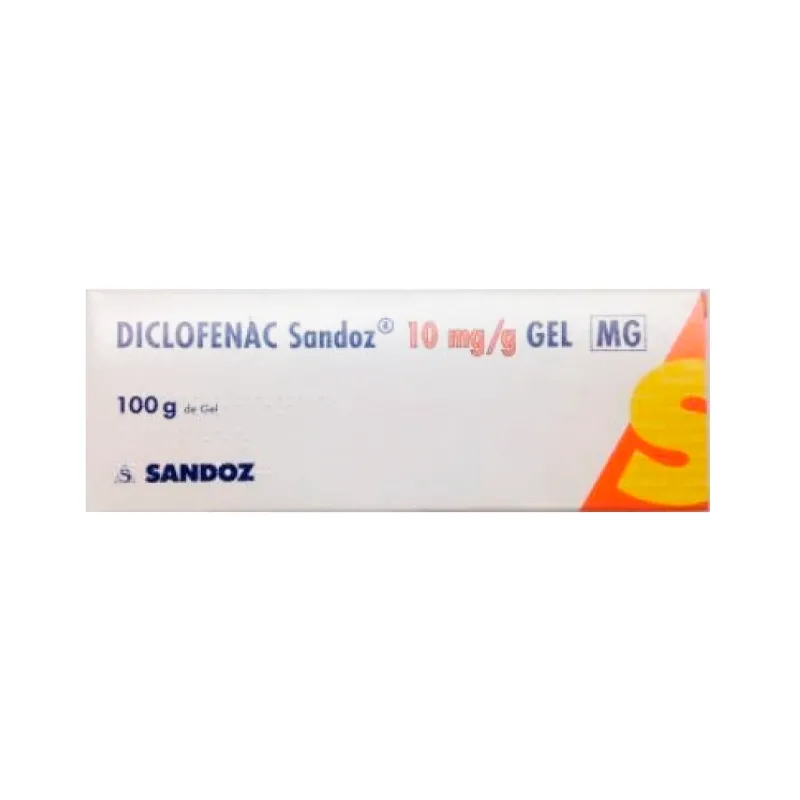
Table of Contents
- Package leaflet: Information for the patient
- Diclofenac Sandoz Gel
- 1. What Diclofenac Sandoz Gel is and what it is used for
- 2. What you need to know before using Diclofenac Sandoz Gel
- 3. How to use Diclofenac Sandoz Gel
- 4. Possible side effects
- 5. How to store Diclofenac Sandoz Gel
- 6. Contents of the pack and other information
Package leaflet: Information for the patient
Diclofenac Sandoz Gel
sodium diclofenac
Generic medicine
Please read this leaflet carefully before using this medicine because it contains important information for you.
Always use this medicine exactly as described in this leaflet or as your doctor or pharmacist has told you to do.
- Keep this leaflet. You may need to read it again.
- If you need more information or advice, consult your pharmacist.
- If you experience any adverse reaction, including those not listed in this leaflet, contact your doctor or pharmacist. See section 4.
- Consult your doctor if you do not notice improvement or if your symptoms worsen after 7 days.
Contents of this leaflet:
- What Diclofenac Sandoz Gel is and what it is used for
- What you need to know before using Diclofenac Sandoz Gel
- How to use Diclofenac Sandoz Gel
- Possible side effects
- How to store Diclofenac Sandoz Gel
- Contents of the pack and other information
1. What Diclofenac Sandoz Gel is and what it is used for
Diclofenac Sandoz Gel contains the active substance sodium diclofenac. Diclofenac belongs to the class of non-steroidal anti-inflammatory drugs (NSAIDs) and is used to reduce pain and inflammation.
Diclofenac Sandoz Gel is indicated for the local treatment of painful and inflammatory conditions of rheumatic or traumatic origin affecting:
- joints
- muscles
- tendons and ligaments.
Consult your doctor if you do not feel better or feel worse after 7 days.
2. What you need to know before using Diclofenac Sandoz Gel
Do not use Diclofenac Sandoz Gel
- if you are allergic to the active substance or to any of the other ingredients of this medicine (listed in section 6)
- if in the past you have experienced symptoms of an allergic reaction such as asthma (e.g. wheezing and shortness of breath), angioedema (swelling of the face, lips, tongue and/or throat with difficulty in swallowing and/or breathing), urticaria (skin rash), or acute forms of nasal inflammation (acute rhinitis) after taking acetylsalicylic acid or other non-steroidal anti-inflammatory drugs (NSAIDs)
- if you are in the third trimester of pregnancy (see section “Pregnancy and breastfeeding”)
- if the patient is a child or adolescent under 14 years of age.
Warnings and precautions
Talk to your doctor or pharmacist before using Diclofenac Sandoz Gel.
Take special care:
- do not swallow Diclofenac Sandoz Gel; wash your hands after use;
- do not apply Diclofenac Sandoz Gel to damaged, diseased or broken skin
- avoid contact of Diclofenac Sandoz Gel with eyes or mucous membranes, for example of the mouth or vagina. If this occurs, rinse the area immediately with running water and contact your doctor
- do not use Diclofenac Sandoz Gel with an occlusive dressing, i.e. covering the affected area with an airtight plastic film. However, you may use Diclofenac Sandoz Gel with a breathable gauze dressing
- if you develop skin rashes, stop treatment with Diclofenac Sandoz Gel
- if you use diclofenac over large areas of skin and for long periods of time, you may experience adverse effects affecting the whole body; do not use Diclofenac Sandoz Gel in larger amounts or for longer than indicated in this leaflet, unless advised by your doctor
Children and adolescents
Diclofenac Sandoz Gel must not be used in children and adolescents under 14 years of age.
Other medicines and Diclofenac Sandoz Gel
Inform your doctor or pharmacist if you are taking, have recently taken or might take any other
medicines.
It is unlikely that Diclofenac Sandoz Gel will interact with other medicines.
Pregnancy, breastfeeding and fertility
If you are pregnant, think you might be pregnant, planning to become pregnant, or are breastfeeding,
ask your doctor or pharmacist for advice before using this medicine.
Pregnancy
Diclofenac Sandoz Gel must not be used during the first and second trimesters of pregnancy except when strictly necessary and under medical advice.
If you wish to become pregnant or are in the first or second trimester of pregnancy and need to use diclofenac, take the lowest dose of diclofenac for the shortest possible time.
Diclofenac Sandoz Gel must not be used during the third trimester of pregnancy because it may cause harm to the unborn child and mother if taken during this period.
Oral forms (e.g. tablets) of diclofenac may cause adverse effects in the newborn. It is not known whether the same risk applies when diclofenac is used on the skin/in the mouth.
Breastfeeding
Diclofenac passes into breast milk in small amounts.
You must not use Diclofenac Sandoz Gel during breastfeeding unless you have first consulted your doctor.
If you are breastfeeding, do not apply Diclofenac Sandoz Gel to the breast, over large areas of skin or for prolonged periods of time.
Driving and using machines
Diclofenac Sandoz Gel does not impair the ability to drive or operate machinery.
Diclofenac Sandoz Gel contains propylene glycol
Diclofenac Sandoz Gel 50 g tube contains 12.5 g of propylene glycol per 50 g, equivalent to 250 mg/g, which may cause skin irritation.
Diclofenac Sandoz Gel 100 g tube contains 25 g of propylene glycol per 100 g, equivalent to 250 mg/g, which may cause skin irritation.
3. How to use Diclofenac Sandoz Gel
Method of administration
Diclofenac Sandoz Gel is for topical use only.
Apply the gel to the affected areas of the body and gently rub it into the skin. Afterwards,
dry your hands with a paper towel and then wash them, unless the hands themselves are the area being
treated.
If too much gel is accidentally applied, wipe off the excess with a paper towel.
Dispose of the paper towel in household waste to prevent unused product from entering the aquatic environment.
If a dressing is to be applied, allow the gel to dry on the skin for a few minutes before application.
Always use this medicine exactly as described in this leaflet or as instructed by your doctor or pharmacist. If you have any doubts, consult your doctor or pharmacist.
Use in adults
Apply Diclofenac Sandoz Gel 3 or 4 times daily to the affected area and gently massage in. The amount of medicine to use depends on the size of the area to be treated (amount ranging from the size of a cherry to a walnut).
Wash your hands after applying Diclofenac Sandoz Gel to avoid the medicine acting on the hands (unless the hands are the area being treated).
Use Diclofenac Sandoz Gel only on the skin, for short periods of time, and no more than the necessary amount.
Use in adolescents aged 14 to 18 years
Apply Diclofenac Sandoz Gel 3 or 4 times daily to the affected area and gently massage in. The amount of medicine to use depends on the size of the area to be treated (amount ranging from the size of a cherry to a walnut).
Wash your hands after applying Diclofenac Sandoz Gel to avoid the medicine acting on the hands.
Consult your doctor if the condition does not improve within 7 days of starting treatment with Diclofenac Sandoz Gel or if symptoms worsen.
Use in children under 14 years of age
Diclofenac Sandoz Gel must not be used in children under 14 years of age.
Use in elderly patients (over 65 years of age)
Elderly patients may use the doses recommended for adults.
If you use more Diclofenac Sandoz Gel than you should
If you ingest the gel or apply an excessive amount, contact your doctor immediately or go to the nearest hospital.
After application to the skin, the amount of diclofenac that reaches the bloodstream is very low, so it is unlikely that symptoms of overdose will occur.
However, if you ingest the contents of a tube of Diclofenac Sandoz Gel, you may experience adverse effects similar to those seen after ingestion of an overdose of diclofenac tablets.
If you forget to use Diclofenac Sandoz Gel
Do not use a double dose to make up for the forgotten dose.
If you have any doubts about how to use this medicine, consult your doctor or pharmacist.
4. Possible side effects
Like all medicines, this medicine may cause side effects, although not everyone experiences them.
Common side effects (may affect up to 1 in 10 people)
- Various skin reactions characterized by rash, redness, skin irritation, itching, and swelling (dermatitis, eczema).
Uncommon side effects (may affect up to 1 in 1,000 people)
- Skin inflammation with blister formation (bullous dermatitis)
Rare side effects (may affect up to 1 in 10,000 people)
- Allergic reactions including hives (urticaria)
- Angioedema (swelling of the face, lips, tongue, and/or throat with difficulty swallowing and/or breathing)
- Skin rash with appearance of pustules
- Asthma (e.g., wheezing and shortness of breath)
- Appearance of spots or redness on the skin following exposure to sunlight or sunlamps.
Side effects frequency not known (frequency cannot be estimated from the available data)
- Burning sensation at the application site
- Dry skin
Reporting of side effects
If you experience any side effect, including those not listed in this leaflet, talk to your doctor or pharmacist. You can also report side effects directly via the national reporting system at https://www.aifa.gov.it/content/segnalazioni-reazioni-avverse.
By reporting side effects, you can help provide more information on the safety of this medicine.
5. How to store Diclofenac Sandoz Gel
Keep this medicine out of the sight and reach of children.
Protect from heat.
Do not use this medicine after the expiry date stated on the packaging after "Exp". The expiry date refers to the last day of that month.
Do not dispose of any medicine via wastewater or household waste. Ask your pharmacist how to dispose of medicines you no longer use. This will help protect the environment.
6. Contents of the pack and other information
What Diclofenac Sandoz Gel contains
- The active substance is sodium diclofenac. 100 g of gel contain 1 g of sodium diclofenac.
- The other ingredients are purified water, isopropyl alcohol, hypromellose, propylene glycol, polyethylene glycol-7 glyceryl cocoate.
Description of the appearance of Diclofenac Sandoz Gel and contents of the pack
Tubes of 50 g or 100 g of gel.
Marketing Authorisation Holder
Sandoz S.p.A.
Largo U. Boccioni, 1
21040 Origgio (VA) Italy
Manufacturer
FAMAR A.V.E.
49th km National Road Athens-Lamia
19011 Avlona Attiki - Greece