Diazepam Zentiva
ItalyTable of Contents
- PATIENT INFORMATION LEAFLET: INFORMATION FOR THE PATIENT
- DIAZEPAM ZENTIVA 5 mg/ml oral drops, solution
- 1. What Diazepam Zentiva is and what it is used for
- 2. What you need to know before taking Diazepam Zentiva
- 3. How to take Diazepam Zentiva
- 4. Possible side effects
- 5. How to store Diazepam Zentiva
- 6. Package contents and other information
Diazepam Zentiva
PATIENT INFORMATION LEAFLET: INFORMATION FOR THE PATIENT
DIAZEPAM ZENTIVA 5 mg/ml oral drops, solution
Generic Medicine
Please read this leaflet carefully before taking this medicine because it contains
important information for you.
- Keep this leaflet. You may need to read it again.
- If you have any questions, ask your doctor or pharmacist.
- This medicine has been prescribed for you only. Do not give it to others, even if their symptoms are the same as yours, as it could be harmful.
- If you experience any side effects, including those not listed in this leaflet, contact your doctor or pharmacist. See section 4.
Contents of this leaflet:
- What Diazepam Zentiva is and what it is used for
- What you need to know before taking Diazepam Zentiva
- How to take Diazepam Zentiva
- Possible side effects
- How to store Diazepam Zentiva
- Contents of the pack and other information
1. What Diazepam Zentiva is and what it is used for
Diazepam Zentiva contains the active substance diazepam, which belongs to a group of medicines called benzodiazepines.
Benzodiazepines are used to relieve severe anxiety states that cause significant distress or impair the patient's normal activities.
This medicine is indicated:
- for the treatment of anxiety, tension, and other conditions associated with anxiety;
- for the treatment of sleep disorders (insomnia).
2. What you need to know before taking Diazepam Zentiva
Do not take Diazepam Zentiva
- if you are allergic to diazepam, to other similar medicines (benzodiazepines), or to any of the other ingredients of this medicine (listed in section 6);
- if you suffer from myasthenia gravis, a disease causing muscle weakness and fatigue;
- if you have severe breathing problems (severe respiratory insufficiency);
- if you have severe liver problems (severe hepatic insufficiency);
- if you have breathing difficulties during sleep (sleep apnoea).
Warnings and precautions
Talk to your doctor or pharmacist before taking Diazepam Zentiva.
Avoid taking this medicine if you consume alcohol or take medicines that depress the central nervous system (central nervous system depressants), unless absolutely necessary (e.g. acute withdrawal crises), as the medicine may cause excessive sedation (deep sedation), breathing difficulties (respiratory depression), heart dysfunction, and low blood pressure (cardiovascular depression).
Take this medicine with caution and always under medical supervision in the following cases:
- if you are elderly or severely weakened (debilitated) (see section 3 - Use in the elderly); in such cases, your doctor may decide to reduce the dose;
- if you have reduced blood flow to the brain (arteriosclerosis);
- if you have heart or lung problems (cardiorespiratory or chronic respiratory insufficiency); your doctor may decide to reduce the dose;
- if you have previously abused alcohol or drugs;
- if you have liver (even mild) or kidney problems.
Tolerance: If after a few weeks the medicine seems less effective than at the beginning of treatment, consult your doctor.
Dependence and withdrawal: When taking this medicine, there is a risk of dependence, meaning the need to continue taking the medicine. The risk increases with dose and duration of treatment. The risk is higher if you have previously abused drugs or alcohol.
Once dependence has developed, abruptly stopping treatment will lead to withdrawal symptoms, which may include:
- headache, muscle pain,
- severe anxiety, tension, restlessness, confusion, and irritability. In severe cases of withdrawal, derealisation (feeling that things are unreal), depersonalisation (feeling detached from the surroundings), intolerance to sound (hyperacusis), numbness and tingling in hands and feet, sensitivity to light, noise and physical contact, hallucinations (seeing or hearing things that do not exist), or epileptic seizures (sudden, uncontrollable movements) may occur. The treatment must be discontinued gradually; otherwise, the symptoms for which you were being treated may return even more intensely than before (rebound insomnia and anxiety). You may also experience mood changes and sleep disturbances. Withdrawal symptoms (or rebound symptoms) may also occur even when the medicine has been taken at recommended doses and for a short period of time (see section 3 - If you stop taking Diazepam Zentiva). To minimise the occurrence of such symptoms, a gradual dose reduction is recommended (see section 3 - If you stop taking Diazepam Zentiva). For certain medicines (benzodiazepines with a short duration of action), withdrawal symptoms may occur between doses, especially at high doses. Withdrawal symptoms may also occur when switching from a long-acting benzodiazepine to a short-acting one. Therefore, such substitution is not recommended.
Duration of treatment: The treatment duration should be as short as possible and should not exceed four weeks for insomnia and eight to twelve weeks for anxiety, including a gradual withdrawal period.
It is important to avoid abrupt discontinuation of treatment and switching from one benzodiazepine to another (see section 3 - If you stop taking Diazepam Zentiva).
Amnesia: To reduce the risk of amnesia (memory loss), ensure uninterrupted sleep of 7–8 hours.
Behavioural reactions: If you experience behavioural disturbances such as restlessness, agitation, irritability, aggression, delirium, anger, nightmares, hallucinations, or psychosis, stop taking the medicine immediately and consult your doctor (see section 4). These reactions are more common in children and the elderly.
Children
Your doctor will prescribe Diazepam Zentiva for children only if absolutely necessary; the treatment duration will be as short as possible.
Other medicines and Diazepam Zentiva
Inform your doctor or pharmacist if you are taking, have recently taken, or might take any other medicines.
Pay particular attention and inform your doctor if you are taking the following medicines:
- antipsychotics (neuroleptics) and antidepressants (such as fluvoxamine, fluoxetine), used to treat mental disorders;
- hypnotics, medicines used to promote sleep;
- anxiolytics/sedatives, used to treat anxiety;
- certain strong painkillers (narcotic analgesics) that may cause excessive euphoria when taken with Diazepam Zentiva. This may increase your desire to continue taking these medicines (dependence);
- antiepileptics, used for epilepsy;
- anaesthetics, used during surgical procedures;
- sedating antihistamines, used to treat allergies;
- cimetidine and omeprazole, used to treat stomach lesions (ulcers);
- ketoconazole, used for fungal infections.
Concomitant use of Diazepam Zentiva and opioids (strong analgesics, medicines for addiction therapy, and some cough medicines) increases the risk of drowsiness, breathing difficulties (respiratory depression), coma, and may be life-threatening. Therefore, concomitant use should only be considered when no other treatment options are available.
However, if your doctor prescribes Diazepam Zentiva together with opioids, the dose and duration of concomitant treatment must be limited by your doctor.
Inform your doctor about all opioid medicines you are taking and carefully follow the doctor’s recommendations regarding dosage. It may be helpful to inform friends or family members to watch for the signs and symptoms listed above.
Contact your doctor if you experience such symptoms.
Diazepam Zentiva and alcohol
Avoid consuming alcohol during treatment with this medicine, as it may increase the sedative effect of the medicine and lead to breathing difficulties (respiratory depression), heart dysfunction, and low blood pressure (cardiac depression). This negatively affects your ability to drive vehicles and operate machinery.
Diazepam Zentiva contains propylene glycol
This medicine contains 600 mg of propylene glycol per ml, equivalent to 25 drops.
If the child is under 5 years of age, talk to your doctor or pharmacist before administering this medicine, especially if the child is taking other medicines containing propylene glycol or alcohol. If you are pregnant or breastfeeding, do not take this medicine unless otherwise recommended by your doctor. Your doctor may perform additional monitoring during treatment.
If you have liver or kidney disease, do not take this medicine unless otherwise recommended by your doctor. Your doctor may perform additional monitoring during treatment.
Pregnancy and breastfeeding
If you are pregnant, think you may be pregnant, are planning to become pregnant, or are breastfeeding, consult your doctor or pharmacist before taking this medicine.
Do not take Diazepam Zentiva during the first three months of pregnancy.
If your doctor considers it necessary for you to take Diazepam Zentiva during the late stages of pregnancy or during labour (at high doses), your newborn may show low body temperature, muscle weakness, and some breathing difficulties immediately after birth.
If Diazepam Zentiva has been taken regularly during the late stages of pregnancy, your baby may develop physical dependence and withdrawal symptoms.
Do not take this medicine while breastfeeding, as diazepam passes into breast milk.
If the medicine must be taken regularly, breastfeeding should be discontinued.
Driving and using machines
Taking Diazepam Zentiva may affect your ability to drive vehicles or operate machinery, as you may feel forgetful, drowsy, have muscle problems, or difficulty concentrating.
These effects are more pronounced if you have not had enough sleep. If this happens, avoid driving vehicles or operating machinery.
Consuming alcohol during treatment with this medicine negatively affects your ability to drive and use machinery.
Diazepam Zentiva contains ethanol (alcohol)
This medicine contains 10 vol% ethanol (alcohol); each 10 mg dose (50 drops) contains 200 mg of ethanol, equivalent to 5 ml of beer or 2 ml of wine per dose. This may be harmful for people suffering from alcoholism. This should be taken into account in pregnant or breastfeeding women, children, and high-risk groups such as patients with liver problems or epilepsy.
3. How to take Diazepam Zentiva
Take this medicine exactly as directed by your doctor or pharmacist. If you are unsure, consult your doctor or pharmacist.
You must continue taking this medicine for as long as your doctor tells you to.
The drops must be diluted with a small amount of water or another drink. For the treatment of insomnia, the medicine should be taken just before going to bed.
Your doctor will determine the correct dose for you.
Adult patients: The recommended dose ranges from 2 mg (10 drops) two to three times daily to 5 mg (25 drops) once or twice daily.
For hospital treatment of anxiety states, the dose may be increased up to 10–20 mg three times daily.
Take Diazepam Zentiva drops as follows:
- To open the bottle: press down on the cap and simultaneously unscrew it (Fig. 1).
- Let the drops fall into a glass, holding the bottle in an upright position with the opening facing downwards. If the liquid does not flow, gently shake the bottle and turn it upside down several times (Fig. 2).
- To close the bottle: screw the cap back on tightly until it is securely sealed (Fig. 3).
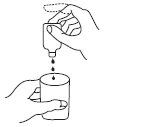
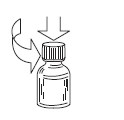
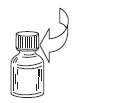
Fig. 1 Fig. 2 Fig. 3
Anxiety, tension, and other anxiety-related disorders
Treatment duration should be as short as possible and generally should not exceed 8–12 weeks, including a period of gradual withdrawal.
In certain cases, your doctor may decide to extend the treatment after re-evaluating your health condition.
Insomnia
Treatment duration should be as short as possible. The usual duration of treatment ranges from a few days to 2 weeks, up to a maximum of 4 weeks, including a period of gradual withdrawal. In certain cases, your doctor may decide to extend the treatment after re-evaluating your health condition. During treatment, your doctor may adjust your dosage: always follow the prescribed dosage carefully.
For the treatment of insomnia, the medicine should be taken just before going to bed.
Use in children
This medicine should be used in children only when absolutely necessary.
Children under 3 years of age: the recommended dose is 1–6 mg (5–30 drops) per day.
Diazepam Zentiva
Children aged 4 to 14 years: the recommended dose is 4–12 mg (20–60 drops) per day.
Use in the elderly
In elderly or debilitated patients, a reduced dose should be administered.
The recommended dose is 2 mg (10 drops) twice daily.
If you take more Diazepam Zentiva than you should
In case of accidental ingestion/overdose, contact your doctor immediately or go to the nearest hospital emergency department.
As with other benzodiazepines, an overdose taken together with other medicines acting on the central nervous system (CNS depressants) or alcohol may be life-threatening.
An overdose may cause marked slowing (depression) of the central nervous system, with symptoms such as drowsiness, confusion, and in more severe cases, muscle problems (ataxia, hypotonia), low blood pressure, breathing difficulties, rarely coma, and very rarely death.
If you forget to take Diazepam Zentiva
If you forget to take a dose, take it as soon as you remember, unless it is almost time for your next dose. Do not take a double dose to make up for the missed dose.
If you stop taking Diazepam Zentiva
Do not stop treatment with Diazepam Zentiva suddenly or without first discussing it with your doctor, as withdrawal symptoms or rebound insomnia and anxiety may occur (see section 2 - Warnings and precautions).
If you have any doubts about how to use this medicine, consult your doctor or pharmacist.
4. Possible side effects
Like all medicines, this medicine can cause side effects, although not everybody gets them.
Always contact your doctor if you experience any of the following side effects.
Contact your doctor immediately if you experience:
-
depression and mental disorders such as restlessness, agitation, irritability, aggression, feelings of despair, anger, nightmares, hallucinations (seeing or hearing things that do not exist), psychosis (a serious mental condition in which a person loses touch with reality and the ability to think and judge clearly), behavioural changes. These reactions are more common in children and elderly patients.
The following side effects mainly occur at the beginning of treatment and usually disappear with continued use: -
drowsiness (during the day), reduced alertness, confusion;
-
reduced emotional responsiveness;
-
headache, dizziness, vertigo;
-
fatigue, muscle weakness, difficulty controlling movements (ataxia), tremors;
-
double vision (diplopia) or blurred vision.
Additionally, you may experience:
- difficulty speaking (dysarthria);
- stomach and intestinal disorders, nausea, constipation, dry mouth, excessive salivation;
- changes in sexual desire;
- skin irritations;
- excessive use of the medicine (abuse) and dependence;
- withdrawal or rebound phenomena (see section 3 - If you stop taking Diazepam Zentiva);
Diazepam Zentiva
- memory loss (amnesia), sometimes associated with behavioural changes (see section 2 - Warnings and precautions);
- falls and resulting fractures. The risk of fractures is higher in elderly patients;
- low blood pressure (hypotension), with reduced heart function (heart failure and circulatory depression) up to cardiac arrest;
- irregular heartbeat;
- involuntary loss of urine (incontinence), difficulty urinating (urinary retention);
- difficulty breathing (respiratory depression, respiratory failure);
- dizziness, tremor, blurred vision.
Very rarely the following may occur:
- abnormal blood tests with increased liver-related values (transaminases and alkaline phosphatase);
- jaundice (yellowing of the skin and whites of the eyes).
Reporting of side effects
If you experience any side effect, including those not listed in this leaflet, contact your doctor or pharmacist.
You can also report side effects directly via the national reporting system at:
www.agenziafarmaco.gov.it/content/come-segnalare-una-sospetta-reazione-avversa.
By reporting side effects, you can help provide more information on the safety of this medicine.
5. How to store Diazepam Zentiva
Keep this medicine out of the sight and reach of children.
Do not use this medicine after the expiry date which is stated on the packaging after “Exp.”.
The expiry date refers to the last day of that month.
The medicine should be used within 3 months of first opening the bottle. Any excess medicine must be discarded.
Do not dispose of any medicine via wastewater or household waste. Ask your pharmacist how to dispose of medicines you no longer use. This will help protect the environment.
6. Package contents and other information
What Diazepam Zentiva contains
The active substance is diazepam. 1 ml (25 drops) of solution contains 5 mg of diazepam.
The other components are: ethanol, glycerol 85%, saccharin, propylene glycol, orange soluble essence, lemon soluble essence, erythrosine (E 127), purified water.
Description of the appearance of Diazepam Zentiva and contents of the pack
Pack containing one 20 ml bottle of solution.
The bottle has a child-resistant closure to protect against tampering by children.
Marketing Authorization Holder
Zentiva Italia S.r.l., Via P. Paleocapa 7, 20121 Milano
Manufacturer
ICE S.p.A., Canton Moretti 29, 10015 San Bernardo d'Ivrea (TO)