Diazepam Eg Stada
Italy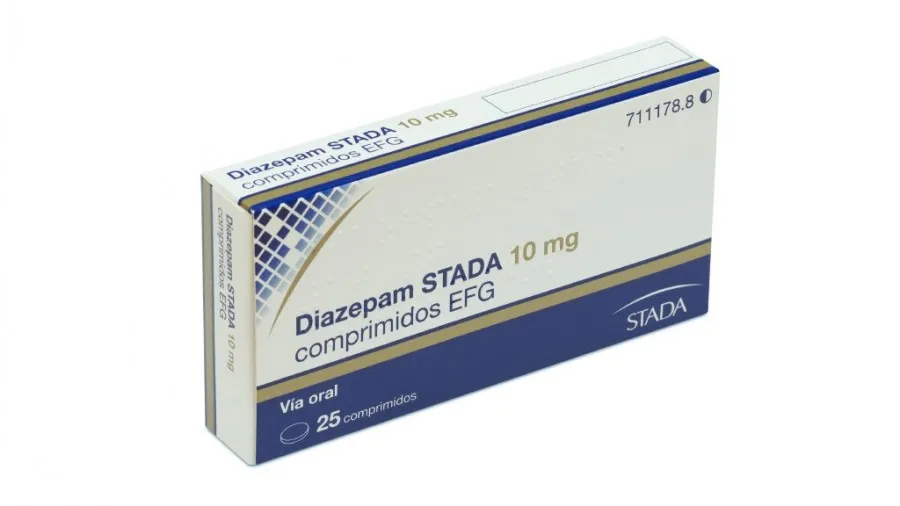
Table of Contents
- Patient Information Leaflet: Information for the User
- Diazepam EG STADA 2 mg tablets, 5 mg tablets, 10 mg tablets
- 1. What Diazepam EG STADA is and what it is used for
- 2. What you need to know before taking Diazepam EG STADA
- 3. How to take Diazepam EG STADA
- 4. Possible side effects
- 5. How to store Diazepam EG STADA
- 6. Package contents and other information
Patient Information Leaflet: Information for the User
Diazepam EG STADA 2 mg tablets, 5 mg tablets, 10 mg tablets
Generic medicine
Please read this leaflet carefully before taking this medicine because it contains
important information for you.
- Keep this leaflet. You may need to read it again.
- If you have any questions, ask your doctor or pharmacist.
- This medicine has been prescribed for you only. Do not give it to others, even if their symptoms are the same as yours, as it could be harmful.
- If you experience any side effects, including those not listed in this leaflet, talk to your doctor or pharmacist. See section 4.
Contents of this leaflet
- What Diazepam EG STADA is and what it is used for
- What you need to know before taking Diazepam EG STADA
- How to take Diazepam EG STADA
- Possible side effects
- How to store Diazepam EG STADA
- Contents of the pack and other information
1. What Diazepam EG STADA is and what it is used for
Diazepam EG STADA contains the active substance diazepam, which belongs to a group of medicines called benzodiazepines.
Diazepam EG STADA is used to treat the following conditions:
In adults:
- anxiety symptoms
- alcohol withdrawal symptoms
In adults and children over 6 years of age:
- muscle spasms or muscle pain caused by inflammation of muscles and joints or trauma, including spasms due to conditions such as cerebral palsy (a group of disorders affecting movement, balance, and posture), paraplegia (paralysis of the lower half of the body, affecting both legs), as well as athetosis (continuous, involuntary, slow movements and unusual sensations in fingers and hands), and stiff-person syndrome.
2. What you need to know before taking Diazepam EG STADA
Do NOT take Diazepam EG STADA if
- you are allergic to diazepam or to any of the other ingredients of this medicine (listed in section 6);
- you suffer from a condition called myasthenia gravis, which causes muscle weakness and fatigue;
- you have acute respiratory problems (slow and/or shallow breathing);
- you suffer from sleep apnoea (a sleep disorder characterized by abnormal pauses in breathing during sleep);
- you have severe liver disease.
Warnings and precautions
Talk to your doctor or pharmacist before taking Diazepam EG STADA if
- you have liver, heart or kidney problems;
- you have a history of alcohol or drug abuse;
- you suffer from muscle weakness;
- you have respiratory problems;
- you have mental health disorders. Benzodiazepines are not recommended as first-line treatment for psychosis (mental conditions). These medicines should not be used to treat depression or anxiety associated with depression, as symptoms may worsen;
- you suffer from epilepsy or have a history of seizures.
Consult your doctor if
- after a few weeks you notice that the tablets are no longer working as well as they did when you started treatment. Tolerance to benzodiazepines may develop;
- you experience side effects or changes in behaviour (see section 4).
There is a risk of developing dependence while taking this medicine.
Children and adolescents
Do not administer this medicine to children under 6 years of age unless advised by and under the close supervision of a specialist (paediatrician, neurologist, psychiatrist, anaesthetist or intensive care physician) who will determine the dose.
Children are more sensitive to the effects of benzodiazepines on the central nervous system, as their bodies are not fully developed and may not metabolize this medicine effectively. For this reason, a higher amount of the active substance may remain in their bodies.
Other medicines and Diazepam EG STADA
Inform your doctor or pharmacist if you are taking, have recently taken or might take any other medicines. Some other medicines may affect the way Diazepam EG STADA works. In particular:
- antidepressants (e.g. fluvoxamine, fluoxetine);
- antipsychotics such as clozapine (for the treatment of mental disorders);
- muscle relaxants (e.g. suxamethonium, tubocurarine);
- barbiturates such as phenobarbital (to treat epilepsy and mental disorders);
- other central nervous system depressants (buprenorphine, narcotic analgesics, opioids and derivatives used to treat cough, baclofen, thalidomide, pizotifen, centrally-acting antihypertensives). Taking these medicines together with diazepam may affect your mental state, cause excessive drowsiness, and suppress breathing and blood pressure;
- disulfiram (to treat alcohol dependence). Taking this medicine with diazepam may cause excessive drowsiness and slow down the elimination of diazepam from the body;
- medicines for epilepsy, e.g. phenytoin and carbamazepine, as they may reduce the effect of diazepam. Diazepam may also influence how phenytoin works;
- theophylline (to treat asthma and other respiratory disorders), as it may weaken the effect of diazepam;
- cimetidine, omeprazole or esomeprazole (medicines that reduce stomach acidity), as they may slow down the elimination of diazepam from the body;
- rifampicin (an antibiotic), as it may accelerate the removal of diazepam from the body. The effect of diazepam may therefore be weakened;
- atazanavir, ritonavir, delavirdine, efavirenz, indinavir, nelfinavir or saquinavir (antivirals), fluconazole, itraconazole, ketoconazole or voriconazole (antifungal medicines), as they may slow down the elimination of diazepam from the body and therefore increase the risk of side effects;
- isoniazid (for the treatment of tuberculosis), as it may slow down the removal of diazepam from the body;
- oral contraceptives, as they may slow down the elimination of diazepam from the body and increase its effect. When diazepam and oral contraceptives are taken together, breakthrough bleeding may occur, but contraceptive protection is not reduced;
- cisapride (used to treat stomach problems), as it may slow down the removal of diazepam from the body;
- corticosteroids (medicines used to treat inflammation in the body), as they may weaken the effect of diazepam;
- levodopa (for the treatment of Parkinson's disease). Diazepam may reduce the effect of levodopa;
- valproic acid (for the treatment of epilepsy and mental disorders), as it may slow down the removal of diazepam from the body and increase its effect. Taking valproic acid with diazepam increases the risk of psychosis (mental conditions);
- ketamine (an anaesthetic), as diazepam enhances the effect of ketamine.
Opioids
Concomitant use of Diazepam EG STADA and opioids (strong painkillers, medicines for substitution therapy, and some cough medicines) increases the risk of drowsiness, breathing difficulties (respiratory depression) and coma, and can be life-threatening. Therefore, concomitant use should only be considered when no other therapeutic options are available.
If your doctor nevertheless prescribes Diazepam EG STADA together with opioids, the dose and duration of concomitant treatment must be limited by the doctor.
Inform your doctor which opioids you are taking and strictly follow their prescription. It may be helpful for friends or family members to be aware of the signs and symptoms listed above. Contact your doctor if any of these symptoms occur.
Use of Diazepam EG STADA with food, drinks and alcohol
Do NOT drink alcohol during treatment with diazepam. Alcohol may enhance the sedative effects of Diazepam EG STADA.
Grapefruit juice may increase the effect of diazepam.
Pregnancy, breastfeeding and fertility
If you are pregnant, suspect you may be pregnant, planning to become pregnant, or are breastfeeding, consult your doctor or pharmacist before taking this medicine.
If you are pregnant, planning a pregnancy, or breastfeeding, you should not take Diazepam EG STADA.
This medicine may have effects on your baby.
Driving and using machines
Talk to your doctor before driving or operating machinery, as Diazepam EG STADA may impair your reaction abilities. These effects are increased by alcohol consumption and lack of sleep.
Diazepam EG STADA contains lactose
If your doctor has diagnosed you with an intolerance to certain sugars, contact them before taking this medicine.
3. How to take Diazepam EG STADA
Take this medicine exactly as directed by your doctor. If you have any doubts, consult your doctor or pharmacist.
Dosage
Your doctor will determine the appropriate dose for you and how long you should take the tablets.
Treatment should normally not exceed 4 weeks. If necessary, your doctor may extend the duration of treatment.
Use in adults
Recommended dose:
- Anxiety symptoms: from 2 mg to 5 mg of diazepam two or three times daily. The dose may be increased up to a maximum of 30 mg per day, divided into 2 or 4 doses.
- Alcohol withdrawal syndrome: from 5 mg to 20 mg of diazepam, repeatable once after 2–4 hours if needed, or 10 mg of diazepam three or four times during the first day of treatment. After the first day, the dose is generally reduced to 5 mg of diazepam three or four times daily, as needed. In more severe cases, your doctor may use alternative dosing regimens and hospitalization may be required.
- Muscle spasms: up to 15 mg of diazepam per day, divided into 2–4 doses.
- Muscle spasms in cerebral spasticity: up to a maximum of 60 mg per day, divided into 3 or 4 doses.
Use in children and adolescents
Children over 6 years of age and adolescents (over 20 kg):
The pediatrician will decide how much Diazepam EG STADA should be administered and how often.
The usual dose is 0.1–0.3 mg/kg body weight per day, divided into 2–4 doses.
Children under 6 years of age:
Administration of Diazepam EG STADA is not recommended in children under 6 years of age due to possible swallowing difficulties. For younger children, more suitable pharmaceutical forms may be available.
Do not administer this medicine to children under 6 years of age unless advised by and under the strict supervision of a specialist (pediatrician, neurologist, psychiatrist, anesthetist, or intensive care physician), who will determine the appropriate dose.
Use in elderly patients
Your doctor will decide how much Diazepam EG STADA should be administered and how often.
The dose will be lower than that usually prescribed for other adults. Treatment should start with the lowest possible dose (from 2 to 2.5 mg, once or twice daily) and be gradually increased if necessary and if tolerated.
Use in patients with renal impairment
Dosage adjustment is not usually required. However, patients with impaired renal function should take diazepam with caution.
The use of benzodiazepines with active metabolites such as diazepam should be avoided in patients with end-stage renal disease.
Use in patients with hepatic impairment
Your doctor will decide how much Diazepam EG STADA should be administered and how often.
The dose will be lower than that usually prescribed for other adults.
Patients with severe liver disorders must not be treated with Diazepam EG STADA (see also “DO NOT take Diazepam EG STADA if”).
Use in overweight patients
If you are overweight, it may take longer for the medicine to take effect. In addition, the effects of Diazepam EG STADA may last longer, including possible adverse effects.
Method of administration
The tablet may be divided into equal parts.
If you take more Diazepam EG STADA than you should
- If you have taken too many tablets (more than prescribed), or think a child may have ingested some, contact the nearest hospital emergency department or inform your doctor or pharmacist immediately.
- Signs of overdose include loss of muscle coordination, severe breathing difficulties (apnea), low blood pressure (hypotension), heart and lung problems (cardiorespiratory depression), and coma (unresponsive unconscious state).
Duration of treatment
Treatment duration should be as short as possible. In general, treatment should not exceed 8–12 weeks.
If you forget to take Diazepam EG STADA
Do not take a double dose to make up for the missed dose. If you forget to take a tablet, take it as soon as you remember. If it is almost time for your next dose, skip the missed dose.
If you stop taking Diazepam EG STADA
- Do not stop treatment without first talking to your doctor. If you stop treatment with Diazepam EG STADA, withdrawal symptoms may occur suddenly, including sleep disturbances, headache, muscle pain, tension, confusion, irritability or aggression, mood changes, and hypersensitivity to light, noise, and physical contact. Less common withdrawal symptoms include seeing or hearing things that are not there (hallucinations) and loss of reality perception (derealization).
- You must gradually reduce the number or dosage of tablets before completely stopping treatment. Your doctor will advise you on how to do this.
If you have any questions about the use of this medicine, consult your doctor or pharmacist.
4. Possible side effects
Like all medicines, this medicine can cause side effects, although not everyone experiences them.
Some side effects can be serious and require immediate medical attention:
Allergic reactions
If you develop an allergic reaction, seek immediate medical advice. The side effects include:
- sudden swelling of the throat, face and lips, which may lead to breathing and swallowing difficulties;
- sudden swelling of hands, feet and ankles, skin rash or itching.
Behavioural effects
Contact your doctor if you experience any of the following side effects:
- aggression, irritability, nervousness, restlessness, anxiety, delusional thoughts, anger;
- difficulty sleeping, nightmares and vivid dreams. Your doctor may ask you to stop treatment.
For possible withdrawal symptoms, see "If you stop taking Diazepam EG STADA" in section 3.
These are likely to be more frequent in children and elderly patients.
Elderly patients
The risk of falls and consequent fractures is higher in elderly patients treated with benzodiazepines.
Other side effects:
The following side effects may occur at the beginning of treatment with Diazepam EG STADA:
- drowsiness, fatigue, dizziness and mild confusion;
- muscle weakness, loss of coordination of muscular movements (ataxia), and other movement disorders. Your doctor may suggest reducing the dose of Diazepam EG STADA and subsequently increasing it slowly.
During treatment, the following side effects may occur:
Psychiatric and nervous system disorders
- difficulty concentrating, reduced alertness, confusion and disorientation, restlessness;
- memory loss;
- headache;
- depression;
- difficulty speaking;
- loss of coordination, including unsteadiness when walking;
- altered sexual desire (libido).
Effects on liver and blood (very rare)
- changes in blood test results showing abnormal levels of certain liver enzymes;
- yellowing of the skin and eyes (jaundice);
- blood disorders. Signs may include fatigue, easy bruising, shortness of breath and nosebleeds. Your doctor may occasionally prescribe blood tests.
Effects on heart, circulation and blood vessels
- heart problems such as slow heartbeat (bradycardia), heart failure and cessation of heartbeat (cardiac arrest);
- low blood pressure (hypotension). Dizziness or mild confusion may occur when standing;
- circulatory problems (circulatory depression).
Effects on stomach and intestines (sporadic)
- nausea;
- constipation;
- stomach pain;
- dry mouth and increased salivation.
Effects on lungs and kidneys
- respiratory depression;
- inability to urinate (urinary retention), loss of bladder control (urinary incontinence).
Effects on eyes, skin and hair
- double vision;
- blurred vision;
- dizziness with symptoms such as dizziness or spinning sensation;
- the most common reactions are skin rash, hives, itching and erythematous rash.
If any of the side effects worsens, or if you notice any side effect not listed in this leaflet, inform your doctor or pharmacist.
Reporting of side effects
If you experience any side effect, including those not listed in this leaflet, talk to your doctor or pharmacist. You can also report side effects directly via the national reporting system at https://www.aifa.gov.it/content/segnalazioni-reazioni-avverse.
By reporting side effects, you can help provide more information on the safety of this medicine.
5. How to store Diazepam EG STADA
Keep this medicine out of the sight and reach of children.
Do not use this medicine after the expiry date stated on the label after the word "Exp".
The expiry date refers to the last day of that month.
This medicine does not require any special storage conditions.
Do not dispose of medicines via wastewater or household waste. Ask your pharmacist how to
dispose of medicines you no longer use. This will help protect the environment.
6. Package contents and other information
What Diazepam EG STADA contains
- The active substance is diazepam. Each tablet contains 2 mg of diazepam. Each tablet contains 5 mg of diazepam. Each tablet contains 10 mg of diazepam.
- The other components are monohydrate lactose, pregelatinized maize starch, and magnesium stearate.
Description of the appearance of Diazepam EG STADA and contents of the pack
Tablets varying in colour from white to off-white, flat, round (8.0 mm diameter), with "2"
imprinted on one side and a break line on the other side.
Tablets varying in colour from white to off-white, flat, round (8.0 mm diameter), with "5"
imprinted on one side and a break line on the other side.
Tablets varying in colour from white to off-white, flat, round (8.0 mm diameter), with "10"
imprinted on one side and a break line on the other side.
The tablet can be divided into equal parts.
Diazepam EG STADA is packaged in Al/PVC blisters. The blisters, together with the leaflet,
are placed in a carton with printed label text.
Diazepam EG STADA is packaged in Al/PVC blisters or in white HDPE bottles with PE screw caps. The blisters, together with the leaflet, are placed in a carton with printed label text. The bottles are alternatively supplied with a carton label or, together with the leaflet, placed in a carton with printed label text.
Diazepam EG STADA is packaged in Al/PVC blisters or in white HDPE bottles with PE screw caps. The blisters, together with the leaflet, are placed in a carton with printed label text. The bottles are alternatively supplied with a carton label or, together with the leaflet, placed in a carton with printed label text.
Pack sizes:
20, 20x1, 25, 25x1, 30, 30x1, 50, 50x1, 60, 60x1, 90, 90x1, 100 and 100x1 tablets in blisters.
20, 20x1, 25, 25x1, 30, 30x1, 50, 50x1, 60, 60x1, 90, 90x1, 100 and 100x1 tablets in blisters or 20
tablets in bottles.
20, 20x1, 25, 25x1, 30, 30x1, 50, 50x1, 60, 60x1, 90, 90x1, 100 and 100x1 tablets in blisters or 20
tablets in bottles.
Not all pack sizes may be marketed.
Marketing Authorization Holder
EG S.p.A., via Pavia 6 - 20136 Milan, Italy
Manufacturers
S.C. Santa S.A., Carpatilor Street no. 60 Objective no. 47, 48, 58, 133 Brasov 500269 - Romania
Stada Arzneimittel AG, Stadastrasse 2-18, Bad Vilbel 61118 - Germany
This medicinal product is authorized in the European Economic Area countries under the following names:
NL Diazepam STADA 2 mg tabletten
Diazepam STADA 5 mg tabletten
Diazepam STADA 10 mg tabletten
BE Diazepam Eurogenerics 2 mg tabletten
Diazepam Eurogenerics 5 mg tabletten
Diazepam Eurogenerics 10 mg tabletten
CZ Diazepam STADA
IT Diazepam EG STADA
LU Diazepam Eurogenerics 2 mg comprimés
Diazepam Eurogenerics 5 mg comprimés
Diazepam Eurogenerics 10 mg comprimés
PL Diazepam STADA