Diane
Italy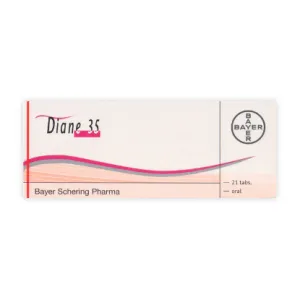
Table of Contents

Package leaflet: Information for the user
Diane 2 mg + 0.035 mg coated tablets
cyproterone acetate + ethinylestradiol
Please read this leaflet carefully before using this medicine because it contains
important information for you.
- Keep this leaflet. You may need to read it again.
- If you have any questions, ask your doctor or pharmacist.
- This medicine has been prescribed for you only. Do not give it to others, even if their symptoms are the same as yours, because it could be harmful. If you experience any adverse reaction, including those not listed in this leaflet, contact your doctor or pharmacist. See section 4.
The use of Diane is restricted to cases where treatment of the androgen-dependent conditions described in the indications is required. Although, due to its composition, Diane also has a contraceptive effect, it should not be used for this purpose.
Therefore, after complete resolution of the conditions for which the medicine was prescribed, continued use of Diane solely for contraceptive purposes is not recommended.
This patient information leaflet contains all the information concerning combined oral contraceptives.
Patients being treated with Diane must not use other hormonal contraceptives, as this would expose the patient to excessive hormone doses without any need for effective contraceptive protection.
Contents of this leaflet
- What Diane is and what it is used for
- What you need to know before taking Diane
- How to take Diane
- Possible side effects
- How to store Diane
- Contents of the pack and other information
1. What Diane is and what it is used for
Diane is used for the treatment of skin disorders such as acne, very oily skin, and excessive hair growth in women of childbearing age. Due to its contraceptive properties, the medicine should only be prescribed if the physician considers appropriate the treatment with a hormonal contraceptive (oral contraceptive pill).
You should take Diane only if your skin condition has not improved with other acne treatments, including topical therapies and antibiotics.
Although Diane also has contraceptive effect, it must not be prescribed for this purpose;
its use should instead be reserved for cases where treatment of the above-mentioned
androgen-dependent disorders is required.
It is recommended to discontinue treatment three to four cycles after complete resolution
of the conditions for which the medicine was prescribed, and that Diane not be further
used solely for contraceptive purposes.
Additional treatment cycles with Diane may be administered if the androgen-dependent
pathological conditions should recur.

2. What you should know before using Diane
General information
Diane contains the progestogen cyproterone acetate and the oestrogen ethinylestradiol, and is administered for twenty-one days in monthly cycles. Therefore, it is essentially similar to a combined oral contraceptive.
This patient leaflet describes certain situations in which you must stop taking the medicine or in which a reduction in the effectiveness of the medicine may occur. In such situations, the contraceptive effect is also lost; consequently, if you wish to avoid pregnancy, you must abstain from sexual intercourse or use additional non-hormonal contraceptive precautions such as the use of a condom or other barrier method.
Do not use rhythm or basal body temperature methods, which may be unreliable, since oestrogen-progestogen combinations such as Diane alter the normal variations in body temperature and cervical mucus that occur during the menstrual cycle.
Before starting or restarting Diane, a thorough medical examination is recommended. Furthermore, periodic check-ups during use of the medicine are advisable. The frequency and type of examination will be determined by your doctor and will particularly include monitoring of blood pressure, breast and abdominal examination, gynaecological examination, including a Pap test and appropriate blood tests.
Like all oral contraceptives, Diane does not protect against infection with HIV (AIDS) or any other sexually transmitted disease.
Diane is prescribed for personal use and must not be shared by more than one person at the same time.
Do not use Diane
Inform your doctor before starting to use Diane if any of the following conditions apply to you. In such cases, your doctor may prescribe a different treatment:
- if you are using another hormonal contraceptive;
- if you have (or have had in the past) a blood clot in a leg (thrombosis), in the lungs (pulmonary embolism), or in another part of the body;
- if you have (or have had in the past) a disease that may indicate a future risk of heart attack (e.g. angina pectoris, which causes severe chest pain) or a "mini-stroke" (transient ischaemic attack);
- if you have (or have had in the past) a heart attack or stroke;
- if you have a disease that may increase the risk of forming a blood clot in the arteries. This occurs in the following conditions: o diabetes with blood vessel involvement, o very high blood pressure, or very high levels of fats (lipids) in the blood (cholesterol or triglycerides);
- if you have problems with blood clotting (e.g. Protein C deficiency);
- if you have (or have had in the past) migraine with visual disturbances;
- if you are allergic to cyproterone acetate, ethinylestradiol, or any of the other components of this medicine (listed in section 6);
- if you suffer from cardiovascular disorders: coronary heart disease, valvular heart disease, arrhythmias that may lead to thrombus formation;
- if you suffer from sickle cell anaemia (an inherited red blood cell disorder);
- if you have or have had jaundice (yellowing of the skin) or severe liver disease;
- if you have or have had breast or genital organ cancer;
- if you have or have had benign or malignant liver tumours;
- if you have vaginal bleeding of unknown origin;

- if you are or suspect you may be pregnant;
- if you are breastfeeding (see "Pregnancy and breastfeeding");
- if you have suffered from Herpes gestationis (an autoimmune skin disease affecting women during or immediately after pregnancy);
- if you experienced hearing loss due to otosclerosis during a pregnancy;
- if you are a young woman with an unstable menstrual cycle;
- if you have eye problems of vascular origin;
- if you have meningioma or have previously been diagnosed with meningioma (a generally benign tumour of the tissue layer between the brain and skull).
If any of these conditions occurs for the first time while using the medicine, stop taking it immediately and consult your doctor.
Diane must not be used in men.
Do not use Diane if you have hepatitis C and are taking medicines containing ombitasvir/paritaprevir/ritonavir, dasabuvir, glecaprevir/pibrentasvir, or sofosbuvir/velpatasvir/voxilaprevir (see also section “Other medicines and Diane”).
Warnings and precautions
Talk to your doctor or pharmacist before using Diane.
The effectiveness of Diane may be reduced if you forget to take tablets, or if you experience vomiting and/or diarrhoea (see “How to use Diane”), or if you take other medicines at the same time (see “Other medicines and Diane”).
When to contact your doctor
Stop taking the tablets and contact your doctor immediately if you notice possible signs of a blood clot. Symptoms are described in section 2 “Blood clots (thrombosis)”.
Reasons requiring immediate discontinuation of treatment with Diane:
- new onset or worsening of migraines, or increased frequency of unusually severe headaches;
- sudden disturbances in vision or hearing, or other sensory disturbances;
- first symptoms of thrombophlebitis or thromboembolic symptoms (formation of blood clots in blood vessels) (e.g. unusual pain or swelling in the legs, sharp pain during breathing or unexplained cough). Sensation of pain and tightness in the chest;
- six weeks before undergoing major surgery (e.g. abdominal, orthopaedic), including surgery on the lower limbs and sclerotherapy of varicose veins, and throughout any period of immobilisation, such as after accidents or surgical procedures. Treatment with Diane may be resumed two weeks after full recovery of mobility. In case of emergency surgery, preventive antithrombotic treatment (e.g. subcutaneous administration of heparin) should be considered;
- onset of jaundice (yellowish discoloration of the skin, mucous membranes, and whites of the eyes), hepatitis, or generalized pruritus;
- increased frequency of epileptic seizures;
- marked increase in blood pressure;
- onset of severe depression;
- severe pain in the upper abdomen or liver enlargement;

- worsening of conditions known to deteriorate during use of oral contraceptives or during pregnancy;
- pregnancy is a reason for immediate discontinuation of treatment, as a slight increase in the risk of fetal malformations cannot be excluded.
If any of the following conditions apply, use of Diane may require close monitoring by your doctor. You must therefore inform your doctor if you have any of the following conditions before starting Diane:
- smoking;
- diabetes;
- overweight;
- hypertension (high blood pressure);
- heart valve disorders or certain cardiac arrhythmias;
- superficial phlebitis (vein inflammation);
- varicose veins;
- history of thrombosis, heart attack, or stroke (even among close relatives);
- migraine (one-sided headache);
- depression;
- epilepsy;
- history of elevated cholesterol and triglyceride (fat) levels in the blood (even among close relatives);
- breast nodules;
- family history (including close relatives) of breast cancer;
- liver or gallbladder disease;
- if you have Crohn’s disease or ulcerative colitis (chronic inflammatory bowel disease);
- if you have systemic lupus erythematosus (SLE, a disease affecting the skin throughout the body);
- if you have haemolytic-uraemic syndrome (HUS, a blood clotting disorder causing kidney failure);
- if you have sickle cell anaemia (an inherited red blood cell disorder);
- porphyria (a metabolic blood disorder);
- if you have or have had chloasma (brownish-yellow pigmented patches on the skin, especially on the face). In this case, avoid prolonged exposure to sunlight or ultraviolet rays;
- if you suffer from fluid retention;
- if you have reduced folate levels;
- if you have suffered from Herpes gestationis (an autoimmune skin disease affecting women during or immediately after pregnancy);
- certain medical conditions associated with resistance to activated Protein C, hyperhomocysteinaemia, antithrombin III deficiency, protein C deficiency, protein S deficiency, antiphospholipid antibodies (anticardiolipin antibodies, lupus anticoagulant), which predispose to venous or arterial thrombosis;
- Sydenham’s chorea (a central nervous system disorder);
- hearing loss due to otosclerosis;
- if you experience symptoms of angioedema such as swelling of the face, tongue and/or throat and/or difficulty swallowing, or urticaria with possible breathing difficulties, contact your doctor immediately. Medicines containing oestrogens may induce or worsen symptoms of hereditary or acquired angioedema.
If any of the above conditions appears for the first time, recurs, or worsens during use of Diane, consult your doctor.

Do not take preparations containing St. John’s wort (Hypericum perforatum) because the effectiveness of medicines containing oral contraceptives may be reduced (see “Other medicines and Diane”).
The use of Diane may affect the results of certain blood tests. Inform the doctor who ordered the tests that you are taking this medicine.
Psychiatric disorders
Some women using hormonal contraceptives, including Diane, have reported depression or low mood. Depression can be severe and may sometimes lead to suicidal thoughts. If you experience mood changes or depressive symptoms, consult your doctor as soon as possible for further medical advice.
Diane is also an oral contraceptive. Together with your doctor, you should consider all aspects related to the safe use of oral hormonal contraceptives.
Blood clots (thrombosis)
Taking Diane may slightly increase the risk of developing a blood clot (thrombosis). The likelihood of forming a blood clot is only slightly higher in women taking Diane compared to women not taking Diane or any other oral contraceptive. Thrombosis does not always resolve completely, and in 1–2% of cases it may be fatal.
Blood clots in a vein
A blood clot in a vein (venous thrombosis) can block the vein. This may occur in the veins of the legs, lungs (pulmonary embolism), or any other organ.
Taking a combined oral contraceptive increases the risk of developing a blood clot compared to women who do not take any combined oral contraceptive. The risk of developing a venous blood clot is highest during the first year of taking the pill. This risk is lower than the risk of developing a clot during pregnancy.
In users of a combined oral contraceptive, the risk of developing a venous blood clot increases further:
- with increasing age;
- if you smoke. It is strongly recommended that you stop smoking if you use a hormonal contraceptive such as Diane, especially if you are over 35 years old;
- if a close relative had a blood clot in the legs, lungs, or elsewhere at a young age;
- if you are overweight;
- if you are undergoing surgery, need to remain bedridden due to illness or injury, or have a leg in a cast.
In these cases, it is important that you inform your doctor that you are using Diane so that treatment can be interrupted. Your doctor may advise you to stop using Diane several weeks before surgery or during periods of reduced mobility. Your doctor will also advise you when you can resume taking Diane once you are mobile again.
Blood clots in an artery
A clot in an artery can cause serious problems. For example, a clot in an artery of the heart can cause a heart attack, while in the brain it can cause a stroke.
The use of a combined oral contraceptive has been associated with an increased risk of arterial clots. The risk increases further:
- with increasing age;

- if you smoke. It is strongly recommended that you stop smoking if you use a hormonal contraceptive such as Diane, especially if you are over 35 years old;
- if you are overweight;
- if you have high blood pressure;
- if a close relative had a heart attack or stroke at a young age;
- if you have high levels of fats (lipids) in the blood (cholesterol or triglycerides);
- if you suffer from migraine;
- if you have a heart condition (heart valve disease, arrhythmias).
Arterial thromboembolic events can be life-threatening or fatal.
Symptoms of blood clots
Stop taking the tablets and contact your doctor immediately if you notice possible signs of a blood clot, such as:
- sudden, unexplained cough;
- severe chest pain, possibly radiating to the left arm;
- shortness of breath;
- any unusual, severe, or persistent headache, or worsening of migraine;
- partial or complete blindness, or double vision;
- difficulty or inability to speak;
- sudden changes in hearing, smell, or taste;
- dizziness or fainting;
- weakness or numbness in any part of the body;
- severe abdominal pain;
- severe pain or swelling in one leg.
After a blood clot has formed, recovery is not always complete. Severe and permanent disabilities may rarely occur, and the clot may even be fatal.
Immediately after childbirth, the risk of blood clots is increased; therefore, you must ask your doctor how long you should wait after delivery before starting Diane.
If you have a combination of risk factors or a more severe manifestation of a single risk factor, your potential risk of thrombosis may be greater than the simple cumulative risk of the individual factors.
Diane must not be prescribed if the risk/benefit assessment is negative (see “Do not use Diane”).
Tumours
Breast cancer diagnoses are slightly more frequent in women using an oral oestrogen-progestogen combination compared to women of the same age who do not use such combinations. The slight increase in breast cancer diagnoses gradually disappears within ten years after stopping treatment. It is not known whether this difference is due to the oral oestrogen-progestogen combination.
This increase could be due to earlier diagnosis (as women are examined more frequently), the biological effect of the oral oestrogen-progestogen combination, or both factors. Breast cancer diagnosed in women using an oral oestrogen-progestogen combination tends to be less advanced clinically than in women who do not use it.

Benign liver tumours have been reported rarely in women using oral oestrogen-progestogen combinations, and malignant liver tumours even more rarely. These tumours may cause internal bleeding. Consult your doctor immediately if you experience severe abdominal pain. Such tumours can be life-threatening or fatal.
An increased incidence of cervical cancer (cervix) has been reported in women using oral oestrogen-progestogen combinations for long periods. This may not depend on the oestrogen-progestogen combination but on sexual behaviour and other factors implicated in the development of tumours in general.
With high doses (equal to or greater than 25 mg) of cyproterone acetate, an increased risk of a benign brain tumour (meningioma) has been reported. If you have been diagnosed with meningioma, your doctor will discontinue treatment with all medicines containing cyproterone, including Diane, as a precautionary measure (see section “Do not take Diane”).
Periodic checks
While using Diane, your doctor will ask you to attend periodic check-up visits.
Consult your doctor as soon as possible:
if you notice any change in your health status, particularly related to what is described in this leaflet (see also “Do not use Diane” and “Warnings and precautions”. Do not forget references to close family members);
if you feel a lump in your breast;
if you need to take other medicines (see also “Other medicines and Diane”);
if you are immobilised or need to undergo surgery (consult your doctor at least four weeks in advance);
if you have heavy and unusual vaginal bleeding;
if you missed tablets in the first week of use and had sexual intercourse in the seven days before the missed dose;
if you miss two consecutive periods or suspect pregnancy, do not start a new pack without your doctor’s approval.
Children and adolescents
Diane is indicated only after menarche (the onset of the first menstrual period).
Elderly women
Diane is not indicated after menopause (cessation of menstruation).
Women with impaired liver function
Do not use Diane in case of severe liver disease. See also section “Warnings and precautions”.
Women with impaired kidney function
Inform your doctor if you have kidney problems.
Other medicines and Diane
Always inform your doctor if you are taking medicines or herbal products. Inform any other doctor or dentist who prescribes another medicine (or the pharmacist) that you are taking Diane. They may advise you whether you need to use additional contraceptive measures (e.g. condoms) and, if so, for how long, or whether the use of another medicine you may need should be adjusted.

Some medicines:
- affect the levels of Diane in the blood and
- may make it less effective in preventing pregnancy, or
- may cause unexpected bleeding. These include:
- medicines for the treatment of: o epilepsy (e.g. primidone, phenytoin, barbiturates, carbamazepine, oxcarbazepine) o tuberculosis (e.g. rifampicin) o HIV infection and hepatitis C virus (ritonavir, nevirapine, efavirenz, known as protease inhibitors and non-nucleoside reverse transcriptase inhibitors) o fungal infections (e.g. griseofulvin, ketoconazole) o arthritis, osteoarthritis (etoricoxib) o high blood pressure in the pulmonary arteries (bosentan)
- St. John’s wort, a herbal remedy
Diane may affect the action of other medicines, for example:
- medicines containing ciclosporin
- the antiepileptic lamotrigine (this may lead to an increased frequency of epileptic seizures)
- theophylline (used to treat respiratory problems)
- tizanidine (used to treat muscle pain and/or muscle cramps)
Do not use Diane if you have hepatitis C and are taking medicines containing ombitasvir/paritaprevir/ritonavir, dasabuvir, glecaprevir/pibrentasvir, or sofosbuvir/velpatasvir/voxilaprevir, as these products may cause increases in liver function blood test results (elevated liver enzyme ALT). Your doctor will prescribe another type of contraceptive before starting treatment with these medicines. Diane may be resumed approximately 2 weeks after completion of this treatment. See section “Do not use Diane”.
Pregnancy and breastfeeding
If you are pregnant, suspect you may be pregnant, plan to become pregnant, or are breastfeeding, consult your doctor or pharmacist before using this medicine.
Do not use Diane during confirmed or suspected pregnancy.
Diane is not recommended during breastfeeding.
Driving and using machines
No effects on the ability to drive or use machines have been observed.
Diane contains lactose and sucrose
If your doctor has diagnosed you with an intolerance to certain sugars, contact him/her before taking this medicine.
3. How to use Diane

Take this medicine exactly as directed by your doctor or pharmacist.
If you have any doubts, consult your doctor or pharmacist.
Since Diane has a composition similar to that of combined oral contraceptives, it inhibits ovulation and therefore prevents conception. For this reason, you should not use other hormonal contraceptives, as this would expose you to excessive hormone doses without any need for effective contraceptive protection. For the same reason, if you wish to become pregnant, you must not take Diane.
Diane should be taken regularly, as irregular intake may lead to intermenstrual bleeding and a loss of contraceptive effectiveness.
The tablets must be taken with a little liquid every day at approximately the same time, following the order indicated on the packaging.
Starting the first pack
Begin taking Diane on the first day of your menstrual cycle, taking the tablet marked with the corresponding day of the week; for example, a tablet marked "Friday" if your period starts on Friday. Then follow the days in order, taking one tablet daily at the same time, without chewing, preferably in the evening, until the pack is finished. The pack contains twenty-one tablets.
Subsequent treatment cycles
After finishing the twenty-one tablets, stop taking the tablets for seven days, during which withdrawal bleeding (menstruation) should begin. Resume treatment on the eighth day, even if bleeding continues. Thus, the new pack will start on the same day of the week as the previous one.
Duration of use
Your doctor will tell you how long you should take Diane.
The duration of treatment depends on the severity of your condition; normally, treatment should continue for many months.
If symptoms recur weeks or months after stopping treatment, consult your doctor, who may recommend restarting treatment with Diane. When restarting treatment with Diane (after a pill-free interval of 4 weeks or more), you should consider an increased risk of venous thromboembolism (see also "Warnings and precautions").
Special situations
Switching from another oral contraceptive to Diane
Start taking Diane on the first day of the menstrual bleeding that occurs after the last active tablet of the previous oral contraceptive, then follow the instructions above.
Taking Diane after childbirth or after an abortion
Normally, after childbirth or an abortion, Diane should only be prescribed after completion of the first normal menstrual cycle.
However, if a reliable and immediate contraceptive effect is medically required, treatment with Diane may be started within the twelfth day (but not earlier than the seventh day) after childbirth, or no later than the fifth day after an abortion.
When combined estrogen-progestogen oral preparations are administered in the period immediately following childbirth or abortion, the increased risk of thromboembolic disease must be carefully considered.
If you are breastfeeding and wish to take Diane, speak to your doctor first.
Absence of withdrawal bleeding (menstruation)
In rare cases, if withdrawal bleeding does not occur, the possibility of an existing pregnancy must be ruled out before continuing Diane. Pregnancy would require immediate discontinuation of treatment.

Management of irregular bleeding
Occasionally, slight bleeding (spotting) or intermenstrual bleeding may occur, particularly during the first three months of use; this usually stops spontaneously. Continue taking Diane even if irregular bleeding occurs. If bleeding persists or recurs, medical evaluation is recommended to rule out organic causes and the possible need for curettage.
This also applies to slight bleeding that recurs at irregular intervals over several consecutive cycles or occurs for the first time after prolonged use of Diane.
In case of vomiting or diarrhea
If vomiting or diarrhea occurs within 3 to 4 hours after taking the tablet, the active ingredients may not be adequately absorbed. Continue taking your daily tablets as usual, but use additional contraceptive measures for the remainder of the cycle to prevent pregnancy, which would necessitate immediate discontinuation of treatment.
If you take more medicine than you should
There are no reports of serious adverse effects following the ingestion of multiple tablets at once. In such cases, nausea, vomiting, or vaginal bleeding may occur. Even girls who have not yet had their first period but have accidentally taken this medicine may experience such bleeding.
In case of accidental ingestion/overdose of Diane, contact your doctor immediately or go to the nearest hospital.
If you forget to take Diane
If you forget to take a Diane tablet at the usual time, take it within the following twelve hours. If more than thirty-six hours have passed since the last tablet was taken, the contraceptive protection of Diane is no longer guaranteed. In this case, discard the missed tablet and continue taking your tablets at the usual time, but use additional contraceptive precautions for the remainder of the cycle to prevent pregnancy, which would require immediate discontinuation of treatment.
If you have any doubts about the use of this medicine, consult your doctor or pharmacist.
4. Possible side effects
Like all medicines, this medicine can cause side effects, although not everyone gets them.
If you experience any side effect, especially if it is severe and persistent, or if you notice any change in your health that you think may be due to Diane, inform your doctor.
Women taking combined hormonal contraceptives have an increased risk of developing blood clots in the veins (venous thromboembolism (VTE)) or blood clots in the arteries (arterial thromboembolism (ATE)). For more detailed information on the different risks associated with taking combined hormonal contraceptives, see section 2 “What you should know before using Diane”.
The following is a list of side effects that have been associated with the use of Diane:
Common side effects: may affect up to 1 in 10 people
nausea, abdominal pain,
change in body weight (weight increased)

headache
mood changes
breast tenderness
Uncommon side effects: may affect up to 1 in 100 people
vomiting, diarrhoea,
fluid retention
mammory gland hyperplasia (breast enlargement which may cause breast tension)
skin reactions, urticaria
migraine (one-sided headache)
decreased sexual desire
Rare side effects: may affect up to 1 in 1,000 people
intolerance to contact lenses
hypersensitivity reactions (allergy)
change in body weight (weight decreased)
increased sexual desire
vaginal discharge
breast discharge
nodular erythema, multiform or polymorphic erythema
thromboembolism
Side effects with unknown frequency: frequency cannot be estimated from the available data
increase in blood pressure
exacerbation of symptoms of hereditary and acquired angioedema
Serious side effects
The following serious side effects associated with combined oestrogen-progestogen use, and their related symptoms, are described in the section “Warnings and precautions”: “Blood clots (Thrombosis)” and “Tumours”:
- hypertension
- hypertriglyceridaemia
- diabetes
- liver tumours (benign and malignant)
- liver problems
- chloasma
- jaundice and/or cholestatic pruritus, porphyria, systemic lupus erythematosus, haemolytic-uraemic syndrome, Sydenham's chorea, Herpes gestationis, hearing loss due to otosclerosis, Crohn's disease, ulcerative colitis, cervical cancer.
For further information, please read these sections and consult your doctor immediately.
Contact your doctor immediately if you experience any of the following symptoms of angioedema: swelling of the face, tongue and/or throat and/or difficulty swallowing, or urticaria with possible breathing difficulties (see also the section “Warnings and precautions”).
If you suffer from hereditary angioedema, medicines containing certain female sex hormones (oestrogens) may trigger or worsen angioedema symptoms (see the section “Warnings and precautions”).
Reporting of side effects

If you experience any side effect, including those not listed in this leaflet, talk to your doctor or pharmacist. You can also report side effects directly via the national reporting system at
https://www.aifa.gov.it/content/segnalazioni-reazioni-avverse . By reporting side effects, you can help provide more information on the safety of this medicine.
5. How to store Diane
Keep this medicine out of the sight and reach of children.
Do not use this medicine after the expiry date stated on the blister and carton after "Exp.". The expiry date refers to the last day of that month. The date refers to the product in its original, undamaged packaging, correctly stored.
Do not use the medicine if you notice any change in colour or crumbling of the tablet, or if there are any other visible signs of deterioration.
Do not dispose of any medicine via wastewater or household waste. Ask your pharmacist how to dispose of medicines you no longer use. This will help protect the environment.
6. Package Contents and Other Information
What Diane Contains
- The active substances are: cyproterone acetate and ethinylestradiol. Each coated tablet contains 2.0 mg of cyproterone acetate and 0.035 mg of ethinylestradiol.
- The other components are: lactose, maize starch, povidone 25,000, talc, magnesium stearate, sucrose, povidone 700,000, macrogol 6,000, calcium carbonate, glycerol 85%, ethylene glycol ester of montanic acid, titanium dioxide, yellow iron oxide.
Description of the Appearance of Diane and Contents of the Package
Blister pack containing 21 coated tablets.
Marketing Authorization Holder
Bayer S.p.A. - Viale Certosa, 130 - 20156 Milan (MI), Italy
Manufacturer
Bayer AG, Muellerstrasse 170-178, D-13353, Berlin (Germany)
Bayer Weimar GmbH und Co. KG, Weimar Doebereinerstr. 20, 99427 Weimar (Germany)