Dermomycin
Italy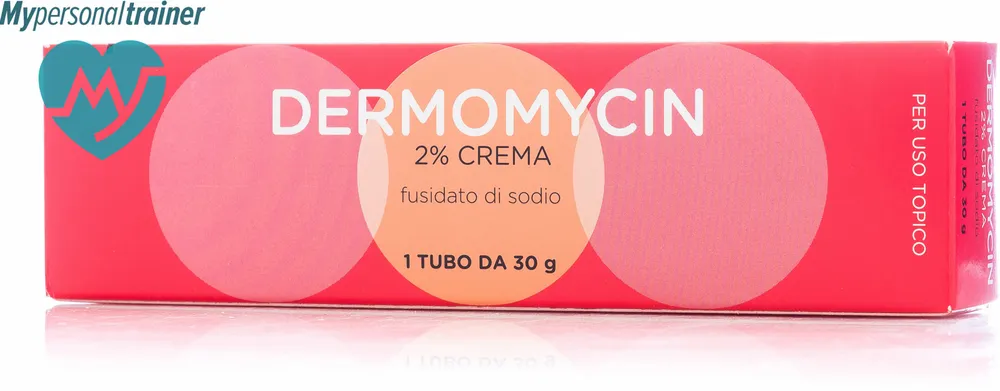
Table of Contents
- Package leaflet: Information for the patient
- Dermomycin 20 mg/g cream
- 1. What Dermomycin is and what it is used for
- 2. What you need to know before using Dermomycin
- 3. How to use Dermomycin
- 4. Possible side effects
- 5. How to store Dermomycin
- 6. Package contents and other information
- Package leaflet: information for the patient
- Dermomycin 250 mg hard capsules
- 1. What Dermomycin is and what it is used for
- 2. What you should know before taking Dermomycin
- 3. How to take Dermomycin
- 4. Possible adverse reactions
- 5. How to store Dermomycin
- 6. Package contents and other information
Package leaflet: Information for the patient
Dermomycin 20 mg/g cream
sodium fusidate
Please read this leaflet carefully before using this medicine because it contains important information for you.
- Keep this leaflet. You may need to read it again.
- If you have any questions, consult your doctor or pharmacist.
- This medicine has been prescribed for you only. Do not give it to other people, even if their symptoms are the same as yours, because it could be harmful.
- If you experience any side effect, including those not listed in this leaflet, consult your doctor or pharmacist. See section 4.
Contents of this leaflet:
- What Dermomycin is and what it is used for
- What you need to know before using Dermomycin
- How to use Dermomycin
- Possible side effects
- How to store Dermomycin
- Contents of the pack and other information
1. What Dermomycin is and what it is used for
Dermomycin contains the active substance sodium fusidate, an antibiotic that works by killing the
microorganisms that cause infections. It is particularly effective against gram-positive cocci bacteria,
including staphylococci, pneumococci and streptococci.
Dermomycin is indicated for the treatment of skin inflammations caused by the bacterium
Staphylococcus, particularly:
- Impetigo, a superficial skin infection characterized by blisters and pustules
- Boils
- Folliculitis, inflammation of the hair follicle, i.e. the skin structure from which hair grows
- Abscesses
- Hidradenitis suppurativa, a painful inflammation of a type of sweat glands (apocrine glands), characterized by red-violet nodules resembling boils
- Sycosis barbae, a chronic inflammation of the hair follicle, i.e. the skin structure from which facial hair grows
- Infected wounds and skin abrasions
2. What you need to know before using Dermomycin
Do not use Dermomycin
- if you are allergic to sodium fusidate or to any of the other ingredients of this medicine (listed in section 6)
- if you have a skin condition called rosacea.
Warnings and precautions
Talk to your doctor or pharmacist before using Dermomycin.
- Although systemic absorption of fusidic acid when applied topically to the skin is minimal, caution is required if you have severe liver problems.
During treatment with Dermomycin:
- Take particular care to avoid contact of Dermomycin with the eyes
- Inform your doctor if you notice the development of other infections, as additional infections caused by bacteria or fungi may occur during antibiotic treatment. In such cases, your doctor will prescribe appropriate therapy to treat these infections.
- The use of topical products such as Dermomycin cream, especially when prolonged, may cause allergic reactions and irritation. If this occurs, stop treatment and contact your doctor, who will prescribe suitable therapy.
Children
If the patient is in the earliest infancy, Dermomycin will be prescribed only when clearly necessary and under direct medical supervision.
Other medicines and Dermomycin
Inform your doctor or pharmacist if you are currently using, have recently used, or might use any other medicines.
Pregnancy, breastfeeding and fertility
If you are pregnant, suspect you may be pregnant, planning to become pregnant, or are breastfeeding, consult your doctor or pharmacist before using this medicine.
Pregnancy
There is insufficient information on the use of Dermomycin during pregnancy.
If you are pregnant, Dermomycin will be prescribed only when clearly necessary and under direct medical supervision.
Breastfeeding
There are no data on the excretion of fusidic acid in breast milk. If you are breastfeeding, Dermomycin will be prescribed only when clearly necessary. Do not apply DERMOMYCIN cream to the breast during breastfeeding.
Fertility
There are no data on the effects of Dermomycin cream on fertility.
Driving and using machines
No effects on the ability to drive or operate machinery are known.
Dermomycin contains butylated hydroxyanisole and cetyl alcohol
Dermomycin contains butylated hydroxyanisole, which may cause localized skin reactions (e.g. contact dermatitis) or irritation to the eyes and mucous membranes.
Dermomycin contains cetyl alcohol, which may cause localized skin reactions (e.g. contact dermatitis).
3. How to use Dermomycin
Use this medicine exactly as directed by your doctor or pharmacist. If
you have any doubts, consult your doctor or pharmacist.
Apply Dermomycin 2-3 times a day to the infected area.
If you use more Dermomycin than you should
In case of accidental ingestion or excessive use of Dermomycin, inform your doctor immediately or go to the nearest hospital.
To date, there have been no reported cases of accidental ingestion or overdose of sodium fusidate.
If you forget to use Dermomycin
Do not apply a double dose of cream to make up for a missed dose.
If you stop using Dermomycin
If you have any doubts about using this medicine, consult your doctor or pharmacist.
4. Possible side effects
Like all medicines, this medicine can cause side effects, although not everyone experiences them.
Side effects reported after use of Dermomycin cream
Uncommon (in more than 1 out of 1,000 but less than 1 out of 100 patients):
- Allergic reaction which may cause serious conditions (Hypersensitivity)
Rare (in more than 1 out of 10,000 but less than 1 out of 1,000 patients):
- Hair loss (Alopecia)
- Burning sensation
- Redness of the skin (Erythema)
- Itching
- Abnormal change in skin colour or consistency, with appearance of red spots or bumps (Skin rash)
- Pain
- Skin irritation
Not known (frequency cannot be estimated from the available data):
- Allergic skin rashes
Reporting of side effects
If you experience any side effect, including those not listed in this leaflet, talk to your doctor or pharmacist. You can also report side effects directly via the national reporting system at the following website:
www.agenziafarmaco.gov.it/content/come-segnalare-una-sospetta-reazione-avversa
By reporting side effects, you can help provide more information on the safety of this medicine.
5. How to store Dermomycin
Do not store above 25°C.
Keep this medicine out of the sight and reach of children.
Do not use this medicine after the expiry date stated on the packaging after "Exp.".
The expiry date refers to the last day of that month.
Do not dispose of any medicine via wastewater or household waste. Ask your pharmacist how to
dispose of medicines no longer in use. This will help protect the environment.
6. Package contents and other information
What Dermomycin contains
- The active substance is sodium fusidate. 100 grams of cream contain 2 g of sodium fusidate.
- The other ingredients are light liquid paraffin, white soft paraffin, cetyl alcohol, butylated hydroxyanisole (E320), polysorbate 60, purified water, glycerol, potassium sorbate.
Description of the appearance of Dermomycin and contents of the pack
Each pack contains a tube of 20 g or 30 g of 2% cream.
Marketing Authorization Holder
Alfasigma S.p.A. - Via Ragazzi del '99, n. 5, 40133 Bologna (BO)
Manufacturer
Alfasigma S.p.A., Via Pontina Km 30,400
00071 Pomezia (Rome)
Package leaflet: information for the patient
Dermomycin 250 mg hard capsules
sodium fusidate
Please read this leaflet carefully before taking this medicine because it contains
important information for you.
- Keep this leaflet. You may need to read it again.
- If you have any questions, ask your doctor or pharmacist.
- This medicine has been prescribed for you only. Do not give it to others, even if their symptoms are the same as yours, as it may be harmful.
- If you experience any adverse reaction, including those not listed in this leaflet, contact your doctor or pharmacist. See section 4.
Contents of this leaflet:
- What Dermomycin is and what it is used for
- What you need to know before taking Dermomycin
- How to take Dermomycin
- Possible side effects
- How to store Dermomycin
- Contents of the pack and other information
1. What Dermomycin is and what it is used for
Dermomycin contains the active substance sodium fusidate, an antibiotic that works by killing the
microorganisms that cause infections. It is particularly effective against gram-positive bacteria,
including staphylococci, pneumococci, and streptococci.
Dermomycin is indicated for the treatment of acute and chronic infections caused by gram-positive
bacteria, especially those caused by staphylococcal bacteria, such as:
- abscesses
- skin inflammation characterized by clusters of boils (furunculosis)
- infected wounds
- lung infections (bronchopneumonia)
- intestinal inflammation (enteritis)
- bone and marrow inflammation (osteomyelitis)
- inflammation of the peritoneum, the membrane lining the abdominal wall and abdominal organs (peritonitis).
Dermomycin is also used in patients who have been treated without success by other antibiotics and
in patients allergic to other antibiotics.
2. What you should know before taking Dermomycin
Do not take Dermomycin
- if you are allergic to sodium fusidate or to any of the other ingredients of this medicine (listed in section 6)
- if you have a skin condition called rosacea
- if you are taking statins (medicines used to reduce cholesterol in the blood)
- if you are taking medicines for the treatment of HIV (HIV-1 protease inhibitors, such as lopinavir, ritonavir and saquinavir)
Warnings and precautions
Talk to your doctor or pharmacist before taking Dermomycin.
Inform your doctor before taking Dermomycin:
- if you have severe liver problems, because Dermomycin should be used with caution
- if you are taking medicines for the treatment of HIV (HIV-1 protease inhibitors, such as lopinavir, ritonavir and saquinavir), because it may cause liver toxicity (see section “Do not take Dermomycin” and “Other medicines and Dermomycin”)
- if you are taking an antibiotic (flucloxacillin), because your white blood cell count may decrease
- if you are taking an antibiotic (rifampicin), because resistance may develop
During treatment with Dermomycin:
- Inform your doctor if you notice the onset of other infections, as additional infections caused by bacteria or fungi may occur during antibiotic treatment. In such cases, your doctor will prescribe appropriate therapy to treat these infections.
- Your doctor may perform tests to monitor liver function, especially if you are taking Dermomycin at high doses or for a prolonged period.
Children
If the patient is in early infancy, Dermomycin will be prescribed only when clearly necessary and under direct medical supervision.
Other medicines and Dermomycin
Inform your doctor or pharmacist if you are taking, have recently taken, or might take any other medicines.
You must not take Dermomycin together with HMG–CoA reductase inhibitors (e.g. statins, medicines used to reduce cholesterol in the blood). Concomitant administration of Dermomycin and HMG–CoA reductase inhibitors may cause muscle weakness, muscle pain, and a serious muscle disease called rhabdomyolysis.
You must not take Dermomycin together with medicines used for the treatment of HIV (HIV-1 protease inhibitors, such as lopinavir, ritonavir and saquinavir), as this may cause liver toxicity (see section “Do not take Dermomycin” and “Other medicines and Dermomycin”).
Use with caution together with flucloxacillin (an antibiotic), as your white blood cell count may decrease.
Use with caution together with rifampicin, as resistance may develop.
Pregnancy and breastfeeding
If you are pregnant, think you might be pregnant, are planning to become pregnant, or are breastfeeding, consult your doctor or pharmacist before taking this medicine.
Pregnancy
Fusidic acid has been found in fetal blood after systemic treatment.
If you are pregnant, Dermomycin will be prescribed only when clearly necessary and under direct medical supervision.
Breastfeeding
Fusidic acid passes into breast milk and risk to the breastfed infant cannot be excluded. Dermomycin will be prescribed only when clearly necessary and under direct medical supervision.
Fertility
There are no data on the effects of Dermomycin on fertility.
Driving and using machines
No known effects on the ability to drive or operate machinery.
3. How to take Dermomycin
Take this medicine exactly as directed by your doctor or pharmacist.
If you have any doubts, consult your doctor or pharmacist.
Use in adults
The recommended dose is 2 capsules (each 250 mg), taken 3 times a day.
If the infection is particularly resistant to treatment, your doctor may instruct you to increase the
dose up to 4 capsules (each 250 mg), taken 3 times a day.
Use in children
The recommended dose is half the dose prescribed for adults.
If you take more Dermomycin than you should
If an excessive dose of Dermomycin is accidentally ingested, inform your doctor immediately or go to the nearest hospital.
To date, there have been no reported cases of overdose with fusidic acid sodium.
If you forget to take Dermomycin
Do not take a double dose to make up for a missed dose.
If you stop taking Dermomycin
If you have any doubts about using this medicine, consult your doctor or pharmacist.
4. Possible adverse reactions
Like all medicines, this medicine can cause adverse reactions, although not everyone experiences them.
Adverse reactions reported after use of Dermomycin capsules
Uncommon (in more than 1 out of 1,000 but less than 1 out of 100 patients):
Dizziness,
Headache (Cephalalgia),
Drowsiness,
Upper abdominal pain,
Diarrhea,
Flatulence,
Gastrointestinal disorders,
Indigestion, which can be avoided by taking the capsules with food,
Nausea,
Vomiting.
Rare (in more than 1 out of 10,000 but less than 1 out of 1,000 patients):
Infections,
Reduction in red blood cell count (Anaemia),
Reduction in a type of white blood cells (Neutropenia),
Allergic reaction which may cause serious conditions (Hypersensitivity),
Abdominal discomfort,
Constipation,
Dry mouth,
Reduced appetite,
Skin disorders (Skin pathology),
Urticaria,
Redness of the skin (Erythema),
Itching (Pruritus),
Skin rash (Rash),
General disorders and administration site conditions.
Very rare (in less than 1 out of 10,000 patients):
Nervous system disorders,
Altered sense of taste (Dysgeusia),
Tingling sensations (Paresthesia),
Flushing,
Liver function abnormalities,
Development of moderate urticaria, red spots or papules turning purple in color (Henoch-Schönlein purpura),
Sweating (Hyperhidrosis),
Feeling of fatigue,
Sensation of body temperature changes,
Pain,
Swelling.
Frequency not known (frequency cannot be estimated from the available data):
Yellowing of the skin, mucous membranes, and eyes (jaundice), which resolved after discontinuation of treatment or dose reduction.
Reporting of adverse reactions
If you experience any adverse reaction, including those not listed in this leaflet, please contact your doctor or pharmacist. You may also report adverse reactions directly via the national reporting system at the following website:
www.agenziafarmaco.gov.it/content/come-segnalare-una-sospetta-reazione-avversa .
By reporting adverse reactions, you can help provide more information on the safety of this medicine.
5. How to store Dermomycin
Keep this medicine out of the sight and reach of children.
Do not use this medicine after the expiry date stated on the packaging after "Exp". The expiry date refers to the last day of that month.
Do not dispose of any medicine via wastewater or household waste. Ask your pharmacist how to dispose of medicines you no longer use. This will help protect the environment.
6. Package contents and other information
What Dermomycin contains
- The active substance is sodium fusidate. Each capsule contains 250 mg of sodium fusidate.
- The other components are magnesium stearate.
- The capsule shell is composed of animal gelatin, yellow iron oxide, titanium dioxide.
Description of the appearance of Dermomycin and contents of the pack
Each pack contains 8 capsules of 250 mg in blisters.
Marketing Authorization Holder
Alfasigma S.p.A. – Via Ragazzi del ’99, n. 5 – 40133 Bologna (BO)
Manufacturer
Alfasigma S.p.A.
Via Pontina Km 30,400
00071 Pomezia (Rome)