Depo Medrol
Italy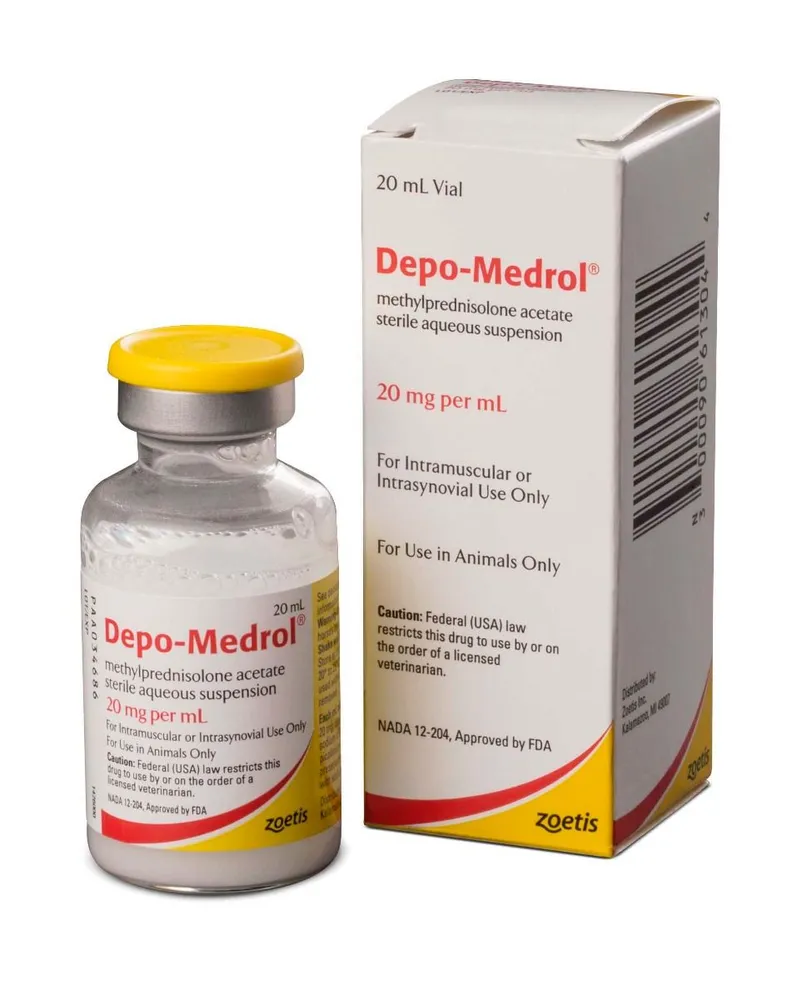
Table of Contents
- Package leaflet: Information for the patient
- DEPO MEDROL 40 mg/ml injectable suspension
- 1. What Depo-Medrol is and what it is used for
- 2. What you should know before using/being administered Depo Medrol
- 3. How to use/How Depo Medrol will be administered
- Depo Medrol may be administered by injection into a muscle, into a joint, or into a lesion.
- 4. Possible side effects
- 5. How to store Depo-Medrol
- 6. Package contents and other information
- The following information is intended exclusively for physicians or healthcare professionals
- 1. Rheumatoid arthritis and osteoarthritis
- 2. Bursitis
- 3. Tendon cysts, tendinitis, epicondylitis
- 4. Local Treatment of Dermatological Conditions
Package leaflet: Information for the patient
DEPO MEDROL 40 mg/ml injectable suspension
methylprednisolone acetate
Please read this leaflet carefully before you or your child is given this medicine, because it contains important information for you and/or your child.
- Keep this leaflet. You may need to read it again.
- If you have any questions, ask your doctor, the doctor treating your child, nurse or pharmacist.
- This medicine has been prescribed for you or your child only. Do not give it to other people, even if their symptoms are the same as yours, because it could be harmful.
- If you or your child experience any adverse reaction, including those not listed in this leaflet, contact your doctor, the doctor treating your child, nurse or pharmacist. See section 4.
Contents of this leaflet:
- What Depo Medrol is and what it is used for
- What you need to know before using/being given Depo Medrol
- How Depo Medrol is used/administered
- Possible side effects
- How to store Depo Medrol
- Contents of the pack and other information
1. What Depo-Medrol is and what it is used for
Depo-Medrol contains the active substance methylprednisolone acetate. Methylprednisolone acetate belongs to a group of medicines called corticosteroids. Corticosteroids are substances naturally produced by the body and are important for many bodily functions.
Depo-Medrol can be administered by a doctor or nurse, for example into a joint, a lesion, or in the surrounding area, to treat local symptoms caused by inflammatory or rheumatic conditions such as:
- Bursitis: inflammation of the fluid-filled sacs around the shoulder, knee, and/or elbow joints;
- Osteoarthritis and rheumatoid arthritis: localized joint inflammation;
- Skin conditions: such as alopecia areata (bald patches), keloids (scar tissue), lichen planus or simplex (small or raised purplish skin patches), discoid lupus (round patches, often on the face), or granuloma annulare (round nodules);
- Epicondylitis (tennis elbow) and tenosynovitis.
Alternatively, the medicine can be injected into a muscle to help treat:
- 1 -
- conditions in which the body is unable to produce sufficient amounts of natural corticosteroids, for example due to adrenal gland disorders such as adrenal insufficiency;
- joint diseases (e.g. rheumatoid arthritis or psoriatic arthritis);
- skin diseases (e.g. pemphigus and severe psoriasis);
- allergic diseases (e.g. bronchial asthma);
- eye diseases (e.g. diffuse posterior uveitis, optic neuritis, iritis, and iridocyclitis);
- intestinal diseases (e.g. regional enteritis and ulcerative colitis);
- lung diseases (e.g. sarcoidosis);
- blood diseases (e.g. leukaemia);
- brain diseases (e.g. tuberculous meningitis);
- blood cancers (leukaemia and lymphomas in adults, acute childhood leukaemia);
- conditions characterized by fluid accumulation (edematous states).
Depo-Medrol may be prescribed to treat conditions other than those listed above.
Please consult your doctor if you are unsure why this medicine has been prescribed for you or your child.
2. What you should know before using/being administered Depo Medrol
Do not use/shall not be administered Depo Medrol if you and/or the child:
- are allergic to methylprednisolone or to any of the other ingredients of this medicine (listed in section 6);
- have a fungal infection that has spread to certain organs or throughout the body.
Depo Medrol will not be administered to you/to the child via intravenous injection
(intravenous administration) or into the back (intrathecal/epidural administration).
You or your child must not be vaccinated with live or live attenuated vaccines during
treatment with Depo Medrol. However, you may receive vaccination with inactivated or
killed vaccines, although the effectiveness of these vaccines may be reduced.
Warnings and precautions
Talk to your doctor, nurse, or pharmacist BEFORE using/being administered this
medicine if:
- you have or have had tuberculosis in the past;
- you are under particular conditions of stress. In such cases, your doctor will prescribe a higher dose of this medicine for you or your child;
- you have Cushing's syndrome, a disease characterized by excessive production of natural corticosteroids in the body. Depo Medrol may worsen your or your child’s condition;
- your thyroid gland is underactive ( hypothyroidism ). In this case, doses of Depo Medrol should be reduced;
- you have diabetes;
- you suffer from seizures;
- 2 -
- you suffer from myasthenia gravis, a disease causing muscle weakness and fatigue, or you are undergoing surgery with general anesthesia involving the use of muscle-blocking drugs (e.g., pancuronium). In this case, there is an increased risk that Depo Medrol may cause muscle problems;
- you have an eye infection caused by the Herpes simplex virus;
- you have high blood pressure ( hypertension );
- you have elevated levels of fats in the blood ( dyslipidemia );
- you have heart problems ( heart failure );
- you suffer from or are predisposed to developing blood clots in the veins;
- you have a stomach ulcer or other serious stomach or intestinal problems;
- you have kidney problems;
- you have scleroderma (also known as systemic sclerosis, an autoimmune disease), since the use of corticosteroids may increase the risk of a serious complication called scleroderma renal crisis;
- you have a brain injury caused by trauma;
- you have liver cirrhosis, a liver disease;
- you are being treated with non-steroidal anti-inflammatory drugs (e.g., acetylsalicylic acid) (see section “Other medicines and Depo Medrol”) and suffer from reduced activity of prothrombin, a protein that helps blood to clot;
- you have a type of tumor called pheochromocytoma;
- you have or have had a severe infection or inflammation in the joint where Depo Medrol is to be administered;
- you suffer from peritonitis or other gastrointestinal disorders, because glucocorticoid therapy may mask symptoms such as perforation, obstruction, or pancreatitis.
- your thyroid is overactive ( hyperthyroidism ). If, during treatment with methylprednisolone, you experience muscle weakness, muscle pain, cramps, or stiffness, contact your doctor immediately. These may be symptoms of a condition called thyrotoxic periodic paralysis, which may occur in patients with overactive thyroid (hyperthyroidism) treated with methylprednisolone. Additional treatment may be needed to relieve this condition.
If you have cancer, you are at high risk of developing tumor lysis syndrome, which may
occur when corticosteroids are used during cancer treatment.
Inform your doctor if you have cancer and experience symptoms of tumor lysis syndrome such
as muscle cramps, muscle weakness, confusion, irregular heartbeat, vision loss or visual disturbances, and shortness of breath.
Inform your doctor or the doctor treating your child if any of the following
conditions appear or worsen DURING treatment with this medicine (see
also section 4 “Possible side effects”):
- depression of the skin surface at the injection site. This effect usually disappears several months after discontinuation of treatment;
- infections. This medicine may reduce resistance to various infections, mask certain infection symptoms, worsen existing infections, or cause recurrence or worsening of hidden old infections. New infections may also occur during treatment with Depo Medrol. Therefore, certain infections may occur more easily during treatment, such as chickenpox and measles. These infections may be mild, severe, and sometimes fatal. Your doctor will monitor you
- 3 -
closely for the development of infections and may consider, if necessary,
discontinuation of treatment or dose reduction;
- Kaposi's sarcoma, a skin tumor. In this case, discontinue treatment with Depo Medrol;
- severe allergic reactions;
- onset or worsening of psychiatric disorders (e.g., depression). Inform people living with you about the possible effects of this medicine;
- fat accumulation compressing the spinal cord;
- eye problems;
- severe inflammation of the pancreas and liver;
- osteoporosis (fragile bones);
- swelling in various parts of the body, especially in legs and ankles, or changes in normal levels of blood electrolytes;
- hepatobiliary disorders (reversible after discontinuation);
- blurred vision or other visual disturbances.
Oral anticoagulants (medicines taken by mouth to prevent blood clotting), when taken together with Depo Medrol, may increase the risk of bleeding. In some cases, the effectiveness of oral anticoagulants may be reduced. Your doctor may need to monitor your bleeding risk frequently by performing additional blood tests during treatment with Depo Medrol. Your doctor may also need to adjust the dose of Depo Medrol if necessary.
For people engaged in sports
For people engaged in sports: using this medicine without therapeutic need constitutes doping
and may result in a positive anti-doping test.
Newborns and children
Long-term treatment or high-dose treatment with Depo Medrol may cause growth retardation, increased intracranial pressure, and pancreatitis in newborns and children.
Elderly
If you are elderly, long-term treatment with Depo Medrol may increase the risk of developing osteoporosis, excessive fluid retention in the body, and increased blood pressure. Your doctor will evaluate your condition and administer this medicine cautiously.
Other medicines and Depo Medrol
Inform your doctor or pharmacist if you or your child are taking, have recently taken, or might take any other medicines, including those obtained without a prescription.
Some medicines may increase the effects of Depo Medrol, and your doctor may want to monitor you closely if you are taking these medicines.
The following medicines may affect the activity of Depo Medrol or Depo Medrol may affect the efficacy and/or toxicity of the following medicines:
- isoniazid, troleandomycin, clarithromycin, and erythromycin (antibiotics);
- 4 -
- rifampicin (antibiotic for tuberculosis);
- phenobarbital, phenytoin, carbamazepine (medicines for seizures) and other barbiturates (sedative medicines that induce sleep);
- aprepitant and fosaprepitant (anti-nausea/vomiting medicines);
- itraconazole, ketoconazole, and amphotericin B (medicines for fungal infections);
- HIV treatments such as indinavir, ritonavir, and cobicistat (medicines against HIV virus);
- aminoglutethimide (medicine for excessive production of natural corticosteroids);
- diltiazem (medicine used to treat heart problems or high blood pressure);
- ethinylestradiol/norethindrone (hormones used in combination as oral contraceptives) and other estrogens;
- cyclosporine, cyclophosphamide, and tacrolimus, medicines used to prevent organ transplant rejection and to treat autoimmune diseases;
- oral anticoagulants (medicines taken by mouth to prevent blood clotting);
- neuromuscular blockers such as pancuronium and vecuronium (medicines causing muscle relaxation);
- anticholinesterases (medicines for muscle diseases such as myasthenia gravis and Alzheimer's disease);
- antidiabetics (medicines for diabetes);
- aspirin (acetylsalicylic acid), salicylates, and other non-steroidal anti-inflammatory drugs (including indomethacin);
- diuretics (medicines that increase urine production, such as thiazide diuretics, furosemide, and ethacrynic acid);
- xanthines and beta-2-agonists (medicines for asthma).
Depo Medrol and beverages
You or your child must not drink grapefruit juice during treatment with Depo
Medrol, as the efficacy and toxicity of this medicine could increase.
Pregnancy, breastfeeding, and fertility
If you are pregnant, suspect you may be pregnant, planning to become pregnant, or breastfeeding, consult your doctor or pharmacist before using/being administered this medicine.
Pregnancy
If you use this medicine during pregnancy, especially at high doses and for a long period, your baby may experience adverse effects at birth.
Therefore, if you are pregnant, your doctor will prescribe Depo Medrol only if strictly necessary.
Breastfeeding
Depo Medrol passes into breast milk and this may cause adverse effects in the
baby. If you are breastfeeding, your doctor will prescribe Depo Medrol only if
strictly necessary.
- 5 -
Fertility
Based on currently available information, this medicine may reduce fertility.
Driving and using machines
Do not drive vehicles or operate machinery if during treatment with Depo Medrol you experience dizziness, vertigo, visual disturbances, or fatigue.
Depo Medrol contains sodium
This medicine contains less than 1 mmol (23 mg) of sodium per dose, i.e., essentially
“sodium-free”.
3. How to use/How Depo Medrol will be administered
Use this medicine exactly as instructed by your doctor or pharmacist. If you have any doubts, consult your doctor, nurse, or pharmacist.
Your doctor will decide, based on the disease to be treated and its severity, the site of injection, the amount of medicine, and the number of injections to be administered to you or your child. During treatment with Depo Medrol, your doctor will monitor you/your child carefully and may adjust the dose and/or duration of treatment depending on any side effects you and/or your child may experience.
If your doctor is satisfied with the improvement in the disease, you will be advised to gradually reduce the dose until reaching the lowest effective dose (maintenance dose).
Adults
Administration by injection into a joint or lesion
This type of administration will be performed by trained healthcare personnel.
Administration by intramuscular injection
The recommended dose ranges from 40 mg to 120 mg. Your doctor will determine the dosage and frequency of administration based on the disease being treated and its severity.
Use in neonates and children
Your doctor will adjust the dose in neonates and children according to the severity of the child's condition, response to therapy, age, and body weight.
Instructions for use
Depo Medrol may be administered by injection into a muscle, into a joint, or into a lesion.
In the latter two cases, Depo Medrol will be administered to you/your child only by specialized healthcare personnel.
Do not use/you will not be administered Depo Medrol by routes other than those indicated above.
Before administration, the product must be inspected visually to check the contents for the presence of particles or discoloration.
Do not dilute and do not mix Depo Medrol with other solutions.
This product is not suitable for multidose use. After administration of the dose prescribed by the doctor, any remaining suspension must be discarded.
Appropriate hygienic measures must be taken to prevent infections or contamination.
- 6 -
If you use/are administered more Depo Medrol than you should
If a dose of this medicine greatly exceeding the prescribed amount is used, acute toxicity and death may occur, although rarely.
Contact your doctor immediately or go to the nearest hospital if you and/or your child have accidentally used excessive doses of Depo Medrol.
If you forget to use Depo Medrol
Do not use a double dose to make up for the forgotten dose.
If you stop treatment with Depo Medrol
You or your child must not stop taking Depo Medrol suddenly. Depo Medrol can cause reduced function of the adrenal glands that produce natural corticosteroids, and abrupt discontinuation may lead to death.
Moreover, if treatment with Depo Medrol is abruptly stopped, you or your child may develop withdrawal symptoms such as: anorexia, nausea, vomiting, drowsiness, headache, fever, muscle and joint pain, skin peeling, weight loss, low blood pressure, and mental disturbances.
When stopping treatment, doses should be gradually reduced. Your doctor will advise you on the correct way to do this.
If you have any doubts about the use of this medicine, consult your doctor or pharmacist.
4. Possible side effects
Like all medicines, this medicine can cause side effects, although not everyone will experience them.
Contact your doctor if you experience any of the following side effects:
Frequency not known (frequency cannot be estimated from the available data):
- infections, including infections occurring when the body's immune defenses are very low
- inflammation of the abdomen (peritonitis)
- infection and reactions at the injection site
- increased number of white blood cells in the blood
- hypersensitivity to the medicine
- severe allergic reaction, e.g. swelling of the face, tongue, and throat with difficulty swallowing and breathing (angioedema)
- round face or "moon face" (Cushingoid appearance)
- reduced secretion of hormones from the pituitary gland (a gland located at the base of the brain)
- withdrawal syndrome from stopping treatment (see section 3 “If you stop treatment with Depo Medrol”)
- metabolic acidosis
- increase in body fat
- accumulation of adipose tissue in localized areas of the body
- fluid and sodium retention in the body
- loss or increase of acidic substances from the body
- 7 -
- high levels of fat in the blood
- glucose metabolism disorder and worsening of pre-existing diabetes
- increased appetite and body weight
- mental disorders such as: emotional disturbances (depression, euphoria, emotional and drug dependency, suicidal ideation), manic behaviour, delirium, hallucinations, schizophrenia, thought disorders, personality changes, confusion, anxiety, mood swings, abnormal behaviour, insomnia, irritability
- fat accumulation compressing the spinal cord
- increased pressure of the fluid within the skull
- seizures
- difficulty remembering
- disturbances in the thought process enabling awareness of reality
- dizziness
- headache
- reduced vision in the central part of the visual field, blindness (associated with intralesional therapy around the face and head)
- cataract
- increased internal eye pressure
- involuntary contraction of the eye muscle
- disease of the retina and choroid membrane
- protruding eyes
- vertigo
- inability of the heart to pump sufficient blood to the rest of the body (congestive heart failure)
- formation of blood clots in veins and lungs
- increased blood coagulation
- increased or decreased blood pressure
- warmth and redness of the skin (hot flushes)
- hiccups
- stomach and intestinal ulcers with possible bleeding and perforation
- inflammation of the pancreas
- inflammation of the esophagus with or without ulcers
- abdominal distension and pain
- diarrhoea
- nausea
- difficulty digesting
- increased hair growth
- appearance of small red spots or thin purplish stripes on the skin
- bruising
- skin atrophy
- skin redness, skin rashes
- excessive sweating
- itching
- urticaria
- discoloured skin patches
- acne
- delayed wound healing
- 8 -
- thinning and fragility of the skin
- muscle weakness
- muscle and joint pain, muscle diseases, reduced muscle mass
- temporary increase in pain at the injection site (pain flare after injection)
- bone fragility (osteoporosis), bone tissue death and loss
- joint rupture (especially of the foot) causing pain and/or swelling
- irregular menstruation
- pus formation
- swelling
- fatigue, malaise
- reduced tolerance to carbohydrates
- increased levels of calcium in the urine
- changes in laboratory tests assessing liver function
- possible liver damage, hepatitis, increased liver enzymes
- increased levels of urea in the blood
- reduced response to skin tests
- decreased levels of potassium in the blood
- vertebral fractures (from trauma or spontaneous), tendon rupture, particularly of the Achilles tendon
- blurred vision
Additional side effects in children
Frequency not known (frequency cannot be estimated from the available data):
- growth retardation
Reporting of side effects
If you/your child experience any side effect, including those not listed in this leaflet, talk to your doctor or pharmacist. You may also report side effects directly via the national reporting system at
https://www.aifa.gov.it/content/segnalazioni-reazioni-avverse . By reporting side effects, you can help provide more information on the safety of this medicine.
5. How to store Depo-Medrol
Keep this medicine out of the sight and reach of children.
Do not use this medicine after the expiry date which is stated on the carton and vial after "Expiry". The expiry date refers to the last day of that month.
Do not freeze.
Do not use this medicine if you notice the presence of particles or any change in colour.
Do not dispose of any medicine via wastewater or household waste. Ask your pharmacist how to dispose of medicines you no longer use. This will help protect the environment.
6. Package contents and other information
- 9 -
What Depo Medrol contains
- The active substance is: methylprednisolone acetate. Each 1 ml vial contains 40 mg of methylprednisolone acetate.
- The other ingredients are: macrogol 3350, sodium chloride, sodium hydroxide (see section 2 “Depo Medrol contains sodium”), myristyl gamma-picolinium chloride, hydrochloric acid, water for injections.
Description of the appearance of Depo Medrol and package contents
Depo Medrol is a white suspension. The suspension is contained in a 1 ml glass vial sealed with a rubber stopper.
Depo Medrol is available in packs of 1 vial of 1 ml or 3 vials of 1 ml.
Not all pack sizes may be marketed.
Marketing Authorization Holder
Pfizer Italia S.r.l.
Via Isonzo, 71
04100 Latina
Manufacturer
Pfizer Manufacturing Belgium NV
Rijksweg 12
2870 Puurs-Sint-Amands
Belgium
The following information is intended exclusively for physicians or healthcare professionals
INCOMPATIBILITIES
Methylprednisolone acetate is incompatible in solution with several drugs. Compatibility
depends on various factors such as drug concentration, pH of the solution, and temperature.
Therefore, it is recommended not to dilute or mix Depo Medrol with other solutions.
DOSAGE
Local administration
This therapy is intended to be symptomatic, not causative.
1. Rheumatoid arthritis and osteoarthritis
The dose for intra-articular administration depends on the size of the joint
and varies according to the severity of the condition in the individual patient. In chronic cases, injections
may be repeated at intervals ranging from 1 to 5 or more weeks, depending on the degree of
improvement achieved after the first administration. The doses in the following table
are given as a general guide:
- 10 -
Table 1. Dosage of the medicinal product
| Joint size | Examples | Dosage | ||
| Large | knees, ankles, shoulders | 20-80 mg | ||
| Medium | elbows, wrists | 10-40 mg | ||
| Small | metacarpophalangeal, interphalangeal, sternoclavicular, acromioclavicular | 4-10 mg |
Route of administration: It is recommended to review the anatomy of the joint to be treated before proceeding with intra-articular injection. To achieve full anti-inflammatory activity, it is important that the injection be administered into the synovial space.
Using the same sterile technique employed for lumbar puncture, rapidly insert a sterile 20–24 gauge needle, attached to a dry syringe, into the synovial cavity. Infiltration with procaine is optional.
Aspirating a few drops of synovial fluid ensures complete placement of the needle within the joint space.
The injection site for each joint is determined by the location of the most superficial synovial cavity and one that is largely free of large vessels and nerves.
Leaving the needle in place, replace the syringe containing the aspirated fluid with another syringe containing the desired amount of Depo-Medrol. Further confirm by aspiration that the needle remains correctly positioned.
After injection, gently move the joint to promote dispersion of the suspension within the synovial fluid.
Cover the injection site with sterile gauze.
Suitable sites for intra-articular injection include the knee, ankle, wrist, elbow, shoulder, finger joints, and hip.
Since difficulty may occasionally be encountered when attempting to access the hip joint, precautions must be taken to avoid the large vessels present in this area.
Joints unsuitable for injection are those that are anatomically inaccessible, such as spinal and sacroiliac joints, which lack a synovial space.
Treatment failures are most frequently due to failure to introduce the drug into the joint space. Injection into the surrounding tissues results in little or no benefit.
If failure occurs after an injection that has been confirmed to be correctly administered into the synovial space (verified by aspiration of fluid), repeating the injection is unnecessary.
Local therapy cannot alter the underlying disease process; therefore, when possible, a comprehensive treatment approach including physical therapy and orthopedic assessment should be implemented.
After intra-articular corticosteroid therapy, particular care should be taken to avoid overuse of the joint, which may be encouraged by the symptomatic relief obtained. Neglecting this precaution may lead to increased joint damage, thereby negating the benefit of the steroid.
Injections must not be performed in joints affected by active inflammatory processes.
Repeated injections may occasionally induce joint inflammation.
In specific cases, it is advisable to monitor for joint damage using X-rays.
If a local anesthetic is used prior to Depo-Medrol injection, carefully read the package insert and observe all recommended precautions.
2. Bursitis
Sterilize the area surrounding the site to be injected and anesthetize with a 1% solution of procaine hydrochloride. Attach a 20-24 gauge needle to a dry syringe, insert it into the bursa, and aspirate the fluid. Leave the needle in place and replace the syringe used for aspiration with a smaller syringe containing the desired dose of Depo-Medrol. After injection, withdraw the needle and apply a small dressing. Use the same technique described for intra-articular injection.
3. Tendon cysts, tendinitis, epicondylitis
In the treatment of these conditions, inject the suspension into the tendon sheath rather than into the tendon substance itself. Adequately sterilize the overlying skin before infiltration.
The tendon can be easily palpated when it is stretched.
For treating epicondylitis, it is advisable to carefully identify the area of maximum tenderness for infiltration.
Tendon cysts should be directly infiltrated.
In many cases, a single infiltration is sufficient to produce a noticeable reduction in the size of the cysts and to eliminate symptoms.
The dose administered in the treatment of these conditions ranges from 4 to 30 mg.
In chronic or recurrent cases, multiple infiltrations may be necessary.
For each infiltration, standard sterile precautions must be observed.
4. Local Treatment of Dermatological Conditions
After appropriate antiseptic treatment, infiltrate the lesion with doses of 20–60 mg. Occasionally,
a series of small perilesional infiltrations of 20 to 40 mg may be helpful.
Care should be taken to avoid infiltration of material that could induce a reaction followed by a small eschar.
Typically, 1 to 4 infiltrations are performed at intervals varying according to the type of lesion and the duration of improvement achieved after the first injection.
Intramuscular Systemic Administration
Dosage varies depending on the condition being treated.
When a prolonged effect is required, a single weekly intramuscular injection of Depo Medrol may be administered, with dosage calculated by multiplying the daily oral dose of methylprednisolone by 7.
Dosage must be individualized for each patient. Key factors in determining dosage include the severity, prognosis, expected duration of the condition, and the patient's response to treatment.
In pediatric patients, the recommended dosage should be reduced; however, the severity of the condition should take precedence over age/weight ratio when determining dosage.
Hormonal therapy is supportive and not a substitute for conventional therapy.
After administration of the drug for several days, the dosage should be gradually reduced or discontinued.
- 12 -
If a spontaneous remission period occurs during a chronic illness, treatment should be discontinued.
During prolonged therapy, routine blood and urine parameters, postprandial glucose levels, blood pressure, and body weight should be monitored; in addition, periodic chest X-rays are advisable. In patients with a history of ulcers or significant dyspepsia, radiographic examination of the upper gastrointestinal tract is recommended.
In patients with adrenogenital syndrome, a single intramuscular injection of 40 mg of Depo Medrol every two weeks may be sufficient. The weekly maintenance intramuscular dose of Depo Medrol in patients with rheumatoid arthritis ranges from 40 to 120 mg. The usual dosage for patients with dermatological conditions is 40–120 mg administered intramuscularly once weekly for one to four weeks.
In severe acute dermatitis caused by Poison Ivy, intramuscular administration of a single dose of 80–120 mg may provide relief within 8–12 hours.
In chronic contact dermatitis, repeated injections at intervals of 5–10 days may be necessary.
In seborrheic dermatitis, a weekly dose of 80 mg of Depo Medrol may be adequate to control the condition.
After intramuscular administration of 80–120 mg of Depo Medrol in asthmatic patients, relief may occur within 6 to 48 hours, with effects lasting several days up to two weeks. If the condition being treated is accompanied by stress symptoms, doses of Depo Medrol should be increased. For rapid and maximum effect, intravenous administration of the soluble salt (methylprednisolone sodium succinate) is recommended.
Rectal Administration in Ulcerative Colitis
Administration of Depo Medrol at doses of 40–120 mg via retention enema or continuous drip, 3 to 7 times per week for two or more weeks, has proven to be a useful adjunctive therapy in the treatment of some cases of ulcerative colitis.
Many patients can be controlled with 40 mg of Depo Medrol administered in 30–300 ml of water, depending on the extent of inflamed colonic mucosa. Other appropriate therapeutic measures should also be undertaken.
ADVERSE EFFECTS OBSERVED WITH NON-RECOMMENDED ROUTES OF ADMINISTRATION
Intrathecal/Epidural Route
Arachnoiditis, meningitis, paraparesis, paraplegia, sensory disturbances, intestinal/bladder dysfunction, headache, epileptic seizures, convulsions, sensory disorders. The frequency of these adverse reactions is unknown.
Intranasal Route
Temporary/permanent visual disturbances including blindness, allergic reactions, rhinitis.
Ophthalmic Route
Temporary/permanent visual disturbances including blindness, increased intraocular pressure, ocular and periocular inflammations including allergic reactions, infections, injection site residues or eschars.
Other Injection Sites (scalp, palatine tonsils, sphenopalatine ganglia)
Blindness.
- 13 -
For further information, refer to the SmPC (Summary of Product Characteristics).
- 14 -