Deltacortene
Italy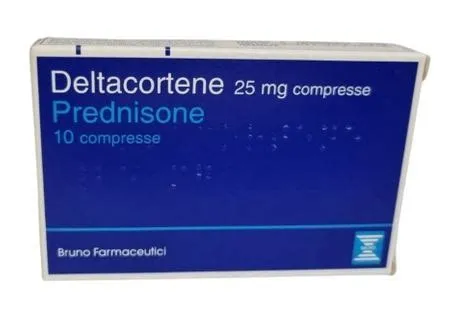
Table of Contents
- Package leaflet: Information for the patient
- DELTACORTENE 5 mg tablets, 25 mg tablets
- 1. What DELTACORTENE is and what it is used for
- 2. WHAT YOU SHOULD KNOW BEFORE TAKING DELTACORTENE
- 3. How to take DELTACORTENE
- 4. POSSIBLE ADVERSE REACTIONS
- 5. How to store DELTACORTENE
- 6. Contents of the pack and other information
Package leaflet: Information for the patient
DELTACORTENE 5 mg tablets, 25 mg tablets
prednisone
Please read this leaflet carefully before taking this medicine because it contains important information for you.
- Keep this leaflet. You may need to read it again.
- If you have any questions, ask your doctor or pharmacist.
- This medicine has been prescribed for you only. Do not give it to other people, even if their symptoms are the same as yours, as it could be harmful.
- If you experience any side effects, including those not listed in this leaflet, contact your doctor or pharmacist.
Contents of this leaflet
- What DELTACORTENE is and what it is used for
- What you need to know before taking DELTACORTENE
- How to take DELTACORTENE
- Possible side effects
- How to store DELTACORTENE
- Contents of the pack and other information
1. What DELTACORTENE is and what it is used for
DELTACORTENE is a tablet medicine containing the active substance prednisone, a synthetic hormone belonging to the corticosteroid group.
Corticosteroids are hormones produced by the adrenal glands that have anti-inflammatory activity. Anti-inflammatory medicines reduce pain, swelling, stiffness, redness, and heat in affected tissues.
Due to these properties, DELTACORTENE is used:
- as an addition to other medicines, in the treatment of rheumatic diseases (e.g. rheumatoid arthritis, Still's disease, ankylosing spondylitis, acute gouty arthritis);
- as therapy for severe and/or widespread inflammations, for example in specific cases of systemic lupus erythematosus (a chronic disease caused by an immune system disorder leading to inflammation and tissue damage), dermatomyositis (a chronic inflammatory muscle disease), inflammations affecting structures adjacent to joints (e.g. bursae, tendons, connective tissue), cardiac inflammations of rheumatic origin;
- in cases of severe or debilitating allergies, such as bronchial asthma, contact dermatitis, atopic dermatitis, which do not respond or respond inadequately to other therapies;
- in the treatment of sarcoidosis (an inflammatory disease that may affect various organs, but primarily the lungs and lymph nodes);
- to treat certain blood disorders (e.g. certain forms of anaemia);
- as palliative therapy for certain malignant proliferations (tumours) of white blood cells (leukaemias) or of certain organs (e.g. lymph node tumours);
- in combination with other medicines, for the treatment of certain gastrointestinal tract disorders (e.g. ulcerative colitis).
2. WHAT YOU SHOULD KNOW BEFORE TAKING DELTACORTENE
Do not take DELTACORTENE
➢ if you are allergic to prednisone or to any of the other ingredients of this medicine (listed in
section 6)
➢ if you have:
o tuberculosis (TB), a bacterial infection that usually affects the lungs;
o stomach or intestinal ulcers;
o psychiatric disorders;
o viral infections (e.g. eye disease caused by herpes simplex);
o systemic fungal infections;
o severe bone weakening (severe osteoporosis).
➢ if your immune system is impaired.
➢ if you have high blood sugar (glucose) levels and are unable to control them (unstable diabetes).
Warnings and precautions
Talk to your doctor or pharmacist before taking DELTACORTENE.
You must inform your doctor if you currently have or have previously had any of the following conditions, or if you have undergone any of the following treatments:
- intestinal diseases such as colitis and diverticulosis;
- intestinal surgery;
- sores in the stomach lining (active peptic ulcer);
- kidney diseases;
- high blood pressure;
- severe muscle weakness;
- bone weakening (mild or moderate osteoporosis);
- dental infections or abscesses;
- psychological or emotional disorders;
- blurred vision or other visual disturbances;
- excessively high blood sugar (glucose) levels (diabetes). Your doctor may increase your dose of diabetes medications and closely monitor your blood glucose levels;
- scleroderma (also known as systemic sclerosis, an autoimmune disease), since daily doses equal to or greater than 15 mg may increase the risk of a serious complication called scleroderma renal crisis. Signs of scleroderma renal crisis include increased blood pressure and reduced urine output. Your doctor may recommend regular monitoring of blood pressure and urine;
- If you have an overactive thyroid (hyperthyroidism).
Contact your doctor immediately if, during treatment with prednisone, you develop muscle weakness, muscle pain, cramps, or stiffness. These may be symptoms of a condition called "thyrotoxic periodic paralysis", which may occur in patients with hyperthyroidism treated with prednisone. Additional treatment may be required to relieve this condition.
Other important information about DELTACORTENE
DELTACORTENE may affect your immune system. This reduces your ability to fight infections. If your immune system is impaired:
- vaccinations may not be effective during treatment with DELTACORTENE;
- there may be an increased risk of serious infections. Treatment with DELTACORTENE may increase the likelihood of developing an infection. If an infection develops, it may be more difficult to detect during treatment with DELTACORTENE.
Treatment with DELTACORTENE may negatively affect calcium metabolism in your bones. For this reason, you should discuss with your doctor the risk of osteoporosis (loss of bone mass and fractures), especially if there are family members with a history of bone fractures, if you do not exercise regularly, if you are a woman in or after menopause, or if you are elderly.
A dose reduction of DELTACORTENE may be necessary in case of:
- hypothyroidism (underactive thyroid gland);
- hepatic cirrhosis (liver disease caused by alcoholism or hepatitis);
- adrenal insufficiency. This occurs when the adrenal glands do not produce enough cortisol (a hormone), particularly likely during periods of stress, for example during infections, after an accident, or if you are experiencing increased physical strain.
Your doctor may need to adjust your dose of DELTACORTENE during stressful events, such as surgery or active infection.
If you are taking DELTACORTENE for several months or longer, your doctor will perform periodic checks, such as eye examination, blood tests, and blood pressure monitoring.
Children
In early infancy, the medicine should be administered only when strictly necessary and under direct medical supervision. Children undergoing prolonged therapy must be closely monitored for growth and development.
For athletes: using this medicine without a therapeutic need constitutes doping and may lead to a positive anti-doping test.
YOUR DOCTOR WILL ADVISE YOU ON WHAT TO DO.
Other medicines and DELTACORTENE
Inform your doctor if you are taking or have recently taken any other medicines, including those obtained without a prescription.
Some medicines may increase the effects of DELTACORTENE, and your doctor may wish to monitor you closely if you are taking these medicines (including some HIV treatments: ritonavir, cobicistat).
Treatment with DELTACORTENE may reduce the effects of the following medicines:
- diabetes medicines, e.g. oral antidiabetics such as sulfonylureas;
- medicines containing salicylates.
The following medicines may reduce the effect of DELTACORTENE:
- phenobarbital, primidone, carbamazepine, phenytoin, used to treat epilepsy;
- antibiotics such as rifampicin, used to treat infections;
- bronchodilators such as ephedrine, used to treat asthma.
The following medicines may increase the effect of DELTACORTENE:
- diltiazem, used to treat heart conditions;
- antibiotics (Macrolides) such as erythromycin, troleandomycin, used to treat infections;
- estrogens, the main female sex hormones.
Other effects of DELTACORTENE:
- increases the risk of gastrointestinal bleeding associated with the use of non-steroidal anti-inflammatory drugs (NSAIDs), such as acetylsalicylic acid, diclofenac, and ibuprofen;
- may increase or decrease, depending on the individual, the blood-thinning effects of anticoagulant medicines; in particular, DELTACORTENE increases the anticoagulant effect of warfarin.
If you are taking any of the medicines listed above, your doctor may prescribe an alternative medicine or adjust the dose of DELTACORTENE or the other medicine.
YOUR DOCTOR WILL ADVISE YOU ON WHAT TO DO.
Pregnancy and breastfeeding
If you are pregnant, think you may be pregnant, are planning to become pregnant, or are breastfeeding, consult your doctor or pharmacist before using this medicine.
Driving and using machines
It is unlikely that DELTACORTENE will affect your ability to drive or operate machinery. However, if you experience side effects such as visual disturbances or changes in mental status, you should avoid performing these activities.
DELTACORTENE contains lactose
If your doctor has diagnosed you with an intolerance to certain sugars, contact him/her before taking DELTACORTENE.
3. How to take DELTACORTENE
Take this medicine exactly as directed by your doctor or pharmacist. If you have any doubts,
consult your doctor or pharmacist.
The dose of DELTACORTENE prescribed by your doctor depends on the severity of the disease. Usually, the maintenance dose should not exceed 10–15 mg of prednisone per day.
The initial dose may be higher and, on your doctor's advice, gradually reduced to the maintenance dose according to:
- the symptoms of the disease;
- the response to DELTACORTENE.
Method of administration:
DELTACORTENE is taken orally. Take the number of tablets prescribed by your doctor. Your doctor will discuss with you the necessary duration of treatment.
If you take more DELTACORTENE than you should:
there is likely an increased risk of adverse effects on electrolyte balance (salts), which may lead to an increased risk of heart rhythm abnormalities, and on the metabolism of certain minerals such as calcium, which may lead to an increased risk of fractures.
CONTACT YOUR DOCTOR IF YOU ARE CONCERNED OR IF YOU NOTICE AN INCREASE IN ADVERSE EFFECTS
If you forget to take DELTACORTENE
CONTACT YOUR DOCTOR FOR ADVICE ON WHAT TO DO
If you stop taking DELTACORTENE
Do not stop taking DELTACORTENE suddenly. If you stop treatment with DELTACORTENE:
- the symptoms of your condition may return;
- corticosteroid withdrawal syndrome may occur (a serious condition caused by the body's failure to produce cortisol).
IF YOU HAVE ANY DOUBTS ABOUT THE USE OF THIS MEDICINE, ASK YOUR DOCTOR OR PHARMACIST
4. POSSIBLE ADVERSE REACTIONS
Like all medicines, this medicine can cause adverse reactions, although not everyone experiences them.
The frequency and severity of the adverse reactions listed below depend on the dose and duration of
treatment.
Very common: more than 1 in 10 people taking DELTACORTENE
Common: less than 1 in 10 but more than 1 in 100 people taking DELTACORTENE
Uncommon: less than 1 in 100 but more than 1 in 1,000 people taking DELTACORTENE
Rare: less than 1 in 1,000 but more than 1 in 10,000 people taking DELTACORTENE
Very rare: less than 1 in 10,000 people taking DELTACORTENE
Very common adverse reactions of DELTACORTENE:
Mouth ulcers (aphthae);
Burning sensation and stomach pain;
Nausea, vomiting, diarrhoea;
Abdominal bloating with cramps and pain;
General malaise, weakness, fever;
Urticaria, pruritus, wheals;
Skin redness, acne, skin striae;
Headache, dizziness;
Throat irritation, cough;
Infections from various causes, reduced ability to fight infections. Infections may be more severe or symptoms may be masked.
Common adverse reactions of DELTACORTENE:
Increase or decrease in blood cell count;
Elevated liver enzyme levels (transaminases), bilirubin, digestive enzymes (amylase, lipase), blood glucose levels, and values in the test monitoring blood fluidity (INR);
Abscesses;
Heart disease and disturbances in heart rhythm;
Indigestion, inflammation of the stomach and intestines, oesophageal burning;
Swelling of mucous membranes and face; eye burning; contact dermatitis;
Fluid accumulation (oedema);
Muscle deterioration and weakness, bone deterioration leading to increased risk of bone fractures (osteopenia and osteoporosis);
Drowsiness, dizziness, transient paralysis of limbs, particularly the hand;
Agitation, irritability, confusion, difficulty sleeping;
Bronchopneumonia, pneumonia;
Capillary fragility, bruising.
Uncommon adverse reactions of DELTACORTENE:
Failure to produce blood cells;
Disorders of sex hormone secretion, which may cause irregular menstruation in women or impotence in men;
Diabetes;
Increased hair growth;
Lens opacity (cataract) and increased eye pressure (glaucoma), with or without eye pain; double vision, reduced vision;
Dryness, inflammation of the mouth, tingling of the tongue;
Constipation;
Gastric and duodenal ulcers, intestinal bleeding, blood in stools;
High fever, septicaemia;
Gallbladder problems;
Achilles tendon injury and/or rupture;
Disturbances in the balance of sugars, fats, and salts in the body, which may lead to increased appetite and body weight;
Loss of appetite;
Growth retardation in children;
Development or worsening of epileptic seizures;
Delayed wound healing and dry skin;
Fainting due to low blood pressure;
Tremors;
Depression (feeling of sadness), anxiety, irritability, feelings of unjustified happiness, increased impulsivity, loss of touch with reality (psychosis), memory disturbance, panic attack;
Fluid retention;
Increased urine volume, blood in urine;
Breathing difficulties;
Increased blood pressure;
Phenomena of cell death;
Thickening or inflammation of blood vessel lining and blood clots;
Herpes;
Slowed heart rate.
Rare adverse reactions of DELTACORTENE:
Hormonal imbalance causing Cushing's syndrome (typical symptoms: round face, often called "moon face", weight gain in the upper part of the body);
Blindness in one eye, swelling of the periorbital area;
Bleeding from the mouth, oesophageal ulcers;
Tooth loss, fragile teeth;
Hiccups;
Diverticulitis, intestinal obstruction;
Severe and rapid swelling (oedema) of the skin, mucous membranes, and submucosal tissues;
Severe and simultaneous dysfunction of multiple organs (multiorgan failure);
Reversible changes in cerebral perfusion (reversible posterior leukoencephalopathy);
Severe liver problems;
Virus-associated tumours (Kaposi's sarcoma);
Reactivation of viral diseases;
Hallucinations, suicide attempt;
Widespread pain due to inflammation of peripheral sensory nerves;
Severe kidney disorders.
Very rare adverse reactions of DELTACORTENE:
Overactivity of the thyroid gland (hyperthyroidism) which may cause periodic episodes of paralysis.
Adverse reactions with unknown frequency of DELTACORTENE:
Inflammation of the pancreas (acute pancreatitis);
Scleroderma renal crisis in patients already affected by scleroderma (an autoimmune disease). Signs of scleroderma renal crisis include increased blood pressure and reduced urine output;
Blurred vision.
Reporting of adverse reactions
If you experience any adverse reaction, including those not listed in this leaflet, consult your doctor or pharmacist. You may also report adverse reactions directly via the national reporting system at the website http://www.aifa.gov.it/content/segnalazioni-reazioni-avverse. By reporting adverse reactions, you can help provide more information on the safety of this medicine.
5. How to store DELTACORTENE
- Keep this medicine out of the sight and reach of children.
- Do not use this medicine after the expiry date stated on the carton. The expiry date refers to the last day of that month.
- This medicine requires no special storage conditions.
- Do not dispose of medicines via wastewater or household waste. Ask your pharmacist how to dispose of medicines you no longer use. This will help protect the environment.
6. Contents of the pack and other information
What DELTACORTENE contains
The active substance is prednisone.
One tablet of DELTACORTENE 5 mg contains 5 mg of prednisone.
The excipients are: stearic acid; maize starch; microcrystalline cellulose; lactose.
One tablet of DELTACORTENE 25 mg contains 25 mg of prednisone.
The excipients are: magnesium stearate; maize starch; microcrystalline cellulose; lactose.
What DELTACORTENE looks like and contents of the pack
DELTACORTENE is available in:
- boxes of 10 or 20 tablets of 5 mg.
- box of 10 tablets of 25 mg.
MARKETING AUTHORISATION HOLDER
BRUNO FARMACEUTICI S.p.A. - Via delle Ande, 15 - 00144 ROME
MANUFACTURER
- MIPHARM S.p.A. - Via B. Quaranta n. 12 - 20141 Milan (MI)
- Special Product’s Line S.p.A. - Via Fratta Rotonda Vado Largo n.1 - 03012 Anagni (FR)