Degarelix Accord
ItalyTable of Contents
- Package leaflet: Information for the patient
- Degarelix Accord 80 mg powder and solvent for injectable solution
- 1. What Degarelix Accord is and what it is used for
- 2. What you need to know before using Degarelix Accord
- 3. How to use Degarelix Accord
- 4. Possible side effects
- 5. How to store Degarelix Accord
- 6. Package contents and other information
- -----------The following information is intended for healthcare professionals only:
- Patient information leaflet
- Degarelix Accord 120 mg powder and solvent for injectable solution
- 1. What Degarelix Accord is and what it is used for
- 2. What you need to know before using Degarelix Accord
- 3. How to use Degarelix Accord
- 4. Possible side effects
- 5. How to store Degarelix Accord
- 6. Package contents and other information
- The following information is intended exclusively for healthcare professionals:
Package leaflet: Information for the patient
Degarelix Accord 80 mg powder and solvent for injectable solution
degarelix
Read this leaflet carefully before using this medicine because it contains
important information for you.
- Keep this leaflet. You may need to read it again.
- If you have any questions, ask your doctor.
- If you experience any side effects, including those not listed in this leaflet, contact your doctor or pharmacist. See section 4.
Contents of this leaflet:
- What Degarelix Accord is and what it is used for
- What you need to know before using Degarelix Accord
- How to use Degarelix Accord
- Possible side effects
- How to store Degarelix Accord
- Contents of the pack and other information
1. What Degarelix Accord is and what it is used for
Degarelix Accord contains degarelix.
Degarelix is a hormone blocker produced by chemical synthesis, used in the treatment of prostate cancer and in the treatment of high-risk prostate cancer prior to radiotherapy or in combination with radiotherapy in adult male patients. Degarelix mimics a natural hormone (gonadotropin-releasing hormone, GnRH) and directly blocks its effect. By doing so, degarelix immediately reduces the level of the male hormone testosterone, which stimulates prostate cancer.
2. What you need to know before using Degarelix Accord
Do not use Degarelix Accord
- If you are allergic to degarelix or to any of the other ingredients of this medicine (listed in section 6)
Warnings and precautions
Tell your doctor if you are in any of the following conditions:
- You have any cardiovascular problems or heart rhythm disorders (arrhythmia), or you are taking medicines to treat such conditions. Heart rhythm problems may worsen during treatment with Degarelix Accord.
- You have diabetes mellitus. Worsening of diabetes or new onset diabetes may occur. If you have diabetes, your blood glucose levels should be monitored more frequently.
- You have liver problems. You may need to have your liver function monitored.
- You have kidney problems. The use of Degarelix Accord has not been studied in patients with severe kidney disease.
- You have osteoporosis or any other condition affecting bone strength. Reduced testosterone levels may lead to decreased bone calcium (bone thinning).
- You have a history of severe hypersensitivity. The use of Degarelix Accord has not been studied in patients with severe hypersensitivity reactions.
For athletes: using this medicine without therapeutic need constitutes doping and may lead to a positive anti-doping test.
Children and adolescents
Do not give this medicine to children or adolescents.
Other medicines and Degarelix Accord
Degarelix Accord may interact with certain medicines used for heart rhythm disorders (e.g.
quinidine, procainamide, amiodarone and sotalol) or with other drugs that may affect heart rhythm
(e.g. methadone (used for pain relief and as part of drug addiction treatment), moxifloxacin (an antibiotic), antipsychotics).
Tell your doctor if you are taking, have recently taken, or might take any other medicines, including those without a prescription.
Driving and using machines
Tiredness and dizziness are common side effects which may affect your ability to drive or operate machinery. These effects may be due to the treatment itself or to the underlying disease.
3. How to use Degarelix Accord
This medicine is usually administered by a doctor or nurse.
The recommended initial dose consists of two consecutive 120 mg injections. Subsequently, you will receive a monthly 80 mg injection. The injected liquid forms a gel that releases degarelix over a period of one month.
Degarelix Accord must be injected ONLY under the skin (subcutaneously). Degarelix Accord must NOT be injected into a blood vessel (intravenously). Precautions must be taken to avoid accidental intravenous injection. The injection site should be rotated within the abdominal area.
If you forget to use Degarelix Accord
If you think you have missed your monthly dose of Degarelix Accord, inform your doctor. If you have any further questions about the use of this medicine, ask your doctor.
4. Possible side effects
Like all medicines, this medicine can cause side effects, although not everybody gets them.
Severe allergic reactions to this medicine are rare. Contact your doctor immediately if you develop a severe rash, itching, or shortness of breath or difficulty breathing. These may be symptoms of a serious allergic reaction.
Very common (may affect more than 1 in 10 people)
Hot flushes, pain and redness at the injection site. Injection site reactions are more common with the initial dose and less common with the maintenance dose.
Common (may affect up to 1 in 10 people)
- swelling, nodules, and hardening at the injection site
- chills, fever, or flu-like syndrome after injection
- sleep disturbances, fatigue, dizziness, headache
- weight gain, nausea, diarrhoea, elevated levels of some liver enzymes
- excessive sweating (including night sweats), rash
- anaemia
- muscle and skeletal pain and disorders
- reduction in testicular volume, breast swelling, impotence
Uncommon (may affect up to 1 in 100 people)
- loss of sexual desire, testicular pain, pelvic pain, ejaculatory failure, genital irritation, breast pain
- depression, psychiatric disturbances
- skin redness, hair loss, skin nodules, numbness
- allergic reactions, urticaria, itching
- decreased appetite, constipation, vomiting, dry mouth, abdominal pain and discomfort, increased blood sugar/diabetes mellitus, increased cholesterol, changes in blood calcium levels, weight loss
- increased blood pressure, changes in heart rate, changes in ECG (prolongation of QT interval), palpitations, dyspnoea, peripheral oedema
- muscle weakness, muscle spasms, joint swelling/stiffness, osteoporosis/osteopenia, joint pain
- frequent need to urinate, urgency to urinate, difficulty or pain when urinating, nocturnal urination, impaired kidney function, incontinence
- blurred vision
- discomfort at the injection site including decreased blood pressure and heart rate (vasovagal reaction)
- malaise
Rare (may affect up to 1 in 1,000 people)
- Febrile neutropenia (very low white blood cell count in combination with fever), heart attack, heart failure.
- Unexplained muscle pain or cramps, tenderness or weakness. Muscle problems may be severe, including muscle breakdown leading to kidney damage.
Very rare (may affect up to 1 in 10,000 people)
- Infection, abscess, and necrosis at the injection site
Reporting of side effects
If you experience any side effects, including those not listed in this leaflet, please inform your doctor. You can also report side effects directly via the national reporting system listed in Annex V.
By reporting side effects, you can help provide more information on the safety of this medicine.
5. How to store Degarelix Accord
Keep this medicine out of the sight and reach of children.
Do not use this medicine after the expiry date stated on the vials, syringes and outer packaging.
The expiry date refers to the last day of that month.
Store below 25 °C.
After reconstitution
This medicine is stable for 4 hours at 25 °C.
Due to the risk of microbial contamination, this medicine should be used immediately.
If not used immediately, the responsibility for its use lies with the user.
Do not dispose of any medicine via wastewater or household waste. Ask your pharmacist how to dispose of medicines you no longer use. This will help protect the environment.
6. Package contents and other information
What Degarelix Accord contains
- The active substance is degarelix. Each vial contains 80 mg of degarelix (as acetate). After reconstitution, 1 ml of the reconstituted solution contains 20 mg of degarelix.
- The other ingredient in the powder is mannitol.
- The solvent is water for injections.
What Degarelix Accord looks like and contents of the pack
Degarelix Accord is a powder and solvent for solution for injection. The powder is white or almost white.
The solvent is a colourless and clear solution.
Degarelix Accord is available in two pack sizes.
Pack containing 1 tray comprising:
1 vial of powder containing 80 mg of degarelix and 1 pre-filled syringe containing 4.2 ml of solvent,
1 plunger, 1 vial adapter, and 1 injection needle.
Pack containing 3 trays comprising:
3 vials of powder containing 80 mg of degarelix and 3 pre-filled syringes containing 4.2 ml of solvent,
3 plungers, 3 vial adapters, and 3 injection needles.
Not all pack sizes may be marketed.
Marketing Authorisation Holder
Accord Healthcare S.L.U.
World Trade Center, Moll de Barcelona, s/n,
Edifici Est 6ª planta,
08039 Barcelona,
Spain
Manufacturer
Accord Healthcare Polska Sp.z o.o.
ul. Lutomierska 50,
95-200 Pabianice, Poland
Or
Laboratori Fundació Dau
C/ C, 12-14 Pol. Ind.
Zona Franca, Barcelona, 08040,
Spain
Or
Accord Healthcare B.V.
Winthontlaan 200, 3526KV Utrecht
The Netherlands
Or
Pharmadox Healthcare Limited
KW20A Kordin Industrial Park, Paola
PLA 3000, Malta
Detailed information on this medicine is available on the European Medicines Agency website: http://www.ema.europa.eu/.
-----------The following information is intended for healthcare professionals only:
Instructions for proper use
NOTE:
- DO NOT SHAKE THE VIALS
The pack contains a vial of powder and a pre-filled syringe of solvent,
which must be prepared for subcutaneous injection.
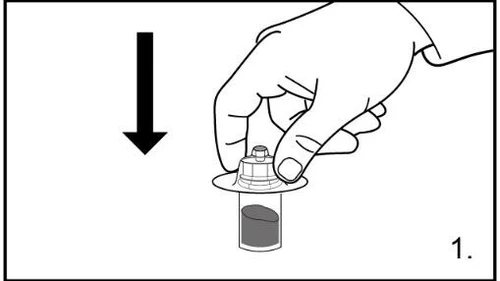 |
|
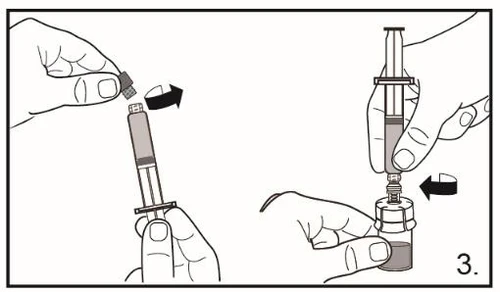 | |
 |
|
| |
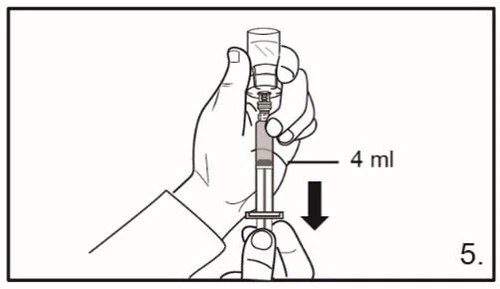
- Invert the vial and draw up to the syringe's marking line.
Always ensure that the exact volume is drawn up
and adjust for any possible
- Detach the syringe from the adapter and attach the deep subcutaneous injection needle to the syringe.
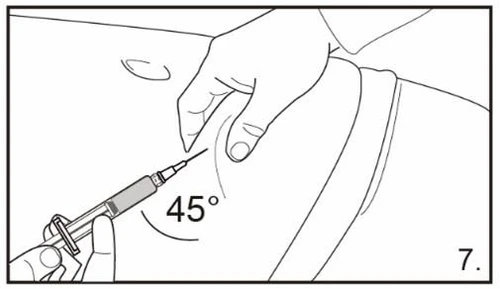
- Perform a deep subcutaneous injection. To do so: grasp the skin of the abdomen, lift the subcutaneous tissue, and insert the needle deeply at an angle not less than 45 degrees. Inject slowly 4 ml of Degarelix Accord 80 mg immediately after reconstitution.*
* Chemical and physical in-use stability has been demonstrated for 4 hours at 25 °C. From a microbiological standpoint, unless the reconstitution method excludes the risk of bacterial contamination, the product should be used immediately. If not used immediately, the times and conditions of use are the responsibility of the user.
- Injections must not be administered in areas where the patient may be exposed to pressure, such as the belt area, areas with bands, or near the ribs. Do not inject directly into a vein. Gently pull back the syringe plunger to check whether blood has been aspirated. If blood appears in the syringe, the medicinal product must not be used; discontinue the procedure and discard the syringe and needle (reconstitute a new dose for the patient).
Patient information leaflet
Degarelix Accord 120 mg powder and solvent for injectable solution
degarelix
Please read this leaflet carefully before using this medicine because it contains important information for you.
- Keep this leaflet. You may need to read it again.
- If you have any questions, consult your doctor.
- If you experience any side effects, including those not listed in this leaflet, tell your doctor or pharmacist. See section 4.
Contents of this leaflet:
- What Degarelix Accord is and what it is used for
- What you need to know before using Degarelix Accord
- How to use Degarelix Accord
- Possible side effects
- How to store Degarelix Accord
- Contents of the pack and other information
1. What Degarelix Accord is and what it is used for
Degarelix Accord contains degarelix.
Degarelix is a synthetic hormonal blocker used in the treatment of prostate cancer and in the treatment of high-risk prostate cancer prior to radiotherapy or in combination with radiotherapy in adult male patients. Degarelix mimics a natural hormone (gonadotropin-releasing hormone, GnRH) and directly blocks its effect. By doing so, degarelix rapidly reduces the level of the male hormone testosterone, which stimulates prostate cancer.
2. What you need to know before using Degarelix Accord
Do not use Degarelix Accord
- If you are allergic to degarelix or to any of the other ingredients of this medicine (listed in section 6)
Warnings and precautions
Inform your doctor if you are in any of the following conditions:
- You have any cardiovascular problems or heart rhythm disorders (arrhythmia), or you are taking medicines to treat such conditions. Heart rhythm problems may worsen during treatment with Degarelix Accord.
- You have diabetes mellitus. Worsening of diabetes or new onset diabetes may occur. If you have diabetes, your blood glucose levels should be monitored more frequently.
- You have liver problems. You may need to have liver function tests.
- You have kidney problems. The use of Degarelix Accord has not been studied in patients with severe kidney disease.
- You have osteoporosis or any other condition affecting bone strength. Reduced testosterone levels may lead to decreased bone mineral density (bone thinning).
- You have a history of severe hypersensitivity. The use of Degarelix Accord has not been studied in patients with severe hypersensitivity reactions.
For athletes: using this medicine without therapeutic need constitutes doping and may result in a positive anti-doping test.
Children and adolescents
Do not give this medicine to children or adolescents.
Other medicines and Degarelix Accord
Degarelix Accord may interact with certain medicines used for heart rhythm disorders (e.g.
quinidine, procainamide, amiodarone and sotalol) or with other drugs that may affect heart rhythm
(e.g. methadone (used for pain relief and in drug addiction detoxification programs), moxifloxacin (an antibiotic), antipsychotics).
Inform your doctor if you are taking, have recently taken, or might take any other medicines, including those without a prescription.
Driving and using machines
Tiredness and dizziness are common side effects that may affect your ability to drive or operate machinery. These effects may be due to the treatment or to the underlying disease itself.
3. How to use Degarelix Accord
This medicine is usually administered by a doctor or nurse.
The recommended initial dose consists of two consecutive 120 mg injections. After this, you will receive a monthly 80 mg injection. The injected liquid forms a gel that releases degarelix over a period of one month.
Degarelix Accord must be injected ONLY under the skin (subcutaneously). Degarelix Accord must NOT be injected into a blood vessel (intravenously). Precautions must be taken to avoid accidental intravenous injection. The injection site should be rotated within the abdominal area.
If you forget to use Degarelix Accord
If you think you have missed your monthly dose of Degarelix Accord, inform your doctor. If you have any further questions about the use of this medicine, ask your doctor.
4. Possible side effects
Like all medicines, this medicine can cause side effects, although not everyone experiences them.
Severe allergic reactions to this medicine are rare. Seek immediate medical attention if you develop a severe rash, itching, or shortness of breath or difficulty breathing. These may be symptoms of a serious allergic reaction.
Very common (may affect more than 1 in 10 people):
Hot flushes, pain and redness at the injection site. Injection site reactions are more common with the initial dose and less common with the maintenance dose.
Common (may affect up to 1 in 10 people):
- Swelling, nodules, and hardening at the injection site
- Chills, fever, or flu-like syndrome after injection
- Sleep disorders, fatigue, dizziness, headache
- Weight gain, nausea, diarrhea, elevated levels of certain liver enzymes
- Excessive sweating (including night sweats), skin rash
- Anaemia
- Musculoskeletal pain and disorders
- Decreased testicular volume, breast swelling, impotence
Uncommon (may affect up to 1 in 100 people):
- Loss of sexual desire, testicular pain, pelvic pain, ejaculatory failure, genital irritation, breast pain
- Depression, psychiatric disturbances
- Skin redness, hair loss, skin nodules, numbness
- Allergic reactions, urticaria, itching
- Decreased appetite, constipation, vomiting, dry mouth, abdominal pain and discomfort, increased blood sugar levels/diabetes mellitus, increased cholesterol, changes in blood calcium levels, weight loss
- Increased blood pressure, changes in heart rate, changes in ECG (prolongation of the QT interval), palpitations, dyspnoea, peripheral oedema
- Muscle weakness, muscle spasms, joint swelling/stiffness, osteoporosis/osteopenia, joint pain
- Frequent need to urinate, urinary urgency, difficulty or pain when urinating, nocturia, impaired renal function, incontinence
- Blurred vision
- Injection site discomfort including decreased blood pressure and heart rate (vasovagal reaction)
- Malaise
Rare (may affect up to 1 in 1,000 people):
- Febrile neutropenia (very low white blood cell count in combination with fever), heart attack, heart failure
- Unexplained muscle pain or cramps, tenderness or weakness. Muscle problems may be severe, including muscle rupture leading to kidney damage
Very rare (may affect up to 1 in 10,000 people):
- Infection, abscess, and necrosis at the injection site
Reporting of side effects
If you experience any side effect, including those not listed in this leaflet, consult your doctor. You can also report side effects directly via the national reporting system listed in Annex V.
Reporting side effects can help provide more information on the safety of this medicine.
5. How to store Degarelix Accord
Keep this medicine out of the sight and reach of children.
Do not use this medicine after the expiry date stated on the vials, syringes and outer carton.
The expiry date refers to the last day of that month.
Store below 25 °C.
After reconstitution
This medicine is stable for 4 hours at 25 °C.
Due to the risk of microbial contamination, this medicine must be used immediately.
If not used immediately, the responsibility for use of this medicine lies with the user.
Do not dispose of any medicine via wastewater or household waste. Ask your pharmacist how to dispose of medicines no longer required. This will help protect the environment.
6. Package contents and other information
What Degarelix Accord contains
- The active substance is degarelix. Each vial contains 120 mg of degarelix (as acetate). After reconstitution, 1 ml of the reconstituted solution contains 40 mg of degarelix.
- The other ingredient of the powder is mannitol.
- The solvent is water for injections.
What Degarelix Accord looks like and contents of the pack
Degarelix Accord is a powder and solvent for solution for injection. The powder is white or almost white. The solvent is a colourless and clear solution.
Degarelix Accord is available in one pack size.
The pack containing 2 trays includes:
2 vials of powder containing 120 mg of degarelix and 2 pre-filled syringes containing 3 ml of solvent,
2 plungers, 2 vial adapters, and 2 injection needles.
Not all pack sizes may be marketed.
Marketing Authorisation Holder
Accord Healthcare S.L.U.
World Trade Center, Moll de Barcelona, s/n,
Edifici Est 6ª planta,
08039 Barcelona,
Spain
Manufacturer
Accord Healthcare Polska Sp.z o.o.
ul. Lutomierska 50,
95-200 Pabianice, Poland
Or
Laboratori Fundació Dau
C/ C, 12-14 Pol. Ind.
Zona Franca, Barcelona, 08040,
Spain
Or
Accord Healthcare B.V.
Winthontlaan 200, 3526KV Utrecht
The Netherlands
Or
Pharmadox Healthcare Limited
KW20A Kordin Industrial Park, Paola
PLA 3000, Malta
Detailed information on this medicine is available on the European Medicines Agency website: http://www.ema.europa.eu/.
The following information is intended exclusively for healthcare professionals:
Instructions for proper use
NOTE:
- DO NOT SHAKE THE VIALS
The pack contains two vials of powder and two pre-filled syringes of solvent, which must be
prepared for subcutaneous injection. Therefore, the procedure described below must be repeated a
second time.
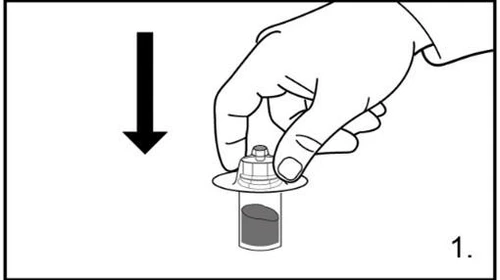
- Remove the cap from the vial adapter package. Attach the adapter to the powder vial by pressing down firmly until the tip pierces the rubber stopper and the adapter clicks into place.
- Prepare the pre-filled syringe by inserting the plunger.
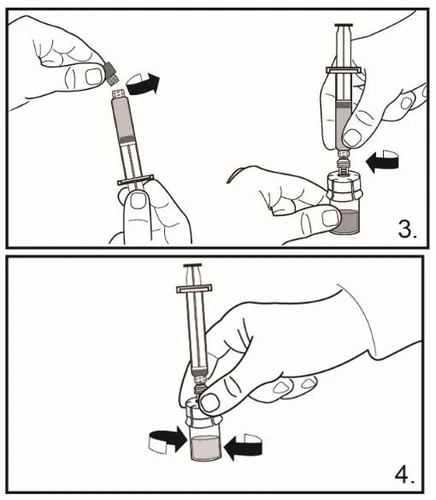
- Remove the cap from the pre-filled syringe. Attach the syringe to the powder vial by screwing it onto the adapter. Transfer all the solvent into the powder vial.
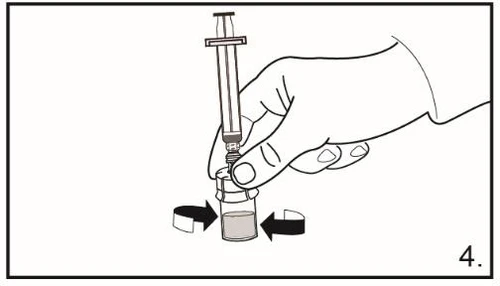
4. While keeping the syringe attached to the adapter,
gently rotate the vial until the solution appears clear and free of particles or undissolved powder.
If any powder adheres to the vial above the liquid surface, the vial may be tilted slightly.
Avoid shaking to prevent foam formation.
The formation of a ring of small air bubbles at the liquid surface is acceptable. Reconstitution
usually takes a few minutes but may require up to 15 minutes in some cases.
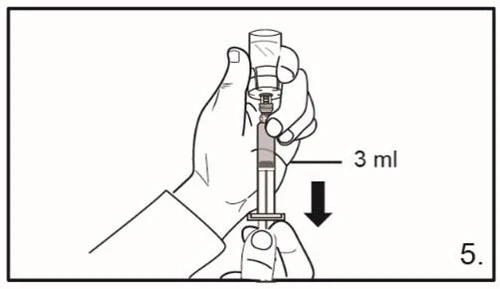
- Invert the vial and withdraw the solution up to the syringe’s marking line.
Always ensure that the exact volume is withdrawn,
and adjust for any air bubbles.
-
Detach the syringe from the adapter and attach the deep subcutaneous injection needle to the syringe.
-
Administer a deep subcutaneous injection. To do this: grasp the skin of the abdomen, lift the
subcutaneous tissue, and insert the needle deeply at an angle not less than 45 degrees.
Slowly inject 3 ml of Degarelix Accord 120 mg immediately after reconstitution.*
* Chemical and physical in-use stability has been demonstrated for 4 hours at 25 °C. From a microbiological standpoint, unless the reconstitution method excludes the risk of bacterial contamination, the product should be used immediately. If not used immediately, the duration and conditions of storage prior to use are the responsibility of the user. -
Injections should not be administered in areas where the patient may be exposed to pressure, such as under a belt line, tight clothing, or near the ribs.
Do not inject directly into a vein. Gently pull back on the syringe plunger to check for blood. If blood appears in the syringe, the product must not be used; discontinue the procedure and discard the syringe and needle (reconstitute a new dose for the patient).
- Repeat the reconstitution procedure for the second dose. Select a different injection site and inject 3 ml.