Deflazacort EG
Italy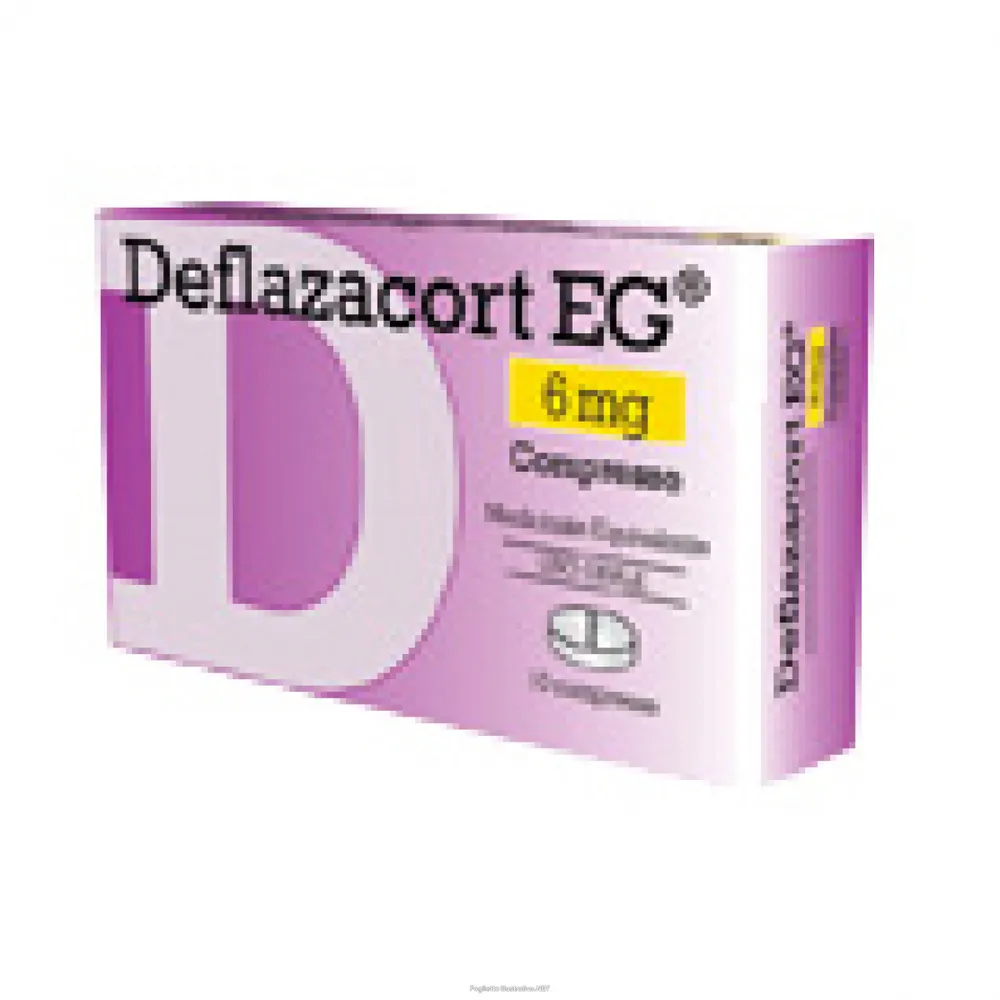
Table of Contents
- Package leaflet: Information for the patient
- DEFLAZACORT EG 6 mg tablets, 30 mg tablets
- 1. What DEFLAZACORT EG is and what it is used for
- 2. What you should know before taking DEFLAZACORT EG
- 3. How to take DEFLAZACORT EG
- 4. Possible side effects
- 5. How to store DEFLAZACORT EG
- 6. Package contents and other information
Package leaflet: Information for the patient
DEFLAZACORT EG 6 mg tablets, 30 mg tablets
Equivalent medicine
Please read this leaflet carefully before taking this medicine, as it contains important information for you.
- Keep this leaflet. You may need to read it again.
- If you have any questions, ask your doctor or pharmacist.
- This medicine has been prescribed for you only. Do not give it to other people, even if their symptoms are the same as yours, as it could be harmful.
- If you experience any adverse reactions, including those not listed in this leaflet, contact your doctor or pharmacist. See section 4.
Contents of this leaflet:
- What DEFLAZACORT EG is and what it is used for
- What you need to know before taking DEFLAZACORT EG
- How to take DEFLAZACORT EG
- Possible side effects
- How to store DEFLAZACORT EG
- Contents of the pack and other information
1. What DEFLAZACORT EG is and what it is used for
This medicinal product contains the active substance deflazacort, which belongs to a group of medicines called glucocorticoids with anti-inflammatory activity.
DEFLAZACORT EG is indicated for the treatment of:
- reduced adrenal function (primary and secondary adrenocortical insufficiency), alone or in combination with hormones (mineralocorticoids);
- rheumatic diseases (psoriatic arthropathy, rheumatoid arthritis, ankylosing spondylitis, acute gouty arthritis, post-traumatic osteoarthritis, acute and subacute bursitis, acute non-specific tenosynovitis, epicondylitis);
- collagen diseases (systemic lupus erythematosus, acute rheumatic carditis, systemic dermatomyositis);
- dermatological diseases (pemphigus, bullous dermatitis herpetiformis, severe polymorphous erythema, Stevens-Johnson syndrome, exfoliative dermatitis, mycosis fungoides such as cutaneous lymphoma, severe psoriasis, severe seborrheic dermatitis);
- allergic conditions (seasonal or perennial allergic rhinitis, bronchial asthma, contact dermatitis, atopic dermatitis, serum sickness, drug hypersensitivity);
- severe and chronic eye inflammation and allergies (allergic marginal keratoconjunctival ulcers, ocular herpes zoster, inflammation of the anterior segment of the eyeball, posterior diffuse choroiditis and uveitis, sympathetic ophthalmia, allergic conjunctivitis, keratitis, chorioretinitis, optic neuritis, iritis and iridocyclitis);
- blood disorders (secondary thrombocytopenia in adults, autoimmune hemolytic anemia, erythroblastopenia, congenital hypoplastic anemia, Hodgkin's disease, non-Hodgkin lymphomas, chronic lymphocytic leukemia, acute leukemia in childhood);
- edematous conditions: idiopathic or secondary nephrotic syndrome (kidney disease) due to Systemic Lupus Erythematosus;
- gastrointestinal diseases (ulcerative colitis, regional enteritis).
2. What you should know before taking DEFLAZACORT EG
Do not take DEFLAZACORT EG
- if you are allergic to deflazacort or to any of the other ingredients of this medicine (listed in section 6);
- if you have a lung infection (active tuberculosis);
- if you have a stomach or intestinal problem called peptic ulcer;
- if you have an eye infection caused by the Herpes simplex virus;
- if you have fungal infections (systemic mycotic infections);
- if you have mental disorders (psychosis);
- if you have been administered a live attenuated vaccine.
Warnings and precautions
Talk to your doctor or pharmacist before taking DEFLAZACORT EG.
Contact your doctor if you experience blurred vision or other visual disturbances.
Take this medicine with caution and always under medical supervision in the following cases:
- if you are under stress. In this case, your doctor will determine the appropriate dose according to your condition;
- if you have reduced hormone production by the thyroid gland (hypothyroidism);
- if you have a severe liver problem (hepatic cirrhosis);
- if you have mood or personality disorders (euphoria, depression, psychosis) or sleep disturbances (insomnia), as these may worsen;
- if you have a latent lung infection (latent tuberculosis) or if you test positive on a test called the tuberculin test. Close medical monitoring is recommended, as the disease may become activated. If you have tuberculosis, take this medicine only if the disease is in an advanced stage (fulminant disease) or has spread to other organs (disseminated disease). In such cases, antibiotic treatment is also required;
- if you have an inflammatory bowel disease with risk of perforation (non-specific ulcerative colitis), if you have collections of pus (abscesses) or skin infections (pyogenic infections), if you have a bowel problem (diverticulitis, intestinal anastomoses), if you have kidney problems (renal failure), if you suffer from high blood pressure (hypertension), if you have diabetes, if you have a bone disease (osteoporosis), or if you have a muscle disease (myasthenia gravis);
- if you are taking medicines to eliminate fluids through urine (thiazide diuretics, furosemide) or medicines for the treatment of asthma (beta-agonists) such as reproterol. Consult your doctor, as it is necessary to monitor potassium levels and blood pH. Inform your doctor if any of the following occur during treatment with this medicine:
- onset of infections. In this case, specific antibiotic therapy may be required;
- decreased production of cortisol, a hormone produced by the adrenal glands (secondary adrenal insufficiency). In this case, your doctor may decide to reduce the dose or prescribe specific hormone replacement therapy (mineralocorticoid hormones);
- changes in blood electrolyte levels, especially if you have taken DEFLAZACORT EG for a prolonged period and at high doses. In such cases, adequate intake of sodium and potassium is necessary. Furthermore, DEFLAZACORT EG may increase calcium excretion in urine.
During treatment with DEFLAZACORT EG, if you have never had chickenpox, avoid contact with people who have chickenpox or an infection caused by the herpes zoster virus. Also, exercise caution if you come into contact with people who have measles. If you do come into contact with such individuals, inform your doctor immediately. Be particularly careful if your child has measles.
If you are taking this medicine, you must not receive the smallpox vaccine or other types of vaccines (immunization procedures), as this may lead to a reduced immune response (antibody response) and neurological problems (neurological complications).
For athletes: using this medicine without therapeutic need constitutes doping and may result in a positive anti-doping test.
Children
DEFLAZACORT EG should be used in children only under strict medical supervision. Children who have taken corticosteroids for prolonged periods must be closely monitored for growth and development (see section 4 “Additional undesirable effects in children and adolescents”).
Other medicines and DEFLAZACORT EG
Tell your doctor or pharmacist if you are taking, have recently taken, or might take any other medicines, including those obtained without a prescription.
Some medicines can increase the effects of DEFLAZACORT EG, and your doctor may want to monitor you closely if you are taking these medicines (including certain HIV treatments: ritonavir, cobicistat).
Take this medicine with caution and consult your doctor if you are taking any of the following medicines:
- medicines used to reduce seizures (phenobarbital, diphenylhydantoin, carbamazepine, phenytoin, primidone);
- certain medicines used to treat bacterial infections (rifampicin, rifabutin);
- medicines used to thin the blood (coumarin anticoagulants, e.g. warfarin); consult your doctor, as specific monitoring (prothrombin time or INR) is required;
- ephedrine, a medicine used as a bronchodilator;
- aminoglutethimide, a medicine used to reduce steroid hormone production. In these cases, the maintenance dose of DEFLAZACORT EG may need to be increased.
- Medicines for treating bacterial infections (erythromycin, troleandomycin) or ketoconazole used for fungal infections. In this case, the dose of DEFLAZACORT EG may need to be reduced;
- acetylsalicylic acid (an anti-inflammatory medicine). Consult your doctor if you suffer from a blood disorder called hypoprothrombinemia;
- medicines used to reduce stomach acidity (antacids), as they may reduce the intestinal absorption of DEFLAZACORT EG;
- quetiapine, a medicine used for mental disorders;
- female hormones (estrogens); concurrent use of oral contraceptives may increase DEFLAZACORT EG levels;
- medicines for treating infections (anti-infectives);
- medicines for treating diabetes (oral agents and insulin);
- medicines for controlling blood pressure or heart conditions (antihypertensives, loop diuretics, thiazide diuretics), medicines used for treating asthma (xanthines and beta2-agonists), and carbenoxolone, a medicine used for stomach problems. Consult your doctor, as increased potassium loss from the blood may occur;
- medicines used to relax muscles (non-depolarizing muscle relaxants). Concurrent use of these medicines with DEFLAZACORT EG may cause prolonged muscle relaxation and muscle problems (acute myopathy).
Pregnancy and breastfeeding
If you are pregnant, think you may be pregnant, are planning a pregnancy, or are breastfeeding, consult your doctor or pharmacist before taking this medicine.
If you are pregnant or breastfeeding, take DEFLAZACORT EG only if absolutely necessary and under direct medical supervision, as it may cause harm to the fetus or newborn.
Driving and using machines
There are no available data to assess the effects on the ability to drive or operate machinery.
DEFLAZACORT EG 6 mg tablets contain lactose and sucrose
If your doctor has diagnosed you with an intolerance to certain sugars, contact him/her before taking this medicine.
May be harmful to teeth.
DEFLAZACORT EG 30 mg tablets contain lactose
If your doctor has diagnosed you with an intolerance to certain sugars, contact him/her before taking this medicine.
3. How to take DEFLAZACORT EG
Take this medicine exactly as directed by your doctor or pharmacist. If you have
any doubts, consult your doctor or pharmacist.
It is recommended to take the daily dose as a single dose in the morning, with a small amount of food,
orally.
The tablets cannot be divided. Therefore, if the required dose cannot be achieved with the available
strengths, another medicine must be used.
The recommended starting dose in adults ranges from 6 mg to 90 mg per day. Your doctor will determine
the necessary dose and duration of treatment according to your condition and therapeutic response. If the
dose needs to be reduced, this should be done gradually.
If you take more DEFLAZACORT EG than you should
In case of accidental overdose, contact your doctor immediately or go to the nearest hospital.
If you forget to take DEFLAZACORT EG
Do not take a double dose to make up for the forgotten tablet.
If you have any doubts about how to use this medicine, consult your doctor or pharmacist.
If you stop treatment with DEFLAZACORT EG
If you have any doubts about how to use this medicine, consult your doctor or pharmacist.
4. Possible side effects
Like all medicines, this medicine can cause side effects, although not everybody gets them.
The following side effects may occur:
- weight gain, increased appetite, disturbances in sugar metabolism (reduced glucose tolerance), latent diabetes mellitus, need to increase antidiabetic medication in diabetic patients;
- changes in blood electrolyte levels (electrolyte imbalance), which may rarely lead to heart problems (hypertension and congestive heart failure);
- increased risk of infections without symptoms, lung infection caused by a bacterium (latent tuberculosis), fungal infections (candidiasis);
- bone problems (osteoporosis), bone fragility, muscle problems (myopathies), vertebral and long bone fractures, death of bone tissue (avascular necrosis), tendon inflammation (tendinitis), tendon rupture when administered with quinolones (medicines used to treat bacterial infections);
- dizziness, headache (cephalalgia), increased pressure in the brain (intracranial pressure), worsening of epilepsy;
- mental disturbances such as: irritability, feelings of worry or fear (anxiety), suicidal thoughts, obsessive ideas and behaviors (mania), delusions, hallucinations, worsening of schizophrenia, feeling of well-being (euphoria), sleep disorders (insomnia), mood or personality changes, severe depression, memory (amnesia) and attention disturbances (cognitive disorders), including confusion;
- delayed wound healing, thinning and fragility of the skin, increased hair growth in body areas where it is not normally present (hirsutism), appearance of "pimples" (acne), stretch marks (striae), bruising (ecchymoses), dilation of small superficial blood vessels (telangiectasia), swelling in different parts of the body due to fluid retention (edema);
- eye disorders (posterior subcapsular cataract), increased eye pressure (intraocular pressure), inflammation of the inner membrane of the eye (chorioretinopathy), thinning of the white part of the eye (sclera) or of the membrane covering the eye (cornea), worsening of viral or fungal eye diseases (viral or fungal ophthalmic diseases); blurred vision (side effect not known (frequency cannot be determined from the available data.))
- stomach and intestinal disorders (peptic ulcer), digestive difficulties (dyspepsia), bleeding, nausea;
- irregular menstrual cycle;
- heart problems (heart failure);
- increased loss of protein (negative nitrogen balance);
- disruption of the connection between the brain and the adrenal gland (interference with hypothalamic-pituitary-adrenal axis function), particularly during periods of stress, hormonal disturbances (endocrine dysfunction), changes in physical appearance ("moon face");
- increased number of white blood cells in the blood (leukocytosis);
- allergic reactions (hypersensitivity);
- formation of blood clots in the veins (venous thromboembolism) in patients prone to thrombosis, increased pressure around the brain (benign intracranial hypertension).
Side effects not known (frequency cannot be determined from the available data.):
- blurred vision.
Additional side effects in children and adolescents
The following side effect may occur:
- growth disorders.
Reporting of side effects
If you experience any side effects, including those not listed in this leaflet, please consult your doctor or pharmacist. You may also report side effects directly through the national reporting system at the following website: http://www.agenziafarmaco.gov.it/content/come-segnalare-una-sospetta-reazione-avversa. By reporting side effects, you can help provide more information on the safety of this medicine.
5. How to store DEFLAZACORT EG
Keep this medicine out of the sight and reach of children.
Do not use this medicine after the expiry date stated on the packaging after "Exp".
The expiry date refers to the last day of that month.
This medicine does not require any special storage conditions.
Do not dispose of any medicine via wastewater or household waste. Ask your pharmacist how to dispose of medicines you no longer use. This will help protect the environment.
6. Package contents and other information
What DEFLAZACORT EG 6 mg tablets contains
- The active substance is deflazacort: one tablet contains 6 mg of deflazacort.
- The other components are: monohydrate lactose, magnesium stearate, pregelatinized starch, microcrystalline cellulose, sucrose, anhydrous colloidal silica.
What DEFLAZACORT EG 30 mg tablets contains
- The active substance is deflazacort: one tablet contains 30 mg of deflazacort.
- The other components are: monohydrate lactose, magnesium stearate, pregelatinized starch, microcrystalline cellulose, anhydrous colloidal silica.
Description of the appearance of DEFLAZACORT EG and package contents
Blister pack containing 10 tablets.
Marketing Authorization Holder
EG S.p.A., Via Pavia 6, 20136 Milano
Manufacturer
Doppel Farmaceutici S.r.l. - Via Martiri delle Foibe, 1 - 29016 - Cortemaggiore (Piacenza)