Deferasirox Accord
Italy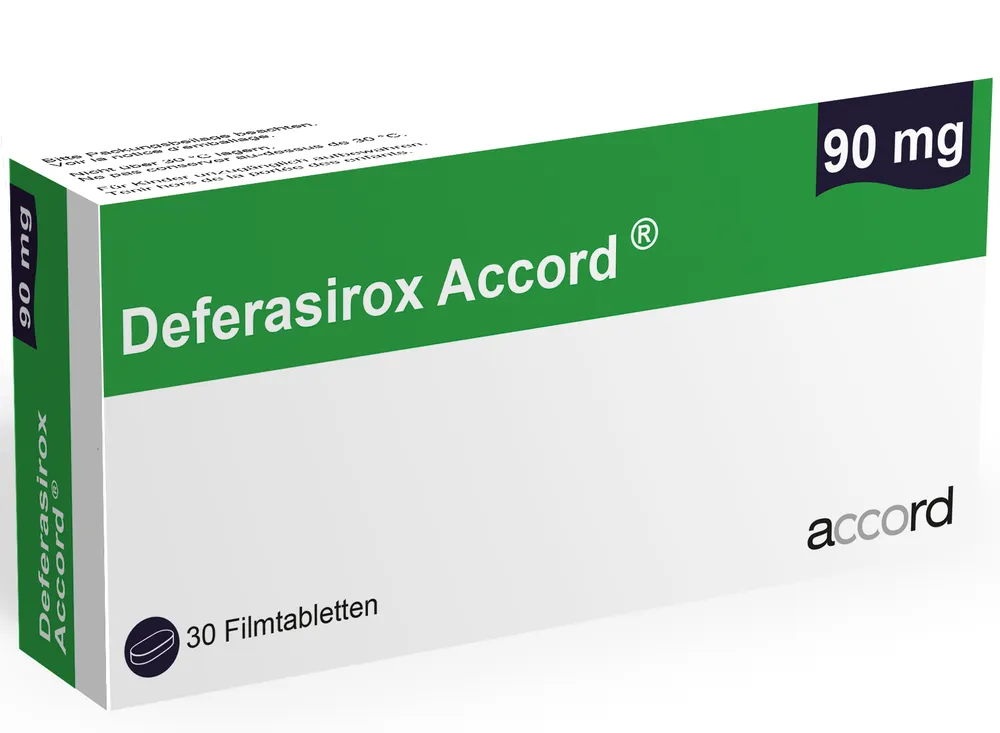
Table of Contents
- Package leaflet: Information for the user
- Deferasirox Accord 90 mg film-coated tablets, 180 mg film-coated tablets, 360 mg film-coated tablets
- 1. What is Deferasirox Accord and what is it used for
- 2. What you need to know before taking Deferasirox Accord
- 3. How to take Deferasirox Accord
- 4. Possible side effects
- 5. How to store Deferasirox Accord
- 6. Package contents and other information
Package leaflet: Information for the user
Deferasirox Accord 90 mg film-coated tablets, 180 mg film-coated tablets, 360 mg film-coated tablets
deferasirox
Please read all of this leaflet carefully before taking this medicine because it contains important information for you.
- Keep this leaflet. You may need to read it again.
- If you have any questions, ask your doctor or pharmacist.
- This medicine has been prescribed for you only. Do not give it to other people, even if they have the same symptoms as you, because it could be harmful.
- If you experience any side effects, including those not listed in this leaflet, tell your doctor or pharmacist. See section 4.
Contents of this leaflet
- What Deferasirox Accord is and what it is used for
- What you need to know before taking Deferasirox Accord
- How to take Deferasirox Accord
- Possible side effects
- How to store Deferasirox Accord
- Contents of the pack and other information
1. What is Deferasirox Accord and what is it used for
What is Deferasirox Accord
Deferasirox Accord contains an active substance called deferasirox. It is an iron chelator, that is
a medicine used to remove excess iron from the body (iron overload).
Deferasirox binds excess iron and removes it from the body, primarily through the faeces.
What Deferasirox Accord is used for
Patients with various forms of anaemia (for example, thalassaemia, sickle cell anaemia, or myelodysplastic syndromes (MDS)) may require repeated blood transfusions.
However, these can lead to excess iron in the body. This occurs because blood contains iron, and the body has no natural way to eliminate the excess iron introduced through blood transfusions. In patients with thalassaemic syndromes who are not receiving blood transfusions, iron overload may also develop over time, primarily due to increased dietary iron absorption in response to a low number of blood cells.
Over time, excess iron can damage vital organs such as the liver and heart. Medicines known as iron chelators are used to remove excess iron and reduce the risk of organ damage.
Deferasirox Accord is used to treat iron overload due to frequent blood transfusions in patients with beta-thalassaemia major aged 6 years and older.
Deferasirox Accord is also used to treat iron overload when therapy with deferoxamine is contraindicated or inadequate in patients with beta-thalassaemia major who have iron overload due to infrequent blood transfusions, in patients with other forms of anaemia, and in children aged between 2 and 5 years.
Deferasirox Accord is also used when therapy with deferoxamine is contraindicated or inadequate for the treatment of patients aged 10 years and older who have iron overload associated with thalassaemic syndromes but who do not require blood transfusions.
2. What you need to know before taking Deferasirox Accord
Do not take Deferasirox Accord
- if you are allergic to deferasirox or to any of the other ingredients of this medicine (listed in section 6). If this applies to you, inform your doctor before taking Deferasirox Accord. If you think you may be allergic, consult your doctor.
- if you have moderate or severe kidney disease.
- if you are currently taking any other iron chelating medicine.
Deferasirox Accord is not recommended
- if you have advanced myelodysplastic syndrome (MDS: reduced production of blood cells by the bone marrow) or advanced-stage cancer.
Warnings and precautions
Talk to your doctor or pharmacist before taking Deferasirox Accord:
- if you have kidney or liver problems.
- if you have heart problems due to iron overload.
- if you notice a marked reduction in urine output (a sign of kidney problems).
- if you develop a severe skin rash, or have difficulty breathing, dizziness, or swelling, particularly of the face and throat (signs of a severe allergic reaction, see also section 4 “Possible side effects”).
- if you experience a combination of any of the following symptoms: rash, red skin, blistering of the lips, eyes or mouth, skin peeling, high fever, flu-like symptoms, swollen lymph nodes (signs of a severe skin reaction, see also section 4 “Possible side effects”).
- if you experience a combination of drowsiness, pain in the upper right abdomen, yellowing or increased yellowing of the skin or eyes, and dark urine (signs of liver problems).
- if you experience difficulty thinking, remembering information, or solving problems, if you feel less alert or aware, or feel very drowsy with low energy (signs of high blood ammonium levels, which may be associated with liver or kidney problems, see also section 4 “Possible side effects”).
- if you vomit blood and/or have black stools.
- if you experience frequent abdominal pain, especially after eating or taking Deferasirox Accord.
- if you frequently have heartburn.
- if you have low platelet or white blood cell counts in blood tests.
- if you have blurred vision.
- if you have diarrhoea or vomiting. If any of these situations apply to you, inform your doctor immediately.
Monitoring during treatment with Deferasirox Accord
During treatment, you will have regular blood and urine tests. These will monitor the amount of iron in your body (blood ferritin level) to assess how well Deferasirox Accord is working. The tests will also monitor kidney function (blood creatinine level, presence of protein in urine) and liver function (blood transaminase levels). Your doctor may request a kidney biopsy if significant kidney damage is suspected. To determine the amount of iron in the liver, you may also undergo magnetic resonance imaging (MRI) scans. Your doctor will use these test results to determine the most appropriate dose of Deferasirox Accord for you and to decide when treatment should be stopped.
As a precautionary measure, your vision and hearing will be checked annually during treatment.
Other medicines and Deferasirox Accord
Tell your doctor or pharmacist if you are taking, have recently taken, or might take any other medicines. This is particularly important for:
- other iron chelators, which must not be taken with Deferasirox Accord,
- antacids (medicines used to treat heartburn) containing aluminium, which must not be taken at the same time of day as Deferasirox Accord,
- ciclosporin (used to prevent rejection of a transplanted organ or for other conditions such as rheumatoid arthritis or atopic dermatitis),
- simvastatin (used to lower cholesterol),
- certain painkillers or anti-inflammatory medicines (e.g. aspirin, ibuprofen, corticosteroids),
- oral bisphosphonates (used to treat osteoporosis),
- anticoagulant medicines (used to prevent or treat blood clotting),
- hormonal contraceptives (medicines for birth control),
- bepridil, ergotamine (used for heart conditions and migraines),
- repaglinide (used to treat diabetes),
- rifampicin (used to treat tuberculosis),
- phenytoin, phenobarbital, carbamazepine (used to treat epilepsy),
- ritonavir (used to treat HIV infection),
- paclitaxel (used in cancer treatment),
- theophylline (used to treat respiratory diseases such as asthma),
- clozapine (used to treat psychiatric disorders such as schizophrenia),
- tizanidine (used as a muscle relaxant),
- colestyramine (used to reduce cholesterol levels in the blood),
- busulfan (used as a pre-transplant treatment to destroy the original bone marrow before transplantation),
- midazolam (used to relieve anxiety and/or sleep disorders).
Additional monitoring may be needed to check blood levels of some of these medicines.
Elderly (age 65 years or older)
Deferasirox Accord can be used in people aged 65 years or older at the same dose as in adults. Elderly patients may experience more side effects (particularly diarrhoea) than younger patients. They should be closely monitored by their doctor for side effects that may require dose adjustment.
Children and adolescents
Deferasirox Accord can be used in children and adolescents aged 2 years and older who receive regular blood transfusions, and in children and adolescents aged 10 years and older who do not receive regular blood transfusions. The doctor will adjust the dose according to the patient’s growth.
Deferasirox Accord is not recommended for children under 2 years of age.
Pregnancy and breastfeeding
If you are pregnant, think you may be pregnant, planning to become pregnant, or are breastfeeding, consult your doctor before taking this medicine.
Deferasirox Accord is not recommended during pregnancy unless strictly necessary.
If you are currently using a hormonal contraceptive to prevent pregnancy, you should use an additional or different type of contraception (e.g. a condom), as Deferasirox Accord may reduce the effectiveness of hormonal contraceptives.
Breastfeeding is not recommended during treatment with Deferasirox Accord.
Driving and using machines
If you feel dizzy after taking Deferasirox Accord, do not drive or operate tools or machinery until the dizziness has resolved.
Deferasirox Accord contains lactose (a type of sugar)
If your doctor has diagnosed you with an intolerance to certain sugars, contact them before taking this medicine.
Deferasirox Accord contains sodium
This medicine contains less than 1 mmol of sodium (23 mg) per tablet, i.e., essentially “sodium-free”.
Deferasirox contains castor oil
This medicine may cause gastrointestinal disturbances and diarrhoea.
3. How to take Deferasirox Accord
Treatment with Deferasirox Accord will be monitored by a doctor experienced in the treatment of iron overload caused by blood transfusions.
Always take this medicine exactly as your doctor has instructed you. If you have any doubts, consult your doctor or pharmacist.
How much Deferasirox Accord to take
The dose of Deferasirox Accord is based on body weight for all patients. Your doctor will calculate the dose you need and tell you how many tablets to take each day.
- The usual starting daily dose of Deferasirox Accord film-coated tablets for patients receiving regular blood transfusions is 14 mg per kilogram of body weight. Your doctor may recommend a higher or lower starting dose depending on the need for individualized treatment.
- The usual starting daily dose of Deferasirox Accord film-coated tablets for patients not receiving regular blood transfusions is 7 mg per kilogram of body weight.
- Depending on your response to treatment, your doctor may subsequently adjust the dose by increasing or decreasing it.
- The maximum recommended daily dose of Deferasirox Accord film-coated tablets is:
- 28 mg per kilogram of body weight for patients receiving regular blood transfusions,
- 14 mg per kilogram of body weight for adult patients not receiving regular blood transfusions,
- 7 mg per kilogram of body weight for children and adolescents not receiving regular blood transfusions.
In some countries, deferasirox may also be available as dispersible tablets produced by other manufacturers. If you switch from these dispersible tablets to Deferasirox Accord film-coated tablets, the dose will change. Your doctor will calculate the required dose and inform you how many film-coated tablets to take each day.
When to take Deferasirox Accord
- Take Deferasirox Accord once daily, every day, approximately at the same time each day, with some water.
- Take Deferasirox Accord film-coated tablets on an empty stomach or with a light meal. Taking Deferasirox Accord at the same time each day will also help you remember when to take the tablets.
For patients unable to swallow the tablets whole, Deferasirox Accord film-coated tablets may be crushed and administered by sprinkling the full dose onto soft food such as yoghurt or applesauce (apple puree). The food must be consumed immediately and completely. Do not store it for later use.
How long to take Deferasirox Accord
Continue taking Deferasirox Accord every day for the duration prescribed by your doctor. This is a long-term treatment, which may last for months or years. Your doctor will monitor your condition regularly to ensure the treatment is effective (see also section 2: “Monitoring of treatment with Deferasirox Accord”).
If you have any questions about how long to take Deferasirox Accord, speak with your doctor.
If you take more Deferasirox Accord than you should
If you have taken too much Deferasirox Accord, or if someone else has accidentally taken your tablets, contact your doctor or hospital immediately for advice. Show the doctor the tablet packaging. Urgent medical treatment may be necessary. Symptoms may include abdominal pain, diarrhoea, nausea and vomiting, and kidney or liver problems, which can be serious.
If you forget to take Deferasirox Accord
If you forget to take a dose, take it as soon as you remember on the same day. Take the next dose at your usual time. Do not take a double dose the next day to make up for the missed tablet(s).
If you stop taking Deferasirox Accord
Do not stop taking Deferasirox Accord unless instructed by your doctor. If you stop taking it, excess iron will no longer be removed from your body (see also above section: “How long to take Deferasirox Accord”).
4. Possible side effects
Like all medicines, this medicine can cause side effects, although not everyone will experience them. Most side effects are mild to moderate and usually disappear after a period of treatment ranging from a few days to a few weeks.
Some side effects may be serious and require immediate medical attention.
These side effects are uncommon (may affect up to 1 in 100 people) or rare
(may affect up to 1 in 1,000 people).
- If you develop a severe skin rash, or have difficulty breathing and dizziness or swelling mainly of the face and throat (signs of a severe allergic reaction),
- If you experience a combination of any of the following symptoms: skin rash, red skin, blistering of the lips, eyes or mouth, skin peeling, high fever, flu-like symptoms, swollen lymph nodes (signs of severe skin reactions),
- If you notice a marked reduction in urine output (a sign of kidney problems),
- If you experience a combination of drowsiness, pain in the upper right part of the abdomen, yellowing or increased yellowing of the skin or eyes, and dark urine (signs of liver problems),
- If you experience difficulty thinking, remembering information, or solving problems, if you feel less alert or aware, or feel very drowsy with low energy (signs of high blood ammonium levels, which may be associated with liver or kidney problems and may lead to changes in brain function),
- If you vomit blood and/or have black stools,
- If you experience frequent abdominal pain, particularly after eating or taking
Deferasirox Accord,
- If you experience frequent heartburn,
- If you experience partial loss of vision,
- If you experience severe pain in the upper abdomen (pancreatitis), stop taking this medicine and contact your doctor immediately.
Some side effects may become serious.
These side effects are uncommon.
- If you have blurred or cloudy vision,
- If you experience hearing loss, contact your doctor as soon as possible.
Other side effects
Very common (may affect more than 1 in 10 people)
- Abnormal kidney function tests.
Common (may affect up to 1 in 10 people)
- Gastrointestinal disorders such as nausea, vomiting, diarrhoea, abdominal pain, bloating, constipation, indigestion
- Rash
- Headache
- Abnormal liver function tests
- Itching
- Abnormal urine test (protein in urine). If any of these effects becomes severe, inform your doctor.
Uncommon (may affect up to 1 in 100 people)
- Dizziness
- Fever
- Sore throat
- Swelling of arms or legs
- Change in skin colour
- Anxiety
- Sleep disorders
- Tiredness. If any of these effects becomes severe, inform your doctor.
Frequency not known (frequency cannot be estimated from the available data).
- A reduction in the number of cells involved in blood clotting (thrombocytopenia), in the number of red blood cells (worsening of anaemia), in the number of white blood cells (neutropenia), or in the number of all types of blood cells (pancytopenia)
- Hair loss
- Kidney stones
- Low urine production
- Tear or perforation in the wall of the stomach or intestine, which may be painful and cause nausea
- Severe pain in the upper abdomen (pancreatitis)
- Increased acidity of the blood (metabolic acidosis).
Reporting of side effects
If you experience any side effect, including those not listed in this leaflet, talk to your doctor or pharmacist. You can also report side effects directly through the national reporting system detailed in Annex V. Reporting side effects can help provide more information on the safety of this medicine.
5. How to store Deferasirox Accord
- Keep this medicine out of the sight and reach of children.
- Do not use this medicine after the expiry date stated on the blister after EXP and on the carton after Exp.. The expiry date refers to the last day of that month.
- Do not use the pack if it is damaged or shows signs of tampering.
- Do not dispose of any medicine via wastewater or household waste. Ask your pharmacist how to dispose of medicines you no longer use. This will help protect the environment.
6. Package contents and other information
What Deferasirox Accord contains
The active substance is deferasirox.
Each film-coated tablet (tablet) contains 90 mg of deferasirox.
Each film-coated tablet (tablet) contains 180 mg of deferasirox.
Each film-coated tablet (tablet) contains 360 mg of deferasirox.
The other components are:
Tablet core: microcrystalline cellulose; sodium croscarmellose; slow-release hydroxypropylcellulose; povidone; poloxamer; monohydrate lactose; anhydrous colloidal silica; sodium stearyl fumarate, hydrogenated castor oil (see section 2).
Tablet coating: hypromellose (E464); propylene glycol (E1520); talc (E553b); yellow iron oxide (E172); titanium dioxide (E171).
Description of the appearance of Deferasirox Accord and pack sizes:
Deferasirox Accord 90 mg film-coated tablets are yellow, oval, biconvex tablets with bevelled edges, marked with “D” on one side and “90” on the other.
Deferasirox Accord 180 mg film-coated tablets are yellow, oval, biconvex tablets with bevelled edges, marked with “D” on one side and “180” on the other.
Deferasirox Accord 360 mg film-coated tablets are yellow, oval, biconvex tablets with bevelled edges, marked with “D” on one side and “360” on the other.
Deferasirox Accord 90 mg film-coated tablets and Deferasirox Accord 180 mg film-coated tablets are available in PVC/PE/PVDC/Aluminium blisters, unit packs containing 28 x 1, 30 x 1, 56 x 1, or 90 x 1 film-coated tablets.
Deferasirox Accord 360 mg film-coated tablets are available in PVC/PE/PVDC/Aluminium blisters, unit packs containing 28 x 1, 30 x 1, 56 x 1, 90 x 1, or 300 x 1 film-coated tablets.
Marketing Authorisation Holder
Accord Healthcare S.L.U.
World Trade Center, Moll de Barcelona s/n,
Edifici Est, 6th Floor,
Barcelona, 08039
Spain
Manufacturer
Accord Healthcare Polska Sp.z.o.o.
Ul. Lutomierska 50,
96-200, Pabianice, Poland
Pharmadox Healthcare Limited
KW20A Kordin Industrial Park,
Paola PLA 3000, Malta
LABORATORI FUNDACIÓ DAU
C/ C, 12-14 Pol. Ind. Zona Franca,
Barcelona, 08040, Spain
For further information about this medicine, please contact the local representative of the Marketing Centre:
Accord Healthcare S.L.U.
AT / BE / BG / CY / CZ / DE / DK / EE / FI / FR / HR / HU / IE / IS / IT / LT / LV / LX / MT / NL / NO / PT / PL / RO / SE / SI / SK / ES
Accord Healthcare S.L.U.
Tel: +34 93 301 00 64
EL Win Medica Pharmaceutical S.A.
Tel: +30 210 7488 821
More detailed information on this medicine is available on the European Medicines Agency website: http://www.ema.europa.eu