Daunoblastina
Italy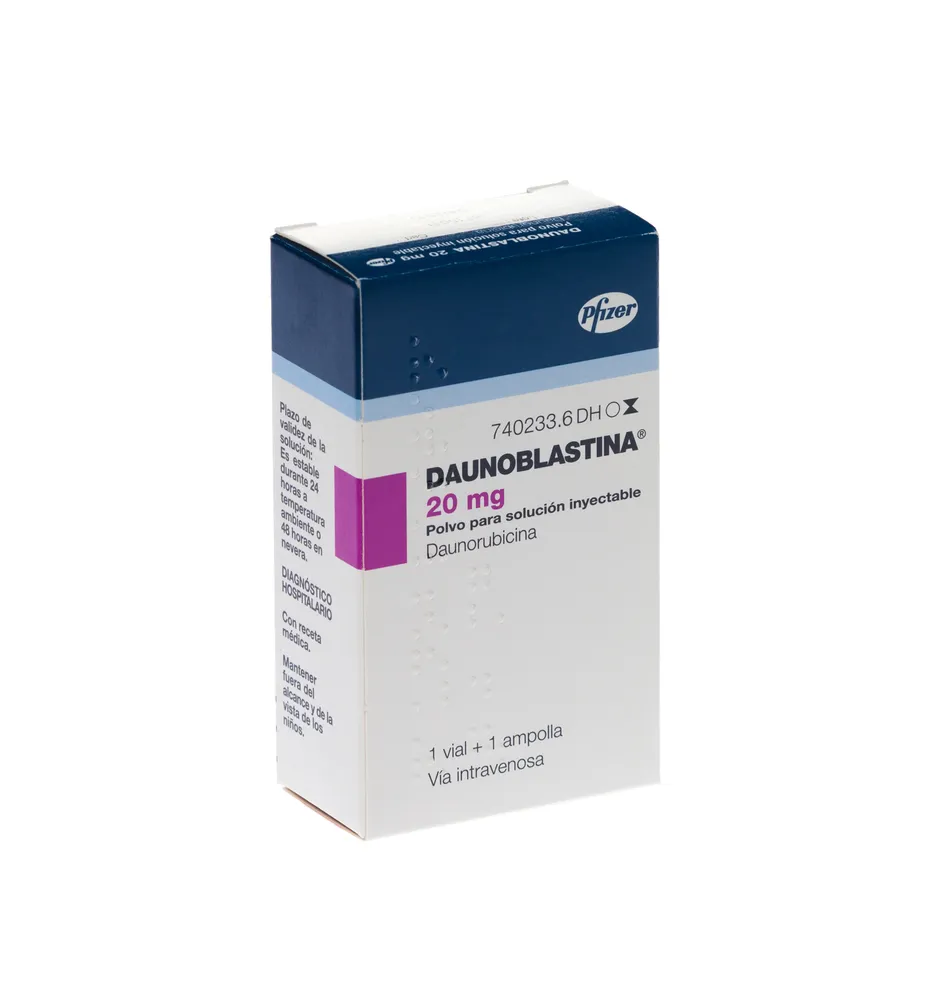
Table of Contents
- Package leaflet: Information for the user
- DAUNOBLASTINA 20 mg/10 ml powder and solvent for injectable solution
- 1. What Daunoblastina is and what it is used for
- 2. What you should know before Daunoblastina is administered
- 3. How to administer Daunorubicin
- 4. Possible side effects
- 5. How to store Daunoblastina
- 6. Package contents and other information
- The following information is intended exclusively for physicians or healthcare professionals
Package leaflet: Information for the user
DAUNOBLASTINA 20 mg/10 ml powder and solvent for injectable solution
Daunorubicin hydrochloride
Please read this leaflet carefully before this medicine is administered to you, as it contains important information for you.
- Keep this leaflet. You may need to read it again.
- If you have any questions, consult the doctor treating you or your child, or the nurse.
- If you experience any adverse reactions, including those not listed in this leaflet, consult the doctor treating you or your child, or the nurse. See section 4.
Contents of this leaflet:
- What Daunoblastina is and what it is used for
- What you need to know before Daunoblastina is administered
- How Daunoblastina is administered
- Possible side effects
- How to store Daunoblastina
- Contents of the pack and other information
1. What Daunoblastina is and what it is used for
Daunoblastina contains the active substance daunorubicin hydrochloride, which belongs to a group of medicines called cytotoxic antibiotics that act against tumours. Daunorubicin hydrochloride works by interfering with the growth of tumour cells, which are eventually destroyed.
Daunoblastina is used in adults and children to treat the following types of cancer:
- acute myeloblastic leukaemia (blood cancers). Daunoblastina is indicated for all stages of this disease and may be used alone or in combination with other anticancer medicines (antiblastics). Daunoblastina is a first-line medicine for treating a variant of acute myeloblastic leukaemia called “promyelocytic leukaemia”.
- acute lymphoblastic leukaemia (blood cancers). Daunoblastina is indicated only in cases where other medicines have not been effective, but it may be administered together with prednisone (a corticosteroid) and vincristine (an anticancer medicine) during the initial phase of this disease.
- neuroblastoma, a tumour of the nervous system.
- rhabdomyosarcoma, a tumour of connective tissue (the body's supporting tissue).
Daunoblastina, in combination with other medicinal products, is indicated in children with acute malignant diseases of blood lymphocytes (acute lymphocytic leukaemia) and acute malignant diseases of blood myelocytes (acute myeloid leukaemia).
2. What you should know before Daunoblastina is administered
Daunoblastina must not be administered to you or your child:
- if you are allergic to daunorubicin hydrochloride, to other medicines in the same group (anthracyclines), or to any of the other components of this medicine (listed in section 6);
- if you have a low number of blood cells (myelosuppression) prior to starting treatment with this medicine;
- if you currently have a severe infection;
- if you suffer from severe liver problems (severe hepatic insufficiency) or kidney problems (severe renal insufficiency);
- if you suffer from severe heart problems such as heart failure, severe arrhythmia, or have recently had a heart attack;
- if you have previously been treated for cancer with the maximum cumulative dose of this medicine or with another anticancer medicine belonging to the anthracycline group, as this increases the risk of heart problems;
- if you are breastfeeding or plan to breastfeed (see section 2 “Pregnancy, breastfeeding and fertility”).
Warnings and precautions
Talk to your doctor, the doctor treating your child, or the nurse before
Daunoblastina is administered, if you think any of the following conditions apply to you or your child:
- you have undergone cytotoxic cancer therapy that may have caused toxic effects such as mouth inflammation and ulcers (stomatitis), reduced white blood cells, platelets, all blood cells, and infections in various parts of the body (generalized). Before starting treatment with Daunoblastina, these toxic effects must have disappeared or significantly diminished;
- you have undergone, are currently undergoing, or are about to start radiotherapy;
- you suffer or have previously suffered from a heart condition. Daunoblastina may cause heart function disorders (cardiotoxicity), especially if you are elderly or if you or your child have previously had heart problems or high blood pressure. Additionally, the risk increases if you are currently undergoing or have recently undergone radiotherapy to the chest area, if you have been treated with other anticancer medicines similar to Daunoblastina (called anthracyclines or anthracenediones), or if you are taking other medicines causing cardiotoxicity or heart function disorders (e.g. trastuzumab). Trastuzumab (a medicine used to treat certain cancers) may take up to 7 months to be eliminated from the body. Because trastuzumab may affect the heart, Daunoblastina must not be administered until at least 7 months after stopping trastuzumab. If Daunoblastina is administered within this time frame, heart function must be closely monitored (see section “Other medicines and Daunoblastina”);
- you have liver or kidney problems. In such cases, the toxic effects of Daunoblastina may be greater than expected, and your doctor will prescribe a lower dose of this medicine.
Inform your doctor, the doctor treating your child, or the nurse if any of the following
conditions appear or worsen in you or your child during treatment with Daunoblastina
(see also section 4 “Possible side effects”):
-
heart problems, which may include:
-
acute (occurring shortly after starting treatment): changes in heart rhythm (arrhythmias), chest pain (angina pectoris), heart attack, inflammation of the membrane surrounding the heart (pericarditis), inflammation of the heart muscle (myocarditis), abnormal formation of connective tissue within the heart (endomyocardial fibrosis);
-
delayed (occurring long after treatment, sometimes months or years later). The most common manifestations of delayed toxicity are: inability of the heart to supply adequate blood flow to meet the body's needs (heart failure). Sometimes, heart failure can be severe and lead to death. Children are more likely to develop delayed-type heart problems (see section “Children and adolescents”).
-
uncontrolled infections, especially caused by a virus called herpes zoster, which can sometimes be severe and life-threatening;
-
decreased total number of white blood cells (leucopenia) or of a type of white blood cells called neutrophils (neutropenia), or of platelets (thrombocytopenia), or of red blood cells (anaemia). Typically, the lowest white blood cell count occurs 8–10 days after starting treatment and returns to normal within 2–3 weeks. Sometimes, the consequences of reduced blood cells can be severe, including fever, infections in various organs and in the bloodstream, shock, bleeding, reduced oxygen supply to organs, and death;
-
development of blood cancer ( leukaemia ) not present before starting treatment with Daunoblastina (secondary leukaemia). Leukaemia may appear 1–3 years after
completion of treatment with Daunoblastina and is more likely if this medicine is
administered at high doses or in combination with other anticancer medicines or radiotherapy; -
liver problems, as this increases the risk of systemic toxic effects from this medicine. Your doctor will adjust the dosage of Daunoblastina based on your or your child’s condition;
-
kidney problems directly caused by Daunoblastina or due to increased levels of uric acid in the blood ( hyperuricemia ). Increased uric acid levels may cause kidney problems after starting treatment with Daunoblastina or worsen pre-existing kidney conditions. Therefore, your doctor will perform frequent clinical and laboratory checks and provide appropriate treatment to reduce or prevent kidney problems;
-
nausea, vomiting, and inflammation of the mucosa of the mouth (stomatitis) and esophagus (esophagitis). In severe cases, nausea and vomiting may lead to dehydration, and mucosal inflammation may progress to ulcers. Typically, these lesions resolve within three weeks of treatment;
-
inflammation of the vein (phlebitis), inflammation and blockage of the vein (thrombophlebitis), complete blockage of the vein (venous sclerosis), or leakage of the medicine from the vein where the needle was inserted ( extravasation ). These may occur in veins repeatedly used for Daunoblastina injections. In case of extravasation, severe inflammation of surrounding tissues, painful ulcers, and necrosis (irreversible damage) may occur, sometimes requiring surgical intervention. In case of extravasation, administration of Daunoblastina must be immediately stopped. These risks can be avoided by strictly following the instructions for intravenous administration of Daunoblastina (see section 3 “How to administer Daunoblastina”);
-
hair loss, including beard, underarm, and pubic hair. Regrowth usually begins 2–3 months after stopping treatment;
-
fertility problems in women and men (see section “Pregnancy, breastfeeding and fertility”);
-
neurological problems: following treatment with daunorubicin in combination with other anticancer agents, a neurological disorder called Posterior Reversible Encephalopathy Syndrome (PRES) has been reported. PRES may cause symptoms such as headache, seizures, lethargy, confusion, and visual disturbances. If any of these symptoms occur, contact your doctor immediately. During treatment with Daunoblastina, you must not receive vaccines known as “live” or “attenuated”, as serious or fatal infections may occur due to your weakened immune system. However, you may receive vaccines known as “killed” or “inactivated”, although the effectiveness of such vaccination may be reduced.
Before and during treatment with Daunoblastina, your doctor will perform frequent and regular laboratory tests to assess your or your child’s condition and the effectiveness of this medicine.
Children and adolescents
Children and adolescents are more susceptible to the cardiotoxic effects of Daunoblastina. These effects appear after a certain period from the start of treatment (delayed onset of cardiotoxicity).
Other medicines and Daunoblastina
Inform your doctor, the doctor treating your child, or the nurse if you or your child are taking, have recently taken, or might take any other medicines.
Inform your doctor if you or your child are taking the following medicines, as they may increase the toxic effects caused by Daunoblastina:
- medicines toxic to the heart or medicines to lower blood pressure (called “calcium channel blockers”). If Daunoblastina is administered concomitantly with these medicines, the risk of heart function disorders (cardiotoxicity) may increase;
- other anticancer medicines (e.g. cytarabine, cyclophosphamide);
- sulfonamides, chloramphenicol (antibiotics);
- phenytoin (a medicine for epilepsy);
- amidopyrine derivatives (substances used in tests for detecting a bacterium causing gastritis);
- antiretroviral agents (medicines for HIV infection);
- some diuretics (medicines to increase urine production);
- methotrexate (a medicine for cancer and autoimmune diseases);
- acetylsalicylic acid (a medicine for inflammation and reducing clot formation). If this medicine is administered concomitantly with Daunoblastina, the risk of bleeding may increase due to reduced platelet count.
Live vaccines must not be administered to you or your child (see also section “Warnings and precautions”).
Pregnancy, breastfeeding and fertility
If you are pregnant, suspect you may be pregnant, plan to become pregnant, or are breastfeeding, consult your doctor or nurse before receiving this medicine.
Pregnancy
You must not become pregnant while being treated with Daunoblastina, as this medicine may harm the unborn child (congenital abnormalities). If you are pregnant, your doctor will prescribe this medicine only if strictly necessary and will perform clinical and laboratory tests on the unborn child to assess its condition.
Breastfeeding
Do not breastfeed during treatment with Daunoblastina and for at least 6 days after the last dose, as this medicine and its metabolites with similar activity have been found in human milk (see section “Daunoblastina must not be administered to you or your child”).
Fertility
Daunoblastina may have negative effects on fertility in both men and women.
In men, damage to sperm may occur.
Moreover, Daunoblastina may cause irreversible infertility in men.
Both men and women should speak with their doctor to receive genetic counselling and information on methods to preserve fertility before starting treatment with Daunoblastina.
Contraception
Women of childbearing potential must use effective contraception during treatment with Daunoblastina and for at least 27 weeks after completing therapy.
If you wish to have children after completing therapy, your doctor will advise you to undergo genetic testing before pregnancy to assess potential risks of transmitting genetic abnormalities to the child.
Men undergoing treatment with Daunoblastina must use an effective contraceptive method and continue it for at least 14 weeks after completing treatment with this medicine.
Driving and using machines
Daunoblastina may cause nausea and vomiting, which could impair your ability to drive or operate machinery.
Daunoblastina 20 mg/10 ml powder and solvent for injection solution contains 35.45 mg of sodium (main component of table salt) in each 10 ml solvent vial. This is equivalent to 1.78% of the maximum daily dietary intake recommended for an adult.
3. How to administer Daunorubicin
This medicinal product must be administered to you or your child under the supervision of physicians
experienced in cancer therapy with antineoplastic drugs.
This medicinal product may only be used in suitable facilities (hospitals, clinics, and medical centers)
that ensure immediate and effective treatment of any complications, even serious ones, caused by the
disease or by Daunorubicin therapy.
The recommended single dose is 0.5–3 mg per kilogram of body weight.
- Doses between 0.5 and 1 mg per kilogram of body weight may be repeated at intervals of 1 or more days;
- Doses of 2 mg per kilogram of body weight should be repeated at intervals of 4 or more days;
- Doses between 2.5 and 3 mg per kilogram of body weight should only be repeated at intervals of 7–14 days.
Children
- For children older than 2 years, the maximum cumulative dose is 300 mg per m² of body surface area;
- For children younger than 2 years, the maximum cumulative dose is 10 mg per kilogram of body weight.
Treatment cycles may be repeated after 3–6 weeks.
The maximum recommended dose for both adults and children is 20 mg per kilogram of body weight.
Your doctor will decide the number of injections required based on your condition or that of your child.
Use in patients with liver and/or kidney problems
Your doctor may reduce the dose depending on your condition or that of your child if you or your child have liver and/or kidney problems.
If more Daunorubicin has been administered than intended
If you think that you or your child have been given more Daunorubicin than required, inform your doctor, your child's doctor, or the nurse immediately, as the following may occur:
- severe reduction in the number of all blood cells, such as white blood cells, red blood cells, and platelets (myelosuppression), usually within 10–14 days;
- severe heart problems within the first 24 hours. Heart damage may also appear several months after overdose of this medicinal product.
4. Possible side effects
Like all medicines, this medicine can cause side effects, although not everybody gets them.
Contact your doctor immediately if you or your child experience any of the following side effects because they may be serious:
Very common (may affect more than 1 in 10 people):
- marked reduction in the production of blood cells (white blood cells, red blood cells, platelets) in the bone marrow
- blood infections (sepsis, septicaemia) which may sometimes be fatal
- infections, which may sometimes be fatal
- heart problems (heart failure) (see section 2 “Warnings and precautions”). Heart problems may present as difficulty in breathing (dyspnoea), bluish discolouration of the skin and mucous membranes (cyanosis), swelling of various parts of the body due to fluid accumulation, especially in the feet, ankles, legs and arms, fluid accumulation and swelling in the abdomen (ascites), fluid in the space between the lung and chest wall (pleural effusion), inability of the heart to supply adequate blood flow to meet the body's needs (heart failure)
- bleeding from blood vessels (haemorrhage)
Common (may affect up to 1 in 10 people):
- inflammation of the vein (phlebitis) where repeated injections of the medicine have been administered (see section 2 “Warnings and precautions”)
Uncommon (may affect up to 1 in 100 people):
- blood cell cancer (acute myeloid leukaemia) (see section 2 “Warnings and precautions”)
- heart attack
Not known (frequency cannot be estimated from the available data):
- infusion site reactions. If the medicine leaks out of the vein where the needle was inserted (extravasation), administration of Daunorubicin will be immediately stopped (see section 2 “Warnings and precautions”)
- severe allergic reaction (anaphylactic/anaphylactoid reactions)
- severe complications due to infections (septic shock)
- disorders of red and/or white blood cells (myelodysplastic syndrome)
- abnormal increase of connective tissue within the heart muscle (endomyocardial fibrosis)
- chest pain due to reduced blood flow to the heart (angina)
- shock
- absence of sperm in semen
- death
- inflammation and blockage of the vein (thrombophlebitis) where repeated injections of the medicine have been administered (see section 2 “Warnings and precautions”)
The following side effects may also occur:
Very common (may affect more than 1 in 10 people):
- diarrhoea
- inflammation of the oesophagus (oesophagitis)
- inflammation and/or ulceration of the mucous membranes of the mouth (mucositis, stomatitis)
- nausea
- vomiting
- hair loss (alopecia)
- skin irritations (erythema, skin rash)
- fever
- pain
- changes in certain laboratory values measuring liver function (increased blood levels of bilirubin, aspartate aminotransferase and alkaline phosphatase)
Common (may affect up to 1 in 10 people):
- abdominal pain
- abnormalities in the electrocardiogram [ECG]
Not known (frequency cannot be estimated from the available data):
- dehydration
- increased levels of uric acid in the blood (hyperuricaemia) which may cause kidney problems
- heart problems such as inflammation of the outer layer or muscle of the heart (pericarditis/myocarditis) and changes in heart rate (arrhythmias)
- hot flushes
- decreased oxygen levels in tissues (tissue hypoxia)
- inflammation of the final part of the intestine, called the colon (colitis)
- liver infection (hepatitis)
- liver function problems (liver failure)
- skin inflammation (contact dermatitis)
- increased sensitivity of skin exposed to radiation
- itching
- darkening of the skin and nails (hyperpigmentation)
- hives
- reddish discoloration of the urine (for 1 or 2 days after administration)
- absence of menstrual periods (amenorrhoea)
- chills
- severe increase in body temperature (fulminant hyperpyrexia)
- thickening of the walls of blood vessels (venous sclerosis, phlebosclerosis)
Reporting of side effects
If you or your child experience any side effect, including those not listed in this leaflet, talk to your doctor, the doctor treating your child, or nurse. You may also report side effects directly via the website: https://www.aifa.gov.it/content/segnalazioni-reazioni-avverse. By reporting side effects, you can help provide more information on the safety of this medicine.
5. How to store Daunoblastina
Keep this medicine out of the sight and reach of children.
Do not use this medicine after the expiry date which is stated on the carton, vial, and bottle after "Exp.". The expiry date refers to the last day of that month.
This medicine does not require any special storage conditions.
After reconstitution, the solution is stable for 24 hours if stored at room temperature protected from light, and for 48 hours if stored refrigerated (2°C-8°C).
Do not dispose of any medicine via wastewater or household waste. Healthcare professionals know how to properly dispose of unused medicines. This will help protect the environment.
6. Package contents and other information
What Daunoblastina contains
- The active substance is daunorubicin hydrochloride. Each vial of powder contains 20 mg of daunorubicin hydrochloride.
- The other component is: mannitol. The solvent vial contains saline solution.
Description of the appearance of Daunoblastina and contents of the pack
Daunoblastina is available in a pack containing 1 glass vial with rubber stopper + 1 glass solvent vial of 10 ml.
Marketing Authorisation Holder and Manufacturer
Marketing Authorisation Holder
Pfizer Italia S.r.l.
Via Isonzo, 71
04100 Latina
Italy
Manufacturer
Corden Pharma Latina S.p.A
Via Murillo, 7
04013 Sermoneta,
Latina, Italy
The following information is intended exclusively for physicians or healthcare professionals
Incompatibility
Daunoblastine must not be mixed with heparin due to chemical incompatibility, which in certain proportions may lead to the formation of a precipitate.
Dosage
The single dose may range from 0.5 to 3 mg/kg.
Doses of 0.5–1 mg/kg may be repeated at intervals of 1 or more days; doses of 2 mg/kg should be spaced at least 4 days apart; doses of 2.5–3 mg/kg, although rarely used, should be administered only at intervals of 7–14 days.
The number of injections required varies widely among patients and must be determined individually according to response and tolerability, particularly with regard to hematological and bone marrow status, and any concomitant use of other antineoplastic agents.
In both adults and children, the total cumulative dose should not exceed 20 mg/kg.
Hepatic impairment
The dosage of Daunoblastine must be reduced in patients with impaired liver function to avoid increased overall toxicity.
Dose reductions are recommended in patients with the following serum laboratory parameters:
Do not administer daunorubicin hydrochloride to patients with severe hepatic impairment (Child-Pugh Grade C [total score 10–15]).
For patients with mild to moderate hepatic impairment (Child-Pugh Grade A [total score 5–6] and Grade B [total score 7–9]), dose reductions are recommended based on the following serum bilirubin levels:
Bilirubin 1.2–3 mg/dL: half the recommended initial dose.
Bilirubin >3 mg/dL: one-quarter of the recommended initial dose.
Renal impairment
For patients with moderate renal impairment, glomerular filtration rate (GFR) between 10–20 mL/min or serum creatinine between approximately 3.4–7.9 mg/dL, reduce the dose of daunorubicin hydrochloride by half.
Method of administration
Daunoblastine is not active orally and must not be administered intramuscularly or intrathecally.
Administration should be performed only by intravenous injection; it is advisable to administer it through the tubing of an ongoing saline infusion, after ensuring that the needle is properly positioned within the vein. This technique reduces the risk of drug extravasation and ensures venous flushing at the end of administration.
Paravenous injection may result in local necrosis and thrombophlebitis. If a burning sensation develops at the infusion site, this indicates paravenous administration.
Pediatric population
Daunoblastine dosage in children (over 2 years of age) is usually calculated based on body surface area and adjusted according to individual patient requirements, based on clinical response and hematological status. Treatment cycles may be repeated after 3–6 weeks.
For appropriate treatment regimens, current specialized protocols and guidelines should be consulted.
For children over 2 years of age, the maximum cumulative dose is 300 mg/m².
For children under 2 years of age (or with body surface area less than 0.5 m²), the maximum cumulative dose is 10 mg/kg.
Special warnings
Contact with skin and mucous membranes must be avoided during handling of daunorubicin hydrochloride. Increased safety precautions must be observed by physicians and nursing staff due to the potential mutagenic and carcinogenic effects of daunorubicin hydrochloride. Particular caution is advised when handling patient excreta and vomitus, as they may contain daunorubicin hydrochloride or its active metabolites. Pregnant personnel should not handle cytostatic drugs.
Overdose
Treatment of intoxication
No specific antidote for daunorubicin hydrochloride is known. In case of myocardial weakness, a cardiologist should be consulted and treatment with daunorubicin hydrochloride should be discontinued. In the presence of severe myelosuppression, appropriate supportive treatment should be initiated depending on the most affected myelopoietic system, e.g., transfer of the patient to a sterile environment or transfusion of deficient blood cells.
Management of extravasation
In case of extravasation, infusion or injection must be immediately stopped. The needle should initially remain in place and then be removed after brief aspiration. Local application of 99% dimethylsulfoxide (DMSO 99%) is recommended over an area twice the size of the affected region (4 drops per 10 cm² of skin surface), repeated three times daily for at least 14 days. Surgical debridement should be considered if necessary. Due to the controversial mechanism, cooling of the area (e.g., to reduce pain) should be performed sequentially with DMSO application (vasoconstriction versus vasodilation). Other measures described in the literature are controversial and lack uniform validation.
For further information, please refer to the Summary of Product Characteristics.