Dasatinib Mylan
Italy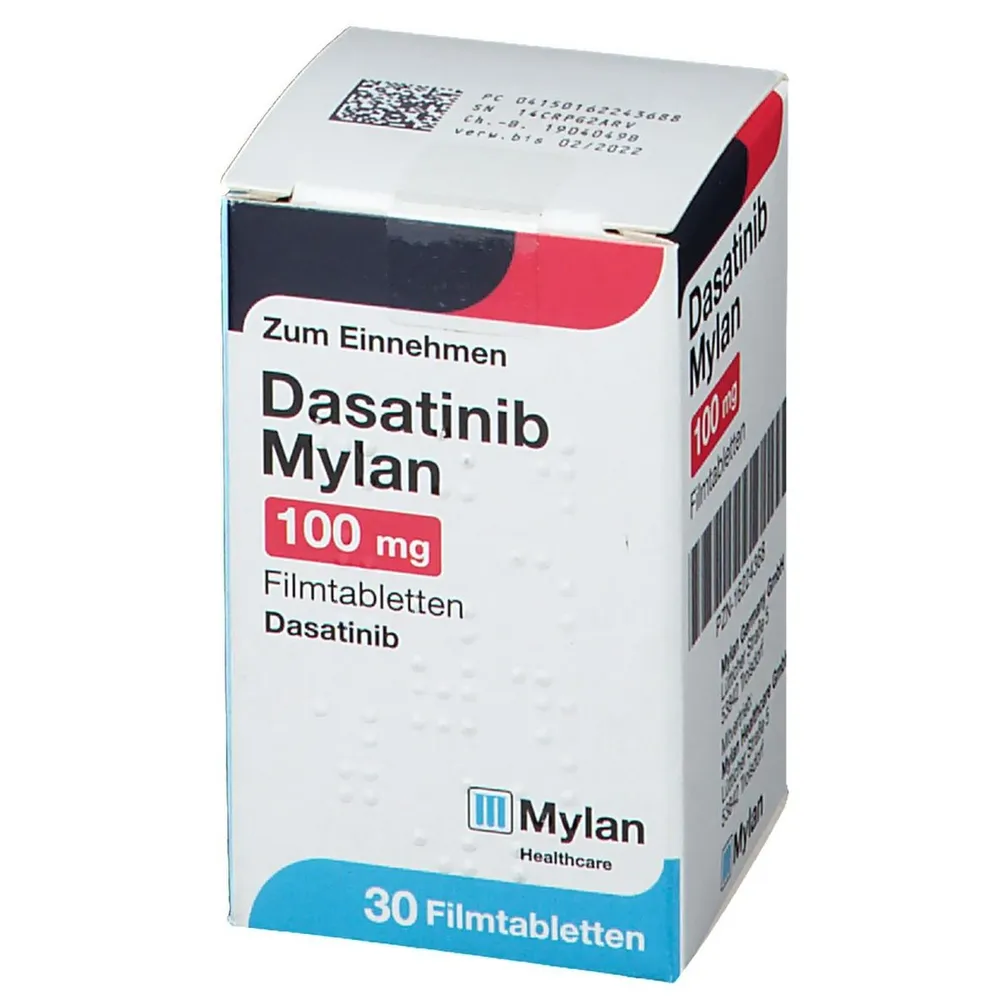
Table of Contents
- Patient Information Leaflet: Information for the User
- Dasatinib Mylan 50 mg film-coated tablets, 70 mg film-coated tablets, 80 mg film-coated tablets, 100 mg film-coated tablets, 140 mg film-coated tablets
- 1. What Dasatinib Mylan is and what it is used for
- 2. What you should know before taking Dasatinib Mylan
- 3. How to take Dasatinib Mylan
- 4. Possible side effects
- 5. How to store Dasatinib Mylan
- 6. Package contents and other information
Patient Information Leaflet: Information for the User
Dasatinib Mylan 50 mg film-coated tablets, 70 mg film-coated tablets, 80 mg film-coated tablets, 100 mg film-coated tablets, 140 mg film-coated tablets
dasatinib
Generic Medicine
Please read all of this leaflet carefully before you start taking this medicine as it contains important
information for you.
- Keep this leaflet. You may need to read it again.
- If you have any further questions, ask your doctor or pharmacist.
- This medicine has been prescribed for you only. Do not give it to other people, even if their symptoms are the same as yours, as it may be harmful.
- If you experience any side effects, including those not listed in this leaflet, tell your doctor or pharmacist. See section 4.
Contents of this leaflet:
- What Dasatinib Mylan is and what it is used for
- What you need to know before taking Dasatinib Mylan
- How to take Dasatinib Mylan
- Possible side effects
- How to store Dasatinib Mylan
- Contents of the pack and other information
1. What Dasatinib Mylan is and what it is used for
Dasatinib Mylan contains the active substance dasatinib. This medicine is used for the
treatment of Philadelphia chromosome-positive (Ph+) acute lymphoblastic leukemia (ALL) in
adults, adolescents and children aged at least 1 year. Leukemia is a cancer of the white
blood cells. Normally, white blood cells help the body fight infections. In patients with
ALL, white blood cells called lymphocytes multiply rapidly and live much longer than normal.
Dasatinib Mylan inhibits the growth of these leukemic cells.
This medicine is also used for the treatment of chronic myeloid leukemia (CML) in
adults, adolescents and children aged at least 1 year, and for lymphoid blast phase CML in adults who
have not benefited from prior therapies. In patients with CML, white blood cells called granulocytes begin
to grow uncontrollably. Dasatinib Mylan inhibits the growth of these leukemic cells.
If you have any questions about how Dasatinib Mylan works or why it has been prescribed for you,
please consult your doctor.
2. What you should know before taking Dasatinib Mylan
Do not take Dasatinib Mylan
- if you are allergic to dasatinib or to any of the other ingredients of this medicine (listed in section 6). If you think you may be allergic, consult your doctor.
Warnings and precautions
Talk to your doctor or pharmacist before taking Dasatinib Mylan
- if you are taking medicines that thin the blood or prevent blood clots (see “Other medicines and Dasatinib Mylan”)
- if you have or have had liver or heart problems
- if you start experiencing breathing difficulties, chest pain, or cough while taking Dasatinib Mylan: these symptoms could indicate fluid retention in the lungs or chest (which may be more common in patients aged 65 years or older), or could be due to changes in the blood vessels supplying the lungs
- if you have ever had or may currently have hepatitis B infection. This is because Dasatinib Mylan could cause reactivation of hepatitis B, which in some cases may be fatal. Your doctor will carefully monitor you for signs of this infection before starting treatment
- if you develop bruising, bleeding, fever, fatigue, or confusion while taking Dasatinib Mylan, contact your doctor. These may be signs of damage to blood vessels known as thrombotic microangiopathy (TMA).
Your doctor should regularly monitor your clinical condition to ensure Dasatinib Mylan is having the desired effect. Additionally, you will have regular blood tests while taking Dasatinib Mylan.
Children and adolescents
Do not give this medicine to children under one year of age. Experience with Dasatinib Mylan in this age group is limited. Bone growth and development in children taking Dasatinib Mylan will be closely monitored.
Other medicines and Dasatinib Mylan
Inform your doctor if you are taking, have recently taken, or might take any other medicines.
Dasatinib Mylan is mainly metabolized by the liver. Some medicines may interfere with the effect of Dasatinib Mylan when taken at the same time.
These medicines must not be used with Dasatinib Mylan:
- ketoconazole, itraconazole – antifungal medicines
- erythromycin, clarithromycin, telithromycin – antibiotics
- ritonavir – an antiviral medicine
- phenytoin, carbamazepine, phenobarbital – treatments for epilepsy
- rifampicin – a treatment for tuberculosis
- famotidine, omeprazole – medicines that block stomach acid production
- St. John’s wort – a herbal preparation available without prescription, used for the treatment of depression and other conditions (also known as Hypericum perforatum)
Do not take medicines that neutralize stomach acid (antacids such as aluminium hydroxide or magnesium hydroxide) within 2 hours before or 2 hours after taking Dasatinib Mylan.
Inform your doctor if you are taking medicines that thin the blood or prevent blood clots.
Dasatinib Mylan with food and drink
Do not take Dasatinib Mylan with grapefruit or grapefruit juice.
Pregnancy and breastfeeding
If you are pregnant or suspect you may be pregnant, inform your doctor immediately.
Dasatinib Mylan must not be used during pregnancy unless strictly necessary. Your doctor will discuss with you the potential risks of taking Dasatinib Mylan during pregnancy.
Both men and women taking Dasatinib Mylan should use an effective method of contraception during treatment.
If you are breastfeeding, inform your doctor. Breastfeeding must be discontinued during treatment with Dasatinib Mylan.
Driving and using machines
If you experience side effects such as dizziness or blurred vision, exercise particular caution when driving or operating machinery.
Dasatinib Mylan contains lactose and sodium
If your doctor has diagnosed you with an intolerance to certain sugars, contact him before taking this medicine.
This medicine contains less than 1 mmol (23 mg) of sodium per tablet, i.e., essentially “sodium-free”.
3. How to take Dasatinib Mylan
Dasatinib Mylan will be prescribed only by a doctor experienced in the treatment of leukaemia. Always take this medicine exactly as instructed by your doctor. If you have any doubts, consult your doctor or pharmacist. Dasatinib Mylan is prescribed for adults and children aged at least 1 year.
The recommended starting dose in adult patients with chronic-phase chronic myeloid leukaemia (CML) is 100 mg once daily.
The recommended starting dose in adult patients with accelerated-phase or blast-phase chronic myeloid leukaemia (CML), or with Philadelphia chromosome-positive (Ph+) acute lymphoblastic leukaemia (ALL), is 140 mg once daily.
The dosage in children with chronic-phase CML or Ph+ ALL is based on body weight. Dasatinib is administered orally once daily as either dasatinib tablets or dasatinib oral suspension powder. Dasatinib Mylan tablets are not recommended for patients weighing less than 10 kg. For patients weighing less than 10 kg and for patients unable to swallow tablets, the oral suspension powder must be used. When switching between formulations (i.e. between tablets and oral suspension powder), a change in dose may occur; therefore, do not switch from one formulation to the other on your own.
Your doctor will determine the appropriate formulation and dose based on body weight, any side effects, and response to treatment. The initial dose of Dasatinib Mylan for children is calculated according to body weight, as shown below:
Body weight (kg) Daily dose (mg)
from 10 to <20 kg 40 mg
from 20 to <30 kg 60 mg
from 30 to <45 kg 70 mg
≥45 kg 100 mg
The tablet formulation is not recommended for patients weighing less than 10 kg; in such patients, the oral suspension powder should be used.
There is no recommended dose of Dasatinib Mylan for children under 1 year of age.
Depending on how you respond to treatment, your doctor may recommend a higher or lower dose, or even a brief interruption of treatment. For higher or lower doses, you may need to take combinations of tablets with different strengths.
How to take Dasatinib Mylan
Take the tablets at the same time each day. Swallow the tablets whole without crushing, splitting, or chewing them. Do not take dissolved tablets. If you crush, split, chew, or disperse the tablets, you cannot be certain of receiving the correct dose. Dasatinib Mylan tablets may be taken with or without food.
Special precautions for handling Dasatinib Mylan
It is unlikely that Dasatinib Mylan tablets will break. However, if this should happen, individuals other than the patient must wear gloves when handling Dasatinib Mylan.
How long to take Dasatinib Mylan
Take Dasatinib Mylan daily for as long as your doctor instructs you to continue. Make sure you take Dasatinib Mylan for the entire duration prescribed.
If you take more Dasatinib Mylan than you should
If you accidentally take too many tablets, contact your doctor immediately. You may require medical assistance.
If you forget to take Dasatinib Mylan
Do not take a double dose to make up for a missed tablet. Take the next scheduled dose at the usual time.
If you have any doubts about how to use this medicine, consult your doctor or pharmacist.
4. Possible side effects
Like all medicines, this medicine can cause side effects, although not everyone gets them.
The following may all be symptoms of serious side effects:
- if you have chest pain, difficulty breathing, cough, or fainting
- if unexpected bleeding or bruising occurs without injury
- if you find blood in your vomit, stools, or urine, or if your stools are black
- if signs of infection occur, such as fever, severe chills
- if you develop fever, mouth or throat pain, blisters, or peeling of the skin and/or mucous membranes
Contact your doctor immediately if you notice any of the above effects.
Very common side effects (may affect more than 1 in 10 people)
- Infections (including bacterial, viral, and fungal infections)
- Heart and lungs: shortness of breath
- Digestive system problems: diarrhea, feeling unwell (nausea, vomiting)
- Skin, hair, eyes, general: rash, fever, swelling of the face, hands, and feet, headache, feeling tired or weak, bleeding
- Pain: muscle pain (during or after treatment interruption), abdominal pain
- Laboratory and instrumental tests may show: low platelet count, low white blood cell count (neutropenia), anemia, fluid in the lungs (effusion)
Common side effects (may affect up to 1 in 10 people)
- Infections: pneumonia, herpes virus infection (including cytomegalovirus - CMV), upper respiratory tract infections, severe blood and tissue infections (including uncommon cases with fatal outcomes)
- Heart and lungs: palpitations, irregular heartbeat, congestive heart failure, myocardial weakness, high blood pressure, increased lung pressure, cough
- Digestive system problems: loss of appetite, taste disturbances, swelling or distension of the abdomen, inflammation of the colon, constipation, heartburn, mouth ulcers, weight gain, weight loss, gastritis
- Skin, hair, eyes, general: skin tingling, itching, dry skin, acne, skin inflammation, persistent ringing in the ears, hair loss, excessive sweating, eye disorders (including blurred vision and vision disturbances), dry eyes, bruising, depression, insomnia, hot flashes, dizziness, contusion (bruise), anorexia, drowsiness, generalized edema
- Pain: joint pain, muscle weakness, chest pain, pain in hands and feet, chills, muscle and joint stiffness, muscle spasms
- Laboratory and instrumental tests may show: fluid around the heart, fluid in the lungs, arrhythmia, febrile neutropenia, gastrointestinal bleeding, elevated uric acid levels in the blood
Uncommon side effects (may affect up to 1 in 100 people)
- Heart and lungs: heart attack (including fatal cases), inflammation of the sac (fibrous sac) surrounding the heart, irregular heartbeat, chest pain due to lack of blood flow to the heart (angina), low blood pressure, narrowing of the airways that may cause breathing difficulties, asthma, increased blood pressure in the pulmonary arteries (blood vessels) of the lungs
- Digestive system problems: inflammation of the pancreas, peptic ulcer, esophagitis, bloated abdomen, tear in the skin of the anal canal, difficulty swallowing, gallbladder inflammation, bile duct obstruction, gastroesophageal reflux (a condition where stomach acids and other contents flow back into the throat)
- Skin, hair, eyes, general: allergic reactions including sensitivity, red nodules on the skin (erythema nodosum), anxiety, confusion, mood swings, decreased sexual desire, fainting, tremors, eye inflammation causing redness or pain, a skin disease characterized by sensitivity, redness, well-defined patches with sudden onset of fever and increased white blood cell count (neutrophilic dermatosis), hearing loss, light sensitivity, visual impairment, increased eye tearing, skin pigmentation disorders, inflammation of the subcutaneous fat tissue, skin ulcers, blisters on the skin, nail disorders, hair and scalp disorders, hand-foot syndrome, kidney failure, frequent urination, breast enlargement in men, menstrual disorders, general weakness and malaise, decreased thyroid function, loss of balance while walking, osteonecrosis (a disease due to reduced blood flow to bones, which may lead to bone loss and bone death), arthritis, skin swelling anywhere on the body
- Pain: vein inflammation causing redness, tenderness, and swelling, tendon inflammation
- Brain: memory loss
- Laboratory and instrumental tests may show: abnormal blood test results and possible kidney function impairment due to tumor lysis products (tumor lysis syndrome), low albumin levels in the blood, low lymphocyte levels (a type of white blood cell) in the blood, high cholesterol levels in the blood, swollen lymph nodes, cerebral hemorrhage, irregularities in the heart's electrical activity, heart enlargement, liver inflammation, protein in the urine, increased creatine phosphokinase (an enzyme mainly found in the heart, brain, and skeletal muscles), elevated troponin (an enzyme mainly found in the heart and skeletal muscles), elevated gamma-glutamyltransferase (an enzyme mainly found in the liver), milky-appearing fluid around the lungs (chylous effusion)
Rare side effects (may affect up to 1 in 1,000 people)
- Heart and lungs: enlargement of the right ventricle of the heart, inflammation of the heart muscle, a set of conditions resulting from blocked blood flow to the heart muscle (acute coronary syndrome), cardiac arrest (cessation of blood flow from the heart), coronary artery disease (of the heart), inflammation of the tissue lining the heart and lungs, blood clots, blood clots in the lungs
- Digestive system problems: loss of vital nutrients from the gastrointestinal tract, such as proteins, intestinal obstruction, anal fistula (an abnormal crack from the anus to the surrounding skin), reduced kidney function, diabetes
- Skin, hair, eyes, general: seizures, optic nerve inflammation which may cause partial or complete vision loss, blue-purple patches on the skin, abnormally increased thyroid function, thyroid gland inflammation, ataxia (a condition associated with lack of muscle coordination), difficulty walking, miscarriage, inflammation of blood vessels in the skin, skin fibrosis
- Brain: stroke, transient episode of neurological dysfunction caused by loss of blood flow, facial nerve paralysis, dementia
- Immune system: severe allergic reaction
- Musculoskeletal and connective tissue: delayed fusion of the rounded ends forming the joints (epiphyses); slowed or delayed growth
Other side effects reported with unknown frequency (cannot be estimated from the available data):
- pneumonia
- bleeding in the stomach or intestines which may lead to death
- reactivation of hepatitis B infection if you have had hepatitis B in the past (a liver infection)
- a reaction with fever, skin blisters, and mucosal ulceration
- kidney disease with symptoms including edema and abnormal laboratory findings such as protein in the urine and low protein levels in the blood
- damage to blood vessels known as thrombotic microangiopathy (TMA), including decreased red blood cell count, decreased platelet count, and blood clot formation
Your doctor will monitor some of these side effects during treatment.
Reporting of side effects
If you experience any side effect, including those not listed in this leaflet, talk to your doctor or pharmacist.
You can also report side effects directly via the national reporting system at https://www.aifa.gov.it/content/segnalazioni-reazioni-avverse.
By reporting side effects, you can help provide more information on the safety of this medicine.
5. How to store Dasatinib Mylan
Keep this medicine out of the sight and reach of children.
Do not use this medicine after the expiry date stated on the label of the bottle, on the blister pack, or on the box after Exp. The expiry date refers to the last day of that month.
This medicine does not require any special storage conditions.
Do not dispose of medicines via wastewater or household waste. Ask your pharmacist how to dispose of medicines you no longer use. This will help protect the environment.
6. Package contents and other information
What Dasatinib Mylan contains
-
The active substance is dasatinib. Each film-coated tablet contains 50 mg, 70 mg, 80 mg,
100 mg or 140 mg of dasatinib. -
The other components are:
Tablet core: lactose monohydrate (200); microcrystalline cellulose (101 and 102);
sodium croscarmellose; hydroxypropylcellulose (MW 80,000); magnesium stearate.
Film coating: lactose monohydrate; hypromellose (15 mPas); titanium dioxide (E171);
triacetin (see section 2 “Dasatinib Mylan contains lactose and sodium”).
Description of the appearance of Dasatinib Mylan and package contents
Dasatinib Mylan 50 mg: the film-coated tablet is white to almost white, biconvex, oval-shaped, approximately 11.0 mm in length and 6.0 mm in width, with “D7SB” printed on one side and “50” on the other.
Dasatinib Mylan 70 mg: the film-coated tablet is white to almost white, biconvex, round, approximately 9.1 mm in diameter, with “D7SB” printed on one side and “70” on the other.
Dasatinib Mylan 80 mg: the film-coated tablet is white to almost white, biconvex, triangular-shaped, approximately 10.4 mm in length and 10.6 mm in width, with “D7SB” printed on one side and “80” on the other.
Dasatinib Mylan 100 mg: the film-coated tablet is white to almost white, biconvex, oval-shaped, approximately 15.1 mm in length and 7.1 mm in width, with “D7SB” printed on one side and “100” on the other.
Dasatinib Mylan 140 mg: the film-coated tablet is white to almost white, biconvex, round, approximately 11.7 mm in diameter, with “D7SB” printed on one side and “140” on the other.
Dasatinib Mylan 50 mg and 70 mg film-coated tablets are available in cartons containing 56 or 60 film-coated tablets in blisters or containing 56 x 1 or 60 x 1 film-coated tablets in unit-dose divisible blisters. They are also available in bottles containing 60 film-coated tablets.
Dasatinib Mylan 80 mg, 100 mg and 140 mg film-coated tablets are available in cartons containing 30 film-coated tablets in blisters or containing 30 x 1 film-coated tablets in unit-dose divisible blisters. They are also available in bottles containing 30 film-coated tablets.
Not all pack sizes may be marketed.
Marketing Authorization Holder and Manufacturer
Marketing Authorization Holder:
Mylan S.p.A., Via Vittor Pisani 20, 20124 Milano, Italy
Manufacturer(s):
Synthon Hispania, S.L., Calle Castello 1, Poligono Las Salinas, 08830 Sant Boi de Llobregat, Barcelona, Spain
Synthon BV, Microweg 22, 6545 CM Nijmegen, The Netherlands