Darunavir Sandoz
Italy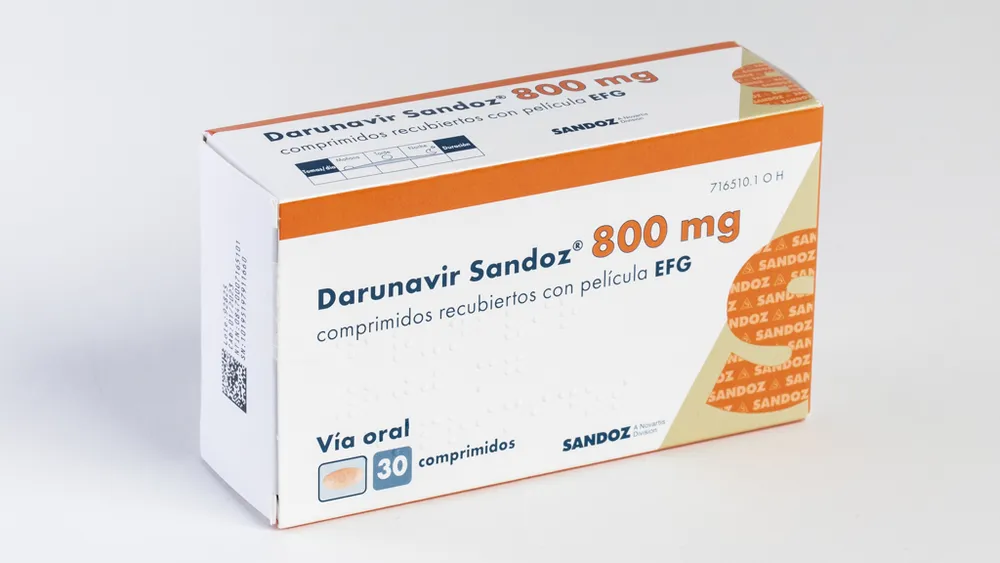
Table of Contents
- Package leaflet: Information for the patient
- Darunavir Sandoz 800 mg film-coated tablets
- 1. What Darunavir Sandoz is and what it is used for
- 2. What you need to know before taking Darunavir Sandoz
- 3. How to take Darunavir Sandoz
- 4. Possible side effects
- 5. How to store Darunavir Sandoz
- 6. Package contents and other information
- Package leaflet: information for the patient
- Darunavir Sandoz 75 mg film-coated tablets, 600 mg film-coated tablets
- 1. What Darunavir Sandoz is and what it is used for
- 2. What you need to know before taking Darunavir Sandoz
- 3. How to take Darunavir Sandoz
- 4. Possible side effects
- 5. How to store Darunavir Sandoz
- 6. Package contents and other information
Package leaflet: Information for the patient
Darunavir Sandoz 800 mg film-coated tablets
Generic medicine
Please read all of this leaflet carefully before you start taking this medicine as it contains important information for you.
- Keep this leaflet. You may need to read it again.
- If you have any questions, ask your doctor, pharmacist or nurse.
- This medicine has been prescribed for you only. Do not give it to other people, even if their symptoms are the same as yours, as it may be harmful.
- If you get any side effects, including those not listed in this leaflet, tell your doctor, pharmacist or nurse. See section 4.
Contents of this leaflet:
- What Darunavir Sandoz is and what it is used for
- What you need to know before taking Darunavir Sandoz
- How to take Darunavir Sandoz
- Possible side effects
- How to store Darunavir Sandoz
- Contents of the pack and other information
1. What Darunavir Sandoz is and what it is used for
What Darunavir Sandoz is
Darunavir Sandoz contains the active substance darunavir. Darunavir Sandoz is an antiretroviral medicine used in the treatment of human immunodeficiency virus (HIV) infection. It belongs to a group of medicines called protease inhibitors. Darunavir Sandoz works by reducing the amount of HIV in the body, thereby improving the immune system and reducing the risk of developing HIV-related illnesses.
What it is used for
Darunavir Sandoz is used to treat adults and children (aged 3 years and older, and weighing at least 40 kilograms)
- who have HIV infection and have not previously used other antiretroviral medicines, or
- in some patients who have previously used antiretroviral medicines (your doctor will determine to whom it should be administered).
Darunavir Sandoz must be taken in combination with a low dose of cobicistat or ritonavir and other anti-HIV medicines. Your doctor will discuss with you which combination of medicines is best for you.
2. What you need to know before taking Darunavir Sandoz
Do not take Darunavir Sandoz
- If you are allergic to darunavir, or to any of the other ingredients of this medicine (listed in section 6), or to cobicistat or ritonavir.
- If you have severe liver problems. Consult your doctor if you are unsure about the severity of your liver disease. Additional tests may be required.
Inform your doctor about all the medicines you are taking, including medicines taken orally,
inhaled, injected, or applied to the skin.
Do not take Darunavir Sandoz with any of the following medicines.
If you are currently taking any of these medicines, ask your doctor how to switch to another
medicine.
| Medicine | Purpose of the medicine |
| Avanafil | for the treatment of erectile dysfunction |
| Astemizole or terfenadine | for the treatment of allergic symptoms |
| Triazolam and oral midazolam (taken by mouth) | used to help sleep and/or reduce anxiety |
| Cisapride | for the treatment of certain stomach disorders |
| Colchicine (if you have kidney and/or liver problems) | for the treatment of gout or familial Mediterranean fever |
| Lurasidone, pimozide, quetiapine or sertindole | for the treatment of psychiatric disorders |
| Ergot alkaloids such as ergotamine, dihydroergotamine, ergometrine and methylergonovine | for the treatment of migraine headache |
| Amiodarone, bepridil, dronedarone, ivabradine, quinidine, ranolazine | for the treatment of certain heart problems, such as heart rhythm abnormalities |
| Lovastatin, simvastatin and lomitapide | to lower cholesterol levels |
| Rifampicin | for the treatment of certain infections, such as tuberculosis |
| Combination of lopinavir/ritonavir | this anti-HIV medicine belongs to the same class as Darunavir Sandoz |
| Elbasvir/grazoprevir | to treat hepatitis C infection |
| Alfuzosin | to treat benign prostatic hyperplasia |
| Sildenafil | to treat high blood pressure in the pulmonary circulation |
| Ticagrelor | to help prevent platelet aggregation in the treatment of patients with a history of heart attack |
| Naloxegol | to treat opioid-induced constipation |
| Dapoxetine | to treat premature ejaculation |
| Domperidone | to treat nausea and vomiting |
Do not associate Darunavir Sandoz with products containing St. John's Wort (Hypericum perforatum).
Warnings and precautions
Speak to your doctor, pharmacist, or nurse before taking Darunavir Sandoz.
Darunavir Sandoz is not a cure for HIV infection.
People taking Darunavir Sandoz may still develop infections or other illnesses associated with HIV infection. You must maintain regular contact with your doctor.
People taking Darunavir Sandoz may develop a rash.
The rash may rarely become severe or potentially life-threatening.
Contact your doctor whenever you develop a rash.
In patients taking Darunavir Sandoz and raltegravir (for HIV infection), rashes (generally mild or moderate) may occur more frequently than in patients taking each of these medicines separately.
Inform your doctor about your condition BEFORE and DURING treatment
Make sure to check the following points and inform your doctor if any of them apply to you.
-
Inform your doctor if you have previously had liver problems, including hepatitis B or C infection. Your doctor will assess the severity of your liver disease before deciding whether you can take Darunavir Sandoz.
-
Inform your doctor if you have diabetes. Darunavir Sandoz may increase blood sugar levels.
-
Inform your doctor immediately if you notice any signs of infection (e.g., swollen lymph nodes and fever). In some patients with advanced HIV infection and a history of opportunistic infections, signs and symptoms of inflammation from prior infections may occur soon after starting anti-HIV treatment. These symptoms are believed to be due to an improved immune response, allowing the body to fight infections that may have been present without obvious symptoms.
-
In addition to opportunistic infections, autoimmune disorders (a condition occurring when the immune system attacks healthy body tissue) may also occur after you start taking medicines for HIV infection. Autoimmune disorders may occur many months after starting treatment. If you notice any symptoms of infection or other symptoms such as muscle weakness, initial weakness in hands and feet progressing toward the trunk, palpitations, tremor, or hyperactivity, inform your doctor immediately to receive necessary treatment.
-
Inform your doctor if you have haemophilia. Darunavir Sandoz may increase the risk of bleeding.
-
Inform your doctor if you are allergic to sulfonamides (used to treat certain infections).
-
Inform your doctor if you notice any musculoskeletal problems. Some patients taking a combination of antiretroviral medicines may develop a bone disease called osteonecrosis (death of bone tissue due to reduced blood supply to the bone). Some of the many risk factors for developing this disease include duration of combined antiretroviral use, corticosteroid use, alcohol consumption, severe immunosuppression, and high body mass index. Signs of osteonecrosis include joint stiffness, aches, and pains (especially in the hip, knee, and shoulders) and difficulty moving. If you notice any of these symptoms, inform your doctor.
Elderly
Darunavir Sandoz has been administered to a limited number of patients aged 65 years and older. If you belong to this age group, consult your doctor before taking Darunavir Sandoz.
Children and adolescents
Darunavir Sandoz 800 mg film-coated tablets are not indicated for use in children under 3 years of age or weighing less than 40 kilograms.
Other medicines and Darunavir Sandoz
Inform your doctor or pharmacist if you are taking, have recently taken, or might take any other medicines.
There are medicines that must not be taken together with Darunavir Sandoz. These have been listed earlier under the heading “Do not associate Darunavir Sandoz with any of the following medicines.”
In most cases, Darunavir Sandoz can be combined with anti-HIV medicines belonging to another class [e.g., NRTIs (nucleoside reverse transcriptase inhibitors), NNRTIs (non-nucleoside reverse transcriptase inhibitors), CCR5 antagonists, and FIs (fusion inhibitors)]. Darunavir in combination with cobicistat or ritonavir has not been studied with all PIs (protease inhibitors) and must not be used with other HIV PIs. In some cases, the dose of other medicines may need to be adjusted.
Therefore, always inform your doctor if you are taking other anti-HIV medicines and carefully follow your doctor’s instructions regarding which medicines you can take in combination.
The effects of Darunavir Sandoz may be reduced if you take any of the following medicines.
Inform your doctor if you take:
- Phenobarbital, phenytoin (to prevent epileptic seizures)
- Dexamethasone (a corticosteroid)
- Efavirenz (to treat HIV infection)
- Rifapentine, rifabutin (medicines to treat certain infections such as tuberculosis)
- Saquinavir (to treat HIV infection).
The effects of other medicines may be affected by taking Darunavir Sandoz, and your doctor may wish to perform additional blood tests.
Inform your doctor if you take:
-
Amlodipine, diltiazem, disopyramide, carvedilol, felodipine, flecainide, lidocaine, metoprolol, mexiletine, nifedipine, nicardipine, propafenone, timolol, verapamil (for heart conditions), as the therapeutic effect or side effects of these medicines may be increased.
-
Apixaban, dabigatran etexilate, edoxaban, rivaroxaban, warfarin, clopidogrel (to reduce blood clotting), because both therapeutic and adverse effects may be altered.
-
Hormonal contraceptives containing estrogens and hormone replacement therapy. The efficacy of Darunavir Sandoz may be reduced. When hormonal therapy is used for contraception, use of non-hormonal contraceptive methods is recommended.
-
Ethinylestradiol/drospirenone. Darunavir Sandoz may increase the risk of elevated potassium levels caused by drospirenone.
-
Atorvastatin, pravastatin, rosuvastatin (to lower cholesterol levels). The risk of muscle tissue damage may increase. Your doctor will evaluate which cholesterol-lowering medicine is most suitable for you.
-
Clarithromycin (an antibiotic).
-
Cyclosporine, everolimus, tacrolimus, sirolimus (to reduce the activity of your immune system), as the therapeutic effect or side effects of these medicines may be increased.
-
Corticosteroids including betamethasone, budesonide, fluticasone, mometasone, prednisone, triamcinolone. These medicines are used to treat allergies, asthma, inflammatory bowel diseases, inflammatory skin, eye, joint, and muscle disorders, and other inflammatory conditions. These medicines are generally taken orally, inhaled, injected, or applied to the skin. If alternative therapies are not possible, the use of these medicines may only occur after careful evaluation by the doctor and under close medical supervision due to corticosteroid side effects.
-
Buprenorphine/naloxone (medicines to treat opioid dependence).
-
Salmeterol (a medicine for asthma treatment).
-
Artemether/lumefantrine (a combination of medicines to treat malaria).
-
Dasatinib, everolimus, irinotecan, nilotinib, vinblastine, vincristine (to treat cancer).
-
Sildenafil, tadalafil, vardenafil (for erectile dysfunction or to treat a heart and lung disorder called pulmonary arterial hypertension).
-
Glecaprevir/pibrentasvir (to treat hepatitis C infection).
-
Fentanyl, oxycodone, tramadol (for pain treatment)
-
Fesoterodine, solifenacin (to treat urological conditions).
Your doctor may wish to perform additional blood tests and it may be necessary to adjust the dose of other medicines, as the therapeutic effect and side effects of these medicines or of Darunavir Sandoz may be affected when used together.
Inform your doctor if you take:
- Dabigatran etexilate, edoxaban, warfarin (to reduce blood clotting)
- Alfentanil (a potent, short-acting injectable painkiller used during surgery)
- Digoxin (for the treatment of certain heart conditions)
- Clarithromycin (an antibiotic)
- Itraconazole, isavuconazole, fluconazole, posaconazole, clotrimazole (to treat fungal infections). Voriconazole may only be taken after evaluation by the doctor.
- Rifabutin (for bacterial infections)
- Sildenafil, vardenafil, tadalafil (for erectile dysfunction or high blood pressure in the lung circulation)
- Amitriptyline, desipramine, imipramine, nortriptyline, paroxetine, sertraline, trazodone (to treat depression and anxiety)
- Maraviroc (to treat HIV infection)
- Methadone (to treat opioid dependence)
- Carbamazepine, clonazepam (to prevent epileptic seizures or to treat certain types of neuropathic pain)
- Colchicine (to treat gout or familial Mediterranean fever)
- Bosentan (to treat high blood pressure in the lung circulation).
- Buspirone, chlordiazepoxide, diazepam, estazolam, flurazepam, midazolam when administered parenterally, zolpidem (sedatives)
- Perphenazine, risperidone, thioridazine (to treat psychiatric conditions).
- Metformin (to treat type 2 diabetes).
This is not a complete list of medicines. Inform your doctor about all medicines you are taking.
Darunavir Sandoz with food and drinks
See section 3 “How to take Darunavir Sandoz”.
Pregnancy and breastfeeding
Inform your doctor immediately if you are pregnant or planning a pregnancy. Pregnant women must not take Darunavir Sandoz with ritonavir unless specifically instructed by their doctor. Pregnant women must not take Darunavir Sandoz with cobicistat.
Due to potential adverse effects in breastfed infants, women taking Darunavir Sandoz must not breastfeed.
Breastfeeding is not recommended for women living with HIV because HIV infection can be transmitted to the child through breast milk. If you are breastfeeding or considering breastfeeding, discuss this with your doctor as soon as possible.
Driving and using machines
Do not operate machinery or drive if you feel dizzy after taking Darunavir Sandoz.
3. How to take Darunavir Sandoz
Take this medicine exactly as instructed by your doctor, pharmacist, or nurse. If you have any doubts, consult your doctor, pharmacist, or nurse.
Even if you feel better, do not stop taking Darunavir Sandoz together with cobicistat or ritonavir without first talking to your doctor.
After starting treatment, do not change the dose or formulation or stop treatment without your doctor’s instructions.
The 800 mg film-coated tablet must be taken once daily.
Dose for adults who have not previously taken antiretroviral medicines (your doctor will determine this condition)
The usual dose of darunavir is 800 milligrams (2 tablets containing 400 milligrams of Darunavir Sandoz or 1 tablet of Darunavir Sandoz 800 mg) once daily.
You must take Darunavir Sandoz every day, always together with 150 milligrams of cobicistat or 100 milligrams of ritonavir and with food. Darunavir Sandoz will not work properly without cobicistat or ritonavir and without food. You must eat a meal or snack within 30 minutes before taking Darunavir Sandoz and cobicistat or ritonavir. The type of food does not matter. Even if you feel better, do not stop taking Darunavir Sandoz and cobicistat or ritonavir without first talking to your doctor.
Instructions for adults
- Take one 800 milligram tablet at the same time each day, once daily, every day.
- Take Darunavir Sandoz always together with 150 milligrams of cobicistat or 100 milligrams of ritonavir.
- Take Darunavir Sandoz with food.
- Swallow the tablet with a drink such as water or milk.
- Take any other HIV medicines used in combination with Darunavir Sandoz and cobicistat or ritonavir as prescribed by your doctor.
Dose for adults who have previously taken antiretroviral medicines (your doctor will determine this condition)
The dose is:
- 800 milligrams of Darunavir Sandoz (2 tablets containing 400 milligrams of Darunavir Sandoz or 1 tablet of Darunavir Sandoz 800 mg) together with 150 milligrams of cobicistat or 100 milligrams of ritonavir once daily, OR
- 600 milligrams of Darunavir Sandoz (2 tablets containing 300 milligrams of Darunavir Sandoz or 1 tablet of Darunavir Sandoz 600 mg) together with 100 milligrams of ritonavir twice daily.
Check with your doctor which dose is most suitable for you.
Dose for children aged 3 years and above taking ritonavir and aged 12 years and above taking cobicistat, and weighing more than 40 kilograms, who have not previously taken antiretroviral medicines (the child’s doctor will determine this condition)
- The usual dose of Darunavir Sandoz is 800 milligrams (2 tablets containing 400 milligrams of Darunavir Sandoz or 1 tablet of Darunavir Sandoz 800 mg) together with 100 mg of ritonavir or 150 milligrams of cobicistat once daily.
Dose for children aged 3 years and above taking ritonavir and aged 12 years and above taking cobicistat, and weighing more than 40 kilograms, who have previously taken antiretroviral medicines (the child’s doctor will determine this condition)
The dose is:
- 800 milligrams of Darunavir Sandoz (2 tablets containing 400 milligrams of Darunavir Sandoz or 1 tablet of Darunavir Sandoz 800 mg) together with 100 milligrams of ritonavir or 150 milligrams of cobicistat once daily, OR
- 600 milligrams of Darunavir Sandoz (2 tablets containing 300 milligrams of Darunavir Sandoz or 1 tablet of Darunavir Sandoz 600 mg) together with 100 milligrams of ritonavir twice daily.
Check with your doctor which dose is most suitable for your child.
Instructions for children aged 3 years and above taking ritonavir and aged 12 years and above taking cobicistat, and weighing more than 40 kilograms
- Take 800 milligrams of Darunavir Sandoz (2 tablets containing 400 milligrams of Darunavir Sandoz or 1 tablet of Darunavir Sandoz 800 mg) at the same time each day, once daily, every day.
- Take Darunavir Sandoz always together with 100 milligrams of ritonavir or 150 milligrams of cobicistat.
- Take Darunavir Sandoz with food.
- Swallow the tablets with a drink such as water or milk.
- Take any other HIV medicines used in combination with Darunavir Sandoz and ritonavir or cobicistat as prescribed by your doctor.
Removing the child-resistant cap
The plastic bottle comes with a child-resistant cap and should be opened as follows:
- Press down on the plastic cap and turn it counterclockwise.
- Remove the unscrewed cap.

If you take more Darunavir Sandoz than you should
Contact your doctor, pharmacist, or nurse immediately.
If you forget to take Darunavir Sandoz
If you remember within 12 hours, take the tablets immediately. Always take the tablets together with cobicistat or ritonavir and with food. If you remember after 12 hours, skip the missed dose and take the next dose as usual. Do not take a double dose to make up for a forgotten dose.
If you vomit after taking Darunavir Sandoz and cobicistat or ritonavir
If you vomit within 4 hours of taking the medicine, take another dose of Darunavir Sandoz and cobicistat or ritonavir with food as soon as possible. If you vomit more than 4 hours after taking the medicine, you do not need to take another dose of Darunavir Sandoz and cobicistat or ritonavir until the next scheduled dose.
Contact your doctor if you are unsure what to do if you miss a dose or vomit.
Do not stop taking Darunavir Sandoz without first talking to your doctor
Anti-HIV medicines can improve your sense of well-being. Do not stop taking Darunavir Sandoz, even if you feel better. Talk to your doctor first.
If you have any doubts about how to use this medicine, ask your doctor, pharmacist, or nurse.
4. Possible side effects
During HIV therapy, an increase in weight and in blood lipid and glucose levels may occur. This is partly due to the recovery of health status and lifestyle factors, and in the case of blood lipids, sometimes also to the HIV medicines themselves. Your doctor will carry out tests to monitor these changes.
Like all medicines, this medicine can cause side effects, although not everybody gets them.
Tell your doctor if you develop any of the following side effects.
Liver problems have been reported, which occasionally can be serious. Your doctor will need to perform blood tests before starting treatment with Darunavir Sandoz. If you have chronic hepatitis B or C, your doctor will monitor your blood tests more frequently, as you have a higher risk of developing liver problems. Discuss with your doctor the signs and symptoms of liver problems. These may include yellowing of the skin or whites of the eyes, dark urine (tea-colored), pale stools (bowel movements), nausea, vomiting, loss of appetite, or pain, tenderness, or discomfort on the right side under the ribs.
Skin rashes (more frequent when used in combination with raltegravir), itching. Rashes are usually mild to moderate in severity. A skin rash may also be a symptom of a rare but serious condition. It is important that you contact your doctor if you develop a skin rash. Your doctor will advise you on how to manage the symptoms or whether Darunavir Sandoz should be discontinued.
Other serious side effects include diabetes (common) and inflammation of the pancreas (uncommon).
Very common side effects (may affect more than 1 in 10 people)
- Diarrhea
Common side effects (may affect up to 1 in 10 people)
- Vomiting, nausea, abdominal pain or bloating, indigestion, flatulence
- Headache, fatigue, dizziness, drowsiness, numbness, tingling or pain in hands or feet, loss of strength, difficulty falling asleep
- Uncommon side effects (may affect up to 1 in 100 people)
Chest pain, changes in electrocardiogram, rapid heartbeat - Decreased or abnormal skin sensation, tingling sensation, attention disturbances, memory loss, difficulty with balance
- Difficulty breathing, cough, nosebleeds, sore throat
- Inflammation of the stomach or mouth, heartburn, retching, dry mouth, abdominal discomfort, constipation, belching
- Kidney failure, kidney stones, difficulty urinating, frequent or excessive urination, sometimes at night
- Hives, severe swelling of the skin and other tissues (especially lips or eyes), eczema, excessive sweating, night sweats, hair loss, acne, scaly skin, nail pigmentation
- Muscle pain, muscle cramps or weakness, pain in extremities, osteoporosis
- Slowed thyroid function. This can be detected through a blood test.
- High blood pressure, hot flushes
- Red or dry eyes
- Fever, swelling of legs due to fluid retention, malaise, irritability, pain
- Symptoms of infection, herpes simplex
- Erectile dysfunction, breast enlargement
- Sleep disturbances, drowsiness, depression, anxiety, abnormal dreams, decreased sexual desire
Rare side effects (may affect up to 1 in 1,000 people)
-
A reaction called DRESS [a severe rash that may be accompanied by fever, fatigue, facial swelling or swollen lymph nodes, increased eosinophils (a type of white blood cell), and effects on the liver, kidneys, or lungs]
-
Heart attack, slow heartbeat, palpitations
-
Vision disorders
-
Chills, abnormal sensations
-
A feeling of confusion or disorientation, mood changes, restlessness
-
Fainting, seizures, altered or loss of taste
-
Mouth ulcers, vomiting blood, inflammation of the lips, dry lips, coated tongue
-
Runny nose
-
Skin lesions, dry skin
-
Stiffness of muscles or joints, joint pain with or without inflammation
-
Changes in certain blood cell or chemical values. These may be seen in blood and/or urine tests. Your doctor will explain these results to you. Examples include: increased levels of certain white blood cells.
-
Darunavir crystals in the kidney causing kidney disease.
Some side effects are typical of anti-HIV medicines belonging to the same class as Darunavir Sandoz. These include:
- Muscle pain, fragility or weakness. In rare cases, these muscle disorders have been severe.
Reporting of side effects
If you experience any side effects, including those not listed in this leaflet, talk to your doctor, pharmacist, or nurse. You can also report side effects directly via the reporting system at the following website:
https://www.aifa.gov.it/content/segnalazioni-reazioni-avverse
By reporting side effects, you can help provide more information on the safety of this medicine.
5. How to store Darunavir Sandoz
Keep this medicine out of the sight and reach of children.
Do not use this medicine after the expiry date stated on the carton and on the bottle after "Exp". The expiry date refers to the last day of that month.
This medicine does not require any special storage conditions.
Storage conditions after first opening of the bottle:
Do not store above 25°C.
Storage period after first opening of the bottle: 6 months
Do not dispose of medicines via wastewater or household waste. Ask your pharmacist how to dispose of medicines you no longer use. This will help protect the environment.
6. Package contents and other information
What Darunavir Sandoz contains
The active substance is darunavir.
Each film-coated tablet contains 800 mg of darunavir.
The other components are microcrystalline cellulose (E460), anhydrous colloidal silica (E551),
crospovidone (type A) (E1202), magnesium stearate (E470b), polyvinyl alcohol (E1203), macrogol
(3350) (E1521), titanium dioxide (E171), talc (E553b) and iron oxide red (E172).
Description of the appearance of Darunavir Sandoz and contents of the pack
800 mg film-coated tablets:
Dark red, oval-shaped film-coated tablet, imprinted with '800' on one side and plain on the other.
Dimensions: approximately 20.2 mm x 10.1 mm.
The film-coated tablets are packed in HDPE bottles with a polypropylene (PP) cap and child-resistant closure.
Pack size: 30 film-coated tablets.
Not all pack sizes may be marketed.
Marketing Authorisation Holder
Sandoz S.p.A., L.go U. Boccioni 1, 21040 Origgio (VA), Italy
Manufacturers
Lek Pharmaceuticals d.d, Verovškova ulica 57, Ljubljana, 1526, Slovenia
Salutas Pharma GmbH, Otto-von-Guericke-Allee 1, Sachsen-Anhalt, 39179, Barleben, Germany
Remedica Ltd, Aharnon Street, Limassol Industrial Estate, Limassol 3056, Cyprus
This medicinal product is authorised in the European Economic Area (EEA) Member States and the
United Kingdom (Northern Ireland) under the following names:
Italy: Darunavir Sandoz
Netherlands: Darunavir Sandoz 800 mg, filmomhulde tabletten
Package leaflet: information for the patient
Darunavir Sandoz 75 mg film-coated tablets, 600 mg film-coated tablets
Generic medicine
Please read this leaflet carefully before taking this medicine because it contains
important information for you.
- Keep this leaflet. You may need to read it again.
- If you have any questions, ask your doctor, pharmacist, or nurse.
- This medicine has been prescribed for you only. Do not give it to other people, even if their symptoms are the same as yours, as it may be harmful.
- If you experience any side effect, including those not listed in this leaflet, tell your doctor, pharmacist, or nurse. See section 4.
Contents of this leaflet:
- What Darunavir Sandoz is and what it is used for
- What you need to know before taking Darunavir Sandoz
- How to take Darunavir Sandoz
- Possible side effects
- How to store Darunavir Sandoz
- Contents of the pack and other information
1. What Darunavir Sandoz is and what it is used for
What Darunavir Sandoz is
Darunavir Sandoz contains the active substance darunavir. Darunavir Sandoz is an antiretroviral medicine used in the treatment of human immunodeficiency virus (HIV) infection. It belongs to a group of medicines called protease inhibitors. Darunavir Sandoz works by reducing the amount of HIV in the body, thereby improving the immune system and reducing the risk of developing HIV-related illnesses.
What it is used for
Darunavir Sandoz is used to treat adults and children aged 3 years and older who weigh at least 15 kilograms and who have previously been treated with other antiretroviral medicines.
Darunavir Sandoz must be taken in combination with a low dose of ritonavir and other anti-HIV medicines. Your doctor will discuss with you the most appropriate combination of medicines for your treatment.
2. What you need to know before taking Darunavir Sandoz
Do not take Darunavir Sandoz
- If you are allergic to darunavir, to any of the other ingredients of this medicine (listed in section 6), or to ritonavir.
- If you have severe liver problems. Consult your doctor if you are unsure about the severity of your liver disease. Additional tests may be required.
Inform your doctor about all the medicines you are taking, including those taken orally,
inhaled, injected, or applied to the skin.
Do not take Darunavir Sandoz together with any of the following medicines.
If you are currently taking one of these medicines, ask your doctor how to switch to another
medication.
| Medicine | Purpose of the medicine |
| Avanafil | for the treatment of erectile dysfunction |
| Astemizole or terfenadine | for the treatment of allergic symptoms |
| Triazolam and oral midazolam (taken by mouth) | used to help sleep and/or reduce anxiety |
| Cisapride | for the treatment of certain stomach disorders |
| Colchicine (if you have kidney and/or liver problems) | for the treatment of gout or familial Mediterranean fever |
| Lurasidone, pimozide, quetiapine or sertindole | for the treatment of psychiatric disorders |
| Ergot alkaloids such as ergotamine, dihydroergotamine, ergometrine and methylergonovine | for the treatment of migraine headache |
| Amiodarone, bepridil, dronedarone, ivabradine, quinidine, ranolazine | for the treatment of certain heart problems, for example, heart rhythm abnormalities |
| Lovastatin, simvastatin and lomitapide | to lower cholesterol levels |
| Rifampicin | for the treatment of certain infections, such as tuberculosis |
| Combination of lopinavir/ritonavir | this anti-HIV medicine belongs to the same class as Darunavir Sandoz |
| Elbasvir/grazoprevir | to treat hepatitis C infection |
| Alfuzosin | to treat benign prostatic hyperplasia |
| Sildenafil | to treat high blood pressure in the pulmonary circulation |
| Ticagrelor | to help block platelet aggregation in the treatment of patients with |
| a history of heart attack | |
| Naloxegol | to treat opioid-induced constipation |
| Dapoxetine | to treat premature ejaculation |
| Domperidone | to treat nausea and vomiting |
Do not co-administer Darunavir Sandoz with products containing St John’s wort (Hypericum perforatum).
Warnings and precautions
Speak to your doctor, pharmacist, or nurse before taking Darunavir Sandoz.
Darunavir Sandoz is not a cure for HIV infection.
People taking Darunavir Sandoz may still develop infections or other illnesses associated with HIV infection. You must maintain regular contact with your doctor.
People taking Darunavir Sandoz may develop a rash.
The rash may rarely become severe or potentially life-threatening.
Contact your doctor whenever you develop a rash.
In patients taking both Darunavir Sandoz and raltegravir (for HIV infection), rashes (generally mild or moderate) may occur more frequently than in patients taking either medicine separately.
Inform your doctor about your condition BEFORE and DURING treatment
Please check the following points and inform your doctor if any of these apply to you.
- Inform your doctor if you have previously had liver problems, including hepatitis B or C infection. Your doctor will assess the severity of your liver disease before deciding whether you can take Darunavir Sandoz.
- Inform your doctor if you have diabetes. Darunavir Sandoz may increase blood sugar levels.
- Inform your doctor immediately if you notice any signs of infection (e.g., swollen lymph nodes and fever). In some patients with advanced HIV infection and a history of opportunistic infections, signs and symptoms of inflammation from prior infections may occur soon after starting anti-HIV treatment. These symptoms are believed to be due to an improved immune response, enabling the body to fight infections that may have been present without obvious symptoms.
- In addition to opportunistic infections, autoimmune disorders (a condition occurring when the immune system attacks healthy body tissue) may also occur after starting medications for HIV infection. Autoimmune disorders may occur several months after starting treatment. If you notice any signs of infection or other symptoms such as muscle weakness, initial weakness in hands and feet progressing toward the trunk, palpitations, tremors, or hyperactivity, inform your doctor immediately to receive necessary treatment.
- Inform your doctor if you have haemophilia. Darunavir Sandoz may increase the risk of bleeding.
- Inform your doctor if you are allergic to sulfonamides (used to treat certain infections).
- Inform your doctor if you notice any musculoskeletal problems. Some patients taking a combination of antiretroviral medicines may develop a bone disease called osteonecrosis (death of bone tissue due to reduced blood supply to the bone). Some of the many risk factors for developing this disease may include duration of combination antiretroviral therapy, corticosteroid use, alcohol consumption, severe immunosuppression, and high body mass index. Signs of osteonecrosis include joint stiffness, pain, and aches (especially in the hip, knee, and shoulders) and difficulty moving. If you notice any of these symptoms, inform your doctor.
Elderly
Darunavir Sandoz has been administered to a limited number of patients aged 65 years and older. If you belong to this age group, consult your doctor before taking Darunavir Sandoz.
Children
Darunavir Sandoz is not indicated for use in children under 3 years of age or weighing less than 15 kilograms.
Other medicines and Darunavir Sandoz
Inform your doctor or pharmacist if you are taking, have recently taken, or might take any other medicines.
There are medicines that must not be taken together with Darunavir Sandoz. These have been listed earlier under the heading “Do not co-administer Darunavir Sandoz with any of the following medicines.”
In most cases, Darunavir Sandoz can be combined with anti-HIV medicines belonging to another class [e.g., NRTIs (nucleoside reverse transcriptase inhibitors), NNRTIs (non-nucleoside reverse transcriptase inhibitors), CCR5 antagonists, and FIs (fusion inhibitors)]. Darunavir in combination with ritonavir has not been studied with all PIs (protease inhibitors) and must not be used with other HIV PIs. In some cases, the dose of other medicines may need to be adjusted. Therefore, always inform your doctor if you are taking other anti-HIV medicines and carefully follow your doctor’s instructions regarding which medicines you may take in combination.
The effects of Darunavir Sandoz may be reduced if you take any of the following medicines.
Inform your doctor if you take:
- Phenobarbital, phenytoin (to prevent epileptic seizures)
- Dexamethasone (a corticosteroid)
- Efavirenz (to treat HIV infection)
- Rifapentine, rifabutin (medicines to treat certain infections such as tuberculosis)
- Saquinavir (to treat HIV infection).
The effects of other medicines may be affected by taking Darunavir Sandoz, and your doctor may wish to perform additional blood tests.
Inform your doctor if you take:
- Amlodipine, diltiazem, disopyramide, carvedilol, felodipine, flecainide, lidocaine, metoprolol, mexiletine, nifedipine, nicardipine, propafenone, timolol, verapamil (for heart conditions), as the therapeutic effect or side effects of these medicines may be increased.
- Apixaban, dabigatran etexilate, edoxaban, rivaroxaban, warfarin, clopidogrel (to reduce blood clotting), because both the therapeutic effect and side effects may be altered.
- Hormonal contraceptives containing estrogens and hormone replacement therapy. The efficacy of Darunavir Sandoz may be reduced. When hormonal therapy is used for contraception, use of additional non-hormonal contraceptive methods is recommended.
- Ethinylestradiol/drospirenone. Darunavir Sandoz may increase the risk of elevated potassium levels due to drospirenone.
- Atorvastatin, pravastatin, rosuvastatin (to lower cholesterol levels). The risk of muscle tissue damage may increase. Your doctor will evaluate which cholesterol-lowering medicine is most suitable for you.
- Clarithromycin (an antibiotic).
- Cyclosporine, everolimus, tacrolimus, sirolimus (to reduce immune system activity), as the therapeutic effect or side effects of these medicines may be increased.
- Corticosteroids including betamethasone, budesonide, fluticasone, mometasone, prednisone, triamcinolone. These medicines are used to treat allergies, asthma, inflammatory bowel diseases, inflammatory skin, eye, joint, and muscle disorders, and other types of inflammatory conditions. These medicines are
generally taken orally, inhaled, injected, or applied to the skin. If alternative therapies cannot be used, the use of these medicines should only occur after careful evaluation by the doctor and under close medical supervision due to corticosteroid side effects.
- Buprenorphine/naloxone (medicines to treat opioid dependence).
- Salmeterol (a medicine to treat asthma).
- Artemether/lumefantrine (a combination of medicines to treat malaria).
- Dasatinib, everolimus, irinotecan, nilotinib, vinblastine, vincristine (to treat cancer).
- Sildenafil, tadalafil, vardenafil (for erectile dysfunction or to treat a heart and lung disorder called pulmonary arterial hypertension).
- Glecaprevir/pibrentasvir (to treat hepatitis C infection).
- Fentanyl, oxycodone, tramadol (for pain treatment)
- Fesoterodine, solifenacin (to treat urological conditions)
Your doctor may wish to perform additional blood tests and it may be necessary to adjust the dose of other medicines, as the therapeutic effect and side effects of these medicines or of Darunavir Sandoz may be affected when used together.
Inform your doctor if you take:
- Dabigatran etexilato, edoxaban, warfarin (to reduce blood clotting)
- Alfentanil (a potent, short-acting injectable painkiller used during surgery).
- Digoxin (to treat certain heart conditions)
- Clarithromycin (antibiotic).
- Itraconazole, isavuconazole, fluconazole, posaconazole, clotrimazole (to treat fungal infections). Voriconazole may be taken only after evaluation by the doctor.
- Rifabutin (for bacterial infections)
- Sildenafil, vardenafil, tadalafil (for erectile dysfunction or high blood pressure in the lung circulation)
- Amitriptyline, desipramine, imipramine, nortriptyline, paroxetine, sertraline, trazodone (to treat depression and anxiety)
- Maraviroc (to treat HIV infection)
- Methadone (to treat opioid dependence).
- Carbamazepine, clonazepam (to prevent epileptic seizures or to treat certain types of neuropathic pain)
- Colchicine (to treat gout or familial Mediterranean fever)
- Bosentan (to treat high blood pressure in the lung circulation).
- Buspirone, chlordiazepoxide, diazepam, estazolam, flurazepam, midazolam when administered parenterally, zolpidem (sedatives).
- Perphenazine, risperidone, thioridazine (to treat psychiatric conditions).
This is not a complete list of medicines. Inform your doctor about all medicines you are taking.
Darunavir Sandoz with food and drink
See section 3 “How to take Darunavir Sandoz”.
Pregnancy and breastfeeding
Inform your doctor immediately if you are pregnant or planning a pregnancy. Pregnant women must not take Darunavir Sandoz with ritonavir unless specifically instructed by their doctor. Pregnant women must not take Darunavir Sandoz with cobicistat.
Due to potential adverse effects in breastfed infants, women taking Darunavir Sandoz must not breastfeed.
Breastfeeding is not recommended for women living with HIV because HIV infection can be transmitted to the child through breast milk. If you are breastfeeding or considering breastfeeding, discuss this with your doctor as soon as possible.
Driving and using machines
Do not operate machinery or drive if you feel dizzy after taking Darunavir Sandoz.
Darunavir Sandoz 600 mg film-coated tablets contain sunset yellow FCF (E110)
which may cause allergic reactions.
3. How to take Darunavir Sandoz
Take this medicine exactly as instructed by your doctor, pharmacist, or nurse. If you have any doubts, consult your doctor, pharmacist, or nurse.
Even if you feel better, do not stop taking Darunavir Sandoz and ritonavir without first talking to your doctor.
After starting treatment, do not change the dose or dosage form or stop treatment without instructions from your doctor.
Dose for children aged 3 years and older and weighing at least 15 kilograms who have not previously taken antiretroviral medicines (this condition will be determined by the child's doctor)
The doctor will calculate the correct daily dose based on the child's body weight (see table below). This dose must not exceed the recommended dose for adults, which is 800 milligrams of Darunavir Sandoz together with 100 milligrams of ritonavir once daily.
The doctor will inform you how many Darunavir Sandoz tablets and how much ritonavir (capsules, tablets, or solution) the child should take.
| Weight | One dose of darunavir is | One dose of ritonavir is |
| between 15 and 30 kilograms | 600 milligrams | 100 milligrams |
| between 30 and 40 kilograms | 675 milligrams | 100 milligrams |
| more than 40 kilograms | 800 milligrams | 100 milligrams |
ritonavir oral solution: 80 milligrams per millilitre
Dose for children aged 3 years and older and weighing at least 15
kilograms who have previously taken antiretroviral medicines (this condition will be
determined by the child's doctor)
The doctor will calculate the appropriate dose based on the child's weight (see table
below).
The doctor will decide whether a once-daily or twice-daily dosing regimen is appropriate for the child. This dose must not exceed the recommended adult dose, which is 600 milligrams of Darunavir Sandoz together with 100 milligrams of ritonavir twice daily or 800 milligrams of Darunavir Sandoz together with 100 milligrams of ritonavir once daily.
The doctor will inform you how many Darunavir Sandoz tablets and how much ritonavir (capsules, tablets or solution) the child should take. Tablets are available in other strengths, and the doctor may prescribe a combination of tablets to achieve the appropriate dosing regimen.
Dose twice daily
| Body weight | A dose is |
| between 15 and 30 kilograms | 375 milligrams darunavir + 50 milligrams ritonavir twice daily |
| between 30 and 40 kilograms | 450 milligrams darunavir + 60 milligrams ritonavir twice daily |
| over 40 kilograms* | 600 milligrams darunavir + 100 milligrams ritonavir twice daily |
* For children aged 12 years and older and weighing at least 40 kilograms, the child's physician will determine whether Darunavir Sandoz 800 mg once daily can be used. This dose must not be administered with 75 mg/150 mg tablets. Other darunavir dosage strengths are available.
Once-daily dose
| Weight | One dose of darunavir is | One dose of ritonavir is |
| between 15 and 30 kilograms | 600 milligrams | 100 milligrams |
| greater than 30 to 40 kilograms | 675 milligrams | 100 milligrams |
| greater than 40 kilograms | 800 milligrams | 100 milligrams |
ritonavir oral solution: 80 milligrams per millilitre
Instructions for children
- The child must always take Darunavir Sandoz together with ritonavir. Darunavir Sandoz cannot work effectively without ritonavir.
- The child must take the appropriate doses of Darunavir Sandoz and ritonavir twice daily or once daily. If Darunavir Sandoz is prescribed twice daily, the child must take one dose in the morning and one dose in the evening. The doctor will determine the appropriate dosing schedule for the child.
- The child must take Darunavir Sandoz with food. Darunavir Sandoz cannot work effectively without food. The type of food does not matter.
- The child must swallow the tablets with a drink such as water or milk.
Dose for adults who have never taken antiretroviral medicines (to be determined by the doctor)
A different dose of Darunavir Sandoz may be needed which cannot be administered
with these 150 mg tablets.
Other strengths of Darunavir Sandoz are available.
Dose for adults who have previously taken antiretroviral medicines (to be determined by the
doctor)
The doses are:
- 600 milligrams of Darunavir Sandoz (2 tablets containing 300 milligrams of Darunavir Sandoz or one Darunavir Sandoz 600 mg tablet) together with 100 mg of ritonavir, twice daily, or
- 800 milligrams of Darunavir Sandoz (2 tablets containing 400 milligrams of Darunavir Sandoz or one Darunavir Sandoz 800 mg tablet) together with 100 mg of ritonavir once daily. The 400 mg Darunavir Sandoz tablets and Darunavir Sandoz 800 mg tablets should only be used to build the 800 mg once-daily regimen.
Check with your doctor which dose is most suitable for you.
Instructions for adults
- Take Darunavir Sandoz always with ritonavir. Darunavir Sandoz does not work adequately without ritonavir.
In the morning, take 1 tablet of 600 milligrams of Darunavir Sandoz together with 100
milligrams of ritonavir.
In the evening, take 1 tablet of 600 milligrams of Darunavir Sandoz together with 100
milligrams of ritonavir.
- Take Darunavir Sandoz with food. Darunavir Sandoz does not work adequately without food. The type of food is not important.
- Swallow the tablets with a drink such as water or milk.
- Darunavir Sandoz 75 mg and 150 mg tablets have been developed for use in children, but may be used in some cases in adults as well.
Removing the child-resistant cap
The plastic bottle comes with a child-resistant cap and must be opened as follows:
- Push down on the plastic cap and turn it counterclockwise.
- Remove the unscrewed cap.

If you take more Darunavir Sandoz than you should
Contact your doctor, pharmacist, or nurse immediately.
If you forget to take Darunavir Sandoz
If you remember within 6 hours, take the tablets immediately. Always take the tablets together with ritonavir and food. If you remember after 6 hours, skip the missed dose and take the next dose as usual. Do not take a double dose to make up for a forgotten dose.
If you vomit after taking Darunavir Sandoz and ritonavir
If you vomit within 4 hours of taking the medicine, you must take another dose of Darunavir Sandoz and ritonavir with food as soon as possible. If you vomit more than 4 hours after taking the medicine, you do not need to take another dose of Darunavir Sandoz and ritonavir until the next scheduled dose.
Contact your doctor if you have any doubts about what to do if you miss a dose or vomit.
Do not stop taking Darunavir Sandoz without first talking to your doctor
Anti-HIV medicines can make you feel better. Do not stop taking Darunavir Sandoz, even if you feel better. Talk to your doctor first.
If you have any questions about the use of this medicine, ask your doctor, pharmacist, or nurse.
4. Possible side effects
During HIV therapy, an increase in weight and in blood lipid and glucose levels may occur. This is partly due to the recovery of health status and lifestyle, and, in the case of blood lipids, sometimes also to the HIV medicines themselves. Your doctor will carry out tests to monitor these changes.
Like all medicines, this medicine can cause side effects, although not everybody gets them.
Tell your doctor if you develop any of the following side effects.
Liver problems have been reported, which occasionally can be serious. Your doctor will need to carry out blood tests before starting treatment with Darunavir Sandoz. If you have chronic hepatitis B or C, your doctor must check your blood tests more frequently, as you have a higher risk of developing liver problems. Talk to your doctor about the signs and symptoms of liver problems. These may include yellowing of the skin or whites of the eyes, dark-coloured urine (tea-coloured), pale stools (bowel movements), nausea, vomiting, loss of appetite, or pain, tenderness or discomfort on the right side under the ribs.
Skin rash (more frequent when used in combination with raltegravir), itching. Rashes are usually mild to moderate in severity. A skin rash may also be a symptom of a rare but serious condition. It is therefore important that you inform your doctor if you develop a skin rash. Your doctor will advise you on how to manage symptoms or whether Darunavir Sandoz should be discontinued.
Other serious side effects include diabetes (common) and inflammation of the pancreas (uncommon).
Very common side effects (may affect more than 1 in 10 people)
- Diarrhoea
Common side effects (may affect up to 1 in 10 people)
- Vomiting, nausea, abdominal pain or bloating, indigestion, flatulence
- Headache, fatigue, dizziness, drowsiness, numbness, tingling or pain in hands or feet, loss of strength, difficulty falling asleep
- Chest pain, changes in electrocardiogram, rapid heartbeat
- Decreased or abnormal skin sensitivity, tingling sensation, attention disturbances, memory loss, difficulty with balance
- Difficulty breathing, cough, nosebleed, throat irritation
- Inflammation of the stomach or mouth, heartburn, retching, dry mouth, abdominal discomfort, constipation, belching
- Kidney failure, kidney stones, difficulty urinating, frequent or excessive urination, sometimes at night
- Hives, severe swelling of the skin and other tissues (especially lips or eyes), eczema, excessive sweating, night sweats, hair loss, acne, scaly skin, nail pigmentation
- Muscle pain, muscle cramps or weakness, pain in extremities, osteoporosis
- Slowed thyroid function. This may be detected by a blood test.
- High blood pressure, hot flushes
- Red or dry eyes
- Fever, leg swelling due to fluid accumulation, malaise, irritability, pain
- Symptoms of infection, herpes simplex
- Erectile dysfunction, breast enlargement
- Sleep disorders, drowsiness, depression, anxiety, abnormal dreams, decreased sexual desire
Uncommon side effects (may affect up to 1 in 100 people)
- A reaction called DRESS [a severe skin rash that may be accompanied by fever, fatigue, facial or lymph node swelling, increased eosinophils (a type of white blood cell), and effects on the liver, kidneys, or lungs]
- Heart attack, slow heartbeat, palpitations
- Vision disorders
- Chills, abnormal sensations
- A feeling of confusion or disorientation, altered mood, restlessness
- Fainting, epileptic seizures, change or loss of taste
- Mouth ulcers, vomiting blood, inflammation of the lips, dry lips, coated tongue
- Runny nose
- Skin lesions, dry skin
- Stiffness of muscles or joints, joint pain with or without inflammation
- Changes in certain blood or urine laboratory values. These may be seen in blood and/or urine tests. Your doctor will explain these results to you. Examples include: increase in certain white blood cells.
- Darunavir crystals in the kidney causing kidney disease.
Some side effects are typical of anti-HIV medicines belonging to the same class as Darunavir Sandoz. These include:
- Muscle pain, tenderness or weakness. In rare cases, these muscle disorders have been severe.
Reporting of side effects
If you experience any side effect, including those not listed in this leaflet, talk to your doctor, pharmacist, or nurse. You can also report side effects directly via the national reporting system at https://www.aifa.gov.it/content/segnalazioni-reazioni-avverse. By reporting side effects, you can help provide more information on the safety of this medicine.
5. How to store Darunavir Sandoz
Keep this medicine out of the sight and reach of children.
Do not use this medicine after the expiry date stated on the carton and on the bottle
after Exp. The expiry date refers to the last day of that month.
This medicine does not require any special storage conditions.
Storage conditions after first opening of the bottle:
Do not store above 25°C.
Storage period after first opening of the bottle: 6 months.
Do not dispose of any medicine via wastewater or household waste. Ask your pharmacist
how to dispose of medicines you no longer use. This will help protect the environment.
6. Package contents and other information
What Darunavir Sandoz contains
75 mg film-coated tablets
The active substance is darunavir.
Each film-coated tablet contains 75 mg of darunavir.
The other components are microcrystalline cellulose (E460), anhydrous colloidal silica (E551), crospovidone (type A) (E1202), magnesium stearate (E470b), polyvinyl alcohol (E1203), macrogol (3350) (E1521), titanium dioxide (E171), and talc (E553b).
600 mg film-coated tablets
The active substance is darunavir.
Each film-coated tablet contains 600 mg of darunavir.
The other components are microcrystalline cellulose (E460), anhydrous colloidal silica (E551), crospovidone (type A) (E1202), magnesium stearate (E470b), polyvinyl alcohol (E1203), macrogol (3350) (E1521), titanium dioxide (E171), talc (E553b), sunset yellow FCF (E110).
Description of the appearance of Darunavir Sandoz and contents of the pack
75 mg film-coated tablets
White, capsule-shaped film-coated tablet, with '75' engraved on one side and smooth on the other.
Size: approximately 8.6 mm x 4.6 mm.
600 mg film-coated tablets
Orange, oval-shaped film-coated tablet, with '600' engraved on one side and smooth on the other.
Size: approximately 20.1 mm x 10.1 mm.
The film-coated tablets are packed in HDPE bottles with a polypropylene (PP) cap and child-resistant closure.
Pack sizes:
75 mg film-coated tablets:
480 film-coated tablets
600 mg film-coated tablets:
60 film-coated tablets
Not all pack sizes may be marketed.
Marketing Authorisation Holder
Sandoz S.p.A., L.go U. Boccioni 1, 21040 Origgio (VA), Italy
Manufacturers
Lek Pharmaceuticals d.d, Verovškova ulica 57, Ljubljana, 1526, Slovenia
Salutas Pharma GmbH, Otto-von-Guericke-Allee 1, Sachsen-Anhalt, 39179, Barleben, Germany
Remedica Ltd, Aharnon Street, Limassol Industrial Estate, Limassol 3056, Cyprus
This medicinal product is authorised in the European Economic Area countries and in the
United Kingdom (Northern Ireland) under the following names:
Italy Darunavir Sandoz
Netherlands Darunavir Sandoz 75 mg, filmomhulde tabletten
Darunavir Sandoz 600 mg, filmomhulde tabletten