Daptomycin Aurobindo
Italy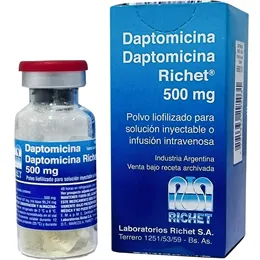
Table of Contents
- Package leaflet: Information for the user
- Daptomycin Aurobindo 350 mg powder for solution for injection/infusion, 500 mg powder for solution for injection/infusion
- 1. What Daptomicin Aurobindo is and what it is used for
- 2. What you need to know before you are given Daptomicin Aurobindo
- 3. How Daptomycin Aurobindo is administered
- 4. Possible side effects
- 5. How to store Daptomycin Aurobindo
- 6. Package contents and other information
- The following information is intended exclusively for healthcare professionals
Package leaflet: Information for the user
Daptomycin Aurobindo 350 mg powder for solution for injection/infusion, 500 mg powder for solution for injection/infusion
Generic medicine
Please read all of this leaflet carefully before you are given this medicine because it contains important information for you.
- Keep this leaflet. You may need to read it again.
- If you have any questions, ask your doctor or nurse.
- This medicine has been prescribed for you only. Do not give it to other people, even if their symptoms are the same as yours, as it may be harmful.
- If you experience any side effect, including those not listed in this leaflet, tell your doctor or nurse. See section 4.
Contents of this leaflet
- What Daptomycin Aurobindo is and what it is used for
- What you need to know before being given Daptomycin Aurobindo
- How Daptomycin Aurobindo is administered
- Possible side effects
- How to store Daptomycin Aurobindo
- Contents of the pack and other information
1. What Daptomicin Aurobindo is and what it is used for
The active substance of Daptomicin Aurobindo powder for solution for injection or infusion is
daptomycin. Daptomycin is an antibacterial agent that can stop the growth of certain bacteria.
Daptomicin Aurobindo is used in adults and in children and adolescents (aged 1 to 17 years)
to treat skin and subcutaneous tissue infections (below the skin). It is also used to treat
bloodstream infections when associated with skin infections.
Daptomicin Aurobindo is also used in adults to treat infections of the tissues lining the inside of the
heart (including heart valves) caused by a type of bacterium called Staphylococcus aureus. It is also
used to treat bloodstream infections caused by the same type of bacterium when associated with
heart infections.
Depending on the type of infection(s) you have, your doctor may also prescribe other antibacterial agents during treatment with Daptomicin Aurobindo.
2. What you need to know before you are given Daptomicin Aurobindo
Do not receive Daptomicin Aurobindo if:
You are allergic to daptomycin or sodium hydroxide, or to any of the other ingredients of this
medicine (listed in section 6).
If this applies to you, inform your doctor or nurse. If you think you may be allergic, consult your
doctor or nurse.
Warnings and precautions
Talk to your doctor or nurse before you are given Daptomicin Aurobindo:
- If you have or have previously had kidney problems. Your doctor may need to adjust the dose of Daptomicin Aurobindo (see section 3 of this leaflet).
- Patients treated with Daptomicin Aurobindo have sometimes experienced muscle pain, weakness, or muscle damage (see section 4 of this leaflet for more information). If this occurs, inform your doctor. Your doctor will arrange for a blood test and will advise whether you should continue or stop treatment with Daptomicin Aurobindo. Symptoms usually resolve within a few days after stopping Daptomicin Aurobindo.
- If you have previously developed a severe skin reaction, skin peeling, blistering rash, mouth ulcers, or serious kidney problems after taking daptomycin.
- If you are overweight. Daptomicin Aurobindo blood levels may be higher than in individuals of average weight, so you may need closer monitoring for adverse effects.
If any of these apply to you, inform your doctor or nurse before you are given Daptomicin Aurobindo.
Inform your doctor or nurse immediately if any of the following symptoms occur:
- Severe acute allergic reactions have been observed in patients treated with nearly all antibacterial medicines, including Daptomicin Aurobindo. Symptoms may include wheezing, difficulty breathing, swelling of the face, neck, and throat, skin rash, hives, or fever.
- Serious skin disorders have been reported with the use of Daptomicin Aurobindo. Symptoms associated with these skin disorders may include:
- Onset or worsening of fever;
- Raised red skin lesions or fluid-filled blisters appearing under the arms, chest, or groin areas, which may spread over large areas of the body;
- Blisters or sores in the mouth or on the genitals.
- Serious kidney problems have been reported with the use of Daptomicin Aurobindo. Symptoms may include fever and rash.
- Unusual tingling or numbness in the hands or feet, loss of sensation, or difficulty moving. If this occurs, inform your doctor, who will decide whether to continue treatment.
- Diarrhea, especially if you notice blood or mucus, or if diarrhea becomes severe or persistent.
- Onset or worsening of fever, cough, or difficulty breathing. These may be signs of a rare but serious lung disease called eosinophilic pneumonia. Your doctor will check your lung function and decide whether you should continue or stop treatment with Daptomicin Aurobindo.
Daptomicin Aurobindo may interfere with laboratory tests measuring blood coagulation. Test results may suggest impaired blood clotting even when no actual problem exists. It is therefore important that your doctor is aware that you are receiving Daptomicin Aurobindo. Inform your doctor that you are being treated with Daptomicin Aurobindo.
Your doctor will perform blood tests to monitor your muscle function both before starting treatment and regularly during treatment with Daptomicin Aurobindo.
Children and adolescents
Daptomicin Aurobindo must not be given to children under one year of age, as animal studies have shown that serious adverse effects may occur in this age group.
Use in the elderly
People over 65 years of age may receive the same dose as adults, provided they have normal kidney function.
Other medicines and Daptomicin Aurobindo
Inform your doctor or nurse if you are taking, have recently taken, or might take any other medicines. It is especially important to mention if you are taking:
- Medicines called statins or fibrates (used to lower cholesterol), or cyclosporine (a medicine used in organ transplantation to prevent organ rejection or in other conditions such as rheumatoid arthritis or atopic dermatitis). If you take any of these medicines (and others that may affect muscles) during treatment with Daptomicin Aurobindo, your risk of muscle-related adverse effects may be increased. Your doctor may decide not to prescribe Daptomicin Aurobindo or may temporarily discontinue the other medicines.
- Painkillers called non-steroidal anti-inflammatory drugs (NSAIDs) or COX-2 inhibitors (e.g., celecoxib). These may interfere with the renal effects of Daptomicin Aurobindo.
- Oral anticoagulants (e.g., warfarin), which are medicines that prevent blood from clotting. Your doctor may need to monitor your blood clotting time.
Pregnancy and breastfeeding
Daptomicin Aurobindo is generally not given to pregnant women. If you are pregnant, breastfeeding, suspect you may be pregnant, or are planning to become pregnant, consult your doctor or pharmacist before receiving this medicine.
Do not breastfeed while taking Daptomicin Aurobindo, as it may pass into breast milk and could therefore affect the infant.
Driving and using machines
Daptomicin Aurobindo has no known effect on the ability to drive or operate machinery.
Daptomicin Aurobindo contains sodium
This medicine contains less than 1 mmol (23 mg) of sodium per dose, i.e., essentially ‘sodium-free’.
3. How Daptomycin Aurobindo is administered
Daptomycin Aurobindo is usually administered by a doctor or nurse.
Adults (aged 18 years and older)
The dose depends on your body weight and the type of infection being treated. In adults, the usual dose is 4 mg per kilogram (kg) of body weight, administered once daily for skin infections, or 6 mg per kg of body weight administered once daily for heart infection or bloodstream infection associated with skin or heart infection. In adult patients, this dose is injected directly into the bloodstream (into a vein) either as an infusion lasting approximately 30 minutes or as an injection lasting approximately 2 minutes. The same dose is recommended for individuals over 65 years of age, provided they have normal renal function. If you have impaired renal function, you may receive Daptomycin Aurobindo less frequently, for example, every other day. If you are undergoing dialysis and your next dose of Daptomycin Aurobindo is due on the same day as dialysis, it is usually administered after completion of dialysis.
Children and adolescents (1 to 17 years of age)
The dose for children and adolescents (1 to 17 years of age) depends on the patient's age and the type of infection being treated. This dose is injected directly into the bloodstream (into a vein) as an infusion lasting approximately 30 to 60 minutes.
Typically, for skin infections, a treatment course lasts from 1 to 2 weeks. For bloodstream or heart infections and skin infections, your doctor will decide how long your treatment should last.
Detailed instructions for use and handling are provided at the end of this leaflet.
4. Possible side effects
Like all medicines, this medicine can cause side effects, although not everybody gets them.
The most serious side effects are described below:
Serious side effects with unknown frequency (frequency cannot be estimated from the available data)
- In some cases during administration of Daptomycin Aurobindo, a hypersensitivity reaction (severe allergic reaction including anaphylaxis and angioedema) has been reported. This severe allergic reaction requires immediate medical intervention. Immediately inform your doctor or nurse if you experience any of the following symptoms:
- Chest pain or tightness,
- Skin rash or hives,
- Swelling around the throat,
- Rapid or weak heartbeat,
- Wheezing,
- Fever,
- Chills or shaking,
- Flushing,
- Dizziness,
- Fainting,
- Metallic taste.
- If you notice the onset of unexplained muscle pain, tenderness or weakness, inform your doctor immediately. Muscle problems can be serious, including destruction of muscle tissue (rhabdomyolysis), which may lead to kidney damage.
Other serious side effects reported with the use of Daptomycin Aurobindo are:
- A rare but potentially serious lung disease called eosinophilic pneumonia, usually occurring after more than 2 weeks of treatment. Symptoms may include difficulty breathing, onset or worsening of cough, or onset or worsening of fever.
- Severe skin disorders. Symptoms may include:
- onset or worsening of fever;
- raised or fluid-filled red skin lesions that may appear under the arms or in the chest or groin areas and may spread over a large area of the body;
- blisters or sores in the mouth or on the genitals.
- Serious kidney problems. Symptoms may include fever and skin rash.
If you experience any of these symptoms, inform your doctor or nurse immediately. Your doctor will perform further tests to make a diagnosis.
The side effects reported most frequently are described below:
Common side effects (may affect up to 1 in 10 people)
- Fungal infections such as oral candidiasis
- Urinary tract infections
- Decrease in the number of red blood cells (anaemia)
- Dizziness, anxiety, difficulty sleeping
- Headache
- Fever, weakness (asthenia)
- High or low blood pressure
- Constipation, abdominal pain
- Diarrhoea, feeling unwell (nausea or vomiting)
- Flatulence
- Abdominal swelling or bloated stomach
- Skin rash or itching
- Pain, itching or redness at the infusion site
- Pain in arms or legs
- Increased levels of liver enzymes or creatine phosphokinase (CPK) shown in blood tests.
Other side effects that may occur during treatment with Daptomycin Aurobindo are described below:
Uncommon side effects (may affect up to 1 in 100 people)
- Blood disorders (such as increased number of small blood particles called platelets, which may increase the tendency for blood to clot, or increased levels of certain types of white blood cells)
- Loss of appetite
- Tingling or numbness in hands or feet, altered taste
- Tremor
- Changes in heart rhythm, hot flushes
- Indigestion (dyspepsia), inflammation of the tongue
- Skin rash associated with itching
- Muscle pain, cramps or weakness, inflammation of the muscles (myositis), joint pain
- Kidney problems
- Vaginal inflammation and irritation
- Generalised pain or weakness, tiredness (fatigue)
- Blood tests showing increased levels of blood sugar, serum creatinine, myoglobin or lactate dehydrogenase (LDH), prolonged blood clotting time, or electrolyte imbalance
- Itching of the eyes.
Rare side effects (may affect up to 1 in 1,000 people)
- Yellowing of the skin and eyes (jaundice),
- Prolongation of prothrombin time.
Frequency not known (frequency cannot be estimated from the available data)
Colitis associated with antibiotic use, including pseudomembranous colitis (severe or persistent diarrhoea containing blood and/or mucus, associated with abdominal pain or fever), easy bruising, bleeding gums or nosebleeds.
Reporting of side effects
If you experience any side effect, including those not listed in this leaflet, talk to your doctor or pharmacist. You can also report side effects directly via the national reporting system at www.aifa.gov.it/content/segnalazioni-reazioni-avverse.
By reporting side effects, you can help provide more information on the safety of this medicine.
5. How to store Daptomycin Aurobindo
- Keep this medicine out of the sight and reach of children.
- Do not use this medicine after the expiry date stated on the carton and label after "EXP". The expiry date refers to the last day of that month.
- Store in a refrigerator (2°C–8°C).
After reconstitution: the chemical and physical stability during use of the reconstituted solution in the vial has been demonstrated for 12 hours at 25°C and up to 48 hours at 2°C–8°C.
After dilution: the chemical and physical stability of the diluted solution in infusion bags has been established for 12 hours at 25°C or 24 hours at 2°C–8°C.
For a 30-minute intravenous infusion, the total storage period (reconstituted solution in the vial and diluted solution in the infusion bag; see section 6.6) at 25°C must not exceed 12 hours (or 24 hours at 2°C–8°C).
For a 2-minute intravenous injection, the storage period of the reconstituted solution in the vial (see section 6.6) at 25°C must not exceed 12 hours (or 48 hours at 2°C–8°C).
However, from a microbiological standpoint, the medicine should be used immediately.
This medicine does not contain preservatives or bacteriostatic agents. If immediate use is not possible, the user is responsible for the in-use storage duration, which under normal circumstances should not exceed 24 hours at 2°C–8°C, unless reconstitution/dilution has been carried out under controlled and validated aseptic conditions.
Do not dispose of medicines via wastewater or household waste. Ask your pharmacist how to dispose of medicines no longer required. This will help protect the environment.
6. Package contents and other information
What Daptomicina Aurobindo contains
- The active substance is daptomycin. One vial of powder contains 350 mg of daptomycin.
- The active substance is daptomycin. One vial of powder contains 350 mg of daptomycin.
- The other component is sodium hydroxide.
Description of the appearance of Daptomicina Aurobindo and the contents of the pack
Daptomicina Aurobindo 350 mg powder for solution for injection/infusion
Daptomicina Aurobindo powder for solution for injection/infusion is supplied as a
lyophilisate or powder, pale yellow to light brown in colour, in type I clear glass tubular vials,
closed with a bromobutyl rubber stopper and sealed with an aluminium seal with a yellow chromium-coloured polypropylene disc.
Daptomicina Aurobindo 500 mg powder for solution for injection/infusion
Daptomicina Aurobindo powder for solution for injection/infusion is supplied as a
lyophilisate or powder, pale yellow to light brown in colour, in type I clear glass tubular vials,
closed with a bromobutyl rubber stopper and sealed with an aluminium seal with a blue polypropylene disc.
It is mixed with a solvent to form a liquid before administration.
Each carton contains 1, 5 or 10 vials.
Not all pack sizes may be marketed.
Marketing Authorisation Holder and Manufacturer
Marketing Authorisation Holder
Eugia Pharma (Malta) Ltd
Vault 14, Level 2, Valletta Waterfront,
Floriana FRN 1914
Malta
Manufacturer
APL Swift Services (Malta) Ltd
Hf26, Hal Far Industrial Estate, Qasam Industrijali Hal Far, Birzebbuga, BBG 3000 Malta
Arrow Generiques
26 Avenue Tony Garnier, Lyon, 69007 France
This medicinal product is authorised in the European Economic Area countries under the following names:
France: Daptomycine Arrow Pharma 350 mg poudre pour solution injectable/pour perfusion
Daptomycine Arrow Pharma 500 mg poudre pour solution injectable/pour perfusion
Germany: Daptomycin Eugia 350 mg Pulver zur Herstellung einer Injektions-/Infusionslösung
Daptomycin Eugia 500 mg Pulver zur Herstellung einer Injektions-/Infusionslösung
Italy: Daptomicina Aurobindo
Spain: Daptomicina Eugia 350 mg polvo para solución inyectable y para perfusión EFG
Daptomicina Eugia 500 mg polvo para solución inyectable y para perfusión EFG
Portugal: Daptomicina Eugia
The following information is intended exclusively for healthcare professionals
Important: Consult the Summary of Product Characteristics before prescribing.
Instructions for use and handling
350 mg pack:
In adults, daptomycin may be administered intravenously as a 30-minute infusion or as a 2-minute injection. In contrast to adults, daptomycin must not be administered as a 2-minute injection in pediatric patients. Daptomycin should be administered by infusion over 30 minutes in pediatric patients aged 7 to 17 years. In pediatric patients under 7 years of age receiving a dose of 9–12 mg/kg, daptomycin must be administered over at least 60 minutes. Preparation of the infusion solution requires further dilution, as described below.
500 mg pack:
In adults, daptomycin may be administered intravenously as a 30-minute infusion or as a 2-minute injection. In contrast to adults, daptomycin must not be administered as a 2-minute injection in pediatric patients. Daptomycin should be administered by infusion over 30 minutes in pediatric patients aged 7 to 17 years. In pediatric patients under 7 years of age receiving a dose of 9–12 mg/kg, daptomycin must be administered over at least 60 minutes. Preparation of the infusion solution requires further dilution, as described below.
For the 350 mg pack, powder for solution for injection/infusion:
Administration of Daptomycin Aurobindo as a 30- or 60-minute intravenous infusion.
A concentration of 50 mg/ml of Daptomycin Aurobindo for infusion is obtained by reconstituting the lyophilisate with 7 ml of sodium chloride 9 mg/ml (0.9%) solution for injection.
Approximately 15 minutes are required for complete dissolution of the lyophilisate. The fully reconstituted medicinal product has a clear appearance, and there may be some bubbles or foam around the edges of the vial.
To prepare Daptomycin Aurobindo for intravenous infusion, the following instructions must be followed: an aseptic technique must be used throughout the entire process of reconstitution or dilution of the Daptomycin Aurobindo lyophilisate.
For reconstitution:
- Remove the polypropylene overcap to expose the central portion of the rubber stopper. Clean the top of the rubber stopper with an alcohol-impregnated swab or other antiseptic solution and allow it to dry. After cleaning, do not touch the rubber stopper or allow it to come into contact with any other surface. Draw 7 ml of sodium chloride 9 mg/ml (0.9%) solution for injection into a syringe using a sterile transfer needle with a gauge of 21 or smaller, or a needle-free device, and slowly inject it into the vial by inserting the needle into the center of the rubber stopper with the tip directed toward the vial wall.
- Gently rotate the vial to ensure that the product is completely wetted by the liquid, then allow it to stand for 10 minutes.
- Finally, gently rotate the vial for several minutes until a clear reconstituted solution is obtained. Avoid vigorous shaking or agitation to prevent foam formation.
- Before use, the reconstituted solution must be carefully inspected to ensure complete dissolution of the product and visually checked for particulate matter. The color of the reconstituted Daptomycin Aurobindo solution may vary from pale yellow to light brown.
- The reconstituted solution must then be diluted with sodium chloride 9 mg/ml (0.9%) solution (typical volume 50 ml).
For dilution:
- Slowly withdraw the properly reconstituted liquid (50 mg daptomycin/ml) from the vial using a new sterile needle with a gauge of 21 or smaller, by inverting the vial to allow the solution to flow toward the stopper. Using a syringe, insert the needle into the inverted vial. While keeping the vial inverted, position the needle tip at the bottom of the solution in the vial while aspirating the solution into the syringe. Before removing the needle from the vial, pull back the plunger to the end of the syringe barrel to aspirate the required solution from the inverted vial.
- Expel air, large bubbles, and excess solution until the required dose is obtained.
- Transfer the required reconstituted dose into 50 ml of sodium chloride 9 mg/ml (0.9%).
- The reconstituted and diluted solution must then be administered by intravenous infusion over 30 or 60 minutes.
Daptomycin Aurobindo is physically and chemically incompatible with glucose-containing solutions. The following agents have been shown to be compatible when added to infusion solutions containing Daptomycin Aurobindo: aztreonam, ceftazidime, ceftriaxone, gentamicin, fluconazole, levofloxacin, dopamine, heparin, and lidocaine.
The total storage period (reconstituted solution in the vial and diluted solution in the infusion bag) must not exceed 12 hours at 25°C (24 hours if stored refrigerated).
The stability of the diluted solution in the infusion bag is 12 hours at 25°C or 24 hours if stored refrigerated at 2°C–8°C.
Administration of Daptomycin Aurobindo by 2-minute intravenous injection (adults only)
Water must not be used for reconstitution of Daptomycin Aurobindo for intravenous injection.
Daptomycin Aurobindo must be reconstituted only with sodium chloride 9 mg/ml (0.9%).
A concentration of 50 mg/ml of Daptomycin Aurobindo for injection is obtained by reconstituting the lyophilisate with 7 ml of sodium chloride 9 mg/ml (0.9%) solution for injection.
Approximately 15 minutes are required for complete dissolution of the lyophilisate. The fully reconstituted medicinal product has a clear appearance, and there may be some bubbles or foam around the edges of the vial.
To prepare Daptomycin Aurobindo for intravenous injection, the following instructions must be followed: an aseptic technique must be used throughout the entire process of reconstitution of the Daptomycin Aurobindo lyophilisate.
- Remove the polypropylene overcap to expose the central portion of the rubber stopper. Clean the top of the rubber stopper with an alcohol-impregnated swab or other antiseptic solution and allow it to dry. After cleaning, do not touch the rubber stopper or allow it to come into contact with any other surface. Draw 7 ml of sodium chloride 9 mg/ml (0.9%) solution for injection into a syringe using a sterile transfer needle with a gauge of 21 or smaller, or a needle-free device, and slowly inject it into the vial by inserting the needle into the center of the rubber stopper with the tip directed toward the vial wall.
- Gently rotate the vial to ensure that the product is completely wetted by the liquid, then allow it to stand for 10 minutes.
- Finally, gently rotate the vial for several minutes until a clear reconstituted solution is obtained. Avoid vigorous shaking or agitation to prevent foam formation.
- Before use, the reconstituted solution must be carefully inspected to ensure complete dissolution of the product and visually checked for particulate matter. The color of the reconstituted Daptomycin Aurobindo solution may vary from pale yellow to light brown.
- Slowly withdraw the reconstituted liquid (50 mg daptomycin/ml) from the vial using a sterile needle with a gauge of 21 or smaller.
- Invert the vial to allow the solution to flow toward the stopper. Using a new syringe, insert the needle into the inverted vial. While keeping the vial inverted, position the needle tip at the bottom of the solution in the vial while aspirating the solution into the syringe. Before removing the needle from the vial, pull back the plunger to the end of the syringe barrel to aspirate all the solution from the inverted vial.
- Replace the needle with a new needle for intravenous injection.
- Expel air, large bubbles, and excess solution until the required dose is obtained.
- The reconstituted solution must be slowly injected intravenously over 2 minutes.
Chemical and physical stability during use of the reconstituted solution in the vial has been demonstrated for 12 hours at 25°C and up to 48 hours if stored refrigerated (2°C–8°C).
However, from a microbiological standpoint, the medicinal product should be used immediately. If not used immediately, the user is responsible for the in-use storage period, which under normal circumstances must not exceed 24 hours at 2°C–8°C, unless reconstitution/dilution was performed under controlled and validated aseptic conditions.
The medicinal product must not be mixed with other products except those mentioned above.
Daptomycin Aurobindo vials are for single use only. Any unused solution remaining in the vial must be discarded.
For the 500 mg pack, powder for solution for injection/infusion:
Administration of Daptomycin Aurobindo as a 30- or 60-minute intravenous infusion.
A concentration of 50 mg/ml of Daptomycin Aurobindo for infusion is obtained by reconstituting the lyophilisate with 10 ml of sodium chloride 9 mg/ml (0.9%) solution for injection.
Approximately 15 minutes are required for complete dissolution of the lyophilisate. The fully reconstituted medicinal product has a clear appearance, and there may be some bubbles or foam around the edges of the vial.
To prepare Daptomycin Aurobindo for intravenous infusion, the following instructions must be followed: an aseptic technique must be used throughout the entire process of reconstitution or dilution of the Daptomycin Aurobindo lyophilisate.
For reconstitution:
- Remove the polypropylene overcap to expose the central portion of the rubber stopper. Clean the top of the rubber stopper with an alcohol-impregnated swab or other antiseptic solution and allow it to dry. After cleaning, do not touch the rubber stopper or allow it to come into contact with any other surface. Draw 10 ml of sodium chloride 9 mg/ml (0.9%) solution for injection into a syringe using a sterile transfer needle with a gauge of 21 or smaller, or a needle-free device, and slowly inject it into the vial by inserting the needle into the center of the rubber stopper with the tip directed toward the vial wall.
- Gently rotate the vial to ensure that the product is completely wetted by the liquid, then allow it to stand for 10 minutes.
- Finally, gently rotate the vial for several minutes until a clear reconstituted solution is obtained. Avoid vigorous shaking or agitation to prevent foam formation.
- Before use, the reconstituted solution must be carefully inspected to ensure complete dissolution of the product and visually checked for particulate matter. The color of the reconstituted Daptomycin Aurobindo solution may vary from pale yellow to light brown.
- The reconstituted solution must then be diluted with sodium chloride 9 mg/ml (0.9%) solution (typical volume 50 ml).
For dilution:
- Slowly withdraw the properly reconstituted liquid (50 mg daptomycin/ml) from the vial using a new sterile needle with a gauge of 21 or smaller, by inverting the vial to allow the solution to flow toward the stopper. Using a syringe, insert the needle into the inverted vial. While keeping the vial inverted, position the needle tip at the bottom of the solution in the vial while aspirating the solution into the syringe. Before removing the needle from the vial, pull back the plunger to the end of the syringe barrel to aspirate the required solution from the inverted vial.
- Expel air, large bubbles, and excess solution until the required dose is obtained.
- Transfer the required reconstituted dose into 50 ml of sodium chloride 9 mg/ml (0.9%).
- The reconstituted and diluted solution must then be administered by intravenous infusion over 30 or 60 minutes.
Daptomycin Aurobindo is physically and chemically incompatible with glucose-containing solutions. The following agents have been shown to be compatible when added to infusion solutions containing Daptomycin Aurobindo: aztreonam, ceftazidime, ceftriaxone, gentamicin, fluconazole, levofloxacin, dopamine, heparin, and lidocaine.
The total storage period (reconstituted solution in the vial and diluted solution in the infusion bag) must not exceed 12 hours at 25°C (24 hours if stored refrigerated).
The stability of the diluted solution in the infusion bag is 12 hours at 25°C or 24 hours if stored refrigerated at 2°C–8°C.
Administration of Daptomycin Aurobindo by 2-minute intravenous injection (adults only)
Water must not be used for reconstitution of Daptomycin Aurobindo for intravenous injection.
Daptomycin Aurobindo must be reconstituted only with sodium chloride 9 mg/ml (0.9%).
A concentration of 50 mg/ml of Daptomycin Aurobindo for injection is obtained by reconstituting the lyophilisate with 10 ml of sodium chloride 9 mg/ml (0.9%) solution for injection.
Approximately 15 minutes are required for complete dissolution of the lyophilisate. The fully reconstituted medicinal product has a clear appearance, and there may be some bubbles or foam around the edges of the vial.
To prepare Daptomycin Aurobindo for intravenous injection, the following instructions must be followed: an aseptic technique must be used throughout the entire process of reconstitution of the Daptomycin Aurobindo lyophilisate.
- Remove the polypropylene overcap to expose the central portion of the rubber stopper. Clean the top of the rubber stopper with an alcohol-impregnated swab or other antiseptic solution and allow it to dry. After cleaning, do not touch the rubber stopper or allow it to come into contact with any other surface. Draw 10 ml of sodium chloride 9 mg/ml (0.9%) solution for injection into a syringe using a sterile transfer needle with a gauge of 21 or smaller, or a needle-free device, and slowly inject it into the vial by inserting the needle into the center of the rubber stopper with the tip directed toward the vial wall.
- Gently rotate the vial to ensure that the product is completely wetted by the liquid, then allow it to stand for 10 minutes.
- Finally, gently rotate the vial for several minutes until a clear reconstituted solution is obtained. Avoid vigorous shaking or agitation to prevent foam formation.
- Before use, the reconstituted solution must be carefully inspected to ensure complete dissolution of the product and visually checked for particulate matter. The color of the reconstituted Daptomycin Aurobindo solution may vary from pale yellow to light brown.
- Slowly withdraw the reconstituted liquid (50 mg daptomycin/ml) from the vial using a sterile needle with a gauge of 21 or smaller.
- Invert the vial to allow the solution to flow toward the stopper. Using a new syringe, insert the needle into the inverted vial. While keeping the vial inverted, position the needle tip at the bottom of the solution in the vial while aspirating the solution into the syringe. Before removing the needle from the vial, pull back the plunger to the end of the syringe barrel to aspirate all the solution from the inverted vial.
- Replace the needle with a new needle for intravenous injection.
- Expel air, large bubbles, and excess solution until the required dose is obtained.
- The reconstituted solution must be slowly injected intravenously over 2 minutes.
Chemical and physical stability during use of the reconstituted solution in the vial has been demonstrated for 12 hours at 25°C and up to 48 hours if stored refrigerated (2°C–8°C).
However, from a microbiological standpoint, the medicinal product should be used immediately. If not used immediately, the user is responsible for the in-use storage period, which under normal circumstances must not exceed 24 hours at 2°C–8°C, unless reconstitution/dilution was performed under controlled and validated aseptic conditions.
The medicinal product must not be mixed with other products except those mentioned above.
Daptomycin Aurobindo vials are for single use only. Any unused solution remaining in the vial must be discarded.