Dapagliflozin Tecnigen
ItalyTable of Contents
- 1. NAME OF THE MEDICINAL PRODUCT
- 2. QUALITATIVE AND QUANTITATIVE COMPOSITION
- 3. PHARMACEUTICAL FORM
- 4. CLINICAL INFORMATION
- 5. PHARMACOLOGICAL PROPERTIES
- 6. PHARMACEUTICAL INFORMATION
- 7. MARKET AUTHORIZATION HOLDER
- 8. MARKETING AUTHORISATION NUMBERS
- 9. DATE OF FIRST AUTHORISATION/RENEWAL OF THE AUTHORISATION
- 10. DATE OF TEXT REVISION
SUMMARY OF PRODUCT CHARACTERISTICS
1. NAME OF THE MEDICINAL PRODUCT
Dapagliflozin Tecnigen 5 mg film-coated tablets
Dapagliflozin Tecnigen 10 mg film-coated tablets
2. QUALITATIVE AND QUANTITATIVE COMPOSITION
Dapaglifozin Tecnigen 5 mg film-coated tablets
Each tablet contains dapagliflozin propanediol monohydrate equivalent to 5 mg of dapagliflozin.
Dapaglifozin Tecnigen 10 mg film-coated tablets
Each tablet contains dapagliflozin propanediol monohydrate equivalent to 10 mg of dapagliflozin.
For the complete list of excipients, see section 6.1.
3. PHARMACEUTICAL FORM
Film-coated tablet (tablet).
Dapagliflozin 5 mg film-coated tablets are described as round, yellow, film-coated tablets with a diameter of 7.0 mm ± 0.2 mm, imprinted with "5" on one side.
Dapagliflozin 10 mg film-coated tablets are described as oval, yellow, film-coated tablets with a length of 11.5 mm ± 0.2 mm and a width of 7.0 mm ± 0.2 mm.
4. CLINICAL INFORMATION
4.1 Therapeutic indications
Type 2 diabetes mellitus
Dapaglifozin Tecnigen is indicated in adult patients and children aged 10 years and older who are not adequately controlled, for the treatment of type 2 diabetes mellitus, as an adjunct to diet and exercise:
- as monotherapy when use of metformin is considered inappropriate due to intolerance.
- in combination with other medicinal products for the treatment of type 2 diabetes mellitus.
For study results regarding combinations with other medicinal products, effects on glycaemic control, cardiovascular and renal events, and studied populations, see sections 4.4, 4.5 and 5.1.
Heart failure
Dapaglifozin Tecnigen is indicated in adults for the treatment of chronic symptomatic heart failure.
Chronic kidney disease
Dapaglifozin Tecnigen is indicated in adults for the treatment of chronic kidney disease.
4.2 Posology and method of administration
Posology
Type 2 diabetes mellitus
The recommended dose is 10 mg of dapagliflozin once daily.
When dapagliflozin is used in combination with insulin or an insulin secretagogue such as a sulphonylurea, consideration should be given to administering a lower dose of insulin or the insulin secretagogue to reduce the risk of hypoglycaemia (see sections 4.5 and 4.8).
Heart failure
The recommended dose is 10 mg of dapagliflozin once daily.
Chronic kidney disease
The recommended dose is 10 mg of dapagliflozin once daily.
Special populations
Renal impairment
No dose adjustment is required based on renal function.
In patients with eGFR < 25 mL/min, due to limited experience, initiation of dapagliflozin treatment is not recommended.
In patients with type 2 diabetes mellitus, the glycaemic efficacy of dapagliflozin is reduced when glomerular filtration rate (GFR) is < 45 mL/min and is likely absent in patients with severe renal impairment. Therefore, in patients with type 2 diabetes mellitus, if GFR falls below 45 mL/min and additional glycaemic control is needed, consideration should be given to initiating additional glucose-lowering therapy (see sections 4.4, 4.8, 5.1 and 5.2).
Hepatic impairment
No dose adjustment is necessary in patients with mild or moderate hepatic impairment.
In patients with severe hepatic impairment, a starting dose of 5 mg is recommended. This may be increased to 10 mg if well tolerated (see sections 4.4 and 5.2).
Elderly (≥ 65 years)
No dose adjustment is recommended based on age.
Paediatric population
No dose adjustment is required for the treatment of type 2 diabetes mellitus in children aged 10 years and older (see sections 5.1 and 5.2). Data are not available for children under 10 years of age.
The safety and efficacy of dapagliflozin for the treatment of heart failure or chronic kidney disease in children < 18 years have not been established. No data are available.
Method of administration
Dapaglifozin Tecnigen can be taken orally once daily, independent of meals, at any time of day. Tablets should be swallowed whole.
4.3 Contraindications
Hypersensitivity to the active substance or to any of the excipients listed in section 6.1.
4.4 Special warnings and precautions for use
General
Dapagliflozin must not be used in patients with type 1 diabetes mellitus (see “Diabetic ketoacidosis” in section 4.4).
Renal impairment
In patients with eGFR < 25 mL/min, due to limited experience, initiation of dapagliflozin treatment is not recommended.
The glucose-lowering efficacy of dapagliflozin depends on renal function and is reduced in patients with eGFR < 45 mL/min and is practically absent in patients with severe renal impairment (see sections 4.2, 5.1 and 5.2).
In a study conducted in patients with type 2 diabetes mellitus and moderate renal impairment (eGFR < 60 mL/min), a higher proportion of patients treated with dapagliflozin experienced adverse reactions such as increases in creatinine, phosphorus, parathyroid hormone (PTH), and hypotension compared to placebo.
Hepatic impairment
Clinical experience in patients with hepatic impairment is limited. Exposure to dapagliflozin is increased in patients with severe hepatic impairment (see sections 4.2 and 5.2).
Use in patients at risk of volume depletion and/or hypotension
Due to its mechanism of action, dapagliflozin increases diuresis, which may lead to a modest reduction in blood pressure observed in clinical studies (see section 5.1). This effect may be more pronounced in patients with very high blood glucose levels.
Caution is advised in patients for whom a blood pressure reduction induced by dapagliflozin may pose a risk, such as patients on antihypertensive therapy with a history of hypotension or elderly patients.
In patients with concomitant conditions that may lead to volume depletion (e.g. gastrointestinal disorders), careful monitoring of volume status (e.g. physical examination, blood pressure measurements, laboratory tests including haematocrit and electrolytes) is recommended. Temporary interruption of dapagliflozin treatment is recommended in patients who develop volume depletion until the depletion is corrected (see section 4.8).
Diabetic ketoacidosis
Rare cases, including potentially fatal and fatal cases, of diabetic ketoacidosis (DKA) have been reported in patients treated with sodium-glucose co-transporter-2 (SGLT2) inhibitors, including dapagliflozin. In several reports, the clinical presentation was atypical, with only a moderate increase in blood glucose levels, below 14 mmol/L (250 mg/dL).
The risk of diabetic ketoacidosis should be considered in the presence of non-specific symptoms such as nausea, vomiting, anorexia, abdominal pain, excessive thirst, difficulty breathing, confusion, unusual fatigue or drowsiness. If these symptoms occur, patients should be immediately evaluated for ketoacidosis, regardless of blood glucose levels.
In patients in whom DKA is suspected or diagnosed, treatment with dapagliflozin must be immediately discontinued.
Treatment should be interrupted in patients hospitalised for major surgical procedures or acute serious illnesses. In these patients, monitoring of ketones is recommended. Measurement of blood ketone levels is preferred over urine ketone testing.
Treatment with dapagliflozin may be resumed when ketone levels are normal and the patient's condition has stabilised.
Before initiating treatment with dapagliflozin, patient history factors that may predispose to ketoacidosis should be considered.
Patients at higher risk of DKA include those with low beta-cell functional reserve (e.g. patients with type 2 diabetes and low C-peptide or latent autoimmune diabetes in adults (LADA)), patients with conditions leading to reduced food intake or severe dehydration, patients with reduced insulin doses, and patients with increased insulin requirements due to acute illness, surgery or alcohol abuse. SGLT2 inhibitors should be used with caution in these patients.
Resumption of SGLT2 inhibitor treatment in patients with a prior episode of DKA is not recommended unless another triggering factor has been identified and resolved.
In type 1 diabetes mellitus studies with dapagliflozin, DKA was reported with common frequency.
Dapagliflozin must not be used for the treatment of patients with type 1 diabetes mellitus.
Necrotising fasciitis of the perineum (Fournier's gangrene)
Cases of necrotising fasciitis of the perineum (also known as Fournier's gangrene) have been reported in male and female patients treated with SGLT2 inhibitors following marketing authorisation (see section 4.8). This is a rare but serious and potentially fatal event requiring urgent surgical intervention and antibiotic therapy.
Patients should be advised to contact their physician if they experience a combination of symptoms such as pain, tenderness, erythema or swelling in the genital or perineal area, associated with fever or malaise. It should be noted that necrotising fasciitis may be preceded by a genitourinary infection or perineal abscess. If Fournier's gangrene is suspected, Dapaglifozin Tecnigen should be discontinued and immediate treatment initiated (including antibiotics and surgical debridement).
Urinary tract infections
Urinary glucose excretion may be associated with an increased risk of urinary tract infections; therefore, temporary interruption of dapagliflozin should be considered during treatment of pyelonephritis or urosepsis.
Elderly (≥ 65 years)
Elderly patients may be at increased risk of volume depletion and are more likely to be treated with diuretics.
Elderly patients are more likely to have reduced renal function and/or to be treated with antihypertensive medicines that may affect renal function, such as angiotensin-converting enzyme (ACE) inhibitors and angiotensin receptor blockers (ARBs). The same recommendations regarding renal function apply to elderly patients as to all patients (see sections 4.2, 4.4, 4.8 and 5.1).
Heart failure
Experience with dapagliflozin in NYHA class IV patients is limited.
Infiltrative cardiomyopathy
Patients with infiltrative cardiomyopathy have not been studied.
Chronic kidney disease
There is no experience with dapagliflozin for the treatment of chronic kidney disease in non-diabetic patients without albuminuria. Patients with albuminuria may derive greater benefit from dapagliflozin treatment.
Lower limb amputations
An increased incidence of lower limb amputations (mainly of the toes) has been observed in long-term clinical studies in patients with type 2 diabetes mellitus treated with SGLT2 inhibitors. It is not known whether this is a class effect. It is important to advise diabetic patients to perform regular preventive foot care.
Urine tests
Due to its mechanism of action, patients taking Dapaglifozin Tecnigen will test positive for glucose in urine tests.
4.5 Interactions with other medicinal products and other forms of interaction
Pharmacodynamic interactions
Diuretics
Dapagliflozin may enhance the diuretic effect of thiazide and loop diuretics and may increase the risk of dehydration and hypotension (see section 4.4).
Insulin and insulin secretagogues
Insulin and insulin secretagogues, such as sulphonylureas, cause hypoglycaemia. Therefore, a lower dose of insulin or an insulin secretagogue may be required to reduce the risk of hypoglycaemia when used in combination with dapagliflozin in patients with type 2 diabetes (see sections 4.2 and 4.8).
Pharmacokinetic interactions
Dapagliflozin is primarily metabolised via glucuronide conjugation mediated by UDP-glucuronosyltransferase 1A9 (UGT1A9).
In vitro studies show that dapagliflozin does not inhibit cytochrome P450 (CYP) 1A2, CYP2A6, CYP2B6, CYP2C8, CYP2C9, CYP2C19, CYP2D6, CYP3A4, nor does it induce CYP1A2, CYP2B6 or CYP3A4.
Therefore, dapagliflozin is not expected to alter the metabolic clearance of co-administered medicinal products metabolised by these enzymes.
Effect of other medicinal products on dapagliflozin
Interaction studies conducted in healthy subjects, primarily using a single-dose design, suggest that the pharmacokinetic profile of dapagliflozin is not altered by metformin, pioglitazone, sitagliptin, glimepiride, voglibose, hydrochlorothiazide, bumetanide, valsartan or simvastatin.
Following co-administration of dapagliflozin with rifampicin (an inducer of several active transporters and drug-metabolising enzymes), a 22% reduction in systemic exposure of dapagliflozin (AUC) was observed, but without any clinically significant effect on 24-hour urinary glucose excretion. No dose adjustment is recommended. A clinically relevant effect with other inducers (e.g. carbamazepine, phenytoin, phenobarbital) is not expected.
Following co-administration of dapagliflozin with mefenamic acid (an inhibitor of UGT1A9), a 55% increase in systemic exposure of dapagliflozin was observed, but without any clinically significant effect on 24-hour urinary glucose excretion. No dose adjustment is recommended.
Effect of dapagliflozin on other medicinal products
Dapagliflozin may increase renal excretion of lithium and blood lithium levels may decrease. After initiation of dapagliflozin and dose adjustments, serum lithium concentrations should be monitored more frequently. Patients should be referred to the physician who prescribed lithium to monitor serum lithium levels.
In interaction studies conducted in healthy subjects, primarily using a single-dose design, dapagliflozin did not alter the pharmacokinetic profiles of metformin, pioglitazone, sitagliptin, glimepiride, hydrochlorothiazide, bumetanide, valsartan, digoxin (a P-glycoprotein substrate) or warfarin (S-warfarin, a CYP2C9 substrate), nor the anticoagulant effects of warfarin as measured by INR. Administration of a single 20 mg dose of dapagliflozin with simvastatin (a CYP3A4 substrate) resulted in a 19% increase in AUC of simvastatin and a 31% increase in AUC of simvastatin acid. The increases in exposure to simvastatin and simvastatin acid are not considered clinically relevant.
Interference with 1,5-anhydroglucitol (1,5-AG) assay
Monitoring of glycaemic control using the 1,5-AG assay is not recommended, as measurements of 1,5-AG are unreliable for assessing glycaemic control in patients taking SGLT2 inhibitors. Alternative methods are recommended for monitoring glycaemic control.
Paediatric population
Interaction studies have only been conducted in adults.
4.6 Fertility, pregnancy and lactation
Pregnancy
There are no data on the use of dapagliflozin in pregnant women. Studies in rats have shown renal developmental toxicity corresponding to the second and third trimesters of human pregnancy (see section 5.3). Consequently, use of dapagliflozin is not recommended during the second and third trimesters of pregnancy.
When pregnancy is confirmed, treatment with dapagliflozin should be discontinued.
Lactation
It is not known whether dapagliflozin and/or its metabolites are excreted in human milk. Available pharmacodynamic/toxicological data in animals have shown excretion of dapagliflozin/metabolites in milk and pharmacologically mediated effects in suckled offspring (see section 5.3). Risk to neonates/infants cannot be excluded. Dapagliflozin must not be used during breastfeeding.
Fertility
The effect of dapagliflozin on fertility has not been studied in humans. In male and female rats, dapagliflozin showed no effects on fertility at any dose tested.
4.7 Effects on ability to drive and use machines
Dapaglifozin Tecnigen does not impair or impairs negligibly the ability to drive and use machines. Patients should be warned of the risk of hypoglycaemia when dapagliflozin is used in combination with a sulphonylurea or insulin.
4.8 Undesirable effects
Summary of safety profile
Type 2 diabetes mellitus
In clinical studies in type 2 diabetes, more than 15,000 patients were treated with dapagliflozin.
The primary safety and tolerability assessment was conducted in a pre-specified pooled analysis of 13 short-term (up to 24 weeks) placebo-controlled studies, involving 2,360 subjects treated with dapagliflozin 10 mg and 2,295 treated with placebo.
In the dapagliflozin cardiovascular outcomes study in type 2 diabetes mellitus (DECLARE study, see section 5.1), 8,574 patients received dapagliflozin 10 mg and 8,569 received placebo for a median exposure time of 48 months. In total, there were 30,623 patient-years of exposure to dapagliflozin.
The most frequently reported adverse reactions in clinical studies were genital infections.
Heart failure
In the dapagliflozin cardiovascular outcomes study in patients with heart failure and reduced ejection fraction (DAPA-HF study), 2,368 patients were treated with dapagliflozin 10 mg and 2,368 with placebo for a median exposure time of 18 months. The patient population included patients with type 2 diabetes mellitus and patients without diabetes, and patients with eGFR ≥ 30 mL/min/1.73 m². In the dapagliflozin cardiovascular outcomes study in patients with heart failure and ejection fraction > 40% (DELIVER study), 3,126 patients were treated with dapagliflozin 10 mg and 3,127 with placebo for a median exposure time of 27 months. The patient population included patients with type 2 diabetes mellitus and patients without diabetes, and patients with eGFR ≥ 25 mL/min/1.73 m².
The overall safety profile of dapagliflozin in patients with heart failure was consistent with the known safety profile of dapagliflozin.
Chronic kidney disease
Results from the dapagliflozin renal outcomes study (DAPA-CKD), conducted in patients with chronic kidney disease, showed that 2,149 patients were treated with dapagliflozin 10 mg and 2,149 with placebo for a median exposure time of 27 months. The patient population included patients with and without type 2 diabetes mellitus, with eGFR ranging from ≥ 25 to ≤ 75 mL/min/1.73 m² and albuminuria (urine albumin-to-creatinine ratio [ACR] ≥ 200 and ≤ 5000 mg/g). Treatment was continued if eGFR fell below 25 mL/min/1.73 m².
In patients with chronic kidney disease, the overall safety profile of dapagliflozin was consistent with the known safety profile of dapagliflozin.
Table of adverse reactions
The following adverse reactions have been identified from placebo-controlled clinical studies and post-marketing surveillance. None were dose-related. The adverse reactions listed below are classified by frequency and by system organ class (SOC). Frequency categories are defined according to the following convention: very common (≥ 1/10), common (≥ 1/100, < 1/10), uncommon (≥ 1/1,000, < 1/100), rare (≥ 1/10,000, < 1/1,000), very rare (< 1/10,000), and not known (frequency cannot be estimated from available data).
Table 1. Adverse reactions observed in placebo-controlled clinical studies a and in post-marketing experience
| System Organ Class | Very common | Common* | Uncommon** | Rare | Very rare |
| Infections and infestations | Vulvovaginitis, balanitis and genital infections related*,b,c Urinary tract infection*,b,d | Fungal infection** | Necrotizing fasciitis of the perineum (Fournier's gangrene)b,i | ||
| Metabolism and nutrition disorders | Hypoglycaemiaa (when used with SU or insulin)b | Volume depletionb,e Thirst** | Diabetic ketoacidosis (when used in type 2 diabetes mellitus)b,i,k | ||
| Nervous system disorders | Dizziness | ||||
| Gastrointestinal disorders | Constipation** Dry mouth** | ||||
| Skin and subcutaneous tissue disorders | Rashj | Angioedema | |||
| Musculoskeletal and connective tissue disorders | Back pain* | ||||
| Renal and urinary disorders | Dysuria Polyuria*,f | Nycturia** | Tubulo-interstitial nephritis | ||
| Reproductive system and breast disorders | Vulvovaginal pruritus** Genital pruritus** | ||||
| Investigations | Increased haematocritg Reduced creatinine renal clearance during initial treatmentb Dyslipidaemiah | Increased blood creatinine during initial treatment**,b Increased blood urea** Decreased weight** |
Description of selected adverse reactions
Vulvovaginitis, balanitis and related genital infections
In the pooled analysis of 13 aggregated safety studies, vulvovaginitis, balanitis and related genital infections were reported in 5.5% and 0.6% of subjects receiving dapagliflozin 10 mg and placebo, respectively. Most infections were mild to moderate, and subjects responded to an initial course of treatment, with discontinuation of dapagliflozin rarely required. These infections occurred more frequently in women (8.4% and 1.2% for dapagliflozin and placebo, respectively), and subjects with a prior history were more likely to experience recurrent infections.
In the DECLARE study, the number of patients with serious adverse events of genital infections was low and balanced: 2 patients in each dapagliflozin and placebo group.
In the DAPA-HF study, no patient reported serious adverse events of genital infections in the dapagliflozin group and one in the placebo group. There were 7 (0.3%) patients with adverse events leading to treatment discontinuation due to genital infections in the dapagliflozin group and none in the placebo group. In the DELIVER study, one patient (<0.1%) in each treatment group reported a serious adverse event of genital infections. There were 3 (0.1%) patients with adverse events leading to treatment discontinuation due to genital infections in the dapagliflozin group and none in the placebo group.
In the DAPA-CKD study, there were 3 (0.1%) patients with serious adverse events of genital infections in the dapagliflozin group and none in the placebo group. There were 3 (0.1%) patients with adverse events leading to discontinuation due to genital infections in the dapagliflozin group and none in the placebo group. No serious adverse events of genital infections or adverse events leading to discontinuation due to genital infections were reported in any patient without diabetes.
Cases of phimosis/acquired phimosis have been reported in association with genital infections, and in some cases circumcision was required.
Fournier’s gangrene (necrotizing fasciitis of the perineum)
Post-marketing, cases of Fournier’s gangrene have been reported in patients treated with SGLT2 inhibitors, including dapagliflozin (see section 4.4).
In the DECLARE study involving 17,160 patients with type 2 diabetes and a median exposure time of 48 months, a total of 6 cases of Fournier’s gangrene were reported, one in the dapagliflozin group and five in the placebo group.
Hypoglycaemia
The frequency of hypoglycaemia depended on the type of background therapy used in clinical trials in type 2 diabetes.
In studies of dapagliflozin as monotherapy, as add-on to metformin, or as add-on to sitagliptin (with or without metformine), the frequency of minor hypoglycaemic episodes was similar (<5%) between treatment groups, including placebo, up to 102 weeks of treatment. In all studies, major hypoglycaemic events were uncommon and comparable between dapagliflozin and placebo groups. Studies involving add-on therapy with sulphonylureas and insulin showed higher rates of hypoglycaemia (see section 4.5).
In a study of add-on to glimepiride, minor hypoglycaemic episodes were reported more frequently in the dapagliflozin 10 mg plus glimepiride group (6.0% and 7.9% at weeks 24 and 48, respectively) compared to the placebo plus glimepiride group (2.1% and 2.1% at weeks 24 and 48, respectively).
In a study of add-on to insulin, major hypoglycaemic events were reported in 0.5% and 1.0% of subjects receiving dapagliflozin 10 mg plus insulin at weeks 24 and 104, respectively, and in 0.5% of subjects in the placebo plus insulin group at weeks 24 and 104. Minor hypoglycaemic episodes were reported at weeks 24 and 104 in 40.3% and 53.1% of subjects receiving dapagliflozin 10 mg plus insulin and in 34.0% and 41.6% of subjects receiving placebo plus insulin, respectively.
In a study of add-on to metformin and a sulphonylurea up to 24 weeks, no major hypoglycaemic episodes were reported. Minor hypoglycaemic episodes were reported in 12.8% of subjects receiving dapagliflozin 10 mg plus metformin and a sulphonylurea and in 3.7% of subjects receiving placebo plus metformin and a sulphonylurea.
In the DECLARE study, no increased risk of severe hypoglycaemia was observed with dapagliflozin therapy compared to placebo. Severe hypoglycaemia events were reported in 58 (0.7%) patients treated with dapagliflozin and 83 (1.0%) patients treated with placebo.
In the DAPA-HF study, major hypoglycaemic events were reported in 4 (0.2%) patients in both the dapagliflozin and placebo treatment groups. In the DELIVER study, major hypoglycaemic events were reported in 6 (0.2%) patients in the dapagliflozin group and 7 (0.2%) in the placebo group. Major hypoglycaemic events were observed only in patients with type 2 diabetes.
In the DAPA-CKD study, major hypoglycaemic events were observed in 14 (0.7%) patients in the dapagliflozin group and 28 (1.3%) patients in the placebo group, and were observed only in patients with type 2 diabetes.
Volume depletion
In the pooled analysis of 13 aggregated safety studies, reactions indicative of volume depletion (including cases of dehydration, hypovolaemia or hypotension) were reported in 1.1% and 0.7% of subjects treated with dapagliflozin 10 mg and placebo, respectively. Serious reactions occurred in <0.2% of subjects, balanced between dapagliflozin 10 mg and placebo (see section 4.4).
In the DECLARE study, the number of patients with events indicative of volume depletion was balanced between treatment groups: 213 (2.5%) and 207 (2.4%) in the dapagliflozin and placebo groups, respectively. Serious adverse events were reported in 81 (0.9%) and 70 (0.8%) in the dapagliflozin and placebo groups, respectively. Events were generally balanced between treatment groups across different subgroups of age, diuretic use, blood pressure, and use of angiotensin-converting enzyme inhibitors (ACE-I)/angiotensin II type 1 receptor blockers (ARB). In patients with baseline eGFR <60 mL/min/1.73 m², there were 19 serious adverse events indicative of volume depletion in the dapagliflozin group and 13 in the placebo group.
In the DAPA-HF study, the number of patients with events indicative of volume depletion was 170 (7.2%) in the dapagliflozin group and 153 (6.5%) in the placebo group. There were fewer patients with serious symptoms indicative of volume depletion in the dapagliflozin group (23 [1.0%]) compared to the placebo group (38 [1.6%]). Results were similar regardless of baseline diabetes status and baseline eGFR. In the DELIVER study, the number of patients with serious events with symptoms indicative of volume depletion was 35 (1.1%) in the dapagliflozin group and 31 (1.0%) in the placebo group.
In the DAPA-CKD study, the number of patients with events indicative of volume depletion was 120 (5.6%) in the dapagliflozin group and 84 (3.9%) in the placebo group. There were 16 (0.7%) patients with serious events of symptoms indicative of volume depletion in the dapagliflozin group and 15 (0.7%) patients in the placebo group.
Diabetic ketoacidosis in type 2 diabetes
In the DECLARE study, with a mean exposure time of 48 months, DKA events were reported in 27 patients in the 10 mg dapagliflozin group and 12 patients in the placebo group. Events occurred uniformly during the study period. Of the 27 patients with DKA events, 22 were receiving concomitant insulin therapy at the time of the event. Precipitating factors for DKA were as expected in a population with type 2 diabetes (see section 4.4).
In the DAPA-HF study, DKA events were reported in 3 patients with type 2 diabetes in the dapagliflozin group and none in the placebo group. In the DELIVER study, DKA events were reported in 2 patients with type 2 diabetes in the dapagliflozin group and none in the placebo group.
In the DAPA-CKD study, no DKA events were observed in any patient in the dapagliflozin group and in 2 patients with type 2 diabetes in the placebo group.
Urinary tract infections
In the pooled analysis of 13 aggregated safety studies, urinary tract infections were reported more frequently with dapagliflozin 10 mg compared to placebo (4.7% vs 3.5%, respectively; see section 4.4). Most infections were mild to moderate, and subjects responded to an initial course of standard treatment, rarely leading to discontinuation of dapagliflozin. These infections were reported more frequently in women, and subjects with a prior history were more likely to experience recurrent infections.
In the DECLARE study, serious adverse events of urinary tract infections were reported less frequently with dapagliflozin 10 mg compared to placebo: 79 (0.9%) events versus 109 (1.3%) events, respectively.
In the DAPA-HF study, the number of patients with serious adverse events of urinary tract infections was 14 (0.6%) in the dapagliflozin group and 17 (0.7%) in the placebo group. There were 5 (0.2%) patients with adverse events leading to treatment discontinuation due to urinary tract infections in both the dapagliflozin and placebo groups. In the DELIVER study, the number of patients with serious adverse events of urinary tract infections was 41 (1.3%) in the dapagliflozin group and 37 (1.2%) in the placebo group. There were 13 (0.4%) patients with adverse events leading to treatment discontinuation due to urinary tract infections in the dapagliflozin group and 9 (0.3%) in the placebo group.
In the DAPA-CKD study, the number of patients with serious adverse events of urinary tract infections was 29 (1.3%) in the dapagliflozin group and 18 (0.8%) in the placebo group. There were 8 (0.4%) patients with adverse events leading to discontinuation due to urinary tract infections in the dapagliflozin group and 3 (0.1%) in the placebo group. The number of patients without diabetes who experienced serious adverse events of urinary tract infections or adverse events leading to discontinuation due to urinary tract infections was similar between treatment groups (6 [0.9%] vs 4 [0.6%] for serious adverse events and 1 [0.1%] vs 0 for discontinuation events, respectively, in the dapagliflozin and placebo groups).
Increased creatinine
Adverse drug reactions related to increased creatinine were grouped (e.g., decreased creatinine renal clearance, renal impairment, increased plasma creatinine, and decreased glomerular filtration rate). In the pooled analysis of 13 safety studies, this group of reactions was reported in 3.2% and 1.8% of patients receiving dapagliflozin 10 mg and placebo, respectively. In patients with normal renal function or moderate renal impairment (baseline eGFR ≥60 mL/min/1.73 m²), this group of reactions was reported in 1.3% and 0.8% of patients receiving dapagliflozin 10 mg and placebo, respectively. These reactions were more common in patients with baseline eGFR ≥30 and <60 mL/min/1.73 m² (18.5% in patients treated with dapagliflozin 10 mg and 9.3% in those treated with placebo).
Further evaluation of patients who experienced renal-related adverse reactions showed that most had changes in serum creatinine levels of ≤44 micromoles/L (≤0.5 mg/dL) from baseline. Increases in creatinine levels were generally transient during continued treatment or reversible after treatment discontinuation.
In the DECLARE study, including elderly patients and patients with renal impairment (eGFR <60 mL/min/1.73 m²), eGFR decreased over time in both treatment groups. At 1 year, mean eGFR was slightly lower, and at 4 years, mean eGFR was slightly higher in the dapagliflozin group compared to the placebo group.
In the DAPA-HF and DELIVER studies, eGFR decreased over time in both the dapagliflozin and placebo groups. In the DAPA-HF study, the initial mean eGFR decrease was -4.3 mL/min/1.73 m² in the dapagliflozin group and -1.1 mL/min/1.73 m² in the placebo group. At 20 months, the change from baseline in eGFR was similar between treatment groups: -5.3 mL/min/1.73 m² for dapagliflozin and -4.5 mL/min/1.73 m² for placebo. In the DELIVER study, the mean eGFR decrease at one month was -3.7 mL/min/1.73 m² in the dapagliflozin group and -0.4 mL/min/1.73 m² in the placebo group. At 24 months, the change from baseline in eGFR was similar between treatment groups: -4.2 mL/min/1.73 m² in the dapagliflozin group and -3.2 mL/min/1.73 m² in the placebo group.
In the DAPA-CKD study, eGFR decreased over time in both the dapagliflozin and placebo groups. The initial decrease (day 14) in mean eGFR was -4.0 mL/min/1.73 m² in the dapagliflozin group and -0.8 mL/min/1.73 m² in the placebo group. At 28 months, the change from baseline in eGFR was -7.4 mL/min/1.73 m² in the dapagliflozin group and -8.6 mL/min/1.73 m² in the placebo group.
Paediatric population
The safety profile of dapagliflozin observed in a clinical study in children aged 10 years and older with type 2 diabetes (see section 5.1) was similar to that observed in adult studies.
Reporting of suspected adverse reactions
Reporting suspected adverse reactions after marketing authorisation of the medicinal product is important, as it allows continued monitoring of the benefit-risk balance of the medicinal product. Healthcare professionals are required to report any suspected adverse reactions via the national reporting system at https://www.aifa.gov.it/content/segnalazioni-reazioni-avverse.
4.9 Overdose
Dapagliflozin administered as single oral doses up to 500 mg (50 times the maximum recommended human dose) showed no form of toxicity in healthy subjects. These subjects had detectable levels of glucose in urine for a dose-dependent period (at least 5 days for a 500 mg dose), without cases of dehydration, hypotension or electrolyte imbalance, and without a clinically relevant effect on QTc interval. The incidence of hypoglycaemia was similar to placebo. In clinical studies where single daily doses up to 100 mg (10 times the maximum recommended human dose) were administered for 2 weeks in healthy subjects and patients with type 2 diabetes, the incidence of hypoglycaemia was slightly higher than placebo but not dose-dependent. Rates of adverse events, including dehydration or hypotension, were similar to placebo, and there were no clinically relevant dose-dependent changes in laboratory parameters, including serum electrolyte levels and markers of renal function.
In case of overdose, appropriate supportive treatment should be implemented as required by the patient's clinical condition. Elimination of dapagliflozin by haemodialysis has not been studied.
5. PHARMACOLOGICAL PROPERTIES
5.1 Pharmacodynamic Properties
Pharmacotherapeutic category: Drugs used in diabetes, sodium-glucose co-transporter 2 (SGLT2) inhibitors, ATC code: A10BK01
Mechanism of action
Dapagliflozin is a highly potent (Ki: 0.55 nM), selective, and reversible inhibitor of SGLT2.
Inhibition of SGLT2 by dapagliflozin reduces glucose reabsorption from the glomerular filtrate in the proximal renal tubule, accompanied by a concomitant reduction in sodium reabsorption, leading to urinary glucose excretion and osmotic diuresis. Dapagliflozin also increases sodium delivery to the distal tubule, enhancing tubuloglomerular feedback and reducing intraglomerular pressure. Together with osmotic diuresis, this leads to a reduction in volume overload, decreased blood pressure, reduced preload and afterload, which may have beneficial effects on cardiac remodelling and diastolic function, and help preserve renal function. The cardiovascular and renal benefits of dapagliflozin are not solely dependent on its glucose-lowering effect and are not limited to patients with diabetes, as demonstrated in the DAPA-HF, DELIVER, and DAPA-CKD studies. Other effects include an increase in hematocrit and a reduction in body weight.
Dapagliflozin improves both fasting and postprandial glycaemia by reducing renal glucose reabsorption, resulting in urinary glucose excretion. This glucosuric effect is observed after the first dose, is continuous over a 24-hour dosing interval, and is maintained throughout treatment. The amount of glucose removed by the kidney via this mechanism depends on blood glucose concentration and glomerular filtration rate (GFR). Therefore, in subjects with normal blood glucose levels, dapagliflozin has a low propensity to cause hypoglycaemia. Dapagliflozin does not impair normal endogenous glucose production in response to hypoglycaemia. Dapagliflozin acts independently of insulin secretion and insulin action. In clinical studies with dapagliflozin, an improvement in the homeostasis model assessment of beta-cell function (HOMA beta-cell) has been observed.
SGLT2 is expressed selectively in the kidney. Dapagliflozin does not inhibit other glucose transporters important for glucose transport in peripheral tissues and is >1,400 times more selective for SGLT2 than for SGLT1, the main intestinal transporter responsible for glucose absorption.
Pharmacodynamic Effects
Increases in urinary glucose excretion have been observed in healthy subjects and in patients with type 2 diabetes following administration of dapagliflozin. Approximately 70 g of glucose per day were excreted in the urine (equivalent to 280 kcal/day) at a dapagliflozin dose of 10 mg/day in patients with type 2 diabetes over 12 weeks. Evidence supports sustained glucose excretion in patients with type 2 diabetes receiving a 10 mg/day dose of dapagliflozin for up to 2 years.
This dapagliflozin-induced urinary glucose excretion also results in osmotic diuresis and increased urinary volume in patients with type 2 diabetes. Increases in urinary volume in patients with type 2 diabetes treated with 10 mg of dapagliflozin persisted up to 12 weeks and corresponded to approximately 375 mL/day. The increase in urinary volume was associated with a small, transient increase in urinary sodium excretion, which was not associated with alterations in serum sodium concentrations.
Urinary excretion of uric acid also increased temporarily (for 3–7 days) and was associated with a sustained reduction in serum uric acid concentration. At 24 weeks, reductions in serum uric acid concentrations ranged from -48.3 to -18.3 micromoles/L (from -0.87 to -0.33 mg/dL).
Clinical Efficacy and Safety
Type 2 Diabetes
Improvement in glycaemic control and reduction in cardiovascular and renal comorbidities and mortality are integral components of type 2 diabetes treatment.
Fourteen randomised, double-blind, controlled clinical studies involving 7,056 adult patients with type 2 diabetes were conducted to evaluate the glycaemic efficacy and safety of Dapaglifozin Tecnigen; in these studies, 4,737 patients were treated with dapagliflozin. Twelve studies had a 24-week treatment period, eight included long-term extension phases from 24 to 80 weeks (up to a maximum total study duration of 104 weeks), one study had a 28-week treatment period, and one study had a 52-week duration with long-term extensions of 52 and 104 weeks (total study duration of 208 weeks). The mean duration of diabetes ranged from 1.4 to 16.9 years. Fifty percent of patients had mild renal impairment and 11% had moderate renal impairment. Fifty-one percent of patients were male, 84% were white, 8% were Asian, 4% were black, and 4% belonged to other racial groups. Eighty-one percent of patients had a body mass index (BMI) ≥ 27. Two 12-week placebo-controlled studies were also conducted in patients with inadequately controlled type 2 diabetes and hypertension.
A cardiovascular outcomes study (DECLARE) was conducted with dapagliflozin 10 mg versus placebo in 17,160 patients with type 2 diabetes with or without established cardiovascular disease to evaluate the effect on cardiovascular and renal events.
Glycaemic Control
Monotherapy
A double-blind, placebo-controlled clinical study of 24 weeks' duration (with an additional extension phase) was conducted to evaluate the safety and efficacy of monotherapy with Dapaglifozin Tecnigen in patients with inadequately controlled type 2 diabetes. Treatment with once-daily dapagliflozin produced statistically significant reductions (p < 0.0001) in glycated haemoglobin (HbA1c) compared to placebo (Table 2).
In the extension phase, HbA1c reductions were maintained up to week 102 (mean change from baseline adjusted: -0.61% and -0.17% with dapagliflozin 10 mg and placebo, respectively).
Table 2. Results at Week 24 (LOCFa) in a placebo-controlled clinical study of dapagliflozin monotherapy
| | Monotherapy | |
|---|---|---|
| | Dapagliflozin 10 mg | Placebo |
| N | 70 | 75 |
| HbA1c (%) | | |
| Baseline (mean) | 8.01 | 7.79 |
| Change from baseline | -0.89 | -0.23 |
| Difference vs placebo | -0.66* | |
| (95% CI) | (-0.96; -0.36) | |
| Patients (%) achieving: | | |
| HbA1c < 7% | | |
| Adjusted for baseline values | 50.8§ | 31.6 |
| Body weight (kg) | | |
| Baseline (mean) | 94.13 | 88.77 |
| Change from baseline | -3.16 | -2.19 |
| Difference vs placebo | -0.97 | |
| (95% CI) | (-2.20; 0.25) | |
Add-on Combination Therapy
In a 52-week non-inferiority active-controlled study (with extension phases of 52 and 104 weeks), Dapaglifozin Tecnigen was evaluated as add-on therapy to metformin compared to a sulfonylurea (glipizide) as add-on to metformin in patients with inadequate glycaemic control (HbA1c > 6.5% and ≤ 10%). Results showed a similar mean reduction in HbA1c from baseline to week 52 compared to glipizide, demonstrating non-inferiority of treatment (Table 3). At week 104, the change from baseline in mean HbA1c was –0.32% for dapagliflozin and –0.14% for glipizide. At week 208, the change from baseline in mean HbA1c was –0.10% for dapagliflozin and 0.20% for glipizide. At weeks 52, 104, and 208, a significantly lower percentage of patients in the dapagliflozin group (3.5%, 4.3%, and 5.0%, respectively) experienced at least one hypoglycaemic event compared to the glipizide group (40.8%, 47.0%, and 50.0%, respectively). The percentage of patients remaining in the study at week 104 and week 208 was 56.2% and 39.7% for the dapagliflozin group and 50.0% and 34.6% for the glipizide group.
Table 3. Results at Week 52 (LOCFa) in an active-controlled study comparing dapagliflozin vs glipizide as add-on to metformin
| | Dapagliflozin + metformin | Glipizide + metformin |
|---|---|---|
| Parameter | | |
| N | 400 | 401 |
| HbA1c (%) | | |
| Baseline (mean) | 7.69 | 7.74 |
| Change from baseline | -0.52 | -0.52 |
| Difference vs glipizide + metformin | 0.00 | |
| (95% CI) | (-0.11; 0.11) | |
| Body weight (kg) | | |
| Baseline (mean) | 88.44 | 87.60 |
| Change from baseline | -3.22 | 1.44 |
| Difference vs glipizide + metformin | -4.65* | |
| (95% CI) | (-5.14; -4.17) | |
Dapagliflozin added to metformin, glimepiride, metformin and a sulfonylurea, sitagliptin (with or without metformin), or insulin produced statistically significant reductions in HbA1c at week 24 compared to placebo (p < 0.0001; Tables 4, 5, and 6).
HbA1c reductions observed at week 24 were maintained in combination therapy studies (glimepiride and insulin) based on data at week 48 (glimepiride) and up to week 104 (insulin). At week 48, when added to sitagliptin (with or without metformin), mean adjusted changes from baseline for dapagliflozin 10 mg and placebo were -0.30% and 0.38%, respectively. In the add-on metformin study, HbA1c reductions were maintained up to week 102 (mean adjusted change from baseline: -0.78% and 0.02% for 10 mg and placebo, respectively). At week 104 for insulin (with or without oral antihyperglycaemic agents), mean HbA1c reductions from baseline were -0.71% and -0.06% for dapagliflozin 10 mg and placebo, respectively. At weeks 48 and 104, insulin dose remained stable from baseline in patients treated with dapagliflozin 10 mg at a mean dose of 76 IU/day. In the placebo group, there was a mean increase from baseline of 10.5 IU/day and 18.3 IU/day (mean of mean doses of 84 and 92 IU/day) at weeks 48 and 104, respectively. The percentage of patients remaining in the study at week 104 was 72.4% for the dapagliflozin 10 mg group and 54.8% for the placebo group.
Table 4. Results at Week 24 (LOCFa) from placebo-controlled clinical studies of dapagliflozin as add-on combination therapy with metformin or sitagliptin (with or without metformin)
| | Metformin | | DPP-4 inhibitors (sitagliptin) ± metformin | |
|---|---|---|---|---|
| | Dapagliflozin 10 mg | Placebo | Dapagliflozin 10 mg | Placebo |
| Nb | 135 | 137 | 223 | 224 |
| HbA1c (%) | | | | |
| Baseline (mean) | 7.92 | 8.11 | 7.90 | 7.97 |
| Change from baseline | -0.84 | -0.30 | -0.45 | 0.04 |
| Difference vs placebo | -0.54 | | -0.48 | |
| (95% CI) | (-0.74, -0.34) | | (-0.62, -0.34) | |
| Patients (%) achieving: | | | | |
| HbA1c < 7% | | | | |
| Adjusted for baseline values | 40.6 | 25.9 | | |
| Body weight (kg) | | | | |
| Baseline (mean) | 86.28 | 87.74 | 91.02 | 89.23 |
| Change from baseline | -2.86 | -0.89 | -2.14 | -0.26 |
| Difference vs placebo | -1.97 | | -1.89 | |
| (95% CI) | (-2.63, -1.31) | | (-2.37, -1.40) | |
Table 5. Results at Week 24 in a placebo-controlled clinical study evaluating dapagliflozin as add-on combination therapy with sulfonylurea (glimepiride) or metformin and a sulfonylurea
| | Sulfonylurea (glimepiride) | | Sulfonylurea + metformin | |
|---|---|---|---|---|
| | Dapagliflozin 10 mg | Placebo | Dapagliflozin 10 mg | Placebo |
| N | 151 | 145 | 108 | 108 |
| HbA1c (%) | | | | |
| Baseline (mean) | 8.07 | 8.15 | 8.08 | 8.24 |
| Change from baseline | -0.82 | -0.13 | -0.86 | -0.17 |
| Difference vs placebo | -0.68* | | -0.69* | |
| (95% CI) | (-0.86; -0.51) | | (−0.89; −0.49) | |
| Patients (%) achieving: | | | | |
| HbA1c < 7% (LOCF) | | | | |
| Adjusted for baseline values | 31.7* | 13.0 | 31.8* | 11.1 |
| Body weight (kg) (LOCF) | | | | |
| Baseline (mean) | 80.56 | 80.94 | 88.57 | 90.07 |
| Change from baseline | -2.26 | -0.72 | -2.65 | -0.58 |
| Difference vs placebo | -1.54* | | −2.07* | |
| (95% CI) | (-2.17; -0.92) | | (−2.79; −1.35) | |
Table 6. Results at Week 24 (LOCFa) in a placebo-controlled clinical study evaluating dapagliflozin in combination with insulin (alone or with oral antihyperglycaemic agents)
| | Dapagliflozin 10 mg + insulin ± oral antihyperglycaemic agents | Placebo + insulin ± oral antihyperglycaemic agents |
|---|---|---|
| Parameter | | |
| N | 194 | 193 |
| HbA1c (%) | | |
| Baseline (mean) | 8.58 | 8.46 |
| Change from baseline | -0.90 | -0.30 |
| Difference vs placebo | -0.60* | |
| (95% CI) | (-0.74; -0.45) | |
| Body weight (kg) | | |
| Baseline (mean) | 94.21 | 94.21 |
| Change from baseline | -0.90 | 0.02 |
| Difference vs placebo | -0.92* | |
| (95% CI) | (-1.17; -0.67) | |
| Mean daily insulin dose (IU) | | |
| Baseline (mean) | 77.96 | 73.96 |
| Change from baseline | -1.16 | 5.08 |
| Difference vs placebo | -6.23* | |
| (95% CI) | (-8.84; -3.63) | |
| Patients with reduction in mean daily insulin dose by at least 10% (%) | 19.7** | 11.0 |
Combination with metformin in therapy-naïve patients
A total of 1,236 therapy-naïve patients with inadequately controlled type 2 diabetes (HbA1c ≥ 7.5% and ≤ 12%) participated in two active-controlled studies of 24 weeks' duration to evaluate the efficacy and safety of dapagliflozin (5 mg or 10 mg) in combination with metformin compared to monotherapy components.
Treatment with dapagliflozin 10 mg in combination with metformin (up to 2,000 mg daily) provided significant improvements in HbA1c compared to individual components (Table 7) and led to greater reductions in fasting plasma glucose (FPG) (compared to individual components) and body weight (compared to metformin).
Table 7. Results at Week 24 (LOCFa) in an active-controlled clinical study of dapagliflozin and metformin combination therapy in therapy-naïve patients
| | Dapagliflozin 10 mg + metformin | Dapagliflozin 10 mg | Metformin |
|---|---|---|---|
| Parameter | | | |
| N | 211 | 219 | 208 |
| HbA1c (%) | | | |
| Baseline (mean) | 9.10 | 9.03 | 9.03 |
| Change from baseline | -1.98 | -1.45 | -1.44 |
| Difference vs dapagliflozin | -0.53* | | |
| (95% CI) | (-0.74; -0.32) | | |
| Difference vs metformin | -0.54* | | |
| (95% CI) | (-0.75; -0.33) | | |
Combination therapy with prolonged-release exenatide
In a 28-week, double-blind, comparator-controlled study, the combination of dapagliflozin and prolonged-release exenatide (a GLP-1 receptor agonist) was compared with dapagliflozin alone and prolonged-release exenatide alone in patients with inadequate glycaemic control on metformin alone (HbA1c ≥ 8% and ≤ 12%). All treatment groups showed a reduction in HbA1c from baseline.
Combination treatment with dapagliflozin 10 mg and prolonged-release exenatide showed a greater reduction in HbA1c from baseline compared to dapagliflozin alone and prolonged-release exenatide alone (Table 8).
Table 8: Results from a 28-week study of dapagliflozin and prolonged-release exenatide vs dapagliflozin alone and prolonged-release exenatide alone, in combination with metformin (intent-to-treat patients)
| | Dapagliflozin 10 mg QD + exenatide prolonged-release 2 mg QW + placebo QD | Dapagliflozin 10 mg QD + placebo QW | Exenatide prolonged-release 2 mg QW + placebo QD |
|---|---|---|---|
| Parameter | | | |
| N | 228 | 230 | 227 |
| HbA1c (%) | | | |
| Baseline (mean) | 9.29 | 9.25 | 9.26 |
| Change from baseline | -1.98 | -1.39 | -1.60 |
| Mean difference in change from baseline between combination and single drug (95% CI) | -0.59* (-0.84; -0.34) | -0.38** (-0.63; -0.13) | |
| Patients (%) achieving HbA1c < 7% | 44.7 | 19.1 | 26.9 |
| Body weight (kg) | | | |
| Baseline (mean) | 92.13 | 90.87 | 89.12 |
| Change from baseline | -3.55 | -2.22 | -1.56 |
| Mean difference in change from baseline between combination and single drug (95% CI) | -1.33* (-2.12; -0.55) | -2.00* (-2.79; -1.20) | |
Fasting Plasma Glucose (FPG)
Treatment with dapagliflozin 10 mg as monotherapy or as add-on to metformin, glimepiride, metformin and a sulfonylurea, sitagliptin (with or without metformin), or insulin produced statistically significant reductions in FPG (from -1.90 to -1.20 mmol/L [from -34.2 to -21.7 mg/dL]) compared to placebo (from -0.33 to 0.21 mmol/L [from -6.0 to 3.8 mg/dL]). This effect was observed at week 1 of treatment and persisted in extension studies up to week 104.
The combination therapy of dapagliflozin 10 mg and prolonged-release exenatide resulted in significantly greater reductions in FPG at week 28: -3.66 mmol/L (-65.8 mg/dL), compared to -2.73 mmol/L (-49.2 mg/dL) for dapagliflozin alone (p < 0.001) and -2.54 mmol/L (-45.8 mg/dL) for exenatide alone (p < 0.001).
In a dedicated study in diabetic patients with eGFR from ≥45 to <60 mL/min/1.73 m², treatment with dapagliflozin demonstrated a reduction in FPG at week 24: -1.19 mmol/L (-21.46 mg/dL) compared to -0.27 mmol/L (-4.87 mg/dL) for placebo (p=0.001).
Postprandial Glucose
Treatment with dapagliflozin 10 mg as add-on to glimepiride resulted in statistically significant reductions in 2-hour postprandial glucose at week 24, which persisted up to week 48.
Treatment with dapagliflozin 10 mg as add-on to sitagliptin (with or without metformin) resulted in reductions in 2-hour postprandial glucose at week 24, which persisted up to week 48.
The combination therapy of dapagliflozin 10 mg and prolonged-release exenatide resulted in significantly greater reductions in 2-hour postprandial glucose at week 28 compared to either drug alone.
Body Weight
Dapagliflozin 10 mg as add-on combination therapy to metformin, glimepiride, metformin and a sulfonylurea, sitagliptin (with or without metformin), or insulin produced a statistically significant reduction in body weight at week 24 (p < 0.0001, Tables 4 and 5). These effects persisted in long-term clinical studies. At 48 weeks, the difference for dapagliflozin in combination with sitagliptin (with or without metformin) versus placebo was -2.22 kg. At 102 weeks, the difference for dapagliflozin in combination with metformin versus placebo, or in combination with insulin versus placebo, was -2.14 kg and -2.88 kg, respectively.
As add-on to metformin in a non-inferiority active-controlled study, dapagliflozin produced a statistically significant reduction in body weight compared to glipizide of -4.65 kg at week 52 (p < 0.0001, Table 3), which persisted at weeks 104 and 208 (-4.38 kg and -4.38 kg, respectively).
The combination of dapagliflozin 10 mg and prolonged-release exenatide showed significantly greater reductions in body weight compared to either drug alone (Table 8).
A 24-week clinical study in 182 diabetic patients using dual-energy X-ray absorptiometry (DXA) to assess body composition showed a reduction with dapagliflozin 10 mg plus metformin compared to placebo plus metformin in body weight and fat mass, as measured by DXA, rather than lean mass or fluid loss. Treatment with Dapaglifozin Tecnigen plus metformin resulted in a numerical reduction in visceral adipose tissue compared to placebo plus metformin in a sub-study using magnetic resonance imaging.
Blood Pressure
In a pre-specified pooled analysis of 13 placebo-controlled studies, treatment with dapagliflozin 10 mg produced a change from baseline in systolic blood pressure of -3.7 mmHg and diastolic blood pressure of -1.8 mmHg versus -0.5 mmHg (systolic) and -0.5 mmHg (diastolic) for placebo at week 24. Similar reductions were observed up to week 104.
The combination therapy of dapagliflozin 10 mg and prolonged-release exenatide resulted in a significantly greater reduction in systolic blood pressure at week 28 (-4.3 mmHg) compared to dapagliflozin alone (-1.8 mmHg, p < 0.05) and prolonged-release exenatide alone (-1.2 mmHg, p < 0.01).
In two 12-week placebo-controlled studies, a total of 1,062 patients with inadequately controlled type 2 diabetes and hypertension (despite pre-existing stable treatment with ACE-I or ARB in one study and ACE-I or ARB plus another antihypertensive in the other study) were treated with dapagliflozin 10 mg or placebo. At week 12 in both studies, dapagliflozin 10 mg plus standard antidiabetic treatment improved HbA1c and reduced placebo-corrected systolic blood pressure by 3.1 and 4.3 mmHg, respectively.
In a dedicated study in diabetic patients with eGFR from ≥45 to <60 mL/min/1.73 m², treatment with dapagliflozin demonstrated a reduction in systolic blood pressure at week 24: -4.8 mmHg compared to -1.7 mmHg for placebo (p < 0.05).
Glycaemic Control in Patients with Moderate Renal Impairment (CKD Stage 3A) (eGFR from ≥45 to <60 mL/min/1.73 m²)
The efficacy of dapagliflozin was evaluated in a dedicated study in diabetic patients with eGFR ≥45 to <60 mL/min/1.73 m² with inadequate glycaemic control on standard therapy. Treatment with dapagliflozin led to a reduction in HbA1c and body weight compared to placebo (Table 9).
Table 9. Results at Week 24 of a placebo-controlled study of dapagliflozin in diabetic patients with eGFR ≥45 to <60 mL/min/1.73 m²
| | Dapagliflozin 10 mg | Placebo |
|---|---|---|
| N | 159 | 161 |
| HbA1c (%) | | |
| Baseline (mean) | 8.35 | 8.03 |
| Change from baseline | -0.37 | -0.03 |
| Difference vs placebo | -0.34* | |
| (95% CI) | (-0.53; -0.15) | |
| Body weight (kg) | | |
| Baseline (mean) | 92.51 | 88.30 |
| Percentage change from baseline | -3.42 | -2.02 |
| Percentage difference vs placebo | -1.43* | |
| (95% CI) | (-2.15; -0.69) | |
Patients with Baseline HbA1c ≥ 9%
In a pre-specified analysis of patients with baseline HbA1c ≥ 9.0%, treatment with dapagliflozin 10 mg as monotherapy led to statistically significant reductions in HbA1c at week 24 (mean adjusted change from baseline: -2.04% and 0.19% for dapagliflozin 10 mg and placebo, respectively) and in add-on combination with metformin (mean adjusted change from baseline: -1.32% and -0.53% for dapagliflozin and placebo, respectively).
Cardiovascular and Renal Outcomes
Dapagliflozin Effects on Cardiovascular Events (DECLARE) was an international, multicentre, randomised, double-blind, placebo-controlled study conducted to determine the effect of dapagliflozin versus placebo on cardiovascular outcomes when added to standard therapy. All patients had type 2 diabetes and at least two additional cardiovascular risk factors (age ≥55 years in men or ≥60 years in women and one or more of dyslipidaemia, hypertension, or tobacco use) or established cardiovascular disease.
Of the 17,160 randomised patients, 6,974 (40.6%) had established cardiovascular disease and 10,186 (59.4%) did not have known cardiovascular disease. 8,582 patients were randomised to dapagliflozin 10 mg and 8,578 to placebo and followed for a median of 4.2 years.
The mean age of the study population was 63.9 years, 37.4% were women. In total, 22.4% had been diagnosed with diabetes for ≤5 years, and the mean duration of diabetes was 11.9 years. Mean HbA1c was 8.3% and mean BMI was 32.1 kg/m².
At baseline, 10.0% of patients had a history of heart failure. Mean eGFR was 85.2 mL/min/1.73 m², 7.4% of patients had eGFR <60 mL/min/1.73 m², and 30.3% had micro- or macroalbuminuria (ACR ≥30 to ≤300 mg/g or >300 mg/g, respectively).
Many patients (98%) used one or more diabetes medications at baseline, including metformin (82%), insulin (41%), and sulfonylurea (43%).
The primary endpoints were time to first event of the composite of cardiovascular death, myocardial infarction, or ischemic stroke (MACE) and time to first event of hospitalisation for heart failure or cardiovascular death. Secondary endpoints were a composite renal endpoint and all-cause mortality.
Major Adverse Cardiovascular Events
Dapagliflozin 10 mg demonstrated non-inferiority versus placebo for the composite of cardiovascular death, myocardial infarction, and ischemic stroke (one-sided p < 0.001).
Heart Failure and Cardiovascular Death
Dapagliflozin 10 mg demonstrated superiority versus placebo in preventing the composite of hospitalisation for heart failure or cardiovascular death (Figure 1). The treatment effect difference was driven by hospitalisation for heart failure, with no difference in cardiovascular death (Figure 2).
The benefit of dapagliflozin treatment versus placebo was observed in patients with or without established cardiovascular disease and with or without heart failure at baseline, and was consistent across subgroups including age, gender, renal function (eGFR), and region.
Figure 1: Time to first event of hospitalisation for heart failure or cardiovascular death.
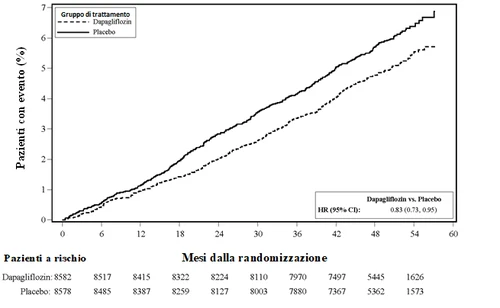
At-risk patients is the number of patients at risk at the beginning of the period.
HR = Hazard ratio, CI = Confidence interval.
The results of primary and secondary endpoints are illustrated in Figure 2. Superiority of dapagliflozin over placebo was not demonstrated for MACE (p=0.172). The composite renal endpoint and all-cause mortality were therefore not tested within the confirmatory testing procedure.
Figure 2: Treatment effects on primary composite endpoints and their components, and secondary endpoints
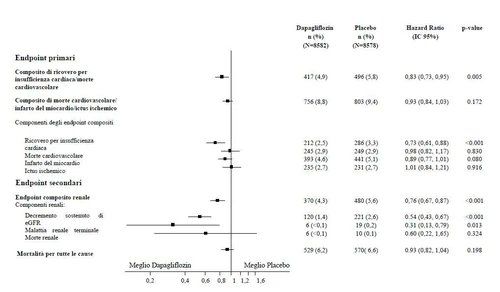
The composite renal endpoint was defined as: sustained and confirmed ≥40% reduction in eGFR to eGFR <60 mL/min/1.73 m² and/or end-stage renal disease (dialysis ≥90 days or kidney transplant, sustained and confirmed eGFR <15 mL/min/1.73 m²) and/or renal or cardiovascular death.
p-values were two-sided. p-values for secondary endpoints and individual components are nominal. Time to first event was analysed using the Cox proportional hazards model. The number of first adverse events for individual components is the actual number of first events for each component and does not sum to the number of events in the composite endpoint.
CI = confidence interval.
Nephropathy
Dapagliflozin reduced the incidence of events in the composite of sustained and confirmed eGFR reduction, end-stage renal disease, renal or cardiovascular death. The difference between groups was driven by reductions in renal component events: sustained eGFR reduction, end-stage renal disease, and renal death (Figure 2).
The hazard ratio (HR) for time to nephropathy (sustained eGFR reduction, end-stage renal disease, and renal death) was 0.53 (95% CI 0.43; 0.66) for dapagliflozin versus placebo.
Additionally, dapagliflozin reduced the new onset of sustained albuminuria (HR 0.79 [95% CI 0.72; 0.87]) and led to greater regression of macroalbuminuria (HR 1.82 [95% CI 1.51; 2.20]) compared to placebo.
Heart Failure
DAPA-HF Study: Heart Failure with Reduced Ejection Fraction (LVEF ≤ 40%)
Dapagliflozin and Prevention of Adverse Outcomes in Heart Failure (DAPA-HF) was an international, multicentre, randomised, double-blind, placebo-controlled study in patients with heart failure (New York Heart Association [NYHA] functional class II–IV) with reduced ejection fraction (left ventricular ejection fraction [LVEF] ≤ 40%) to determine the effect of dapagliflozin versus placebo, when added to standard background therapy, on the incidence of cardiovascular death and worsening heart failure.
Of 4,744 patients, 2,373 were randomised to dapagliflozin 10 mg and 2,371 to placebo and followed for a median of 18 months. The mean age of the study population was 66 years, 77% were male.
At baseline, 67.5% of patients were classified as NYHA class II, 31.6% as class III, and 0.9% as class IV; median LVEF was 32%, 56% of heart failures were of ischemic origin, 36% were non-ischemic, and 8% were of unknown aetiology. In each treatment group, 42% of patients had a history of type 2 diabetes mellitus, and an additional 3% in each group were classified as having type 2 diabetes based on HbA1c ≥6.5% measured at both enrolment and randomisation. Patients were on standard heart failure therapy; 94% were on ACE-I, ARB, or angiotensin receptor-neprilysin inhibitor (ARNI, 11%), 96% on beta-blockers, 71% on mineralocorticoid receptor antagonists (MRA), 93% on diuretics, and 26% had an implantable device (defibrillator function).
Patients with eGFR ≥30 mL/min/1.73 m² were included at enrolment. Mean eGFR was 66 mL/min/1.73 m², 41% of patients had eGFR <60 mL/min/1.73 m², and 15% had eGFR <45 mL/min/1.73 m².
Cardiovascular Death and Worsening Heart Failure
Dapagliflozin was superior to placebo in preventing the primary composite endpoint of cardiovascular death, hospitalisation for heart failure, or urgent visit for heart failure (HR 0.74 [95% CI 0.65; 0.85], p < 0.0001). The effect was observed early and maintained throughout the study duration (Figure 3).
Figure 3: Time to first event of the composite endpoint of cardiovascular death, hospitalisation for heart failure, or urgent visit for heart failure
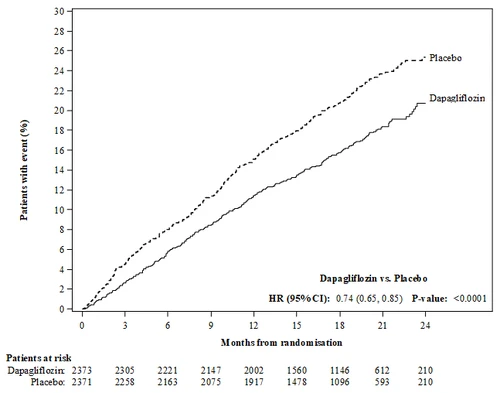
Patients with event (%)
Months from randomisation
All three components of the primary composite endpoint contributed individually to the treatment effect (Figure 4). There were few urgent visits for heart failure.
Figure 4: Treatment effects on the primary composite endpoint, its components, and all-cause mortality
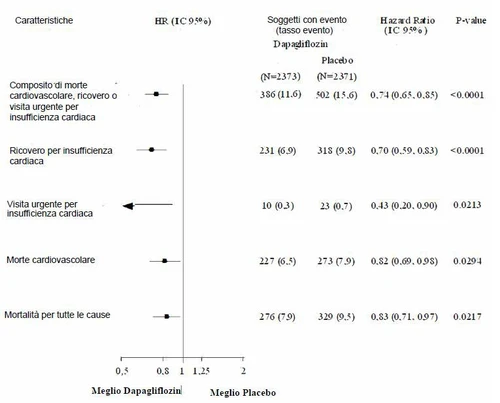
Dapagliflozin also reduced the total number of heart failure hospitalisations (first and recurrent) and cardiovascular deaths; there were 567 events in the dapagliflozin group versus 742 events in the placebo group (Rate Ratio 0.75 [95% CI 0.65; 0.88]; p=0.0002).
The benefit of dapagliflozin treatment versus placebo was observed in patients with heart failure both with and without type 2 diabetes. Dapagliflozin reduced the primary composite endpoint of cardiovascular death and worsening heart failure with an HR of 0.75 (95% CI 0.63; 0.90) in patients with diabetes and 0.73 (95% CI 0.60; 0.88) in patients without diabetes.
The benefit of dapagliflozin versus placebo on the primary endpoint was consistent across other key subgroups, including those with concomitant heart failure therapy, renal function (eGFR), age, gender, and region.
Patient-Reported Outcome – Heart Failure Symptoms
The effect of dapagliflozin treatment on heart failure symptoms was evaluated using the Total Symptom Score of the Kansas City Cardiomyopathy Questionnaire (KCCQ-TSS), which quantifies the frequency and severity of heart failure symptoms, including fatigue, peripheral oedema, dyspnoea, and orthopnoea. The score ranges from 0 to 100, with higher scores representing better health status.
Treatment with dapagliflozin led to a statistically significant and clinically meaningful benefit versus placebo in heart failure symptoms, as measured by change from baseline to month 8 in KCCQ-TSS (Win Ratio 1.18 [95% CI 1.11; 1.26]; p < 0.0001).
Both frequency and severity of symptoms contributed to the results. The benefit was seen both in improvement of heart failure symptoms and in preventing worsening of symptoms.
In the analysis of treatment responders, the proportion of patients with a clinically significant improvement in KCCQ-TSS from baseline at 8 months, defined as an increase of 5 points or more, was higher in the dapagliflozin group than in the placebo group. The proportion of patients with a clinically significant worsening, defined as a reduction of 5 points or more, was lower in the dapagliflozin group than in the placebo group. The benefits observed with dapagliflozin remained when more conservative thresholds for clinically more significant change were applied (Table 10).
Table 10. Number and percentage of patients with clinically significant improvement and deterioration in KCCQ-TSS at 8 months
| Change from baseline at 8 months: | Dapagliflozin 10 mg n=2086 | Placebo n=2062 | ||
| Improvement | n (%) improvedb | n (%) improvedb | Odds Ratioc (95% CI) | p-valuef |
| ≥ 5 points | 933 (44.7%) | 794 (38.5%) | 1.14 (1.06; 1.22) | 0.0002 |
| ≥ 10 points | 689 (33.0%) | 579 (28.1%) | 1.13 (1.05; 1.22) | 0.0018 |
| ≥ 15 points | 474 (22.7%) | 406 (19.7%) | 1.10 (1.01; 1.19) | 0.0300 |
| Worsening | n (%) worsenedd | n (%) worsenedd | Odds Ratioe (95% CI) | p-valuef |
| ≥ 5 points | 537 (25.7%) | 693 (33.6%) | 0.84 (0.78; 0.89) | <0.0001 |
| ≥ 10 points | 395 (18.9%) | 506 (24.5%) | 0.85 (0.79; 0.92) | <0.0001 |
Renal disease
There were few events of the composite renal endpoint (a confirmed and sustained decrease in
eGFR ≥ 50%, ESKD, or renal death); the incidence was 1.2% in the dapagliflozin group and 1.6%
in the placebo group.
DELIVER study: heart failure with left ventricular ejection fraction > 40%
Dapagliflozin Evaluation to Improve the LIVEs of Patients with PReserved Ejection Fraction Heart
Failure (DELIVER) was an international, multicenter, randomized, double-blind, placebo-controlled
study conducted in patients aged ≥ 40 years with heart failure (NYHA class II-IV) with LVEF > 40% and
evidence of structural heart disease, to determine the effect of dapagliflozin compared to placebo on
the incidence of cardiovascular death and worsening of heart failure.
Of 6,263 patients, 3,131 were randomized to dapagliflozin 10 mg and 3,132 to placebo and followed
for a median of 28 months. The study included 654 (10%) patients with worsening heart failure
defined as randomized during hospitalization for heart failure or within 30 days of discharge). The
mean age of the study population was 72 years and 56% were male.
At baseline, 75% of patients were classified as NYHA class II, 24% as class III, and 0.3% as class IV.
Median LVEF was 54%, 34% of patients had LVEF ≤ 49%, 36% had LVEF 50–59%, and 30% had
LVEF ≥ 60%. In each treatment group, 45% had a history of type 2 diabetes mellitus. Background
therapy included ACE inhibitors/ARBs/ARNI (77%), beta-blockers (83%), diuretics (98%), and MRA
(43%).
Mean eGFR was 61 mL/min/1.73 m², 49% of patients had eGFR < 60 mL/min/1.73 m², 23% had
eGFR < 45 mL/min/1.73 m², and 3% had eGFR < 30 mL/min/1.73 m².
Dapagliflozin was superior to placebo in reducing the incidence of the primary composite endpoint of
cardiovascular death, hospitalization for heart failure, or urgent heart failure visit (HR 0.82 [95% CI 0.73, 0.92]; p=0.0008) (Figure 5).
Figure 5: Time to first occurrence of the composite of cardiovascular death, hospitalization for
heart failure, or urgent heart failure visit
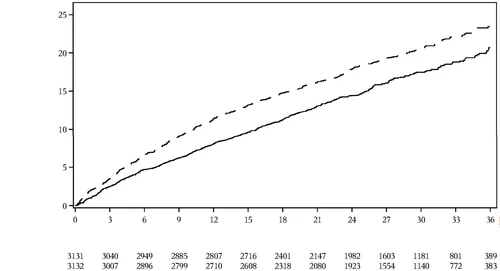

An urgent heart failure visit was defined as an urgent and unplanned evaluation by a physician, e.g., in an emergency department, requiring treatment for the
| Heart failure (different from a simple increase in oral diuretics) | Months from randomization | Event |
| worsening in patients at risk Dapagliflozin: | worsening of heart failure (different |
| ( |
An urgent heart failure visit was defined as an urgent and unplanned evaluation by a physician, e.g. in an emergency department, requiring treatment for worsening heart failure (other than a simple increase in oral diuretics).
At-risk patients: number of at-risk patients at the beginning of the period.
Figure 6 shows the contribution of the three components of the primary composite endpoint to the treatment effect.
Figure 6: Treatment effects on the primary composite endpoint and its components
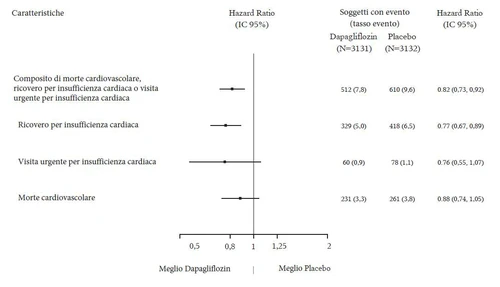
An urgent heart failure visit was defined as an urgent and unplanned evaluation by a physician, e.g. in an emergency department, requiring treatment for worsening heart failure (other than a simple increase in oral diuretics).
The number of first events for individual components represents the actual number of first events for each component and does not sum to the number of events in the composite endpoint.
Event rates are presented as the number of event-occurring subjects per 100 patient-years of observation (follow-up). Cardiovascular death, presented here as a component of the primary endpoint, was tested under formal control of type 1 error also as a secondary endpoint.
Dapagliflozin was superior to placebo in reducing the total number of heart failure events (defined as hospitalization, first and recurrent, for heart failure or urgent visits for heart failure) and cardiovascular death; 815 events occurred in the dapagliflozin group versus 1,057 events in the placebo group (Rate Ratio 0.77 [95% CI 0.67, 0.89]; p=0.0003).
The benefit of dapagliflozin treatment over placebo on the primary endpoint was observed in subgroups of patients with LVEF ≤ 49%, 50–59%, and ≥ 60%. Effects were consistent across other key subgroups classified, for example, by age, sex, NYHA class, NT-proBNP level, subacute status, and type 2 diabetes status.
Patient-reported outcome – heart failure symptoms
Treatment with dapagliflozin resulted in a statistically significant benefit over placebo in heart failure symptoms, as measured by change in KCCQ-TSS at month 8 compared to baseline (Win Ratio 1.11 [95% CI 1.03, 1.21]; p=0.0086). Both symptom frequency and symptom burden contributed to the results.
In responder analyses, the proportion of patients who experienced moderate (≥ 5 points) or large (≥ 14 points) deterioration in KCCQ-TSS at month 8 compared to baseline was lower in the dapagliflozin treatment group; 24.1% of dapagliflozin-treated patients versus 29.1% with placebo experienced moderate deterioration (Odds Ratio 0.78 [95% CI 0.64, 0.95]), and 13.5% of dapagliflozin-treated patients versus 18.4% with placebo experienced large deterioration (Odds Ratio 0.70 [95% CI 0.55, 0.88]). The proportion of patients with small to moderate improvement (≥ 13 points) or large improvement (≥ 17 points) did not differ between treatment groups.
Heart failure in the DAPA-HF and DELIVER studies
In a pooled analysis of DAPA-HF and DELIVER, the HR for dapagliflozin versus placebo on the composite endpoint of cardiovascular death, hospitalization for heart failure, or urgent visit for heart failure was 0.78 (95% CI 0.72, 0.85), p < 0.0001. The treatment effect was consistent across the entire range of LVEF, with no attenuation of effect according to LVEF.
In a pre-specified, individual-level pooled analysis of the DAPA-HF and DELIVER studies, dapagliflozin versus placebo reduced the risk of cardiovascular death (HR 0.85 [95% CI 0.75, 0.96], p=0.0115). Both studies contributed to the effect.
Chronic kidney disease
The study to evaluate the effect of Dapagliflozin on renal outcomes and cardiovascular mortality in patients with chronic kidney disease (DAPA-CKD) was an international, multicenter, randomized, double-blind, placebo-controlled study in patients with chronic kidney disease (CKD) with eGFR from ≥ 25 to 75 mL/min/1.73 m² and albuminuria (ACR ≥ 200 and ≤ 5000 mg/g) to determine, compared to placebo, the effect of dapagliflozin, when added to standard background therapy, on the incidence of the composite endpoint of sustained ≥ 50% decline in eGFR, end-stage kidney disease (ESKD) (defined as sustained eGFR < 15 mL/min/1.73 m², chronic dialysis treatment, or kidney transplantation), cardiovascular or renal death.
Of 4,304 patients, 2,152 were randomized to dapagliflozin 10 mg and 2,152 to placebo and followed for a median of 28.5 months. Treatment was continued if, during the study, eGFR fell to levels below 25 mL/min/1.73 m² and could continue in cases where dialysis became necessary.
The mean age of the study population was 61.8 years, 66.9% were male. At baseline, mean eGFR was 43.1 mL/min/1.73 m² and median ACR was 949.3 mg/g; 44.1% of patients had eGFR from 30 to < 45 mL/min/1.73 m² and 14.5% had eGFR < 30 mL/min/1.73 m². 67.5% of patients had type 2 diabetes mellitus. Patients were on standard of care (SOC); 97.0% of patients were treated with an angiotensin-converting enzyme inhibitor (ACEi) or an angiotensin receptor blocker (ARB).
The study was stopped early for efficacy before the planned analysis based on a recommendation from the Independent Data Monitoring Committee. Dapagliflozin was superior to placebo in preventing the primary composite endpoint of sustained ≥ 50% decline in eGFR, reaching end-stage kidney disease, cardiovascular or renal death.
Based on the Kaplan-Meier curve, the time to first occurrence of the primary composite endpoint, the treatment effect was evident from 4 months and was maintained until the end of the study (Figure 7).
Figure 7: Time to occurrence of the primary composite endpoint, of a sustained ≥ 50% decline in eGFR,
end-stage kidney disease, cardiovascular or renal death
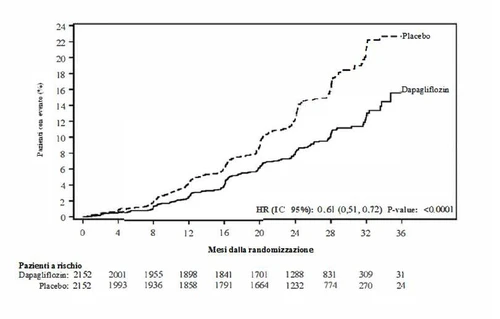
All four components of the primary composite endpoint individually contributed to the treatment effect. Dapagliflozin also reduced the incidence of the composite endpoint of sustained ≥ 50% decline in eGFR, end-stage kidney disease, or renal death and the composite endpoint of cardiovascular death and hospitalization for heart failure. In patients with chronic kidney disease, treatment with dapagliflozin improved overall survival, with a significant reduction in all-cause mortality (Figure 8).
Figure 8: Treatment effects on primary and secondary composite endpoints, their individual components,
and all-cause mortality
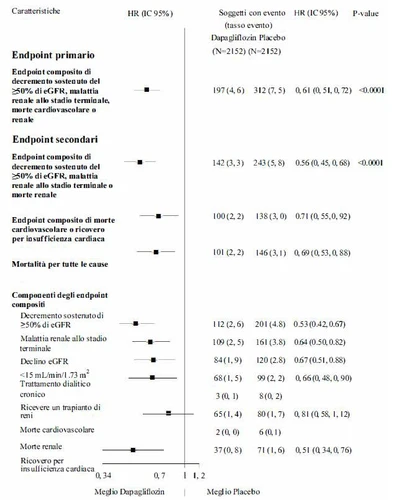
The treatment benefit of dapagliflozin was consistent in patients with chronic kidney disease with and without type 2 diabetes. Dapagliflozin reduced the primary composite endpoint of sustained ≥ 50% decline in eGFR, end-stage kidney disease, cardiovascular or renal death with an HR of 0.64 (95% CI 0.52; 0.79) in patients with type 2 diabetes and 0.50 (95% CI 0.35; 0.72) in patients without type 2 diabetes.
The benefit of dapagliflozin treatment over placebo on the primary endpoint was also consistent across other key subgroups, including eGFR levels, age, sex, and region.
Paediatric population
Type 2 diabetes mellitus
In a clinical study in children and adolescents aged 10 to 24 years with type 2 diabetes mellitus, 39 patients were randomized to dapagliflozin 10 mg and 33 to placebo, in addition to metformin, insulin, or a combination of metformin and insulin. At randomization, 74% of patients were <18 years of age. The adjusted mean change in HbA1c from baseline to week 24 for dapagliflozin versus placebo was -0.75% (95% CI -1.65, 0.15).
In the <18 years age group, the adjusted mean change in HbA1c for dapagliflozin versus placebo was -0.59% (95% CI -1.66, 0.48). In the ≥18 years age group, the mean change from baseline in HbA1c was -1.52% in the dapagliflozin-treated group (n=9) and 0.17% in the placebo group (n=6). Efficacy and safety were similar to those observed in the adult population treated with dapagliflozin. Safety and tolerability were further confirmed in a 28-week safety extension of the study.
Heart failure and chronic kidney disease
The European Medicines Agency has granted a waiver from the obligation to submit results of studies with dapagliflozin in all paediatric population subgroups for the prevention of cardiovascular events in patients with chronic heart failure and for the treatment of chronic kidney disease (see section 4.2 for information on paediatric use).
5.2 Pharmacokinetic properties
Absorption
Dapagliflozin is rapidly and effectively absorbed after oral administration. Maximum plasma concentrations (Cmax) of dapagliflozin are generally reached within 2 hours of administration under fasting conditions. The geometric mean values of Cmax and AUCτ of dapagliflozin at steady state, observed following once-daily dosing of dapagliflozin 10 mg, are 158 ng/mL and 628 ng·h/mL, respectively. The absolute oral bioavailability of dapagliflozin following administration of a 10 mg dose is 78%. Concomitant administration with a high-fat meal reduced the Cmax of dapagliflozin by up to 50% and prolonged the Tmax by approximately 1 hour, but did not alter the AUC compared to fasting conditions. These variations are not considered clinically significant. Therefore, Dapagliflozin Tecnigen may be taken with or without food.
Distribution
Dapagliflozin is approximately 91% protein-bound. Protein binding was not altered in the presence of various disease states (e.g. renal impairment or hepatic impairment). The mean volume of distribution of dapagliflozin at steady state is 118 litres.
Biotransformation
Dapagliflozin is extensively metabolized, primarily to dapagliflozin 3-O-glucuronide, an inactive metabolite. Dapagliflozin 3-O-glucuronide and other metabolites do not contribute to the hypoglycaemic effects. Formation of dapagliflozin 3-O-glucuronide is mediated by UGT1A9, an enzyme present in the liver and kidney, and CYP-mediated metabolism represented a secondary clearance pathway in humans.
Elimination
The mean terminal plasma half-life (t1/2) of dapagliflozin was 12.9 hours following administration of a single 10 mg oral dose of dapagliflozin in healthy subjects. The mean total systemic clearance of dapagliflozin following intravenous administration was 207 mL/min. Dapagliflozin and its metabolites are primarily eliminated via urinary excretion, with less than 2% as unchanged dapagliflozin. After administration of a dose of [ 14 C]-dapagliflozin 50 mg, 96% was recovered, 75% in urine and 21% in faeces. In faeces, approximately 15% of the dose was excreted as parent drug.
Linearity
Exposure to dapagliflozin increased proportionally with increasing dapagliflozin dose over the range of 0.1–500 mg, and its pharmacokinetic profile did not change over time following repeated daily dosing up to 24 weeks.
Special populations
Renal impairment
At steady state (20 mg dapagliflozin once daily for 7 days), subjects with type 2 diabetes and mild, moderate, or severe renal impairment (as defined by plasma iohexol clearance) showed mean systemic exposures to dapagliflozin approximately 32%, 60%, and more than 87% higher, respectively, compared to subjects with type 2 diabetes and normal renal function. Twenty-four-hour urinary glucose excretion at steady state was highly dependent on renal function, with 85, 52, 18, and 11 g/day of glucose excreted in subjects with type 2 diabetes and normal renal function or mild, moderate, or severe renal impairment, respectively. The impact of haemodialysis on dapagliflozin exposure is not known. The effect of reduced renal function on systemic exposure was evaluated using a population pharmacokinetic model. Consistent with previous findings, model-predicted AUC was higher in patients with chronic kidney disease compared to patients with normal renal function and was not significantly different between patients with chronic kidney disease with and without type 2 diabetes.
Hepatic impairment
In subjects with mild or moderate hepatic impairment (Child-Pugh classes A and B), mean Cmax and AUC values of dapagliflozin were up to 12% and 36% higher, respectively, compared to matched healthy control subjects. These differences were not considered clinically significant. In subjects with severe hepatic impairment (Child-Pugh class C), mean Cmax and AUC values of dapagliflozin were 40% and 67% higher, respectively, compared to matched healthy controls.
Elderly (≥ 65 years)
No clinically relevant increase in exposure based solely on age is observed in subjects up to 70 years. However, an increase in exposure due to age-related decline in renal function may be expected. Insufficient data are available to draw conclusions regarding exposure in patients over 70 years of age.
Paediatric population
The pharmacokinetic and pharmacodynamic (glucosuria) profile in children aged 10–17 years with type 2 diabetes mellitus was similar to that observed in adults with type 2 diabetes mellitus.
Sex
The mean AUCss of dapagliflozin in women was estimated to be approximately 22% higher than in men.
Ethnicity
No clinically relevant differences in systemic exposures were observed between White, Black, or Asian subjects.
Body weight
Exposure to dapagliflozin was found to decrease with increasing body weight. Consequently, patients with low body weight may sometimes have increased exposure and those with high body weight may sometimes have reduced exposure. However, relative differences in exposure were not considered clinically significant.
5.3 Preclinical safety data
Preclinical data reveal no special hazard for humans based on conventional studies of safety pharmacology, repeated-dose toxicity, genotoxicity, carcinogenic potential, and fertility. Dapagliflozin does not induce tumours in mice or rats at any of the doses evaluated in two-year carcinogenicity studies.
Reproductive and developmental toxicity
Direct administration of dapagliflozin to young, recently weaned rats and indirect exposure during the late phase of gestation (time periods corresponding to the second and third trimesters of human pregnancy) and during lactation are each associated with an increased incidence and/or severity of renal tubular and pelvic dilatation in offspring.
In a juvenile animal toxicity study, when dapagliflozin was administered directly to young rats from day 21 to day 90 post-birth, renal tubular and pelvic dilatations were observed at all dose levels; exposures in pups at the lowest dose tested were ≥ 15 times the maximum recommended human dose. These findings were associated with dose-related increases in kidney weight and macroscopic kidney enlargement observed at all dose levels. Renal pelvic and tubular dilatations observed in young animals did not completely resolve within an approximate recovery period of 1 month.
In a separate prenatal and postnatal development study, some rat dams were treated from day 6 of gestation until day 21 post-birth, while offspring were indirectly exposed in utero and throughout the entire lactation period (a satellite study was conducted to assess dapagliflozin exposure in milk and offspring). An increased incidence or severity of renal pelvic dilatation was observed in adult offspring of treated dams, although only at the highest dose tested (maternal and offspring exposures to dapagliflozin were 1,415 and 137 times, respectively, the values observed in humans at the maximum recommended dose). Additional developmental toxicity was limited to dose-related reductions in offspring body weight and was observed only at doses ≥ 15 mg/kg/day (associated with offspring exposures ≥ 29 times the values observed in humans at the maximum recommended dose). Maternal toxicity was evident only at the highest dose tested and was limited to transient reductions in body weight and food consumption at dosing. The no-observed-adverse-effect level (NOAEL) for developmental toxicity at the lowest dose tested is associated with a maternal systemic exposure multiple of approximately 19 times the human value at the maximum recommended human dose.
In additional embryo-fetal development studies conducted in rats and rabbits, dapagliflozin was administered during intervals coinciding with the most critical phases of organogenesis in each species. No maternal or developmental toxicity was observed in rabbits at any dose tested; the highest dose tested was associated with a systemic exposure multiple of approximately 1,191 times the maximum recommended human dose. In rats, dapagliflozin was neither embryolethal nor teratogenic at exposures up to 1,441 times the maximum recommended human dose.
6. PHARMACEUTICAL INFORMATION
6.1 List of excipients
Tablet core
Microcrystalline cellulose silicified (type SMCC 50)
Crospovidone
Mannitol (type M 100)
Talc
Magnesium stearate
Film coating
Polyvinyl alcohol
Titanium dioxide (E171)
Macrogol / polyethylene glycol
Talc
Yellow iron oxide (E172).
6.2 Incompatibilities
Not applicable.
6.3 Shelf life
2 years
6.4 Special precautions for storage
This medicinal product does not require any special storage conditions.
6.5 Nature and contents of the container
Complex blister made of opaque grey OPA (25 µm Polyamide + 45 µm Aluminium + 60 µm PVC),
sealed with a 20 µm aluminium foil.
Dapagliflozin Tecnigen 5 mg film-coated tablets
Packs of 14 and 28 film-coated tablets.
Dapagliflozin Tecnigen 10 mg film-coated tablets
Packs of 14 and 28 film-coated tablets.
It is possible that not all pack sizes are marketed.
6.6 Special precautions for disposal
Unused medicine and waste material derived from this medicine must be disposed of in accordance with
local applicable regulations.
7. MARKET AUTHORIZATION HOLDER
Tecnigen S.r.l.
Via Galileo Galilei 40
Cinisello Balsamo 20092 MI - Italy
8. MARKETING AUTHORISATION NUMBERS
051232015 - "5 mg film-coated tablets" 14 tablets in OPA/AL/PVC blisters
051232027 - "5 mg film-coated tablets" 28 tablets in OPA/AL/PVC blisters
051232039 - "10 mg film-coated tablets" 14 tablets in OPA/AL/PVC blisters
051232041 - "10 mg film-coated tablets" 28 tablets in OPA/AL/PVC blisters
9. DATE OF FIRST AUTHORISATION/RENEWAL OF THE AUTHORISATION
Date of first authorisation: