Dalneva
Italy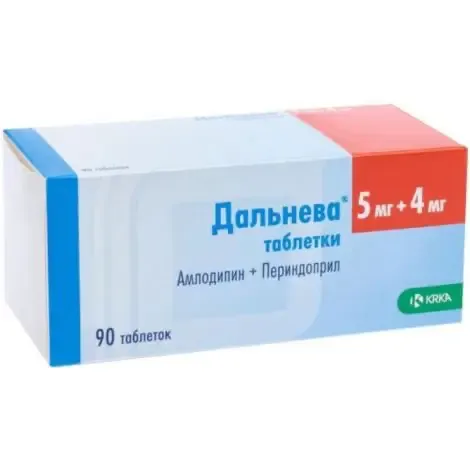
Table of Contents
- PACKAGE LEAFLET: INFORMATION FOR THE PATIENT
- Dalneva 4 mg/5 mg tablets, 4 mg/10 mg tablets, 8 mg/5 mg tablets, 8 mg/10 mg tablets
- 1. What Dalneva is and what it is used for
- 2. What you need to know before taking Dalneva
- 3. How to take Dalneva
- 4. Possible side effects
- 5. How to store Dalneva
- 6. Package contents and other information
PACKAGE LEAFLET: INFORMATION FOR THE PATIENT
Dalneva 4 mg/5 mg tablets, 4 mg/10 mg tablets, 8 mg/5 mg tablets, 8 mg/10 mg tablets
perindopril tert-butylamine and amlodipine
Please read this leaflet carefully before taking this medicine because it contains
important information for you.
- Keep this leaflet. You may need to read it again.
- If you have any questions, ask your doctor or pharmacist.
- This medicine has been prescribed for you only. Do not give it to other people, even if their symptoms are the same as yours, because it may be harmful.
- If you experience any adverse reaction, including those not listed in this leaflet, talk to your doctor or pharmacist. See section 4.
Contents of this leaflet:
- What Dalneva is and what it is used for
- What you need to know before taking Dalneva
- How to take Dalneva
- Possible side effects
- How to store Dalneva
- Contents of the pack and other information
1. What Dalneva is and what it is used for
Dalneva is prescribed for the treatment of high blood pressure (hypertension) and/or for the treatment of stable coronary artery disease (a condition in which blood supply to the heart is reduced or blocked). Patients who are already taking perindopril and amlodipine as separate tablets may instead take a single tablet of Dalneva containing both active substances.
Dalneva is a combination of two active substances, perindopril and amlodipine. Perindopril is an ACE inhibitor (angiotensin-converting enzyme inhibitor). Amlodipine is a calcium antagonist (belonging to a class of medicines called dihydropyridines). Together, they work by widening and relaxing blood vessels, resulting in reduced blood vessel resistance. Blood can then flow more easily through the body, and the heart does not need to work as hard.
2. What you need to know before taking Dalneva
Do not take Dalneva
- if you are allergic to perindopril tert-butylamine or to any ACE inhibitor, amlodipine besylate or any dihydropyridine, or to any of the excipients in this medicine (listed in section 6),
- if you are more than 3 months pregnant (it is better to avoid Dalneva even in early pregnancy – see the section on pregnancy),
- if you have previously experienced symptoms such as shortness of breath, facial or tongue swelling, intense itching, or severe skin rashes during prior treatment with ACE inhibitors, or if you or a family member has had these symptoms under other circumstances (a condition called angioedema),
- if you suffer from cardiogenic shock (when the heart is unable to supply sufficient blood to the body), aortic stenosis (narrowing of the main blood vessels leaving the heart), or unstable angina (chest pain that may occur at rest),
- if you have severe low blood pressure (severe hypotension),
- if you have heart failure (the heart cannot pump blood adequately, causing shortness of breath or peripheral swelling such as in legs, ankles, or feet) following an acute heart attack,
- if you have diabetes or impaired kidney function and are being treated with a blood pressure-lowering medicine containing aliskiren,
- if you are undergoing dialysis or any other type of blood filtration. Depending on the machine used, Dalneva may not be suitable for you,
- if you have kidney problems due to reduced blood supply to the kidneys (renal artery stenosis),
- if you have taken or are currently taking sacubitril/valsartan, a medicine used to treat chronic heart failure in adults, as this increases the risk of angioedema (rapid swelling beneath the skin, for example in the throat).
Warnings and precautions
Talk to your doctor or pharmacist before taking Dalneva:
- if you have hypertrophic cardiomyopathy (a heart muscle disease) or renal artery stenosis (narrowing of the artery supplying blood to the kidney),
- if you have any other heart condition,
- if you have impaired liver function,
- if you have kidney problems or are on dialysis,
- if you have abnormally high levels of a hormone called aldosterone in your blood (primary aldosteronism),
- if you have a collagen vascular disease (connective tissue disorder) such as systemic lupus erythematosus or scleroderma,
- if you have diabetes,
- if you are on a low-salt diet or use salt substitutes containing potassium (maintaining balanced potassium levels in the blood is essential),
- if you are elderly and your dose needs to be increased,
- if you are taking any of the following medicines used to treat high blood pressure:
- an angiotensin II receptor antagonist (AIIRA) (also known as sartans – e.g. valsartan, telmisartan, irbesartan), especially if you have kidney problems related to diabetes,
- aliskiren,
- if you are taking any of the following medicines, the risk of angioedema is increased:
- racecadotril, a medicine used to treat diarrhoea,
- medicines used to prevent organ transplant rejection or cancer (e.g. sirolimus, everolimus, temsirolimus, and other medicines belonging to the so-called mTOR inhibitors class),
- vildagliptin, a medicine used to treat diabetes,
- if you are of Black origin, as you may have a higher risk of angioedema, and this medicine may be less effective in lowering blood pressure compared to non-Black patients.
Your doctor may check your kidney function, blood pressure, and levels of electrolytes (e.g. potassium) in your blood at regular intervals. See also the section “Do not take Dalneva”.
Angioedema
Angioedema (a severe allergic reaction with swelling of the face, lips, tongue, or throat causing difficulty in swallowing or breathing) has been reported in patients treated with ACE inhibitors, including perindopril. This may occur at any time during treatment. If you develop such symptoms, stop taking Dalneva immediately and seek medical advice without delay. See also section 4.
You must inform your doctor if you think you are (or might become) pregnant. Dalneva is not recommended during early pregnancy and must not be taken if you are more than 3 months pregnant, as it may cause serious harm to the unborn child if used during this period (see section on pregnancy).
When taking Dalneva, you must inform your doctor or healthcare provider:
- if you are about to undergo general anaesthesia and/or major surgery,
- if you have recently suffered from diarrhoea or vomiting,
- if you are due to undergo LDL apheresis (removal of cholesterol from your blood using a machine),
- if you are about to undergo desensitisation treatment to reduce the effects of an allergy to bee or wasp stings.
Children and adolescents
Dalneva is not recommended for use in children and adolescents.
Other medicines and Dalneva
Inform your doctor or pharmacist if you are taking, have recently taken, or might take any other medicines.
You must avoid Dalneva with:
- lithium (used to treat mania or depression),
- estramustine (used in cancer therapy),
- potassium supplements (including salt substitutes), potassium-sparing diuretics (spironolactone, triamterene), and other medicines that may increase potassium levels in the blood (such as trimethoprim and co-trimoxazole used to treat bacterial infections; cyclosporine, an immunosuppressant used to prevent organ transplant rejection; and heparin, a medicine used to thin the blood and prevent clotting),
- potassium-sparing medicines used in heart failure treatment: eplerenone and spironolactone at doses between 12.5 mg and 50 mg daily.
Dalneva treatment may be affected by other medicines. Make sure to inform your doctor if you are taking any of the following medicines, as special attention may be required:
- other medicines for high blood pressure, including angiotensin II receptor blockers (ARBs), aliskiren (see also information under "Do not take Dalneva" and "Warnings and precautions"), or diuretics (medicines that may increase urine production by the kidneys),
- sacubitril/valsartan (used to treat chronic heart failure): See sections "Do not take Dalneva" and "Warnings and precautions",
- non-steroidal anti-inflammatory medicines (e.g. ibuprofen) for pain relief or high-dose acetylsalicylic acid,
- medicines for diabetes (such as insulin or vildagliptin),
- medicines for mental disorders such as depression, anxiety, schizophrenia, etc. (e.g. tricyclic antidepressants, antipsychotics, imipramine-type antidepressants, neuroleptics),
- immunosuppressants (medicines that may reduce the body's defence mechanisms) used to treat autoimmune diseases or after organ transplantation (e.g. cyclosporine, tacrolimus),
- trimethoprim and co-trimoxazole (for treating infections),
- allopurinol (for treating gout),
- procainamide (for treating irregular heartbeat),
- vasodilators including nitrates (substances that dilate blood vessels),
- ephedrine, noradrenaline, or adrenaline (medicines used to treat low blood pressure, shock, or asthma),
- baclofen or dantrolene (infusion), both used to treat muscle stiffness in conditions such as multiple sclerosis; dantrolene is also used to treat malignant hyperthermia during anaesthesia (symptoms include high fever and muscle rigidity),
- certain antibiotics such as rifampicin, erythromycin,
- clarithromycin (to treat bacterial infections),
- antiepileptic agents such as carbamazepine, phenobarbital, phenytoin, fosphenytoin, primidone,
- itraconazole, ketoconazole (medicines used to treat fungal infections),
- alpha-blockers used for enlarged prostate treatment such as prazosin, alfuzosin, doxazosin, tamsulosin, terazosin,
- amifostine (used to prevent or reduce side effects caused by other medicines or radiation therapy used in cancer treatment),
- corticosteroids (used to treat various conditions including severe asthma and rheumatoid arthritis),
- gold salts, particularly when administered intravenously (used to treat symptoms of rheumatoid arthritis),
- simvastatin (a medicine to lower cholesterol levels),
- ritonavir, indinavir, nelfinavir (also known as protease inhibitors used to treat HIV),
- Hypericum perforatum (St. John’s wort),
- verapamil, diltiazem (heart medicines),
- medicines usually used to treat diarrhoea (racecadotril) or to prevent organ transplant rejection (sirolimus, everolimus, temsirolimus, and other medicines belonging to the so-called mTOR inhibitors class). See the section "Warnings and precautions".
Dalneva may lower your blood pressure even if you are already taking other medicines for high blood pressure.
Dalneva with food and drinks
Dalneva should be taken before a meal.
Grapefruit and grapefruit juice must not be consumed by patients taking Dalneva. This is because grapefruit and grapefruit juice may increase blood levels of the active substance amlodipine, which could lead to an unpredictable increase in blood pressure, thereby reducing the blood pressure-lowering effect of Dalneva.
Pregnancy and breastfeeding
If you are pregnant, think you may be pregnant, are planning to become pregnant, or are breastfeeding, consult your doctor or pharmacist before taking this medicine.
Pregnancy
You must inform your doctor if you think you are (or might become) pregnant.
Your doctor will usually advise you to stop taking Dalneva before becoming pregnant or as soon as you know you are pregnant, and will recommend an alternative medicine. Dalneva is not recommended during early pregnancy and must not be taken if you are more than 3 months pregnant, as it may cause serious harm to your unborn child if used beyond the third month of pregnancy.
Breastfeeding
Inform your doctor if you are breastfeeding or planning to breastfeed. Dalneva is not recommended for breastfeeding mothers. If you wish to breastfeed, your doctor may choose a different treatment, especially if your baby is a newborn or premature.
It has been shown that amlodipine passes into breast milk in small amounts.
Driving and using machines
Dalneva does not affect alertness, but it may cause dizziness or weakness due to low blood pressure, which could affect your ability to drive or operate machinery. You are advised not to drive or operate machinery until you know how Dalneva affects you.
Dalneva contains sodium
This medicine contains less than 1 mmol (23 mg) of sodium per tablet, i.e. essentially ‘sodium-free’.
3. How to take Dalneva
Take this medicine exactly as your doctor has instructed. If you have any doubts, consult your doctor or pharmacist.
Swallow the tablet whole with a glass of water, preferably at the same time each day, in the morning, before a meal. Your doctor will decide the correct dose for you. This is usually one tablet daily. Dalneva is usually prescribed for patients who are already taking perindopril and amlodipine as separate tablets.
Use in children and adolescents
Use in children and adolescents is not recommended.
If you take more Dalneva than you should
If you take too many tablets, contact the nearest hospital emergency department or inform your doctor immediately. The most likely symptoms of overdose are low blood pressure, which may make you feel dizzy or faint. If this happens, lying down with your legs raised may help.
If you forget to take Dalneva
It is important that you take your medicine every day, as regular treatment works best. However, if you forget to take a dose of Dalneva, take the next dose at your usual time. Do not take a double dose to make up for the forgotten tablet.
If you stop taking Dalneva
Since treatment with Dalneva is usually chronic, you must discuss with your doctor before stopping your tablets.
If you have any questions about the use of this medicine, ask your doctor or pharmacist.
4. Possible side effects
Like all medicines, this medicine can cause side effects, although not everybody gets them.
If any of the following conditions occur, stop taking the medicine immediately and inform your doctor straight away:
- sudden shortness of breath, chest pain, breathlessness or difficulty breathing,
- swelling of the eyelids, face or lips,
- swelling of the tongue and throat, causing severe breathing difficulties,
- severe skin reactions including intense skin rash, hives, redness of the skin all over the body, severe itching, blisters, peeling and swelling of the skin, inflammation of mucous membranes (Stevens-Johnson syndrome, toxic epidermal necrolysis) or other allergic reactions,
- severe dizziness or fainting,
- heart attack, abnormal or unusually rapid heartbeat, or chest pain,
- inflamed pancreas which may cause severe abdominal and back pain accompanied by a feeling of general malaise.
The following common side effects have been reported. If any of these cause problems or last for more than one week, you should contact your doctor.
- Very common side effects (may affect more than 1 in 10 people): oedema (fluid retention).
- Common side effects (may affect up to 1 in 10 people): headache, dizziness, drowsiness (especially at the beginning of treatment), vertigo, numbness or tingling sensations in the limbs, visual disturbances (including double vision), tinnitus (ringing in the ears), palpitations (awareness of heartbeat), flushing, sensation of emptiness in the head due to low blood pressure, cough, breathlessness, nausea (feeling unwell), vomiting (feeling sick), abdominal pain, altered taste, indigestion or difficulty digesting food, altered bowel habits, diarrhoea, constipation, allergic reactions (such as skin rashes, itching), muscle cramps, fatigue, weakness, swelling of the ankle (peripheral oedema).
Other side effects have been reported and are included in the following list. If any of these worsen or if you notice any side effect not listed in this leaflet, inform your doctor or pharmacist.
- Uncommon side effects (may affect up to 1 in 100 people): mood swings, anxiety, depression, insomnia, sleep disorders, tremor, fainting, loss of pain sensation, irregular heartbeat, rhinitis (stuffy or runny nose), hair loss, red spots on the skin, skin discolouration, back pain, arthralgia (joint pain), myalgia (muscle pain), chest pain, urinary problems, increased need to urinate at night, increased frequency of urination, discomfort, malaise, bronchospasm (tightening of the chest, wheezing and breathlessness), dry mouth, angioedema (symptoms such as wheezing, swelling of the face or tongue), formation of clusters of blisters on the skin, kidney problems, impotence, increased sweating, eosinophilia (an excess of a type of white blood cells), discomfort or enlargement of the breast in men, weight gain or loss, tachycardia, vasculitis (inflammation of blood vessels), photosensitivity reaction (increased skin sensitivity to sunlight), fever, collapse, changes in laboratory parameters: high blood potassium levels (reversible upon discontinuation), low sodium levels, hypoglycaemia (very low blood sugar levels) in diabetic patients, increased blood urea and increased blood creatinine.
- Rare side effects (may affect up to 1 in 1,000 people): confusion, worsening of psoriasis, changes in laboratory parameters: increased liver enzyme levels, high serum bilirubin levels.
- Very rare side effects (may affect up to 1 in 10,000 people): cardiovascular disorders (angina, heart attack and stroke), eosinophilic pneumonia (a rare type of pneumonia), swelling of the eyelids, face or lips, swelling of the tongue and throat causing severe breathing difficulties, severe skin reactions including intense skin rash, hives, redness of the skin all over the body, severe itching, blisters, peeling and swelling of the skin, inflammation of mucous membranes (Stevens-Johnson syndrome), erythema multiforme (a skin rash that often begins with itchy red spots on the face, arms or legs), light sensitivity, changes in blood values such as reduced numbers of white and red blood cells, reduced haemoglobin, reduced platelet count, blood disorders, inflamed pancreas which may cause severe abdominal and back pain accompanied by severe malaise, acute kidney failure, altered liver function, inflammation of the liver (hepatitis), yellowing of the skin (jaundice), increased liver enzymes which may affect certain medical tests, abdominal swelling (gastritis), nerve disorders which may cause weakness, tingling or numbness, increased muscle tension, swollen gums, excess sugar in the blood (hyperglycaemia).
- Side effects not known (frequency cannot be estimated from the available data): trembling, rigid posture, mask-like facial expression, slow movements and unbalanced, unstable gait, discolouration, numbness and pain in fingers or toes (Raynaud's phenomenon).
Reporting of side effects
If you experience any side effect, including those not listed in this leaflet, talk to your doctor or pharmacist. You can also report side effects directly via the national reporting system at https://www.aifa.gov.it/content/segnalazioni-reazioni-avverse.
By reporting side effects, you can help provide more information on the safety of this medicine.
5. How to store Dalneva
Keep this medicine out of the sight and reach of children.
Do not use this medicine after the expiry date stated on the carton after EXP. The expiry date refers to the last day of the month.
Store in the original packaging to protect from light and moisture.
This medicine does not require any special storage temperature conditions.
Do not dispose of medicines via wastewater or household waste. Ask your pharmacist how to dispose of medicines no longer required. This will help protect the environment.
6. Package contents and other information
What Dalneva contains
- The active substances are perindopril tert-butylamine and amlodipine.
Dalneva 4 mg/5 mg tablets: Each tablet contains 4 mg of perindopril tert-butylamine (equivalent to 3.34 mg of perindopril) and 5 mg of amlodipine (as besylate).
Dalneva 4 mg/10 mg tablets: Each tablet contains 4 mg of perindopril tert-butylamine (equivalent to 3.34 mg of perindopril) and 10 mg of amlodipine (as besylate).
Dalneva 8 mg/5 mg tablets: Each tablet contains 8 mg of perindopril tert-butylamine (equivalent to 6.68 mg of perindopril) and 5 mg of amlodipine (as besylate).
Dalneva 8 mg/10 mg tablets: Each tablet contains 8 mg of perindopril tert-butylamine (equivalent to 6.68 mg of perindopril) and 10 mg of amlodipine (as besylate). - The excipients are sodium hydrogen carbonate, microcrystalline cellulose (E460), pregelatinized maize starch, sodium glycolate starch (type A), anhydrous colloidal silica, and magnesium stearate (E470b). See section 2 "Dalneva contains sodium".
Description of the appearance of Dalneva and package contents
Dalneva 4 mg/5 mg tablets
This medicinal product appears as white to almost white, round, slightly biconvex tablets with bevelled edges, engraved with the code U 1 on one side of the tablet. Diameter: approximately 7 mm.
Dalneva 4 mg/10 mg tablets
This medicinal product appears as white to almost white, capsule-shaped, biconvex tablets with a score line on one side. The tablets are engraved with the code U on one side of the tablet and the number 2 on the other side of the score line. Size: approximately 12.5 mm x 5.5 mm. The score line on the tablet is intended to facilitate breaking the tablet for easier swallowing and does not allow division into equal doses.
Dalneva 8 mg/5 mg tablets
This medicinal product appears as white to almost white, round, biconvex tablets with bevelled edges, engraved with the code U 3 on one side of the tablet. Diameter: approximately 9 mm.
Dalneva 8 mg/10 mg tablets
This medicinal product appears as white to almost white, round, biconvex tablets with bevelled edges and a score line on one side. The tablets are engraved with the code U on one side of the tablet and the number 4 on the other side of the score line. Diameter: approximately 9 mm. The tablet can be divided into two equal doses.
The tablets are available in boxes containing 5, 7, 10, 14, 20, 28, 30, 50, 60, 90 and 100 tablets in blisters.
Not all pack sizes may be marketed.
Marketing Authorization Holder
KRKA, d.d., Novo mesto, Šmarješka cesta 6, 8501 Novo mesto, Slovenia
Local representative in Italy:
KRKA Farmaceutici Milano S.r.l., Viale Achille Papa 30, 20149 Milano, Italy
Responsible manufacturers for batch release
KRKA, d.d., Novo mesto, Šmarješka cesta 6, 8501 Novo mesto, Slovenia
TAD Pharma GmbH, Heinz-Lohmann-Straße 5, 27472 Cuxhaven, Germany
This medicinal product is authorized in the European Economic Area Member States under the following names:
| Member State Name | Medicinal Product Name |
| Czech Republic, Latvia, Hungary, Poland, Romania, Slovakia, Slovenia | Amlessa |
| Netherlands | Perindopril tert-butylamine/Amlodipine Krka |
| Lithuania | Dalneva |
| Italy | Dalneva |
| Portugal | Perindopril+Amlodipine Krka |
| United Kingdom | Perindopril/Amlodipine |