Daktarin
Italy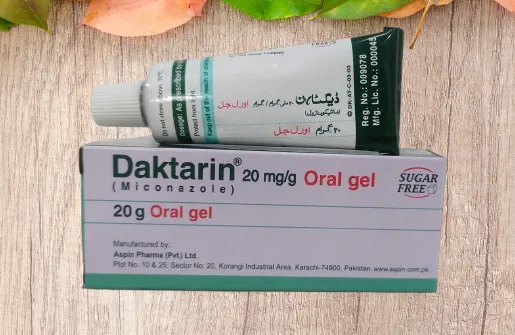
Table of Contents
Package leaflet: Information for the patient
Daktarin 20 mg/g oral gel
Miconazole
Please read this leaflet carefully before using this medicine because it contains important information for you.
Use this medicine exactly as described in this leaflet or as your doctor or pharmacist has instructed you.
- Keep this leaflet. You may need to read it again.
- If you need more information or advice, consult your pharmacist.
- If you experience any side effects, including those not listed in this leaflet, consult your doctor or pharmacist. See section 4.
- Consult your doctor if you do not notice any improvement or if your symptoms worsen.
Contents of this leaflet:
- What Daktarin is and what it is used for
- What you need to know before using Daktarin
- How to use Daktarin
- Possible side effects
- How to store Daktarin
- Contents of the pack and other information
1. What Daktarin is and what it is used for
Daktarin contains miconazole, which belongs to a group of medicines called "antimicrobials and
antiseptics" used to treat fungal and yeast infections.
Daktarin is a medicine for local oral treatment. This medicine can be used for the treatment and
prevention of the following infections:
- Candidiasis (yeast infection) of the oropharyngeal cavity (mouth and throat) and of the gastrointestinal tract.
- Other mycoses (fungal infections) of the digestive tract, or systemic mycoses (infections that spread throughout the body), such as candidiasis, South American blastomycosis, and coccidioidomycosis.
Consult your doctor if you do not feel better or if you feel worse.
2. What you need to know before using Daktarin
Do NOT use Daktarin
- if you are allergic to miconazole, to other similar antifungal medicines, or to any of the other ingredients of this medicine (listed in section 6);
- in infants under 4 months of age or in whom swallowing is not yet sufficiently developed (see section “Warnings and precautions”);
- in case of liver dysfunction;
- if you are taking the following medicines (see section “Other medicines and Daktarin”):
- certain medicines used to treat allergies (terfenadine, astemizole, and mizolastine);
- medicines used to treat certain digestive disorders (cisapride);
- certain medicines that lower blood cholesterol levels (simvastatin and lovastatin);
- medicines used to treat anxiety and insomnia (triazolam and oral midazolam);
- certain medicines used to treat psychotic mental disorders (pimozide and sertindole);
- medicines used to treat malaria (halofantrine);
- certain medicines used to treat migraine (ergot alkaloids);
- medicines used in the treatment of cardiac arrhythmias (quinidine, bepridil, and dofetilide);
- medicines that slow down blood coagulation or make blood more fluid (warfarin).
Warnings and precautions
Talk to your doctor or pharmacist before using Daktarin.
The effectiveness and side effects of the following medicines may be increased or decreased if used
concurrently with Daktarin:
- oral hypoglycemics (medicines used in the treatment of diabetes) and phenytoin (an antiepileptic medicine): the effectiveness and side effects may be increased when administered together with miconazole. Inform your doctor or pharmacist if you are taking any other medicines (see section “Other medicines and Daktarin”). This medicine may cause serious skin and mucous membrane disorders, including potentially fatal conditions such as Stevens-Johnson syndrome and toxic epidermal necrolysis, which may present with skin and mucous membrane lesions (see section “Side effects”). If you notice the appearance of a skin rash, consult your doctor as soon as possible, as treatment with Daktarin may need to be discontinued. Children It is important to consider that the development of swallowing varies among infants, especially when administering oral miconazole gel to infants aged between 4 and 6 months. In preterm infants or in infants in whom swallowing is not yet sufficiently developed, Daktarin should not be used before 5–6 months of age.
Choking in infants and children
Daktarin has adhesive properties that allow it to remain in the mouth longer. Exercise particular caution when administering Daktarin to infants and children (aged 4 months to 2 years) to prevent the gel from obstructing the throat. Therefore, the following measures are recommended:
- do not administer the full dose at once; instead, divide it into small portions;
- apply the gel with a clean finger to the affected areas of the mouth (white patches), as advised by your doctor or pharmacist;
- do not apply the gel to the back of the oral cavity (throat), but to the front;
- do not apply the gel to the nipple of a breastfeeding woman for administration to the infant.
Other medicines and Daktarin
Inform your doctor or pharmacist if you are taking, have recently taken, or might take any other medicines.
Do not take the following medicines concomitantly with Daktarin:
- certain medicines used to treat allergies (terfenadine, astemizole, and mizolastine);
- medicines used to treat certain digestive disorders (cisapride);
- certain medicines that lower blood cholesterol levels (simvastatin and lovastatin);
- medicines used to treat anxiety and insomnia (triazolam and oral midazolam);
- medicines used to treat mental disorders (pimozide and sertindole);
- medicines used to treat malaria (halofantrine);
- certain medicines used to treat migraine (ergot alkaloids);
- medicines used in the treatment of cardiac arrhythmias (quinidine, bepridil, and dofetilide);
- medicines that slow down blood coagulation or make blood more fluid (warfarin).
The concomitant use of Daktarin with the following medicines may require dose adjustments of one or both medicines:
- certain oral medicines used to treat diabetes (sulfonylureas);
- phenytoin, a medicine used to treat epilepsy (see section “Warnings and precautions”);
- certain medicines used in the treatment of AIDS (HIV-protease inhibitors, e.g., saquinavir);
- certain medicines used in cancer treatment (vinca alkaloids, busulfan, and docetaxel);
- certain medicines acting on the heart and blood vessels (dihydropyridines, verapamil, disopyramide, cilostazol);
- medicines commonly used after organ transplantation (cyclosporine, tacrolimus, sirolimus (rapamycin));
- medicines used to treat epilepsy (phenytoin and carbamazepine);
- certain anesthetics used in hospital settings (alfentanil);
- sildenafil, used to treat impotence;
- certain medicines used to treat anxiety and insomnia (tranquilizers) (alprazolam, brotizolam, buspirone, IV midazolam (sedative-hypnotic));
- medicines for tuberculosis;
- methylprednisolone taken orally or by injection, used to treat inflammation;
- trimetrexate, used to treat certain types of pneumonia;
- ebastine, a medicine used to treat allergies;
- reboxetine, a medicine used to treat depression;
- rifabutin, a medicine used to treat tuberculosis.
Do not start any new treatment while using Daktarin oral gel without first consulting your doctor or pharmacist.
Pregnancy and breastfeeding
If you are pregnant, think you may be pregnant, are planning a pregnancy, or are breastfeeding, consult your doctor or pharmacist before using this medicine.
It is preferable to avoid using Daktarin during pregnancy unless your doctor considers that the benefits of treatment outweigh the risks to the fetus.
Breastfeeding
It is not known whether miconazole or its metabolites are excreted in breast milk; therefore, use Daktarin with caution during breastfeeding.
Driving and using machines
Daktarin does not affect the ability to drive or operate machinery.
Daktarin contains ethanol, orange flavour, cocoa flavour, and sodium
Ethanol
This medicine contains 7.85 mg of alcohol (ethanol) per 1,000 mg, which is equivalent to 0.00785 mg/mg (0.785% mg/mg). The amount in 1,000 mg of this medicine is equivalent to less than 1 mL of beer or 1 mL of wine.
The small amount of alcohol in this medicine will not produce significant effects.
Orange flavour
This medicine contains orange flavour (containing: citral, citronellol, d-limonene, geraniol, linalool).
Cocoa flavour
This medicine contains cocoa flavour (containing: benzyl benzoate and benzyl alcohol, which may cause allergic reactions). This medicine contains 0.000000017 mg of benzyl benzoate in each maximum single dose for an adult (10 mL of oral gel). Benzyl benzoate may cause mild local irritation.
Benzyl alcohol
This medicine contains 0.0000000285 mg of benzyl alcohol in each maximum single dose for an adult (10 mL of oral gel). Benzyl alcohol may cause allergic reactions.
Administration of benzyl alcohol is associated with the risk of serious adverse effects, including respiratory problems (known as “gasping syndrome”) in young children.
Do not administer to neonates up to 4 weeks of age unless otherwise recommended by a doctor.
Consult your doctor or pharmacist if you are pregnant or breastfeeding. This is because large amounts of benzyl alcohol may accumulate in your body and cause adverse effects (called “metabolic acidosis”).
Consult your doctor or pharmacist if you have kidney disease. This is because large amounts of benzyl alcohol may accumulate in your body and cause adverse effects (called “metabolic acidosis”).
Benzyl alcohol may cause mild local irritation.
Sodium
This medicine contains less than 1 mmol of sodium (23 mg) per g, i.e., it is essentially “sodium-free”.
3. How to use Daktarin
Use this medicine exactly as described in this leaflet or as directed by your doctor or pharmacist. If you have any doubts, consult your doctor or pharmacist.
The dosing spoon (measuring spoon) provided equals 124 mg per 5 ml
The recommended dose is:
-
Oropharyngeal candidiasis
-
Infants (4–24 months): 1.25 ml of gel (1/4 spoon) applied four times daily after meals. Divide each dose into smaller portions and apply the gel to the affected area using a clean finger. The gel must not be applied into the throat due to the risk of choking. The gel should not be swallowed immediately, but should be retained in the mouth as long as possible.
-
Adults and children over 2 years of age: 2.5 ml of gel (1/2 spoon) applied four times daily after meals. The gel should not be swallowed immediately, but should be retained in the mouth as long as possible. Continue treatment for at least one week after symptoms have resolved. In cases of oral candidiasis, remove dentures during the night and brush them with the gel.
-
Gastrointestinal tract candidiasis
The gel may be used in infants (from 4 months of age), children, and adults. The dose is 20 mg/kg body weight per day, administered in four divided doses. The daily dose must not exceed 250 mg (10 ml of oral gel) four times daily. Continue treatment for at least one week after symptoms have resolved.
If you use more Daktarin than you should
In case of accidental overdose, vomiting and diarrhoea may occur.
The efficacy and side effects of other medicines (e.g. oral hypoglycaemics and phenytoin) may be increased if taken together with Daktarin.
If you accidentally take too much Daktarin, contact your doctor immediately or go to the nearest hospital.
If you have any doubts about how to use this medicine, consult your doctor or pharmacist.
4. Possible side effects
Like all medicines, this medicine can cause side effects, although not everybody will experience them.
Choking may occur in children and infants if the gel blocks the throat.
The following side effects have been reported with Daktarin.
Common (may affect up to 1 in 10 people):
- Dry mouth
- Nausea
- Oral cavity disorders
- Vomiting
- Taste alteration
Uncommon (may affect more than 1 in 100 people):
- Dysgeusia (distortion or reduction of taste sensation)
Not known (frequency cannot be estimated from the available data):
- Anaphylactic reaction
- Difficulty swallowing
- Difficulty breathing
- Angioedema (swelling of the face, tongue, or throat)
- Hypersensitivity
- Diarrhoea
- Stomatitis (inflammation of the mucous lining of the mouth)
- Discoloration of the tongue
- Hepatitis
- Rash
- Urticaria
- Severe skin and/or mucosal reaction induced by the drug (toxic epidermal necrolysis; Stevens-Johnson syndrome)
- Rash with pustules filled with pus (generalised exanthematous pustulosis); drug reaction with eosinophilia and systemic symptoms (DRESS)
Additional side effects in children
The following side effects may occur with Daktarin in children
Very common (may affect more than 1 in 10 people):
- Nausea
- Vomiting
Common (may affect up to 1 in 10 people):
- Regurgitation
Not known (frequency cannot be estimated from the available data):
- Choking
Reporting of side effects
If you experience any side effect, including those not listed in this leaflet, talk to your doctor or pharmacist. You can also report side effects directly via the national reporting system at https://www.aifa.gov.it/content/segnalazioni-reazioni-avverse
By reporting side effects, you can help provide more information on the safety of this medicine.
5. How to store Daktarin
Keep this medicine out of the sight and reach of children.
Do not use this medicine after the expiry date stated on the packaging after "Exp.".
The expiry date refers to the last day of that month.
The stated expiry date applies to the product in its original, undamaged packaging, correctly stored.
Do not dispose of any medicine via wastewater or household waste. Ask your pharmacist how to dispose of medicines you no longer use. This will help protect the environment.
Do not store above 25°C.
6. Package contents and other information
What Daktarin contains
The active substance is miconazole. One gram of oral gel contains 20 mg of miconazole.
The other components are:
- polysorbate monolaurate,
- sodium saccharin,
- purified water,
- pregelatinized potato starch,
- orange flavour,
- cocoa flavour,
- ethanol,
- glycerin.
Description of the appearance of Daktarin and contents of the pack
Oral gel 20 mg/g – 1 tube containing 80 g with dosing spoon (measuring spoon).
The provided measuring spoon corresponds to 124 mg of miconazole per 5 ml of gel.
Marketing Authorisation Holder and Manufacturer
MARKETING AUTHORISATION HOLDER
Johnson & Johnson S.p.A., Via Ardeatina, km 23,500 - 00071 Santa Palomba – Pomezia - Rome
MANUFACTURER
Janssen Pharmaceutica NV
Turnhoutseweg, 30
B-2340 Beerse (Belgium)