Daktarin dermatological
Italy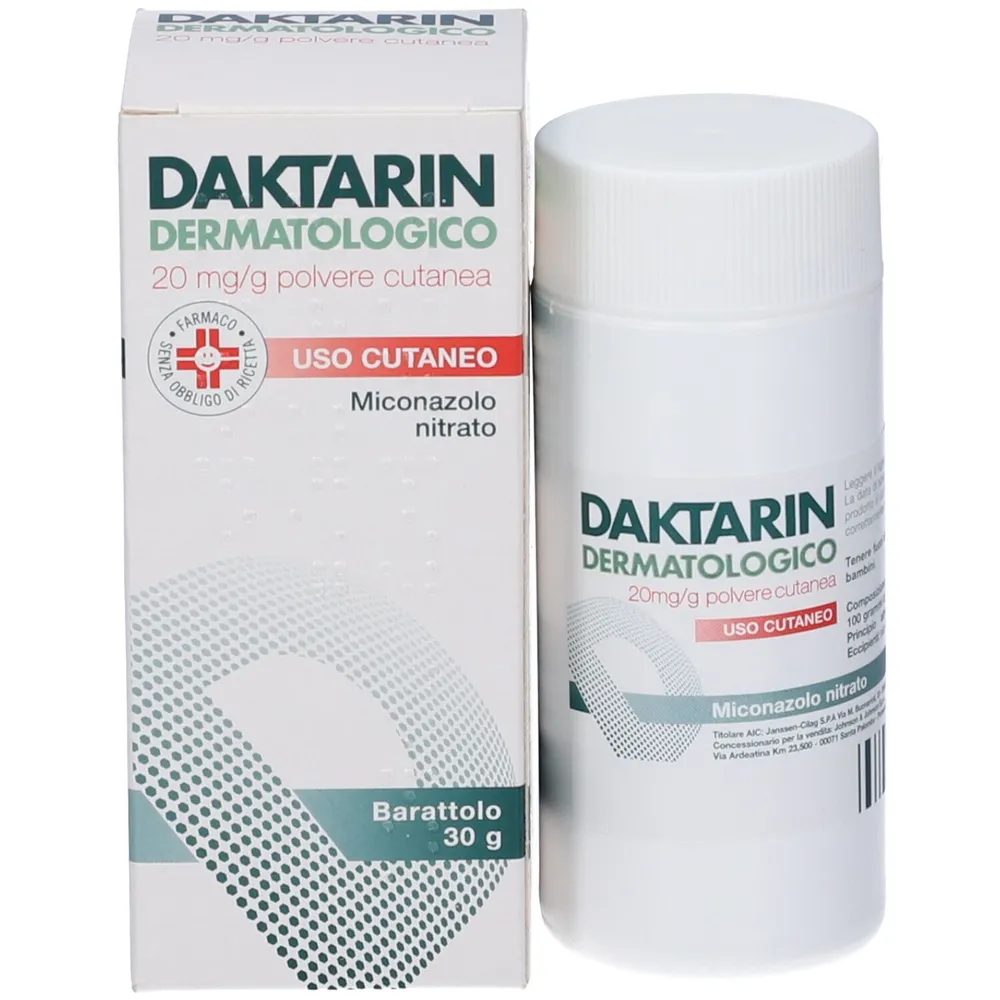
Table of Contents
- Package leaflet: Information for the patient
- DAKTARIN DERMATOLOGIC 20 mg/g cutaneous spray, powder
- Package leaflet: information for the patient
- DAKTARIN 20 mg/g vaginal cream
- 1. What Daktarin is and what it is used for
- 2. What you need to know before using Daktarin
- 3. How to use Daktarin
- 4. Possible side effects
- 5. How to store Daktarin
- 6. Contents of the pack and other information
Package leaflet: Information for the patient
DAKTARIN DERMATOLOGIC 20 mg/g cutaneous spray, powder
miconazole nitrate
Please read this leaflet carefully before using this medicine because it contains important
information for you.
Use this medicine exactly as described in this leaflet or as your doctor or pharmacist has instructed.
Keep this leaflet. You may need to read it again.
If you need further information or advice, consult your pharmacist.
If you experience any side effects, including those not listed in this leaflet, contact your doctor or pharmacist. See section 4.
Contact your doctor if you do not notice improvement or if symptoms worsen.
Contents of this leaflet:
What DAKTARIN DERMATOLOGIC cutaneous spray, powder is and what it is used for
What you need to know before using DAKTARIN DERMATOLOGIC cutaneous spray, powder
How to use DAKTARIN DERMATOLOGIC cutaneous spray, powder
Possible side effects
How to store DAKTARIN DERMATOLOGIC cutaneous spray, powder
Contents of the pack and other information
What DAKTARIN DERMATOLOGIC cutaneous spray, powder is and what it is used for
DAKTARIN DERMATOLOGIC cutaneous spray, powder contains miconazole nitrate, which belongs to a group of medicines called “antifungals” used to treat fungal infections.
DAKTARIN DERMATOLOGIC cutaneous spray, powder is a dermatological medicine indicated for the treatment of skin infections caused by fungi (dermatophytes) or yeasts (Candida), possibly complicated by bacterial infections.
Contact your doctor if you do not feel better or if you feel worse.
What you need to know before using DAKTARIN DERMATOLOGIC cutaneous spray,
powder
Do not use DAKTARIN DERMATOLOGIC cutaneous spray, powder
if you are allergic to miconazole, to other similar antifungal medicines, or to any of the other ingredients of this medicine (listed in section 6).
In newborns and children under 12 years of age.
Warnings and precautions
Consult your doctor or pharmacist before using DAKTARIN DERMATOLOGIC cutaneous spray, powder.
If sensitization or irritation occurs, especially with prolonged use, discontinue treatment and contact your doctor.
Avoid contact with the eyes. Wash your hands thoroughly after each application, unless the hands themselves are being treated.
DAKTARIN DERMATOLOGIC cutaneous spray, powder contains talc: avoid inhaling the powder as it may cause respiratory tract irritation.
It is advisable to follow these hygiene measures to avoid sources of infection or reinfection (new infections by the same fungus):
keep towels and underwear separate for personal use to prevent spreading the infection to others;
change clothing that comes into contact with the infected area regularly to avoid reinfection. DAKTARIN DERMATOLOGIC cutaneous spray, powder does not stain the skin or clothing.
Other medicines and DAKTARIN DERMATOLOGIC cutaneous spray, powder
Inform your doctor or pharmacist if you are taking, have recently taken, or might take any other medicines.
As with other topical medicines, clinically significant interactions are very rare. Inform your doctor or pharmacist if you are taking:
oral anticoagulants (medicines that inhibit blood clotting) such as warfarin:
DAKTARIN DERMATOLOGIC cutaneous spray, powder may alter their effect.
Other oral hypoglycemic agents (medicines used in the treatment of diabetes) and phenytoin (an antiepileptic medicine): efficacy and side effects may be increased if administered concurrently with miconazole.
Pregnancy and breastfeeding
If you are pregnant, think you may be pregnant, are planning a pregnancy, or are breastfeeding, consult your doctor or pharmacist before using this medicine.
If you are confirmed or suspect you are pregnant, consult your doctor, who will decide whether to prescribe DAKTARIN DERMATOLOGIC cutaneous spray, powder.
Use DAKTARIN DERMATOLOGIC cutaneous spray, powder with caution during breastfeeding.
Driving and using machines
DAKTARIN DERMATOLOGIC cutaneous spray, powder does not affect the ability to drive or operate machinery.
DAKTARIN DERMATOLOGIC cutaneous spray, powder contains ethanol.
This medicine contains 105 mg of alcohol (ethanol) per dose (1050 mg), equivalent to 100 mg/g (10% w/w).
It may cause a burning sensation on damaged skin.
This medicine is flammable; do not expose it to flames.
How to use DAKTARIN DERMATOLOGIC cutaneous spray, powder
Use this medicine exactly as described in this leaflet or as directed by your doctor or pharmacist. If in doubt, consult your doctor or pharmacist.
FOR EXTERNAL USE ONLY.
Use DAKTARIN DERMATOLOGIC cutaneous spray, powder only as directed.
Use DAKTARIN DERMATOLOGIC cutaneous spray, powder daily to achieve optimal results.
DAKTARIN DERMATOLOGIC cutaneous spray, powder is particularly indicated for the treatment of moist lesions. Generally, Daktarin Dermatologic cutaneous spray, powder is used in combination with Daktarin Dermatologic cream.
Amount: Apply a sufficient amount of powder to cover the affected area.
When and for how long: Apply the powder twice daily.
Treatment should continue uninterrupted for at least one week after symptoms disappear, and may last from 2 to 6 weeks, depending on the type and extent of the infection.
If also using Daktarin Dermatologic cream in combination, it is sufficient to apply both the powder and the cream once daily.
How to apply:
Wash the affected area and dry thoroughly. Treat not only the infected area but also the surrounding skin. Wash your hands carefully after each application to avoid spreading germs to other parts of the body or to other people.
For foot infections, it is recommended to sprinkle the feet daily with DAKTARIN DERMATOLOGIC cutaneous spray, powder during and after treatment with another topical formulation (DAKTARIN DERMATOLOGIC cream), especially between the toes, and also on socks and shoes.
If you use more DAKTARIN DERMATOLOGIC cutaneous spray, powder than you should
Excessive use of the medicine may cause redness, swelling, or a burning sensation. In this case, discontinue treatment and consult your doctor.
Accidental ingestion: DAKTARIN DERMATOLOGIC cutaneous spray, powder is intended for topical use and not for oral intake. In case of accidental ingestion of large quantities, contact your doctor immediately or go to the nearest hospital.
DAKTARIN DERMATOLOGIC cutaneous spray, powder contains talc: accidental inhalation of large amounts may cause airway obstruction. In such a case, contact your doctor immediately.
Possible side effects
Like all medicines, DAKTARIN DERMATOLOGIC cutaneous spray, powder can cause side effects, although not everybody gets them.
In rare cases, redness, irritation, mild burning, or itching may occur at the site of application. In such cases, discontinue treatment and consult your doctor or pharmacist.
Other side effects observed are listed below.
Very rare side effects (may affect up to 1 in 10,000 people):
severe, rapidly occurring allergic reaction (anaphylactic reactions)
Allergy
Swelling of the face, mouth, lips and/or tongue (angioedema)
Skin rash (urticaria; rash)
Contact dermatitis (skin inflammation)
Erythema
Pruritus
Burning sensation of the skin
Irritation
Other reactions at the application site
Reporting of side effects
If you experience any side effect, including those not listed in this leaflet, contact your doctor or pharmacist. You may also report side effects directly via the national reporting system at https://www.aifa.gov.it/content/segnalazioni-reazioni-avverse. Reporting side effects helps provide more information on the safety of this medicine.
How to store DAKTARIN DERMATOLOGIC cutaneous spray, powder
Keep this medicine out of the sight and reach of children.
This medicine does not require any special storage conditions.
Do not use this medicine after the expiry date stated on the packaging after the word "Exp.". The expiry date refers to the last day of that month. The expiry date applies to the product in its original, unopened packaging, correctly stored.
Do not dispose of medicines via wastewater or household waste. Ask your pharmacist how to dispose of medicines no longer in use. This will help protect the environment.
Contents of the pack and other information
What DAKTARIN DERMATOLOGIC cutaneous spray, powder contains
The active substance is miconazole nitrate. 100 g of powder contain 2 g of miconazole nitrate.
The other ingredients are: talc, sorbitan sesquioleate, anhydrous ethanol, stearylconium hectorite, propellant (a mixture of propane and butane).
Description of the appearance of DAKTARIN DERMATOLOGIC cutaneous spray, powder and contents of the pack
Cutaneous spray, powder: container with spray valve containing 100 g of 2% powder
Marketing Authorization Holder
Johnson & Johnson S.p.A., Via Ardeatina, km 23,500 - 00071 Santa Palomba – Pomezia - Rome
Manufacturer
JANSSEN-CILAG S.p.A.
Via C. Janssen – Borgo S. Michele - Latina
JNTL Consumer Health (France) SAS
Domaine de Maigremont - 27100 Val de Reuil - France
Package leaflet: information for the patient
DAKTARIN 20 mg/g vaginal cream
Miconazole nitrate
Please read this leaflet carefully before using this medicine because it contains
important information for you.
Always use this medicine exactly as described in this leaflet or as your doctor or
pharmacist has instructed you.
- Keep this leaflet. You may need to read it again.
- If you need more information or advice, consult your pharmacist.
- If any side effects occur, including those not listed in this leaflet, consult your doctor or pharmacist. See section 4.
- Consult your doctor if you do not notice improvement or if your symptoms worsen.
Contents of this leaflet:
- What Daktarin is and what it is used for
- What you need to know before using Daktarin
- How to use Daktarin
- Possible side effects
- How to store Daktarin
- Contents of the pack and other information
1. What Daktarin is and what it is used for
Daktarin contains miconazole nitrate, which belongs to a group of medicines called antifungals and antiseptics, used to treat infections.
Daktarin is a gynaecological medicine indicated for the local treatment of vulvovaginal candidiasis (infections caused by fungi of the genus Candida) and superinfections (new infections occurring on top of an existing infection) due to Gram-positive bacteria.
If you do not feel better or if you feel worse, talk to your doctor.
2. What you need to know before using Daktarin
DO NOT use Daktarin
- if you are allergic to miconazole or to other similar antifungal medicines, or to any of the other ingredients of this medicine (listed in section 6).
Warnings and precautions
Talk to your doctor or pharmacist before using Daktarin.
The following hygiene measures are recommended to avoid sources of infection or reinfection (new infections caused by the same fungus):
- use personal towels and underwear to prevent spreading the infection to other people;
- change underwear regularly to avoid reinfection. Your sexual partner may also need treatment if infected. Consult your doctor if in doubt. Daktarin does not stain skin or clothing. Daktarin vaginal cream must not be used at the same time as latex condoms or diaphragms. Daktarin vaginal cream may damage latex-based products and prevent them from working properly.
If sensitisation or an allergic reaction occurs, treatment must be discontinued.
Daktarin must not be used at the same time as latex condoms or diaphragms.
Avoid contact of Daktarin with rubber-based contraceptives such as condoms or diaphragms, as the components of Daktarin may damage latex, thereby compromising contraceptive effectiveness and protection against sexually transmitted infections.
Children and adolescents:
The safety and efficacy of Daktarin have not been established in children and adolescents (under 18 years of age).
Other medicines and Daktarin
Tell your doctor or pharmacist if you are taking, have recently taken, or might take any other medicines.
Inform your doctor or pharmacist if you are taking:
- oral anticoagulants (medicines that inhibit blood clotting) such as warfarin: Daktarin may alter their effect;
- other medicines, for example oral hypoglycaemics (medicines used in the treatment of diabetes) and phenytoin (an antiepileptic medicine): the efficacy and side effects may be increased if administered concurrently with miconazole.
Pregnancy and breastfeeding
If you are pregnant, think you might be pregnant, are planning a pregnancy, or are breastfeeding, ask your doctor or pharmacist for advice before using this medicine.
During the first trimester of pregnancy, this medicine should be used only on medical advice and if strictly necessary.
There are no known data regarding the excretion of miconazole nitrate in breast milk. Use Daktarin with great caution during breastfeeding.
Driving and using machines
Not applicable.
Daktarin contains benzoic acid and butylated hydroxyanisole
- Benzoic acid may cause local irritation.
- Butylated hydroxyanisole may cause local skin reactions (e.g. contact dermatitis) or irritation of the eyes and mucous membranes.
3. How to use Daktarin
Use this medicine exactly as described in this leaflet or as directed by your doctor or pharmacist. If you are unsure, consult your doctor or pharmacist.
The recommended dose is the contents of one applicator (approximately 5 g of cream), to be inserted deeply into the vagina once daily (in the evening before going to bed).
Treatment should continue for at least 10 days, even if itching and white discharge (leucorrhoea) have disappeared after 3 days. If there is no improvement, consult your doctor, who may decide to repeat microbiological tests to confirm the diagnosis.
Instructions for use
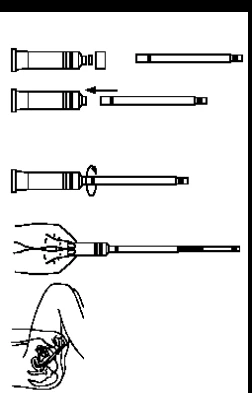
Perform the following steps:
- To open the tube, unscrew the cap and turn it upside down; use the perforating wedge to pierce the aluminium seal.
- Screw the applicator onto the tube in place of the cap.
- Gently squeeze the tube from the bottom to fill the applicator with cream. If the plunger offers resistance, gently pull it. Unless otherwise directed by your doctor, the applicator should be completely filled.
- Remove the applicator from the tube, and immediately recap the tube with the cap.
- Lie down, with knees raised and apart. Gently insert the applicator as deeply as possible into the vagina. Fully depress the plunger. Then remove the applicator and dispose of it.
Local treatment with Daktarin is generally well tolerated.
Insertion of the vaginal applicator is painless and easy to perform.
If you use more Daktarin than you should
Daktarin is intended for topical use only and must not be taken orally.
In case of accidental ingestion of large amounts of Daktarin, contact your doctor immediately or go to the nearest hospital.
Using more Daktarin than prescribed is generally not dangerous and should not cause alarm; however, in this case, as well as in case of accidental ingestion of the medicine, consult your doctor.
4. Possible side effects
Like all medicines, this medicine can cause side effects, although not everyone gets them.
Below is a list of side effects that have occurred with Daktarin vaginal cream:
Very rare (may affect up to 1 in 10,000 people):
- Allergic reaction, including severe allergic reaction occurring rapidly (anaphylactic and anaphylactoid reaction)
- Swelling of the face, mouth, lips and/or tongue (angioedema)
Stop using Daktarin and seek immediate medical attention at an emergency department if you notice or suspect any of the very rare side effects listed above.
Local side effects (frequency not known):
- Itching
- Vaginal irritation
- Application site reaction
Not known (frequency cannot be estimated from the available data):
- Itching of female genital organs
- Vaginal burning sensation
- Vulvovaginal discomfort
- Headache
- Menstrual pain (dysmenorrhea)
- Abdominal pain
- Upper abdominal pain
- Nausea
- Vaginal discharge
- Vaginal bleeding
- Vaginal pain
- Urinary tract infection
- Painful or difficult urination (dysuria)
- Itchy skin rash (pruritic rash)
Reporting of side effects
If you experience any side effect, including those not listed in this leaflet, talk to your doctor or pharmacist.
You can also report side effects directly via the national reporting system at www.agenziafarmaco.gov.it/content/come-segnalare-una-sospetta-reazione-avversa.
By reporting side effects, you can help provide more information on the safety of this medicine.
5. How to store Daktarin
Keep this medicine out of the sight and reach of children.
Do not store above 25°C.
Do not use this medicine after the expiry date which is stated on the packaging after the word
Exp.. The expiry date refers to the last day of that month.
The expiry date stated refers to the product in its original, unopened packaging and correctly
stored.
Do not dispose of any medicine via wastewater or household waste. Ask your pharmacist how to
dispose of medicines no longer in use. This will help protect the environment.
6. Contents of the pack and other information
What Daktarin contains
The active substance is miconazole nitrate 20 mg. One gram of vaginal cream contains 20 mg of
miconazole nitrate.
- Other ingredients are: polyglyceryl palmitostearate, macrogol, glyceryl oleate, liquid paraffin, butylated hydroxyanisole, benzoic acid, purified water
Description of the appearance of Daktarin and contents of the pack
2% vaginal cream – 78 gram tube with 16 single-use applicators
Marketing Authorization Holder
Johnson & Johnson S.p.A., Via Ardeatina, km 23,500 - 00071 Santa Palomba – Pomezia - Rome
MANUFACTURER
JANSSEN PHARMACEUTICA N.V.
Turnhoutseweg, 30
B-2340 Beerse (Belgium)