Dacarbazine Lipomed
Italy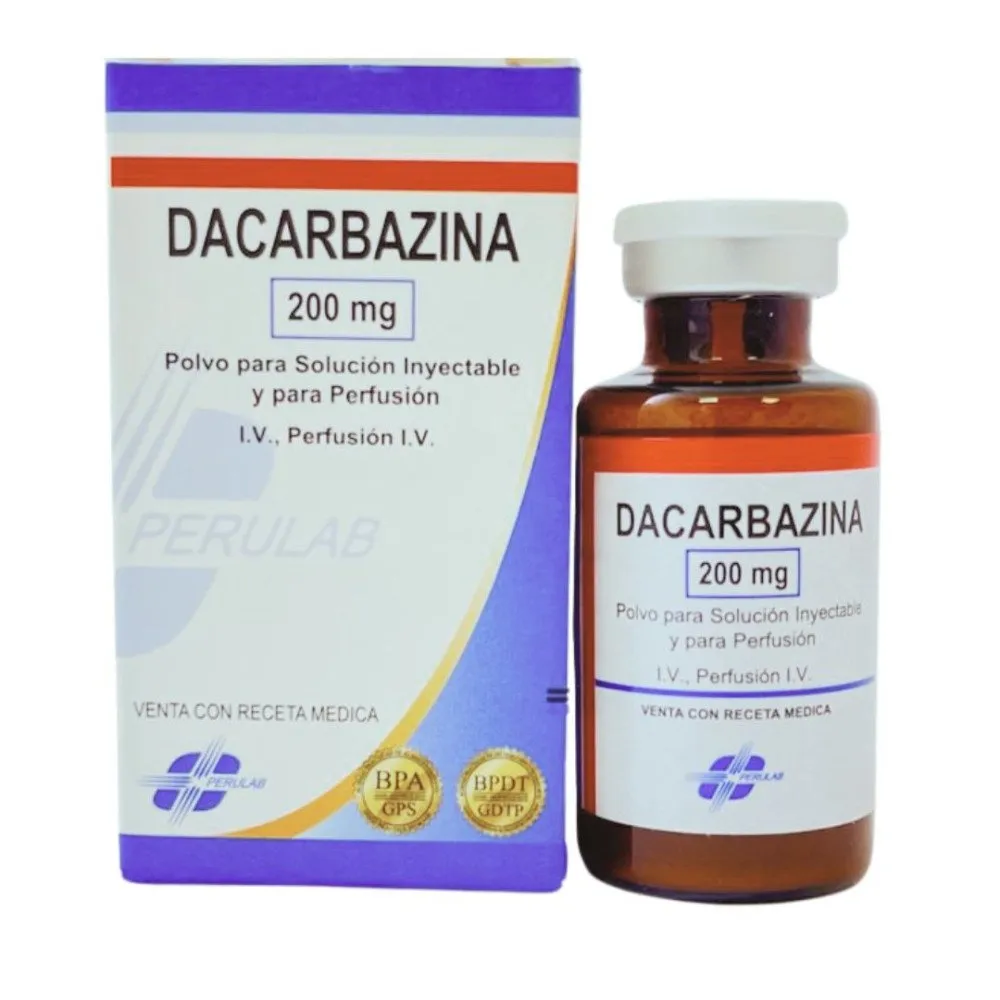
Table of Contents
- Package leaflet: Information for the user
- Dacarbazina Lipomed 500 mg powder for solution for infusion, 1000 mg powder for solution for infusion
- 1. What Dacarbazina Lipomed is and what it is used for
- 2. What you need to know before receiving Dacarbazina Lipomed
- 3. How to use Dacarbazina Lipomed
- 4. Possible side effects
- 5. How to store Dacarbazina Lipomed
- 6. Package contents and other information
- Patient Information Leaflet: Information for the User
- Dacarbazina Lipomed 200 mg powder for injectable solution or for infusion solution
- 1. What Dacarbazina Lipomed is and what it is used for
- 2. What you should know before receiving Dacarbazina Lipomed
- 3. How to use Dacarbazina Lipomed
- 4. Possible side effects
- 5. How to store Dacarbazina Lipomed
- 6. Package contents and other information
- The following information is intended for healthcare professionals only.
Package leaflet: Information for the user
Dacarbazina Lipomed 500 mg powder for solution for infusion, 1000 mg powder for solution for infusion
dacarbazine
Generic medicine
Please read this leaflet carefully before you are given this medicine because it contains important information for you.
- Keep this leaflet. You may need to read it again.
- If you have any questions, ask your doctor or pharmacist.
- If you get any side effects, including those not listed in this leaflet, talk to your doctor or pharmacist. See section 4.
Contents of this leaflet:
- What Dacarbazina Lipomed is and what it is used for
- What you need to know before receiving Dacarbazina Lipomed
- How to use Dacarbazina Lipomed
- Possible side effects
- How to store Dacarbazina Lipomed
- Contents of the pack and other information
1. What Dacarbazina Lipomed is and what it is used for
Dacarbazine belongs to a group of medicines known as cytostatic agents. These agents affect the growth of cancer cells.
Dacarbazina Lipomed has been prescribed by your doctor for the treatment of cancer, such as advanced-stage malignant melanoma (skin cancer), advanced-stage Hodgkin's lymphoma (cancer of the lymphatic tissue), or advanced-stage soft tissue sarcoma in adults (cancer of the muscles, fatty tissue, fibrous tissue, blood vessels, or other supportive tissues).
Dacarbazina Lipomed may be administered in combination with other cytostatic agents.
2. What you need to know before receiving Dacarbazina Lipomed
Do not use Dacarbazina Lipomed
- if you are allergic to dacarbazine or to any of the other ingredients of this medicine (listed in section 6),
- if your white blood cell and/or platelet count is too low (leucopenia and/or thrombocytopenia),
- if you have severe liver or kidney disease,
- if you are pregnant or breastfeeding,
- in combination with the yellow fever vaccine.
Warnings and precautions
Talk to your doctor or pharmacist before you are given Dacarbazina Lipomed.
Before each administration, blood tests will be performed to ensure that you have sufficient blood cells to receive this medicine. Your liver and kidney function will also be monitored.
You must not be vaccinated with live vaccines during treatment with Dacarbazina Lipomed, as this medicine may weaken the immune system and make it easier to contract a serious infection.
Do not take fotemustine during treatment with Dacarbazina Lipomed.
Other medicines and Dacarbazina Lipomed
Tell your doctor or pharmacist if you are taking, have recently taken, or might take any other medicines.
It is not advisable to use any treatment without first talking to your doctor, as there may be interactions between Dacarbazina Lipomed and other medicines.
In particular, you must inform your doctor, nurse, or pharmacist if you are using or are being treated with any of the following medicines:
- Radiotherapy or other tumour growth inhibitors (chemotherapy). The use of these medicines in combination with Dacarbazina Lipomed may worsen bone marrow damage.
- Other medicines metabolized by a liver enzyme system called cytochrome P450.
- Methoxypsoralen (used for skin conditions such as psoriasis and eczema): concomitant use of Dacarbazina Lipomed with methoxypsoralen may increase sensitivity to sunlight (photosensitization).
- Phenytoin (used to treat seizures): concomitant use of Dacarbazina Lipomed and phenytoin may increase the risk of seizures.
- Cyclosporine or tacrolimus (used to reduce the body's immune responses): these medicines may weaken the immune system.
- Fotemustine (used to treat skin cancers): concomitant use of Dacarbazina Lipomed and fotemustine may cause lung damage.
- The use of medicines that may cause liver damage, such as diazepam (used to treat anxiety, muscle spasms, and seizures), imipramine (used to treat symptoms of depression), ketoconazole (used to treat fungal infections), carbamazepine (used to prevent seizures, reduce certain types of pain, or control mood disorders), should be avoided during chemotherapy.
- Anticoagulants (medicines used to prevent blood clots): your doctor will decide whether you should take these medicines and will monitor your blood's clotting tendency.
You must not be vaccinated with live vaccines during treatment with Dacarbazina Lipomed and for
3 months after completion of therapy with this medicine. Dacarbazina Lipomed may indeed weaken the immune system and make it easier to contract a serious infection.
During treatment with Dacarbazina Lipomed, you may receive inactivated or killed vaccines.
Dacarbazina Lipomed with food, drinks and alcohol
Avoid eating shortly before administration of Dacarbazina Lipomed. This may help reduce nausea or vomiting. You should avoid alcoholic beverages during chemotherapy.
Pregnancy, breastfeeding and fertility
Ask your doctor or pharmacist for advice before taking or receiving any medicine.
Dacarbazina Lipomed must not be administered if you are pregnant or planning a pregnancy. You must use adequate contraceptive precautions during therapy.
You must not breastfeed during treatment with Dacarbazina Lipomed.
If you are pregnant, suspect you may be pregnant, are planning a pregnancy, or are breastfeeding, consult your doctor before receiving this medicine.
During treatment with Dacarbazina Lipomed and for 6 months after the end of therapy, men should be advised to use effective contraceptive measures.
Driving and using machines
Your ability to drive or operate machinery may be affected due to side effects on the central nervous system (on the brain and nerves) or due to nausea and vomiting. However, there is no reason to refrain from driving or using machinery between treatment cycles with Dacarbazina Lipomed, unless you experience dizziness or feel unsteady.
3. How to use Dacarbazina Lipomed
This medicine will be administered under the supervision of a physician specialized in oncology (cancer treatment), who has access to the necessary equipment for regular monitoring of all clinical effects during and after therapy.
Dacarbazine is a substance sensitive to light exposure. The healthcare professional administering this medicine will ensure that dacarbazine is protected from exposure to daylight during administration.
Shortly before administration, Dacarbazina Lipomed powder will be dissolved in 50 mL of water for injections. The resulting solution will then be further diluted with 200–300 mL of isotonic sodium chloride solution or 5% glucose solution and administered to you by intravenous infusion (infusion into a vein) over 20–30 minutes.
The dose depends on blood cell counts and concomitant chemotherapy. The dose you will receive is calculated by your doctor based on your body surface area (m²), blood cell counts, and other anticancer medicines or therapies administered.
Your doctor may adjust the dose and frequency of administrations. This will depend on blood test results, your general condition, additional therapies, and your response to Dacarbazina Lipomed. If you have any questions about your treatment, please consult your doctor, nurse, or pharmacist.
Use in children and adolescents
Specific recommendations for the use of Dacarbazina Lipomed in children and adolescents cannot be made until further data become available.
If you have any doubts about using this medicine, consult your doctor, pharmacist, or nurse.
4. Possible side effects
Like all medicines, this medicine can cause side effects, although not everybody gets them. Your doctor will discuss these with you and explain the risks and benefits of your treatment.
Contact your doctor immediately if any of the following side effects occur:
- Signs of infection, such as sore throat and high temperature.
- Unusual bruising or bleeding.
- Extreme tiredness.
- Persistent or severe vomiting or diarrhoea.
- Severe allergic reactions – these may include sudden itchy rash (urticaria), swelling of the hands, feet, ankles, face, lips, mouth or throat (which may cause difficulty in swallowing or breathing), and a feeling of fainting.
- Yellowing of the skin and eyes due to liver problems.
- Signs of brain or nerve problems, such as headache, vision disturbances, seizures, confusion, lethargy (state of apathy), or numbness and tingling of the face.
These are all serious side effects. You may urgently need medical attention.
Below is a list of all known side effects:
Common side effects (may affect up to 1 in 10 people)
- Anaemia (reduction in the number of red blood cells).
- Leucopenia (reduction in the number of white blood cells).
- Thrombocytopenia (reduction in the number of platelets in the blood). Changes in blood cell counts are dose-dependent and delayed. The lowest values often appear only after 3–4 weeks.
- Anorexia (loss of appetite), nausea and vomiting. All of these side effects can be severe.
- Bone marrow suppression (reduced formation of all blood cells in the bone marrow).
Uncommon side effects (may affect up to 1 in 100 people)
- Alopecia (hair loss).
- Hyperpigmentation (increased skin colouring).
- Photosensitivity (increased skin sensitivity to sunlight).
- Occasionally, influenza-like symptoms such as fatigue, chills, fever and muscle pain may occur during or often a few days after administration of dacarbazine. These symptoms may recur with subsequent infusions.
- Infections.
- Transient skin rash.
- Blurred vision.
- Hepatotoxicity (liver damage).
Rare side effects (may affect up to 1 in 1,000 people)
- Pancytopenia (reduction in the number of all blood cells).
- Agranulocytosis (severe reduction in the number of granulocytes, a specific type of white blood cell).
- Anaphylactic reactions (severe allergic reaction causing, for example, a drop in blood pressure, swelling of the hands, feet, ankles, face, lips, mouth and throat, which may cause difficulty in swallowing or breathing, rapid pulse, urticaria and widespread itching or skin redness).
- Headache.
- Vision disturbances.
- Confusion.
- Lethargy (state of apathy).
- Seizures.
- Facial paraesthesia (abnormal sensations in the face), numbness and facial flushing immediately after injection.
- Diarrhoea.
- Veno-occlusive disease (VOD) (a serious liver condition due to blockage of the liver’s blood vessels) with hepatic necrosis (destruction of liver cells), which may be life-threatening. Symptoms include fever, abdominal pain, enlarged liver and yellowing of the skin. If this complication is suspected, your doctor will consider appropriate treatment.
- Increased liver enzymes.
- Impaired kidney function.
- Erythema (redness of the skin).
- Maculopapular rash (skin eruption).
- Urticaria.
- Irritation at the application site.
If the medicine is accidentally administered into the tissues around the vein, this will cause pain and tissue damage.
You may experience one or more of these symptoms; if so, inform your doctor.
Reporting of side effects
If you get any side effect, including ones not listed in this leaflet, talk to your doctor, pharmacist or nurse. You can also report side effects directly via
https://www.aifa.gov.it/content/segnalazioni-reazioni-avverse. By reporting side effects, you can help provide more information on the safety of this medicine.
5. How to store Dacarbazina Lipomed
Do not store above 25°C. Keep the vial in the outer packaging to protect the medicine from light.
Keep this medicine out of the sight and reach of children.
Do not use this medicine after the expiry date stated on the label and carton after "Exp.". The expiry date refers to the last day of that month.
Dacarbazina Lipomed is for single use only.
Any remaining contents after use must be disposed of by a doctor, nurse, or pharmacist. This also applies to solutions in which the appearance of the product has changed. The diluted infusion solution should be inspected visually by a doctor, nurse, or pharmacist and used only if clear and practically free from particles.
In-use stability of the reconstituted solution
Chemical and physical in-use stability has been demonstrated for 8 hours at room temperature and protected from light, and for 5 days at 2–8°C and protected from light. From a microbiological point of view, the reconstituted solution should be used immediately.
If the reconstituted solution is not used immediately, the duration and conditions of storage are the responsibility of the user. The reconstituted solution must not be stored for longer than 24 hours in a refrigerator (2–8°C) protected from light, unless reconstitution was carried out under controlled and validated aseptic conditions.
In-use stability of the diluted infusion solution
Chemical and physical in-use stability has been demonstrated for 8 hours at room temperature and protected from light, and for 5 days at 2–8°C and protected from light. From a microbiological point of view, the diluted infusion solution should be used immediately.
If the diluted infusion solution is not used immediately, the duration and conditions of storage are the responsibility of the user. The diluted infusion solution must not be stored for longer than 24 hours in a refrigerator (2–8°C) protected from light, unless both reconstitution and dilution were carried out under controlled and validated aseptic conditions.
From a microbiological standpoint, it is recommended not to exceed a total storage time of 24 hours after opening the product.
6. Package contents and other information
What Dacarbazina Lipomed contains
- The active substance is dacarbazine (as dacarbazine citrate).
- The other components are citric acid monohydrate and mannitol.
Description of the appearance of Dacarbazina Lipomed and contents of the pack
Dacarbazina Lipomed is a white lyophilized powder available in brown vials for injectable preparations (hydrolytic class I), closed with grey bromobutyl rubber stoppers for lyophilization. The vials containing Dacarbazina Lipomed 500 mg are sealed with aluminium seals and grey flip-off caps, while the vials containing Dacarbazina Lipomed 1000 mg are sealed with aluminium seals and red flip-off caps.
Each single-dose vial of Dacarbazina Lipomed 500 mg contains 500 mg of dacarbazine as dacarbazine citrate.
After reconstitution of Dacarbazina Lipomed 500 mg with 50 ml of water for injections, 1 ml of solution contains 10 mg of dacarbazine.
Each single-dose vial of Dacarbazina Lipomed 1000 mg contains 1,000 mg of dacarbazine as dacarbazine citrate.
After reconstitution of Dacarbazina Lipomed 1000 mg with 50 ml of water for injections, 1 ml of solution contains 20 mg of dacarbazine.
Before reconstitution, Dacarbazina Lipomed is a white lyophilized powder. The reconstituted solutions are clear and pale yellow in colour. Diluted infusion solutions are clear and almost colourless.
Dacarbazina Lipomed 500 mg and 1000 mg are packaged in boxes. Each box contains 1 vial.
Marketing Authorization Holder and Manufacturer
Lipomed GmbH
Hegenheimer Strasse 2
D-79576 Weil am Rhein
Germany
This medicinal product is authorized in the European Economic Area countries under the following names:
Austria: Dacarbazin Lipomed 500 mg Pulver zur Herstellung einer Infusionslösung
Germany: Dacarbazin Lipomed 500 mg Pulver zur Herstellung einer Infusionslösung
France: Dacarbazine Lipomed 500 mg poudre pour solution pour perfusion
Italy: Dacarbazina Lipomed 500 mg polvere per soluzione per infusione
Denmark: Dacarbazine Lipomed 500 mg pulver til infusionsvæske, opløsning
Finland: Dacarbazine Lipomed 500 mg infuusiokuiva-aine liuosta varten
Norway: Dacarbazine Lipomed 500 mg pulver til infusjonsvæske, oppløsning
Ireland: Dacarbazine Lipomed 500 mg powder for solution for infusion
Austria: Dacarbazin Lipomed 1000 mg Pulver zur Herstellung einer Infusionslösung
Germany: Dacarbazin Lipomed 1000 mg Pulver zur Herstellung einer Infusionslösung
France: Dacarbazine Lipomed 1000 mg poudre pour solution pour perfusion
Italy: Dacarbazina Lipomed 1000 mg polvere per soluzione per infusione
Denmark: Dacarbazine Lipomed 1000 mg pulver til infusionsvæske, opløsning
Finland: Dacarbazine Lipomed 1000 mg infuusiokuiva-aine liuosta varten
Norway: Dacarbazine Lipomed 1000 mg pulver til infusjonsvæske, oppløsning
Ireland: Dacarbazine Lipomed 1000 mg powder for solution for infusion
The following information is intended exclusively for physicians or healthcare professionals:
Dacarbazine is an antineoplastic agent. Before starting, consult local guidelines regarding the handling of cytotoxic agents.
Solutions of dacarbazine must be prepared only by trained personnel and, as with all cytotoxic agents, precautions must be taken to avoid exposure of personnel. Handling of cytotoxic drugs should generally be avoided during pregnancy. The preparation of the solution for administration must be carried out in a designated handling area, working on a washable surface or on disposable plastic-backed absorbent paper.
Wear appropriate eye protection, disposable gloves, mask, and disposable gown. Syringes and infusion sets must be assembled carefully to prevent leakage (use of Luer lock connectors is recommended).
After completion of work, all exposed surfaces must be thoroughly cleaned and the operator must wash hands and face.
In case of spills, the operator must wear gloves, mask, eye protection, and disposable gown, and remove the spill using absorbent material kept for this purpose in the work area. The area must then be cleaned and all contaminated material must be transferred into a bag or container for cytotoxic waste or sealed for incineration.
Reconstituted solutions must be adequately protected from light even during administration (use of light-resistant infusion sets is recommended).
Stability period of the reconstituted solution
Chemical and physical in-use stability has been demonstrated for 8 hours at room temperature and protected from light, and for 5 days at 2–8°C and protected from light. From a microbiological standpoint, the reconstituted solution should be used immediately.
If the reconstituted solution is not used immediately, the duration and conditions of storage are the responsibility of the user. The reconstituted solution must not be stored for more than 24 hours in the refrigerator (2–8°C) protected from light, unless reconstitution was performed under controlled, validated aseptic conditions.
Stability period of the diluted infusion solution
Chemical and physical in-use stability has been demonstrated for 8 hours at room temperature and protected from light, and for 5 days at 2–8°C and protected from light. From a microbiological standpoint, the diluted infusion solution should be used immediately.
If the diluted infusion solution is not used immediately, the duration and conditions of storage are the responsibility of the user. The diluted infusion solution must not be stored for more than 24 hours in the refrigerator (2–8°C) protected from light, unless reconstitution and dilution were performed under controlled, validated aseptic conditions.
From a microbiological standpoint, it is recommended not to exceed a total storage time of 24 hours after opening the product.
Patient Information Leaflet: Information for the User
Dacarbazina Lipomed 200 mg powder for injectable solution or for infusion solution
Dacarbazina
Please read this leaflet carefully before receiving this medicine as it contains
important information for you.
- Keep this leaflet. You may need to read it again.
- If you have any questions, consult your doctor or pharmacist.
- If you experience any side effects, including those not listed in this leaflet, contact your doctor or pharmacist. See section 4.
Contents of this leaflet:
- What Dacarbazina Lipomed is and what it is used for
- What you need to know before receiving Dacarbazina Lipomed
- How to use Dacarbazina Lipomed
- Possible side effects
- How to store Dacarbazina Lipomed
- Contents of the pack and other information
1. What Dacarbazina Lipomed is and what it is used for
Dacarbazine belongs to a group of medicines known as cytostatic agents. These agents
affect the growth of cancer cells.
Dacarbazina Lipomed has been prescribed by your doctor for the treatment of cancer, such as
advanced-stage malignant melanoma (skin cancer), advanced-stage Hodgkin's lymphoma
(cancer of the lymphatic tissue), or advanced-stage soft tissue sarcoma (cancer of muscles,
fatty tissue, fibrous tissue, blood vessels, or other supportive tissues). Dacarbazina Lipomed
may be administered in combination with other cytostatic agents.
2. What you should know before receiving Dacarbazina Lipomed
Dacarbazina must not be administered to you if:
- you are allergic to dacarbazine or to any of the excipients of this medicine (listed in section 6),
- you have too low a number of white blood cells and/or platelets in the blood (leucopenia and/or thrombocytopenia),
- you have severe liver or kidney disease,
- you are pregnant or breastfeeding,
- you are receiving the yellow fever vaccine.
Warnings and precautions
Special caution is required if Dacarbazina Lipomed is administered in the following cases:
During treatment with Dacarbazina Lipomed and for up to 6 months after completion of therapy, men must use effective contraceptive methods.
Your doctor will perform blood tests before each administration to ensure that you have sufficient blood cells to receive Dacarbazina Lipomed. Liver and kidney function will also be monitored.
Talk to your doctor or pharmacist before receiving Dacarbazina Lipomed.
Other medicines and Dacarbazina Lipomed
Do not take any medication without first talking to your doctor, as there may be interactions between Dacarbazina Lipomed and other medicines.
In particular, this medicine must not be administered and you must inform your doctor, nurse, or pharmacist if you are taking or receiving any of the following medicines:
- phenytoin – used to treat seizures (epilepsy),
- yellow fever vaccine,
- live vaccines, because dacarbazine may weaken the immune system and increase the risk of developing a serious infection.
Dacarbazina Lipomed must not be administered if you are taking any of these medicines. If you have any doubts, consult your doctor, nurse, or pharmacist before Dacarbazina Lipomed is administered to you.
Inform your doctor, nurse, or pharmacist if you are receiving any of the following treatments:
- fotemustine – you must not receive dacarbazine and fotemustine at the same time, to avoid lung damage.
- cyclosporine or tacrolimus: these medicines may reduce immune system function. If you are taking any of these medicines or if you have any doubts, consult your doctor, nurse, or pharmacist before Dacarbazina Lipomed is administered. Your doctor will decide whether to administer medicines that improve blood flow and will monitor blood coagulation.
Inform your doctor or pharmacist if you are taking or using, have recently taken or used, or might take or use any other medicine.
During chemotherapy, avoid medicines that may cause liver damage (e.g. diazepam, imipramine, ketoconazole, or carbamazepine).
Dacarbazina Lipomed with food, drinks and alcohol
Avoid eating shortly before administration of Dacarbazina Lipomed. This will help prevent nausea or vomiting. You must avoid alcoholic beverages during chemotherapy.
Pregnancy, breastfeeding and fertility
Ask your doctor or pharmacist for advice before taking or receiving any medicine.
Dacarbazina Lipomed must not be administered if you are pregnant or planning to become pregnant. You must use adequate contraceptive precautions during therapy.
You must not breastfeed during treatment with Dacarbazina Lipomed.
If you are pregnant, suspect you may be pregnant, are planning a pregnancy, or are breastfeeding, consult your doctor before receiving this medicine.
During treatment with Dacarbazina Lipomed and for 6 months after therapy ends, men should be advised to use effective contraceptive measures.
Driving and using machines
Your ability to drive vehicles or operate machinery may be impaired due to central nervous system side effects (affecting the brain and nerves) or due to nausea and vomiting. However, there is no reason to refrain from driving or using machines between treatment cycles with Dacarbazina Lipomed, unless you experience dizziness or feel unsteady.
3. How to use Dacarbazina Lipomed
This medicine will be administered under the supervision of a physician specialized in oncology (cancer treatment), who has access to the necessary equipment for regular monitoring of all clinical effects during and after therapy.
Dacarbazina is a substance sensitive to light exposure. The physician or nurse administering this medicine will take care to protect dacarbazina from exposure to daylight during administration.
Shortly before administration, Dacarbazina Lipomed powder will be dissolved in 20 ml of water for injections.
The resulting solution will be administered by slow intravenous injection or further diluted with 200–300 ml of isotonic sodium chloride solution or 5% glucose solution and administered to you as an intravenous infusion (infusion into a vein) over 15–30 minutes.
The dose will depend on blood cell counts and concomitant chemotherapy. The dose you will receive is calculated by your doctor based on your body surface area (m²), blood cell counts, and other anticancer medicines or therapies administered.
Your doctor may adjust the dose and frequency of administrations. This will depend on blood test results, your general condition, additional therapies, and your response to Dacarbazina Lipomed. If you have any questions about your treatment, consult your doctor, nurse, or pharmacist.
Use in children and adolescents
Specific recommendations for the use of Dacarbazina Lipomed in children and adolescents cannot be provided until further data become available.
If you have any doubts about using this medicine, consult your doctor, pharmacist, or nurse.
4. Possible side effects
Like all medicines, this medicine can cause side effects, although not everyone experiences them.
Your doctor will discuss this with you and explain the risks and benefits of your treatment.
Inform your doctor immediately if any of the following side effects occur:
- Signs of infection, such as sore throat and high temperature.
- Unusual bruising or bleeding.
- Extreme tiredness.
- Persistent or severe vomiting or diarrhoea.
- Severe allergic reactions – these may include sudden itchy skin rash (urticaria), swelling of the hands, feet, ankles, face, lips, mouth or throat (which may cause difficulty swallowing or breathing), and a feeling of fainting.
- Yellowing of the skin and eyes due to liver problems.
- Signs of brain or nerve problems, such as headache, vision disturbances, seizures, confusion, lethargy (a state of apathy), or facial numbness and tingling.
These are all serious side effects. You may urgently need medical attention.
Below is a list of all known side effects:
Common side effects (1–10 in 100 patients treated)
- Anaemia (reduction in the number of red blood cells)
- Leucopenia (reduction in the number of white blood cells)
- Thrombocytopenia (reduction in the number of platelets in the blood). Changes in blood cell counts are dose-dependent and delayed. The lowest values often appear only after 3–4 weeks.
- Anorexia (loss of appetite), nausea, and vomiting. All of these side effects can be severe.
- Bone marrow suppression (reduced formation of all blood cells in the bone marrow)
Uncommon side effects (1–10 in 1,000 patients treated)
- Alopecia (hair loss).
- Hyperpigmentation (increased skin pigmentation).
- Photosensitivity (increased skin sensitivity to sunlight).
- Occasionally, flu-like symptoms such as fatigue, chills, fever, and muscle pain may occur during or often a few days after administration of dacarbazine. These symptoms may recur with subsequent infusions.
- Infections.
- Transient skin rash.
- Blurred vision.
- Hepatotoxicity (liver damage).
Rare side effects (1–10 in 10,000 patients treated)
- Pancytopenia (reduction in the number of all blood cells).
- Agranulocytosis (severe reduction in the number of granulocytes, a specific type of white blood cell).
- Anaphylactic reactions (severe allergic reaction causing, for example, a drop in blood pressure, swelling of the hands, feet, ankles, face, lips, mouth and throat, which may cause difficulty swallowing or breathing, rapid pulse, widespread hives and itching, or skin redness).
- Headache.
- Vision disturbances.
- Confusion.
- Lethargy (a state of apathy).
- Seizures.
- Facial paresthesia (abnormal sensations in the face), numbness, and facial flushing immediately after injection.
- Diarrhoea.
- Veno-occlusive disease (VOD) (a serious liver condition caused by blockage of the liver's blood vessels) with hepatic necrosis (destruction of liver cells), which may be life-threatening. If this complication is suspected, your doctor will consider appropriate treatment.
- Increased liver enzymes.
- Impaired kidney function.
- Erythema (redness of the skin).
- Maculopapular rash (skin eruption).
- Urticaria.
- Irritation at the site of administration.
If this medicine is accidentally administered into the surrounding tissues outside the vein, you will experience pain and tissue damage.
You may experience one or more of these symptoms; if so, inform your doctor.
Reporting of side effects
If you experience any side effect, including those not listed in this leaflet, talk to your doctor or pharmacist. You can also report side effects directly via the national reporting system:
Website:
https://www.aifa.gov.it/content/segnalazioni-reazioni-avverse
By reporting side effects, you can help provide more information on the safety of this medicine.
5. How to store Dacarbazina Lipomed
Do not store above 25°C. Keep the vials in the outer packaging to protect the medicine from light.
Keep this medicine out of the sight and reach of children.
This medicine must not be used after the expiry date which is stated on the label and on the carton after "Exp.". The expiry date refers to the last day of that month.
Dacarbazina Lipomed is for single use only.
Any residual contents after use must be disposed of by the doctor, nurse or pharmacist. This also applies to solutions in which the appearance of the product has changed. The injectable solution or the diluted infusion solution must be inspected visually by the doctor, nurse or pharmacist and used only if clear and practically free from particles.
In-use stability of the reconstituted solution
Chemical and physical in-use stability has been demonstrated for 8 hours at room temperature and protected from light, and for 5 days at 2–8°C and protected from light. From a microbiological point of view, the reconstituted solution should be used immediately.
If the reconstituted solution is not used immediately, the duration and conditions of storage are the responsibility of the user. The reconstituted solution must not be stored for more than 24 hours in a refrigerator (2–8°C) protected from light, unless reconstitution was carried out under controlled and validated aseptic conditions.
In-use stability of the diluted infusion solution
Chemical and physical in-use stability has been demonstrated for 8 hours at room temperature and protected from light, and for 5 days at 2–8°C and protected from light. From a microbiological point of view, the diluted infusion solution should be used immediately.
If the diluted infusion solution is not used immediately, the duration and conditions of storage are the responsibility of the user. The diluted infusion solution must not be stored for more than 24 hours in a refrigerator (2–8°C) protected from light, unless reconstitution and dilution were carried out under controlled and validated aseptic conditions.
From a microbiological point of view, it is recommended not to exceed a total storage time of 24 hours after opening the product.
6. Package contents and other information
What Dacarbazina Lipomed contains
- The active substance is dacarbazine (as dacarbazine citrate).
- The excipients are monohydrate citric acid and mannitol (E 421).
Description of the appearance of Dacarbazina Lipomed and package contents
Dacarbazina Lipomed is a white lyophilized powder available in brown vials for injectable preparations (hydrolytic class I), closed with bromobutyl rubber stoppers suitable for lyophilization. The vials containing Dacarbazina Lipomed 200 mg are sealed with aluminium caps and red flip-off seals.
Each single-dose vial of Dacarbazina Lipomed 200 mg contains 200 mg of dacarbazine as dacarbazine citrate.
After reconstitution of Dacarbazina Lipomed 200 mg with 20 ml of water for injections, 1 ml of solution contains 10 mg of dacarbazine.
Before reconstitution, Dacarbazina Lipomed is a white lyophilized powder. Reconstituted solutions are clear and pale yellow in colour. Diluted infusion solutions are clear and almost colourless.
Dacarbazina Lipomed 200 mg is packaged in boxes. Each box contains 10 vials.
Marketing Authorization Holder and Manufacturer
Lipomed GmbH
Hegenheimer Strasse 2
79576 Weil am Rhein
Germany
Tel. +49 7621 1693 472
Fax +49 7621 1693 474
[email protected]
This medicinal product is authorized in the European Economic Area countries under the following names:
Austria: Dacarbazin Lipomed 200 mg Pulver zur Herstellung einer Injektions- oder Infusionslösung
Germany: Dacarbazin Lipomed 200 mg Pulver zur Herstellung einer Injektions- bzw. Infusionslösung
France: Dacarbazine Lipomed 200 mg poudre pour solution injectable ou perfusion
Italy: Dacarbazina Lipomed 200 mg polvere per soluzione iniettabile o per soluzione per infusione
Cyprus: Dacarbazine Lipomed 200 mg κόνις για ενέσιμο διάλυμα ή διάλυμα προς έγχυση
Denmark: Dacarbazine Lipomed 200 mg pulver til injektions- og infusionsvæske, opløsning
Finland: Dacarbazine Lipomed 200 mg injektio-/infuusiokuiva-aine liuosta varten
Norway: Dacarbazine Lipomed 200 mg pulver til injeksjons-/infusjonsvæske, oppløsning
Ireland: Dacarbazine Lipomed 200 mg powder for solution for injection or infusion
Romania: Dacarbazină Lipomed 200 mg pulbere pentru soluţie injectabilă sau perfuzabilă
The following information is intended for healthcare professionals only.
Dacarbazine is an antineoplastic agent. Before starting, consult local guidelines on handling cytotoxic agents.
Solutions of dacarbazine must be prepared only by trained personnel and, as with all cytotoxic agents, precautions must be taken to avoid exposure of personnel. Handling of cytotoxic drugs should generally be avoided during pregnancy. Preparation of the solution for administration must be carried out in a designated handling area, working on a washable surface or on plastic-backed disposable absorbent paper.
Wear appropriate eye protection, disposable gloves, mask, and disposable gown. Syringes and infusion sets must be assembled carefully to prevent leakage (use of Luer lock connectors is recommended).
After completion of work, all exposed surfaces must be thoroughly cleaned and the operator must wash hands and face.
In case of spillage, the operator must wear gloves, mask, eye protection, and disposable gown, and remove the spill using absorbent material kept for this purpose in the working area. The area must then be cleaned and all contaminated material must be transferred into a bag or container for cytotoxic waste or sealed for incineration.
Reconstituted solutions must be adequately protected from light, even during administration (use of light-resistant infusion sets is recommended).
Stability of the reconstituted solution
Chemical and physical in-use stability has been demonstrated for 8 hours at room temperature and protected from light, and for 5 days at 2–8°C and protected from light. From a microbiological standpoint, the reconstituted solution should be used immediately.
If the reconstituted solution is not used immediately, the duration and conditions of storage are the responsibility of the user. The reconstituted solution must not be stored for more than 24 hours in a refrigerator (2–8°C) protected from light, unless reconstitution was performed under controlled and validated aseptic conditions.
Stability of the diluted infusion solution
Chemical and physical in-use stability has been demonstrated for 8 hours at room temperature and protected from light, and for 5 days at 2–8°C and protected from light. From a microbiological standpoint, the diluted infusion solution should be used immediately.
If the diluted infusion solution is not used immediately, the duration and conditions of storage are the responsibility of the user. The diluted infusion solution must not be stored for more than 24 hours in a refrigerator (2–8°C) protected from light, unless both reconstitution and dilution were performed under controlled and validated aseptic conditions.
From a microbiological standpoint, it is recommended not to exceed a total storage time of 24 hours after product opening.