Cytarabine Accord
Italy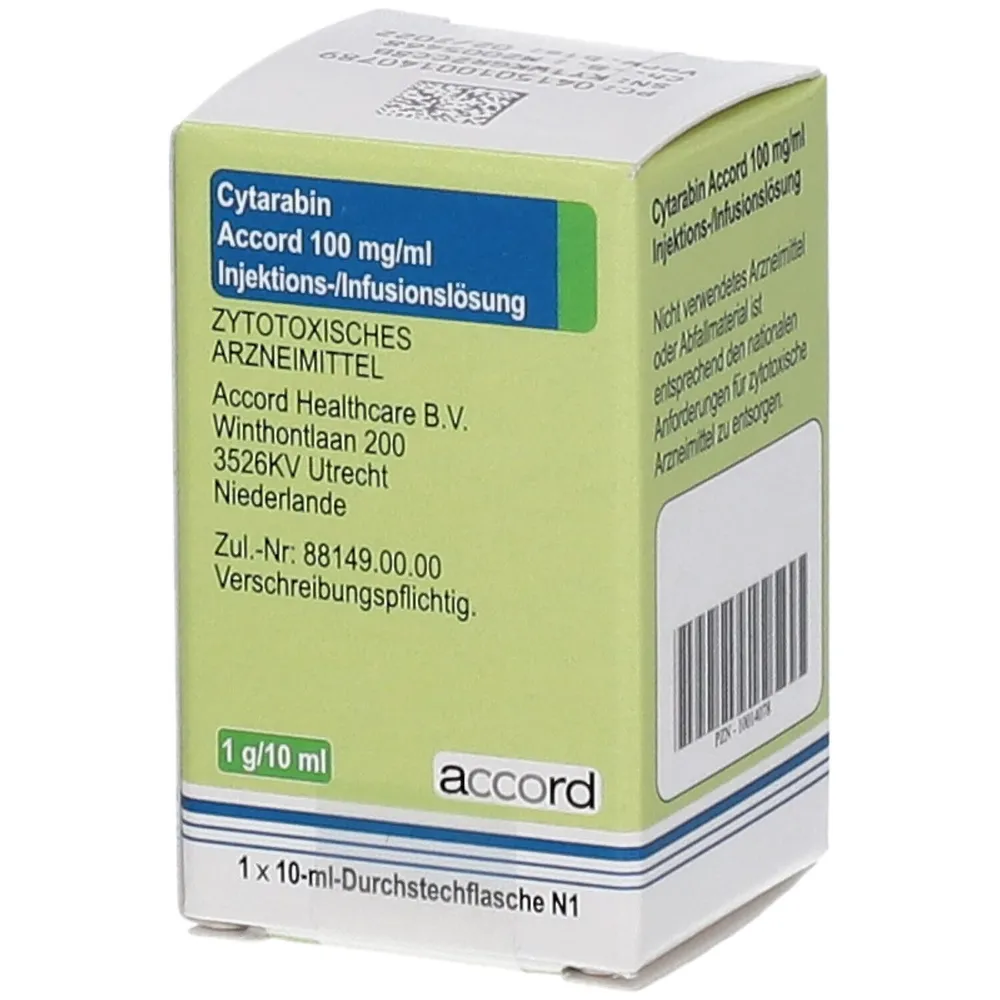
Table of Contents
- PACKAGE LEAFLET: INFORMATION FOR THE USER
- Cytarabine Accord 100 mg/ml solution for injection or infusion
- 1. What Cytarabine Injectable is and what it is used for
- 2. What you need to know before receiving Cytarabine Injectable
- 3. How Cytarabine Injectable is administered
- 4. Possible side effects
- 5. How to store Injectable Cytarabine
- 6. Package Contents and Other Information
- 1. Induction of remission:
- 2. Maintenance therapy:
PACKAGE LEAFLET: INFORMATION FOR THE USER
Cytarabine Accord 100 mg/ml solution for injection or infusion
Generic medicine
The name of your medicine is ‘Cytarabine Accord 100 mg/ml solution for injection or infusion’, but throughout
this leaflet it will be referred to as "Injectable Cytarabine".
Please read all of this leaflet carefully before receiving this medicine because it contains important
information for you.
- Keep this leaflet. You may need to read it again.
- If you have any questions, ask your doctor, pharmacist, or nurse.
- This medicine has been prescribed for you only. Do not give it to other people, even if they have the same symptoms as you, because it may be harmful to them.
- If you experience any side effect, including those not listed in this leaflet, tell your doctor, pharmacist, or nurse. See section 4.
Contents of this leaflet:
- What Injectable Cytarabine is and what it is used for
- What you need to know before receiving Injectable Cytarabine
- How Injectable Cytarabine is administered
- Possible side effects
- How to store Injectable Cytarabine
- Contents of the pack and other information
1. What Cytarabine Injectable is and what it is used for
- Cytarabine Injectable is used in adults and children. The active substance is cytarabine.
- Cytarabine belongs to a group of medicines known as cytotoxic agents; these medicines are used in the treatment of acute leukaemias (blood cancer, in which an excessive number of white blood cells is present in the blood). Cytarabine interferes with the growth of cancer cells, which are eventually destroyed.
- Induction of remission is an intensive treatment aimed at inducing remission of leukaemia. When effective, the balance of blood cells becomes more normal, leading to an improvement in your health. This period of relatively healthy condition is known as 'remission'.
- Maintenance therapy is a milder treatment intended to prolong remission for as long as possible. Relatively low doses of cytarabine are used to keep leukaemia under control and prevent relapse.
2. What you need to know before receiving Cytarabine Injectable
Do not receive Cytarabine Injectable if
- You are allergic to cytarabine or to any of the ingredients of this medicine (listed in section 6).
- If your blood cell count is very low due to causes other than cancer or as decided by your doctor.
- If you experience increasing difficulty with body coordination after radiation therapy or after treatment with other anticancer medicines such as methotrexate.
Inform your doctor if you think any of the conditions listed above apply to you before taking this medicine.
Warnings and precautions
Talk to your doctor, pharmacist, or nurse before receiving Cytarabine Injectable.
Pay special attention to the administration of Cytarabine Injectable if:
- Your blood cell count (blood cell count) is low (your doctor will monitor this through blood tests).
- You have liver problems, including jaundice (which causes yellowing of the skin).
- Your bone marrow is still recovering from the effects of other medicines (your doctor will check this through blood tests and will consider treatment with cytarabine only if absolutely necessary).
- Cytarabine markedly reduces the production of blood cells in the bone marrow. This reduction may increase your risk of infections or bleeding. Your blood cell count may continue to decrease for up to one week after stopping treatment. Your doctor will perform regular blood tests and examine your bone marrow if necessary.
- Serious and sometimes potentially life-threatening side effects may occur affecting the central nervous system, intestines, lungs, or heart, especially when high doses of cytarabine are used.
- Your liver and kidney function should be monitored during treatment with cytarabine. If your liver function is impaired before treatment, cytarabine will be administered only with extreme caution.
- Levels of uric acid (indicating destruction of cancer cells) in the blood (hyperuricemia) may be elevated during treatment. Your doctor will advise you whether you need to take any medication to manage this effect.
- Administration of live or attenuated vaccines is not recommended during treatment with cytarabine. Consult your doctor if vaccination is required. The use of killed or inactivated vaccines may not produce the desired effect due to suppression of the immune system while undergoing treatment with cytarabine. If you have recently received radiotherapy or other antitumor medicines, or if you are scheduled to receive radiotherapy (side effects of radiotherapy may be worsened by treatment with cytarabine).
Other medicines and Cytarabine Injectable Inform your doctor or pharmacist if you are taking, have recently taken, or might take any other medicines. Particular caution is required when taking/using other medicines, as some may interact with cytarabine. The effectiveness of the following medicines may be reduced or increased by cytarabine: - 5-fluorocytosine (a medicine used to treat fungal infections).
- digitoxin or beta-acetyl digoxin tablets (used to treat certain heart conditions).
- gentamicin (an antibiotic used to treat bacterial infections).
- methotrexate (a drug used to treat a variety of cancers and certain inflammatory conditions).
- Medicines containing cyclophosphamide, vincristine, and prednisone used in cancer treatment regimens.
- idarubicin and daunorubicin (chemotherapeutic agents).
Pregnancy, breastfeeding, and fertility
Pregnancy
If you are pregnant, think you might be pregnant, or are planning a pregnancy, consult your doctor or pharmacist before taking this medicine.
Cytarabine may cause birth defects, so it is important to inform your doctor if you think you may be pregnant.
Avoid becoming pregnant while you or your partner are receiving treatment with cytarabine. If you are sexually active, regardless of gender, you are advised to use an effective method of contraception to prevent pregnancy during treatment.
Contraception in men and women
If you are a woman of childbearing age, you must use an effective method of contraception to avoid pregnancy during treatment with this medicine and for at least 6 months after treatment.
If you are a man, you must take adequate precautions to ensure your partner does not become pregnant during treatment and for at least 3 months after the last dose.
Breastfeeding
It is not known whether cytarabine or its metabolites are excreted in human milk. You must stop breastfeeding before starting treatment with cytarabine because this medicine may be harmful to breastfed infants.
Ask your doctor or pharmacist for advice before taking any medicine.
Fertility
Cytarabine may cause interruption of the menstrual cycle in women, leading to amenorrhea, and may suppress sperm production in male patients. Men undergoing treatment with cytarabine should use a reliable method of contraception.
Driving and using machines
Cytarabine does not affect the ability to drive or operate machinery. However, cancer treatment in general may affect the ability to drive or operate machinery in some patients.
If you feel unwell, you should not drive or operate machinery.
3. How Cytarabine Injectable is administered
Method and routes of administration
Cytarabine will be administered via infusion into a vein (through an intravenous drip) or by injection into a vein or subcutaneous injection, under the supervision of specialists in the hospital. Your doctor will decide the dose to administer and the number of days of treatment you will receive, depending on your condition.
The recommended dose is
Depending on your condition, your doctor will determine the dose of cytarabine, whether you will receive induction or maintenance therapy, and your body surface area. Your body weight and height will be used to calculate your body surface area.
During treatment, you will need to undergo regular monitoring, including blood tests. Your doctor will inform you how frequently these checks will be performed. Regular checks will include:
- Blood tests, to monitor for low blood cell counts which may require treatment.
- Liver function, also assessed through blood tests, to ensure that cytarabine is not adversely affecting liver function.
- Kidney function, also assessed through blood tests, to ensure that cytarabine is not adversely affecting kidney function.
- Blood levels of uric acid. Cytarabine may increase uric acid levels in the blood. Another medicine may be administered if uric acid levels become too high.
- If you are on dialysis, your doctor may adjust the timing of drug administration, as dialysis may reduce the effectiveness of the medicine.
If you receive more Cytarabine Injectable than you should
This medicine will be administered in a hospital setting under the supervision of a doctor. It is unlikely that you will receive too high or too low a dose. However, if you have any concerns, inform your doctor or nurse immediately.
High doses may worsen side effects, such as mouth ulcers, or may reduce the number of white blood cells and platelets (which help blood clotting) in the blood. In such cases, you may likely require antibiotics or blood transfusions. Mouth ulcers can be treated to make them less uncomfortable while they heal.
If you have any doubts about the use of this medicine, consult your doctor or pharmacist.
4. Possible side effects
Like all medicines, this medicine can cause side effects, although not everyone gets them.
Side effects of cytarabine are dose-dependent. The gastrointestinal system is most commonly affected, but the blood is also affected.
Tell your doctor or nursing staff immediately , if you experience any of the following symptoms after taking this medicine:
- An allergic reaction, such as sudden shortness of breath, difficulty breathing, swelling of the eyelids, face or lips, skin rash or itching (particularly affecting the whole body).
- Severe allergic reaction (anaphylaxis): skin rash including itchy red skin, swelling of hands, feet, ankles, face, lips or throat (which may cause difficulty swallowing or breathing), bronchospasm and feeling faint (a spontaneous loss of consciousness caused by insufficient blood supply to the brain). This can be fatal ( uncommon ).
- Clinical signs of pulmonary edema/ARDS may develop, particularly during high-dose therapy: acute, distressing shortness of breath and fluid in the lungs (pulmonary edema) have been observed, especially at high doses ( common ).
- You feel tired and drowsy.
- You have flu-like symptoms, e.g. raised temperature or fever or chills.
- Severe chest pain.
- Severe abdominal pain.
- Loss of vision, loss of sense of touch, mental disturbance or loss of ability to move normally (this medicine may cause side effects affecting the brain and eyes, which are usually reversible but can be very serious).
- You bruise more easily or bleed more than normal when injured. These are symptoms of low blood cell counts. Inform your doctor or nursing staff immediately if you experience these symptoms.
These are serious side effects. You may need urgent medical attention.
Common (affects 1 to 10 users in 100):
- Fever
- Low numbers of white and red blood cells or platelets in the blood, which may increase your risk of infections or bleeding
- a drop in white blood cells may be accompanied by chills and fever requiring immediate medical evaluation;
- a drop in platelets may be accompanied by bleeding requiring immediate medical evaluation
- Abnormal blood cells (megaloblastosis)
- Loss of appetite
- Difficulty swallowing
- Stomach ache (abdominal pain)
- Nausea (feeling sick)
- Vomiting
- Diarrhea
- Inflammation or ulceration of the mouth or anus
- Reversible skin effects such as redness (erythema), blistering, rash, hives, inflammation of blood vessels (vasculitis), hair loss
- Reversible effects on the liver, such as increased enzyme levels
- Reversible effects on the eyes, such as sore eyes with bleeding (haemorrhagic conjunctivitis), changes in vision, sensitivity to light (photophobia), watery or burning eyes, and inflammation of the cornea (keratitis)
- Reduced level of consciousness (at high doses)
- Difficulty speaking (at high doses)
- Abnormal eye movements (nystagmus at high doses)
- Inflammation of the vein at the injection site
- Abnormally high levels of uric acid in the blood (hyperuricemia)
Uncommon (affects 1 to 10 users in 1,000):
- Sore throat
- Headache
- Severe allergic reactions (anaphylaxis), causing, for example, difficulty breathing or dizziness
- Blood poisoning (sepsis)
- Inflammation and ulcers of the oesophagus
- Severe intestinal inflammation (necrotizing colitis)
- Intestinal cysts
- Skin ulceration
- Itching
- Inflammation at the injection site
- Brown/black spots on the skin (lentigo)
- Yellowing of the skin and whites of the eyes (jaundice)
- Lung infection (pneumonia)
- Breathing difficulties
- Paralysis of the legs and lower body may occur when cytarabine is administered into the space surrounding the spinal cord
- Muscle and joint pain
- Inflammation of the lining surrounding the heart (pericarditis)
- Impaired kidney function
- Inability to urinate (urinary retention)
- Chest pain
Very rare (affects less than 1 user in 10,000):
- Inflammation of the salivary glands
- Irregular heartbeat (arrhythmias)
Not known (frequency cannot be estimated from the available data):
- Damage to nerve tissue (neurotoxicity) and inflammation of one or more nerves (neuritis)
- Inflammation of the pancreas (pancreatitis)
- Sore eyes (conjunctivitis)
- Burning pain in the palms of the hands and soles of the feet
- Slower than normal heartbeat or pulse
Other side effects:
The cytarabine syndrome may occur 6–12 hours after starting treatment. Symptoms include:
- Fever
- Bone and muscle pain
- Occasional chest pain
- Skin rash
- Sore eyes (conjunctivitis)
- Nausea (feeling sick)
Your doctor may prescribe corticosteroids (anti-inflammatory medicines) to prevent or treat these symptoms. If they are effective, cytarabine treatment may continue.
Reactions observed with high-dose therapy
Central nervous system:
The following symptoms, which are generally reversible, may develop in up to one-third of patients after high-dose cytarabine treatment:
- Personality changes
- Altered mental clarity
- Difficulty speaking
- Coordination problems
- Tremor
- Abnormal eye movements (nystagmus)
- Headache
- Peripheral motor and sensory neuropathies (damage to nerves of the peripheral nervous system)
- Confusion
- Drowsiness
- Dizziness
- Coma
- Seizures
These side effects may occur more frequently:
- in elderly patients (>55 years of age)
- in patients with impaired liver or kidney function
- after previous treatment for brain or spinal cord cancer, such as radiotherapy or cytostatic injections
- with alcohol abuse
The risk of nervous system damage increases if cytarabine treatment:
- is administered at high doses or at short intervals
- is combined with other treatments that are neurotoxic (such as radiotherapy or methotrexate)
Gastrointestinal system:
Particularly during high-dose cytarabine treatment, more severe reactions may occur in addition to common symptoms. Perforation, tissue death (necrosis), intestinal obstruction and inflammation of the inner lining of the abdomen have been reported. Liver abscesses, liver enlargement, blockage of liver veins and pancreatitis have been observed after high-dose therapy.
Gastrointestinal side effects are less frequent when cytarabine is administered by infusion.
Lungs:
Acute, distressing breathing difficulties and fluid in the lungs (pulmonary edema) have been observed, particularly at high doses.
Other:
- Heart muscle disease (cardiomyopathy)
- Abnormal breakdown of muscle cells (rhabdomyolysis)
- Blood infection (sepsis)
- Corneal toxicity
- Viral, bacterial infections, etc.
- Loss of sperm and menstrual cycle
If you experience any side effect, including those not listed in this leaflet, talk to your doctor or pharmacist.
Reporting of side effects
If you experience any side effect, including those not listed in this leaflet, talk to your doctor, pharmacist or nurse. You can also report side effects directly via the national reporting system at the website: https://www.aifa.gov.it/content/segnalazioni-reazioni-avverse.
By reporting side effects, you can help provide more information on the safety of this medicine.
5. How to store Injectable Cytarabine
Keep out of the sight and reach of children.
Do not store above 25°C.
Do not refrigerate or freeze.
Do not use Injectable Cytarabine after the expiry date stated on the vial or carton (mm/yy).
The expiry date refers to the last day of that month.
In-use stability:
Chemical and physical in-use stability has been demonstrated in sodium chloride injectable solution (0.9%
p/v) and in dextrose injectable solution (5% p/v) for up to 24 hours at temperatures below 25°C and up to 72 hours at temperatures from 2 to 8°C.
From a microbiological standpoint, the product should be used immediately. If not used immediately, the in-use storage times and conditions prior to use are the responsibility of the user and normally should not exceed 24 hours at 2–8°C, unless the dilution has been carried out under controlled and validated aseptic conditions.
Do not use Injectable Cytarabine if you notice that the solution is not clear, colourless and free from particles.
Do not dispose of any medicine via wastewater or household waste. Ask your pharmacist how to dispose of medicines you no longer use. This will help protect the environment.
6. Package Contents and Other Information
What Cytarabine Injectable contains:
Cytarabine Injectable contains the active substance cytarabine.
1 ml contains 100 mg of cytarabine.
Each 1 ml vial contains 100 mg of cytarabine.
Each 5 ml vial contains 500 mg of cytarabine.
Each 10 ml vial contains 1 g of cytarabine.
Each 20 ml vial contains 2 g of cytarabine.
Each 40 ml vial contains 4 g of cytarabine.
Each 50 ml vial contains 5 g of cytarabine.
The excipients are macrogol 400, tromethamine, and water for injections.
Description of the appearance of Cytarabine Injectable and contents of the pack:
Cytarabine Injectable is a clear, colourless solution for injection or infusion.
1 ml
The injectable solution is contained in a 2 ml transparent Type I glass vial closed with a grey 13 mm rubber stopper and a transparent blue or blue-turquoise 13 mm aluminium flip-off seal.
5 ml
The injectable solution is contained in a 5 ml transparent tubular Type I glass vial closed with a grey 20 mm rubber stopper and a transparent blue or blue-turquoise 20 mm aluminium flip-off seal.
10 ml
The injectable solution is contained in a 10 ml transparent tubular Type I glass vial closed with a grey 20 mm rubber stopper and a transparent blue or blue-turquoise 20 mm aluminium flip-off seal.
20 ml
The injectable solution is contained in a 20 ml transparent Type I glass vial closed with a grey 20 mm rubber stopper and a blue-turquoise 20 mm aluminium flip-off seal.
40 ml
The injectable solution is contained in a 50 ml transparent Type I glass vial closed with a grey 20 mm rubber stopper and a blue-turquoise 20 mm aluminium flip-off seal.
50 ml
The injectable solution is contained in a 50 ml transparent Type I glass vial closed with a grey 20 mm rubber stopper and a purple 20 mm aluminium flip-off seal.
Pack sizes:
1 vial of 1 ml, 5 vials of 1 ml
1 vial of 5 ml, 5 vials of 5 ml
1 vial of 10 ml
1 vial of 20 ml
1 vial of 40 ml
1 vial of 50 ml
Not all pack sizes may be marketed.
Marketing Authorisation Holder and Manufacturer
Marketing Authorisation Holder
Accord Healthcare S.L.U.
World Trade Center,
Moll de Barcelona,
s/n, Edifici Est 6ª planta,
08039 Barcelona,
Spain
Manufacturer
Accord Healthcare Polska Sp.z o.o.,
ul. Lutomierska 50,
95-200 Pabianice,
Poland
This medicinal product is authorised in the Member States of the European Economic Area under the following names:
| Member State | Name of the medicinal product | |------------------------|-----------------------------------| | United Kingdom | Cytarabine 100 mg/ml Solution for Injection or Infusion | | Bulgaria | ЦитарабинАкорд 100 mg/ml инжекционенилиинфузионенразтвор | | Estonia | Cytarabine Accord 100 mg/ml süste- või infusioonilahus | | Lithuania | Cytarabine Accord 100 mg/ml injekcinis/ infuzinis tirpalas | | Latvia | Cytarabine Accord 100 mg/ml šķīdums injekcijām vai infūzijām | | Austria | Cytarabin Accord 100 mg/ml Injektions-/Infusionslösung | | Belgium | Cytarabine Accord Healthcare 100 mg/ml Oplossing voor injectie of infusie | | Cyprus | Cytarabine Accord 100 mg/ml Solution for Injection or Infusion | | Czech Republic | Cytarabine Accord 100 mg/ml injekční nebo infuzní roztok | | Germany | Cytarabine Accord 100 mg/ml Lösung zur Injektion oder Infusion | | Denmark | Cytarabine Accord 100 mg/ml | | France | Cytarabine Accord 100 mg/ml solution injectable/pour perfusion | | Hungary | CYTARABINE Accord 100 mg/ml oldatos injekció vagy infúzió | | Ireland | Cytarabine 100 mg/ml Solution for Injection or Infusion | | Italy | Citarabina Accord | | Netherlands | Cytarabine Accord 100 mg/ml, oplossing voor injectie of infusie | | Norway | Cytarabine Accord | | Portugal | Citarabina Accord | | Slovakia | Cytarabine Accord 100 mg/ml Solution for Injection or Infusion | | Sweden | Cytarabine Accord 100 mg/ml Lösning för injektion eller infusion |
The following information is intended exclusively for physicians or healthcare professionals:
Dosage and method of administration
By infusion or intravenous injection, or subcutaneous injection.
Cytarabine 100 mg/ml must not be administered by intrathecal route.
Dosage recommendations expressed in terms of body weight (mg/kg) may be converted to those based on body surface area (mg/m²) using nomograms.
1. Induction of remission:
a) Continuous treatment:
i) Rapid injection – 2 mg/kg/day is a reasonable initial dose. Administer for 10 days. Perform daily blood counts. If no antileukemic effect is observed and no toxicity is evident, increase the dose to 4 mg/kg/day and maintain it until therapeutic response or toxicity becomes evident. Almost all patients can be brought to toxicity with these doses.
ii) 0.5–1.0 mg/kg/day may be administered as an infusion lasting up to 24 hours. One-hour infusions have yielded satisfactory results in most patients. After 10 days, this initial daily dose may be increased to 2 mg/kg/day depending on toxicity. Continue until toxicity or remission occurs.
b) Intermittent treatment:
i) 3–5 mg/kg/day are administered intravenously on each of five consecutive days. After a rest period of 2–9 days, an additional cycle is given. Continue until response or toxicity occurs.
The first evidence of bone marrow improvement has been reported to occur 7–64 days (mean of 28 days) after initiation of therapy.
In general, if a patient shows neither toxicity nor remission after an adequate trial period, cautious administration of higher doses is justified. Normally, patients have been able to tolerate higher doses when administered via rapid intravenous injection rather than by slow infusion. This difference is due to the rapid metabolism of cytarabine and the resulting short duration of action of the high dose.
ii) Cytarabine 100–200 mg/m²/24 hours has been used as a continuous infusion for 5–7 days, either alone or in combination with other cytostatic agents, including, for example, an anthracycline. Additional cycles may be administered at intervals of 2–4 weeks, until remission or intolerable toxicity is achieved.
2. Maintenance therapy:
i) Remissions induced by cytarabine or other drugs may be maintained by intravenous or subcutaneous injection of 1 mg/kg once or twice weekly.
ii) Cytarabine has also been administered at doses of 100–200 mg/m² as continuous infusion for 5 days at monthly intervals, either as monotherapy or in combination with other cytostatic agents.
At high doses, cytarabine is administered at 2–3 g/m² under strict medical supervision, either as monotherapy or in combination with other cytostatic agents, by intravenous infusion over 1–3 hours every 12 hours for 2–6 days (total of 12 doses per cycle). A total treatment dose exceeding 36 g/m² must not be exceeded.
Paediatric patients:
Safety has not been established in infants.
Patients with hepatic and renal impairment:
Patients with impaired liver or kidney function: dosage must be reduced.
Elderly patients:
No data are available to suggest that dosage adjustment is warranted in elderly patients. Nevertheless, as with younger patients, elderly patients do not tolerate drug toxicity well. High-dose therapy in patients over 60 years of age should be administered only after careful risk-benefit assessment.
Incompatibilities
Incompatible with: sodium carbenicillin, sodium cephalothin, gentamicin sulfate, sodium heparin, hydrocortisone sodium succinate, regular insulin, methotrexate, 5-fluorouracil, sodium nafcillin, sodium oxacillin, sodium penicillin G (benzylpenicillin), methylprednisolone sodium succinate and prednisolone succinate.
Instructions for use/handling
For single use only.
If the solution appears discoloured or contains visible particles, it must be discarded.
Once opened, the contents of each vial must be used immediately. Unused product should be discarded.
Commonly used infusion fluids for cytarabine (see section 6.3) are water for injections, 0.9% w/v sodium chloride solution or 5% w/v dextrose solution. Injectable cytarabine must not be mixed with other medicinal products except those mentioned in section 6.6.
Guidelines for handling cytotoxic agents
Administration:
Must be administered by, or under the direct supervision of, a qualified physician experienced in the use of chemotherapeutic agents for cancer.
Preparation:
- Chemotherapeutic agents should be prepared for administration only by trained personnel instructed in the safe handling of these preparations.
- Procedures such as dilution and transfer into syringes must be carried out only in an appropriate designated area.
- Personnel performing these procedures must be adequately protected with gown, gloves, and eye protection.
- Pregnant personnel are advised not to handle chemotherapeutic agents.
Disposal and contamination:
Unused medicine and waste materials derived from this medicine must be disposed of in accordance with local regulations.
For destruction, place in a bag/container for disposal of high-risk waste (for cytotoxic agents) and incinerate at 1100°C.
In case of spillage, restrict access to the affected area and wear appropriate protective equipment, including gloves and safety goggles. Contain the spill and clean the area with absorbent paper/material. Spills may also be treated with 5% sodium hypochlorite. The spill area must be rinsed thoroughly with large amounts of water. Place contaminated materials in a sealed bag/container for disposal of cytotoxic waste and incinerate at 1100°C.
Shelf life
2 years
In-use stability:
Chemical and physical in-use stability has been demonstrated in injectable solutions of sodium chloride (0.9% w/v) and dextrose (5% w/v) for 24 hours at temperatures below 25°C and up to 72 hours at temperatures from 2 to 8°C. From a microbiological standpoint, the product should be used immediately. If not used immediately, in-use storage times and conditions prior to use are the responsibility of the user and normally should not exceed 24 hours at 2–8°C, unless dilution has taken place under controlled and validated aseptic conditions.
Storage
Do not store above 25°C.
Do not refrigerate or freeze.