Cusimolol
Italy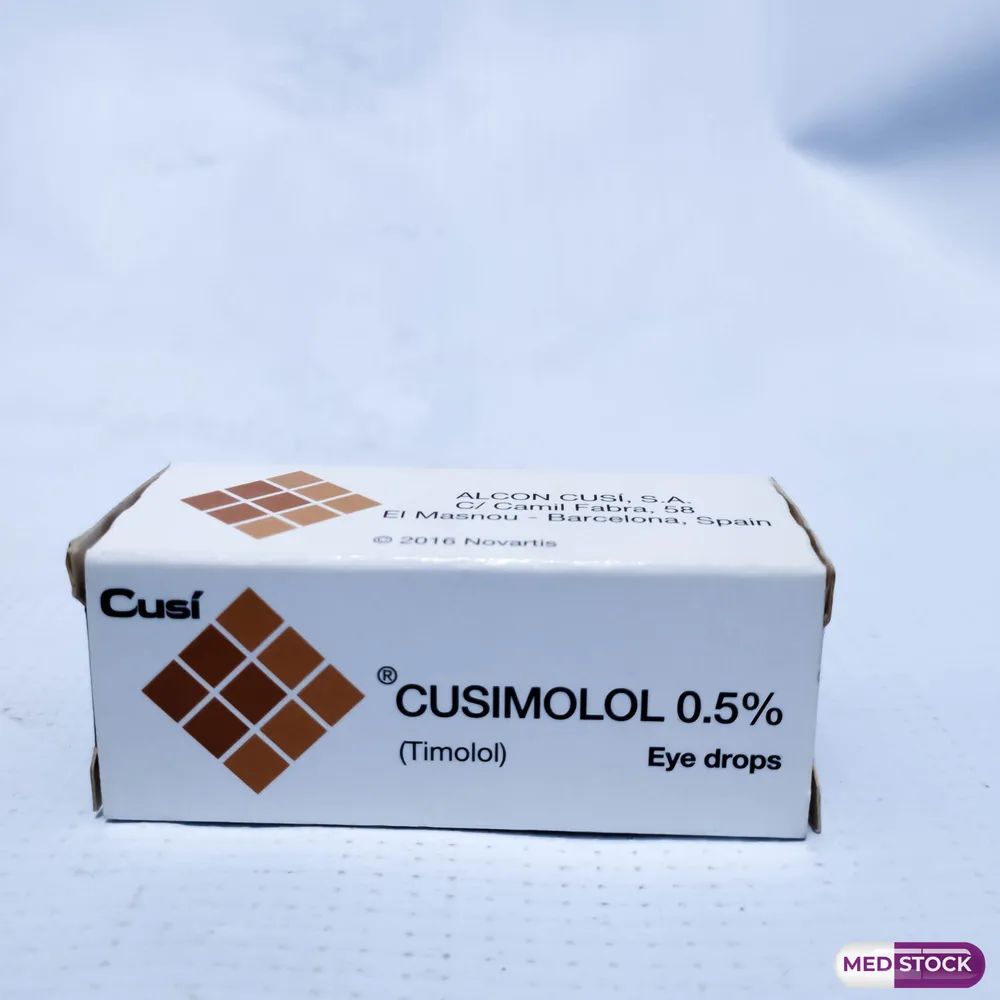
Table of Contents
Package leaflet: Information for the patient
CUSIMOLOL 5 mg/ml eye drops, solution
timolol
Read this entire leaflet carefully before using this medicine because it contains important information for you
- Keep this leaflet. You may need to read it again.
- If you have any questions, ask your doctor or pharmacist.
- This medicine has been prescribed for you only. Do not give it to other people, even if their symptoms are the same as yours, as it could be harmful.
- If you experience any side effect, including those not listed in this leaflet, contact your doctor or pharmacist. See section 4.
Contents of this leaflet
- What CUSIMOLOL is and what it is used for
- What you need to know before using CUSIMOLOL
- How to use CUSIMOLOL
- Possible side effects
- How to store CUSIMOLOL
- Contents of the pack and other information
1. What CUSIMOLOL is and what it is used for
CUSIMOLOL contains the active substance timolol maleate, which belongs to a group of medicines called beta-blockers, used to reduce the pressure inside the eye, with or without an eye disease known as glaucoma.
CUSIMOLOL is used in adults to treat:
- high pressure inside the eye (ocular hypertension), a condition that causes damage to the optic nerve due to excessive pressure within the eye;
- open-angle glaucoma and secondary glaucoma, including in patients without a lens (the natural lens inside the eye).
2. What you should know before using CUSIMOLOL
Do NOT use CUSIMOLOL
- If you are allergic to timolol maleate, beta-blockers, or any of the other ingredients of this medicine (listed in section 6).
- If you have or have previously had respiratory problems such as asthma, severe chronic obstructive bronchitis (a serious lung condition that may cause wheezing, difficulty breathing, and/or long-lasting cough).
- If you have a slow heartbeat (sinus bradycardia) or heart rhythm disorders (sino-atrial block, second- or third-degree atrioventricular block not controlled by a pacemaker).
- If you suffer from overt heart failure or cardiogenic shock.
Warnings and precautions
Talk to your doctor before using CUSIMOLOL.
Be especially careful with CUSIMOLOL and, before using this medicine, inform your doctor if you
have or have previously had:
- Coronary heart disease (symptoms may include chest pain or tightness, difficulty breathing, or suffocation), heart failure, low blood pressure.
- Changes in heart rate such as slow heartbeat.
- Breathing problems, asthma, or chronic obstructive pulmonary disease (a lung disease that may cause wheezing, difficulty breathing, and/or long-lasting cough).
- Poor blood circulation disorders (such as Raynaud's disease or Raynaud's syndrome).
- Hypoglycemia or diabetes, as timolol maleate may mask signs and symptoms of low blood sugar.
- Overactive thyroid (hyperthyroidism), as timolol maleate may mask its signs and symptoms.
- A genetic predisposition to allergic reactions or a history of severe allergic reactions to various substances, since administration of timolol may increase the likelihood of having an allergic reaction upon repeated exposure to such substances. If you experience a severe allergic reaction (skin rash, eye redness and itching) while using CUSIMOLOL, regardless of the cause, administration of adrenaline may not be as effective as expected. Inform your doctor if you are taking any other treatments while using CUSIMOLOL.
- Muscle weakness (myasthenia gravis).
- First-degree heart block, due to the negative effect of beta-blockers on conduction time.
- Corneal disease, as ophthalmic beta-blockers may cause dry eyes.
Before undergoing surgery, inform your doctor that you are using CUSIMOLOL, as timolol maleate may
alter the effects of certain medicines used during anesthesia.
It may cause eye irritation. Avoid contact with soft contact lenses (also read section “CUSIMOLOL contains benzalkonium chloride”).
Inform your doctor if you have received therapy to reduce aqueous humor production following filtering surgery.
Children
No specific clinical studies have been conducted to establish safety and efficacy in children.
Other medicines and CUSIMOLOL
Inform your doctor or pharmacist if you are taking, have recently taken, or might take any other medicines.
CUSIMOLOL may interact with other medicines you are taking, including other eye drops for glaucoma treatment. Inform your doctor if you are taking or plan to take medicines to lower blood pressure, heart medications including quinidine (used to treat heart problems and certain types of malaria), antidepressants known as fluoxetine and paroxetine, or medicines for diabetes treatment.
The effect on intraocular pressure or the known systemic effects of beta-blockers may be enhanced when timolol maleate is administered concomitantly with another beta-blocking agent taken orally or by injection. Inform your doctor if you are taking another beta-blocking medicine.
Although timolol eye drops have minimal or no effect on pupil diameter, dilation of the pupil (mydriasis) has been rarely reported during concomitant therapy with epinephrine (adrenaline).
If you are also using another eye drop or ophthalmic ointment, wait at least 5 minutes between the use of each medicine. Ophthalmic ointment should be administered last.
Pregnancy and breastfeeding
Pregnancy
Do not use CUSIMOLOL during pregnancy unless your doctor considers it necessary.
Breastfeeding
If you are breastfeeding, consult your doctor before taking this medicine. Your doctor will decide whether you should take the medicine, as timolol is excreted in breast milk and may potentially cause serious adverse effects in breastfed infants.
Driving and using machines
As with any eye drop, temporary blurred vision and other visual disturbances may impair your ability to drive or use machinery. If blurred vision occurs after using CUSIMOLOL, wait until your vision clears before driving or operating machinery.
CUSIMOLOL contains benzalkonium chloride
This medicine contains 0.5 mg of benzalkonium chloride per 5 ml, equivalent to 0.1 mg/ml.
Benzalkonium chloride may be absorbed by soft contact lenses and may cause a change in their color. Remove contact lenses before using this medicine and wait 15 minutes before reinserting them.
Benzalkonium chloride may also cause eye irritation, especially if you have dry eye or corneal disorders (the eye's most superficial transparent layer). If you experience an unusual sensation, burning, or pain in the eye after using this medicine, speak with your doctor.
CUSIMOLOL contains phosphate buffer
This medicine contains 59 mg of phosphate buffer per 5 ml, equivalent to 11.8 mg/ml.
If you have severe damage to the eye's outermost transparent layer (the cornea), phosphates may very rarely cause cloudy corneal deposits due to calcium accumulation during treatment.
Doping Warning
For individuals engaged in sports: using this medicine without therapeutic need constitutes doping and may result in a positive anti-doping test.
3. How to use CUSIMOLOL
Use this medicine exactly as prescribed by your doctor. If you have any doubts, consult your
doctor or pharmacist.
The recommended dose is one drop twice daily, as directed by your doctor.
Use CUSIMOLOL only for instillation into the eye(s).
How to apply CUSIMOLOL
1 2 3
- Wash your hands.
- Take the CUSIMOLOL bottle and unscrew the cap.
- If you are opening the bottle for the first time, remove the loose ring from the cap before using the
product.
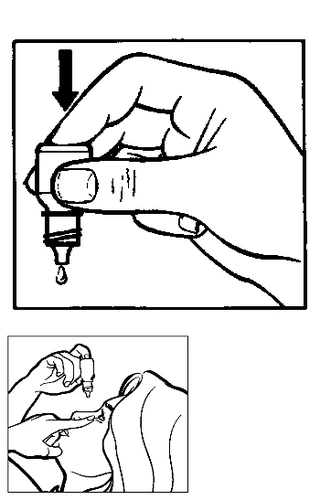
- Hold the bottle upside down between your thumb and middle finger.
- Tilt your head backward. Pull down the lower eyelid with a clean finger to create a pouch between the eyelid and the eye. The drop should be instilled into this pouch (figure 1).
- Bring the tip of the bottle close to the eye.
- Do not touch the eye, eyelid, surrounding areas, or any other surfaces with the dropper tip to avoid contaminating the remaining drops in the bottle.
- Gently press the base of the bottle to release one drop of CUSIMOLOL at a time.
- Do not squeeze the bottle: it is designed so that only gentle pressure on the bottom is needed (figure 2).
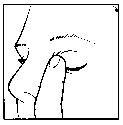
- After using CUSIMOLOL, press with a finger on the corner of the eye near the nose for 2 minutes as shown in figure 3. This helps prevent CUSIMOLOL from spreading into the rest of the body.
- If you are instilling drops into both eyes, repeat the same procedure for the other eye.
- Immediately replace the cap after use, screwing it on tightly.
If a drop does not enter the eye, try again.
If you use more CUSIMOLOL than you should
Rinse the eye immediately with lukewarm water. Do not use the eye drops again until the next scheduled
dose.
Possible symptoms of overdose include reduced heart rate, low blood pressure, heart failure, and breathing difficulties.
If you forget to use CUSIMOLOL
If you forget to use CUSIMOLOL, do not worry—use it as soon as you remember. However, if it is almost time for your next dose, skip the missed dose and return to your regular dosing schedule. Do not use a double dose to make up for a forgotten dose.
If you stop using CUSIMOLOL
Do not stop using CUSIMOLOL without first discussing it with your doctor.
If you have any doubts about how to use this medicine, consult your doctor or pharmacist.
4. Possible side effects
Like all medicines, CUSIMOLOL can cause side effects, although not everyone gets them.
You can generally continue using the eye drops unless the side effects are severe. If you are concerned, consult your doctor or pharmacist. Do not stop using CUSIMOLOL without first discussing it with your doctor.
The side effects listed below have been reported with timolol maleate eye drops.
Common side effects (may affect up to 1 in 10 people)
- Blurred vision, eye pain, eye irritation, red eyes.
Uncommon side effects (may affect up to 1 in 100 people)
- Damage to the front layer of the eyeball (corneal erosion), keratitis and corneal inflammation (punctate keratitis and keratitis), inflammation of the iris, inflammation of the conjunctiva (conjunctivitis), inflammation of the eyelid (blepharitis), corneal discoloration, reduced vision, sensitivity to light (photophobia), dry eye, eye discomfort, increased tearing, eye discharge, eye itching, eyelid margin crusts, abnormal eye sensitivity, sensation of a foreign body in the eye, inflammation of the front part of the eye, eyelid swelling, eye redness and inflammation (conjunctival hyperemia);
- Asthma, bronchitis, breathing difficulties;
- Headache;
- Taste disturbances;
- Slowed heart rate, reduced blood pressure;
- Fatigue.
Rare side effects (may affect up to 1 in 1,000 people)
- Inflammation of the eye (uveitis), corneal disorder, double vision, eye fatigue, eyelid eczema, red eyelid (eyelid erythema), eyelid disorder, eyelid itching, eye swelling (conjunctival edema), corneal pigmentation, eyelash growth;
- Depression, reduced blood flow to the brain (cerebral ischemia), dizziness, migraine, myocardial infarction, increased blood pressure, fluid accumulation in the extremities (peripheral edema), cold sensation in the extremities, lung disease that may cause wheezing, difficulty breathing and/or long-lasting cough (chronic obstructive pulmonary disease), bronchospasm, cough, wheezing, nasal congestion (stuffy nose), upper respiratory tract infection, digestive difficulties, abdominal discomfort, dry mouth, facial swelling, skin erythema, excessive sweating, weakness (asthenia), chest discomfort.
Additional side effects reported during post-marketing experience, for which the frequency is unknown
- Detachment of the layer beneath the retina containing blood vessels following filtering surgery, which may cause visual disturbances, drooping of the upper eyelids, the eye remaining half-closed (ptosis);
- Swelling under the skin that may occur in areas such as the face and limbs and may obstruct the airways, causing difficulty in swallowing or breathing (angioedema), allergy (hypersensitivity), low blood sugar levels, hallucinations, insomnia, nightmares, memory loss, stroke, fainting, unusual sensations such as pins and needles (paresthesia), cardiac arrest, heart rhythm disorders, heart disease with shortness of breath and swelling of feet and legs due to fluid accumulation (worsening of congestive heart failure), changes in heart rhythm or rate, palpitations, poor blood circulation disorder (Raynaud's phenomenon), cold hands and feet, vomiting, diarrhea, nausea, hives, hair loss, skin rash, psoriasis, joint disease (or joint damage), sexual dysfunction (such as impotence).
Like other medicines applied to the eyes, timolol maleate is absorbed into the bloodstream. This may cause side effects similar to those seen with intravenous and/or oral administration of beta-blockers. The incidence of side effects after ocular administration is lower than when medicines are taken orally or injected.
Additional side effects observed with the use of beta-blockers for the treatment of ocular disorders are listed below:
Reduced corneal sensitivity, a condition causing skin swelling and redness with fever and joint pain (systemic lupus erythematosus), localized and generalized skin rash, hives, itching, severe sudden allergic reactions that may be life-threatening, worsening of signs and symptoms of myasthenia gravis (a muscle disorder), chest pain, fluid accumulation (edema), heart disease with shortness of breath and swelling of feet and legs due to fluid accumulation (congestive heart failure), silvery-white skin rash (psoriasiform eruption) or worsening of psoriasis, muscle pain not caused by exercise, reduced sexual desire.
In very rare cases, some patients with severe damage to the transparent layer at the front of the eye (the cornea) have developed opaque areas on the cornea due to calcium deposits during treatment.
Reporting of side effects
If you experience any side effects, including those not listed in this leaflet, consult your doctor or pharmacist. You may also report side effects directly via the national reporting system at https://www.aifa.gov.it/content/segnalazioni-reazioni-avverse. By reporting side effects, you can help provide more information on the safety of this medicine.
5. How to store CUSIMOLOL
Keep this medicine out of the sight and reach of children.
Do not store above 25°C.
Do not use this medicine after the expiry date stated on the bottle and the outer carton after "Expiry". The expiry date refers to the last day of that month.
The expiry date applies to the product in its original, unopened packaging and stored correctly.
The shelf-life after first opening the bottle is 30 days.
Medicines should not be disposed of via wastewater or household waste. Ask your pharmacist how to dispose of medicines no longer required. This will help protect the environment.
6. Package contents and other information
What CUSIMOLOL contains
5 mg/ml eye drops, solution
- The active substance is timolol maleate. 1 ml of eye drops contains 6.8 mg of timolol maleate (equivalent to 5 mg/ml of timolol base).
- The other components are: disodium dihydrogen phosphate dihydrate, disodium phosphate dodecahydrate, benzalkonium chloride, purified water.
Description of the appearance of CUSIMOLOL and contents of the pack
CUSIMOLOL is a clear, colourless solution. Each pack contains one plastic dropper bottle of
5 ml of CUSIMOLOL 5 mg/ml eye drops, solution.
Marketing Authorization Holder
Immedica Pharma AB
SE-113 29 Stockholm
Sweden
Manufacturer
S.A. Alcon-Couvreur N.V.
Rijksweg 14 B-2870 Puurs
Belgium
Novartis Pharma GmbH
Roonstraße 25, D-90429 Nuremberg
Germany
Siegfried El Masnou, S.A.
Camil Fabra 58, El Masnou, 08320 Barcelona
Spain
Novartis Farmacéutica, S.A.
Gran Via de les Corts Catalanes 764, 08013 Barcelona
Spain