Curosurf
Italy
Table of Contents
- Package leaflet: Information for the patient and user
- CUROSURF 80 mg/ml
- 1. What CUROSURF is and what it is used for
- 2. What you need to know before using CUROSURF
- 3. How to use CUROSURF
- 4. Possible side effects
- 5. How to store CUROSURF
- 6. Package contents and other information
- THE FOLLOWING INFORMATION IS INTENDED EXCLUSIVELY FOR PHYSICIANS OR
- INSTRUCTIONS FOR THE USE OF CUROSURF
Package leaflet: Information for the patient and user
CUROSURF 80 mg/ml
SUSPENSION FOR ENDOTRACHEOBRONCHIAL INSTILLATION
Phospholipid fraction from porcine lung
Please read this leaflet carefully before using this medicine because it contains important information for you.
- Keep this leaflet. You may need to read it again.
- If you have any questions, consult your doctor.
- If you experience any side effects, including those not listed in this leaflet, consult your doctor. (See section 4)
Contents of this leaflet:
- What CUROSURF is and what it is used for
- What you need to know before using CUROSURF
- How to use CUROSURF
- Possible side effects
- How to store CUROSURF
- Contents of the pack and other information
1. What CUROSURF is and what it is used for
CUROSURF is a sterile suspension in single-dose vials for endotracheal or endobronchial administration, used in premature infants to treat or prevent Respiratory Distress Syndrome.
The lungs are lined with a substance called surfactant, which prevents them from collapsing and facilitates breathing. Some newborns, especially premature infants, do not have a sufficient amount of this substance, leading to Respiratory Distress Syndrome.
CUROSURF is a natural surfactant derived from porcine lungs, which acts in the same way as the surfactant naturally produced by newborns, and is used to improve breathing in premature infants until their own surfactant production becomes sufficient.
2. What you need to know before using CUROSURF
Do not use CUROSURF
if you are allergic to the active substance or to any of the other components of this medicinal product (listed in
section 6).
Warnings and precautions
CUROSURF must be used only in a hospital setting by medical personnel trained and experienced in intensive care of preterm neonates, with adequate equipment available for ventilation and monitoring of infants with Respiratory Distress Syndrome.
In almost all neonates with a gestational age of less than 27 weeks, the physician will administer CUROSURF
(within 15 minutes after birth) to prevent Respiratory Distress Syndrome (prophylaxis).
The physician may consider prophylactic administration in neonates with a gestational age greater than 26 weeks and less than or equal to 30 weeks in the following cases:
- if intubation is required in the delivery room;
- if the mother has not received corticosteroid prophylaxis.
The physician may administer CUROSURF to preterm infants in cases of oxygen deprivation occurring during the last weeks of gestation and/or immediately after birth (perinatal asphyxia), maternal diabetes, multiple pregnancies, male sex, family history of Respiratory Distress Syndrome, or caesarean section.
In all other preterm neonates, the physician will administer CUROSURF when the first signs of Respiratory Distress Syndrome appear.
Before administering CUROSURF, the physician will assess that the infant's general condition is stable, correcting, for example, blood acid pH (acidosis), low blood pressure (hypotension), reduced red blood cells (anemia), blood sugar levels (hypoglycemia), and low body temperature (hypothermia).
It can be expected that surfactant administration will reduce the severity of Respiratory Distress Syndrome, but it should not be expected to completely eliminate complications associated with premature birth (mortality and morbidity), as preterm infants may experience other complications related to their immaturity.
Preterm infants born after prolonged rupture of membranes (longer than three weeks) may not respond optimally to exogenous surfactant.
After administration of CUROSURF, a temporary decrease (transient depression) in electrical brain activity (electro-cerebral) has been reported, lasting between 2 and 10 minutes.
Administration of CUROSURF in preterm neonates with severe low blood pressure (hypotension) has not been studied.
Administration of CUROSURF in preterm neonates with renal or hepatic impairment has not been evaluated.
Children
This medicinal product is used exclusively in preterm neonates.
Other medicines and CUROSURF
No interactions between CUROSURF and other medicinal products are known.
Pregnancy, breastfeeding and fertility
This medicinal product is used exclusively in preterm neonates.
Driving and use of machines
This medicinal product is used exclusively in preterm neonates.
CUROSURF contains sodium chloride.
This medicinal product contains less than 1 mmol (23 mg) of sodium per dose, i.e. it is practically 'sodium-free'.
3. How to use CUROSURF
CUROSURF must only be used in a hospital setting by trained and experienced medical personnel skilled in the intensive care of preterm infants, with adequate equipment available for ventilation and monitoring of newborns with Respiratory Distress Syndrome.
CUROSURF is a medicinal product for endotracheal or endobronchial administration.
TREATMENT:
The recommended initial dose is 100–200 mg/kg (1.25–2.5 mL/kg) of body weight, administered as a single dose as soon as possible after diagnosis of Respiratory Distress Syndrome has been established.
Additional doses of 100 mg/kg each may be given at intervals of at least 12 hours apart in infants who still require assisted ventilation and supplemental oxygen. The maximum total dose is: 300–400 mg/kg.
PREVENTION (PROPHYLAXIS):
The recommended dose is 100–200 mg/kg (1.25–2.5 mL/kg) of body weight, administered as a single dose, preferably within 15 minutes of birth.
If Respiratory Distress Syndrome develops requiring mechanical ventilation, additional doses of 100 mg/kg may be administered 6–12 hours after the first dose, followed by further doses at 12-hour intervals. The maximum total dose is: 300–400 mg/kg.
For correct use of this medicinal product, refer to the section “Instructions for use of CUROSURF” at the end of this leaflet.
If you use more CUROSURF than you should
There have been no reports of overdose following administration of CUROSURF. In the event this should occur, and only if clear clinical effects on respiration, ventilation, or oxygenation of the newborn are observed, it is recommended to aspirate as much of the suspension as possible and to provide supportive treatment to the newborn, with particular attention to hydration and electrolyte balance.
4. Possible side effects
Like all medicines, this medicine can cause side effects, although not everybody gets them.
Treatment with CUROSURF may cause:
Uncommon side effects (may affect up to 1 in 100 people)
severe infection (sepsis); bleeding inside the skull (intracranial haemorrhage); presence of air in the pleura (pneumothorax).
Rare side effects (may affect up to 1 in 1,000 people)
low blood pressure (hypotension); slowed heart rate (bradycardia); chronic lung disease (bronchopulmonary dysplasia); lung haemorrhage; reduced oxygen in the blood (reduced oxygen saturation).
Side effects with unknown frequency (frequency cannot be estimated from the available data)
Breathing difficulties with breathing pauses (apnoea); oxygen toxicity (hyperoxia); bluish discoloration of the skin and mucous membranes (neonatal cyanosis); abnormal electroencephalogram; complications due to endotracheal intubation.
A few cases of patent ductus arteriosus have been reported in neonates treated with CUROSURF.
During administration of CUROSURF using a thin catheter, transient and moderate adverse events such as bradycardia, apnoea, reduced oxygen saturation, foaming at the mouth, coughing, choking, and sneezing have occurred.
Reporting of side effects
If you experience any side effect, including those not listed in this leaflet, please inform your doctor or nurse. You can also report side effects directly via the national reporting system at “www.agenziafarmaco.gov.it/it/responsabili”. By reporting side effects, you can help provide more information on the safety of this medicine.
5. How to store CUROSURF
Keep this medicine out of the sight and reach of children.
CUROSURF is available in ready-to-use vials that should be stored in their original packaging to protect from light. Store in a refrigerator (+2 to +8°C).
Unused and unopened CUROSURF vials that have been warmed to room temperature may be returned to the refrigerator within 24 hours for future use. Do not warm to room temperature and refrigerate more than once.
Do not use any residual solution left in the vial after the first withdrawal.
Do not use this medicine after the expiry date stated on the packaging. The expiry date refers to the last day of that month.
Do not dispose of medicines via wastewater or household waste. Ask your pharmacist how to dispose of medicines no longer required. This will help protect the environment.
6. Package contents and other information
What CUROSURF contains
The active substance is: phospholipid fraction from porcine lung.
A 1.5 ml and 3 ml vial contains: 120 mg and 240 mg of phospholipid fraction from porcine lung, respectively.
The other components are: sodium chloride, water for injections.
Description of the appearance of CUROSURF and contents of the pack
CUROSURF is a sterile suspension contained in single-dose vials made of neutral glass, with a volume of 5 ml, closed with a chlorobutyl rubber stopper and sealed with a plastic and aluminium cap.
This medicinal product is available in the following pack sizes:
- 1 vial containing 3 ml of suspension (80 mg/ml);
- 1 vial containing 1.5 ml of suspension (80 mg/ml);
- 2 vials containing 1.5 ml of suspension (80 mg/ml) each.
Marketing Authorisation Holder
Chiesi Farmaceutici S.p.A.
Via Palermo, 26/A
43122 Parma
Manufacturer
Chiesi Farmaceutici S.p.A.
Via San Leonardo, 96
43122 Parma
THE FOLLOWING INFORMATION IS INTENDED EXCLUSIVELY FOR PHYSICIANS OR
HEALTHCARE PROFESSIONALS
REFER TO THE SUMMARY OF PRODUCT CHARACTERISTICS FOR
ADDITIONAL INFORMATION
INSTRUCTIONS FOR THE USE OF CUROSURF
BEFORE using CUROSURF:
- Aspirate the endotracheal tube prior to instillation to reduce the risk of tube obstruction, as ventilator parameters becoming markedly altered during or immediately after instillation may indicate mucus obstruction of the endotracheal tube, especially if pulmonary secretions were abundant before drug administration. If endotracheal tube mucus obstruction is suspected and aspiration fails to remove it, the endotracheal tube must be immediately replaced.
Mode of administration
Bring the vial to room temperature, for example by holding it in the hand for a few minutes.
Gently invert it several times, WITHOUT SHAKING, until the suspension appears homogeneous.
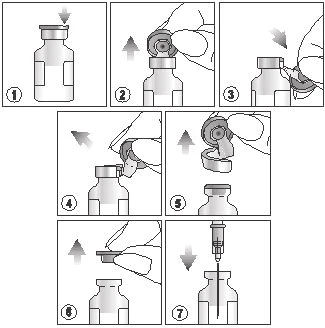
To withdraw the suspension, carefully follow the instructions below:
- Locate the notch (FLIP UP) on the colored plastic cap;
- Lift the notch and pull upward;
- Pull downward on the plastic cap along with the aluminum portion;
- and 5) Completely remove the ring by pulling off the aluminum seal;
- Remove the rubber stopper;
- Withdraw the contents using a sterile needle and syringe, and administer CUROSURF according to the most appropriate method among those described below.
CUROSURF can be administered using the following methods:
-
Disconnecting the newborn from the mechanical ventilator
Temporarily disconnect the newborn from the mechanical ventilator and administer 1.25–2.5 mL/kg (100–200 mg/kg) of suspension as a single bolus directly into the lower trachea via the endotracheal tube. Manually ventilate for approximately one minute, then reconnect the newborn to the mechanical ventilator using the same settings as before administration. Additional doses (1.25 mL/kg, equivalent to 100 mg/kg), if required, may be administered in the same manner; -
Without disconnecting the newborn from the mechanical ventilator
Administer 1.25–2.5 mL/kg (100–200 mg/kg) of suspension as a single bolus directly into the lower trachea by passing a catheter through the suction port of the endotracheal tube.
Additional doses (1.25 mL/kg, equivalent to 100 mg/kg), if needed, may be administered in the same way;
-
INSURE (Intubation-Surfactant-Extubation)
Intubate the newborn solely for the purpose of surfactant administration. Doses are the same as those indicated in methods 1) and 2). In this setting, the newborn is manually ventilated, and after surfactant administration and extubation, nasal CPAP (continuous positive airway pressure ventilation) may be applied. -
Less Invasive Surfactant Administration (LISA)
In preterm newborns with spontaneous breathing, CUROSURF may also be administered using a less invasive technique (LISA) with a thin catheter. The doses are the same as those described in methods 1), 2), and 3). While maintaining spontaneous breathing with CPAP and direct visualization of the vocal cords using a laryngoscope, a small-diameter catheter is inserted into the newborn’s trachea. CUROSURF is instilled as a single bolus over a period of 0.5 to 3 minutes. Immediately after CUROSURF instillation, the catheter is removed. CPAP support must be maintained throughout the entire procedure.
For surfactant administration, thin catheters bearing the CE mark for this intended use must be employed.
DURING therapy, regardless of the administration method, it is recommended:
- Frequent monitoring of blood gases, as an immediate increase in PaO₂ or oxygen saturation is generally observed after administration. To maintain adequate blood oxygen levels, monitor via periodic blood gas analysis, continuous transcutaneous PaO₂ monitoring, or oxygen saturation monitoring;
- Monitoring for signs of infection. Appropriate antibiotic therapy should be initiated immediately at the first signs of infection;
- Avoiding high PaO₂ peaks by adjusting ventilator settings immediately after instillation. The occurrence of intracranial hemorrhage after CUROSURF instillation has been associated with reduced mean arterial blood pressure and early peaks in arterial oxygenation (PaO₂).
AFTER administration of the medicinal product:
- Do not aspirate tracheal secretions for at least 6 hours, unless life-threatening conditions occur;
- It may be necessary to:
- Reduce peak inspiratory pressure (without waiting for confirmation from blood gas analysis, if lung compliance improves rapidly);
- Rapidly adjust the inspired oxygen concentration (if there is a rapid increase in arterial oxygen concentration, to avoid hyperoxia).
DISCONTINUE therapy with CUROSURF in case of:
- Bradycardia, hypotension, and reduced oxygen saturation; in such situations, initiate appropriate measures to normalize heart rate. After stabilization is achieved, the newborn may be further treated with appropriate monitoring of vital signs;
- Reflux; if necessary, increase peak inspiratory pressure until endotracheal tube obstruction is cleared.
To complete the picture of complications related to prematurity, the following disorders—directly related to the severity of the disease and to the use of mechanical ventilation required for reoxygenation—may occur: pneumothorax, pulmonary interstitial emphysema, and pulmonary hemorrhage.
Finally, prolonged exposure to high oxygen concentrations and mechanical ventilation are associated with the development of bronchopulmonary dysplasia and retinopathy of prematurity.