Curcix
Italy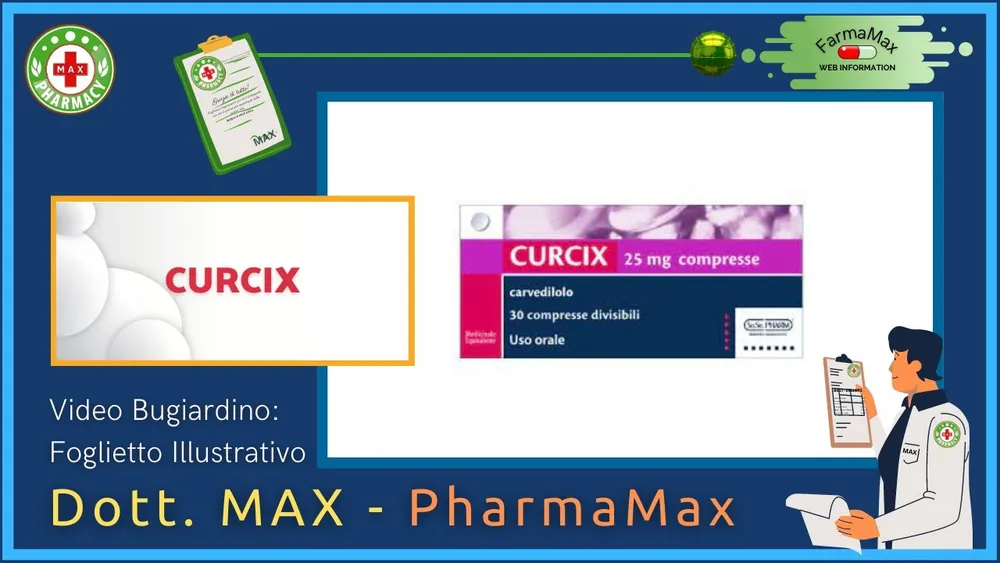
Table of Contents
Package leaflet: Information for the patient
CURCIX 6.25 mg tablets, 25 mg tablets
carvedilol
Equivalent medicine
Please read this leaflet carefully before taking this medicine because it contains important information for you.
- Keep this leaflet. You may need to read it again.
- If you have any questions, ask your doctor or pharmacist.
- This medicine has been prescribed for you only. Do not give it to other people, even if their symptoms are the same as yours, because it could be harmful.
- If you experience any side effects, including those not listed in this leaflet, talk to your doctor or pharmacist. See section 4.
Contents of this leaflet:
- What CURCIX is and what it is used for
- What you need to know before taking CURCIX
- How to take CURCIX
- Possible side effects
- How to store CURCIX
- Contents of the pack and other information
1. What CURCIX is and what it is used for
CURCIX contains the active substance carvedilol, which belongs to a group of medicines called alpha and beta-adrenergic receptor blockers.
Curcix is indicated for the treatment of high blood pressure and can be used alone or in combination with other medicines that promote diuresis (diuretics).
Curcix is also indicated for the treatment of angina pectoris and heart failure.
2. What you need to know before taking CURCIX
Do not take CURCIX
- If you are allergic to carvedilol or to any of the other ingredients of this medicine (listed in section 6).
- If you have unstable or decompensated heart failure.
- If you have severe heart failure (classified as NYHA class IV heart failure) requiring intravenous medication.
- If you have severe liver disease or impaired liver function.
- If you have conduction disorders of the heart (so-called second- or third-degree atrioventricular block or sick sinus syndrome, including sinoatrial block).
- If you have a very slow pulse (bradycardia) or very low blood pressure (severe hypotension).
- If you have severe impairment of heart function (cardiogenic shock).
- If you have asthma or other chronic lung diseases (e.g. bronchospasm, even if previous, chronic obstructive pulmonary disease (COPD) with bronchospastic component).
- If you are pregnant or breastfeeding (see section 6).
- If you have untreated overactivity of the adrenal glands (pheochromocytoma).
- If you have a condition called metabolic acidosis.
Warnings and precautions
Talk to your doctor or pharmacist before taking CURCIX:
- If you have heart failure: at the beginning of treatment, your condition may worsen and fluid retention may increase; your doctor may decide to reduce the dose of CURCIX or temporarily discontinue treatment.
- If you have heart failure accompanied by:
- Low blood pressure
- Reduced blood and oxygen supply to the heart (ischaemic heart disease) and vascular diseases
- Kidney problems
You may experience worsening of kidney and vascular problems: your doctor will closely monitor your kidney function and may decide to reduce the dose of CURCIX.
- If you are taking medicines that stimulate the heart, known as digitalis glycosides.
- If you have recently had an acute heart attack.
- If you have respiratory problems: your doctor will monitor you closely, especially at the beginning of treatment, and may decide to reduce the dose of CURCIX.
- If you have diabetes: CURCIX may mask the symptoms of low blood sugar levels; your doctor will assess whether you really need to take CURCIX and will closely monitor your blood sugar levels.
- If you have Raynaud's phenomenon (fingers and toes turning first bluish, then pale, then red, accompanied by pain) or peripheral vascular disorders: CURCIX may worsen your symptoms.
- If you have overactive thyroid (hyperthyroidism) with excessive production of thyroid hormone: CURCIX may mask the symptoms.
- If you are undergoing surgery requiring anaesthesia.
- If you have a very slow pulse (less than 55 beats per minute).
- If you have previously experienced severe allergic reactions or are undergoing desensitisation therapy: CURCIX may increase your sensitivity and the severity of allergic reactions.
- If you have psoriasis: your doctor will carefully evaluate whether you should take CURCIX.
- If you are being treated with other medicines to control blood pressure (verapamil, diltiazem or other antiarrhythmics).
- If you have a condition called pheochromocytoma (increased activity of the adrenal glands).
- If you have a disease called Prinzmetal's variant angina.
- If you wear contact lenses: CURCIX may reduce tear production.
- If you are lactose intolerant (see below “CURCIX contains lactose”).
- If you are sucrose intolerant (see below “CURCIX contains sucrose”).
Children
The safety and efficacy of carvedilol in children under 18 years of age are unknown.
Other medicines and CURCIX
Tell your doctor or pharmacist if you are taking, have recently taken or might take any other medicines.
In particular, inform your doctor if you are taking:
- Digoxin (used to treat heart failure): concomitant use of carvedilol and digoxin may increase digoxin blood levels.
- Insulin or oral hypoglycaemics (medicines used to reduce blood sugar levels): concomitant use of carvedilol may enhance the effects of these medicines and mask symptoms of low blood sugar.
- Rifampicin (an antibiotic used to treat tuberculosis).
- Cimetidine (an antacid used to treat gastric ulcers).
- Medicines containing reserpine, clonidine, monoamine oxidase inhibitors, or other blood pressure-lowering medicines (antihypertensives, such as calcium channel agonists): concomitant use of carvedilol (contained in CURCIX) and these medicines may cause excessive lowering of blood pressure and/or heart rate.
- Cyclosporine (used to suppress the immune system and prevent organ transplant rejection).
- Cardiac glycosides such as verapamil and diltiazem, or other antiarrhythmics (used for irregular heartbeat).
- Medicines used during anaesthesia.
- Amiodarone, a medicine used for rapid heart rate.
- Fluoxetine, a medicine used to treat certain psychological disorders such as depression.
- Non-steroidal anti-inflammatory drugs (NSAIDs).
- Other medicines used to treat respiratory diseases such as asthma (beta-agonists).
CURCIX with food and drink
CURCIX can be taken with or without food (see section 3. How to take CURCIX).
Pregnancy, breastfeeding and fertility
If you are pregnant, think you may be pregnant or are planning to become pregnant, or if you are breastfeeding, consult your doctor or pharmacist before taking this medicine.
Pregnancy
The risk of harmful effects on the fetus following carvedilol intake cannot be excluded.
Carvedilol may cause fetal death in utero and premature or immature delivery. In addition, adverse reactions (especially hypoglycaemia and bradycardia) may occur in the fetus and newborn. There may also be an increased risk of cardiac and pulmonary complications in the newborn.
If you are pregnant, you should take carvedilol only under direct medical supervision, and your doctor will assess whether the potential benefits outweigh the possible risks.
Breastfeeding
It is not known whether carvedilol is excreted in human breast milk. The risk of harmful effects on the breastfed infant following carvedilol intake by the mother cannot be excluded. If you are breastfeeding, you should take carvedilol only under direct medical supervision, and your doctor will assess whether the potential benefits outweigh the possible risks.
Driving and using machines
There is no evidence that carvedilol impairs the ability to drive or operate machinery.
However, at the beginning of treatment, after dose increases, when switching products, or in combination with alcohol, side effects such as dizziness and fatigue may occur. If you experience dizziness or feel weak while taking CURCIX, your ability to drive or operate machinery may be impaired.
CURCIX contains lactose
This medicine contains lactose. If your doctor has diagnosed you with an intolerance to certain sugars, consult them before taking this medicine.
CURCIX contains sucrose
This medicine contains sucrose. If your doctor has diagnosed you with an intolerance to certain sugars, consult them before taking this medicine.
3. How to take CURCIX
Take this medicine exactly as instructed by your doctor or pharmacist. If you are unsure, consult your doctor or pharmacist.
The recommended dose is:
-
For the treatment of essential arterial hypertension
Adults: The recommended starting dose is 12.5 mg once daily for the first two days. Afterwards, the recommended dose is 25 mg once daily. If necessary, the dose may be gradually increased at intervals of no less than two weeks, up to the maximum recommended dose of 50 mg per day, taken as a single dose or divided into 25 mg twice daily.
Elderly: The recommended starting dose is 12.5 mg once daily. This dose has provided adequate blood pressure control in some patients. If the response is inadequate, the dose may be increased at intervals of no less than two weeks, up to the maximum recommended dose of 50 mg daily, divided into 25 mg twice daily. -
For the treatment of angina pectoris
Adults: The recommended starting dose is 12.5 mg twice daily for the first two days. Afterwards, the recommended dose is 25 mg twice daily. It is recommended not to exceed this dosage.
Elderly: The recommended starting dose is 12.5 mg twice daily. The dose may then be increased, after an interval of at least two days, to 25 mg twice daily (maximum dose not to be exceeded). -
For the treatment of heart failure
The decision to start carvedilol therapy for heart failure must be made by an experienced physician, and the dosage must be individualized and increased gradually. Your doctor will closely monitor you throughout the period required to reach the target dose.
The recommended starting dose is 3.125 mg (½ of a 6.25 mg tablet) twice daily for at least two weeks. If this dose is well tolerated, the dose may subsequently be increased at intervals of no less than two weeks: first to 6.25 mg twice daily, then to 12.5 mg twice daily, and finally to 25 mg twice daily. The dose should be increased up to the highest dose tolerated by the patient.
The maximum recommended dose is 25 mg twice daily in all patients with severe heart failure and in patients with mild to moderate heart failure and body weight below 85 kg. In patients with mild to moderate heart failure and body weight above 85 kg, the maximum recommended dose is 50 mg twice daily.
Use in children
The safety and efficacy of carvedilol in children under 18 years of age have not been established.
Method of administration
Take the tablets with a sufficient amount of liquid.
You may take the tablets with or without food; however, if you have heart failure, carvedilol should be taken with meals to slow absorption and reduce the incidence of postural effects such as orthostatic hypotension.
The tablets may be divided into two equal halves.
If you take more CURCIX than you should
In case of accidental overdose of CURCIX, contact your doctor immediately or go to the nearest hospital.
Overdose may cause severe drop in blood pressure, slow heart rate, heart failure, cardiogenic shock, and cardiac arrest. Additionally, breathing difficulties, respiratory problems, bronchospasm, vomiting, altered consciousness, and generalized seizures may occur.
If you forget to take CURCIX
Take the missed dose as soon as possible and then continue as prescribed. However, if it is almost time for the next dose, skip the missed dose and continue with your regular schedule. Do not take a double dose to make up for a forgotten dose.
If you stop taking CURCIX
Do not stop taking CURCIX abruptly and without first consulting your doctor.
If you need to discontinue treatment, it must be done gradually (over a period of 2 weeks) and only after consulting your doctor.
If you have any doubts about how to use this medicine, consult your doctor or pharmacist.
4. Possible side effects
Like all medicines, this medicine can cause side effects, although not everyone experiences them.
The frequency of reactions does not depend on the dose of CURCIX taken, except in the case of dizziness, visual disturbances, and decreased heart rate.
Side effects that may occur with CURCIX are:
Very common: affects more than 1 person in 10
- dizziness, headache
- heart failure
- very low blood pressure
- feeling of fatigue/weakness
Common: affects up to 1 person in 10
- bronchitis, pneumonia, upper respiratory tract infections (throat, tonsils, sinuses)
- urinary tract infections
- low red blood cell count
- weight gain
- increased blood cholesterol levels
- altered blood sugar levels (hyperglycaemia, hypoglycaemia) in patients with diabetes
- depression, depressed mood
- feeling tired
- visual disturbances, reduced tear production (dry eyes), eye irritation
- slowed heart rate
- generalized or localized swelling (genitals, lower limbs)
- increased blood volume, fluid overload
- drop in blood pressure upon standing causing dizziness, lightheadedness or fainting
- peripheral circulatory disorders (cold hands and feet, peripheral vascular disease)
- worsening of Raynaud's disease and intermittent claudication
- shortness of breath
- fluid accumulation in the lungs
- asthma in predisposed patients
- nausea, diarrhoea, vomiting, indigestion, abdominal pain, dry mouth
- pain in the extremities (e.g. legs or arms)
- renal failure and changes in kidney function in patients with diffuse vascular disease and/or pre-existing renal failure
- difficulty urinating
Uncommon: affects up to 1 person in 100
- difficulty sleeping
- feeling faint, fainting
- tingling or numbness in hands and feet
- disturbances in the heart's conduction system (atrioventricular block)
- worsening of heart failure during dose escalation
- severe chest pain (angina pectoris)
- skin reactions (skin allergies, skin inflammation, urticaria, itching, skin lesions resembling psoriasis or lichen)
- hair loss or loss of body hair
- increased sweating
- erectile dysfunction
Rare: affects up to 1 person in 1,000
- reduced platelet count in the blood (leading to increased risk of bleeding or bruising)
- nasal congestion
Very rare: affects up to 1 person in 10,000
- reduced white blood cell count
- severe allergic reactions
- abnormal liver function tests
- involuntary loss of urine in women (incontinence)
- severe skin reactions (e.g. erythema multiforme, Stevens-Johnson syndrome, toxic epidermal necrolysis)
Dizziness, transient loss of consciousness (syncope), headache and fatigue are generally mild and are more likely to occur at the beginning of treatment.
If you have heart problems, during the initial phase when your doctor is determining the effective carvedilol dose to improve your condition, worsening of heart function and increased tendency to retain fluid in the body may occur.
If you have chronic heart problems leading to low blood pressure, or conditions involving inadequate blood and oxygen supply to the heart, or diseases affecting blood vessels or kidneys, use of carvedilol may cause an initial, reversible worsening of kidney function.
In general, all medicines belonging to the same therapeutic class as carvedilol may cause certain adverse reactions affecting various mechanisms involved in blood glucose level control.
Reporting of side effects
If you experience any side effect, including those not listed in this leaflet, please inform your doctor or pharmacist. You can also report side effects directly via the national reporting system at www.agenziafarmaco.gov.it/it/responsabili.
By reporting side effects, you can help provide more information on the safety of this medicine.
5. How to store CURCIX
Keep this medicine out of the sight and reach of children.
Do not use this medicine after the expiry date which is stated on the packaging after the word EXP. and on the
blister. The expiry date refers to the last day of that month.
Store CURCIX in the original packaging to protect the medicine from moisture and light, and at a temperature not exceeding 25°C.
Do not dispose of medicines via wastewater or household waste. Ask your pharmacist how to dispose of medicines you no longer use. This will help protect the environment.
6. Package contents and other information
What CURCIX contains
The active substance is carvedilol.
Curcix 6.25 mg tablets
Each tablet contains 6.25 mg of carvedilol.
The other components are: sucrose; monohydrate lactose; povidone, anhydrous colloidal silica;
crospovidone; magnesium stearate; yellow iron oxide (E 172).
Curcix 25 mg tablets
Each tablet contains 25 mg of carvedilol.
The other components are: sucrose; monohydrate lactose; povidone, anhydrous colloidal silica;
crospovidone; magnesium stearate.
Description of the appearance of CURCIX and pack contents
Film-coated, divisible tablets
Curcix 6.25 mg tablets
Blister pack containing 28 divisible tablets
Curcix 25 mg tablets
Blister pack containing 30 divisible tablets
Marketing Authorization Holder and Manufacturer
MARKETING AUTHORIZATION HOLDER
So.Se.PHARM S.r.l.
Via dei Castelli Romani, 22
00071 Pomezia (RM)
Italy
MANUFACTURER
Special Product’s Line S.p.A.
Strada Paduni, 240
03012 Anagni (FR)
Italy