Cosmegen
Italy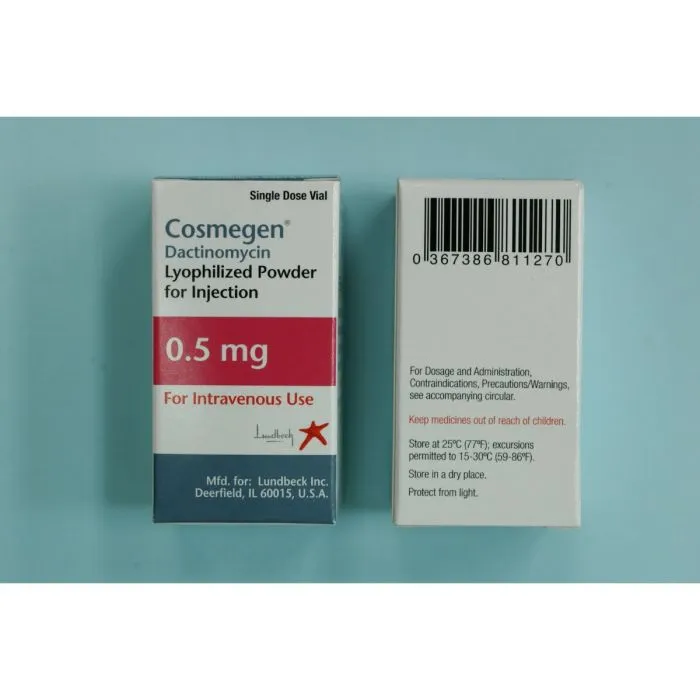
Table of Contents
Package leaflet: Information for the user
Cosmegen 0.5 mg powder for solution for injection
dactinomycin
Please read all of this leaflet carefully before you use this medicine because it contains important information for you.
- Keep this leaflet. You may need to read it again.
- If you have any questions, ask your doctor, pharmacist, or nurse.
- This medicine has been prescribed for you only. Do not give it to other people, even if they have the same symptoms as you, because it could be harmful.
- If you experience any side effects, including those not listed in this leaflet, tell your doctor or nurse. See section 4.
Contents of this leaflet:
- What Cosmegen is and what it is used for
- What you need to know before using Cosmegen
- How to use Cosmegen
- Possible side effects
- How to store Cosmegen
- Contents of the pack and other information
1. What Cosmegen is and what it is used for
Cosmegen contains the active substance dactinomycin.
Dactinomycin is a substance belonging to a group of medicines called cytotoxic antibiotics, which work by preventing cell reproduction, especially of abnormal cells associated with certain types of cancer, as well as normal cells that multiply rapidly.
Cosmegen is indicated for the treatment of:
- Wilms' tumour (a type of kidney tumour that usually occurs in children)
- rhabdomyosarcoma (a rare tumour of muscle tissue)
- testicular tumour (metastatic non-seminomatous testicular tumour)
- other neoplasms such as: melanoma (a type of skin cancer) or neuroblastoma (a tumour of nerve tissue cells)
Your doctor may prescribe Cosmegen in combination with radiotherapy.
2. What you need to know before using Cosmegen
Do not use Cosmegen
- if you are allergic to dactinomycin or to any of the other ingredients of this medicine (listed in section 6).
- if you have recently had chickenpox or herpes zoster (shingles).
Warnings and precautions
Talk to your doctor before using Cosmegen.
Below are some important facts about Cosmegen that you should know, so you can take appropriate precautions where necessary.
Spills and leaks
Cosmegen is highly harmful to soft tissues such as skin, and any spillage onto the skin may cause damage to soft tissues. Any spill or leakage of Cosmegen must be immediately washed off with abundant water or saline solution, while contaminated clothing and shoes should be removed. Contaminated clothing should be destroyed, and shoes thoroughly cleaned before being used again.
In case of accidental eye contact, immediate and abundant irrigation with water, normal saline solution, or "balanced salt ophthalmic solution" is required, for at least 15 minutes; additionally, an ophthalmologist should be consulted immediately.
Contact your doctor immediately.
Antibiotics: Inform your doctor if you are taking antibiotics. Cosmegen may interfere with test results used to determine antibiotic levels.
X-rays: Inform your doctor if you have ever undergone X-ray therapy. Some data suggest that, rarely, other tumors may develop following treatment with X-rays and medicines such as Cosmegen.
Live virus vaccines: Inform your doctor if you are due to be vaccinated, as allergic reactions may occur.
Toxic effects: Cosmegen is an antineoplastic drug and may therefore cause myelosuppression (reduced production of blood cells), abnormalities in liver, kidney, and bone marrow function.
Your doctor will monitor you closely, especially if you are undergoing radiotherapy at the same time.
Inform your doctor if you experience stomatitis, diarrhea, nausea, or vomiting.
Children
Cosmegen may be administered to children. In children under 12 months of age, the benefit-risk ratio must be carefully evaluated due to the higher risk of adverse effects, particularly the risk of veno-occlusive disease (mainly of hepatic origin), which could be fatal in children under 12 months of age. Only after careful assessment of the benefit-risk balance should treatment be considered in this age group.
Elderly
In elderly patients, Cosmegen may be associated with an increased risk of myelosuppression (reduced production of blood cells from the bone marrow).
Other medicines and Cosmegen
Inform your doctor if you are using, have recently used, or might use any other medicines.
No interactions between Cosmegen and other medicines are known.
Pregnancy and breastfeeding
If you are pregnant, suspect you may be pregnant, planning a pregnancy, or breastfeeding, consult your doctor before using this medicine.
Driving and using machines
Cosmegen may reduce the level of alertness in some people. Make sure your reactions are normal before driving or operating machinery.
3. How to use Cosmegen
Cosmegen will be administered by a doctor or a qualified nurse experienced in the administration of anticancer drugs.
The number of injections required will depend on your condition, your response to the drug, possible side effects, and other medications you may be taking concurrently.
Cosmegen may be administered by injection (see below) or mixed with another solution and given as an intravenous infusion ("drip") into a vein.
It must not be taken by mouth. There are two methods for administering Cosmegen by injection:
- into a vein
- directly into the tumor site.
The dosage for each method is different.
In these cases, the doctor will calculate and inform you of the required doses.
The doctor will determine the necessary doses and inform you of how long the treatment may last. The doctor will decide the appropriate dose and duration of treatment based on the type of tumor.
Dosage
Recommended doses for intravenous injection:
- no more than 15 mcg per kg of body weight for 5 days in adults and children, or
- 400–600 mcg per m² of body surface area per day, for 5 days.
Recommended doses for administration directly into the tumor site:
- for lower limbs and pelvic region: 50 mcg per kg of body weight
- for upper limbs: 35 mcg per kg of body weight.
Your doctor will inform you about the method, number of injections, and treatment cycles you require.
If you use more Cosmegen than you should
Your response to the drug and your condition will be monitored by your doctor, who will decide if any changes to treatment are needed.
If you have any doubts or concerns about the number of doses you have received, or if you think you may have been given too high a dose of the medicine, inform your doctor immediately.
If you have been given more Cosmegen than you should, you may experience:
- nausea, vomiting, diarrhea
- inflammation of the mouth and throat (mucositis and stomatitis), gastric ulcers
- severe skin disorders, such as rashes, peeling, blistering
- reduced production of blood cells from the bone marrow
- blockage of the veins (veno-occlusive disease)
- acute kidney failure
- a complication of infection (sepsis), even with fever and low neutrophils (neutropenic sepsis), which may lead to death
Regular medical monitoring is recommended.
4. Possible side effects
Like all medicines, this medicine can cause side effects, although not everyone experiences them. In general, side effects are reversible upon discontinuation of treatment.
Side effects may include (especially within the first two hours after administration of Cosmegen):
- vomiting
- nausea (feeling unwell)
- general feeling of malaise.
Except for nausea and vomiting, side effects generally do not occur until several days after completion of treatment and may last for one or two weeks. Fatal cases have been reported.
Side effects that may occur with the use of Cosmegen are:
- pharyngeal infections
- bacterial infections of the bloodstream or tissues (including sepsis), sometimes with fatal outcome
- eating disorder (anorexia)
- spasms in hands or feet and tingling around the mouth and vocal cords (caused by low calcium levels in the blood)
-
- tumor lysis syndrome (rapid destruction of tumor cells), which may impair kidney function and manifest as irregular heartbeat, tingling, muscle spasms, and reduced urine output
- inflammation of the lungs (pneumonia)
- lung disease with breathing difficulty and chest pain (pneumothorax)
- diarrhea, stomach pain, stomach and intestinal ulcers
- difficulty swallowing, mouth or throat lesions, mouth ulcers, chapped lips
- constipation
- abdominal swelling (ascites), inflammation of the rectum
- liver problems (such as hepatitis, liver enlargement with pain, liver failure), with reports of fatal outcomes
- impaired brain function (hepatic encephalopathy), accumulation of fluid in the pleural cavity of the lung (pleural effusion) as a complication of various liver diseases
- reduction in the number of red blood cells in the blood, which may cause fatigue (even severe)
- severe bleeding caused by excessive coagulation (disseminated intravascular coagulation)
- reduction in the number of white blood cells in the blood, which may increase susceptibility to infections
- reduction in the number of platelets in the blood, which may increase the risk of bleeding
- any skin spill causes damage to soft tissues
- skin rashes, acne, hair loss
- reactivation of irritation
- skin toxicity and inflammation of the skin (dermatitis)
- blistering or redness of the skin
- increased pigmentation of skin previously exposed to radiotherapy
- severe reactions involving the skin and mucous membranes, which may also be fatal (toxic epidermal necrolysis, Stevens-Johnson syndrome)
- muscle pain
- growth delay
- fatigue, general feeling of malaise
- fever and infections
- swelling of the face or tongue, hives, skin pain which may be accompanied by fever, chills, muscle aches, and general malaise (hypersensitivity)
- sensation of numbness or tingling in hands and feet (peripheral neuropathy), lethargy
- loss of vision or blurred vision (optic neuropathy)
- bleeding; thrombophlebitis
When Cosmegen is administered directly into the tumor site, leakage can cause damage to the skin and soft tissues. These side effects include:
- formation of blood clots
- damage to soft tissues
- infections
- impaired wound healing
- blistering and redness of the skin
- swelling of the affected area.
Any spillage or leakage of Cosmegen must be immediately washed off with abundant water or saline solution (salt water).
Reporting of side effects
If you experience any side effect, including those not listed in this leaflet, talk to your doctor, pharmacist, or nurse. You can also report side effects directly via the national reporting system at the following website: https://www.aifa.gov.it/content/segnalazioni-reazioni-avverse. By reporting side effects, you can help provide more information on the safety of this medicine.
5. How to store Cosmegen
Keep this medicine out of the sight and reach of children.
Do not store above 25°C.
Do not freeze. Store the vial in the original outer packaging to protect it from light.
Do not use this medicine after the expiry date stated on the carton after “Exp.”. The expiry date refers to the last day of that month.
Do not dispose of medicines via wastewater or household waste. Ask your pharmacist how to dispose of medicines you no longer use. This will help protect the environment.
6. Package contents and other information
What Cosmegen contains
- The active substance is dactinomycin. Each vial contains 0.5 mg of dactinomycin.
- The other component is mannitol.
Description of the appearance of Cosmegen and contents of the pack
Each pack of Cosmegen contains one vial with powder for injectable solution.
Marketing Authorisation Holder
Recordati Rare Diseases
Immeuble Le Wilson
70 avenue du Général de Gaulle
92800 Puteaux
France
Manufacturer
Recordati Rare Diseases
Eco River Parc,
30 rue des Peupliers,
92000 Nanterre,
France
Or
Recordati Rare Diseases
Immeuble Le Wilson
70 avenue du Général de Gaulle
92800 Puteaux
France
The following information is intended exclusively for physicians or healthcare professionals.
Dosage and method of administration
Toxic reactions due to dactinomycin are common and may be severe, which in many cases limits the dosage that can be administered. The severity of toxic effects is, however, highly variable and depends only partially on the doses used. The drug must be administered in short cycles.
Intravenous use
The dosage of dactinomycin varies according to the patient's tolerance, the size and location of the neoplasm, and the use of other forms of therapy. Reduction of the usual doses indicated below may be necessary when other chemotherapeutic agents or radiotherapy are used concomitantly or have been used previously.
A higher frequency of toxic effects due to dactinomycin has been observed in children. The risk of adverse events (including hepatic veno-occlusive disease) is particularly high in children under 12 months of age, in whom the drug should not be administered unless after careful evaluation of the benefit-risk ratio and of any possible alternative therapeutic options.
The dosage of COSMEGEN is calculated in micrograms (mcg). The dosage per 2-week cycle, in both adult and pediatric populations, must not exceed 15 mcg/kg/day or 400–600 mcg/m² of body surface area administered intravenously daily for five days. Dosage calculation in obese or edematous patients should be based on body surface area in an attempt to correlate dosage with lean body mass.
COSMEGEN may be used as monotherapy or as a component of a wide variety of polychemotherapy regimens. Since therapeutic regimens are constantly evolving, administration and choice of dosage schedule must be under the direct supervision of physicians experienced in the treatment of oncological conditions. The suggested regimens below are based on a review of the most recent literature on COSMEGEN therapy and refer to a single cycle.
Wilms' tumour
Regimens with a high single dose (PI: "pulse intensive") of 45 mcg/kg intravenously, administered according to various dosage schedules and in various combinations with other chemotherapeutic agents. Although regimens with a standard divided dose (STD) of 15 mcg/kg intravenously daily for five days, administered according to various dosage schedules and in various combinations with other chemotherapeutic agents, have also been used, the high single dose is recommended.
Rhabdomyosarcoma
Regimens of 15 mcg/kg intravenously daily for five days, administered according to various dosage schedules and in various combinations with other chemotherapeutic agents.
Non-seminomatous metastatic testicular tumour
1000 mcg/m² intravenously on Day 1, as part of a combination regimen with cyclophosphamide, bleomycin, vinblastine and cisplatin.
Isolated perfusion technique
Dosage regimens and the technique itself vary between investigators; therefore, consult the relevant literature for details.
Generally, the following doses are recommended:
- 0.05 mg per kg of body weight for the lower limbs and pelvic region
- 0.035 mg per kg of body weight for the upper limbs.
Lower doses may be appropriate in obese patients or when chemotherapy or radiotherapy has been previously administered.
Complications of the perfusion technique occur mainly in relation to the amount of drug that may escape into the systemic circulation and may manifest as bone marrow suppression, absorption of toxic products from massive destruction of neoplastic tissue, increased susceptibility to infections, impaired wound healing, and superficial gastric mucosal ulceration.
Other side effects may include edema of the affected extremity, damage to soft tissues in the perfused area, and (potentially) venous thrombosis.
For instructions on solution preparation and disposal of unused product, see section 6.6 "Special precautions for disposal and handling".
COSMEGEN in combination with other antineoplastic agents:
The following dosage regimens for adults regarding the use of dactinomycin in combination with chlorambucil (an alkylating agent) and methotrexate (an antimetabolite) are based on studies conducted by a group of researchers who used this combination in the treatment of choriocarcinoma. Chlorambucil (10 mg) and methotrexate (5 mg) are administered orally every day for 16–25 days. Dactinomycin is administered intravenously for five consecutive days at a daily dosage of 0.5 mg starting on Day 3 from the beginning of therapy with chlorambucil and methotrexate. Two additional 5-day cycles of dactinomycin therapy are initiated on Day 12 and Day 21. The disease may actually show signs of worsening during the first two weeks of combination therapy. However, with continued use of these drugs, improvement in both subjective and objective symptoms may be observed once a 25-day treatment cycle is completed.
Nausea and vomiting due to dactinomycin necessitate intermittent administration of the drug, and it is extremely important to maintain daily monitoring of the patient to detect any toxic side effects when using the above-described multiple chemotherapy, as in some cases the patient may not tolerate a complete treatment cycle.
If stomatitis, diarrhoea, or severe bone marrow depression occur during treatment, administration of these drugs should be suspended until symptoms resolve.
Maintenance therapy (consisting of a 7-day cycle with chlorambucil and methotrexate and a 5-day cycle with dactinomycin starting on Day 3) is performed once every two weeks for two cycles, then once monthly until objective symptoms go into remission, and subsequently once every two months.
Special warnings and precautions for use
To reconstitute COSMEGEN, add 1.1 ml of sterile water for injection (without preservatives), observing necessary aseptic precautions.
The reconstituted dactinomycin solution may be added, either directly or by injection into the tubing of an ongoing intravenous infusion, to infusion solutions of 5% dextrose for injection or sodium chloride for injection. Since dactinomycin is highly corrosive to soft tissues, the drug is for intravenous use only. All usual precautions for substances of this type must be observed. When the drug is administered directly into a vein without using an infusion, the two-needle technique should be used.
Reconstitution and withdrawal of the prescribed dose from the vial must be performed using a sterile needle. For direct intravenous injection, a second sterile needle should be used.
Discard any unused dactinomycin.
This product, like most antineoplastic and immunosuppressive drugs, has demonstrated carcinogenic properties in animals under specific experimental conditions.
As with all antineoplastic agents, dactinomycin is a toxic drug, and patients must be carefully and frequently monitored for potential side effects.
Such reactions may affect any tissue of the body, but most commonly the hematopoietic system, causing myelosuppression. Live virus vaccines should not be administered during treatment with COSMEGEN.
The possibility of anaphylactoid reactions should be considered.
Various abnormalities in renal, hepatic, and bone marrow function have been observed in patients with neoplasms treated with dactinomycin. Frequent monitoring of these functions is therefore advisable. An increased incidence of gastrointestinal toxicity and bone marrow suppression has been reported when dactinomycin is administered in combination with radiotherapy.
COSMEGEN should be administered only under the supervision of a physician experienced in antineoplastic chemotherapy. Due to the toxic properties of dactinomycin (e.g., corrosive, carcinogenic, mutagenic, and teratogenic effects), special procedures for handling must be carefully implemented and followed.
This drug is highly toxic; therefore, both the powder and the solution should be handled and administered with care. Since "Cosmegen" is highly corrosive to soft tissues, it is intended for intravenous use only.
Inhalation of dust or vapours and contact with skin or mucous membranes, particularly ocular mucosa, must be avoided. Adequate protective equipment must be worn during handling of "Cosmegen".
If accidental contact with the eyes occurs, immediate copious irrigation with water, normal saline, or balanced ophthalmic saline solution for at least 15 minutes is required; in addition, an ophthalmologist should be consulted immediately. After accidental skin contact, the affected area should be immediately washed with copious amounts of water for at least 15 minutes while removing contaminated clothing and shoes. A physician should be contacted immediately. Contaminated clothing should be destroyed and shoes thoroughly cleaned before reuse.
Severe damage to soft tissues may occur in case of extravasation during intravenous administration.
Particularly in children younger than 48 months, veno-occlusive disease (primarily of hepatic origin) may be fatal (see Undesirable effects, hepatic).
Particular caution is required when dactinomycin is administered within the first two months after radiotherapy for right-sided localized Wilms' tumour, as elevated AST levels and hepatomegaly have been observed. In general, COSMEGEN should not be co-administered with radiotherapy in the treatment of Wilms' tumour unless the benefit outweighs the risk.
Some data suggest an increased incidence of secondary primary tumours (including leukaemia) following treatment with radiotherapy and antineoplastic agents such as COSMEGEN. Such combination therapies require careful long-term follow-up of surviving patients.
Administer the drug intermittently to avoid the onset of nausea and vomiting.
When multiple chemotherapy is used, it is extremely important to monitor the patient daily to detect toxic side effects, as occasionally a complete treatment cycle may not be tolerated.
If stomatitis, diarrhoea, or severe haematopoietic depression occur during therapy, these drugs should be suspended until the patient has recovered.
Clinical studies with COSMEGEN have not included a sufficient number of patients aged 65 years or older to determine whether this age group responds differently from younger patients. Other clinical experience has not identified differences in response between elderly and younger patients. However, a published meta-analysis of all studies conducted by the "Eastern Cooperative Oncology Group (ECOG)" over a 13-year period has suggested that administration of COSMEGEN in elderly patients may be associated with an increased risk of myelosuppression compared to younger patients.
Laboratory tests: Numerous alterations in renal, hepatic, and bone marrow function have been observed in patients with neoplastic diseases receiving COSMEGEN. Renal, hepatic, and bone marrow functions should be monitored frequently.
Interactions with other medicinal products and other forms of interaction
COSMEGEN may interfere with biological assays for the determination of antibacterial drug levels.
No drug interactions with this medicinal product are known.