Cosentyx
Italy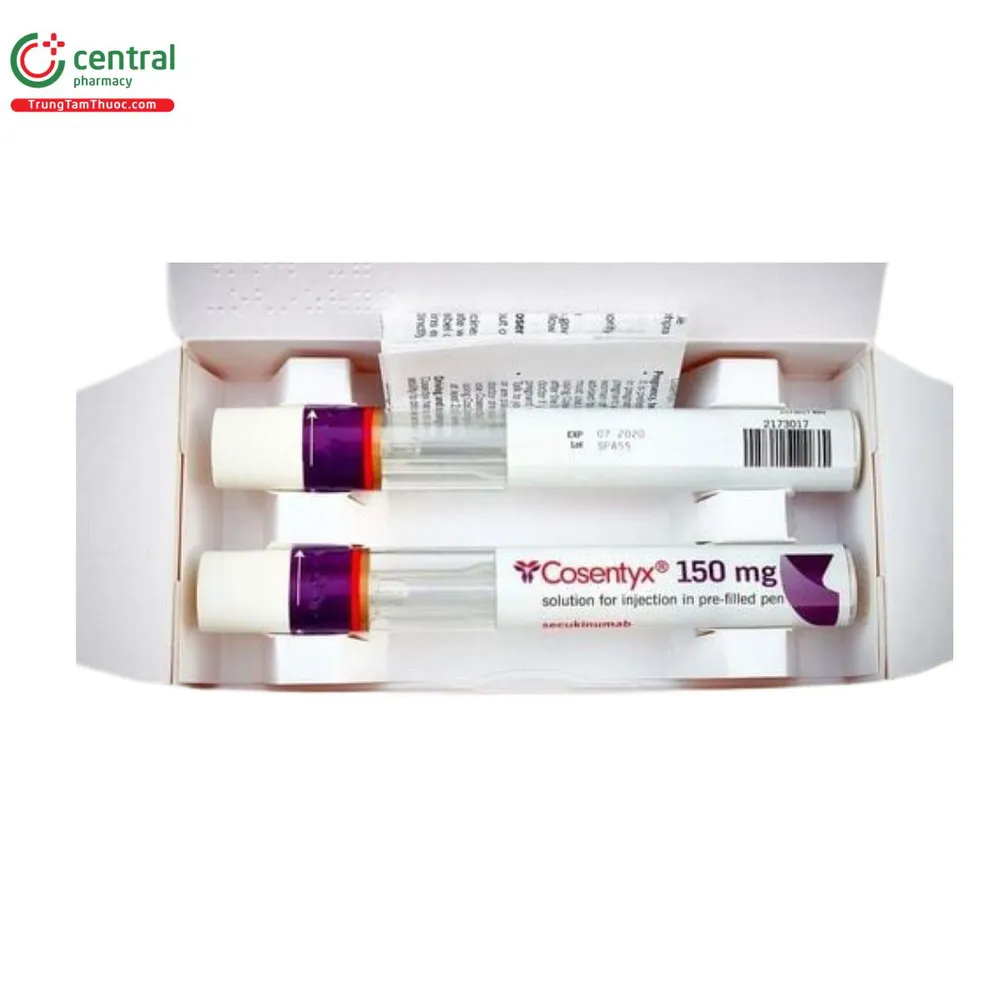
Table of Contents
- Package leaflet: Information for the user
- Cosentyx 75 mg solution for injection in pre-filled syringe
- 1. What Cosentyx is and what it is used for
- 2. What you should know before using (or before your child uses) Cosentyx
- 3. How to use Cosentyx
- Cosentyx 75 mg pre-filled syringe at the end of this leaflet.
- 4. Possible side effects
- 5. How to store Cosentyx
- 6. Package contents and other information
- Instructions for the use of Cosentyx 75 mg pre-filled syringe
- Package leaflet: Information for the user
- Cosentyx 150 mg solution for injection in pre-filled syringe
- 1. What Cosentyx is and what it is used for
- 2. What you should know before using Cosentyx
- 3. How to use Cosentyx
- Cosentyx 150 mg pre-filled syringe" at the end of this leaflet.
- 4. Possible side effects
- 5. How to store Cosentyx
- 6. Package contents and other information
- Instructions for the use of Cosentyx 150 mg pre-filled syringe
- Package leaflet: Information for the user
- Cosentyx 150 mg solution for injection in pre-filled pen
- 1. What Cosentyx is and what it is used for
- 2. What you need to know before using Cosentyx
- 3. How to use Cosentyx
- 4. Possible side effects
- 5. How to store Cosentyx
- 6. Package contents and other information
- Instructions for use of Cosentyx 150 mg SensoReady pen
- 1. Important safety checks before injection:
- 3. Cleaning the injection site
- 4. Removing the cap
- 5. Position of the pen
- 6. Start the injection
- 7. Completing the injection
- 8. Check that the green indicator fills the window
- 9. Disposal of the Cosentyx SensoReady pen
- Patient Information Leaflet: Information for the user
- Cosentyx 300 mg solution for injection in pre-filled syringe
- 1. What Cosentyx is and what it is used for
- 2. What you need to know before using Cosentyx
- 3. How to use Cosentyx
- Cosentyx 300 mg pre-filled syringe" at the end of this leaflet.
- 4. Possible side effects
- 5. How to store Cosentyx
- 6. Contents of the pack and other information
- Instructions for use Cosentyx 300 mg pre-filled syringe
- Package leaflet: information for the user
- Cosentyx 300 mg solution for injection in a pre-filled pen
- 1. What Cosentyx is and what it is used for
- 2. What you should know before using Cosentyx
- 3. How to use Cosentyx
- 4. Possible side effects
- 5. How to store Cosentyx
- 6. Package contents and other information
- Instructions for the use of the Cosentyx 300 mg UnoReady pen
- 1. Important safety checks before injection:
- 3. Cleaning the injection site
- 4. Removing the cap
- 5. Pen Position
- 6. Start the injection
- 7. Completing the injection
- 8. Check that the green indicator fills the window
- 9. Disposal of the used Cosentyx 300 mg UnoReady pen
- Package leaflet: Information for the user
- Cosentyx 150 mg powder for injectable solution
- 1. What Cosentyx is and what it is used for
- 2. What you need to know before using Cosentyx
- 3. How to use Cosentyx
- 4. Possible side effects
- 5. How to store Cosentyx
- 6. Package contents and other information
- Instructions for Use of Cosentyx Powder for Injectable Solution
Package leaflet: Information for the user
Cosentyx 75 mg solution for injection in pre-filled syringe
secukinumab
Please read all of this leaflet carefully before you (or your child) use this medicine because it contains important information for you.
- Keep this leaflet. You may need to read it again.
- If you have any questions, ask your doctor, pharmacist or nurse.
- This medicine has been prescribed for you (or your child) only. Do not pass it on to others, even if their symptoms seem identical to yours (or your child’s), as it may be harmful.
- If you (or your child) experience any side effects, including those not listed in this leaflet, tell your doctor, pharmacist or nurse. See section 4.
Contents of this leaflet:
- What Cosentyx is and what it is used for
- What you need to know before using (or your child uses) Cosentyx
- How to use Cosentyx
- Possible side effects
- How to store Cosentyx
- Contents of the pack and other information
1. What Cosentyx is and what it is used for
Cosentyx contains the active substance secukinumab. Secukinumab is a monoclonal antibody that belongs to a group of medicines called interleukin (IL) inhibitors. This medicine works by neutralizing the activity of a protein called IL-17A, which is present at increased levels in diseases such as psoriasis, psoriatic arthritis, and axial spondyloarthritis.
Cosentyx is indicated for the treatment of the following inflammatory diseases:
- Pediatric plaque psoriasis
- Juvenile idiopathic arthritis, including enthesitis-related arthritis and juvenile psoriatic arthritis
Pediatric plaque psoriasis
Cosentyx is used to treat a skin condition called "plaque psoriasis" that causes skin inflammation. Cosentyx reduces inflammation and other symptoms of the disease. Cosentyx is used in adolescents and children (from 6 years of age) with moderate to severe plaque psoriasis.
The use of Cosentyx in plaque psoriasis will provide benefit to you (or your child), resulting in improvement of skin symptoms and reduction of signs such as skin thickening, itching, and pain.
Juvenile idiopathic arthritis, including enthesitis-related arthritis and juvenile psoriatic arthritis
Cosentyx is used in patients (aged 6 years and older) to treat conditions falling within the categories of juvenile idiopathic arthritis known as "enthesitis-related arthritis" and "juvenile psoriatic arthritis." These conditions are inflammatory diseases affecting the joints and the sites where tendons attach to bone.
The use of Cosentyx in enthesitis-related arthritis and juvenile psoriatic arthritis will provide you (or your child) with benefits by reducing symptoms and improving physical function (or your child's physical function).
2. What you should know before using (or before your child uses) Cosentyx
Do not use Cosentyx:
- if you (or your child) are allergic to secukinumab or to any of the other ingredients of this medicine (listed in section 6). If you (or your child) think you may be allergic, ask your doctor for advice before using Cosentyx.
- if you (or your child) have an active infection considered significant by your doctor (for example, active tuberculosis).
Warnings and precautions
Talk to your doctor, nurse, or pharmacist before using Cosentyx:
- if you (or your child) currently have an infection.
- if you (or your child) have long-term (chronic) or recurring infections.
- if you (or your child) have ever had an allergic reaction to latex.
- if you (or your child) have an inflammatory bowel disease called Crohn's disease.
- if you (or your child) have inflammation of the large intestine called ulcerative colitis.
- if you (or your child) have recently been vaccinated or are scheduled to be vaccinated during treatment with Cosentyx.
- if you (or your child) are receiving any other type of treatment for psoriasis, such as another immunosuppressant or ultraviolet (UV) light phototherapy.
Tuberculosis
Talk to your doctor if you (or your child) currently have or have previously had tuberculosis. Also, inform your doctor if you (or your child) have recently been in close contact with someone who has tuberculosis. Your doctor will assess your condition (or your child's) and may perform a test before you (or your child) start using Cosentyx. If your doctor believes you (or your child) are at risk of tuberculosis, they may prescribe medication for its treatment. If symptoms of tuberculosis develop during treatment with Cosentyx (such as persistent cough, weight loss, lethargy, or low-grade fever), inform your doctor immediately.
Hepatitis B
Talk to your doctor if you (or your child) currently have or have previously had a hepatitis B infection. This medicine may cause reactivation of the infection. Before and during treatment with secukinumab, your doctor may monitor you (or your child) for signs of infection. Inform your doctor if you notice any of the following symptoms: worsening fatigue, yellowing of the skin or whites of the eyes, dark urine, loss of appetite, nausea and/or pain in the upper right part of the abdomen.
Inflammatory bowel disease (Crohn's disease or ulcerative colitis)
You (or your child) should stop using Cosentyx and inform your doctor or seek immediate medical help if you (or your child) experience abdominal cramps and pain, diarrhoea, weight loss, blood in the stool, or any other signs of intestinal problems.
Be alert to infections and allergic reactions
Cosentyx may potentially cause serious side effects, including infections and allergic reactions. You should be vigilant for signs of these conditions while you (or your child) are being treated with Cosentyx.
You (or your child) should stop using Cosentyx and inform your doctor or seek immediate medical help if you observe any signs suggestive of a serious infection or allergic reaction. These signs are listed in section 4 under "Serious side effects".
Children and adolescents
Cosentyx is not recommended for the treatment of children under 6 years of age with plaque psoriasis, as it has not been studied in this age group.
Cosentyx is not recommended for children under 6 years of age with juvenile idiopathic arthritis (enthesitis-related arthritis and juvenile psoriatic arthritis).
Cosentyx is not recommended for the treatment of children and adolescents (under 18 years of age) in other indications, as it has not been studied in this age group.
Other medicines and Cosentyx
Inform your doctor or pharmacist:
- if you (or your child) are taking, have recently taken, or might take any other medicines.
- if you (or your child) have recently been vaccinated or are scheduled to be vaccinated. You (or your child) should not receive certain types of vaccines (live vaccines) while using Cosentyx.
Pregnancy, breastfeeding and fertility
- It is preferable to avoid using Cosentyx during pregnancy. The effects of the medicine in pregnant women are unknown. If you (or your child) are of childbearing age, you (or your child) will be advised to avoid pregnancy and to use an effective method of contraception during treatment with Cosentyx and for at least 20 weeks after the last dose of Cosentyx. Inform your doctor if you (or your child) are pregnant, suspect you may be pregnant, or are planning a pregnancy.
- Inform your doctor if you (or your child) are breastfeeding or plan to breastfeed. You (or your child) and your doctor will need to decide whether to breastfeed or use Cosentyx. You (or your child) cannot do both. After using Cosentyx, you (or your child) must not breastfeed for at least 20 weeks after the last dose.
Driving and using machines
It is unlikely that Cosentyx will affect your ability to drive or use machinery.
3. How to use Cosentyx
Use this medicine exactly as instructed by your doctor. If you have any doubts, consult your
doctor, nurse, or pharmacist.
Cosentyx is administered by injection under the skin (subcutaneous injection). You and your
doctor must decide whether, after appropriate training, you should self-inject Cosentyx or if the injection
should be given by a person assisting you.
It is important not to attempt to perform the injection yourself until you have been taught how to do so by your doctor, nurse, or pharmacist.
For detailed instructions on how to reconstitute and inject Cosentyx, see “Instructions for use of
Cosentyx 75 mg pre-filled syringe at the end of this leaflet.
Instructions for use can also be found via the QR code and website below:
‘QR code to be included’
www.cosentyx.eu
How much Cosentyx is given and for how long
Your doctor will decide how much Cosentyx you (or your child) need and for how long.
Pediatric plaque psoriasis (children aged 6 years and older)
- The recommended dose is based on body weight as follows:
o Body weight below 25 kg: 75 mg as subcutaneous injection.
o Body weight 25 kg or above and below 50 kg: 75 mg as subcutaneous injection.
o Body weight 50 kg or above: 150 mg as subcutaneous injection.
Your doctor may increase the dose to 300 mg. - Each 75 mg dose is administered as a single 75 mg injection. Other pharmaceutical forms/dosages may be available for administering 150 mg and 300 mg doses.
After the first dose, additional weekly injections will be given at weeks 1, 2, 3 and 4, followed by monthly injections.
Juvenile idiopathic arthritis (enthesitis-related arthritis and juvenile psoriatic arthritis)
- The recommended dose is based on body weight as follows:
o Weight below 50 kg: 75 mg as subcutaneous injection.
o Weight 50 kg or above: 150 mg as subcutaneous injection. - Each 75 mg dose is administered as a single 75 mg injection. Other pharmaceutical forms/dosages may be available for administering the 150 mg dose.
After the first dose, additional weekly injections will be given at weeks 1, 2, 3 and 4, followed by monthly injections.
Cosentyx is used for long-term treatment. Your doctor will regularly monitor your condition (or your child’s) to ensure the treatment is having the desired effect.
If you use more Cosentyx than you should
If you (or your child) have received more Cosentyx than prescribed or the dose was administered earlier than scheduled, inform your doctor.
If you forget to use Cosentyx
If you (or your child) have forgotten to inject a dose of Cosentyx, administer it as soon as you remember. Then inform your doctor to discuss when the next dose should be given.
If you (or your child) stop treatment with Cosentyx
It is not dangerous to stop using Cosentyx. However, if you (or your child) discontinue treatment, psoriasis symptoms may return.
If you have any questions about the use of this medicine, consult your doctor, pharmacist or nurse.
4. Possible side effects
Like all medicines, this medicine can cause side effects, although not everyone will get them.
Serious side effects
Stop using Cosentyx and contact your doctor or seek immediate medical help if you (or your child) experience any of the following side effects:
Possible serious infections – signs may include:
- fever, flu-like symptoms, night sweats
- feeling tired or short of breath, persistent cough
- skin that is warm, red and painful, or a painful rash with blisters
- burning sensation when urinating.
Severe allergic reaction – signs may include:
- difficulty breathing or swallowing
- low blood pressure which may cause dizziness or lightheadedness
- swelling of the face, lips, tongue or throat
- severe skin itching, with redness or raised hives.
Your doctor will decide whether and when you (or your child) can restart treatment.
Other side effects
Most of the following side effects are mild or moderate. If any of these side effects become severe, inform your doctor, pharmacist or nurse.
Very common (may affect more than 1 in 10 people):
- upper respiratory tract infections with symptoms such as sore throat and runny nose (nasopharyngitis, rhinitis)
Common (may affect up to 1 in 10 people):
- cold sores (oral herpes)
- diarrhoea
- runny nose (rhinorrhoea)
- headache
- nausea
- fatigue
- itchy, red and dry skin (eczema)
Uncommon (may affect up to 1 in 100 people):
- oral thrush (oral candidiasis)
- signs of low white blood cell levels, such as fever, sore throat or mouth ulcers due to infections (neutropenia)
- outer ear infection (otitis externa)
- eye discharge with itching, redness and swelling (conjunctivitis)
- itchy skin rash (urticaria)
- lower respiratory tract infections
- cramps and abdominal pain, diarrhoea, weight loss or blood in the stool (signs of intestinal problems)
- small itchy blisters on the palms of the hands, soles of the feet and edges of fingers and toes (dyshidrotic eczema)
- athlete’s foot (tinea pedis)
Rare (may affect up to 1 in 1,000 people):
- severe allergic reaction with shock (anaphylactic reaction)
- redness and peeling of the skin over a large area of the body, possibly with itching or pain (exfoliative dermatitis)
- inflammation of small blood vessels, which may cause a rash with red or purple spots (vasculitis)
- swelling of the neck, face, mouth or throat which may cause difficulty swallowing or breathing (angioedema)
Not known (frequency cannot be estimated from the available data):
- fungal infections of the skin and mucous membranes (including oesophageal candidiasis)
- painful swelling and skin ulceration (pyoderma gangrenosum)
Reporting of side effects
If you (or your child) experience any side effect, including those not listed in this leaflet, talk to your doctor, pharmacist or nurse. You can also report side effects directly via the national reporting system listed in Annex V.
By reporting side effects, you can help provide more information on the safety of this medicine.
5. How to store Cosentyx
Keep this medicine out of the sight and reach of children.
Do not use this medicine:
- after the expiry date stated on the carton after “Exp.” or on the syringe label after “EXP”.
- if the solution contains visible particles, is cloudy, or is clearly brown.
Store the sealed syringe in the carton to protect the medicine from light. Store in a refrigerator
between 2°C and 8°C. Do not freeze. Do not shake.
If necessary, Cosentyx may be kept outside the refrigerator for a single period not exceeding 4 days at room temperature, not above 30°C.
This medicine is for single use only.
Do not dispose of medicines via wastewater. Ask your pharmacist how to dispose of medicines you no longer use. This will help protect the environment.
6. Package contents and other information
What Cosentyx contains
- The active substance is secukinumab. Each pre-filled syringe contains 75 mg of secukinumab.
- The other components are trehalose dihydrate, histidine, monohydrochloride monohydrate histidine, methionine, polysorbate 80 and water for injections.
Description of the appearance of Cosentyx and contents of the pack
Cosentyx solution for injection is a clear liquid. Its colour may vary from colourless to
slightly yellow.
Cosentyx 75 mg solution for injection in pre-filled syringe is available in single packs
containing 1 pre-filled syringe and in multiple packs containing 3 (3 packs of 1) pre-filled
syringes.
Not all pack sizes may be marketed.
Marketing Authorisation Holder
Novartis Europharm Limited
Vista Building
Elm Park, Merrion Road
Dublin 4
Ireland
Manufacturer
Sandoz GmbH
Biochemiestrasse 10
6336 Langkampfen
Austria
Novartis Pharmaceutical Manufacturing GmbH
Biochemiestrasse 10
6336 Langkampfen
Austria
Novartis Pharma GmbH
Sophie-Germain-Strasse 10
90443 Nuremberg
Germany
For further information about this medicinal product, please contact the local representative of the Marketing Authorisation Holder:
België/Belgique/Belgien Lietuva
Novartis Pharma N.V. SIA Novartis Baltics Lietuvos filialas
Tél/Tel: +32 2 246 16 11 Tel: +370 5 269 16 50
България Luxembourg/Luxemburg
Novartis Bulgaria EOOD Novartis Pharma N.V.
Тел: +359 2 489 98 28 Tél/Tel: +32 2 246 16 11
Česká republika Magyarország
Novartis s.r.o. Novartis Hungária Kft.
Tel: +420 225 775 111 Tel.: +36 1 457 65 00
Danmark Malta
Novartis Healthcare A/S Novartis Pharma Services Inc.
Tlf.: +45 39 16 84 00 Tel: +356 2122 2872
Deutschland Nederland
Novartis Pharma GmbH Novartis Pharma B.V.
Tel: +49 911 273 0 Tel: +31 88 04 52 111
Eesti Norge
SIA Novartis Baltics Eesti filiaal Novartis Norge AS
Tel: +372 66 30 810 Tlf: +47 23 05 20 00
Ελλάδα Österreich
Novartis (Hellas) A.E.B.E. Novartis Pharma GmbH
Τηλ: +30 210 281 17 12 Tel: +43 1 86 6570
España Polska
Novartis Farmacéutica, S.A. Novartis Poland Sp. z o.o.
Tel: +34 93 306 42 00 Tel.: +48 22 375 4888
France Portugal
Novartis Pharma S.A.S. Novartis Farma - Produtos Farmacêuticos, S.A.
Tél: +33 1 55 47 66 00 Tel: +351 21 000 8600
Hrvatska România
Novartis Hrvatska d.o.o. Novartis Pharma Services Romania SRL
Tel. +385 1 6274 220 Tel: +40 21 31299 01
Ireland Slovenija
Novartis Ireland Limited Novartis Pharma Services Inc.
Tel: +353 1 260 12 55 Tel: +386 1 300 75 50
Ísland Slovenská republika
Vistor hf. Novartis Slovakia s.r.o.
Sími: +354 535 7000 Tel: +421 2 5542 5439
Italia Suomi/Finland
Novartis Farma S.p.A. Novartis Finland Oy
Tel: +39 02 96 54 1 Puh/Tel: +358 (0)10 6133 200
Κύπρος Sverige
Novartis Pharma Services Inc. Novartis Sverige AB
Τηλ: +357 22 690 690 Tel: +46 8 732 32 00
Latvija
SIA Novartis Baltics
Tel: +371 67 887 070
Other sources of information
More detailed information on this medicinal product is available on the European Medicines Agency website: https://www.ema.europa.eu .
Instructions for the use of Cosentyx 75 mg pre-filled syringe
Read these instructions COMPLETELY before administering the injection. It is important not to attempt to administer the medicine yourself or have someone administer it until you have received proper training from your doctor, nurse, or pharmacist. The package contains one single-dose plastic blister pack with a sealed pre-filled syringe of Cosentyx 75 mg.
Appearance of the Cosentyx 75 mg pre-filled syringe
Plunger
Grip
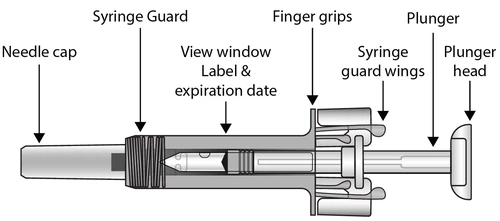
Syringe safety device
Wings of the
Viewing window,
safety device
plunger tip
and syringe
needle cap
label and expiry date

After injecting the medicine, the syringe needle safety device is activated. This is designed to help protect healthcare providers, patients who self-administer the injection, physicians, prescribers, and caregivers from accidental needle-stick injuries.

What you need for the injection:
- Alcohol swab
- Cotton ball or gauze
- Sharps disposal container
Important safety information
Warning: Keep the syringe out of sight and reach of children.
- The syringe needle cap may contain natural rubber (latex), which should not be handled by individuals sensitive to this substance.
- Do not open the sealed outer packaging until it is time to use the medicine.
- Do not use this medicine if the seal on the outer box or the blister seal is damaged, as use may not be safe.
- Do not use if the syringe has fallen on a hard surface or if it has been dropped after removing the needle cap.
- Never leave the syringe unattended where others could tamper with it.
- Do not shake the syringe.
- Be careful not to touch the safety wings of the syringe before use. Touching them may cause the syringe safety mechanism to activate prematurely.
- Do not remove the protective needle cap until you are ready to inject.
- The syringe cannot be reused. Dispose of the syringe immediately after use in a sharps disposal container.
Storage of the Cosentyx 75 mg pre-filled syringe
- Store this medicine sealed in its original carton to protect it from light. Store in the refrigerator at 2°C to 8°C. DO NOT FREEZE.
- Before preparing the syringe for injection, remember to remove it from the refrigerator and allow it to reach room temperature (15–30 minutes).
- Do not use the syringe after the expiry date printed on the carton after “Exp.” or on the syringe label after “EXP.” If expired, return the entire package to the pharmacy.
Injection site
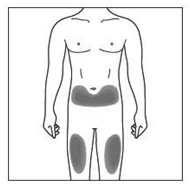
The injection site is the area of the body where the syringe will be used.
- The recommended site is the front of the thighs. You may also use the lower abdomen, but not the area within 5 centimeters around the navel.
- Choose a different site each time you give an injection.
- Do not inject into areas where the skin is tender, bruised, red, scaly, or hard. Avoid areas with scars or stretch marks.
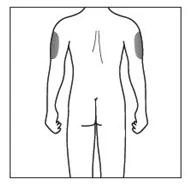
If the injection is administered by someone assisting you, the upper outer arms may also be used.
Preparing the Cosentyx 75 mg pre-filled syringe for use
- Remove the syringe package from the refrigerator and leave it closed for approximately 15–30 minutes so it can reach room temperature.
- Wash your hands thoroughly with soap and water when you are ready to use the syringe.
- Clean the injection site with an alcohol swab.
- Remove the syringe from the carton and take it out of the blister pack by holding the protective body.
- Inspect the syringe. The liquid should be clear. Its color may range from colorless to slightly yellow. Small air bubbles may be visible, which is normal. DO NOT USE if the liquid contains visible particles, is cloudy, or is clearly brown. DO NOT USE if the syringe is damaged. In all these cases, return the entire package to the pharmacy.
How to use the Cosentyx 75 mg pre-filled syringe
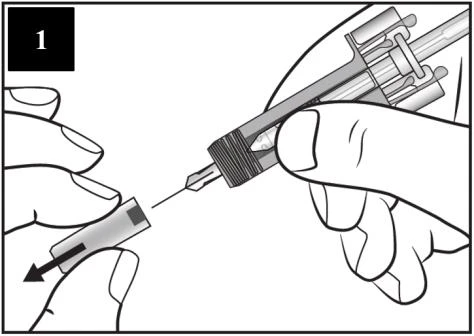
Carefully remove the protective needle cap from the syringe by holding the syringe body. Discard the protective needle cap. A small drop of liquid may appear at the needle tip. This is normal.
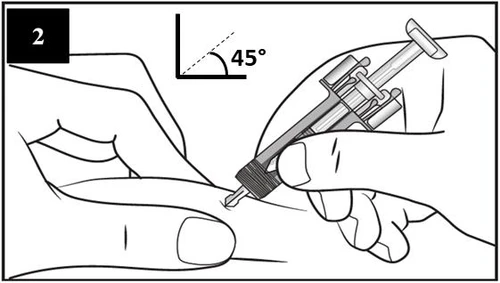
Gently pinch the skin at the injection site and insert the needle as shown. Push the needle in deeply at an angle of approximately 45 degrees to ensure the full dose is administered.
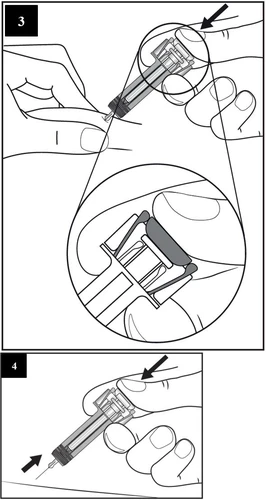
Hold the syringe as shown. Press the plunger slowly and all the way down until the plunger tip is between the safety wings of the syringe. Continue to hold the plunger down while keeping the syringe in place for 5 seconds. Keep the plunger fully depressed while carefully withdrawing the needle from the injection site.
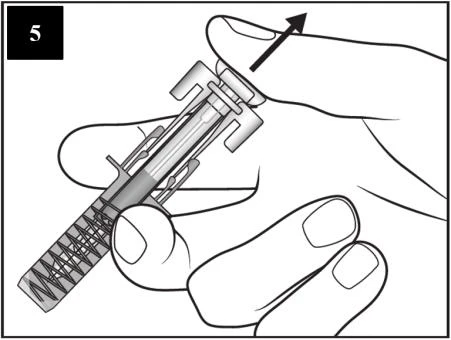
Slowly release the plunger to allow the syringe safety device to automatically cover the exposed needle. Mild bleeding at the injection site may occur. If so, press a cotton ball or gauze pad over the injection site and hold for 10 seconds. Do not rub the injection site. If needed, a small plaster may be placed over the injection site.
Disposal instructions
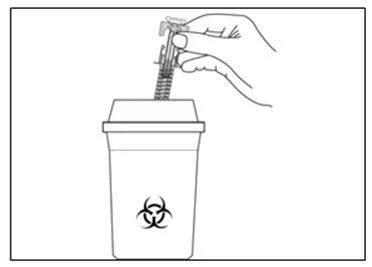
Dispose of the used syringe by placing it in a designated sharps disposal container (a puncture-resistant, closable container). For your safety and the safety of others, used needles and syringes must never be reused.
Package leaflet: Information for the user
Cosentyx 150 mg solution for injection in pre-filled syringe
secukinumab
Please read all of this leaflet carefully before you start using this medicine because it contains important information for you.
- Keep this leaflet. You may need to read it again.
- If you have any questions, ask your doctor, pharmacist or nurse.
- This medicine has been prescribed for you only. Do not pass it on to other people, even if their symptoms are the same as yours, as it may be harmful to them.
- If you experience any side effects, including those not listed in this leaflet, tell your doctor, pharmacist or nurse. See section 4.
Contents of this leaflet:
- What Cosentyx is and what it is used for
- What you need to know before using Cosentyx
- How to use Cosentyx
- Possible side effects
- How to store Cosentyx
- Contents of the pack and other information
1. What Cosentyx is and what it is used for
Cosentyx contains the active substance secukinumab. Secukinumab is a monoclonal antibody that belongs to a group of medicines called interleukin (IL) inhibitors. This medicine works by neutralizing the activity of a protein called IL-17A, which is present at increased levels in conditions such as psoriasis, hidradenitis suppurativa, psoriatic arthritis, and axial spondyloarthritis.
Cosentyx is indicated for the treatment of the following inflammatory diseases:
- Plaque psoriasis
- Hidradenitis suppurativa
- Psoriatic arthritis
- Axial spondyloarthritis, including ankylosing spondylitis (radiographic axial spondyloarthritis) and non-radiographic axial spondyloarthritis
- Juvenile idiopathic arthritis, including enthesitis-related arthritis and juvenile psoriatic arthritis
Plaque psoriasis
Cosentyx is used to treat a skin condition called "plaque psoriasis" which causes skin inflammation. Cosentyx reduces inflammation and other symptoms of the disease. Cosentyx is used in adults, adolescents, and children (from 6 years of age) with moderate to severe plaque psoriasis.
The use of Cosentyx in plaque psoriasis will benefit you by improving skin manifestations and reducing symptoms such as skin thickening, itching, and pain.
Hidradenitis suppurativa
Cosentyx is used to treat a condition called hidradenitis suppurativa, sometimes also known as inverse acne or Verneuil's disease. This condition is a chronic and painful inflammatory skin disease. Symptoms may include painful lumps (nodules) and abscesses (boils) that may drain pus. It commonly affects specific areas of the skin, such as the under-breast area, armpits, inner thighs, groin, and buttocks. Scarring may also develop in the affected areas.
Cosentyx can reduce the number of nodules and abscesses you have, as well as the pain often associated with this disease. If you have hidradenitis suppurativa, you will first be given other medicines. If you do not respond adequately to these medicines, you will be given Cosentyx.
Cosentyx is used in adults with hidradenitis suppurativa and may be used alone or in combination with antibiotics.
Psoriatic arthritis
Cosentyx is used to treat a condition called "psoriatic arthritis". This condition is an inflammatory joint disease, often accompanied by psoriasis. If you have active psoriatic arthritis, you will first be given other medicines. If you do not respond adequately to these medicines, Cosentyx will be given to reduce the signs and symptoms of active psoriatic arthritis, improve physical function, and slow down damage to cartilage and bone in the joints affected by the disease.
Cosentyx is used in adults with active psoriatic arthritis and may be used alone or in combination with another medicine called methotrexate.
The use of Cosentyx in psoriatic arthritis will benefit you by reducing the signs and symptoms of the disease, slowing down damage to cartilage and bone in the affected joints, and improving your ability to perform normal daily activities.
Axial spondyloarthritis, including ankylosing spondylitis (radiographic axial spondyloarthritis) and non-radiographic axial spondyloarthritis
Cosentyx is used to treat conditions called "ankylosing spondylitis" and "non-radiographic axial spondyloarthritis". These conditions are inflammatory diseases that primarily affect the spine, causing inflammation of the spinal joints. If you have ankylosing spondylitis or non-radiographic axial spondyloarthritis, you will first be given other medicines. If you do not respond adequately to these medicines, Cosentyx will be given to reduce the signs and symptoms of the disease, reduce inflammation, and improve your physical function.
Cosentyx is used in adults with active ankylosing spondylitis and active non-radiographic axial spondyloarthritis.
The use of Cosentyx in ankylosing spondylitis and non-radiographic axial spondyloarthritis will benefit you by reducing the signs and symptoms of the disease and improving your physical function.
Juvenile idiopathic arthritis, including enthesitis-related arthritis and juvenile psoriatic arthritis
Cosentyx is used in patients (aged 6 years and older) to treat conditions falling under the categories of juvenile idiopathic arthritis called "enthesitis-related arthritis" and "juvenile psoriatic arthritis". These conditions are inflammatory diseases affecting the joints and the sites where tendons attach to bone.
The use of Cosentyx in enthesitis-related arthritis and juvenile psoriatic arthritis will provide benefit to you (or your child) by reducing symptoms and improving physical function (or your child's physical function).
2. What you should know before using Cosentyx
Do not use Cosentyx:
- if you are allergic to secukinumab or to any of the other ingredients of this medicine (listed in section 6). If you think you may be allergic, consult your doctor before using Cosentyx.
- if you have an active infection that your doctor considers significant (for example, active tuberculosis).
Warnings and precautions
Talk to your doctor, nurse, or pharmacist before using Cosentyx:
- if you currently have an infection.
- if you have long-term (chronic) or recurring infections.
- if you have ever had an allergic reaction to latex.
- if you have an inflammatory bowel disease called Crohn's disease.
- if you have inflammation of the large intestine called ulcerative colitis.
- if you have recently been vaccinated or are scheduled to be vaccinated during treatment with Cosentyx.
- if you are receiving any other type of treatment for psoriasis, such as another immunosuppressant or ultraviolet (UV) light phototherapy.
Tuberculosis
Talk to your doctor if you currently have or have previously had tuberculosis. Also inform your doctor if you have recently been in close contact with someone who has tuberculosis. Your doctor will assess your condition and may perform a test before you start using Cosentyx. If your doctor believes you are at risk of tuberculosis, they may prescribe medication for its treatment. If symptoms of tuberculosis develop during treatment with Cosentyx (such as persistent cough, weight loss, lethargy, or low-grade fever), inform your doctor immediately.
Hepatitis B
Talk to your doctor if you have or have previously had hepatitis B infection. This medicine may cause reactivation of the infection. Before and during treatment with secukinumab, your doctor may monitor for signs of infection. Inform your doctor if you experience any of the following symptoms: worsening fatigue, yellowing of the skin or whites of the eyes, dark urine, loss of appetite, nausea and/or pain in the upper right part of the abdomen.
Inflammatory bowel disease (Crohn's disease or ulcerative colitis)
Stop using Cosentyx and inform your doctor or seek immediate medical help if you experience abdominal cramps and pain, diarrhea, weight loss, blood in the stool, or any other signs of intestinal problems.
Be aware of infections and allergic reactions
Cosentyx may potentially cause serious side effects, including infections and allergic reactions. You should be alert for signs of these conditions while undergoing treatment with Cosentyx. Stop using Cosentyx and inform your doctor or seek immediate medical help if you notice any signs suggesting a serious infection or allergic reaction. These signs are listed in section 4 under “Serious side effects”.
Children and adolescents
Cosentyx is not recommended for the treatment of children under 6 years of age with plaque psoriasis, as it has not been studied in this age group.
Cosentyx is not recommended for children under 6 years of age with juvenile idiopathic arthritis (enthesitis-related arthritis and juvenile psoriatic arthritis).
Cosentyx is not recommended for the treatment of children and adolescents (under 18 years of age) in other indications, as it has not been studied in this age group.
Other medicines and Cosentyx
Inform your doctor or pharmacist:
- if you are taking, have recently taken, or might take any other medicines.
- if you have recently been vaccinated or are scheduled to be vaccinated. Certain types of vaccines (live vaccines) must not be administered while you are using Cosentyx.
Pregnancy, breastfeeding, and fertility
- It is advisable to avoid using Cosentyx during pregnancy. The effects of the medicine in pregnant women are unknown. If you are of childbearing age, you will be advised to avoid pregnancy and to use an effective method of contraception during treatment with Cosentyx and for at least 20 weeks after the last dose. Inform your doctor if you are pregnant, suspect you may be pregnant, or are planning a pregnancy.
- Inform your doctor if you are breastfeeding or intend to breastfeed. You and your doctor will need to decide whether to breastfeed or use Cosentyx. You cannot do both. After using Cosentyx, you must not breastfeed for at least 20 weeks after the last dose.
Driving and using machines
It is unlikely that Cosentyx will affect your ability to drive or use machinery.
3. How to use Cosentyx
Use this medicine exactly as your doctor has told you. If you are unsure, consult your doctor, nurse, or pharmacist.
Cosentyx is administered by subcutaneous injection (an injection under the skin). You and your doctor must decide whether you should self-inject Cosentyx.
It is important not to attempt to inject yourself until you have been properly trained by your doctor, nurse, or pharmacist. The person assisting you may also administer the Cosentyx injection after appropriate training.
For detailed instructions on how to reconstitute and inject Cosentyx, see “Instructions for use of
Cosentyx 150 mg pre-filled syringe" at the end of this leaflet.
Instructions for use can also be found via the QR code and website below:
‘QR code to include’
www.cosentyx.eu
How much Cosentyx is given and for how long
Your doctor will decide how much Cosentyx you need and for how long.
Plaque psoriasis
Adults
- The recommended dose is 300 mg administered by subcutaneous injection.
- Each 300 mg dose is administered as two injections of 150 mg.
After the first dose, additional weekly injections will be given at weeks 1, 2, 3, and 4, followed by monthly injections. Based on your response, your doctor may recommend further dose adjustments. At each time, you will receive a 300 mg dose administered as two injections of 150 mg.
Children from 6 years of age
-
The recommended dose administered by subcutaneous injection is based on body weight as follows:
o Weight less than 25 kg: 75 mg as subcutaneous injection.
o Weight 25 kg or more and less than 50 kg: 75 mg as subcutaneous injection.
o Weight 50 kg or more: 150 mg as subcutaneous injection.
Your doctor may increase the dose to 300 mg. -
Each 150 mg dose is administered as a single injection of 150 mg. Other pharmaceutical forms/dosages may be available for administration of 75 mg and 300 mg doses.
After the first dose, additional weekly injections will be given at weeks 1, 2, 3, and 4, followed by monthly injections.
Hidradenitis suppurativa
- The recommended dose is 300 mg by subcutaneous injection.
- Each 300 mg dose is administered as two injections of 150 mg.
After the first dose, additional weekly injections will be given at weeks 1, 2, 3, and 4, followed by monthly injections. Based on your response, your doctor may recommend further dose adjustments.
Psoriatic arthritis
If you have both psoriatic arthritis and moderate to severe plaque psoriasis, your doctor may adjust the dosing recommendations as necessary.
For patients who have not responded adequately to medicines called tumour necrosis factor (TNF) blockers:
- The recommended dose is 300 mg by subcutaneous injection.
- Each 300 mg dose is administered as two injections of 150 mg.
After the first dose, additional weekly injections will be given at weeks 1, 2, 3, and 4, followed by monthly injections. At each administration, you will receive a 300 mg dose as two injections of 150 mg.
For other patients with psoriatic arthritis:
- The recommended dose is 150 mg by subcutaneous injection.
After the first dose, additional weekly injections will be given at weeks 1, 2, 3, and 4, followed by monthly injections.
Based on your response, your doctor may increase the dose to 300 mg.
Ankylosing spondylitis (radiographic axial spondyloarthritis)
- The recommended dose is 150 mg by subcutaneous injection.
After the first dose, additional weekly injections will be given at weeks 1, 2, 3, and 4, followed by monthly injections.
Based on your response, your doctor may increase the dose to 300 mg. Each 300 mg dose is administered as two injections of 150 mg.
Non-radiographic axial spondyloarthritis
- The recommended dose is 150 mg by subcutaneous injection.
After the first dose, additional weekly injections will be given at weeks 1, 2, 3, and 4, followed by monthly injections.
Juvenile idiopathic arthritis (enthesitis-related arthritis and juvenile psoriatic arthritis)
- The recommended dose is based on body weight as follows:
o Weight less than 50 kg: 75 mg as subcutaneous injection.
o Weight 50 kg or more: 150 mg as subcutaneous injection. - Each 150 mg dose is administered as a single injection of 150 mg. Other pharmaceutical forms/dosages may be available for administration of the 75 mg dose.
After the first dose, additional weekly injections will be given at weeks 1, 2, 3, and 4, followed by monthly injections, to you (or your child).
Cosentyx is used for long-term treatment. Your doctor will regularly monitor your condition to ensure the treatment is having the desired effect.
If you use more Cosentyx than you should
If you have received more Cosentyx than you should, or if the dose was administered earlier than prescribed, inform your doctor.
If you forget to use Cosentyx
If you forget to inject a dose of Cosentyx, administer it as soon as you remember. Then inform your doctor to discuss when you should inject the next dose.
If you stop using Cosentyx
It is not dangerous to stop using Cosentyx. However, if you stop treatment, symptoms of psoriasis, psoriatic arthritis, or axial spondyloarthritis may return.
If you have any questions about the use of this medicine, ask your doctor, pharmacist, or nurse.
4. Possible side effects
Like all medicines, this medicine can cause side effects, although not everyone gets them.
Serious side effects
Stop using Cosentyx and contact your doctor or seek immediate medical help if you experience any of the following side effects:
Possible serious infections – signs may include:
- fever, flu-like symptoms, night sweats
- feeling tired or short of breath, persistent cough
- skin that is warm, red and painful, or a painful skin rash with blisters
- burning sensation when urinating
Severe allergic reaction – signs may include:
- difficulty breathing or swallowing
- low blood pressure which may cause dizziness or feeling lightheaded
- swelling of the face, lips, tongue or throat
- severe itching of the skin, with redness or raised hives
Your doctor will decide whether and when you can restart treatment.
Other side effects
Most of the following side effects are mild or moderate. If any of these side effects become severe, inform your doctor, pharmacist or nurse.
Very common (may affect more than 1 in 10 people):
- upper respiratory tract infections with symptoms such as sore throat and runny nose (nasopharyngitis, rhinitis)
Common (may affect up to 1 in 10 people):
- cold sores (oral herpes)
- diarrhoea
- runny nose (rhinorrhoea)
- headache
- nausea
- fatigue
- itchy, red and dry skin (eczema)
Uncommon (may affect up to 1 in 100 people):
- oral thrush (oral candidiasis)
- signs of low white blood cell counts, such as fever, sore throat or mouth ulcers due to infections (neutropenia)
- outer ear infection (otitis externa)
- eye discharge with itching, redness and swelling (conjunctivitis)
- itchy skin rash (urticaria)
- lower respiratory tract infections
- cramps and abdominal pain, diarrhoea, weight loss or blood in the stools (signs of intestinal problems)
- small itchy blisters on the palms of the hands, soles of the feet and edges of fingers and toes (dyshidrotic eczema)
- athlete’s foot (tinea pedis)
Rare (may affect up to 1 in 1,000 people):
- severe allergic reaction with shock (anaphylactic reaction)
- redness and peeling of the skin over a large area of the body, possibly with itching or pain (exfoliative dermatitis)
- inflammation of small blood vessels, which may cause a rash with red or purple spots (vasculitis)
- swelling of the neck, face, mouth or throat which may cause difficulty swallowing or breathing (angioedema)
Not known (frequency cannot be estimated from the available data):
- fungal infections of the skin and mucous membranes (including oesophageal candidiasis)
- painful skin swelling and ulceration (pyoderma gangrenosum)
Reporting of side effects
If you get any side effects, including ones not listed in this leaflet, talk to your doctor, pharmacist or nurse. You can also report side effects directly through the national reporting system listed in Annex V. By reporting side effects, you can help provide more information on the safety of this medicine.
5. How to store Cosentyx
Keep this medicine out of the sight and reach of children.
Do not use this medicine:
- after the expiry date stated on the carton after “Exp.” or on the syringe label after “EXP”.
- if the solution contains visible particles, is cloudy, or is clearly brown.
Store the sealed syringe in the carton to protect the medicine from light. Store in a refrigerator at 2°C to 8°C. Do not freeze. Do not shake.
If necessary, Cosentyx may be kept outside the refrigerator for a single period not exceeding 4 days at room temperature not above 30°C.
This medicine is for single use only.
Do not dispose of medicines via wastewater. Ask your pharmacist how to dispose of medicines you no longer use. This will help protect the environment.
6. Package contents and other information
What Cosentyx contains
- The active substance is secukinumab. Each pre-filled syringe contains 150 mg of secukinumab.
- The other components are trehalose dihydrate, histidine, monohydrochloride monohydrate histidine, methionine, polysorbate 80 and water for injections.
Description of the appearance of Cosentyx and contents of the pack
Cosentyx injectable solution is a clear liquid. Its colour may vary from colourless to
slightly yellow.
Cosentyx 150 mg solution for injection in a pre-filled syringe is available in single packs
containing 1 or 2 pre-filled syringes and in multiple packs containing 6 (3 packs of 2) pre-filled
syringes.
Not all pack sizes may be marketed.
Marketing Authorisation Holder
Novartis Europharm Limited
Vista Building
Elm Park, Merrion Road
Dublin 4
Ireland
Manufacturer
Sandoz GmbH
Biochemiestrasse 10
6336 Langkampfen
Austria
Novartis Pharmaceutical Manufacturing GmbH
Biochemiestrasse 10
6336 Langkampfen
Austria
Novartis Pharma GmbH
Sophie-Germain-Strasse 10
90443 Nuremberg
Germany
For further information about this medicinal product, please contact the local representative of the Marketing Authorisation Holder:
België/Belgique/Belgien Lietuva
Novartis Pharma N.V. SIA Novartis Baltics Lietuvos filialas
Tél/Tel: +32 2 246 16 11 Tel: +370 5 269 16 50
България Luxembourg/Luxemburg
Novartis Bulgaria EOOD Novartis Pharma N.V.
Тел: +359 2 489 98 28 Tél/Tel: +32 2 246 16 11
Česká republika Magyarország
Novartis s.r.o. Novartis Hungária Kft.
Tel: +420 225 775 111 Tel.: +36 1 457 65 00
Danmark Malta
Novartis Healthcare A/S Novartis Pharma Services Inc.
Tlf.: +45 39 16 84 00 Tel: +356 2122 2872
Deutschland Nederland
Novartis Pharma GmbH Novartis Pharma B.V.
Tel: +49 911 273 0 Tel: +31 88 04 52 111
Eesti Norge
SIA Novartis Baltics Eesti filiaal Novartis Norge AS
Tel: +372 66 30 810 Tlf: +47 23 05 20 00
Ελλάδα Österreich
Novartis (Hellas) A.E.B.E. Novartis Pharma GmbH
Τηλ: +30 210 281 17 12 Tel: +43 1 86 6570
España Polska
Novartis Farmacéutica, S.A. Novartis Poland Sp. z o.o.
Tel: +34 93 306 42 00 Tel.: +48 22 375 4888
France Portugal
Novartis Pharma S.A.S. Novartis Farma - Produtos Farmacêuticos, S.A.
Tél: +33 1 55 47 66 00 Tel: +351 21 000 8600
Hrvatska România
Novartis Hrvatska d.o.o. Novartis Pharma Services Romania SRL
Tel. +385 1 6274 220 Tel: +40 21 31299 01
Ireland Slovenija
Novartis Ireland Limited Novartis Pharma Services Inc.
Tel: +353 1 260 12 55 Tel: +386 1 300 75 50
Ísland Slovenská republika
Vistor hf. Novartis Slovakia s.r.o.
Sími: +354 535 7000 Tel: +421 2 5542 5439
Italia Suomi/Finland
Novartis Farma S.p.A. Novartis Finland Oy
Tel: +39 02 96 54 1 Puh/Tel: +358 (0)10 6133 200
Κύπρος Sverige
Novartis Pharma Services Inc. Novartis Sverige AB
Τηλ: +357 22 690 690 Tel: +46 8 732 32 00
Latvija
SIA Novartis Baltics
Tel: +371 67 887 070
Other sources of information
More detailed information on this medicinal product is available on the European Medicines Agency website: https://www.ema.europa.eu .
Instructions for the use of Cosentyx 150 mg pre-filled syringe
Read these instructions COMPLETELY before administering the injection. It is important not to attempt to perform the injection yourself or have it administered by a caregiver until you have received adequate training from your doctor, nurse, or pharmacist. The package contains one (or more) individually sealed pre-filled syringe(s) of Cosentyx 150 mg in a plastic blister.
Appearance of the 150 mg pre-filled Cosentyx syringe
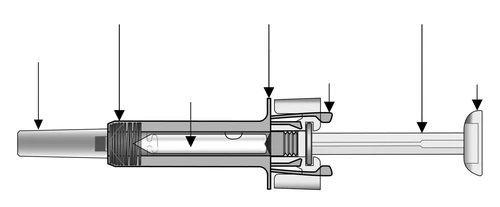
Syringe body
Plunger
Syringe safety device
Needle cap
Observation window, label and expiration date
Safety device wings
Plunger tip
After the medicine has been injected, the syringe needle safety device is automatically activated. This is designed to help protect healthcare providers, patients who self-inject, physicians, prescribers, and caregivers from accidental needle-stick injuries.

What you need for the injection:
- Alcohol swab
- Cotton ball or gauze
- Sharps disposal container
Important safety information
Warning: Keep the syringe out of the sight and reach of children.
- The syringe needle cap may contain natural rubber (latex), which should not be handled by individuals sensitive to this substance.
- Do not open the sealed outer packaging until it is time to use the medicine.
- Do not use this medicine if the seal on the outer box or the blister seal is damaged, as use may not be safe.
- Do not use the syringe if it has fallen on a hard surface or if it has been dropped after removing the needle cap.
- Never leave the syringe unattended where others could tamper with it.
- Do not shake the syringe.
- Avoid touching the safety wings on the syringe before use. Touching them may prematurely activate the syringe safety mechanism.
- Do not remove the protective needle cap until you are ready to inject.
- The syringe cannot be reused. Dispose of the syringe immediately after use in a sharps disposal container.
Storage of the 150 mg pre-filled Cosentyx syringe
- Store this medicine sealed in its original box to protect it from light. Store in the refrigerator at 2°C to 8°C. DO NOT FREEZE.
- Before preparing the syringe for injection, remember to remove it from the refrigerator and allow it to reach room temperature (15–30 minutes).
- Do not use the syringe after the expiration date printed on the box after “Exp.” or on the syringe label after “EXP”. If expired, return the entire package to the pharmacy.
Injection site
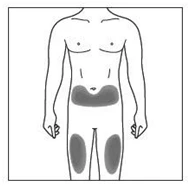
The injection site refers to the area of the body where the syringe will be used.
- The recommended site is the front of the thighs. You may also use the lower abdomen, but not within 5 centimeters of the navel.
- Choose a different site each time you administer an injection.
- Do not inject into areas where the skin is tender, bruised, red, scaly, or hardened. Avoid areas with scars or stretch marks.
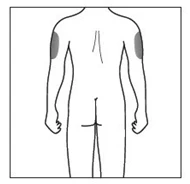
If the injection is administered by a caregiver, the outer upper arms may also be used.
Preparing the 150 mg pre-filled Cosentyx syringe for use
Note: For a 150 mg dose, prepare one pre-filled syringe and inject its entire contents. For a 300 mg dose, prepare two pre-filled syringes and inject the contents of both.
- Remove the syringe package from the refrigerator and leave it closed for approximately 15–30 minutes to allow it to reach room temperature.
- Wash your hands thoroughly with soap and water when you are ready to use the syringe.
- Clean the injection site with an alcohol swab.
- Remove the syringe from the box and take it out of the blister by holding the protective body.
- Inspect the syringe. The liquid should be clear. Its color may range from colorless to slightly yellow. Small air bubbles may be visible, which is normal. DO NOT USE if the liquid contains visible particles, is cloudy, or is clearly brown. DO NOT USE if the syringe is damaged. In any of these cases, return the entire package to the pharmacy.
How to use the 150 mg pre-filled Cosentyx syringe
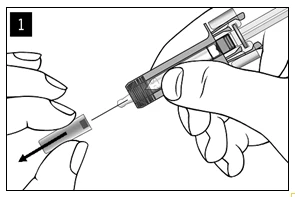
Carefully remove the protective needle cap from the syringe by holding the protective body. Discard the protective needle cap. A small drop of liquid may appear at the tip of the needle. This is normal.
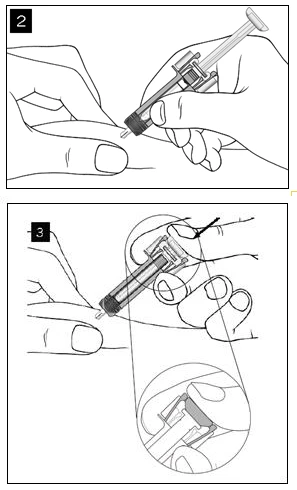
Gently pinch the skin at the injection site and insert the needle as shown. Push the needle fully in to ensure the complete dose is delivered. Hold the syringe as illustrated. Press the plunger slowly and all the way down until the plunger head is between the safety wings of the syringe. Continue holding the plunger fully depressed and keep the syringe in place for 5 seconds.
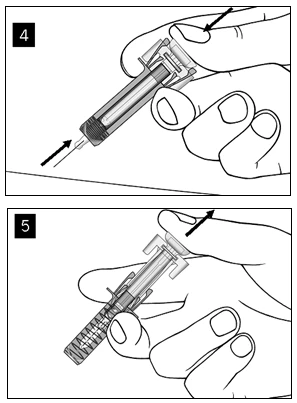
Keep the plunger fully depressed while carefully withdrawing the needle from the injection site.
Slowly release the plunger to allow the syringe safety device to automatically cover the exposed needle.
Mild bleeding at the injection site may occur. If so, apply a cotton ball or gauze to the site and hold for 10 seconds. Do not rub the injection site. If needed, the injection site may be covered with a small plaster.
Disposal instructions
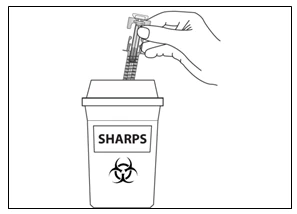
Dispose of the used syringe by placing it in a dedicated sharps disposal container (a puncture-resistant, closable container). For your safety and the safety of others, used needles and syringes must never be reused.
Package leaflet: Information for the user
Cosentyx 150 mg solution for injection in pre-filled pen
secukinumab
Please read this leaflet carefully before using this medicine because it contains important information for you.
- Keep this leaflet. You may need to read it again.
- If you have any questions, ask your doctor, pharmacist or nurse.
- This medicine has been prescribed for you only. Do not give it to other people, even if their symptoms are the same as yours, because it may be harmful.
- If you experience any side effect, including those not listed in this leaflet, tell your doctor, pharmacist or nurse. See section 4.
Contents of this leaflet:
- What Cosentyx is and what it is used for
- What you need to know before using Cosentyx
- How to use Cosentyx
- Possible side effects
- How to store Cosentyx
- Contents of the pack and other information
1. What Cosentyx is and what it is used for
Cosentyx contains the active substance secukinumab. Secukinumab is a monoclonal antibody that belongs to a group of medicines called interleukin (IL) inhibitors. This medicine works by neutralizing the activity of a protein called IL-17A, which is present at increased levels in conditions such as psoriasis, hidradenitis suppurativa, psoriatic arthritis, and axial spondyloarthritis.
Cosentyx is indicated for the treatment of the following inflammatory diseases:
- Plaque psoriasis
- Hidradenitis suppurativa
- Psoriatic arthritis
- Axial spondyloarthritis, including ankylosing spondylitis (radiographic axial spondyloarthritis) and non-radiographic axial spondyloarthritis
- Juvenile idiopathic arthritis, including enthesitis-related arthritis and juvenile psoriatic arthritis
Plaque psoriasis
Cosentyx is used to treat a skin condition called "plaque psoriasis" which causes inflammation of the skin. Cosentyx reduces inflammation and other symptoms of the disease. Cosentyx is used in adults, adolescents, and children (from 6 years of age) with moderate to severe plaque psoriasis.
The use of Cosentyx in plaque psoriasis will benefit you by improving skin manifestations and reducing symptoms such as skin thickening, itching, and pain.
Hidradenitis suppurativa
Cosentyx is used to treat a condition called hidradenitis suppurativa, sometimes also known as inverse acne or Verneuil's disease. This condition is a chronic, painful inflammatory skin disease. Symptoms may include painful nodules (lumps) and abscesses (boils) that may drain pus. It commonly affects specific areas of the skin, such as the under-breast area, armpits, inner thighs, groin, and buttocks. Scarring may also develop in affected areas.
Cosentyx can reduce the number of nodules and abscesses you have, as well as the pain often associated with this disease. If you have hidradenitis suppurativa, you will first be given other medicines. If you do not respond adequately to these medicines, you will be given Cosentyx.
Cosentyx is used in adults with hidradenitis suppurativa and may be used alone or in combination with antibiotics.
Psoriatic arthritis
Cosentyx is used to treat a condition called "psoriatic arthritis". This condition is an inflammatory joint disease, often accompanied by psoriasis. If you have active psoriatic arthritis, you will first be given other medicines. If you do not respond adequately to these medicines, Cosentyx will be given to reduce the signs and symptoms of active psoriatic arthritis, improve physical function, and slow down damage to cartilage and bone in the joints affected by the disease.
Cosentyx is used in adults with active psoriatic arthritis and may be used alone or in combination with another medicine called methotrexate.
The use of Cosentyx in psoriatic arthritis will benefit you by reducing the signs and symptoms of the disease, slowing down damage to cartilage and bone in the affected joints, and improving your ability to perform normal daily activities.
Axial spondyloarthritis, including ankylosing spondylitis (radiographic axial spondyloarthritis) and non-radiographic axial spondyloarthritis
Cosentyx is used to treat conditions called "ankylosing spondylitis" and "non-radiographic axial spondyloarthritis". These conditions are inflammatory diseases that primarily affect the spine, causing inflammation of the spinal joints. If you have ankylosing spondylitis or non-radiographic axial spondyloarthritis, you will first be given other medicines. If you do not respond adequately to these medicines, Cosentyx will be given to reduce the signs and symptoms of the disease, reduce inflammation, and improve your physical function.
Cosentyx is used in adults with active ankylosing spondylitis and active non-radiographic axial spondyloarthritis.
The use of Cosentyx in ankylosing spondylitis and non-radiographic axial spondyloarthritis will benefit you by reducing the signs and symptoms of the disease and improving your physical function.
Juvenile idiopathic arthritis, including enthesitis-related arthritis and juvenile psoriatic arthritis
Cosentyx is used in patients (aged 6 years and older) to treat conditions that fall under the categories of juvenile idiopathic arthritis called "enthesitis-related arthritis" and "juvenile psoriatic arthritis". These conditions are inflammatory diseases affecting the joints and the sites where tendons attach to bone.
The use of Cosentyx in enthesitis-related arthritis and juvenile psoriatic arthritis will provide benefit to you (or your child) by reducing symptoms and improving physical function (or your child's physical function).
2. What you need to know before using Cosentyx
Do not use Cosentyx:
- if you are allergic to secukinumab or to any of the other ingredients of this medicine (listed in section 6). If you think you may be allergic, consult your doctor before using Cosentyx.
- if you have an active infection that your doctor considers significant (for example, active tuberculosis).
Warnings and precautions
Talk to your doctor, nurse, or pharmacist before using Cosentyx:
- if you currently have an infection.
- if you have long-term (chronic) or recurring infections.
- if you have ever had an allergic reaction to latex.
- if you have an inflammatory bowel disease called Crohn's disease.
- if you have inflammation of the large intestine called ulcerative colitis.
- if you have recently been vaccinated or are due to be vaccinated during treatment with Cosentyx.
- if you are receiving any other type of treatment for psoriasis, such as another immunosuppressant or ultraviolet (UV) light phototherapy.
Tuberculosis
Talk to your doctor if you currently have or have previously had tuberculosis. Also, inform your doctor if you have recently been in close contact with someone who has tuberculosis. Your doctor will assess your condition and may perform a test before you start using Cosentyx. If your doctor believes you are at risk of tuberculosis, they may prescribe you medication for its treatment. If symptoms of tuberculosis develop during treatment with Cosentyx (such as persistent cough, weight loss, fatigue, or low-grade fever), inform your doctor immediately.
Hepatitis B
Talk to your doctor if you currently have or have previously had hepatitis B infection. This medicine may cause reactivation of the infection. Before and during treatment with secukinumab, your doctor may monitor for signs of infection. Inform your doctor if you experience any of the following symptoms: worsening fatigue, yellowing of the skin or whites of the eyes, dark urine, loss of appetite, nausea and/or pain in the upper right part of the abdomen.
Inflammatory bowel disease (Crohn's disease or ulcerative colitis)
Stop using Cosentyx and inform your doctor or seek immediate medical help if you experience abdominal cramps and pain, diarrhea, weight loss, blood in the stool, or any other sign of intestinal problems.
Be aware of infections and allergic reactions
Cosentyx may potentially cause serious side effects, including infections and allergic reactions. You should be vigilant for signs of these conditions while undergoing treatment with Cosentyx.
Stop using Cosentyx and inform your doctor or seek immediate medical help if you notice any signs suggestive of a serious infection or allergic reaction. These signs are listed in section 4 under "Serious side effects".
Children and adolescents
Cosentyx is not recommended for the treatment of children under 6 years of age with plaque psoriasis, as it has not been studied in this age group.
Cosentyx is not recommended for children under 6 years of age with juvenile idiopathic arthritis (enthesitis-related arthritis and juvenile psoriatic arthritis).
Cosentyx is not recommended for the treatment of children and adolescents (under 18 years of age) in other indications, as it has not been studied in this age group.
Other medicines and Cosentyx
Inform your doctor or pharmacist:
- if you are taking, have recently taken, or might take any other medicines.
- if you have recently been vaccinated or are due to be vaccinated. Certain types of vaccines (live vaccines) must not be administered while you are using Cosentyx.
Pregnancy, breastfeeding, and fertility
- It is preferable to avoid using Cosentyx during pregnancy. The effects of the medicine in pregnant women are unknown. If you are of childbearing potential, you will be advised to avoid pregnancy and to use an effective method of contraception during treatment with Cosentyx and for at least 20 weeks after the last dose of Cosentyx. Inform your doctor if you are pregnant, suspect you may be pregnant, or are planning a pregnancy.
- Inform your doctor if you are breastfeeding or intend to breastfeed. You and your doctor will need to decide whether to breastfeed or use Cosentyx. You cannot do both. After using Cosentyx, you must not breastfeed for at least 20 weeks after the last dose.
Driving and using machines
It is unlikely that Cosentyx will affect your ability to drive or use machinery.
3. How to use Cosentyx
Use this medicine exactly as instructed by your doctor. If you have any doubts, consult your doctor, nurse, or pharmacist.
Cosentyx is administered by subcutaneous injection (an injection under the skin). You and your doctor will decide whether you should self-inject Cosentyx.
It is important not to attempt to perform the injection yourself until you have been properly trained by your doctor, nurse, or pharmacist. A person assisting you may also administer the Cosentyx injection after appropriate training.
For detailed instructions on how to inject Cosentyx, see “Instructions for use of Cosentyx 150 mg Sensoready Pen” at the end of this leaflet.
The instructions for use can also be accessed via the QR code and website below:
‘QR code to be included’
www.cosentyx.eu
How much Cosentyx is administered and for how long
Your doctor will determine the required dose of Cosentyx and the duration of treatment.
Plaque psoriasis
Adults
- The recommended dose is 300 mg administered by subcutaneous injection.
- Each 300 mg dose is administered as two injections of 150 mg.
After the initial dose, additional weekly injections will be given at weeks 1, 2, 3, and 4, followed by monthly injections. Based on your response, your doctor may recommend further dose adjustments. At each time, you will receive a dose of 300 mg administered as two injections of 150 mg.
Children from 6 years of age
- The recommended dose administered by subcutaneous injection is based on body weight as follows:
- Weight below 25 kg: 75 mg as subcutaneous injection.
- Weight 25 kg or above and below 50 kg: 75 mg as subcutaneous injection.
- Weight 50 kg or above: 150 mg as subcutaneous injection. Your doctor may increase the dose to 300 mg.
- Each 150 mg dose is administered as a single injection of 150 mg. Other pharmaceutical forms/dosages may be available for administering 75 mg and 300 mg doses.
After the initial dose, additional weekly injections will be given at weeks 1, 2, 3, and 4, followed by monthly injections.
Hidradenitis suppurativa
- The recommended dose is 300 mg by subcutaneous injection.
- Each 300 mg dose is administered as two injections of 150 mg.
After the initial dose, additional weekly injections will be given at weeks 1, 2, 3, and 4, followed by monthly injections. Based on your response, your doctor may recommend further dose adjustments.
Psoriatic arthritis
If you have both psoriatic arthritis and moderate to severe plaque psoriasis, your doctor may adjust the dosing recommendations as necessary.
For patients who have not responded adequately to medications known as tumour necrosis factor (TNF) blockers:
- The recommended dose is 300 mg by subcutaneous injection.
- Each 300 mg dose is administered as two injections of 150 mg.
After the initial dose, additional weekly injections will be given at weeks 1, 2, 3, and 4, followed by monthly injections. For each administration, you will receive a 300 mg dose given as two injections of 150 mg.
For other patients with psoriatic arthritis:
- The recommended dose is 150 mg by subcutaneous injection.
After the initial dose, additional weekly injections will be given at weeks 1, 2, 3, and 4, followed by monthly injections.
Depending on your response, your doctor may increase the dose to 300 mg.
Ankylosing spondylitis (radiographic axial spondyloarthritis)
- The recommended dose is 150 mg by subcutaneous injection.
After the initial dose, additional weekly injections will be given at weeks 1, 2, 3, and 4, followed by monthly injections.
Depending on your response, your doctor may increase the dose to 300 mg. Each 300 mg dose is administered as two injections of 150 mg.
Non-radiographic axial spondyloarthritis
- The recommended dose is 150 mg by subcutaneous injection.
After the initial dose, additional weekly injections will be given at weeks 1, 2, 3, and 4, followed by monthly injections.
Juvenile idiopathic arthritis (enthesitis-related arthritis and juvenile psoriatic arthritis)
- The recommended dose is based on body weight as follows:
- Weight below 50 kg: 75 mg as subcutaneous injection.
- Weight 50 kg or above: 150 mg as subcutaneous injection.
- Each 150 mg dose is administered as a single injection of 150 mg. Other pharmaceutical forms/dosages may be available for administering the 75 mg dose.
After the initial dose, additional weekly injections will be given at weeks 1, 2, 3, and 4, followed by monthly injections, either to you or your child.
Cosentyx is used for long-term treatment. Your doctor will regularly monitor your condition to ensure the treatment is achieving the desired effect.
If you use more Cosentyx than you should
If you have received more Cosentyx than prescribed or the dose was administered earlier than scheduled, inform your doctor.
If you forget to use Cosentyx
If you forget to inject a dose of Cosentyx, administer it as soon as you remember. Then inform your doctor to discuss when you should inject the next dose.
If you stop using Cosentyx
Stopping treatment with Cosentyx is not dangerous. However, if you discontinue treatment, symptoms of psoriasis, psoriatic arthritis, or axial spondyloarthritis may return.
If you have any questions about the use of this medicine, consult your doctor, pharmacist, or nurse.
4. Possible side effects
Like all medicines, this medicine can cause side effects, although not everyone gets them.
Serious side effects
Stop using Cosentyx and inform your doctor or seek immediate medical help if you experience any of the following side effects:
Serious infections – signs may include:
- fever, flu-like symptoms, night sweats
- feeling tired or short of breath, persistent cough
- skin that is warm, red and painful, or a painful blistering rash
- burning when you urinate
Severe allergic reaction – signs may include:
- difficulty breathing or swallowing
- low blood pressure that may cause dizziness or a feeling of lightheadedness
- swelling of the face, lips, tongue or throat
- severe skin itching, with redness or raised bumps (hives)
Your doctor will decide whether and when you can restart treatment.
Other side effects
Most of the following side effects are mild or moderate. If any of these side effects become severe, inform your doctor, pharmacist or nurse.
Very common (may affect more than 1 in 10 people):
- upper respiratory tract infections with symptoms such as sore throat and runny nose (nasopharyngitis, rhinitis)
Common (may affect up to 1 in 10 people):
- cold sores (oral herpes)
- diarrhoea
- runny nose (rhinorrhoea)
- headache
- nausea
- fatigue
- itchy, red and dry skin (eczema)
Uncommon (may affect up to 1 in 100 people):
- oral thrush (oral candidiasis)
- signs of low white blood cell counts, such as fever, sore throat or mouth ulcers due to infections (neutropenia)
- outer ear infection (otitis externa)
- eye discharge with itching, redness and swelling (conjunctivitis)
- itchy rash (urticaria)
- lower respiratory tract infections
- cramps and abdominal pain, diarrhoea, weight loss or blood in the stool (signs of intestinal problems)
- small itchy blisters on the palms of the hands, soles of the feet and edges of fingers and toes (dyshidrotic eczema)
- athlete’s foot (tinea pedis)
Rare (may affect up to 1 in 1,000 people):
- severe allergic reaction with shock (anaphylactic reaction)
- redness and peeling of the skin over a large area of the body, possibly with itching or pain (exfoliative dermatitis)
- inflammation of small blood vessels, which may cause a rash with red or purple spots (vasculitis)
- swelling of the neck, face, mouth or throat which may cause difficulty swallowing or breathing (angioedema)
Not known (frequency cannot be estimated from the available data):
- fungal infections of the skin and mucous membranes (including oesophageal candidiasis)
- painful skin swelling and ulceration (pyoderma gangrenosum)
Reporting of side effects
If you get any side effect, including those not listed in this leaflet, talk to your doctor, pharmacist or nurse. You can also report side effects directly via the national reporting system detailed in Annex V. By reporting side effects, you can help provide more information on the safety of this medicine.
5. How to store Cosentyx
Keep this medicine out of the sight and reach of children.
Do not use this medicine:
- after the expiry date stated on the carton after “Exp.” or on the pen label after “EXP”.
- if the solution contains visible particles, is cloudy, or is clearly brown.
Store the pen, sealed in its carton, to protect the medicine from light. Store in a refrigerator between 2°C and 8°C. Do not freeze. Do not shake.
If necessary, Cosentyx may be kept outside the refrigerator for one single period not exceeding 4 days at room temperature not above 30°C.
This medicine is for single use only. Do not dispose of any medicine via wastewater. Ask your pharmacist how to dispose of medicines you no longer use. This will help protect the environment.
6. Package contents and other information
What Cosentyx contains
- The active substance is secukinumab. Each pre-filled pen contains 150 mg of secukinumab.
- The other ingredients are trehalose dihydrate, histidine, monohydrochloride monohydrate histidine, methionine, polysorbate 80 and water for injections.
Description of the appearance of Cosentyx and contents of the pack
Cosentyx injectable solution is a clear liquid. Its colour may range from colourless to slightly yellow.
Cosentyx 150 mg solution for injection in a pre-filled pen is available in single packs containing 1 or 2 pre-filled pens and in multiple packs containing 6 (3 packs of 2) pre-filled pens.
Not all pack sizes may be marketed.
Marketing Authorization Holder
Novartis Europharm Limited
Vista Building
Elm Park, Merrion Road
Dublin 4
Ireland
Manufacturer
Sandoz GmbH
Biochemiestrasse 10
6336 Langkampfen
Austria
Novartis Pharmaceutical Manufacturing GmbH
Biochemiestrasse 10
6336 Langkampfen
Austria
Novartis Pharma GmbH
Sophie-Germain-Strasse 10
90443 Nuremberg
Germany
For further information on this medicinal product, please contact the local representative of the Marketing Authorization Holder:
België/Belgique/Belgien Lietuva
Novartis Pharma N.V. SIA Novartis Baltics Lietuvos filialas
Tél/Tel: +32 2 246 16 11 Tel: +370 5 269 16 50
България Luxembourg/Luxemburg
Novartis Bulgaria EOOD Novartis Pharma N.V.
Тел: +359 2 489 98 28 Tél/Tel: +32 2 246 16 11
Česká republika Magyarország
Novartis s.r.o. Novartis Hungária Kft.
Tel: +420 225 775 111 Tel.: +36 1 457 65 00
Danmark Malta
Novartis Healthcare A/S Novartis Pharma Services Inc.
Tlf.: +45 39 16 84 00 Tel: +356 2122 2872
Deutschland Nederland
Novartis Pharma GmbH Novartis Pharma B.V.
Tel: +49 911 273 0 Tel: +31 88 04 52 111
Eesti Norge
SIA Novartis Baltics Eesti filiaal Novartis Norge AS
Tel: +372 66 30 810 Tlf: +47 23 05 20 00
Ελλάδα Österreich
Novartis (Hellas) A.E.B.E. Novartis Pharma GmbH
Τηλ: +30 210 281 17 12 Tel: +43 1 86 6570
España Polska
Novartis Farmacéutica, S.A. Novartis Poland Sp. z o.o.
Tel: +34 93 306 42 00 Tel.: +48 22 375 4888
France Portugal
Novartis Pharma S.A.S. Novartis Farma - Produtos Farmacêuticos, S.A.
Tél: +33 1 55 47 66 00 Tel: +351 21 000 8600
Hrvatska România
Novartis Hrvatska d.o.o. Novartis Pharma Services Romania SRL
Tel. +385 1 6274 220 Tel: +40 21 31299 01
Ireland Slovenija
Novartis Ireland Limited Novartis Pharma Services Inc.
Tel: +353 1 260 12 55 Tel: +386 1 300 75 50
Ísland Slovenská republika
Vistor hf. Novartis Slovakia s.r.o.
Sími: +354 535 7000 Tel: +421 2 5542 5439
Italia Suomi/Finland
Novartis Farma S.p.A. Novartis Finland Oy
Tel: +39 02 96 54 1 Puh/Tel: +358 (0)10 6133 200
Κύπρος Sverige
Novartis Pharma Services Inc. Novartis Sverige AB
Τηλ: +357 22 690 690 Tel: +46 8 732 32 00
Latvija
SIA Novartis Baltics
Tel: +371 67 887 070
Other sources of information
More detailed information on this medicinal product is available on the website of the European Medicines Agency: https://www.ema.europa.eu .
Instructions for use of Cosentyx 150 mg SensoReady pen

Cosentyx SensoReady pen 150 mg
Injectable solution in a pre-filled pen
Secukinumab
Patient instructions for use

READ THESE INSTRUCTIONS IN FULL BEFORE PERFORMING
THE INJECTION.
These instructions are intended to help you correctly administer the injection
using the Cosentyx SensoReady pen.
It is important not to attempt to perform the injection by yourself or with assistance
from another person until you have received proper training from your doctor,
nurse, or pharmacist.
Appearance of the Cosentyx SensoReady pen 150 mg:
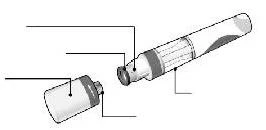
Store the packaged pen in the refrigerator at
2°C to 8°C and keep it out of the reach of children.
- Do not freeze the pen.
- Do not shake the pen.
- Do not use the pen if it has been dropped without the cap.
For a more comfortable injection, remove the pen from
the refrigerator 15–30 minutes before the injection to allow it
to reach room temperature.
What you need for the injection:
Included in the package: Not included in the package:
Cosentyx SensoReady pen 150 mg, • alcohol-impregnated wipes.
new and unused (1 pen is required for a • cotton ball or gauze
dose of 150 mg; 2 pens are required for a
dose of 300 mg).

- sharps disposal container
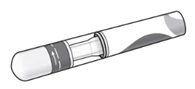
Before the injection:
1. Important safety checks before injection:
The liquid should be clear. The color may range from colorless to
slightly yellow.
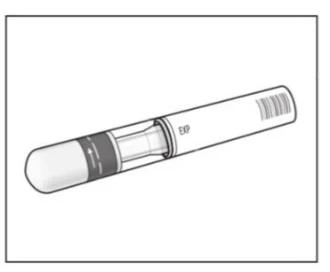
Do not use if the liquid contains visible particles, is cloudy,
or is clearly brown. Small air bubbles may be visible, which is normal.
Do not use the pen after the expiry date.
Do not use if the tamper-evident seal has been opened.
Contact your pharmacist if the pen fails any of these checks.
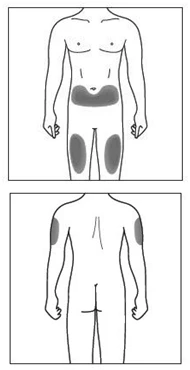
2a. Choosing the injection site
- The recommended site is the front of the thighs. You may also use the lower abdomen, but not the area within 5 centimeters of the navel.
- Select a different site for each new injection.
- Do not inject into areas where the skin is tender, bruised, red, scaly, or hard. Avoid areas with scars or stretch marks.
2b. For caregivers and healthcare professionals only
If the injection is administered by a caregiver or healthcare professional,
it may also be given in the outer upper arms.
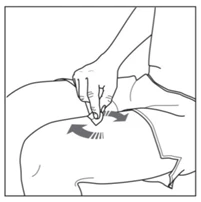
3. Cleaning the injection site
- Wash your hands with soap and warm water.
- Using a circular motion, clean the injection site with an alcohol swab. Allow it to dry before administering the injection.
- Do not touch the cleaned area again before giving the injection.
Injection
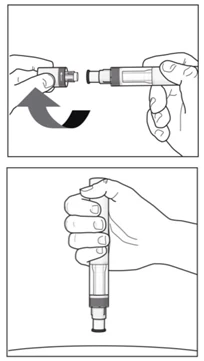
4. Removing the cap
- Remove the cap only when you are ready to use the pen.
- Unscrew the cap in the direction of the arrows.
- Once removed, discard the cap. Do not attempt to reattach the cap.
- Use the pen within 5 minutes after removing the cap.
5. Position of the pen
- Hold the pen at a 90-degree angle to the cleaned injection site.

Correct Incorrect

READ BEFORE ADMINISTERING THE INJECTION.
During the injection, you will hear 2 audible clicks.
The first click indicates that the injection has started. Several seconds later,
a second click will indicate that the injection is almost complete.
You must continue to hold the pen firmly against the skin until
you see a green indicator fill the window and stop moving.
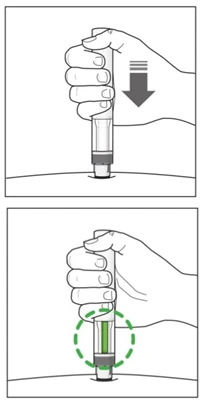
6. Start the injection
- Press the pen firmly against the skin to begin the injection.
- The first click indicates that the injection has started.
- Continue to keep the pen firmly pressed against the skin.
- The green indicator shows the progress of the injection.
7. Completing the injection
- Wait for the sound of the second click. This indicates that the injection is almost complete.
- Check that the green indicator has filled the window and has come to a stop. The pen can now be removed.
After the injection
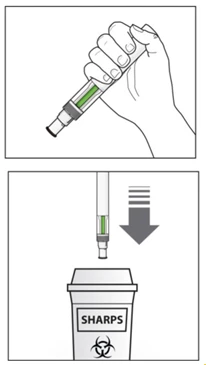
8. Check that the green indicator fills the window
- This means the medicine has been administered. Contact the doctor if the green indicator is not visible.
- Slight bleeding at the injection site may occur. If so, press a cotton ball or gauze pad against the injection site for 10 seconds. Do not rub the injection site. If needed, the injection site may be covered with a small plaster.
9. Disposal of the Cosentyx SensoReady pen
- Dispose of the used pen by placing it in a designated sharps container (e.g. a puncture-resistant, closable container or similar).
- Never attempt to reuse the pen.
Patient Information Leaflet: Information for the user
Cosentyx 300 mg solution for injection in pre-filled syringe
secukinumab
Please read this leaflet carefully before using this medicine because it contains important information for you.
- Keep this leaflet. You may need to read it again.
- If you have any questions, ask your doctor, pharmacist, or nurse.
- This medicine has been prescribed for you only. Do not give it to other people, even if they have the same symptoms as you, because it may be harmful.
- If you experience any side effect, including those not listed in this leaflet, tell your doctor, pharmacist, or nurse. See section 4.
Contents of this leaflet:
- What Cosentyx is and what it is used for
- What you need to know before using Cosentyx
- How to use Cosentyx
- Possible side effects
- How to store Cosentyx
- Contents of the pack and other information
1. What Cosentyx is and what it is used for
Cosentyx contains the active substance secukinumab. Secukinumab is a monoclonal antibody that belongs to a group of medicines known as interleukin (IL) inhibitors. This medicine works by neutralizing the activity of a protein called IL-17A, which is present at increased levels in conditions such as psoriasis, hidradenitis suppurativa, psoriatic arthritis, and axial spondyloarthritis.
Cosentyx is indicated for the treatment of the following inflammatory diseases:
- Plaque psoriasis
- Hidradenitis suppurativa
- Psoriatic arthritis
- Axial spondyloarthritis, including ankylosing spondylitis (radiographic axial spondyloarthritis) and non-radiographic axial spondyloarthritis
Plaque psoriasis
Cosentyx is used to treat a skin condition called "plaque psoriasis" that causes skin inflammation. Cosentyx reduces inflammation and other symptoms of the disease. Cosentyx is used in adults, adolescents, and children (from 6 years of age) with moderate to severe plaque psoriasis.
The use of Cosentyx in plaque psoriasis will benefit you by improving skin manifestations and reducing symptoms such as skin thickening, itching, and pain.
Hidradenitis suppurativa
Cosentyx is used to treat a condition called hidradenitis suppurativa, sometimes also known as inverse acne or Verneuil's disease. This condition is a chronic and painful inflammatory skin disease. Symptoms may include painful nodules (lumps) and abscesses (boils) that may drain pus. It commonly affects specific areas of the skin, such as the under-breast area, armpits, inner thighs, groin, and buttocks. Scarring may also develop in the affected areas.
Cosentyx can reduce the number of nodules and abscesses you have, as well as the pain often associated with this disease. If you have hidradenitis suppurativa, you will first be given other medicines. If you do not respond sufficiently to these medicines, you will be given Cosentyx.
Cosentyx is used in adults with hidradenitis suppurativa and may be used alone or in combination with antibiotics.
Psoriatic arthritis
Cosentyx is used to treat a condition called "psoriatic arthritis". This condition is an inflammatory joint disease, often accompanied by psoriasis. If you have active psoriatic arthritis, you will first be given other medicines. If you do not respond adequately to these medicines, Cosentyx will be prescribed to reduce the signs and symptoms of active psoriatic arthritis, improve physical function, and slow down damage to cartilage and bone in the joints affected by the disease.
Cosentyx is used in adults with active psoriatic arthritis and may be used alone or in combination with another medicine called methotrexate.
The use of Cosentyx in psoriatic arthritis will benefit you by reducing the signs and symptoms of the disease, slowing down damage to cartilage and bone in the affected joints, and improving your ability to perform normal daily activities.
Axial spondyloarthritis, including ankylosing spondylitis (radiographic axial spondyloarthritis) and non-radiographic axial spondyloarthritis
Cosentyx is used to treat conditions called "ankylosing spondylitis" and "non-radiographic axial spondyloarthritis". These conditions are inflammatory diseases that primarily affect the spine, causing inflammation of the spinal joints. If you have ankylosing spondylitis or non-radiographic axial spondyloarthritis, you will first be given other medicines. If you do not respond adequately to these medicines, Cosentyx will be prescribed to reduce the signs and symptoms of the disease, reduce inflammation, and improve your physical function.
Cosentyx is used in adults with active ankylosing spondylitis and active non-radiographic axial spondyloarthritis.
The use of Cosentyx in ankylosing spondylitis and non-radiographic axial spondyloarthritis will benefit you by reducing the signs and symptoms of the disease and improving your physical function.
2. What you need to know before using Cosentyx
Do not use Cosentyx:
- if you are allergic to secukinumab or to any of the other ingredients of this medicine (listed in section 6). If you think you might be allergic, consult your doctor before using Cosentyx.
- if you have an active infection considered significant by your doctor (for example, active tuberculosis).
Warnings and precautions
Talk to your doctor, nurse, or pharmacist before using Cosentyx:
- if you currently have an infection.
- if you have long-term (chronic) or recurring infections.
- if you have an inflammatory bowel disease called Crohn's disease.
- if you have inflammation of the large intestine called ulcerative colitis.
- if you have recently been vaccinated or are due to be vaccinated during treatment with Cosentyx.
- if you are receiving any other type of treatment for psoriasis, such as another immunosuppressant or ultraviolet (UV) light phototherapy.
Tuberculosis
Talk to your doctor if you currently have or have previously had tuberculosis. Also inform your doctor if you have recently been in close contact with someone who has tuberculosis. Your doctor will evaluate your condition and may perform a test before you start using Cosentyx. If your doctor believes you are at risk of tuberculosis, they may prescribe you medication for its treatment. If symptoms of tuberculosis develop during treatment with Cosentyx (such as persistent cough, weight loss, fatigue, or low-grade fever), inform your doctor immediately.
Hepatitis B
Talk to your doctor if you currently have or have previously had hepatitis B infection. This medicine may cause reactivation of the infection. Before and during treatment with secukinumab, your doctor may monitor for signs of infection. Inform your doctor if you notice any of the following symptoms: worsening tiredness, yellowing of the skin or whites of the eyes, dark urine, loss of appetite, nausea and/or pain in the upper right part of the abdomen.
Inflammatory bowel disease (Crohn's disease or ulcerative colitis)
Stop using Cosentyx and inform your doctor or seek immediate medical help if you experience abdominal cramps and pain, diarrhea, weight loss, blood in the stool, or any other sign of intestinal problems.
Be alert for infections and allergic reactions
Cosentyx may potentially cause serious side effects, including infections and allergic reactions. You should be alert for signs of these conditions while being treated with Cosentyx. Stop using Cosentyx and inform your doctor or seek immediate medical help if you notice any signs suggesting a serious infection or allergic reaction. These signs are listed in section 4 under "Serious side effects".
Children and adolescents
Cosentyx is not recommended for the treatment of children under 6 years of age with plaque psoriasis, as it has not been studied in this age group.
Cosentyx is not recommended for the treatment of children and adolescents (under 18 years of age) for other indications, as it has not been studied in this age group.
Other medicines and Cosentyx
Inform your doctor or pharmacist:
- if you are taking, have recently taken, or might take any other medicines.
- if you have recently been vaccinated or are due to be vaccinated. You must not receive certain types of vaccines (live vaccines) while using Cosentyx.
Pregnancy, breastfeeding, and fertility
- It is preferable to avoid using Cosentyx during pregnancy. The effects of the medicine in pregnant women are unknown. If you are of childbearing potential, you will be advised to avoid pregnancy and to use an effective method of contraception during treatment with Cosentyx and for at least 20 weeks after the last dose of Cosentyx. Inform your doctor if you are pregnant, suspect you may be pregnant, or are planning a pregnancy.
- Inform your doctor if you are breastfeeding or plan to breastfeed. You and your doctor will need to decide whether to breastfeed or use Cosentyx. You cannot do both. After receiving Cosentyx, you must not breastfeed for at least 20 weeks after the last dose.
Driving and using machines
It is unlikely that Cosentyx will affect your ability to drive or use machinery.
3. How to use Cosentyx
Use this medicine exactly as your doctor has instructed. If you have any doubts, consult your
doctor, nurse, or pharmacist.
Cosentyx is administered by subcutaneous injection (an injection under the skin). You and your
doctor must decide whether you should self-inject Cosentyx.
It is important not to attempt to inject yourself until your doctor, nurse, or pharmacist has shown you
how to do it properly. The person assisting you may also administer the Cosentyx injection after
appropriate training.
For detailed instructions on how to reconstitute and inject Cosentyx, see “Instructions for use of
Cosentyx 300 mg pre-filled syringe" at the end of this leaflet.
Instructions for use can also be found via the QR code and website below:
‘QR code to include’
www.cosentyx.eu
How much Cosentyx is given and for how long
Your doctor will decide how much Cosentyx you need and for how long.
Plaque psoriasis
Adults
- The recommended dose is 300 mg administered by subcutaneous injection.
- Each 300 mg dose is administered as one injection of 300 mg.
After the first dose, further weekly injections will be given at weeks 1, 2, 3 and 4, followed by monthly injections. Depending on your response, your doctor may recommend further dose adjustments. At each time, you will receive a dose of 300 mg administered as one injection of 300 mg.
Children from 6 years of age and older
- The recommended dose administered by subcutaneous injection is based on body weight as follows: o body weight below 25 kg: 75 mg as subcutaneous injection. o body weight 25 kg or above and below 50 kg: 75 mg as subcutaneous injection. o body weight 50 kg or above: 150 mg as subcutaneous injection. Your doctor may increase the dose to 300 mg.
- Each 300 mg dose is administered as one injection of 300 mg or as two injections of 150 mg. Other pharmaceutical forms/dosages may be available for administration of 75 mg and 150 mg doses.
After the first dose, further weekly injections will be given at weeks 1, 2, 3 and 4, followed by monthly injections.
Hidradenitis suppurativa
- The recommended dose is 300 mg by subcutaneous injection.
- Each 300 mg dose is administered as one injection of 300 mg.
After the first dose, further weekly injections will be given at weeks 1, 2, 3 and 4, followed by monthly injections. Based on your response, your doctor may recommend further dose adjustments.
Psoriatic arthritis
If you have both psoriatic arthritis and moderate to severe plaque psoriasis, your doctor may adjust the dosing recommendations as necessary.
For patients who have not responded adequately to medicines called tumour necrosis factor (TNF) inhibitors:
- The recommended dose is 300 mg by subcutaneous injection.
- Each 300 mg dose is administered as one injection of 300 mg.
After the first dose, further weekly injections will be given at weeks 1, 2, 3 and 4, followed by monthly injections. For each administration, you will receive a 300 mg dose administered as one injection of 300 mg.
For other patients with psoriatic arthritis:
- The recommended dose is 150 mg by subcutaneous injection. Other pharmaceutical forms/dosages are available for the 150 mg dose.
After the first dose, further weekly injections will be given at weeks 1, 2, 3 and 4, followed by monthly injections.
Depending on your response, your doctor may increase the dose to 300 mg.
Ankylosing spondylitis (radiographic axial spondyloarthritis)
- The recommended dose is 150 mg by subcutaneous injection. Other pharmaceutical forms/dosages are available for the 150 mg dose.
After the first dose, further weekly injections will be given at weeks 1, 2, 3 and 4, followed by monthly injections.
Depending on your response, your doctor may increase the dose to 300 mg. Each 300 mg dose is administered as one injection of 300 mg.
Non-radiographic axial spondyloarthritis
- The recommended dose is 150 mg by subcutaneous injection. Other pharmaceutical forms/dosages are available for the 150 mg dose.
After the first dose, further weekly injections will be given at weeks 1, 2, 3 and 4, followed by monthly injections.
Cosentyx is used for long-term treatment. Your doctor will regularly monitor your condition to ensure the treatment is having the desired effect.
If you use more Cosentyx than you should
If you have received more Cosentyx than you should, or the dose was administered earlier than prescribed, inform your doctor.
If you forget to use Cosentyx
If you have forgotten to inject a dose of Cosentyx, administer it as soon as you remember. Then contact your doctor to discuss when you should inject the next dose.
If you stop using Cosentyx
It is not dangerous to stop using Cosentyx. However, if you stop treatment, symptoms of psoriasis, psoriatic arthritis or axial spondyloarthritis may return.
If you have any questions about the use of this medicine, ask your doctor, pharmacist or nurse.
4. Possible side effects
Like all medicines, this medicine can cause side effects, although not everyone gets them.
Serious side effects
Stop using Cosentyx and contact your doctor or seek immediate medical help if you experience
any of the following side effects:
Possible serious infections – signs may include:
- fever, flu-like symptoms, night sweats
- feeling tired or short of breath, persistent cough
- skin that is warm, red and painful, or a painful blistering rash
- burning sensation when urinating.
Severe allergic reaction – signs may include:
- difficulty breathing or swallowing
- low blood pressure which may cause dizziness or feeling lightheaded
- swelling of the face, lips, tongue or throat
- severe skin itching, with redness or raised hives.
Your doctor will decide whether and when you can restart treatment.
Other side effects
Most of the following side effects are mild or moderate. If any of these
side effects become severe, inform your doctor, pharmacist or nurse.
Very common (may affect more than 1 in 10 people):
- upper respiratory tract infections with symptoms such as sore throat and runny nose (nasopharyngitis, rhinitis)
Common (may affect up to 1 in 10 people):
- cold sores (oral herpes)
- diarrhoea
- runny nose (rhinorrhoea)
- headache
- nausea
- fatigue
- itchy, red and dry skin (eczema)
Uncommon (may affect up to 1 in 100 people):
- oral thrush (oral candidiasis)
- signs of low white blood cell counts, such as fever, sore throat or mouth ulcers due to infections (neutropenia)
- outer ear infection (otitis externa)
- eye discharge with itching, redness and swelling (conjunctivitis)
- itchy rash (urticaria)
- lower respiratory tract infections
- cramps and abdominal pain, diarrhoea, weight loss or blood in the stools (signs of intestinal problems)
- small itchy blisters on the palms of the hands, soles of the feet and edges of fingers and toes (dyshidrotic eczema)
- athlete’s foot (tinea pedis)
Rare (may affect up to 1 in 1,000 people):
- severe allergic reaction with shock (anaphylactic reaction)
- redness and peeling of the skin over a large area of the body, possibly with itching or pain (exfoliative dermatitis)
- inflammation of small blood vessels, which may cause a rash with red or purple spots (vasculitis)
- swelling of the neck, face, mouth or throat which may cause difficulty swallowing or breathing (angioedema)
Not known (frequency cannot be estimated from the available data):
- fungal infections of the skin and mucous membranes (including oesophageal candidiasis)
- painful swelling and skin ulceration (pyoderma gangrenosum)
Reporting of side effects
If you get any side effects, including those not listed in this leaflet, talk to your doctor, pharmacist or nurse. You can also report side effects directly through the national reporting system listed in Annex V. By reporting side effects, you can help provide more information on the safety of this medicine.
5. How to store Cosentyx
Keep this medicine out of the sight and reach of children.
Do not use this medicine:
- after the expiry date stated on the carton after “Exp.” or on the syringe label after “EXP”.
- if the solution contains visible particles, is cloudy, or is clearly brown.
Store the syringe in its sealed packaging in the refrigerator, between 2°C and 8°C. Do not freeze. Do not shake.
If necessary, Cosentyx may be kept outside the refrigerator for a single period not exceeding 4 days at room temperature not exceeding 30°C.
This medicine is for single use only.
Do not dispose of medicines via wastewater. Ask your pharmacist how to dispose of medicines no longer required. This will help protect the environment.
6. Contents of the pack and other information
What Cosentyx contains
- The active substance is secukinumab. Each pre-filled syringe contains 300 mg of secukinumab.
- The other components are trehalose dihydrate, histidine, monohydrochloride monohydrate of histidine, methionine, polysorbate 80, and water for injections.
Description of the appearance of Cosentyx and contents of the pack
Cosentyx injectable solution is a clear liquid. Its colour may vary from colourless to
slightly yellow.
Cosentyx 300 mg solution for injection in pre-filled syringe is available in a pack containing 1 pre-filled syringe and in multiple packs containing 3 (3 packs of 1) pre-filled syringes.
Not all pack sizes may be marketed.
Marketing Authorisation Holder
Novartis Europharm Limited
Vista Building
Elm Park, Merrion Road
Dublin 4
Ireland
Manufacturer
Sandoz GmbH
Biochemiestrasse 10
6336 Langkampfen
Austria
Novartis Pharmaceutical Manufacturing GmbH
Biochemiestrasse 10
6336 Langkampfen
Austria
Novartis Pharma GmbH
Sophie-Germain-Strasse 10
90443 Nuremberg
Germany
For further information on this medicinal product, please contact the local representative of the Marketing Authorisation Holder:
België/Belgique/Belgien Lietuva
Novartis Pharma N.V. SIA Novartis Baltics Lietuvos filialas
Tél/Tel: +32 2 246 16 11 Tel: +370 5 269 16 50
България Luxembourg/Luxemburg
Novartis Bulgaria EOOD Novartis Pharma N.V.
Тел: +359 2 489 98 28 Tél/Tel: +32 2 246 16 11
Česká republika Magyarország
Novartis s.r.o. Novartis Hungária Kft.
Tel: +420 225 775 111 Tel.: +36 1 457 65 00
Danmark Malta
Novartis Healthcare A/S Novartis Pharma Services Inc.
Tlf.: +45 39 16 84 00 Tel: +356 2122 2872
Deutschland Nederland
Novartis Pharma GmbH Novartis Pharma B.V.
Tel: +49 911 273 0 Tel: +31 88 04 52 111
Eesti Norge
SIA Novartis Baltics Eesti filiaal Novartis Norge AS
Tel: +372 66 30 810 Tlf: +47 23 05 20 00
Ελλάδα Österreich
Novartis (Hellas) A.E.B.E. Novartis Pharma GmbH
Τηλ: +30 210 281 17 12 Tel: +43 1 86 6570
España Polska
Novartis Farmacéutica, S.A. Novartis Poland Sp. z o.o.
Tel: +34 93 306 42 00 Tel.: +48 22 375 4888
France Portugal
Novartis Pharma S.A.S. Novartis Farma - Produtos Farmacêuticos, S.A.
Tél: +33 1 55 47 66 00 Tel: +351 21 000 8600
Hrvatska România
Novartis Hrvatska d.o.o. Novartis Pharma Services Romania SRL
Tel. +385 1 6274 220 Tel: +40 21 31299 01
Ireland Slovenija
Novartis Ireland Limited Novartis Pharma Services Inc.
Tel: +353 1 260 12 55 Tel: +386 1 300 75 50
Ísland Slovenská republika
Vistor hf. Novartis Slovakia s.r.o.
Sími: +354 535 7000 Tel: +421 2 5542 5439
Italia Suomi/Finland
Novartis Farma S.p.A. Novartis Finland Oy
Tel: +39 02 96 54 1 Puh/Tel: +358 (0)10 6133 200
Κύπρος Sverige
Novartis Pharma Services Inc. Novartis Sverige AB
Τηλ: +357 22 690 690 Tel: +46 8 732 32 00
Latvija
SIA Novartis Baltics
Tel: +371 67 887 070
Other sources of information
More detailed information on this medicinal product is available on the website of the European Medicines Agency: https://www.ema.europa.eu .
Instructions for use Cosentyx 300 mg pre-filled syringe
Read these instructions COMPLETELY before administering the injection. It is important not
to attempt to perform the injection yourself until you have received proper
instructions from your doctor, nurse, or pharmacist. The package contains one (or more) individually
sealed plastic blister(s) with a pre-filled syringe(s) of Cosentyx 300 mg.
Appearance of the Cosentyx 300 mg pre-filled syringe
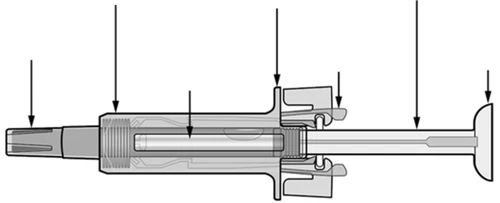
Plunger
Barrel
Grip
Syringe
Wings of the safety
Cap
Viewing window,
tip and label
device
protective cap
and plunger end
expiry date
After injecting the medicine, the syringe’s safety device is activated to cover the needle.
This is designed to help protect healthcare professionals, patients who self-administer the injection, and caregivers assisting patients during self-administration from accidental needle-stick injuries.

What you need for the injection:
- Alcohol swab
- Cotton ball or gauze
- Sharps disposal container
Important safety information
Warning: Keep the syringe out of sight and reach of children.
- Do not open the sealed outer packaging until it is time to use this medicine.
- Do not use this medicine if the seal on the outer box or the blister seal is damaged, as use may not be safe.
- Do not use if the syringe has fallen onto a hard surface or if it has fallen after removing the needle cap.
- Never leave the syringe unattended where others could tamper with it.
- Do not shake the syringe.
- Be careful not to touch the safety wings of the syringe before use. Touching them may prematurely activate the syringe’s safety mechanism.
- Do not remove the protective needle cap until you are ready to inject.
- The syringe cannot be reused. Immediately dispose of the syringe in a sharps disposal container after use.
Storage of the Cosentyx 300 mg pre-filled syringe
- Store this medicine sealed in its original box to protect it from light. Store in the refrigerator at 2°C to 8°C. DO NOT FREEZE.
- Before preparing the syringe for injection, remember to remove it from the refrigerator and allow it to reach room temperature (30–45 minutes).
- Do not use the syringe after the expiry date printed on the box after “Exp.” or on the syringe label after “EXP”. If expired, return the entire package to the pharmacy.
Injection site
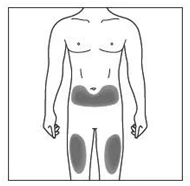
The injection site refers to the area of the body where
the syringe will be used.
- The recommended site is the front of the thighs. You may also use the lower abdomen, but not the area within 5 centimeters around the navel.
- Choose a different site each time you administer an injection.
- Do not inject into areas where the skin is tender, bruised, red, scaly, or hardened. Avoid areas with scars or stretch marks.
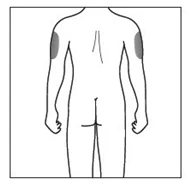
If the injection is administered by someone assisting you, the outer upper arms may also be used.
Preparing the Cosentyx 300 mg pre-filled syringe for use
- Remove the syringe package from the refrigerator and leave it closed for approximately 30–45 minutes so that it reaches room temperature.
- Wash your hands thoroughly with soap and water when you are ready to use the syringe.
- Clean the injection site with an alcohol swab.
- Remove the syringe from the box and take it out of the blister pack by holding the protective body.
- Inspect the syringe. The liquid should be clear. The color may range from colorless to slightly yellow. Small air bubbles may be visible, which is normal. DO NOT USE if the liquid contains visible particles, is cloudy, or is clearly brown. DO NOT USE if the syringe is damaged. In all these cases, return the entire package to the pharmacy.
How to use the Cosentyx 300 mg pre-filled syringe
Carefully remove the protective needle cap
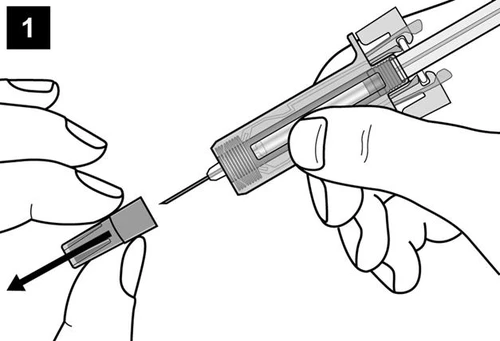
by holding the syringe at the protective body, and discard the protective needle cap. A small drop of liquid may appear at the tip of the needle. This is normal.
Gently pinch the skin at the injection site and insert the needle as shown.
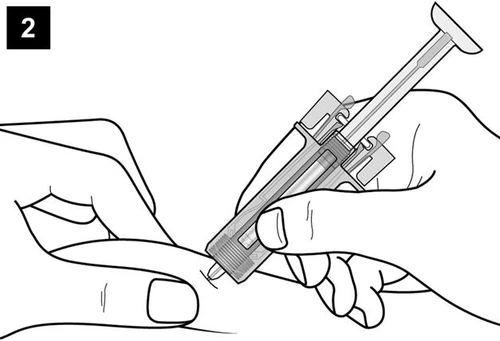
Push the needle fully in to ensure that all the medicine is delivered.
Hold the syringe as illustrated. Press
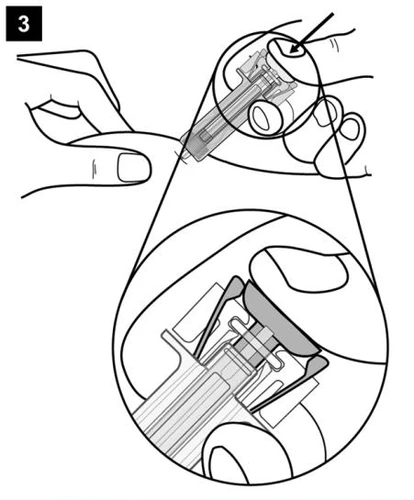 | |
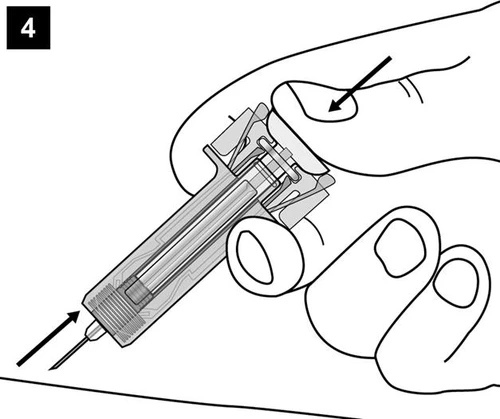 | |
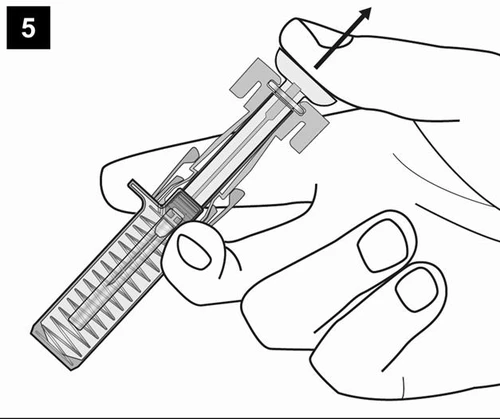 | |
slowly push the plunger all the way down so
that the plunger head is between the protective
fins of the syringe.
Continue to keep the plunger pressed while
holding the syringe in place for
5 seconds.
Keep the plunger continuously depressed
while carefully removing the needle from the
injection site.
Slowly release the plunger to allow the syringe
shield to automatically cover the exposed needle.
Slight bleeding at the injection site may occur. If
so, press a cotton ball or gauze pad against the
injection site and hold for 10 seconds. Do not
rub the injection site. If needed, the injection site
may be covered with a small plaster.
Disposal instructions
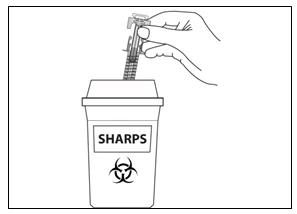
Dispose of the used syringe by placing it in a
dedicated sharps container (a puncture-resistant,
re-sealable container).
For your safety and the safety of others, used
needles and syringes must never be reused.
Package leaflet: information for the user
Cosentyx 300 mg solution for injection in a pre-filled pen
secukinumab
Please read this leaflet carefully before using this medicine because it contains important information for you.
- Keep this leaflet. You may need to read it again.
- If you have any questions, ask your doctor, pharmacist, or nurse.
- This medicine has been prescribed for you only. Do not give it to other people, even if they have the same symptoms as you, because it could be harmful.
- If you experience any side effects, including those not listed in this leaflet, contact your doctor, pharmacist, or nurse. See section 4.
Contents of this leaflet:
- What Cosentyx is and what it is used for
- What you need to know before using Cosentyx
- How to use Cosentyx
- Possible side effects
- How to store Cosentyx
- Contents of the pack and other information
1. What Cosentyx is and what it is used for
Cosentyx contains the active substance secukinumab. Secukinumab is a monoclonal antibody that belongs to a group of medicines called interleukin (IL) inhibitors. This medicine works by neutralizing the activity of a protein called IL-17A, which is present at increased levels in conditions such as psoriasis, hidradenitis suppurativa, psoriatic arthritis, and axial spondyloarthritis.
Cosentyx is indicated for the treatment of the following inflammatory diseases:
- Plaque psoriasis
- Hidradenitis suppurativa
- Psoriatic arthritis
- Axial spondyloarthritis, including ankylosing spondylitis (radiographic axial spondyloarthritis) and non-radiographic axial spondyloarthritis
Plaque psoriasis
Cosentyx is used to treat a skin condition called "plaque psoriasis" which causes skin inflammation. Cosentyx reduces inflammation and other symptoms of the disease. Cosentyx is used in adults, adolescents, and children (from 6 years of age) with moderate to severe plaque psoriasis.
The use of Cosentyx in plaque psoriasis will benefit you by improving skin manifestations and reducing symptoms such as skin thickening, itching, and pain.
Hidradenitis suppurativa
Cosentyx is used to treat a condition called hidradenitis suppurativa, sometimes also known as inverse acne or Verneuil's disease. This condition is a chronic, painful inflammatory skin disease. Symptoms may include painful nodules (lumps) and abscesses (boils) that may drain pus. It commonly affects specific skin areas such as under the breasts, armpits, inner thighs, groin, and buttocks. Scarring may also develop in affected areas.
Cosentyx can reduce the number of nodules and abscesses you have, as well as the pain often associated with this disease. If you have hidradenitis suppurativa, you will first be given other medicines. If you do not respond adequately to these medicines, you will be given Cosentyx.
Cosentyx is used in adults with hidradenitis suppurativa and may be used alone or in combination with antibiotics.
Psoriatic arthritis
Cosentyx is used to treat a condition called "psoriatic arthritis". This condition is an inflammatory joint disease, often accompanied by psoriasis. If you have active psoriatic arthritis, you will first be given other medicines. If you do not respond adequately to these medicines, Cosentyx will be given to reduce the signs and symptoms of active psoriatic arthritis, improve physical function, and slow down damage to cartilage and bone in the joints affected by the disease.
Cosentyx is used in adults with active psoriatic arthritis and may be used alone or in combination with another medicine called methotrexate.
The use of Cosentyx in psoriatic arthritis will benefit you by reducing the signs and symptoms of the disease, slowing down damage to cartilage and bone in the affected joints, and improving your ability to perform normal daily activities.
Axial spondyloarthritis, including ankylosing spondylitis (radiographic axial spondyloarthritis) and non-radiographic axial spondyloarthritis
Cosentyx is used to treat conditions called "ankylosing spondylitis" and "non-radiographic axial spondyloarthritis". These conditions are inflammatory diseases that primarily affect the spine, causing inflammation of the spinal joints. If you have ankylosing spondylitis or non-radiographic axial spondyloarthritis, you will first be given other medicines. If you do not respond adequately to these medicines, Cosentyx will be given to reduce the signs and symptoms of the disease, reduce inflammation, and improve your physical function.
Cosentyx is used in adults with active ankylosing spondylitis and active non-radiographic axial spondyloarthritis.
The use of Cosentyx in ankylosing spondylitis and non-radiographic axial spondyloarthritis will benefit you by reducing the signs and symptoms of the disease and improving your physical function.
2. What you should know before using Cosentyx
Do not use Cosentyx:
- if you are allergic to secukinumab or to any of the other ingredients of this medicine (listed in section 6). If you think you might be allergic, consult your doctor before using Cosentyx.
- if you have an active infection that your doctor considers serious (for example, active tuberculosis).
Warnings and precautions
Talk to your doctor, nurse, or pharmacist before using Cosentyx:
- if you currently have an infection.
- if you have long-term (chronic) or recurring infections.
- if you have an inflammatory bowel disease called Crohn's disease.
- if you have inflammation of the large intestine called ulcerative colitis.
- if you have recently been vaccinated or are due to be vaccinated during treatment with Cosentyx.
- if you are receiving any other type of treatment for psoriasis, such as another immunosuppressant or ultraviolet (UV) phototherapy.
Tuberculosis
Talk to your doctor if you currently have or have previously had tuberculosis. Also inform your doctor if you have recently been in close contact with someone who has tuberculosis. Your doctor will assess your condition and may perform a test before you start using Cosentyx. If your doctor believes you are at risk of tuberculosis, they may prescribe medication for its treatment. If symptoms of tuberculosis occur during treatment with Cosentyx (such as persistent cough, weight loss, fatigue, or low-grade fever), inform your doctor immediately.
Hepatitis B
Talk to your doctor if you currently have or have previously had hepatitis B infection. This medicine may cause reactivation of the infection. Before and during treatment with secukinumab, your doctor may monitor for signs of infection. Inform your doctor if you notice any of the following symptoms: worsening fatigue, yellowing of the skin or whites of the eyes, dark urine, loss of appetite, nausea and/or pain in the upper right part of the abdomen.
Inflammatory bowel disease (Crohn's disease or ulcerative colitis)
Stop using Cosentyx and inform your doctor or seek immediate medical help if you experience abdominal cramps and pain, diarrhea, weight loss, blood in the stool, or any other signs of intestinal problems.
Be aware of infections and allergic reactions
Cosentyx may potentially cause serious side effects, including infections and allergic reactions. You should be vigilant for signs of these conditions while being treated with Cosentyx. Stop using Cosentyx and inform your doctor or seek immediate medical help if you notice any signs suggestive of a serious infection or allergic reaction. These signs are listed in section 4 under "Serious side effects".
Children and adolescents
Cosentyx is not recommended for the treatment of children under 6 years of age with plaque psoriasis, as it has not been studied in this age group.
Cosentyx is not recommended for the treatment of children and adolescents (under 18 years of age) for other indications, as it has not been studied in this age group.
Other medicines and Cosentyx
Inform your doctor or pharmacist:
- if you are taking, have recently taken, or might take any other medicines.
- if you have recently been vaccinated or are due to be vaccinated. You must not receive certain types of vaccines (live vaccines) while you are using Cosentyx.
Pregnancy, breastfeeding, and fertility
- It is advisable to avoid using Cosentyx during pregnancy. The effects of the medicine in pregnant women are unknown. If you are of childbearing age, you will be advised to avoid pregnancy and to use an effective method of contraception during treatment with Cosentyx and for at least 20 weeks after the last dose of Cosentyx. Inform your doctor if you are pregnant, suspect you may be pregnant, or are planning a pregnancy.
- Inform your doctor if you are breastfeeding or plan to breastfeed. You and your doctor will need to decide whether to breastfeed or use Cosentyx. You cannot do both. After using Cosentyx, you must not breastfeed for at least 20 weeks after the last dose.
Driving and using machines
It is unlikely that Cosentyx will affect your ability to drive or use machinery.
3. How to use Cosentyx
Use this medicine exactly as instructed by your doctor. If you have any doubts, consult your doctor, nurse, or pharmacist.
Cosentyx is administered by subcutaneous injection (injection under the skin). You and your doctor will decide whether you should self-inject Cosentyx.
It is important not to attempt to give yourself the injection until you have been properly trained to do so by your doctor, nurse, or pharmacist. A caregiver may also administer the injection of Cosentyx after appropriate training.
For detailed instructions on how to inject Cosentyx, see “Instructions for use of Cosentyx 300 mg pre-filled pen UnoReady” at the end of this leaflet.
Instructions for use can also be accessed via the QR code and website below:
‘QR code to be included’
www.cosentyx.eu
How much Cosentyx is administered and for how long
Your doctor will determine the required dose and duration of treatment.
Plaque psoriasis
Adults
- The recommended dose is 300 mg administered by subcutaneous injection.
- Each 300 mg dose is administered as one 300 mg injection.
After the first dose, additional weekly injections will be given at weeks 1, 2, 3, and 4, followed by monthly injections. Depending on your response, your doctor may recommend further dose adjustments. At each administration, you will receive a dose of 300 mg given as one 300 mg injection.
Children from 6 years of age
- The recommended dose administered by subcutaneous injection is based on body weight as follows:
o Body weight below 25 kg: 75 mg as subcutaneous injection.
o Body weight 25 kg or above and below 50 kg: 75 mg as subcutaneous injection.
o Body weight 50 kg or above: 150 mg as subcutaneous injection. Your doctor may increase the dose to 300 mg. - Each 300 mg dose is administered as one 300 mg injection or as two 150 mg injections. Other pharmaceutical forms/dosages may be available for administration of 75 mg and 150 mg doses.
After the first dose, additional weekly injections will be given at weeks 1, 2, 3, and 4, followed by monthly injections.
Hidradenitis suppurativa
- The recommended dose is 300 mg by subcutaneous injection.
- Each 300 mg dose is administered as one 300 mg injection.
After the first dose, additional weekly injections will be given at weeks 1, 2, 3, and 4, followed by monthly injections. Based on your response, your doctor may recommend further dose adjustments.
Psoriatic arthritis
If you have both psoriatic arthritis and moderate to severe plaque psoriasis, your doctor may adjust the dosing recommendations as necessary.
For patients who have not responded adequately to medications known as tumour necrosis factor (TNF) inhibitors:
- The recommended dose is 300 mg by subcutaneous injection.
- Each 300 mg dose is administered as one 300 mg injection.
After the first dose, additional weekly injections will be given at weeks 1, 2, 3, and 4, followed by monthly injections. For each administration, you will receive a 300 mg dose via one 300 mg injection.
For other patients with psoriatic arthritis:
- The recommended dose is 150 mg by subcutaneous injection. Other pharmaceutical forms/dosages are available for the 150 mg dose.
After the first dose, additional weekly injections will be given at weeks 1, 2, 3, and 4, followed by monthly injections.
Depending on your response, your doctor may increase the dose to 300 mg.
Ankylosing spondylitis (radiographic axial spondyloarthritis)
- The recommended dose is 150 mg by subcutaneous injection. Other pharmaceutical forms/dosages are available for the 150 mg dose.
After the first dose, additional weekly injections will be given at weeks 1, 2, 3, and 4, followed by monthly injections.
Depending on your response, your doctor may increase the dose to 300 mg. Each 300 mg dose is administered as one 300 mg injection.
Non-radiographic axial spondyloarthritis
- The recommended dose is 150 mg by subcutaneous injection. Other pharmaceutical forms/dosages are available for the 150 mg dose.
After the first dose, additional weekly injections will be given at weeks 1, 2, 3, and 4, followed by monthly injections.
Cosentyx is used for long-term treatment. Your doctor will regularly monitor your condition to ensure the treatment is having the desired effect.
If you use more Cosentyx than you should
If you have received more Cosentyx than prescribed or if the dose was administered earlier than scheduled, inform your doctor.
If you forget to use Cosentyx
If you have forgotten to inject a dose of Cosentyx, administer it as soon as you remember. Then inform your doctor to discuss when you should receive the next dose.
If you stop using Cosentyx
Stopping treatment with Cosentyx is not dangerous. However, if you discontinue treatment, symptoms of psoriasis, psoriatic arthritis, or axial spondyloarthritis may return.
If you have any questions about the use of this medicine, consult your doctor, pharmacist, or nurse.
4. Possible side effects
Like all medicines, this medicine can cause side effects, although not everyone experiences them.
Serious side effects
Stop using Cosentyx and inform your doctor or seek immediate medical help if you experience
any of the following side effects:
Possible serious infections – signs may include:
- fever, flu-like symptoms, night sweats
- feeling tired or short of breath, persistent cough
- skin that is warm, red and painful, or a painful rash with blisters
- burning sensation when urinating.
Severe allergic reaction – signs may include:
- difficulty breathing or swallowing
- low blood pressure that may cause dizziness or lightheadedness
- swelling of the face, lips, tongue or throat
- severe skin itching, with redness or raised hives.
Your doctor will decide whether and when you can restart treatment.
Other side effects
Most of the following side effects are mild or moderate. If any of these
side effects become severe, inform your doctor, pharmacist or nurse.
Very common (may affect more than 1 in 10 people):
- upper respiratory tract infections with symptoms such as sore throat and runny nose (nasopharyngitis, rhinitis)
Common (may affect up to 1 in 10 people):
- cold sores (oral herpes)
- diarrhoea
- runny nose (rhinorrhoea)
- headache
- nausea
- fatigue
- itchy, red and dry skin (eczema)
Uncommon (may affect up to 1 in 100 people):
- oral thrush (oral candidiasis)
- signs of low white blood cell levels, such as fever, sore throat or mouth ulcers due to infections (neutropenia)
- outer ear infection (otitis externa)
- eye discharge with itching, redness and swelling (conjunctivitis)
- itchy skin rash (urticaria)
- lower respiratory tract infections
- cramps and abdominal pain, diarrhoea, weight loss or blood in the stools (signs of intestinal problems)
- small itchy blisters on the palms of the hands, soles of the feet and edges of fingers and toes (dyshidrotic eczema)
- athlete’s foot (tinea pedis)
Rare (may affect up to 1 in 1,000 people):
- severe allergic reaction with shock (anaphylactic reaction)
- redness and peeling of the skin over a large area of the body, possibly with itching or pain (exfoliative dermatitis)
- inflammation of small blood vessels, which may cause a rash with red or purple spots (vasculitis)
- swelling of the neck, face, mouth or throat that may cause difficulty swallowing or breathing (angioedema)
Not known (frequency cannot be estimated from the available data):
- fungal infections of the skin and mucous membranes (including oesophageal candidiasis)
- painful swelling and skin ulceration (pyoderma gangrenosum)
Reporting of side effects
If you experience any side effect, including those not listed in this leaflet, please inform your
doctor, pharmacist or nurse. You can also report side effects directly
through the national reporting system listed in Annex V. By reporting side effects, you can help
provide more information on the safety of this medicine.
5. How to store Cosentyx
Keep this medicine out of the sight and reach of children.
Do not use this medicine:
- after the expiry date stated on the carton after “Exp.” or on the pen label after “EXP”.
- if the solution contains visible particles, is cloudy, or is clearly brown.
Store the pen sealed in its carton to protect the medicine from light. Store in a refrigerator between 2°C and 8°C. Do not freeze. Do not shake.
If necessary, Cosentyx may be kept outside the refrigerator for one single period not exceeding 4 days at room temperature not above 30°C.
This medicine is for single use only. Do not dispose of medicines via wastewater. Ask your pharmacist how to dispose of medicines no longer required. This will help protect the environment.
6. Package contents and other information
What Cosentyx contains
- The active substance is secukinumab. Each pre-filled pen contains 150 mg of secukinumab.
- The other components are trehalose dihydrate, histidine, monohydrate hydrochloride histidine, methionine, polysorbate 80 and water for injections.
Description of the appearance of Cosentyx and contents of the pack
Cosentyx injectable solution is a clear liquid. Its colour may vary from colourless to
slightly yellow.
Cosentyx 300 mg solution for injection in pre-filled pen is available in a pack containing 1 pre-filled pen and in multiple packs containing 3 (3 packs of 1) pre-filled pens.
Not all pack sizes may be marketed.
Marketing Authorization Holder
Novartis Europharm Limited
Vista Building
Elm Park, Merrion Road
Dublin 4
Ireland
Manufacturer
Sandoz GmbH
Biochemiestrasse 10
6336 Langkampfen
Austria
Novartis Pharmaceutical Manufacturing GmbH
Biochemiestrasse 10
6336 Langkampfen
Austria
Novartis Pharma GmbH
Sophie-Germain-Strasse 10
90443 Nuremberg
Germany
For further information about this medicinal product, please contact the local representative of the Marketing Authorization Holder:
België/Belgique/Belgien Lietuva
Novartis Pharma N.V. SIA Novartis Baltics Lietuvos filialas
Tél/Tel: +32 2 246 16 11 Tel: +370 5 269 16 50
България Luxembourg/Luxemburg
Novartis Bulgaria EOOD Novartis Pharma N.V.
Тел: +359 2 489 98 28 Tél/Tel: +32 2 246 16 11
Česká republika Magyarország
Novartis s.r.o. Novartis Hungária Kft.
Tel: +420 225 775 111 Tel.: +36 1 457 65 00
Danmark Malta
Novartis Healthcare A/S Novartis Pharma Services Inc.
Tlf.: +45 39 16 84 00 Tel: +356 2122 2872
Deutschland Nederland
Novartis Pharma GmbH Novartis Pharma B.V.
Tel: +49 911 273 0 Tel: +31 88 04 52 111
Eesti Norge
SIA Novartis Baltics Eesti filiaal Novartis Norge AS
Tel: +372 66 30 810 Tlf: +47 23 05 20 00
Ελλάδα Österreich
Novartis (Hellas) A.E.B.E. Novartis Pharma GmbH
Τηλ: +30 210 281 17 12 Tel: +43 1 86 6570
España Polska
Novartis Farmacéutica, S.A. Novartis Poland Sp. z o.o.
Tel: +34 93 306 42 00 Tel.: +48 22 375 4888
France Portugal
Novartis Pharma S.A.S. Novartis Farma - Produtos Farmacêuticos, S.A.
Tél: +33 1 55 47 66 00 Tel: +351 21 000 8600
Hrvatska România
Novartis Hrvatska d.o.o. Novartis Pharma Services Romania SRL
Tel. +385 1 6274 220 Tel: +40 21 31299 01
Ireland Slovenija
Novartis Ireland Limited Novartis Pharma Services Inc.
Tel: +353 1 260 12 55 Tel: +386 1 300 75 50
Ísland Slovenská republika
Vistor hf. Novartis Slovakia s.r.o.
Sími: +354 535 7000 Tel: +421 2 5542 5439
Italia Suomi/Finland
Novartis Farma S.p.A. Novartis Finland Oy
Tel: +39 02 96 54 1 Puh/Tel: +358 (0)10 6133 200
Κύπρος Sverige
Novartis Pharma Services Inc. Novartis Sverige AB
Τηλ: +357 22 690 690 Tel: +46 8 732 32 00
Latvija
SIA Novartis Baltics
Tel: +371 67 887 070
Other sources of information
More detailed information on this medicinal product is available on the website of the European Medicines Agency: https://www.ema.europa.eu .
Instructions for the use of the Cosentyx 300 mg UnoReady pen
secukinumab

READ THESE INSTRUCTIONS IN FULL BEFORE PERFORMING
THE INJECTION.
These instructions are intended to assist you in correctly administering the injection
using the Cosentyx UnoReady pen.
It is important not to attempt to perform the injection by yourself until you have
received proper instructions from your doctor, nurse, or pharmacist.
Appearance of the 300 mg Cosentyx UnoReady pen:
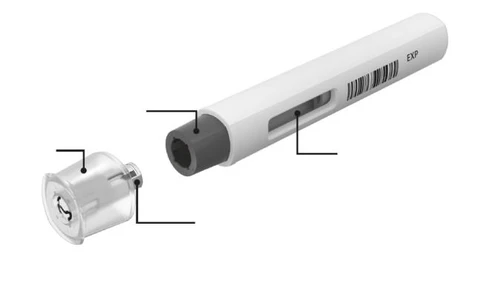
Do not use the Cosentyx UnoReady pen if the seal on the
outer packaging is broken.
Keep the Cosentyx UnoReady pen in its sealed
outer packaging until ready to use, to protect it from light.
Store the Cosentyx UnoReady pen in the
refrigerator at a temperature between 2°C and 8°C and keep it
out of the reach of children.
- Do not freeze the pen.
- Do not shake the pen.
- Do not use the pen if it has been dropped without the cap.
The needle is covered by a protective device and is not visible.
Do not touch or push the needle protection device, as you could injure yourself.
The 300 mg Cosentyx UnoReady pen
shown above with the cap removed.
Do not remove the cap until ready for injection.
What you need for the injection:
Included in the package: Not included in the
package:
Cosentyx 300 mg UnoReady pen,
new and unused • alcohol-impregnated wipes
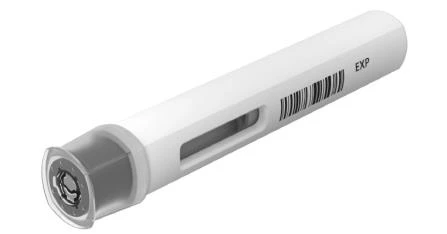
- cotton ball or

gauze
- sharps disposal container
Before the injection:
Remove the Cosentyx 300 mg UnoReady pen from the refrigerator 30–45 minutes before the injection
to allow it to reach room temperature.
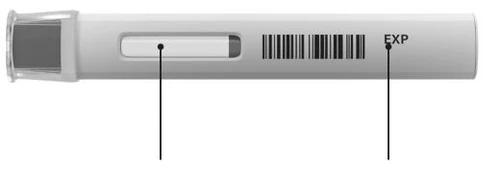
1. Important safety checks before injection:
For the "Inspection Window":
the liquid must be clear. The color may vary from
colorless to slightly yellow.
Do not use if the liquid contains easily visible
particles, is cloudy, or clearly brown.
Small air bubbles may be visible, which is normal.
For the "Expiry date":
check the expiry date (EXP) on the Cosentyx UnoReady pen.
Do not use the pen after the expiry date.
Ensure the pen contains the correct medicine and dose.
Contact your pharmacist if the pen fails any of these checks.
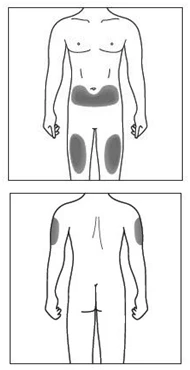
2a. Choosing the injection site
- The recommended site is the front of the thighs. You may also use the lower abdomen, but not the area within 5 centimeters around the navel.
- Choose a different site for each new injection.
- Do not inject in areas where the skin is tender, bruised, red, scaly, or hard. Avoid areas with scars or stretch marks.
2b. For caregivers and healthcare professionals only
If the injection is administered by a caregiver or by healthcare professionals, it may also be given in the outer upper arms.
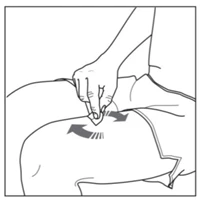
3. Cleaning the injection site
- Wash your hands with soap and warm water.
- Using a circular motion, clean the injection site with an alcohol swab. Allow it to dry before administering the injection.
- Do not touch the cleaned area again before giving the injection.
Injection
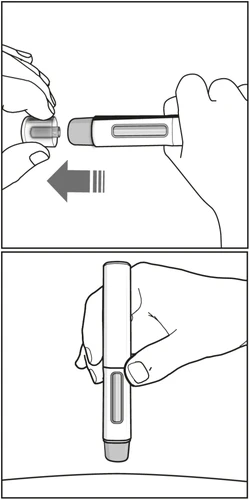
4. Removing the cap
- Remove the cap only when you are ready to use the pen.
- Pull the cap off in the direction of the arrow shown in the figure on the left.
- Once removed, discard the cap. Do not attempt to reattach the cap.
- Use the pen within 5 minutes after removing the cap.
5. Pen Position
- Hold the pen at a 90-degree angle to the clean injection site.
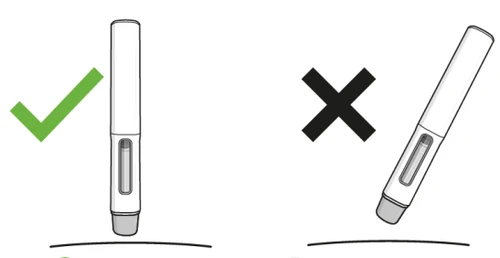
Correct Incorrect

READ BEFORE ADMINISTERING THE INJECTION.
During the injection, you will hear 2 clicks.
The first click indicates that the injection has started. Several seconds later,
a second click will indicate that the injection is almost complete.
You must continue to hold the pen firmly against the skin until
you see a green indicator with a gray tip fill the viewing window
and stop moving.
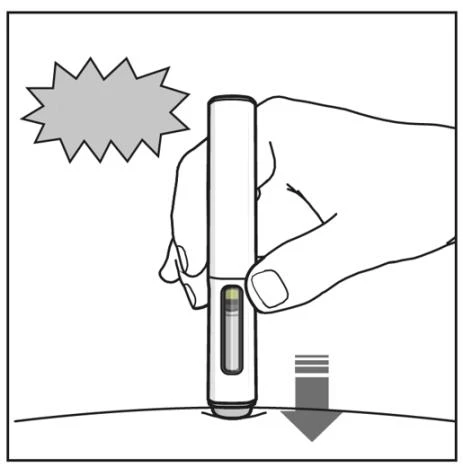
6. Start the injection
- Press the pen firmly against the skin to start the injection.
- The first click indicates that the injection has started.
- Continue to hold the pen firmly against the skin. The green indicator with the grey tip shows the progress of the injection.

7. Completing the injection
- Wait for the sound of the second click. This indicates that the injection is almost complete.
- Check that the green indicator with the grey tip has filled the window and has come to a stop. The pen can now be removed.
After the injection
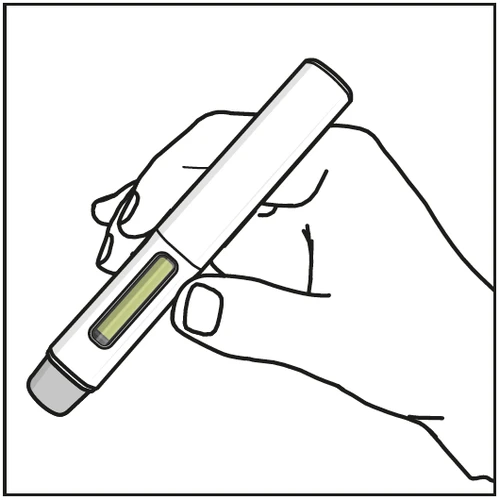
8. Check that the green indicator fills the window
- This means the medicine has been administered. Contact the doctor if the green indicator is not visible.
- Mild bleeding at the injection site may occur. If so, press a cotton ball or gauze pad against the injection site and hold for 10 seconds. Do not rub the injection site. If needed, the injection site may be covered with a small plaster.
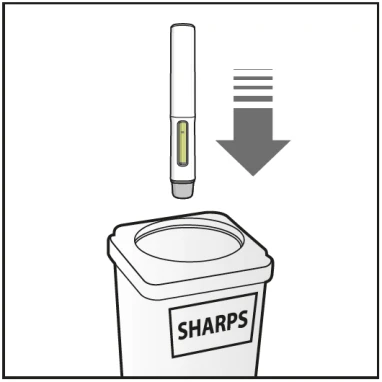
9. Disposal of the used Cosentyx 300 mg UnoReady pen
- Dispose of the used pen by placing it in a designated sharps container (e.g. a puncture-resistant, closable container or similar).
- Never attempt to reuse the pen.
Package leaflet: Information for the user
Cosentyx 150 mg powder for injectable solution
secukinumab
Please read this entire leaflet carefully before using this medicine because it contains important information for you.
- Keep this leaflet. You may need to read it again.
- If you have any questions, consult your doctor, pharmacist, or nurse.
- This medicine has been prescribed for you only. Do not give it to others, even if they have the same symptoms as you, because it may be harmful.
- If you experience any adverse reactions, including those not listed in this leaflet, consult your doctor, pharmacist, or nurse. See section 4.
Contents of this leaflet:
- What Cosentyx is and what it is used for
- What you need to know before using Cosentyx
- How to use Cosentyx
- Possible side effects
- How to store Cosentyx
- Contents of the pack and other information
1. What Cosentyx is and what it is used for
Cosentyx contains the active substance secukinumab. Secukinumab is a monoclonal antibody that belongs to a group of medicines called interleukin (IL) inhibitors. This medicine works by neutralizing the activity of a protein called IL-17A, which is present at increased levels in conditions such as psoriasis, hidradenitis suppurativa, psoriatic arthritis, and axial spondyloarthritis.
Cosentyx is indicated for the treatment of the following inflammatory diseases:
- Plaque psoriasis
- Hidradenitis suppurativa
- Psoriatic arthritis
- Axial spondyloarthritis, including ankylosing spondylitis (radiographic axial spondyloarthritis) and non-radiographic axial spondyloarthritis
- Juvenile idiopathic arthritis, including enthesitis-related arthritis and juvenile psoriatic arthritis
Plaque psoriasis
Cosentyx is used to treat a skin condition called "plaque psoriasis" which causes inflammation of the skin. Cosentyx reduces inflammation and other symptoms of the disease. Cosentyx is used in adults, adolescents, and children (from 6 years of age) with moderate to severe plaque psoriasis.
The use of Cosentyx in plaque psoriasis will benefit you by improving skin manifestations and reducing symptoms such as skin thickening, itching, and pain.
Hidradenitis suppurativa
Cosentyx is used to treat a condition called hidradenitis suppurativa, sometimes also known as inverse acne or Verneuil's disease. This condition is a chronic and painful inflammatory skin disease. Symptoms may include painful nodules (lumps) and abscesses (boils) that can drain pus. It commonly affects specific areas of the skin, such as the under-breast area, armpits, inner thighs, groin, and buttocks. Scarring may also develop in the affected areas.
Cosentyx can reduce the number of nodules and abscesses you have, as well as the pain often associated with this disease. If you have hidradenitis suppurativa, you will first be given other medicines. If you do not respond adequately to these treatments, you will be given Cosentyx.
Cosentyx is used in adults with hidradenitis suppurativa and may be used alone or in combination with antibiotics.
Psoriatic arthritis
Cosentyx is used to treat a condition called "psoriatic arthritis". This condition is an inflammatory joint disease, often accompanied by psoriasis. If you have active psoriatic arthritis, you will first be given other medicines. If you do not respond adequately to these treatments, Cosentyx will be given to reduce the signs and symptoms of active psoriatic arthritis, improve physical function, and slow down damage to cartilage and bone in the affected joints.
Cosentyx is used in adults with active psoriatic arthritis and may be used alone or in combination with another medicine called methotrexate.
The use of Cosentyx in psoriatic arthritis will benefit you by reducing the signs and symptoms of the disease, slowing down joint damage to cartilage and bone, and improving your ability to perform normal daily activities.
Axial spondyloarthritis, including ankylosing spondylitis (radiographic axial spondyloarthritis) and non-radiographic axial spondyloarthritis
Cosentyx is used to treat conditions called "ankylosing spondylitis" and "non-radiographic axial spondyloarthritis". These conditions are inflammatory diseases that primarily affect the spine, causing inflammation of the spinal joints. If you have ankylosing spondylitis or non-radiographic axial spondyloarthritis, you will first be given other medicines. If you do not respond adequately to these treatments, Cosentyx will be given to reduce the signs and symptoms of the disease, reduce inflammation, and improve your physical function.
Cosentyx is used in adults with active ankylosing spondylitis and active non-radiographic axial spondyloarthritis.
The use of Cosentyx in ankylosing spondylitis and non-radiographic axial spondyloarthritis will benefit you by reducing the signs and symptoms of the disease and improving your physical function.
Juvenile idiopathic arthritis, including enthesitis-related arthritis and juvenile psoriatic arthritis
Cosentyx is used in patients (aged 6 years and older) to treat conditions falling within the categories of juvenile idiopathic arthritis known as "enthesitis-related arthritis" and "juvenile psoriatic arthritis". These conditions are inflammatory diseases affecting the joints and the sites where tendons attach to bone.
The use of Cosentyx in enthesitis-related arthritis and juvenile psoriatic arthritis will benefit you (or your child) by reducing symptoms and improving physical function (or your child's physical function).
2. What you need to know before using Cosentyx
Do not use Cosentyx:
- if you are allergic to secukinumab or any of the other ingredients of this medicine (listed in section 6). If you think you may be allergic, ask your doctor for advice before using Cosentyx.
- if you have an active infection that your doctor considers significant (for example, active tuberculosis).
Warnings and precautions
Talk to your doctor, nurse, or pharmacist before using Cosentyx:
- if you currently have an infection.
- if you have long-term (chronic) or repeated infections.
- if you have an inflammatory bowel disease called Crohn's disease.
- if you have inflammation of the large intestine called ulcerative colitis.
- if you have recently been vaccinated or are due to be vaccinated during treatment with Cosentyx.
- if you are receiving any other type of treatment for psoriasis, such as another immunosuppressant or ultraviolet (UV) light phototherapy.
Tuberculosis
Talk to your doctor if you currently have or have previously had tuberculosis. Also inform your doctor if you have recently been in close contact with someone who has tuberculosis. Your doctor will assess your condition and may perform a test before you start using Cosentyx. If your doctor believes you are at risk of tuberculosis, they may prescribe medication for its treatment. If symptoms of tuberculosis develop during treatment with Cosentyx (such as persistent cough, weight loss, fatigue, or low-grade fever), inform your doctor immediately.
Hepatitis B
Talk to your doctor if you currently have or have previously had a hepatitis B infection. This medicine may cause reactivation of the infection. Before and during treatment with secukinumab, your doctor may monitor for signs of infection. Inform your doctor if you experience any of the following symptoms: worsening tiredness, yellowing of the skin or whites of the eyes, dark urine, loss of appetite, nausea and/or pain in the upper right part of the stomach area.
Inflammatory bowel disease (Crohn's disease or ulcerative colitis)
Stop using Cosentyx and inform your doctor or seek immediate medical help if you experience abdominal cramps and pain, diarrhoea, weight loss, blood in the stool, or any other signs of intestinal problems.
Infection and allergic reaction awareness
Cosentyx may potentially cause serious side effects, including infections and allergic reactions. You should be alert to signs of these conditions while being treated with Cosentyx.
Stop using Cosentyx and inform your doctor or seek immediate medical help if you notice any signs suggesting a serious infection or allergic reaction. These signs are listed in section 4 under “Serious side effects”.
Children and adolescents
Cosentyx is not recommended for the treatment of children under 6 years of age with plaque psoriasis, as it has not been studied in this age group.
Cosentyx is not recommended for children under 6 years of age with juvenile idiopathic arthritis (enthesitis-related arthritis and juvenile psoriatic arthritis).
Cosentyx is not recommended for the treatment of children and adolescents (under 18 years of age) in other indications, as it has not been studied in this age group.
Other medicines and Cosentyx
Inform your doctor or pharmacist:
- if you are taking, have recently taken, or might take any other medicines.
- if you have recently been vaccinated or are due to be vaccinated. You must not receive certain types of vaccines (live vaccines) while using Cosentyx.
Pregnancy, breastfeeding, and fertility
- It is preferable to avoid using Cosentyx during pregnancy. The effects of the medicine in pregnant women are unknown. If you are of childbearing potential, you will be advised to avoid pregnancy and to use an effective method of contraception during treatment with Cosentyx and for at least 20 weeks after the last dose of Cosentyx. Inform your doctor if you are pregnant, suspect you may be pregnant, or are planning a pregnancy.
- Inform your doctor if you are breastfeeding or intend to breastfeed. You and your doctor will need to decide whether to breastfeed or use Cosentyx. You cannot do both. After using Cosentyx, you must not breastfeed for at least 20 weeks after the last dose.
Driving and using machines
It is unlikely that Cosentyx will affect your ability to drive or use machinery.
3. How to use Cosentyx
Cosentyx is administered by subcutaneous injection (injection under the skin) by a healthcare professional.
Make sure to discuss with your doctor when you should receive your injections and follow-up appointments.
How much Cosentyx is administered and for how long
Your doctor will decide how much Cosentyx you need and for how long.
Plaque psoriasis
Adults
- The recommended dose is 300 mg given by subcutaneous injection.
- Each 300 mg dose is administered as two injections of 150 mg.
After the first dose, further weekly injections will be given at weeks 1, 2, 3 and 4, followed by monthly injections. Depending on your response, your doctor may recommend further dose adjustments. At each time, you will receive a 300 mg dose administered as two injections of 150 mg.
Children aged 6 years and older
- The recommended dose administered by subcutaneous injection is based on body weight as follows:
o Body weight below 25 kg: 75 mg as subcutaneous injection.
o Body weight 25 kg or above and below 50 kg: 75 mg as subcutaneous injection.
o Body weight 50 kg or above: 150 mg as subcutaneous injection. Your doctor may increase the dose to 300 mg. - Each 150 mg dose is administered as a single injection of 150 mg. Other pharmaceutical forms/dosages are available for administration of 75 mg and 300 mg doses.
After the first dose, further weekly injections will be given at weeks 1, 2, 3 and 4, followed by monthly injections.
Hidradenitis suppurativa
- The recommended dose is 300 mg by subcutaneous injection.
- Each 300 mg dose is administered as two injections of 150 mg.
After the first dose, further weekly injections will be given at weeks 1, 2, 3 and 4, followed by monthly injections. Depending on your response, your doctor may recommend further dose adjustments.
Psoriatic arthritis
If you have both psoriatic arthritis and moderate to severe plaque psoriasis, your doctor may adjust the dosing recommendations as necessary.
For patients who have not responded adequately to medications called tumour necrosis factor (TNF) inhibitors:
- The recommended dose is 300 mg by subcutaneous injection.
- Each 300 mg dose is administered as two injections of 150 mg.
After the first dose, further weekly injections will be given at weeks 1, 2, 3 and 4, followed by monthly injections. For each administration, you will receive a 300 mg dose given as two injections of 150 mg.
For other patients with psoriatic arthritis:
- The recommended dose is 150 mg by subcutaneous injection.
After the first dose, further weekly injections will be given at weeks 1, 2, 3 and 4, followed by monthly injections.
Depending on your response, your doctor may increase the dose to 300 mg.
Ankylosing spondylitis (radiographic axial spondyloarthritis)
- The recommended dose is 150 mg by subcutaneous injection.
After the first dose, further weekly injections will be given at weeks 1, 2, 3 and 4, followed by monthly injections.
Depending on your response, your doctor may increase the dose to 300 mg. Each 300 mg dose is administered as two injections of 150 mg.
Non-radiographic axial spondyloarthritis
- The recommended dose is 150 mg by subcutaneous injection.
After the first dose, further weekly injections will be given at weeks 1, 2, 3 and 4, followed by monthly injections.
Juvenile idiopathic arthritis (enthesitis-related arthritis and juvenile psoriatic arthritis)
- The recommended dose is based on body weight as follows:
o Weight below 50 kg: 75 mg as subcutaneous injection.
o Weight 50 kg or above: 150 mg as subcutaneous injection. - Each 150 mg dose is administered as a single injection of 150 mg. Other pharmaceutical forms/dosages may be available for administration of the 75 mg dose.
After the first dose, further weekly injections will be given at weeks 1, 2, 3 and 4, followed by monthly injections to you (or your child).
Cosentyx is used for long-term treatment. Your doctor will regularly monitor your condition to check that the treatment is having the desired effect.
If you use more Cosentyx than you should
If you have received more Cosentyx than prescribed or the dose was administered earlier than scheduled, inform your doctor.
If you forget to use Cosentyx
If you have missed an injection of Cosentyx, inform your doctor.
If you stop using Cosentyx
It is not dangerous to stop using Cosentyx. However, if you stop treatment, symptoms of psoriasis, psoriatic arthritis or axial spondyloarthritis may return.
If you have any questions about the use of this medicine, ask your doctor, pharmacist or nurse.
4. Possible side effects
Like all medicines, this medicine can cause side effects, although not everyone experiences them.
Serious side effects
Stop using Cosentyx and inform your doctor or seek immediate medical help if you experience
any of the following side effects:
Possible serious infections – signs may include:
- fever, flu-like symptoms, night sweats
- feeling tired or short of breath, persistent cough
- skin that is warm, red and painful, or a painful rash with blisters
- burning sensation when urinating.
Severe allergic reaction – signs may include:
- difficulty breathing or swallowing
- low blood pressure which may cause dizziness or lightheadedness
- swelling of the face, lips, tongue or throat
- severe itching of the skin, with redness or raised hives.
Your doctor will decide whether and when you can restart treatment.
Other side effects
Most of the following side effects are mild or moderate. If any of these side effects become severe, inform your doctor, pharmacist or nurse.
Very common (may affect more than 1 in 10 people):
- upper respiratory tract infections with symptoms such as sore throat and runny nose (nasopharyngitis, rhinitis)
Common (may affect up to 1 in 10 people):
- cold sores (oral herpes)
- diarrhoea
- runny nose (rhinorrhoea)
- headache
- nausea
- fatigue
- itchy, red and dry skin (eczema)
Uncommon (may affect up to 1 in 100 people):
- oral thrush (oral candidiasis)
- signs of low white blood cell counts, such as fever, sore throat or mouth ulcers due to infections (neutropenia)
- outer ear infection (otitis externa)
- eye discharge with itching, redness and swelling (conjunctivitis)
- itchy skin rash (urticaria)
- lower respiratory tract infections
- cramps and abdominal pain, diarrhoea, weight loss or blood in the stool (signs of intestinal problems)
- small itchy blisters on the palms of the hands, soles of the feet and edges of fingers and toes (dyshidrotic eczema)
- athlete’s foot (tinea pedis)
Rare (may affect up to 1 in 1,000 people):
- severe allergic reaction with shock (anaphylactic reaction)
- redness and peeling of the skin over a large area of the body, possibly with itching or pain (exfoliative dermatitis)
- inflammation of small blood vessels, which may cause a rash with red or purple spots (vasculitis)
- swelling of the neck, face, mouth or throat which may cause difficulty swallowing or breathing (angioedema)
Not known (frequency cannot be estimated from the available data):
- fungal infections of the skin and mucous membranes (including oesophageal candidiasis)
- painful swelling and skin ulceration (pyoderma gangrenosum)
Reporting of side effects
If you experience any side effect, including those not listed in this leaflet, please tell your doctor, pharmacist or nurse. You can also report side effects directly through the national reporting system listed in Annex V. By reporting side effects, you can help provide more information on the safety of this medicine.
5. How to store Cosentyx
Keep this medicine out of the sight and reach of children.
Do not use this medicine after the expiry date which is stated on the carton after “Exp.” and on the
vial after “EXP”.
Before reconstitution: Store the vial in a refrigerator at 2°C to 8°C.
After reconstitution: The solution may be used immediately or stored at 2°C to 8°C for up to 24 hours. Do not freeze. The solution must be administered within one hour after removal from storage at 2°C to 8°C.
Do not use this medicine if you notice that the powder has not completely dissolved or if the liquid contains visible particles, is cloudy, or distinctly brown.
This medicine is for single use only.
Do not dispose of any medicine via wastewater. Ask your pharmacist how to dispose of medicines no longer required. This will help protect the environment.
6. Package contents and other information
What Cosentyx contains
- The active substance is secukinumab. Each vial of powder for injectable solution contains 150 mg of secukinumab. After reconstitution, 1 ml of solution contains 150 mg of secukinumab.
- The other components are sucrose, histidine, monohydrate hydrochloride histidine, and polysorbate 80.
Description of the appearance of Cosentyx and contents of the pack
Cosentyx powder for injectable solution is a white solid powder contained in a glass vial.
Cosentyx is supplied in a pack containing one vial.
Marketing Authorization Holder
Novartis Europharm Limited
Vista Building
Elm Park, Merrion Road
Dublin 4
Ireland
Manufacturer
Lek Pharmaceuticals d.d.
Verovškova ulica 57
Ljubljana, 1526
Slovenia
Novartis Farmacéutica, S.A.
Gran Vía de les Corts Catalanes, 764
08013 Barcelona
Spain
Novartis Pharma GmbH
Sophie-Germain-Strasse 10
90443 Nuremberg
Germany
For further information on this medicinal product, please contact the local representative of the Marketing Authorization Holder:
België/Belgique/Belgien Lietuva
Novartis Pharma N.V. SIA Novartis Baltics Lietuvos filialas
Tél/Tel: +32 2 246 16 11 Tel: +370 5 269 16 50
България Luxembourg/Luxemburg
Novartis Bulgaria EOOD Novartis Pharma N.V.
Тел: +359 2 489 98 28 Tél/Tel: +32 2 246 16 11
Česká republika Magyarország
Novartis s.r.o. Novartis Hungária Kft.
Tel: +420 225 775 111 Tel.: +36 1 457 65 00
Danmark Malta
Novartis Healthcare A/S Novartis Pharma Services Inc.
Tlf.: +45 39 16 84 00 Tel: +356 2122 2872
Deutschland Nederland
Novartis Pharma GmbH Novartis Pharma B.V.
Tel: +49 911 273 0 Tel: +31 88 04 52 111
Eesti Norge
SIA Novartis Baltics Eesti filiaal Novartis Norge AS
Tel: +372 66 30 810 Tlf: +47 23 05 20 00
Ελλάδα Österreich
Novartis (Hellas) A.E.B.E. Novartis Pharma GmbH
Τηλ: +30 210 281 17 12 Tel: +43 1 86 6570
España Polska
Novartis Farmacéutica, S.A. Novartis Poland Sp. z o.o.
Tel: +34 93 306 42 00 Tel.: +48 22 375 4888
France Portugal
Novartis Pharma S.A.S. Novartis Farma - Produtos Farmacêuticos, S.A.
Tél: +33 1 55 47 66 00 Tel: +351 21 000 8600
Hrvatska România
Novartis Hrvatska d.o.o. Novartis Pharma Services Romania SRL
Tel. +385 1 6274 220 Tel: +40 21 31299 01
Ireland Slovenija
Novartis Ireland Limited Novartis Pharma Services Inc.
Tel: +353 1 260 12 55 Tel: +386 1 300 75 50
Ísland Slovenská republika
Vistor hf. Novartis Slovakia s.r.o.
Sími: +354 535 7000 Tel: +421 2 5542 5439
Italia Suomi/Finland
Novartis Farma S.p.A. Novartis Finland Oy
Tel: +39 02 96 54 1 Puh/Tel: +358 (0)10 6133 200
Κύπρος Sverige
Novartis Pharma Services Inc. Novartis Sverige AB
Τηλ: +357 22 690 690 Tel: +46 8 732 32 00
Latvija
SIA Novartis Baltics
Tel: +371 67 887 070
Other sources of information
More detailed information on this medicinal product is available on the website of the European Medicines Agency: https://www.ema.europa.eu .
Instructions for Use of Cosentyx Powder for Injectable Solution
The following information is intended exclusively for physicians and healthcare professionals.
Preparation of the solution for subcutaneous injection must be performed without interruption and using aseptic technique. The preparation time, from piercing the stopper to completion of reconstitution, takes on average 20 minutes and must not exceed 90 minutes.
Follow the instructions below to prepare Cosentyx 150 mg powder for injectable solution:
Instructions for Reconstitution of Cosentyx 150 mg Powder for Injectable Solution:
- Bring the vial of powder to room temperature and ensure that the water for injections is at room temperature.
- Draw slightly more than 1.0 mL of water for injections into a single-use, graduated 1 mL syringe, and adjust to exactly 1.0 mL.
- Remove the plastic cap from the vial.
- Insert the needle of the syringe through the center of the rubber stopper into the vial containing the powder and reconstitute the powder by slowly injecting 1.0 mL of water for injections into the vial. Direct the stream of water for injections toward the powder.
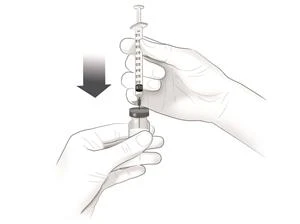
- Tilt the vial at an angle of approximately 45 degrees and gently rotate it between your fingers for about 1 minute. Do not shake or invert the vial.
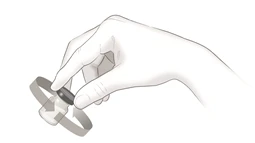
- Allow the vial to stand at room temperature for at least 10 minutes to permit dissolution. Note that foam may form in the solution.
- Tilt the vial at an angle of approximately 45 degrees and gently rotate it between your fingers for about 1 minute. Do not shake or invert the vial.
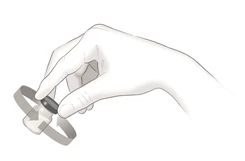
- Allow the vial to stand at room temperature for 5 minutes. The resulting solution should be clear. Its color may range from colorless to slightly yellow. Do not use if the lyophilized powder is not completely dissolved or if the liquid contains visible particles, is cloudy, or is clearly brown.
- Prepare the required number of vials (1 vial for the 75 mg dose, 1 vial for the 150 mg dose, 2 vials for the 300 mg dose).
After storage at 2°C – 8°C, the solution should be brought to room temperature for approximately 20 minutes before administration.
Instructions for Administration of Cosentyx Solution
- Tilt the vial at an angle of approximately 45 degrees and insert the needle tip fully to the bottom of the solution in the vial when drawing up the solution into the syringe. DO NOT invert the vial.
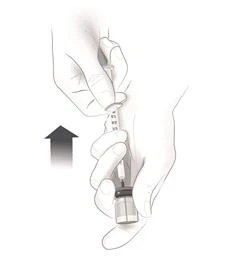
- For the 150 mg and 300 mg doses, carefully draw slightly more than 1.0 mL of the injectable solution from the vial into a single-use, graduated 1 mL syringe using an appropriate needle (21G x 2″). This needle will be used only for transferring Cosentyx into the syringe. Prepare the required number of syringes (2 syringes for the 300 mg dose). For a child receiving the 75 mg dose, carefully draw slightly more than 0.5 mL of the injectable solution and immediately discard the remainder.
- With the needle pointing upward, gently tap the syringe to move air bubbles to the top.
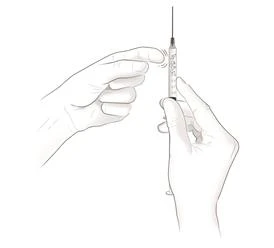
- Replace the needle on the syringe with a 27G x ½″ needle.
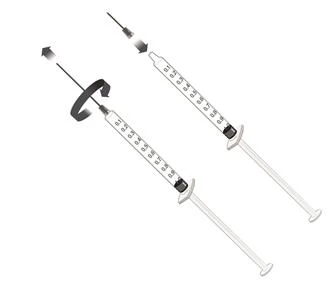
- Remove air bubbles and adjust the plunger to the 1.0 mL mark for the 150 mg dose. Remove air bubbles and adjust the plunger to the 0.5 mL mark for the 75 mg dose.
- Clean the injection site with an alcohol swab.
- Inject the Cosentyx solution subcutaneously into the front of the thighs, the lower abdomen (except for the area within 5 cm of the navel), or the outer upper arm. Select a different site for each new injection. Do not inject into areas where the skin is tender, bruised, red, scaly, or hardened. Avoid areas with scars or stretch marks.
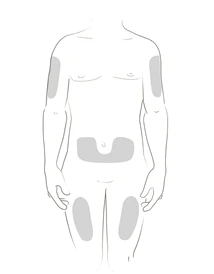
- Any residual solution remaining in the vial must not be used and must be discarded according to local regulations. Vials are for single use only. Dispose of used syringes in a sharps container (puncture-resistant, closable container). For your safety and the safety of others, needles and syringes must never be reused.