Cortisone Chemicetina
Italy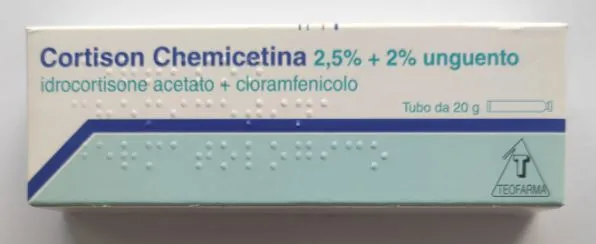
Table of Contents
- Package leaflet: Information for the patient
- Cortison Chemicetina 2.5% + 2% ointment
- 1. What Cortison Chemicetina is and what it is used for
- 2. What you need to know before using Cortison Chemicetina
- 3. How to take/give Cortison Chemicetina to a child
- 4. Possible side effects
- 5. How to store Cortison Chemicetina
- 6. Package contents and other information
- Patient Information Leaflet
- Cortison Chemicetina 0.5% + 1% ophthalmic ointment
- 1. What Cortison Chemicetina is and what it is used for
- 2. What you should know before taking/giving Cortison Chemicetina to the child
- 3. How to take/give Cortison Chemicetina to the child
- 4. Possible side effects
- 5. How to store Cortison Chemicetina
- 6. Package contents and other information
Package leaflet: Information for the patient
Cortison Chemicetina 2.5% + 2% ointment
Hydrocortisone acetate + chloramphenicol
Please read this leaflet carefully before using this medicine because it contains important information for you.
- Keep this leaflet. You may need to read it again.
- If you have any questions, ask your doctor or pharmacist.
- This medicine has been prescribed for you only. Do not give it to other people, even if their symptoms are the same as yours, as it could be harmful.
- If you experience any adverse reaction, including those not listed in this leaflet, contact your doctor or pharmacist. See section 4.
Contents of this leaflet:
- What Cortison Chemicetina is and what it is used for
- What you need to know before using Cortison Chemicetina
- How to use Cortison Chemicetina
- Possible side effects
- How to store Cortison Chemicetina
- Package contents and other information
1. What Cortison Chemicetina is and what it is used for
Cortison Chemicetina is a combination of two medicines:
- hydrocortisone acetate, a cortisone, used to treat inflammation
- chloramphenicol, an antibiotic, used to fight infections
Cortison Chemicetina is indicated in adults and in children (from 0 to 18 years) for the local treatment of superficial skin lesions with an inflammatory component associated with bacterial infections caused by organisms sensitive to chloramphenicol.
This medicine is not indicated for mild infections or for the prevention of infections.
Consult your doctor if you do not feel better or if you feel worse.
2. What you need to know before using Cortison Chemicetina
Do not use Cortison Chemicetina
- if you are allergic to hydrocortisone acetate, chloramphenicol, or any of the other ingredients of this medicine (listed in section 6)
- if you have untreated viral skin infections (e.g. herpes simplex, herpes zoster, varicella)
- if the area of skin to be treated is affected by tuberculosis (an infectious disease)
- if you have untreated fungal skin infections
- if you suffer from rosacea (redness and scaling affecting certain areas of the face)
- if you have perioral dermatitis (skin inflammation around the mouth)
- if you have leg ulcers.
Warnings and precautions
Talk to your doctor or pharmacist before using Cortison Chemicetina.
Inform your doctor if you do not observe any improvement after one week of treatment with Cortison Chemicetina, as treatment should then be discontinued.
Contact your doctor if you experience blurred vision or other visual disturbances.
If you have a severe skin infection, your doctor may combine this topical medicine with systemic antibiotic therapy (e.g. oral).
Your doctor will monitor you/your child, as any possible allergy to chloramphenicol may be masked by hydrocortisone acetate.
Elderly
If you are elderly, you are at higher risk of developing skin thinning after using topical corticosteroids due to increased skin fragility associated with aging.
Children and adolescents
Cortison Chemicetina is indicated in children from one month up to 18 years of age.
Prolonged use and high doses of potent topical corticosteroids increase the risk in children of developing hormonal disturbances and Cushing's syndrome (a condition characterized by excess hormones in the blood) compared to adults (see section 4 “Additional undesirable effects in children and adolescents”).
Considering the recommended dose of Cortison Chemicetina for short-term use, the occurrence of such adverse effects is unlikely.
Neonates (children up to one month of age)
Cortison Chemicetina must be used with caution in neonates.
Excessive doses of chloramphenicol may lead to a fatal gray syndrome (abdominal distension, vomiting, cyanosis, and circulatory collapse), due to the inability to metabolize and eliminate the drug (see section 4 “Additional undesirable effects in children and adolescents”).
The onset of this syndrome is dose-dependent.
Other medicines and Cortison Chemicetina
Inform your doctor or pharmacist if you/your child are taking, have recently taken, or might take any other medicines.
During treatment with this medicine, do not apply other topical preparations to the skin; if necessary, the interval between different applications should be at least 30 minutes.
Combinations not recommended / to be avoided
- macrolide antibiotics and clindamycin, as these medicines reduce the effectiveness of chloramphenicol
- medicines causing reduced blood cell production by the bone marrow (e.g. clozapine)
- medicines used to prevent organ rejection (tacrolimus and cyclosporine).
Combinations requiring caution and careful medical monitoring
- medicines that make the blood thinner (anticoagulants), as this combination could increase the risk of bleeding
- medicines for treating epilepsy (phenytoin or phenobarbital), as concomitant use may increase the risk of phenytoin or phenobarbital toxicity
- medicines to lower blood glucose levels (sulfonylureas), as the effect of sulfonylureas may be enhanced by chloramphenicol.
Pregnancy and breastfeeding
If you are pregnant, think you may be pregnant, planning to become pregnant, or are breastfeeding, consult your doctor or pharmacist before taking this medicine.
Pregnancy
If you are pregnant, your doctor will carefully evaluate whether to prescribe this medicine.
Use of Cortison Chemicetina should be avoided during the last week before delivery.
Breastfeeding
Avoid taking Cortison Chemicetina while breastfeeding.
It is not known whether this medicine passes into breast milk. In the neonate, this medicine may cause jaundice (yellowing of the skin and whites of the eyes).
Driving and using machines
No studies have been conducted on the ability to drive or use machinery. However, it is unlikely that Cortison Chemicetina would impair such abilities.
Cortison Chemicetina contains lanolin
It may cause local skin reactions (e.g. contact dermatitis).
3. How to take/give Cortison Chemicetina to a child
Take/give this medicine to the child exactly as directed by the doctor or pharmacist. If you have any doubts, consult the doctor or pharmacist.
The doctor will determine the most appropriate dose for you/the child based on the severity of symptoms and the size of the affected skin area.
The recommended dose in adults and children is application 2–3 times daily.
Use in children
Cortison Chemicetina is indicated in children from one month up to 18 years of age.
In neonates, Cortison Chemicetina should be administered with caution.
Use in the elderly
Take this medicine with caution due to age-related skin fragility.
Guide for correct ointment use:
- Before application, wash your hands and the skin area to be treated.
- Apply a thin layer of ointment and gently rub it in.
- After application, do not wash or rub the treated area.
- Wash your hands again after use.
- In cases of severe skin diseases, an occlusive dressing may be necessary.
Duration of treatment
Treatment with Cortison Chemicetina ointment should continue for at least one week.
Take/give Cortison Chemicetina to the child for no longer than two weeks, as prolonged use of corticosteroids and antibiotics on the skin may lead to the development of resistant bacteria or fungal infections.
If you take/give more Cortison Chemicetina than you should
In case of accidental ingestion of this medicine, contact your doctor or go to the nearest hospital.
Given the recommended dose and route of administration, overdose is unlikely.
Accidental eye contact
If burning, swelling, tearing, or light sensitivity occurs after accidental eye contact, rinse the affected eye thoroughly with copious amounts of room-temperature water for at least 15 minutes. If symptoms persist after 15 minutes, consult a doctor.
If you forget to take/give Cortison Chemicetina to the child
Do not take/give a double dose to make up for the missed dose.
If you stop treatment with Cortison Chemicetina
If you have any questions about the use of this medicine, consult your doctor or pharmacist.
4. Possible side effects
Like all medicines, this medicine can cause side effects, although not everyone gets them.
The following side effects have been observed and reported during treatment with Cortison Chemicetina:
Effects related to the skin and underlying tissue
- Skin irritation (contact dermatitis)
- Inflammation of the skin accompanied by itching (eczema)
- Redness of the skin (erythema)
- Skin rashes (rash)
- Redness of the skin accompanied by itching (urticaria)
Effects affecting the whole body and conditions related to the site of administration
- Generalized swelling
Other side effects reported following the use of hydrocortisone, which therefore may also be potential side effects of Cortison Chemicetina, include
Infections
- Fungal infections (mycotic)
Benign, malignant and unspecified tumours (including cysts and polyps)
- A rare type of cancer called Kaposi's sarcoma, affecting the skin, mouth, lungs, liver, or stomach and intestines
Effects related to metabolism and nutrition
- Increased blood sugar levels
- Decreased levels of calcium in the blood
Effects related to the nervous system
- Increased pressure within the skull
Effects related to the eyes
- Eye disease characterized by increased pressure of the fluid inside the eye (glaucoma)
- Inflammation leading to corneal damage, the transparent front part of the eye (ulcerative keratitis)
- Clouding of the lens of the eye, which focuses images (cataract)
- Increased pressure of the fluid inside the eye
- Thinning of a membrane in the eye called the cornea
- Blurred vision, occurring not uncommonly (may affect up to 1 in 100 people)
Effects related to the skin and underlying tissue
- Very common thinning of the skin, especially in elderly subjects
- Abnormal hair growth (hirsutism)
- Acne or worsening of acne
- Dilation of small blood vessels (telangiectasia)
- Worsening of a skin condition of the face called rosacea
- Inflammation of the skin localized around the mouth area (perioral dermatitis)
- Decrease or increase in skin pigmentation
- Red spots on the skin (purpura)
- Stretch marks
Effects related to the whole body and conditions related to the site of administration
- Impaired wound healing
- Swelling
Other side effects reported following the use of chloramphenicol, which therefore may also be potential side effects of Cortison Chemicetina, include
Effects related to blood and lymphatic system
- Reduction in the number of all types of blood cells (aplastic anaemia)
- Reduction in the number of white blood cells in the blood (neutropenia)
- Reduction in the number of platelets in the blood (thrombocytopenia)
If you or the child have had or currently suffer from blood disorders (myeloproliferative diseases or abnormalities in white blood cell count), the doctor will carefully monitor you/the child through appropriate tests and, if necessary, may discontinue treatment. However, considering the route of administration and the recommended dose for short treatment periods, the occurrence of these side effects with Cortison Chemicetina is unlikely.
Effects related to the body's defence system
- Allergic reactions, even severe ones leading to shock
Effects related to the nervous system
- Burning sensation
Effects related to the eyes
- Abnormal reduction in the size of the optic disc (an eye component)
- Eye irritation
- Red eyes
- Swelling of the eyelids
Effects related to the skin and underlying tissue
- Swelling of hands, feet, ankles, face, lips, tongue and/or throat (angioedema)
- Itching
- Skin rash with blister formation
- Skin rash with spots and blisters
Effects related to the whole body and conditions related to the site of administration
- Fever
Additional side effects in children and adolescents
Effects related to glands
- Cushing's syndrome (a condition characterized by excess hormones in the blood, with symptoms including a rounded "moon-shaped" face, weight gain, fluid retention, reduced tolerance to sugars, increased risk of diabetes, leg swelling, and headache)
Effects related to muscles, bones and connective tissue
- Growth retardation
Effects related to the heart
- Grey baby syndrome (abdominal distension, vomiting, cyanosis and circulatory collapse)
Reporting of side effects
If you experience any side effect, including those not listed in this leaflet, please inform your doctor. You can also report side effects directly via the national reporting system at the website https://www.aifa.gov.it/content/segnalazioni-reazioni-avverse.
By reporting side effects, you can help provide more information on the safety of this medicine.
5. How to store Cortison Chemicetina
Keep this medicine out of the sight and reach of children.
Store below 25°C.
Do not use this medicine after the expiry date stated on the packaging after "Exp." The expiry date refers to the last day of that month.
Do not dispose of any medicine via wastewater or household waste. Ask your pharmacist how to dispose of medicines you no longer use. This will help protect the environment.
6. Package contents and other information
What Cortison Chemicetina contains
- The active substances are: Acidum hydrocortisonis aceticum 2.5 g; Chloramphenicol 2 g
- Other components: liquid paraffin; lanolin anhydrous (See section 2, Cortison Chemicetina contains lanolin); white vaseline.
Description of the appearance of Cortison Chemicetina and contents of the pack
Cortison Chemicetina is an ointment presented in a 20 g aluminium tube.
Marketing Authorization Holder
Teofarma S.r.l.
Via F.lli Cervi, 8 – 27010 Valle Salimbene (PV)
Manufacturer
Teofarma S.r.l.
Viale Certosa, 8/A – 27100 Pavia
Patient Information Leaflet
Cortison Chemicetina 0.5% + 1% ophthalmic ointment
Hydrocortisone acetate + chloramphenicol
Please read this leaflet carefully before taking/administering this medicine to a child, because it contains important information for you.
- Keep this leaflet. You may need to read it again.
- If you have any questions, ask your doctor or pharmacist.
- This medicine has been prescribed only for you/for the child. Do not give it to other people, even if their symptoms are the same as yours, because it could be harmful.
- If any adverse reaction occurs, including those not listed in this leaflet, consult your doctor or pharmacist. See section 4.
Contents of this leaflet:
- What Cortison Chemicetina is and what it is used for
- What you need to know before taking/administering Cortison Chemicetina to the child
- How to take/administer Cortison Chemicetina to the child
- Possible side effects
- How to store Cortison Chemicetina
- Package contents and other information
1. What Cortison Chemicetina is and what it is used for
Cortison Chemicetina is a combination of two medicines:
- hydrocortisone acetate, a cortisone, to treat inflammation
- chloramphenicol, an antibiotic, to fight infections
Cortison Chemicetina is indicated in adults and children (from 0 to 18 years of age) for the local treatment of superficial eye infections caused by bacteria sensitive to chloramphenicol, when an anti-inflammatory action is also required.
This medicine is not indicated for mild infections or for the prevention of infections.
Consult your doctor if you do not feel better or if you feel worse.
2. What you should know before taking/giving Cortison Chemicetina to the child
Do not take/give the child Cortison Chemicetina if you/the child:
- are allergic to hydrocortisone acetate, chloramphenicol, or any of the other ingredients of this medicine (listed in section 6)
- have suspected inflammation leading to corneal damage, the transparent front part of the eye (e.g. due to the herpes simplex virus or use of contact lenses), even in the early stages
- have an infectious eye disease (ocular tuberculosis)
- have fungal infections of the eye
- have eye inflammation (ophthalmias)
- have purulent conjunctivitis or eyelid margin inflammation (acute purulent conjunctivitis or blepharitis)
- have a stye (inflammation of the eye glands)
- have increased intraocular pressure (ocular hypertension).
Warnings and precautions
Talk to your doctor or pharmacist before taking/giving Cortison Chemicetina to the child.
Inform your doctor if you do not observe any improvement after one week of treatment with Cortison Chemicetina, as in this case treatment must be discontinued.
If you/the child suffer from severe eye infections, your doctor may associate a systemic antibiotic therapy (e.g. oral) to this topical medicine.
Your doctor will monitor you/the child, as any allergy to chloramphenicol could be masked by hydrocortisone acetate.
If you suffer from cataracts (clouding of the lens of the eye, which focuses images) or glaucoma (an eye disease characterized by increased pressure of the fluid inside the eye), take this medicine only under medical supervision, as local corticosteroid therapy, particularly with prolonged use, has been associated with ocular adverse events, including cataracts and increased intraocular pressure.
Contact your doctor if blurred vision or other visual disturbances occur.
Children and adolescents
Cortison Chemicetina is indicated in children from one month to 18 years of age.
Prolonged use and high doses of topical corticosteroids increase the risk in children of developing hormonal disturbances and Cushing's syndrome (a condition characterized by excess hormones in the blood) compared to adults (see section 4 “Additional undesirable effects in children and adolescents”).
Considering the recommended dose of Cortison Chemicetina for short-term use, the occurrence of such adverse effects is unlikely.
Neonates (children up to one month of age)
In neonates, Cortison Chemicetina must be administered with caution.
Excessive doses of chloramphenicol may lead to a fatal gray syndrome (abdominal distension, vomiting, cyanosis, and circulatory collapse), due to the inability to metabolize and eliminate the drug (see section 4 “Possible undesirable effects”).
The occurrence of this syndrome is dose-dependent.
Other medicines and Cortison Chemicetina
Inform your doctor or pharmacist if you/the child are taking, have recently taken, or might take any other medicines.
During treatment with this medicine, do not apply other eye preparations to the eye; if necessary, the interval between different applications should be at least 30 minutes.
Combinations not recommended / to be avoided
- macrolide antibiotics and clindamycin, as these medicines reduce the effectiveness of chloramphenicol
- medicines causing reduced blood cell production by the bone marrow (e.g. clozapine)
- medicines used to prevent organ rejection (tacrolimus and cyclosporine).
Combinations requiring caution and careful medical monitoring
- medicines that make the blood thinner (anticoagulants), as this combination could increase the risk of bleeding
- medicines used to treat epilepsy (phenytoin or phenobarbital), as concomitant use may increase the risk of phenytoin or phenobarbital toxicity
- medicines to lower blood glucose levels (sulfonylureas), as the effect of sulfonylureas may be enhanced by chloramphenicol.
Pregnancy and breastfeeding
If you are pregnant, think you may be pregnant, planning a pregnancy, or breastfeeding, consult your doctor or pharmacist before taking this medicine.
Pregnancy
If you are pregnant, your doctor will carefully evaluate whether to prescribe this medicine.
The use of Cortison Chemicetina should be avoided during the last week before delivery.
Breastfeeding
Avoid taking Cortison Chemicetina during breastfeeding.
It is not known whether this medicine passes into breast milk. In neonates, this medicine may cause jaundice (yellowish discoloration of the skin and whites of the eyes).
Driving and using machines
No studies have been conducted on the ability to drive or use machinery. However, it is unlikely that Cortison Chemicetina would impair such abilities. Vision may be temporarily blurred after application of the ophthalmic ointment.
Cortison Chemicetina contains lanolin
It may cause local skin reactions (e.g. contact dermatitis).
3. How to take/give Cortison Chemicetina to the child
Take/give this medicine to the child exactly as directed by the doctor or pharmacist. If you have any doubts, consult the doctor or pharmacist.
The recommended dose in adults and children from one month to 18 years of age is one application 1–3 times daily, or more if necessary, during the first 48 hours.
After the first 48 hours, the interval between applications may be increased.
Treatment should continue for at least 48 hours after the eye appearance has normalized.
Use in children
This medicine can be used in children aged one month to 18 years.
Use Cortison Chemicetina with caution in neonates (children up to 1 month of age).
Guide for correct ointment use:
- Wash your hands before application.
- Tilt the head backward and pull the lower eyelid downward.
- Hold the tube directly above the eye.
- Squeeze a small amount of Cortison Chemicetina into the lower conjunctival sac.
- Gently roll the eye for 1–2 minutes to distribute the ointment.
- Do not rub the eye.
- Excess ointment may be removed.
- Wash your hands again after use.
Use of contact lenses
Exercise particular caution when using Cortison Chemicetina if you/the child wears contact lenses. Contact lenses must be removed before applying the ointment and must not be worn throughout the entire treatment period.
Duration of treatment
Give/take Cortison Chemicetina to the child for up to two weeks maximum, as prolonged use of corticosteroids and antibiotics on the skin may lead to the development of resistant bacteria or fungal infections.
If you take/give more Cortison Chemicetina than you should
In case of accidental ingestion of this medicine, contact the physician or go to the nearest hospital.
Considering the recommended dose and route of administration, overdose is unlikely.
If you forget to take/give Cortison Chemicetina to the child
Do not take/give a double dose to make up for the missed dose.
If you stop treatment with Cortison Chemicetina
If you have any questions about using this medicine, consult your doctor or pharmacist.
4. Possible side effects
Like all medicines, this medicine can cause side effects, although not everybody gets them.
The following side effects have been observed and reported during treatment with Cortison Chemicetina:
Effects related to the skin and subcutaneous tissue
- Skin reaction caused by a substance leading to irritation (contact dermatitis)
- Inflammation of the skin accompanied by itching (eczema)
- Redness of the skin (erythema)
- Skin rashes (rash)
- Red, itchy skin eruptions (urticaria)
Effects affecting the whole body and conditions related to the site of administration
- Generalized swelling
Other side effects reported following the use of hydrocortisone, which therefore may also be potential side effects of Cortison Chemicetina, include
Infections and infestations
- Fungal infections (mycotic)
Benign, malignant and unspecified tumours (including cysts and polyps)
- A rare type of cancer called Kaposi's sarcoma affecting the skin, mouth, lungs, liver, or stomach and intestines
Effects related to metabolism and nutrition
- Increased blood sugar levels
- Decreased calcium levels in the blood
Effects related to the nervous system
- Increased pressure within the skull
Effects related to the eyes
- Eye disease characterized by increased pressure of the fluid inside the eye (glaucoma)
- Inflammation leading to corneal damage, the transparent front part of the eye (ulcerative keratitis)
- Clouding of the lens of the eye, which focuses images (cataract)
- Increased pressure of the fluid inside the eye
- Thinning of a membrane in the eye called the cornea
- Blurred vision, frequency not known
Effects related to the skin and subcutaneous tissue
- Thinning of the skin, very common especially in elderly subjects
- Abnormal hair growth (hirsutism)
- Acne or worsening of acne
- Dilation of small blood vessels (telangiectasia)
- Worsening of a skin condition affecting the face, rosacea
- Inflammation of the skin around the mouth (perioral dermatitis)
- Decreased or increased skin pigmentation
- Red spots on the skin (purpura)
- Stretch marks
Effects affecting the whole body and conditions related to the site of administration
- Delayed wound healing
- Swelling
Other side effects reported following the use of chloramphenicol, which therefore may also be potential side effects of Cortison Chemicetina, include
Effects related to blood and lymphatic system
- Reduction in the number of all types of blood cells (aplastic anaemia)
- Reduction in the number of white blood cells in the blood (neutropenia)
- Reduction in the number of platelets in the blood (thrombocytopenia)
If you or the child have had or currently suffer from blood disorders (myeloproliferative diseases or abnormalities in white blood cell count), your doctor will monitor you/the child carefully with appropriate tests and may discontinue treatment if considered necessary. However, considering the route of administration and the recommended dose for short treatment periods, the occurrence of these side effects with Cortison Chemicetina is unlikely.
Effects related to the immune system
- Allergic reactions, even severe ones causing shock
Effects related to the nervous system
- Burning sensation
Effects related to the eyes
- Abnormally decreased size of the optic disc (a component of the eye)
- Eye irritation
- Red eyes
- Eyelid swelling
Effects related to the skin and subcutaneous tissue
- Swelling of hands, feet, ankles, face, lips, tongue and/or throat (angioedema)
- Itching
- Skin eruption with blister formation
- Skin eruption with spots and blisters
Effects affecting the whole body and conditions related to the site of administration
- Fever
Additional side effects in children and adolescents
Effects related to the glands
- Cushing's syndrome (a condition characterized by excess hormones in the blood, with symptoms including moon-shaped face, weight gain, fluid retention, reduced sugar tolerance and increased risk of diabetes, leg swelling, headache)
Effects related to muscles, bones and connective tissue
- Growth retardation
Effects related to the heart
- Grey baby syndrome (abdominal distension, vomiting, cyanosis and circulatory collapse)
Reporting of side effects
If you experience any side effect, including those not listed in this leaflet, talk to your doctor. You can also report side effects directly via the national reporting system at the website https://www.aifa.gov.it/content/segnalazioni-reazioni-avverse.
By reporting side effects, you can help provide more information on the safety of this medicine.
5. How to store Cortison Chemicetina
Keep this medicine out of the sight and reach of children.
Store below 25°C.
The product is valid for 28 days after first opening.
Do not use this medicine after the expiry date stated on the packaging after "Exp.". The expiry date refers to the last day of that month.
Do not dispose of medicines via wastewater or household waste. Ask your pharmacist how to dispose of medicines you no longer use. This will help protect the environment.
6. Package contents and other information
What Cortison Chemicetina contains
- The active substances are chloramphenicol 1 g; hydrocortisone acetate 0.5 g
- The other components are: liquid paraffin; anhydrous lanolin (See section 2: Cortison Chemicetina contains lanolin); white soft paraffin.
Description of the appearance of Cortison Chemicetina and package contents
Cortison Chemicetina is an ophthalmic ointment presented in an aluminium tube of 3 g.
Marketing Authorization Holder
Teofarma S.r.l.
Via F.lli Cervi, 8 – 27010 Valle Salimbene (PV)
Manufacturer
Farmila-Thea Farmaceutici S.p.A.
Via E. Fermi 50 - 20019 Settimo Milanese (MI)