Cortiment
Italy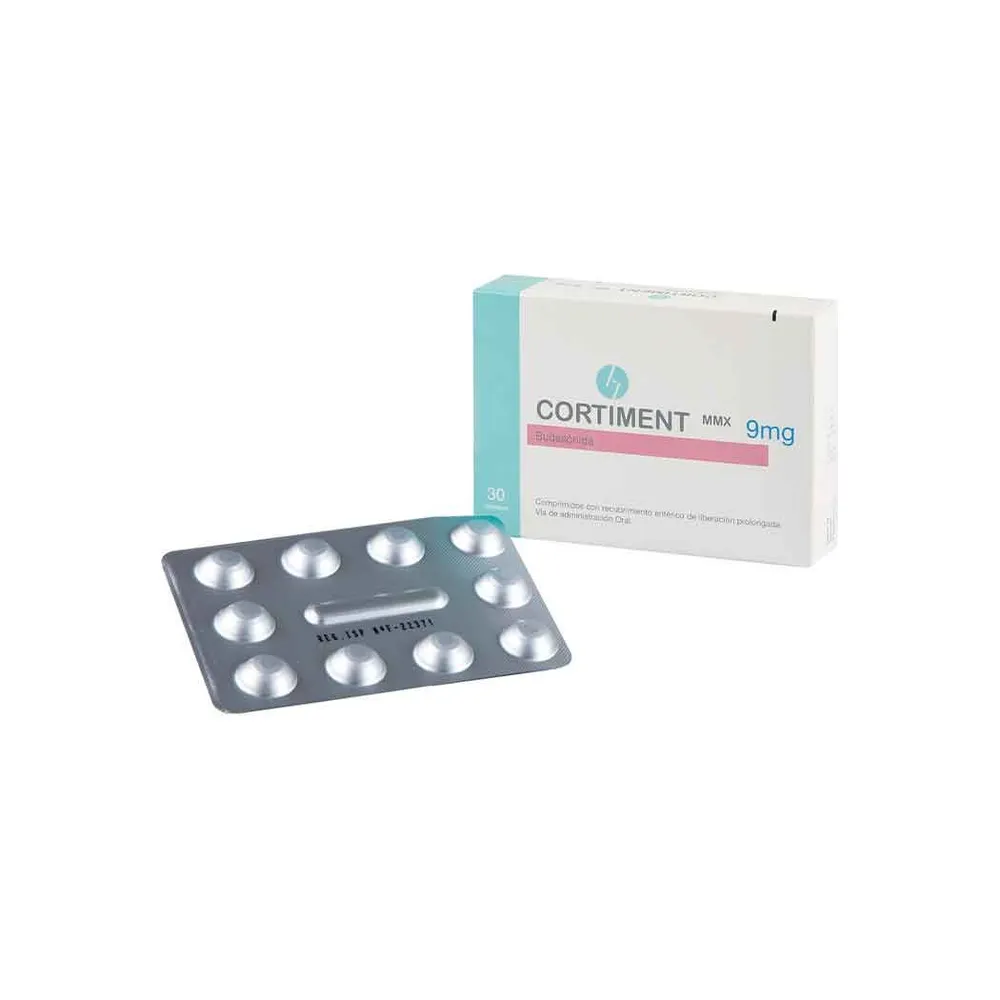
Table of Contents
Package leaflet: Information for the user
CORTIMENT 9 mg, prolonged-release tablets
Budesonide
Please read this leaflet carefully before taking this medicine because it contains important information for you.
- Keep this leaflet. You may need to read it again.
- If you have any questions, ask your doctor.
- This medicine has been prescribed for you only. Do not give it to others, even if their symptoms are the same as yours, as it could be harmful.
- If you experience any side effect, including those not listed in this leaflet, talk to your doctor. See section 4.
Contents of this leaflet:
- What Cortiment is and what it is used for
- What you need to know before taking Cortiment
- How to take Cortiment
- Possible side effects
- How to store Cortiment
- Contents of the pack and other information
1. What Cortiment is and what it is used for
Cortiment tablets contain a substance called budesonide. Budesonide belongs to a group of medicines called "corticosteroids", used to reduce inflammation.
Cortiment tablets are used in adults for the treatment of inflammation of the large intestine (colon) and rectum. This condition is called ulcerative colitis.
2. What you should know before taking Cortiment
Do not take Cortiment
If you are allergic to budesonide or to any of the other ingredients of this medicine (listed in
section 6).
If you are allergic to peanuts or soya, since Cortiment contains lecithin, a derivative of soya oil.
Warnings and precautions
Contact your doctor if you experience blurred vision or other visual disturbances.
Speak with your doctor before taking Cortiment:
- if you have an infection, including viral, bacterial, or fungal infections;
- if you have ever had high blood pressure;
- if you have diabetes;
- if you have ever suffered from brittle bones (osteoporosis);
- if you have ever had stomach ulcers;
- if you have ever had increased pressure inside the eye (glaucoma) or age-related cataracts;
- if a close family member has ever had diabetes or increased intraocular pressure (glaucoma);
- if you have ever had liver problems;
- if you are switching from another corticosteroid therapy to Cortiment, as this may lead to, for example, muscle and joint pain, fatigue, headache, nausea, and vomiting;
- if you know you are due to be vaccinated;
- if you have previously been treated with a more potent corticosteroid before starting Cortiment, symptoms may reappear;
- if you develop an infection during treatment, Cortiment may mask the signs of infection, which could worsen. You may be more prone to infections during treatment with Cortiment, as resistance to infections may be reduced;
- if you are scheduled for surgery in the near future, or are going through a period of stress;
- if you have not previously had measles or chickenpox. While taking Cortiment tablets, try to avoid contact with people who have measles or chickenpox. Speak with your doctor if you think you may have contracted chickenpox or measles while taking this medicine;
- if you or a close family member has ever had mental health problems.
Taking corticosteroids at high doses and for prolonged periods may affect any part of the body and, very rarely, may cause psychological problems (see section 4 “Possible side effects”).
If you have any doubts as to whether any of the above applies to you, consult your doctor before taking Cortiment tablets.
Other medicines and Cortiment
Inform your doctor if you are currently taking, have recently taken, or might take any other medicines, including those obtained without a prescription. This is important because Cortiment tablets may affect the action of certain medicines, and some medicines may affect the action of Cortiment tablets. Some medicines may increase the effects of Cortiment, and your doctor may wish to monitor you closely if you are taking these (including certain medicines for the treatment of HIV; ritonavir, cobicistat).
It is particularly important that you inform your doctor if you are taking, have recently taken, or might take any of the following medicines:
- ketoconazole or itraconazole, substances used to treat fungal infections;
- medicines used to treat HIV (e.g. ritonavir, nelfinavir, products containing cobicistat);
- carbamazepine, used in the treatment of epilepsy;
- cardiac glycosides and diuretics;
- medicines containing estrogens, such as hormone replacement therapy (HRT) and some oral contraceptives;
- cholestyramine, used to reduce cholesterol levels or relieve itching caused by liver problems, or antacids used to neutralize stomach acid.
Cortiment with food, drinks and alcohol
Do not drink grapefruit juice while taking Cortiment tablets. This may affect how the medicine works.
Pregnancy, breastfeeding and fertility
If you are pregnant or breastfeeding, if you suspect you are pregnant or are planning to become pregnant, ask your doctor for advice before taking this medicine.
Driving and using machines
It is unlikely that Cortiment will impair your ability to drive or operate machinery. However, caution is advised, as this type of medicine may sometimes cause dizziness or fatigue.
Cortiment contains lactose and lecithin (soya oil)
Cortiment tablets contain lactose, a type of sugar. If your doctor has informed you that you have an intolerance to certain sugars, contact him or her before taking this medicine.
Cortiment contains lecithin (soya oil). If you are allergic to peanuts or soya, do not use this medicine.
For those engaged in sports
Using this medicine without therapeutic need constitutes doping and may lead to a positive anti-doping test.
3. How to take Cortiment
Take this medicine exactly as your doctor has told you. If you are unsure, consult your doctor.
- The recommended dose is one tablet in the morning, before or during breakfast.
- Swallow the tablet whole with a glass of water. The tablet must not be crushed, powdered, or chewed.
- You will usually take this medicine every day for up to 8 weeks. Afterwards, your doctor may gradually reduce the frequency of dosing.
- Continue taking Cortiment tablets as directed by your doctor, even if you start to feel better.
Additional information while taking Cortiment tablets
If you are about to undergo surgery or are experiencing a period of stress, your doctor may instruct you to take additional steroid tablets.
Use in patients with impaired renal or hepatic function
Cortiment has not been specifically studied in patients with kidney or liver problems. Discuss this with your doctor.
Use in children
The use of Cortiment tablets is not recommended in children.
If you take more Cortiment than you should
If you take more Cortiment tablets than prescribed, inform your doctor immediately.
If you forget to take Cortiment
- If you forget a dose of Cortiment tablets, take it as soon as you remember. However, if it is almost time for your next dose, skip the missed dose.
- Do not take a double dose to make up for the forgotten dose.
If you stop taking Cortiment
Do not stop taking Cortiment tablets without first talking to your doctor. You may need to stop the treatment gradually. If you stop taking this medicine abruptly, your condition may worsen.
If you have any doubts about how to use this medicine, consult your doctor.
4. Possible side effects
Like all medicines, this medicine can cause side effects, although not everyone gets them.
If you have an allergic reaction, contact your doctor immediately or call the emergency medical services.
Signs may include hives or swelling of the face, lips, mouth, tongue, and throat. This may make breathing difficult.
The following side effects may occur with Cortiment; many of the side effects listed below are also expected during treatment with other steroids.
Common (may affect up to 1 in 10 people)
- Symptoms similar to Cushing's syndrome, such as a rounded facial appearance, acne, weight gain, and tendency to develop sores
- Low levels of potassium in the blood, possibly causing muscle weakness or fatigue, thirst, or tingling sensations
- Changes in behaviour, such as nervousness, insomnia, and mood swings
- Depression
- Headache
- Pounding or racing heartbeat (palpitations)
- Nausea
- Stomach ache
- Bloating
- Dry mouth
- Indigestion (dyspepsia)
- Skin rash or itching
- Acne
- Muscle pain, muscle cramps
- Heavy or irregular menstrual periods in women
- Extreme tiredness (fatigue)
- Decreased levels of the hormone cortisol in the blood
Uncommon (may affect up to 1 in 100 people)
- Influenza-like illness
- Increased white blood cell count
- Changes in behaviour, such as mood swings
- Feeling restless with hyperactivity
- Anxiety
- Dizziness
- Tremor
- Flatulence
- Back pain
- Muscle spasms
- Swelling of the legs
Rare (may affect up to 1 in 1,000 people)
- Aggression
- Glaucoma (increased pressure in the eye)
- Clouding of the lens or lens capsule of the eye (cataract)
- Blurred vision
- Purple or black/blue spots on the skin
Very rare (may affect up to 1 in 10,000 people)
- Severe allergic reaction (called anaphylaxis) which may lead to breathing difficulties and potential shock
Some of the side effects listed above are typical of steroid medicines and may occur depending on the dose, duration of treatment, whether you have or have had treatment with other cortisone preparations, and your individual susceptibility.
Psychological problems may occur during treatment with steroids such as Cortiment. Speak with your doctor if you (or someone taking this medicine) experience (or have experienced) symptoms of psychological problems. This is particularly important if you suffer from depression or have thoughts of suicide. In very rare cases, psychological problems have occurred with long-term use of high doses.
Reporting of side effects
If you experience any side effect, including those not listed in this leaflet, talk to your doctor, pharmacist, or nurse. You can also report side effects directly via the national reporting system at: “www.agenziafarmaco.gov.it/content/come-segnalare-una-sospetta-reazione-avversa”.
By reporting side effects, you can help provide more information on the safety of this medicine.
5. How to store Cortiment
Keep this medicine out of the sight and reach of children.
Do not use this medicine after the expiry date which is stated on the carton and blister pack after "Exp.". The expiry date refers to the last day of that month.
Store below 30°C.
Do not dispose of any medicine via wastewater or household waste. Ask your pharmacist how to dispose of medicines no longer required. This will help protect the environment.
6. Package contents and other information
What Cortiment contains
- The active substance is budesonide. Each tablet contains 9 mg of budesonide.
- The other components (excipients) of this medicine are: tablet core: stearic acid (E570), lecithin (soy) (E322), microcrystalline cellulose (E460), hydroxypropylcellulose (E463), lactose monohydrate, hydrated colloidal silica (E551), magnesium stearate (E470b)
tablet coating: methacrylic acid-methyl methacrylate copolymer (1:1), methacrylic acid-methyl methacrylate copolymer (1:2), talc (E553b), titanium dioxide (E171), triethyl citrate.
Description of the appearance of Cortiment and contents of the pack
Cortiment is presented as film-coated tablets, round, biconvex, white to off-white in colour,
with the imprint "MX9" on one side. The tablets are supplied in aluminum blister packs,
contained in a cardboard carton.
This medicine is available in pack sizes of 10, 20, 30, 50, 60 or 80 tablets. Not all pack sizes may be marketed.
Marketing Authorisation Holder and Manufacturer
Marketing Authorisation Holder
Ferring S.p.A.
Via C. Imbonati 18
20159 Milan
Italy
Manufacturer
Cosmo Spa
Via C. Colombo 1
20045 Lainate
Milan
Italy
This medicine is authorised in the European Economic Area (EEA) and the United Kingdom (Northern Ireland)
under the following names:
Austria, Bulgaria, Cyprus, Czech Republic, Denmark, Finland, France, Germany, Greece, Hungary,
Iceland, Ireland, Italy, Malta, Netherlands, Norway, Romania, Slovakia, Spain, Sweden, United Kingdom (Northern Ireland): Cortiment
Croatia, Poland: Cortiment
Portugal: Coramen
Belgium, Estonia, Latvia, Lithuania, Luxembourg: Budesonide Ferring
Slovenia: Budezonid Ferring