Condral
Italy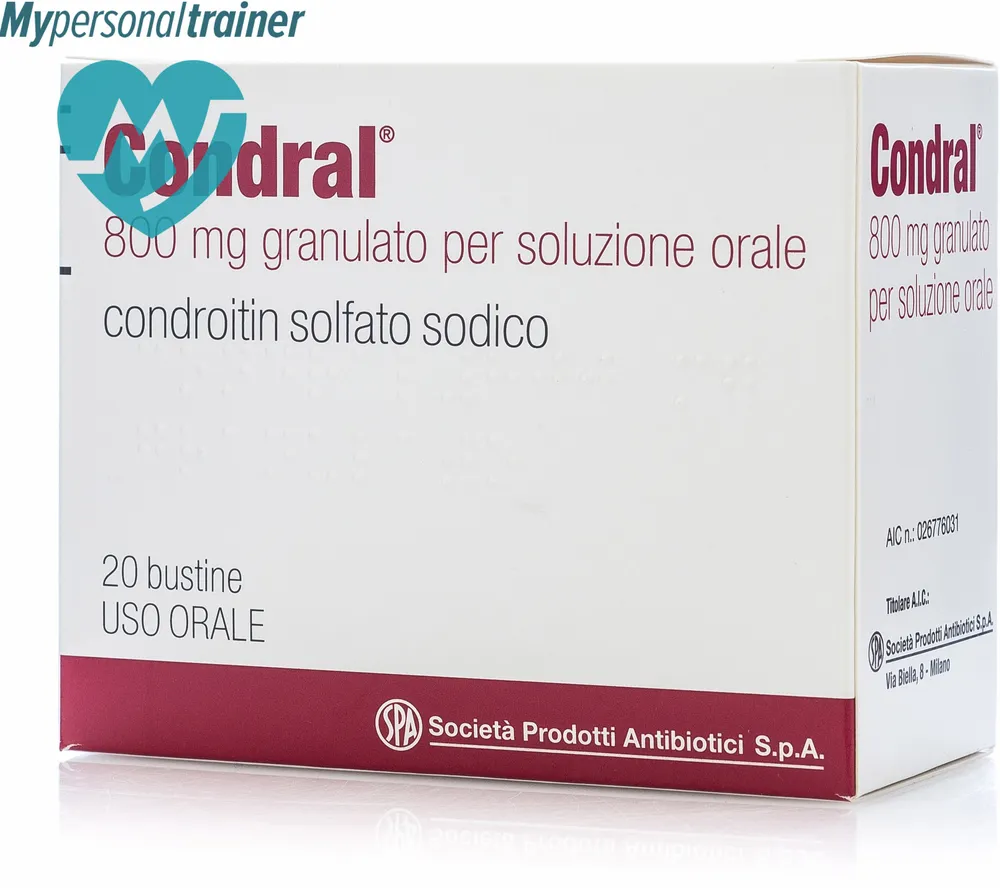
Table of Contents
- 1. What CONDRAL is and what it is used for
- 2. What you need to know before taking CONDRAL
- 3. How to take CONDRAL
- 4. Possible side effects
- 5. How to store CONDRAL
- 6. Package contents and other information
- 2. What CONDRAL is and what it is used for
- 2. What you need to know before taking CONDRAL
- 3. How to take CONDRAL
- 4. Possible side effects
- 5. How to store CONDRAL
- 6. Contents of the pack and other information
CONDRAL 400 mg hard capsules
Sodium chondroitin sulfate
Please read this entire leaflet carefully before taking this medicine, as it contains important information for you.
- Keep this leaflet. You may need to read it again.
- If you have any doubts, consult your doctor or pharmacist.
- This medicine has been prescribed for you only. Do not give it to others, even if their symptoms are the same as yours, as it could be harmful.
- If you experience any adverse effects, including those not listed in this leaflet, contact your doctor or pharmacist. See section 4.
Contents of this leaflet:
- What CONDRAL is and what it is used for
- What you need to know before taking CONDRAL
- How to take CONDRAL
- Possible side effects
- How to store CONDRAL
- Contents of the pack and other information
1. What CONDRAL is and what it is used for
What CONDRAL is
CONDRAL is a medicine containing sodium chondroitin sulfate, belonging to the class of polysaccharides.
Chondroitin sulfate is an important component of cartilage, the supporting tissue found in joints.
What it is used for
CONDRAL is indicated in adults for the treatment of symptoms of knee and hip osteoarthritis.
What is osteoarthritis?
Osteoarthritis is a very common disease, especially in adults, caused by deterioration of cartilage tissue in the joints.
Symptoms of osteoarthritis include joint pain, stiffness after rest, reduced ability to move the joints, and in some cases, joint deformity.
2. What you need to know before taking CONDRAL
Do not take CONDRAL:
- if you are allergic to sodium chondroitin sulfate or to substances chemically related to it, or to any of the other components of CONDRAL (see section 6 “What CONDRAL contains”).
Warnings and precautions
Talk to your doctor before taking CONDRAL
- if you suffer from any type of allergy.
Children and adolescents
The use of CONDRAL is not recommended in children and adolescents under 18 years of age, as safety and efficacy have not been established in this patient group.
Other medicines and CONDRAL
Tell your doctor or pharmacist if you are taking, have recently taken, or might take any other medicines, including those not requiring a prescription.
To date, no interactions with other medicines are known.
Pregnancy and breastfeeding
If you are pregnant, think you may be pregnant, planning a pregnancy, or are breastfeeding, consult your doctor or pharmacist before taking this medicine.
If you are pregnant or breastfeeding, use this medicine only if clearly needed and under direct medical supervision.
Driving and using machines
CONDRAL does not impair the ability to drive vehicles or operate machinery.
CONDRAL contains sodium
This medicine contains 37 mg of sodium (the main component of table salt) per capsule. This corresponds to 1.9% of the maximum daily dietary intake recommended for an adult.
3. How to take CONDRAL
Take CONDRAL exactly as directed by your doctor. If you have any doubts, consult your doctor or pharmacist.
The recommended dose, unless otherwise prescribed by your doctor, is 2 to 3 capsules per day by mouth.
The duration of treatment should not be less than 3 weeks.
If you take more CONDRAL than you should
If you take more CONDRAL than you should, contact your doctor or go to the nearest hospital.
If you forget to take CONDRAL
Do not take a double dose to make up for the missed dose.
If you stop taking CONDRAL
If you have any doubts about using this medicine, consult your doctor or pharmacist.
4. Possible side effects
Like all medicines, CONDRAL may cause side effects, although not everyone experiences them.
Reactions such as nausea, diarrhoea, pain, abdominal discomfort, and skin reactions may occur at the start of
treatment, but are usually rare and mild in intensity.
The following side effects have been reported during treatment with CONDRAL, listed according to frequency:
Rare (may affect up to 1 in 1,000 people):
- dizziness
- upper abdominal pain
- diarrhoea
- nausea
- gastrointestinal disorders
- skin redness (erythema)
- skin rash, including appearance of red spots and blisters (rash and maculopapular rash). Very rare (affects less than 1 in 10,000 people):
- skin redness accompanied by itching (urticaria)
- skin inflammation accompanied by itching (eczema)
- itching
- swelling (oedema).
Reporting of side effects
If you experience any side effect, including those not listed in this leaflet, talk to your doctor.
You may also report side effects directly through the national reporting system at the website
https://www.aifa.gov.it/content/segnalazioni-reazioni-avverse. By reporting side effects, you can help provide more information on the safety of this medicine.
5. How to store CONDRAL
Do not store above 30°C.
Do not use this medicine after the expiry date stated on the packaging after Exp.: The expiry date refers to the last day of that month.
Do not dispose of any medicine via wastewater or household waste. Ask your pharmacist how to dispose of medicines you no longer use. This will help protect the environment.
Keep this medicine out of the sight and reach of children.
6. Package contents and other information
What CONDRAL contains
- The active substance is sodium chondroitin sulfate. Each hard capsule contains 400 mg of sodium chondroitin sulfate.
- The other components are: magnesium stearate, gelatin, indigotine (E132), quinoline yellow (E104).
Description of the appearance of CONDRAL and package contents
CONDRAL hard capsules are blue-green in colour, packaged in blisters. They are available in cartons containing 20 hard capsules.
Marketing Authorization Holder
SPA – Società Prodotti Antibiotici S.p.A. – Via Biella, 8 - 20143 Milan
Manufacturer
DOPPEL Farmaceutici S.r.l. - Via Volturno, 48 - 20089 Quinto De' Stampi – Rozzano (MI).
IBSA Farmaceutici Italia S.r.l. – Via Martiri di Cefalonia, 2 – 26900 Lodi.
CONDRAL 400 mg granules for oral solution
CONDRAL 800 mg granules for oral solution
Sodium chondroitin sulfate
Please read this entire leaflet carefully before taking this medicine, as it contains important information for you.
- Keep this leaflet. You may need to read it again.
- If you have any questions, consult your doctor or pharmacist.
- This medicine has been prescribed for you only. Do not give it to others, even if their symptoms are the same as yours, as it may be dangerous.
- If you experience any adverse reactions, including those not listed in this leaflet, consult your doctor or pharmacist. See section 4.
Contents of this leaflet:
- What CONDRAL is and what it is used for
- What you need to know before taking CONDRAL
- How to take CONDRAL
- Possible side effects
- How to store CONDRAL
- Package contents and other information
2. What CONDRAL is and what it is used for
What CONDRAL is
CONDRAL is a medicine containing Sodium Chondroitin Sulfate, which belongs to the class of polysaccharides.
Chondroitin sulfate is an important component of cartilage, the supporting tissue present in joints.
What it is used for
CONDRAL is indicated in adults for the treatment of symptoms of osteoarthritis of the knee and hip.
What is osteoarthritis?
Osteoarthritis is a very common disease, especially in adults, caused by damage to the cartilage tissue in the joints.
Symptoms of osteoarthritis include joint pain, stiffness after rest, reduced ability to move the joints, and in some cases joint deformity.
2. What you need to know before taking CONDRAL
Do not take CONDRAL:
- if you are allergic to sodium chondroitin sulfate or to substances with a similar chemical structure, or to any of the other ingredients of CONDRAL (see section 6 “What CONDRAL contains”).
Warnings and precautions
Talk to your doctor before taking CONDRAL
- if you suffer from any type of allergy.
Children and adolescents
The use of CONDRAL is not recommended in children and adolescents under 18 years of age, as safety and efficacy have not been established in this patient group.
Other medicines and CONDRAL
Inform your doctor or pharmacist if you are taking, have recently taken, or might take any other medicines, including those not requiring a prescription.
No interactions with other medicines are currently known.
Pregnancy and breastfeeding
If you are pregnant, think you might be pregnant, planning a pregnancy, or are breastfeeding, consult your doctor or pharmacist before taking this medicine.
If you are pregnant or breastfeeding, use this medicine only if clearly needed and under direct medical supervision.
Driving and using machines
CONDRAL does not impair the ability to drive vehicles or operate machinery.
CONDRAL contains:
- sorbitol. In particular, the 400 mg granules contain 1335 mg of sorbitol per sachet, while the 800 mg granules contain 2670 mg of sorbitol per sachet. Sorbitol is a source of fructose. If your doctor has told you that you have an intolerance to certain sugars, or if you have been diagnosed with hereditary fructose intolerance, a rare genetic disorder in which patients are unable to metabolize fructose, speak with your doctor before taking this medicine;
- sunset yellow (E110): may cause allergic reactions;
- sodium (the main component of table salt). In particular, the 400 mg granules contain 38 mg of sodium per sachet, while the 800 mg granules contain 76 mg of sodium per sachet. This corresponds to 1.9% and 3.8%, respectively, of the maximum daily recommended dietary intake for an adult.
3. How to take CONDRAL
Take CONDRAL exactly as directed by your doctor. If you have any doubts, consult your doctor or pharmacist.
The recommended dose, unless otherwise prescribed by your doctor, is:
- 400 mg sachets: 2 to 3 sachets daily by mouth
- 800 mg sachets: one sachet daily by mouth. The contents of the sachets must be dissolved in water before administration. The duration of treatment should not be less than 3 weeks.
If you take more CONDRAL than you should
If you take more CONDRAL than you should, contact your doctor or go to the nearest hospital.
If you forget to take CONDRAL
Do not take a double dose to make up for the missed dose.
If you stop taking CONDRAL
If you have any doubts about the use of this medicine, consult your doctor or pharmacist.
4. Possible side effects
Like all medicines, CONDRAL may cause side effects, although not everyone gets them.
Reactions such as nausea, diarrhoea, pain, abdominal discomfort and skin reactions may occur at the start of
treatment, but are usually rare and mild in intensity.
The following side effects have been reported during treatment with CONDRAL, listed by frequency:
Rare (may affect up to 1 in 1,000 people):
- dizziness
- upper abdominal pain
- diarrhoea
- nausea
- stomach and intestinal disorders
- skin redness (erythema)
- skin rash, sometimes with appearance of red spots and blisters (rash and maculopapular rash). Very rare (affects less than 1 in 10,000 people):
- skin redness accompanied by itching (urticaria)
- skin inflammation accompanied by itching (eczema)
- itching
- swelling (oedema).
- Reporting of side effects If you experience any side effect, including those not listed in this leaflet, consult your doctor. You may also report side effects directly through the national reporting system at the website https://www.aifa.gov.it/content/segnalazioni-reazioni-avverse. By reporting side effects, you can help provide more information on the safety of this medicine.
5. How to store CONDRAL
This medicine does not require any special storage conditions.
Do not use this medicine after the expiry date stated on the packaging after Exp.: The expiry date refers to the last day of that month.
Do not dispose of any medicine via wastewater or household waste. Ask your pharmacist how to dispose of medicines you no longer use. This will help protect the environment.
Keep this medicine out of the sight and reach of children.
6. Contents of the pack and other information
What CONDRAL contains
- The active substance is sodium chondroitin sulfate. Each sachet contains 400 mg or 800 mg of sodium chondroitin sulfate.
- The other components are: citric acid, sodium saccharin (see section “CONDRAL contains sodium”), orange flavour, sunset yellow (E 110) (see section “CONDRAL contains sunset yellow (E110)”), sorbitol (see section “CONDRAL contains sorbitol”), anhydrous colloidal silica.
Description of the appearance of CONDRAL and contents of the pack
CONDRAL 400 mg oral solution granules is supplied in sachets. Packaged in cartons containing 20 sachets.
CONDRAL 800 mg oral solution granules is supplied in sachets. Available in cartons containing 20 or 30 sachets.
It is possible that not all pack sizes are marketed.
Marketing Authorization Holder
SPA – Società Prodotti Antibiotici S.p.A. – Via Biella, 8 - 20143 Milan, Italy
Manufacturer
IBSA Farmaceutici Italia S.r.l. – Via Martiri di Cefalonia, 2 – 26900 Lodi, Italy