Concor
Italy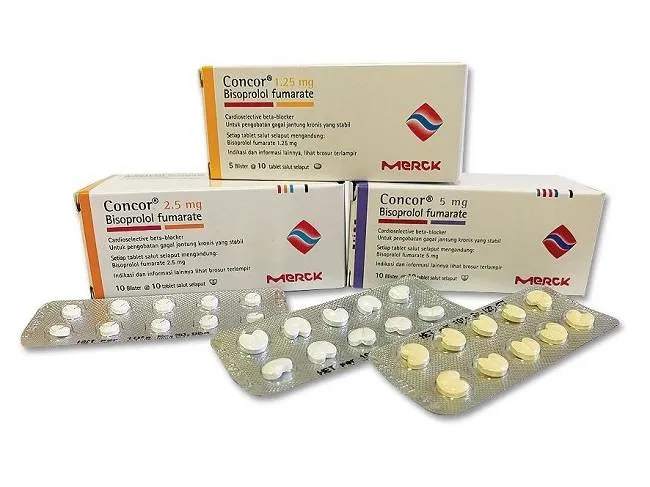
Table of Contents
Package leaflet: Information for the user
CONCOR 10 mg film-coated tablets
Bisoprolol fumarate
Read this leaflet carefully before taking this medicine because it contains important information for you.
- Keep this leaflet. You may need to read it again.
- If you have any questions, ask your doctor or pharmacist.
- This medicine has been prescribed for you only. Do not give it to other people, even if their symptoms are the same as yours, as it may be harmful.
- If you experience any side effects, including those not listed in this leaflet, contact your doctor or pharmacist. See section 4.
Contents of this leaflet:
- What CONCOR is and what it is used for
- What you need to know before taking CONCOR
- How to take CONCOR
- Possible side effects
- How to store CONCOR
- Contents of the pack and other information
1. What CONCOR is and what it is used for
CONCOR contains the active substance bisoprolol fumarate and belongs to a group of medicines known as selective beta-blockers.
CONCOR is indicated for the treatment of arterial hypertension (high blood pressure) and Angina Pectoris (chest pain caused by blockages in the coronary arteries supplying the heart muscle).
2. What you should know before taking CONCOR
Do not take CONCOR:
- if you are allergic to bisoprolol or to any of the other ingredients of this medicine (listed in section 6).
- in cases of acute heart failure or episodes of decompensated heart failure requiring intravenous inotropic therapy (therapy that increases the force of heart contraction).
- in case of cardiogenic shock (severe and sudden drop in blood pressure due to reduced heart efficiency).
- in case of second- or third-degree atrioventricular block without a pacemaker (when the electrical impulse from the upper chambers of the heart, the atria, does not properly reach the lower chambers, the ventricles).
- in case of sick sinus syndrome (this is the site where impulses originate to make the heart contract).
- in case of sinoatrial block (when the impulse from the sinus node does not properly reach the atria).
- in case of bradycardia (reduced heart rate) with less than 60 beats per minute before starting treatment.
- in case of hypotension (systolic blood pressure below 100 mm Hg).
- in case of severe bronchial asthma or severe chronic obstructive pulmonary disease (airway obstruction).
- in case of advanced peripheral arterial occlusion or Raynaud's syndrome (severe circulatory problems in the extremities, hands and feet).
- in case of untreated pheochromocytoma (a tumor of the adrenal gland, located above the kidney) causing high spikes in blood pressure (see section "Warnings and precautions").
- in case of metabolic acidosis (a condition characterized by excessive acidity in the blood).
Ask your doctor or pharmacist for advice before taking this medicine if you are pregnant, suspect you may be pregnant, are planning a pregnancy, or are breastfeeding (see section “Pregnancy and breastfeeding”).
Warnings and precautions
Talk to your doctor or pharmacist before taking CONCOR.
CONCOR should be used with caution in the following cases:
- Heart failure (inability of the heart to pump blood adequately throughout the body); treatment of stable chronic heart failure with bisoprolol must be initiated with a specific dose-titration phase.
- Bronchospasm (bronchial asthma, obstructive airway diseases).
- Use of inhaled anesthetics (used to induce anesthesia during surgical procedures); if therapy interruption is required before surgery, it should be discontinued gradually, if possible, and administration should be stopped at least 48 hours before surgery.
- Diabetes mellitus with unstable blood glucose (elevated blood sugar levels not adequately controlled); symptoms of hypoglycemia (low blood sugar) may not be recognizable.
- Prolonged fasting.
- Ongoing desensitization therapy (allergy treatment via oral or subcutaneous injections).
- First-degree atrioventricular block (slowed conduction of the heart's electrical impulse from the atria to the ventricles).
- Prinzmetal's angina (chest pain at rest; cases of coronary artery spasm have been observed in patients treated with bisoprolol).
- Peripheral arterial occlusion (reduced blood circulation in the limbs; symptoms may worsen, especially at the beginning of therapy).
If you suffer from bronchial asthma or other chronic obstructive lung diseases (due to airway obstruction), your doctor should prescribe concomitant bronchodilator therapy.
Like other beta-blockers, bisoprolol may increase both sensitivity to allergens (substances causing allergies) and the severity of anaphylactic reactions (severe allergic reactions). Treatment with adrenaline (a drug with effects opposite to bisoprolol, used in severe allergic reactions and acute drops in blood pressure) may not always produce the expected therapeutic effect.
If you have psoriasis (scaly skin eruptions) or a family history of this condition, your doctor must carefully evaluate the risk-benefit ratio before prescribing beta-blockers (bisoprolol).
If you have pheochromocytoma (a tumor of the adrenal gland), bisoprolol must not be administered without prior treatment with an alpha-blocker (a drug that acts on small arteries, dilating them and lowering blood pressure).
During bisoprolol therapy, symptoms of thyrotoxicosis (a condition with excess thyroid hormones in the body), such as increased heart rate, tremors, feeling of warmth, weight loss despite increased appetite, and protruding eyes, may become less evident or masked.
If you need to discontinue bisoprolol therapy, this should not be done abruptly unless absolutely necessary.
For further information, see “If you stop taking CONCOR”.
For athletes: The use of this drug without therapeutic need constitutes doping and may lead to a positive result in anti-doping tests.
Other medicines and CONCOR
Inform your doctor or pharmacist if you are taking, have recently taken, or might take any other medicines.
Concomitant administration with CONCOR is not recommended if you are taking:
- Calcium channel blockers such as verapamil and, to a lesser extent, diltiazem (used to treat high blood pressure, angina pectoris – narrowing of the coronary arteries – and arrhythmias – irregular heartbeat), as they have a negative effect on cardiac contractility and atrioventricular conduction. If you are being treated with beta-blockers, intravenous administration of verapaml may cause profound hypotension (low blood pressure) and atrioventricular block (blockage of electrical impulse conduction in the heart).
- Clonidine (used to treat high blood pressure), as it increases the risk of "secondary hypertension" as well as excessive reduction in heart rate and cardiac conduction.
- Monoamine oxidase inhibitors (MAOIs), except MAO-B inhibitors (medicines used to treat depression), as they enhance the blood pressure-lowering effect of beta-blockers and may also increase the risk of hypertensive crisis.
Use with caution when taking CONCOR concomitantly with:
- Calcium channel blockers such as dihydropyridine derivatives (e.g., nifedipine), as they increase the risk of hypotension (excessive drop in blood pressure), especially at the beginning of treatment. If you have latent heart failure, concomitant treatment with beta-blocking agents may lead to cardiac collapse.
- ACE inhibitors (used as antihypertensives, e.g., captopril, enalapril) at the beginning of therapy, as they may cause an excessive drop in blood pressure.
- Class I antiarrhythmic drugs (which normalize heart rate) (e.g., disopyramide, quinidine), as they may enhance the effect on atrial conduction time (increasing the time for transmission of the impulse causing heart contraction) and may increase the negative inotropic effect (reduced force of heart contraction).
- Class III antiarrhythmic drugs (e.g., amiodarone), as they may enhance the effect on atrial conduction time (slowing the impulse that triggers heart contraction).
- Parasympathomimetic drugs (including tacrine), as they may increase atrioventricular conduction time.
- Other beta-blockers, including eye drops, as they have an additive effect (increasing the effect of bisoprolol).
- Insulin and oral hypoglycemic agents, as they enhance the hypoglycemic effect (lowering blood glucose). In addition, beta-adrenergic blockade may mask symptoms of hypoglycemia.
- Anesthetics (used for anesthesia during surgical procedures), as they blunt the reflex tachycardia and increase the risk of hypotension. Continuing beta-blockade reduces the risk of arrhythmias during induction and intubation (initial phases of anesthesia for surgery). The patient must inform the anesthesiologist if they are undergoing beta-blocker therapy (e.g., bisoprolol).
- Digitalis glycosides (drugs that increase the force of heart contraction), as they cause a reduction in heart rate and prolong atrioventricular conduction time.
- Prostaglandin-synthetase inhibitors (substances involved in prostaglandin production, released during inflammation), as they reduce the antihypertensive effects.
- Ergotamine derivatives (used for migraine headaches and act by constricting arteries), as they may worsen peripheral circulatory disturbances.
- Sympathomimetic agents (such as adrenaline), as they may reduce the effect of both drugs (adrenaline and bisoprolol, which have opposing actions). A higher dose of adrenaline may be needed to counteract allergic reactions.
- Tricyclic antidepressants (used to treat depression), barbiturates (used to treat epilepsy), phenothiazines (used to treat, among others, mental illnesses), as with other antihypertensives (used to lower blood pressure), as they may increase the blood pressure-lowering effect.
- Rifampicin (an antibiotic), which increases the production of liver enzymes that inactivate the drug, thereby slightly reducing the half-life of bisoprolol (reducing the time the drug remains in the blood and thus its effectiveness). Usually, no dosage adjustment is necessary.
- Mefloquine (a drug used against malaria), as it increases the risk of bradycardia (reduced heart rate).
- Alcohol, analgesics (medicines for pain), and antihistamines (medicines for allergies), as CONCOR may enhance their central depressant effects.
Pregnancy and breastfeeding
If you are pregnant, suspect you may be pregnant, planning a pregnancy, or breastfeeding, consult your doctor or pharmacist before taking this medicine.
Pregnancy
Bisoprolol has pharmacological effects that may cause harmful effects during pregnancy and/or in the fetus/neonate. Beta-blockers reduce placental perfusion (blood supply to the placenta), which may lead to delayed fetal growth, fetal death in utero, miscarriage, or premature delivery. In the fetus and newborn, adverse effects such as hypoglycemia (low blood sugar) and bradycardia (slowed heart rate) may occur. The fetus must be closely monitored, as symptoms of hypoglycemia and bradycardia usually appear within the first three days of therapy. If treatment is necessary, beta-1 selective beta-blockers are preferred.
Bisoprolol should not be used during pregnancy unless strictly necessary. In such cases, utero-placental blood flow and fetal growth should be closely monitored. If adverse effects occur, alternative therapy should be considered.
Breastfeeding
It is not recommended to take bisoprolol during breastfeeding, as there is insufficient information on whether bisoprolol passes into breast milk.
Driving and use of machines
Bisoprolol does not negatively affect the ability to drive vehicles. However, due to individual variations in response to medication, the ability to drive and operate machinery may be affected, especially at the beginning of treatment, when therapy is changed, or when alcohol is consumed concurrently.
3. How to take CONCOR
Take this medicine exactly as prescribed by your doctor. If you have any doubts, consult your doctor or pharmacist.
The recommended dose is one 10 mg film-coated tablet daily, unless otherwise prescribed by your doctor.
The initial dose may be half a 10 mg tablet once daily.
If necessary, the daily dose may be increased to one tablet daily.
Only in isolated cases may it be necessary to increase the dose to two 10 mg tablets daily, taken as a single dose.
Dose adjustment is not required in patients with mild renal or hepatic impairment.
If renal or hepatic impairment is severe, the daily dose should not exceed 10 mg.
Dose modification is not necessary when concomitantly taking drugs that increase liver metabolism (e.g. Rifampicin).
Treatment with CONCOR must not be stopped abruptly, especially in patients suffering from angina pectoris.
The tablets should be swallowed with a little liquid, preferably in the morning and with food.
If you take more CONCOR than you should
If you take more tablets than prescribed, you may experience bradycardia (slowing of the heartbeat), hypotension (low blood pressure), bronchospasm (difficulty breathing), acute heart failure (rapid onset of symptoms such as breathlessness, weakness, malaise, due to the heart's inability to pump blood effectively), and hypoglycaemia (low blood sugar).
In case of overdose, treatment with bisoprolol should be discontinued and supportive and symptomatic therapy should be initiated.
If you forget to take CONCOR
Do not take a double dose to make up for the forgotten tablet.
If you stop taking CONCOR
Treatment with CONCOR must not be stopped abruptly.
If you have any questions about the use of this medicine, consult your doctor or pharmacist.
4. Possible side effects
Like all medicines, this medicine can cause side effects, although not everybody will get them.
The side effects are listed below according to how often they occur:
Very common (may affect more than 1 in 10 people)
- bradycardia (slowed heart rate)
Common (may affect up to 1 in 10 people):
- worsening of heart failure (inability of the heart to pump blood adequately throughout the body);
- feeling cold or tingling in the extremities, hypotension (low blood pressure);
- fatigue, weakness, dizziness, headache (these occur mainly at the beginning of treatment and usually disappear within 1–2 weeks);
- nausea, vomiting, diarrhoea, constipation.
Uncommon (may affect up to 1 in 100 people):
- muscle weakness, cramps;
- atrioventricular conduction disorders (heart rhythm disturbances), orthostatic hypotension (rapid drop in blood pressure upon standing from a lying or sitting position);
- sleep disorders, depression;
- bronchospasm in patients with bronchial asthma or history of obstructive lung disease.
Rare (may affect up to 1 in 1,000 people):
- syncope (sudden, temporary loss of consciousness);
- nightmares, hallucinations;
- hypersensitivity reactions (itching, redness, rash). You should contact your doctor immediately if you experience more severe allergic reactions, which may include swelling of the face, neck, tongue, mouth or throat, or difficulty breathing.
- increased liver enzymes (ALAT, ASAT), hepatitis (inflammation of the liver);
- increased triglycerides (blood fats);
- erectile dysfunction (male sexual dysfunction);
- hearing disturbances, allergic rhinitis (runny nose, sneezing, nasal and eye itching);
- reduced tear production (to be considered in case of contact lens use).
Very rare (may affect up to 1 in 10,000 people):
- conjunctivitis (inflammation of the eye);
- psoriasis (scaly skin rash); beta-blockers may cause or worsen psoriasis or induce pseudo-psoriatic rashes (rashes resembling psoriasis);
- alopecia (reduction in the amount of hair and body hair).
Cases of coronary vasospasm (constriction of the arteries supplying blood to the heart) have been reported.
Although there have been no reports with the use of CONCOR, isolated cases of thrombocytopenic purpura (small skin hemorrhages caused by low platelet count) and granulocytopenia (reduction in white blood cells) have been reported with the use of beta-blockers.
Reporting of side effects
If you experience any side effect, including those not listed in this leaflet, talk to your doctor or pharmacist. You can also report side effects directly via the national reporting system at www.aifa.gov.it/content/segnalazioni-reazioni-avverse.
By reporting side effects, you can help provide more information on the safety of this medicine, although not everybody will experience them.
5. How to store CONCOR
This medicinal product does not require any special storage conditions.
Keep this medicine out of the sight and reach of children.
Do not use this medicinal product after the expiry date which is stated on the label after "Exp.". The expiry date refers to the last day of that month.
Do not dispose of any medicinal product via wastewater or household waste. Ask your pharmacist how to dispose of medicines no longer required. This will help protect the environment.
6. Package contents and other information
What CONCOR contains
The active substance is: bisoprolol fumarate 10 mg
The other components are: maize starch, microcrystalline cellulose, povidone, hypromellose, magnesium stearate,
anhydrous colloidal silica, titanium dioxide, macrogol 6000, yellow iron oxide, anhydrous dicalcium phosphate,
red iron oxide.
Description of the appearance of CONCOR and contents of the pack
Carton pack containing 28 film-coated tablets of 10 mg
Marketing Authorization Holder
Dompé farmaceutici s.p.a. – Via San Martino, 12 – 20122 Milan
Under license from Merck KGaA – Darmstadt (Germany)
Manufacturer
Patheon Italia S.p.A. – Viale G.B. Stucchi, 110 – 20900 Monza MB
Doppel Farmaceutici s.r.l - Via Volturno, 48 - 20089 Quinto De’ Stampi - Rozzano (MI)