Competact
Italy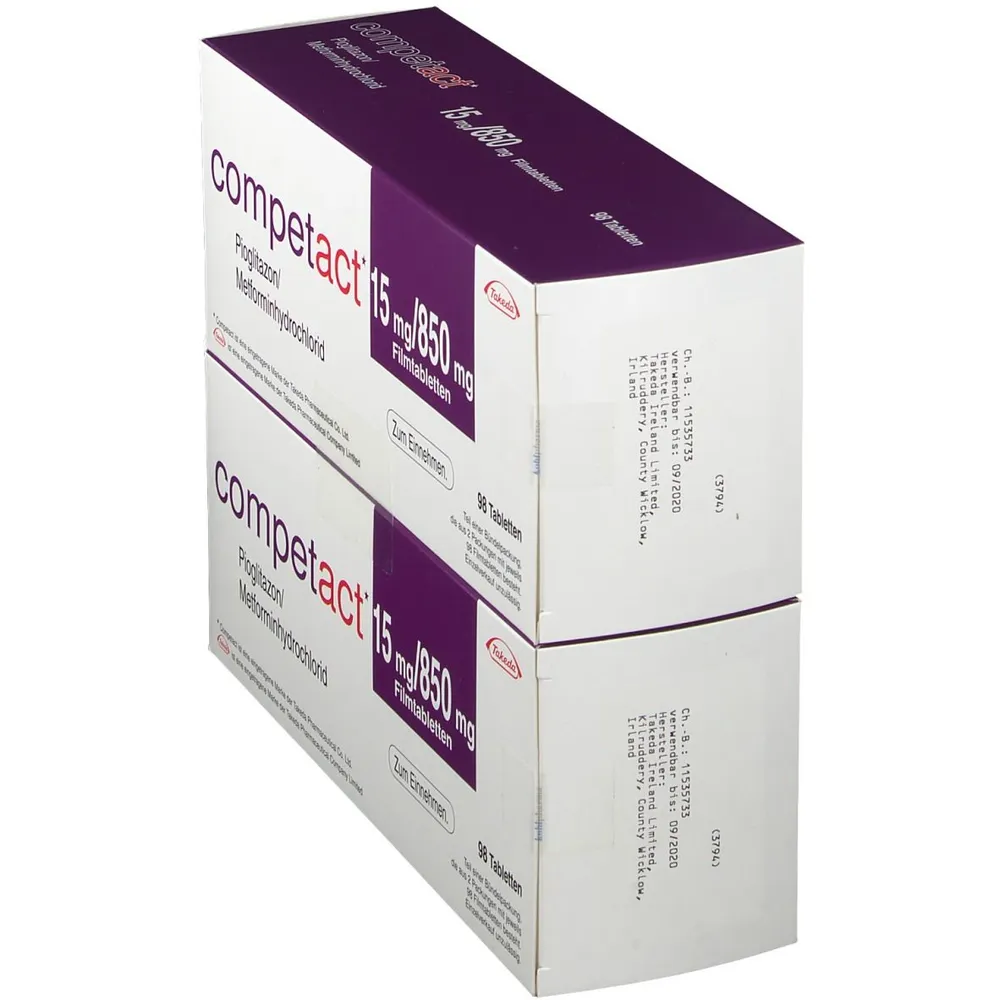
Table of Contents
Patient Information Leaflet
Competact 15 mg/850 mg film-coated tablets
pioglitazone/metformin hydrochloride
Please read all of this leaflet carefully before taking this medicine because it contains important information for you.
- Keep this leaflet. You may need to read it again.
- If you have any questions, ask your doctor or pharmacist.
- This medicine has been prescribed for you only. Do not give it to other people, even if they have the same symptoms as yours, because it may be harmful.
- If you experience any side effect, including those not listed in this leaflet, talk to your doctor or pharmacist. See section 4.
Contents of this leaflet:
- What Competact is and what it is used for
- What you need to know before taking Competact
- How to take Competact
- Possible side effects
- How to store Competact
- Contents of the pack and other information
1. What Competact is and what it is used for
Competact contains pioglitazone and metformin. It is an antidiabetic medicine used in adults for the
treatment of type 2 diabetes mellitus (non-insulin-dependent) when treatment with metformin alone
is not sufficient. This type of diabetes usually occurs in adults, particularly as a result of being
overweight, and where the body is either unable to produce sufficient insulin (a hormone that
controls blood sugar levels), or unable to use effectively the insulin it produces. Your doctor will
assess whether Competact is working 3–6 months after starting treatment.
Competact helps control your blood sugar levels in patients with type 2 diabetes by enabling your
body to make better use of the insulin it produces.
2. What you need to know before taking Competact
Do not take Competact
- if you are allergic to pioglitazone, metformin, or any of the other ingredients of this medicine (listed in section 6).
- if you have heart failure or have previously had heart failure.
- if you recently had a heart attack or have severe circulatory problems including shock, or breathing difficulties.
- if you have liver disorders.
- if you drink alcohol excessively (whether on a daily basis or only occasionally).
- if you have uncontrolled diabetes associated, for example, with severe hyperglycaemia (high blood glucose levels), nausea, vomiting, diarrhoea, rapid weight loss, lactic acidosis (see section “Risk of lactic acidosis”) or ketoacidosis. Ketoacidosis is a condition in which substances called “ketone bodies” accumulate in the blood and may lead to diabetic pre-coma. Symptoms include stomach pain, rapid deep breathing, drowsiness and breath with an unusually fruity odour.
- if you have or have previously had bladder cancer (bladder tumour).
- if you have blood in your urine for which your doctor has not yet carried out investigations.
- if you have severely reduced kidney function.
- if you have a severe infection or are dehydrated.
- if you are due to undergo a radiological examination with an injectable contrast agent; consult your doctor, as you will need to stop treatment with Competact for a certain period of time before and after the examination.
- if you are breastfeeding.
Warnings and precautions
Talk to your doctor or pharmacist before taking Competact (also see section 4)
- if you have heart problems. Some patients with long-standing type 2 diabetes and heart disease or previous stroke who were treated with pioglitazone and insulin together developed heart failure. Inform your doctor as soon as possible if you experience signs of heart failure such as unusual shortness of breath, rapid weight gain, or localized swelling (oedema).
- if you retain water (fluid retention) or have heart failure problems, especially if you are over 75 years old. You should also inform your doctor if you are taking anti-inflammatory medicines, which can also cause fluid retention and swelling.
- if you have a specific type of diabetic eye disease called macular oedema (swelling at the back of the eye), consult your doctor if you notice any changes in your vision.
- if you have ovarian cysts (polycystic ovary syndrome). The likelihood of becoming pregnant may increase, as ovulation may resume when taking Competact. If this applies to you, use an appropriate contraceptive method to avoid the risk of an unplanned pregnancy.
- if you have liver problems. Before starting Competact, you will have a blood test to check your liver function. This test needs to be repeated periodically. Inform your doctor immediately if you experience symptoms suggesting liver problems (such as unexplained nausea, vomiting, stomach ache, fatigue, loss of appetite and/or dark urine), as your liver function will need to be checked.
A decrease in the number of blood cells (anaemia) may also occur.
Risk of lactic acidosis
Competact may cause a very rare but very serious side effect called lactic acidosis,
particularly if the kidneys are not functioning properly. The risk of developing lactic acidosis is higher
in the presence of uncontrolled diabetes, severe infections, prolonged fasting or alcohol consumption,
dehydration (see below for further information), liver problems, or any other
medical condition characterized by reduced oxygen supply to part of the body (such as in severe heart disease).
If you have any of the medical conditions listed above, consult your doctor for further
instructions.
Temporarily stop taking Competact if you have a medical condition that may be associated with dehydration
(significant loss of body fluids), such as severe
vomiting, diarrhoea, fever, heat exposure, or if you are drinking less fluid than usual. Consult your doctor
for further instructions.
If you experience any of the symptoms of lactic acidosis, stop taking Competact and consult your doctor or the nearest hospital immediately,
as lactic acidosis can lead to coma.
Symptoms of lactic acidosis include:
- vomiting
- stomach ache (abdominal pain)
- muscle cramps
- a general feeling of being unwell associated with severe fatigue
- difficulty breathing
- reduced body temperature and slower heart rate
Lactic acidosis is a medical emergency and must be treated in hospital.
During treatment with Competact, your doctor will check your kidney function at least once a
year, or more frequently if you are elderly and/or if kidney function worsens.
If you are due to undergo major surgery, you must stop taking
Competact during the procedure and for a certain period afterwards. Your doctor
will decide when to stop and when to restart treatment with Competact.
Hypoglycaemia
If you take Competact together with other diabetes medicines, it is more likely that your blood sugar
level may drop below normal (hypoglycaemia). If you experience symptoms of
hypoglycaemia such as weakness, dizziness, increased sweating, rapid heartbeat,
visual disturbances or difficulty concentrating, you should eat sugar to raise your
blood sugar level. If you have any doubts about how to recognize hypoglycaemia, ask your
doctor or pharmacist for further information. It is advisable to carry sugar lumps, sweets, biscuits or sugary fruit juices with you.
Bone fractures
A higher number of bone fractures has been observed in patients, particularly in women, taking pioglitazone. Your doctor will take this into account when managing your diabetes.
Children and adolescents
Use in children and adolescents under 18 years of age is not recommended.
Other medicines and Competact
If you are due to receive an injection of iodinated contrast medium into the bloodstream, for
example to undergo an X-ray, you must stop taking Competact before or during the injection. Your doctor will decide when to stop and when to restart treatment with
Competact.
Inform your doctor or pharmacist if you are taking, have recently taken, or might take any other medicines. You may need to have more frequent blood glucose and kidney function tests, or your doctor may decide to adjust the dose of Competact. It is particularly important to mention the following:
- gemfibrozil (used to reduce cholesterol levels)
- rifampicin (used to treat tuberculosis and other infections)
- cimetidine (used to reduce gastric acidity)
- glucocorticoids (used to treat inflammation)
- beta-2 agonists (used to treat asthma)
- medicines that increase urine production (diuretics)
- medicines used to treat pain and inflammation (NSAIDs and COX-2 inhibitors, such as ibuprofen and celecoxib)
- some medicines used to treat high blood pressure (angiotensin-converting enzyme (ACE) inhibitors and angiotensin II receptor antagonists)
Competact and alcohol
Avoid excessive alcohol consumption during treatment with Competact, as this may increase
the risk of lactic acidosis (see section “Risk of lactic acidosis”).
Pregnancy and breastfeeding
- If you are pregnant, suspect you may be pregnant, or are planning to become pregnant, inform your doctor. Competact is not recommended during pregnancy. If you wish to become pregnant, your doctor will advise you to stop treatment with this medicine.
- Do not use Competact if you are breastfeeding or planning to breastfeed (see section “Do not take Competact”).
Driving and using machines
This medicine does not affect your ability to drive or use machines, but be cautious if you experience visual disturbances.
Competact contains sodium
This medicine contains less than 1 mmol (23 mg) of sodium per tablet, i.e. essentially ‘sodium-free’.
3. How to take Competact
Take this medicine exactly as your doctor or pharmacist has told you. If
you are unsure, consult your doctor or pharmacist.
The recommended dose is one tablet taken twice daily. If necessary, your doctor may
instruct you to take a different dose. If you have reduced kidney function, your doctor may
prescribe a lower dose, which may need to be taken as separate tablets of
pioglitazone and metformin.
Take the tablets with a glass of water. You may take the tablets during or
immediately after meals to reduce the possibility of stomach upset.
If you are following a special diet for diabetes, you should continue it while taking Competact.
Your weight should be monitored at regular intervals; if you gain weight, inform your doctor.
Your doctor will ask you to have periodic blood tests during treatment with
Competact. These are to monitor normal liver function.
At least once a year (more frequently if you are elderly or have kidney problems), your doctor will check that your kidneys are functioning normally.
If you take more Competact than you should
If you accidentally take too many tablets, or if someone else or a child takes your
tablets, contact your doctor or pharmacist immediately. Your blood sugar level
could drop below normal levels and may be corrected by taking sugar. It is advisable to carry sugar lumps, sweets, biscuits, or sugared fruit juices with you.
If you have taken more Competact than you should have, you may develop lactic acidosis (see section “Risk of lactic acidosis”).
If you forget to take Competact
Take Competact every day as prescribed. However, if you forget a dose, skip the
missed dose and continue with your next scheduled dose. Do not take a double dose to
make up for the forgotten tablet.
If you stop taking Competact
Competact must be taken every day to work properly. If you stop taking Competact,
your blood sugar levels may rise. Talk to your doctor before stopping treatment.
If you have any questions about how to use this medicine, consult your doctor or pharmacist.
4. Possible side effects
Like all medicines, this medicine can cause side effects, although not everyone gets them.
Competact may cause a very rare (may affect up to 1 in 10,000 people) but very serious side effect called lactic acidosis (see section “Risk of lactic acidosis”). If this occurs, you must stop taking Competact and seek immediate medical attention at your doctor’s office or nearest hospital, because lactic acidosis can lead to coma.
Uncommon cases of bladder cancer (may affect up to 1 in 100 people) have been reported in patients treated with Competact. Signs and symptoms include blood in the urine, pain during urination, or sudden need to urinate. If you experience any of these symptoms, speak with your doctor as soon as possible.
Common cases (may affect up to 1 in 10 people) of bone fractures have been reported in female patients and also in male patients taking Competact (available data do not allow for an estimation of frequency). If you experience this side effect, inform your doctor as soon as possible.
Blurred vision due to swelling (edema) at the back of the eye (macular edema) has been reported (frequency cannot be determined based on available data). Inform your doctor as soon as possible if you notice the new onset of these symptoms. Also inform your doctor promptly if you already have blurred vision and your symptoms worsen.
Allergic reactions have been reported with unknown frequency (frequency cannot be determined based on available data) in patients taking Competact. If you experience a severe allergic reaction including hives and swelling of the face, lips, tongue, or throat, which may cause difficulty breathing or swallowing, stop taking this medicine immediately and contact your doctor without delay.
The following side effects have been reported in some patients taking Competact:
Very common (may affect more than 1 in 10 people)
- Stomach ache
- Feeling unwell (nausea)
- Vomiting
- Diarrhoea
- Loss of appetite
Common (may affect up to 1 in 10 people)
- Localised swelling (oedema)
- Weight gain
- Headache
- Respiratory infection
- Abnormal vision
- Joint pain
- Impotence
- Blood in the urine
- Reduction in blood cells (anaemia)
- Numbness
- Altered taste
Uncommon (may affect up to 1 in 100 people)
- Inflammation of the sinuses (sinusitis)
- Excess wind (flatulence)
- Difficulty sleeping (insomnia)
Very rare (may affect up to 1 in 10,000 people)
- Decrease in vitamin B levels in the blood
- Redness of the skin
- Itchy skin
- Raised, itchy rash (urticaria)
Not known (frequency cannot be determined based on available data)
- Inflammation of the liver (hepatitis)
- Liver not functioning properly (changes in liver enzymes)
Reporting of side effects
If you experience any side effects, including those not listed in this leaflet, talk to your doctor or pharmacist. You can also report side effects directly via the national reporting system listed in Annex V. By reporting side effects, you can help provide more information on the safety of this medicine.
5. How to store Competact
Keep this medicine out of the sight and reach of children.
Do not use this medicine after the expiry date stated on the carton and blister after "Exp./EXP". The expiry date refers to the last day of that month.
This medicine does not require any special storage conditions.
Do not dispose of medicines via wastewater or household waste. Ask your pharmacist how to dispose of medicines you no longer use. This will help protect the environment.
6. Package contents and other information
What Competact contains
- The active substances are pioglitazone and metformin hydrochloride. Each tablet contains 15 mg pioglitazone (as hydrochloride) and 850 mg metformin hydrochloride.
- The other components are: microcrystalline cellulose, povidone (K30), croscarmellose sodium, magnesium stearate, hypromellose, macrogol 8000, talc, and titanium dioxide (E171).
Description of the appearance of Competact and package contents
The film-coated tablets (tablets) are white to almost white, oblong,
biconvex, with ‘15/850’ engraved on one side and “4833M” on the other.
They are supplied in aluminum/aluminum blisters in packs of 56 or 112 tablets.
Not all pack sizes may be marketed.
Marketing Authorisation Holder
CHEPLAPHARM Arzneimittel GmbH
Ziegelhof 24
17489 Greifswald
Germany
Manufacturer
Takeda Ireland Limited, Bray Business Park, Kilruddery, County Wicklow, Ireland
Delpharm Novara S.r.l., Via Crosa 86, I-28065 Cerano (NO), Italy
Lilly S.A., Avda. de la Industria 30, 28108 Alcobendas, Madrid, Spain
Other sources of information
More detailed information on this medicinal product is available on the website of the European Medicines Agency: http://www.ema.europa.eu.