Colchicine Lirca
Italy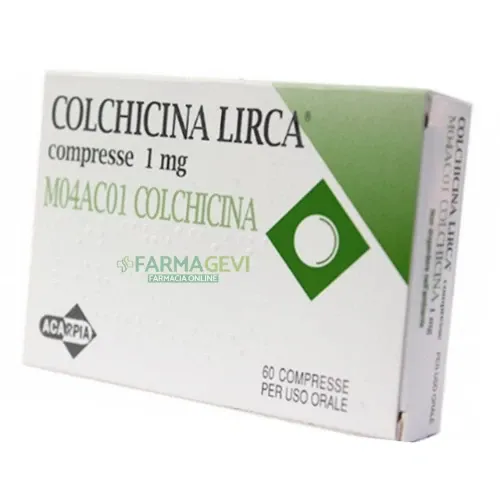
Table of Contents
- Package leaflet: Information for the patient
- COLCHICINE LIRCA 0.5 mg tablets
- 1. What COLCHICINA LIRCA is and what it is used for
- 2. What you need to know before taking COLCHICINA LIRCA
- 3. How to take COLCHICINE LIRCA
- 4. Possible side effects
- 5. How to store COLCHICINA LIRCA
- 6. Package contents and other information
- Patient information leaflet: information for the patient
- COLCHICINE LIRCA 1 mg tablets
- 2. What COLCHICINA LIRCA is and what it is used for
- 2. What you need to know before taking COLCHICINA LIRCA
- 3. How to take COLCHICINE LIRCA
- 4. Possible side effects
- 5. How to store COLCHICINA LIRCA
- 6. Package contents and other information
Package leaflet: Information for the patient
COLCHICINE LIRCA 0.5 mg tablets
colchicine
Please read all of this leaflet carefully before you start taking this medicine because it contains important information for you.
- Keep this leaflet. You may need to read it again.
- If you have any questions, ask your doctor or pharmacist.
- This medicine has been prescribed for you only. Do not give it to other people, even if they have the same symptoms as you, because it could be harmful.
- If you experience any side effects, including those not listed in this leaflet, contact your doctor or pharmacist. See section 4.
Contents of this leaflet:
- What COLCHICINE LIRCA is and what it is used for
- What you need to know before taking COLCHICINE LIRCA
- How to take COLCHICINE LIRCA
- Possible side effects
- How to store COLCHICINE LIRCA
- Contents of the pack and other information
1. What COLCHICINA LIRCA is and what it is used for
COLCHICINA LIRCA contains the active substance colchicine and belongs to a group of medicines
called antigout agents, which reduce inflammation caused by deposits of uric acid in the tissues.
Colchicine also reduces inflammation in diseases other than gout.
This medicine is indicated:
- for the treatment of acute gout attacks (gouty arthritis), an inflammation of the joints caused by elevated uric acid levels;
- for the prevention of recurrent gouty arthritis;
- for the prevention of acute attacks of Familial Mediterranean Fever (an autoinflammatory disease characterized by recurrent brief episodes of fever and serositis, leading to abdominal, chest, joint, and muscle pain) and of Amyloidosis secondary to Familial Mediterranean Fever, in adults and children;
- for the treatment of acute pericarditis, an inflammation of the membrane surrounding the heart;
- for the treatment of recurrent pericarditis, following its initial occurrence;
- for secondary prevention of cardiovascular ischemic events (conditions in which blood flow to the heart or brain is compromised, such as myocardial infarction and stroke) in adults with chronic coronary disease (long-standing heart condition due to narrowing of the heart's blood vessels), in addition to standard therapies.
2. What you need to know before taking COLCHICINA LIRCA
Do not take COLCHICINA LIRCA
- if you are allergic to colchicine or to any of the other ingredients of this medicine (listed in section 6);
- if you have severe heart, kidney, stomach or intestinal problems (heart, renal or gastrointestinal insufficiency);
- if you have kidney or liver impairment and are being treated with medicines that increase colchicine levels in the blood (P-glycoprotein or CYP3A4 enzyme inhibitors) such as:
- amiodarone, quinidine, used to treat heart rhythm disorders;
- verapamil, used for high blood pressure;
- ketoconazole, for the treatment of fungal skin infections;
- clarithromycin and erythromycin, used to treat bacterial infections (See sections “Warnings and precautions” and “Other medicines and COLCHICINA LIRCA”);
- ticagrelor, used to make the blood thinner (See section “Other medicines and COLCHICINA LIRCA”).
- if you are pregnant or breastfeeding (See section “Pregnancy and breastfeeding”).
Warnings and precautions
Talk to your doctor or pharmacist before taking COLCHICINA LIRCA.
Take this medicine with great caution and inform your doctor in the following cases:
- if you are elderly;
- if you are debilitated, especially if you have kidney, stomach, intestinal or heart disease. Inform your doctor if, during treatment with COLCHICINA LIRCA, you experience symptoms such as:
- weakness;
- loss of appetite (anorexia);
- nausea;
- vomiting;
- diarrhoea. In these cases, your doctor may reduce your dose.
Other medicines and COLCHICINA LIRCA
Inform your doctor or pharmacist if you are taking, have recently taken or might take any other medicine.
Use caution and inform your doctor if you are taking the following medicines, which increase colchicine levels in the blood:
- coumarin anticoagulants, such as warfarin, used to make the blood thinner;
- amiodarone, dronedarone, disopyramide, quinidine, used for heart rhythm disorders;
- phenytoin, valproate, carbamazepine, phenobarbital, used to treat epilepsy;
- clarithromycin, telithromycin, erythromycin, used for bacterial infections;
- astemizole, terfenadine, methylprednisolone, for the treatment of allergies;
- ticagrelor, used together with acetylsalicylic acid to make the blood thinner;
- rifabutin, rifapentine, for the treatment of certain infections;
- theophylline, for the treatment of asthma;
- alprazolam, midazolam, triazolam, used for anxiety;
- carbamazepine, pimozide, for the treatment of anxiety and seizures;
- cisapride, used for stomach problems (gastrointestinal motility disorders);
- ciclosporin, used to reduce immune response after organ transplantation;
- lovastatin and simvastatin, to reduce cholesterol levels in the blood (statins). In this case, inform your doctor immediately if you experience muscle pain or weakness;
- tacrolimus, used after organ transplantation;
- ritonavir, atazanavir, indinavir, saquinavir, efavirenz, nevirapine, zidovudine, for the treatment of AIDS;
- sildenafil, for male impotence (erectile dysfunction);
- cilostazol, for difficulty walking (intermittent claudication);
- omeprazole, for treating digestive problems;
- midazolam, to induce sleep;
- ketoconazole, for the treatment of fungal infections;
- ergot alkaloids, for treating headache (migraine);
- verapamil, for treating certain heart rhythm disorders and high blood pressure;
- vinblastine, used for certain types of cancer. Avoid taking COLCHICINA LIRCA and clarithromycin at the same time, an antibiotic used for bacterial infections, especially if you are elderly and have kidney problems. Your doctor must carefully monitor your health status if taking both medicines is considered necessary (See section “Do not take COLCHICINA LIRCA”).
Pregnancy and breastfeeding
If you are pregnant, think you might be pregnant, are planning a pregnancy, or are breastfeeding, ask your doctor or pharmacist for advice before taking this medicine.
Do not take COLCHICINA LIRCA if you are pregnant or breastfeeding.
Driving and using machines
This medicine does not affect the ability to drive or use machinery.
COLCHICINA LIRCA contains lactose
If your doctor has diagnosed you with an intolerance to certain sugars, contact them before taking this medicine.
COLCHICINA LIRCA contains sucrose
If your doctor has diagnosed you with an intolerance to certain sugars, contact them before taking this medicine.
3. How to take COLCHICINE LIRCA
Take this medicine exactly as directed by your doctor or pharmacist. If you have
any doubts, consult your doctor or pharmacist.
Acute gouty arthritis
Adults
The recommended dose is 1 mg three times daily for 3–4 days.
In mild cases, the recommended doses are 1 mg–2 mg per day.
Prevention of recurrent gouty arthritis
Adults
The recommended doses are:
2–3 mg for the first 3–4 days;
2 mg for 1 week;
1 mg every other day for 3, 4, 5 months.
In case of pain and mild swelling of the big toe, the recommended doses are 1 mg–2 mg
for 1–2 evenings, before going to bed, as needed.
Familial Mediterranean Fever
Adults
The recommended doses are 1–1.5 mg per day.
If necessary, the maximum daily dose may be increased up to 3 mg.
Do not exceed the recommended maximum daily dose.
Paediatric population
Children aged between 5 and 10 years:
The recommended doses are 0.5–1 mg per day.
Children over 10 years of age:
The recommended doses are 1–1.5 mg per day.
If necessary, the maximum daily dose may be increased up to 2 mg.
Do not exceed the recommended maximum daily dose.
Acute and recurrent pericarditis
Adults
The recommended doses are:
0.5 mg twice daily if your body weight is greater than 70 kg.
0.5 mg once daily if your body weight is equal to or less than 70 kg or if you do not tolerate higher doses.
Duration of treatment is at least 6 months in recurrent pericarditis and at least 3 months in acute pericarditis.
Secondary prevention of ischemic cardiovascular events in adults with chronic coronary
disease, in addition to standard therapies
Adults
The recommended dose is 0.5 mg per day.
Method of administration
For oral use.
Take the tablets before meals.
Your doctor may adjust the doses according to your clinical condition.
If you have liver and/or kidney problems, your doctor may decide to reduce the dose. The recommended dose may be taken once daily or divided into two or more doses, depending on tolerability and response to treatment.
If you take more COLCHICINE LIRCA than you should
After taking an excessive dose of this medicine, you may experience the following symptoms:
- abdominal pain;
- vomiting;
- diarrhea, loss of water and salts from the body (dehydration and electrolyte imbalance);
- increase and subsequently decrease in the number of white blood cells in the blood (leukocytosis, leukopenia);
- reduction in the number of platelets in the blood (thrombocytopenia);
- increased breathing rate (polypnea);
- hair loss (alopecia);
- death due to loss of heart and blood vessel function (cardiocirculatory collapse) or due to a systemic infection (septic shock).
If you have taken an excessive amount of this medicine, contact your doctor or the nearest hospital immediately.
If you forget to take COLCHICINE LIRCA
If you forget to take a tablet, do not take a double dose to make up for the missed dose.
If you have any doubts about how to use this medicine, consult your doctor or pharmacist.
4. Possible side effects
Like all medicines, this medicine can cause side effects, although not everyone experiences them.
If you experience any of the following symptoms, stop taking COLCHICINE LIRCA immediately and contact your doctor or go to the nearest hospital emergency department.
The following side effects may occur:
Common (may affect up to 1 in 10 people)
- nausea;
- vomiting;
- diarrhoea;
- abdominal pain (abdominal tenderness).
Uncommon (may affect up to 1 in 100 people)
- decrease in the number of white blood cells in the blood (leucopenia);
- hair loss (alopecia);
- prolonged muscle contraction (myotonia);
- severe muscle damage (rhabdomyolysis), especially if you are taking medicines that reduce cholesterol levels in the blood (see section “Other medicines and COLCHICINE LIRCA”);
- muscle weakness.
Rare (may affect up to 1 in 1,000 people)
- increase in the number of platelets in the blood (thrombocytosis);
- nosebleeds (epistaxis);
- bone marrow disorders (aplastic or haemolytic anaemia, pancytopenia, neutropenia, thrombocytopenia);
- skin irritations (urticaria, vesiculobullous eruption, erythema);
- redness of the skin with bleeding (purpura);
- swelling of the skin and mucous membranes due to fluid accumulation (oedema);
- fertility problems in men (azoospermia, oligospermia).
Very rare (may affect up to 1 in 10,000 people)
- severe nerve disease (peripheral motor neuropathy).
Not known (frequency cannot be estimated from the available data)
- severe diarrhoea (profuse diarrhoea);
- bleeding from the stomach or intestine (gastrointestinal haemorrhage);
- liver (hypertransaminasaemia, liver damage) and kidney problems (renal damage);
- skin irritations (skin rashes);
- poor absorption (reversible malabsorption) of vitamin B12 and changes in the intestinal mucosa (ileal).
Reporting of side effects
If you experience any side effect, including those not listed in this leaflet, talk to your doctor or pharmacist.
You can also report side effects directly via the national reporting system at https://www.aifa.gov.it/content/segnalazioni-reazioni-avverse.
By reporting side effects, you help provide more information on the safety of this medicine.
5. How to store COLCHICINA LIRCA
Keep this medicine out of the sight and reach of children.
Do not use this medicine after the expiry date stated on the pack after "Exp.".
The expiry date refers to the last day of that month.
This medicine does not require any special storage temperature conditions.
Store in the original packaging to protect the medicine from light.
Do not use COLCHICINA LIRCA if you notice any visible signs of deterioration.
Do not dispose of medicines via wastewater or household waste. Ask your pharmacist how to dispose of medicines no longer required. This will help protect the environment.
6. Package contents and other information
What COLCHICINA LIRCA 0.5 mg tablets contain
- The active substance is colchicine. One tablet contains 0.5 mg of colchicine.
- The other ingredients are: lactose, arabic gum, sucrose, magnesium stearate.
Description of the appearance of COLCHICINA LIRCA and the contents of the pack
0.5 mg tablet: pack of 60 tablets in PVC/Al blisters.
Marketing Authorization Holder
ACARPIA FARMACEUTICI S.r.l.
Via Saluzzo 100
10126 Turin
(Italy)
Manufacturer
HAUPT PHARMA AMAREG GmbH
Donaustaufer Str. 378
93055 Regensburg
Germany
Special Product’s Line S.p.A.
Via Fratta Rotonda Vado Largo, 1
03012 Anagni (FR)
Italy
CIT S.r.l.
Via Primo Villa, 17
20875 Burago Molgora (MB)
Italy
Patient information leaflet: information for the patient
COLCHICINE LIRCA 1 mg tablets
Colchicine
Read this entire leaflet carefully before taking this medicine because it contains important information for you.
- Keep this leaflet. You may need to read it again.
- If you have any questions, ask your doctor or pharmacist.
- This medicine has been prescribed for you only. Do not give it to others, even if they have the same symptoms as you, because it could be harmful.
- If you experience any side effect, including those not listed in this leaflet, contact your doctor or pharmacist. See section 4.
Contents of this leaflet:
- What COLCHICINE LIRCA is and what it is used for
- What you need to know before taking COLCHICINE LIRCA
- How to take COLCHICINE LIRCA
- Possible side effects
- How to store COLCHICINE LIRCA
- Contents of the pack and other information
2. What COLCHICINA LIRCA is and what it is used for
COLCHICINA LIRCA contains the active substance colchicine and belongs to a group of medicines called
antigout agents, which reduce inflammation caused by deposits of uric acid in the tissues.
Colchicine reduces inflammation also in diseases other than gout. This medicine is indicated:
- for the treatment of gout attacks (gouty arthritis), an inflammation of the joints caused by elevated levels of uric acid;
- for the prevention of recurrent gouty arthritis;
- for the treatment of acute pericarditis, an inflammation of the membrane surrounding the heart;
- for the treatment of recurrent pericarditis, after its first occurrence;
- for the prevention of acute attacks of Familial Mediterranean Fever (an autoinflammatory disease characterized by recurrent brief episodes of fever and serositis, leading to abdominal, chest, joint, and muscle pain) and of secondary amyloidosis associated with Familial Mediterranean Fever, in adults and children.
2. What you need to know before taking COLCHICINA LIRCA
Do not take COLCHICINA LIRCA
- if you are allergic to colchicine or to any of the other ingredients of this medicine (listed in section 6);
- if you have severe heart, kidney, stomach or intestinal problems (heart, renal or gastrointestinal insufficiency);
- if you have kidney or liver impairment and are being treated with medicines that increase colchicine levels in the blood (P-glycoprotein or CYP3A4 enzyme inhibitors) such as:
- amiodarone, quinidine, used to treat heart rhythm disorders;
- verapamil, used for high blood pressure;
- ketoconazole, used to treat fungal skin infections;
- clarithromycin and erythromycin, used to treat bacterial infections (See sections “Warnings and precautions” and “Other medicines and COLCHICINA LIRCA”);
- ticagrelor, used to make the blood more fluid. (See section “Other medicines and COLCHICINA LIRCA”).
- if you are pregnant or breastfeeding (See section “Pregnancy and breastfeeding”).
Warnings and precautions
Talk to your doctor or pharmacist before taking COLCHICINA LIRCA.
Take this medicine with great caution and inform your doctor in the following cases:
- if you are elderly;
- if you are debilitated, particularly if you suffer from kidney, stomach, intestinal or heart disease.
Inform your doctor if, during treatment with COLCHICINA LIRCA, you experience symptoms such as:
- weakness;
- loss of appetite (anorexia);
- nausea;
- vomiting;
- diarrhoea. In these cases, your doctor may reduce your dose of the medicine.
Other medicines and COLCHICINA LIRCA
Inform your doctor or pharmacist if you are taking, have recently taken, or might take any other
medicine.
Use caution and inform your doctor if you are taking the following medicines, which increase colchicine levels in
the blood:
- anticoagulant coumarins, such as warfarin, used to make the blood more fluid;
- amiodarone, dronedarone, disopyramide, quinidine, used for heart rhythm disorders;
- phenytoin, valproate, carbamazepine, phenobarbital, used to treat epilepsy;
- clarithromycin, telithromycin, erythromycin, used for bacterial infections;
- astemizole, terfenadine, methylprednisolone, used to treat allergies;
- ticagrelor, used together with acetylsalicylic acid to make the blood more fluid;
- rifabutin, rifapentine, used to treat certain infections;
- theophylline, used to treat asthma;
- alprazolam, midazolam, triazolam, used for anxiety;
- carbamazepine, pimozide, used to treat anxiety and seizures;
- cisapride, used for stomach problems (gastrointestinal motility disorders);
- cyclosporine, used to reduce immune response after organ transplantation;
- lovastatin and simvastatin, used to reduce cholesterol levels in the blood (statins). In this case, inform your doctor immediately if you experience muscle pain or weakness;
- tacrolimus, used after organ transplantation;
- ritonavir, atazanavir, indinavir, saquinavir, efavirenz, nevirapine, zidovudine, used to treat AIDS;
- sildenafil, used for erectile dysfunction;
- cilostazol, used for difficulty walking (intermittent claudication);
- omeprazole, used to treat digestive problems;
- midazolam, used to induce sleep;
- ketoconazole, used to treat fungal infections;
- ergot alkaloids, used to treat headache (migraine);
- verapamil, used to treat certain heart rhythm disorders and high blood pressure;
- vinblastine, used for certain types of cancer.
Avoid taking COLCHICINA LIRCA together with clarithromycin, an antibiotic used for bacterial
infections, especially if you are elderly or have kidney problems. Your doctor must carefully monitor
your health status if treatment with both medicines is considered necessary (See sections
“Do not take COLCHICINA LIRCA”).
Pregnancy and breastfeeding
If you are pregnant, suspect you may be pregnant, are planning a pregnancy, or are breastfeeding,
consult your doctor or pharmacist before taking this medicine.
Do not take COLCHICINA LIRCA if you are pregnant or breastfeeding.
Driving and using machines
This medicine does not impair the ability to drive or operate machinery.
COLCHICINA LIRCA contains lactose
This medicine contains lactose. If your doctor has diagnosed you with an intolerance to certain sugars,
contact him before taking this medicine.
COLCHICINA LIRCA contains sucrose
If your doctor has diagnosed you with an intolerance to certain sugars, contact him before taking this medicine.
3. How to take COLCHICINE LIRCA
Take this medicine exactly as directed by your doctor or pharmacist. If you have any doubts, please consult your doctor or pharmacist.
For severe gout attacks, the recommended dose is 3 tablets per day for 3–4 days, one tablet approximately half an hour before each meal.
In less severe cases, the recommended dose is 1–2 tablets per day.
To prevent relapses, you will need to take small doses of colchicine for a prolonged period of time, as directed by your doctor.
In this case, the recommended dosage schedule is:
- 2–3 tablets for the first 3–4 days;
- 2 tablets for 1 week;
- 1 tablet every 2 days for 3, 4, or 5 months.
Take one tablet at a time with some water, preferably before each meal.
If you experience pain and mild swelling in the big toe, take 1–2 tablets in the evening before going to sleep, as advised by your doctor. If necessary, you may repeat the dose the following day.
Treatment of acute pericarditis
The recommended dose is half a tablet twice daily for at least three months if you weigh more than 70 kg, or half a tablet once daily for at least three months if you weigh up to 70 kg or do not tolerate higher doses.
However, your doctor will consider your clinical condition (how well your kidneys and liver are functioning) when determining the dose.
Treatment of recurrent pericarditis
The recommended dose is half a tablet twice daily for at least six months if you weigh more than 70 kg, or half a tablet once daily for at least six months if you weigh up to 70 kg or do not tolerate higher doses.
However, your doctor will consider your clinical condition (how well your kidneys and liver are functioning) when determining the dose.
Prevention of acute attacks of Familial Mediterranean Fever and of secondary amyloidosis associated with Familial Mediterranean Fever
Adults
The recommended dose is 1–1.5 tablets per day.
If this dose is not sufficient, your doctor may gradually increase the dose up to a maximum of 3 tablets (3 mg) per day.
Your doctor will determine the most appropriate dose based on your clinical condition (see section “Warnings and precautions”).
The recommended dose may be administered as a single dose or divided into two or more doses, depending on tolerability and clinical response, always under strict medical supervision.
Paediatric population
The recommended dose in children aged between 5 and 10 years is half to one tablet (0.5–1 mg) per day.
The recommended dose in children over 10 years of age is 1 to 1.5 tablets (1–1.5 mg) per day.
If this dose is not sufficient, your doctor may gradually increase the dose up to a maximum of 2 tablets (2 mg) per day.
The medicine must be administered under close medical supervision.
Depending on liver and kidney function, your doctor will determine the most appropriate dose for your clinical condition.
If you take more COLCHICINE LIRCA than you should
After taking an excessive dose of this medicine, you may experience the following symptoms:
- abdominal pain;
- vomiting;
- diarrhoea, loss of body water and salts (dehydration and electrolyte imbalance);
- increase followed by decrease in the number of white blood cells in the blood (leukocytosis, leukopenia);
- decrease in the number of platelets in the blood (thrombocytopenia);
- increased breathing rate (polypnea);
- hair loss (alopecia);
- death due to loss of heart and blood vessel function (cardiocirculatory collapse) or due to a systemic infection (septic shock).
If you have taken more than the prescribed amount of this medicine, contact your doctor or the nearest hospital immediately.
If you forget to take COLCHICINE LIRCA
If you forget to take a tablet, do not take a double dose to make up for the missed dose.
If you have any doubts about how to use this medicine, consult your doctor or pharmacist.
4. Possible side effects
Like all medicines, this medicine can cause side effects, although not everybody gets them. If you experience any of these symptoms, stop taking COLCHICINE LIRCA immediately and contact your doctor or go to the nearest hospital emergency department.
The following side effects may occur:
Common (may affect up to 1 in 10 people)
- nausea;
- vomiting;
- diarrhoea;
- abdominal pain (abdominal tenderness).
Uncommon (may affect up to 1 in 100 people)
- decrease in the number of white blood cells in the blood (leucopenia);
- hair loss (alopecia);
- prolonged muscle contraction (myotonia);
- severe muscle damage (rhabdomyolysis), especially if you are taking medicines that reduce cholesterol levels in the blood (see section “Other medicines and COLCHICINE LIRCA”);
- muscle weakness.
Rare (may affect up to 1 in 1,000 people)
- increase in the number of platelets in the blood (thrombocytosis);
- nosebleeds (epistaxis);
- bone marrow disorders (aplastic or haemolytic anaemia, pancytopenia, neutropenia, thrombocytopenia);
- skin irritations (urticaria, vesiculobullous rash, erythema);
- redness of the skin with bleeding (purpura);
- swelling of the skin and mucous membranes due to fluid accumulation (oedema);
- fertility problems in men (azoospermia, oligospermia).
Very rare (may affect up to 1 in 10,000 people)
- severe nerve disease (peripheral motor neuropathy).
Not known (frequency cannot be estimated from the available data)
- severe diarrhoea (profuse diarrhoea);
- bleeding from the stomach or intestine (gastrointestinal haemorrhage);
- problems with the liver (hypertransaminasaemia, hepatic damage) and kidneys (renal damage);
- skin irritations (skin rashes);
- poor absorption (reversible malabsorption) of vitamin B12 and changes in the intestinal mucosa (ileal).
Reporting of side effects
If you get any side effects, including those not listed in this leaflet, talk to your doctor or pharmacist. You can also report side effects directly via the national reporting system at www.aifa.gov.it/content/segnalazioni-reazioni-avverse. By reporting side effects, you can help provide more information on the safety of this medicine.
5. How to store COLCHICINA LIRCA
Keep this medicine out of the sight and reach of children.
Do not use this medicine after the expiry date stated on the packaging after "Exp.".
The expiry date refers to the last day of that month.
This medicine does not require any special storage conditions.
Do not use COLCHICINA LIRCA if you notice any visible signs of deterioration.
Do not dispose of any medicine via wastewater or household waste. Ask your pharmacist how to dispose of medicines you no longer use. This will help protect the environment.
6. Package contents and other information
What COLCHICINA LIRCA 1 mg tablets contains
- The active substance is colchicine. One tablet contains 1 mg of colchicine.
- The other components are: lactose, acacia gum, sucrose, magnesium stearate.
Description of the appearance of COLCHICINA LIRCA and package contents
1 mg scored tablet: pack containing 60 tablets in PVC/Al blisters.
Marketing Authorization Holder
ACARPIA FARMACEUTICI S.r.l.
Viale L.Majno, 18
20129 Milan (Italy)
Manufacturer
HAUPT PHARMA AMAREG GmbH
Donaustaufer Str. 378
93055 Regensburg
Germany
Complete manufacturing, control and release
CIT S.r.l.
Via Primo Villa, 17
20875 Burago Molgora (MB)
Secondary packaging and release
Special Product’s Line S.p.A.
Via Fratta Rotonda Vado Largo, 1 - 03012 Anagni (Fr) Italy
Complete manufacturing, control and release