Cocarnitin B12
Italy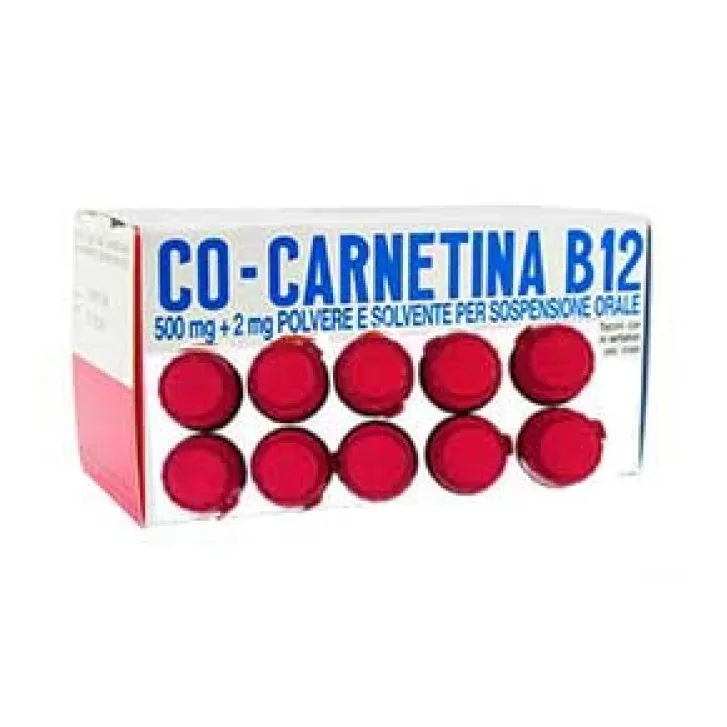
Table of Contents
Package leaflet: Information for the patient
CO-CARNETINA B 500 mg/2 mg powder and solvent for oral suspension
L-Carnitine/Cobamamide
Please read this leaflet carefully before taking this medicine because it contains important information for you.
Always take this medicine exactly as described in this leaflet or as your doctor, pharmacist, or nurse has instructed you.
- Keep this leaflet. You may need to read it again.
- If you need more information or advice, consult your pharmacist.
- If you experience any side effects, including those not listed in this leaflet, contact your doctor or pharmacist. See section 4.
- Contact your doctor if you do not notice any improvement or if you notice a worsening of symptoms.
Contents of this leaflet:
- What Co-Carnetina B is and what it is used for
- What you need to know before taking Co-Carnetina B
- How to take Co-Carnetina B
- Possible side effects
- How to store Co-Carnetina B
- Contents of the pack and other information
1. What Co-Carnetina B is and what it is used for
Co-Carnetina B contains two active substances normally present in the human body: L-Carnitine and Cobamamide (Vitamin B12).
These two substances restore the metabolism of fats, proteins, and nucleic acids (DNA and RNA), promoting energy production within cells.
The components in Co-Carnetina B also increase protein synthesis and protein content in muscles and blood, stimulate appetite and physical growth, and improve overall nutritional status, especially in malnourished individuals.
Co-Carnetina B is indicated in the following conditions:
- Weight loss caused by diseases of any kind;
- Unexplained thinness;
- Reduced appetite (anorexia);
- Weakness (asthenia);
- Convalescence;
- Excessive breakdown of proteins, fats, and carbohydrates (as an anticatabolic agent):
- during long-term cortisone therapy;
- in thyrotoxicosis, a condition caused by overactivity of the thyroid gland;
- in conditions where blood has low protein levels (hypoproteinemia) due to liver or kidney diseases.
In children and adolescents, Co-Carnetina B is indicated in the following conditions:
- Malnutrition of any kind in children, infants, and premature babies;
- Growth delay;
- Insufficient weight;
- Nutritional disturbances affecting tissue, organ, or the whole organism (dystrophies);
- Absence or reduction of appetite;
- Weight loss due to any cause;
- States of debilitation following infection.
Contact your doctor if you do not feel better or if you feel worse.
2. What you need to know before taking Co-Carnetina B
Do not take Co-Carnetina B
- if you are allergic to L-Carnitine, Cobamamide, or any of the other ingredients of this medicine (listed in section 6).
Warnings and precautions
Talk to your doctor or pharmacist before taking Co-Carnetina B.
Inform your doctor if you have anaemia, as your doctor will need to determine the exact nature of your anaemia before you can take Co-Carnetina B.
Inform your doctor, who will closely monitor you, if you have a predisposition to seizures, because treatment with L-Carnitine, one of the active substances in Co-Carnetina B, may trigger them; if you already suffer from seizures, administration of L-Carnitine may increase the number and/or severity of epileptic seizures.
Inform your doctor if you have severe kidney problems (severe renal insufficiency or end-stage renal failure).
In such cases, your doctor will monitor your kidney function during treatment, especially if prolonged (see section “How to take Co-Carnetina B”).
The characteristics of Co-Carnetina B may be altered by exposure to light and if it is not used immediately after mixing with liquids or food. Therefore, prepare the solution or mix Co-Carnetina B with liquids or food immediately before taking it (see section 3).
Other medicines and Co-Carnetina B
Inform your doctor or pharmacist if you are taking, have recently taken, or might take any other medicines.
Inform your doctor if you are taking medicines that reduce blood clotting (anticoagulants), because in very rare cases abnormalities in blood coagulation may occur during concomitant treatment with L-Carnitine, one of the active substances in Co-Carnetina B. In this case, your doctor will prescribe periodic coagulation tests.
Inform your doctor if you are taking antiepileptic drugs (valproic acid), antibiotics (containing pivalic acid, cephalosporins), or anticancer drugs (cisplatin, carboplatin, and ifosfamide), as they may reduce the amount of L-Carnitine in the blood, one of the active substances in Co-Carnetina B.
Pregnancy and breastfeeding
If you are pregnant, think you may be pregnant, planning a pregnancy, or are breastfeeding, consult your doctor or pharmacist before taking this medicine.
Driving and using machines
Co-Carnetina B does not affect the ability to drive or operate machinery.
Co-Carnetina B contains sorbitol, sucrose, and sodium benzoate.
Co-Carnetina B contains 4.075 g of sorbitol per vial.
Sorbitol may cause gastrointestinal disturbances and has a mild laxative effect.
Sorbitol is a source of fructose. If your doctor has told you that you (or the child) are intolerant to certain sugars, or if you have been diagnosed with hereditary fructose intolerance, a rare genetic disorder in which patients cannot metabolize fructose, speak with your doctor before you (or the child) take this medicine.
Co-Carnetina B contains 1.5 g of sucrose per vial.
Sucrose may be harmful to teeth. If your doctor has diagnosed you with intolerance to certain sugars, contact him/her before taking this medicine.
Co-Carnetina B contains 0.048 g of sodium benzoate per vial.
Sodium benzoate may increase jaundice (yellowing of the skin and eyes) in newborns up to 4 weeks of age.
This medicine contains less than 1 mmol (23 mg) of sodium per dose, i.e. essentially 'sodium-free'.
3. How to take Co-Carnetina B
Take this medicine exactly as stated in this leaflet or as instructed by your
doctor or pharmacist. If you have any doubts, consult your doctor or pharmacist.
Take Co-Carnetina B immediately after mixing it with liquid or food.
Use in adults
The recommended dose is 2–3 vials per day.
Use in children and adolescents
The recommended dose is 1–2 vials per day diluted in water.
Use in infants and premature babies
The recommended dose is 1 vial per day diluted in water.
How to open the vials and prepare the solution
- Remove the plastic ring by pushing
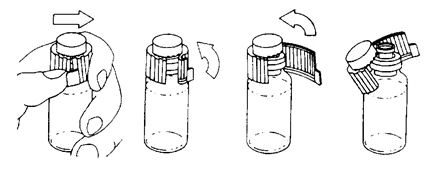
with your thumb in the direction of the arrows.
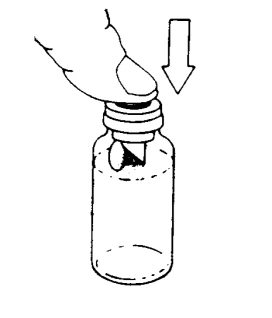
- Press the cap as indicated by the arrow until the separating partition breaks, allowing the powder to fall into the vial.
- Shake the vial vigorously.
If you have severe kidney problems, oral treatment with Co-Carnetina B should not be prolonged
or administered at high doses.
If you are elderly, no special precautions or dosage adjustments are required for Co-Carnetina B.
If you take more Co-Carnetina B than you should
In case of accidental ingestion of an excessive dose of Co-Carnetina B, inform your doctor immediately or go to the nearest hospital.
To date, no harmful effects have been reported following ingestion of an excessive dose of Co-Carnetina B.
If you forget to take Co-Carnetina B
Do not take a double dose to make up for the missed dose.
If you stop taking Co-Carnetina B
If you have any doubts about using this medicine, consult your doctor or pharmacist.
4. Possible side effects
Like all medicines, this medicine can cause side effects, although not everybody will get them.
Common side effects (may affect up to 1 in 10 people)
- Abdominal pain
- Diarrhoea
- Nausea
Uncommon side effects (may affect up to 1 in 100 people)
- Headache
- Abdominal distension
- Gastrointestinal pain
- Vomiting
Other side effects:
Seizures have been reported in patients, with or without a history of seizures, who received one of the components of Co-Carnetina B (L-Carnitine) taken by mouth or administered intravenously.
Reporting of side effects
If you experience any side effect, including those not listed in this leaflet, talk to your doctor or pharmacist. You can also report side effects directly via the national reporting system at http://www.agenziafarmaco.gov.it/content/come-segnalare-una-sospetta-reazione-avversa . By reporting side effects, you can help provide more information on the safety of this medicine.
5. How to store Co-Carnetina B
Keep this medicine out of the sight and reach of children.
Do not store above 25°C.
Do not use this medicine after the expiry date which is stated on the packaging after "Exp.". The expiry date refers to the last day of that month.
Do not dispose of any medicine via wastewater or household waste. Ask your pharmacist how to dispose of medicines you no longer use. This will help protect the environment.
6. Package contents and other information
What Co-Carnetina B contains
- The active substances are L-Carnitine and Cobamamide.
- Each cap contains 2 mg of Cobamamide
- Each vial contains 500 mg of L-Carnitine inner salt
- Other components are:
- Cap: polyethylene glycol 4000, mannitol powder
- Vial: sorbitol 70% solution, sodium benzoate, cherry juice, almond juice, sucrose, demineralized water.
Description of the appearance of Co-Carnetina B and contents of the pack
Each pack contains 10 vials of powder and solvent for oral suspension.
Marketing Authorization Holder
Alfasigma S.p.A. - Via Ragazzi del '99, n. 5 - 40133 Bologna (BO)
Manufacturer
Alfasigma S.p.A. - Via Pontina km. 30.400 - 00071 Pomezia (RM)