Clopidogrel Sandoz GmbH
Italy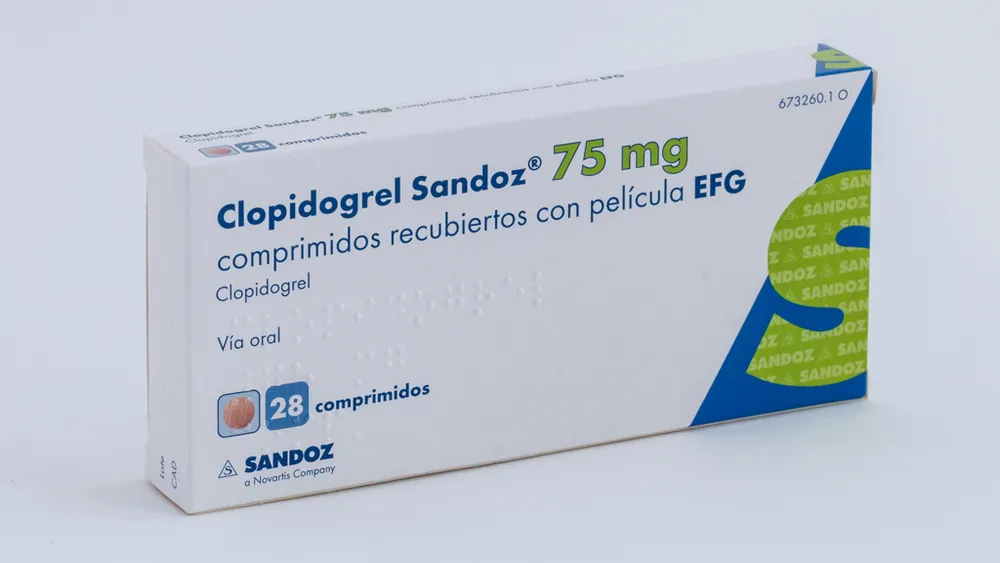
Table of Contents
- Package leaflet: Information for the patient
- Clopidogrel Sandoz GmbH 75 mg film-coated tablets
- 1. What Clopidogrel Sandoz GmbH is and what it is used for
- 2. What you need to know before taking Clopidogrel Sandoz GmbH
- 3. How to take Clopidogrel Sandoz GmbH
- 4. Possible side effects
- 5. How to store Clopidogrel Sandoz GmbH
- 6. Package contents and other information
Package leaflet: Information for the patient
Clopidogrel Sandoz GmbH 75 mg film-coated tablets
clopidogrel
Generic medicine
Please read this leaflet carefully before taking this medicine because it contains
important information for you.
- Keep this leaflet. You may need to read it again.
- If you have any questions, ask your doctor or pharmacist.
- This medicine has been prescribed for you only. Do not give it to others, even if their symptoms are the same as yours, as it could be harmful.
- If you experience any side effects, including those not listed in this leaflet, tell your doctor or pharmacist. See section 4.
Contents of this leaflet:
- What Clopidogrel Sandoz GmbH is and what it is used for
- What you need to know before taking Clopidogrel Sandoz GmbH
- How to take Clopidogrel Sandoz GmbH
- Possible side effects
- How to store Clopidogrel Sandoz GmbH
- Contents of the pack and other information
1. What Clopidogrel Sandoz GmbH is and what it is used for
Clopidogrel Sandoz GmbH contains clopidogrel and belongs to a group of medicines called
antiplatelet agents. Platelets are very small components in the blood that clump together during
blood clotting. By preventing this clumping, antiplatelet medicines reduce the likelihood of blood
clots forming (a process known as thrombosis).
Clopidogrel Sandoz GmbH is taken by adults to help prevent the formation of blood clots (thrombi) in hardened blood vessels (arteries), a process known as atherothrombosis, which can lead to atherothrombotic events (such as stroke, heart attack, or death).
Clopidogrel Sandoz GmbH has been prescribed to you to help prevent blood clots and reduce the risk of these serious events because:
- you have a condition known as hardening of the arteries (also called atherosclerosis), and
- you have previously had a heart attack, stroke, or a condition known as peripheral arterial disease
| peripheral obstructive disease, | or | |
| ||
major bleeding, your doctor may have prescribed Clopidogrel Sandoz GmbH plus
acetylsalicylic acid.
2. What you need to know before taking Clopidogrel Sandoz GmbH
Do not take Clopidogrel Sandoz GmbH
- if you are allergic to clopidogrel or to any of the other ingredients of this medicine (listed in section 6).
- if you have a medical condition causing you to bleed, such as a stomach ulcer or bleeding in the brain
- if you suffer from severe liver disease.
If you think any of these apply to you, or if you are unsure, consult your doctor before
taking Clopidogrel Sandoz GmbH.
Warnings and precautions
Talk to your doctor before taking Clopidogrel Sandoz GmbH if you have any of the
conditions listed below:
- if you have a risk of bleeding such as:
- a medical condition that puts you at risk of internal bleeding (such as a stomach ulcer)
- a blood disorder that makes you prone to internal bleeding (bleeding inside any tissue, organ or joint of the body)
- a recent serious injury
- a recent surgical procedure (including dental surgery)
- a surgical procedure (including dental surgery) planned within the next 7 days
- if you have had a blood clot in an artery of the brain (ischaemic stroke) that occurred within the last 7 days
- if you have kidney or liver disease
- if you have had an allergy or reaction to any other medicine used to treat your condition.
While taking Clopidogrel Sandoz GmbH:
- You must inform your doctor if you are due to have surgery (including dental surgery)
- You must inform your doctor immediately if you develop a medical condition (also known as Thrombotic Thrombocytopenic Purpura or TTP) which includes fever and bruising under the skin appearing as red spots, with or without unexplained extreme tiredness, confusion, yellowing of the skin or eyes (jaundice) (see section 4 “Possible side effects”)
- If you cut or injure yourself, it may take longer than usual for the bleeding to stop. This is due to the way the medicine works, as it prevents blood clots from forming. For minor cuts or injuries, such as shaving or minor cuts, this usually does not cause problems. However, if you are concerned about bleeding, contact your doctor immediately (see section 4 “Possible side effects”)
- Your doctor may prescribe blood tests for you
Children and adolescents
Do not give this medicine to children as it is not effective.
Other medicines and Clopidogrel Sandoz GmbH
Tell your doctor or pharmacist if you are taking, have recently taken or might take
any other medicines.
Some medicines may affect the use of Clopidogrel Sandoz GmbH or vice versa.
You must inform your doctor accurately if you are taking
- medicines that may increase the risk of bleeding such as:
- oral anticoagulants, medicines used to reduce blood clotting
- a non-steroidal anti-inflammatory drug, usually used to treat painful and/or inflammatory conditions of muscles or joints
- heparin or any other injectable medicine used to reduce blood clotting
- ticlopidine, other antiplatelet medicines
- a selective serotonin reuptake inhibitor (including but not limited to fluoxetine or fluvoxamine), medicines usually used to treat depression
- omeprazole or esomeprazole, medicines to treat stomach disorders
- fluconazole or voriconazole, medicines for the treatment of fungal infections
- antiretroviral medicines (medicines for the treatment of HIV infections), carbamazepine, a medicine for the treatment of certain forms of epilepsy
- moclobemide, a medicine for the treatment of depression
- repaglinide, a medicine for the treatment of diabetes
- paclitaxel, a medicine for the treatment of tumours.
| If you have had severe chest pain (unstable angina or heart attack), you may have been prescribed Clopidogrel Sandoz GmbH in combination with acetylsalicylic acid, a substance present in | |
| many medicines used to relieve pain and reduce fever | |
| frequent medicines used for pain relief and fever reduction | Occasional use of acetylsalicylic |
acetylsalicylic acid (no more than 1,000 mg within 24 hours) should generally not cause problems, but
prolonged use in other circumstances should be discussed with your doctor.
Clopidogrel Sandoz GmbH with food and drink
Clopidogrel Sandoz GmbH may be taken regardless of meals.
Pregnancy and breastfeeding
It is preferable not to take this medicine during pregnancy.
If you are pregnant, suspect you may be pregnant, are planning a pregnancy, or are breastfeeding,
consult your doctor or pharmacist before taking this medicine. If you become pregnant while taking
Clopidogrel Sandoz GmbH, consult your doctor immediately, as clopidogrel is not recommended
during pregnancy.
You must not breastfeed while taking this medicine.
If you are breastfeeding or plan to breastfeed, consult your doctor before taking this medicine.
Driving and using machines
It is unlikely that Clopidogrel Sandoz GmbH will affect your ability to drive vehicles or operate
machinery.
3. How to take Clopidogrel Sandoz GmbH
Take this medicine exactly as directed by your doctor or pharmacist. If
you have any doubts, consult your doctor or pharmacist.
The recommended dose, including for patients with a condition called “atrial fibrillation” (an irregular
heartbeat), is one tablet of Clopidogrel Sandoz GmbH daily, taken orally with or without food, at the same
time each day.
| If you have had severe chest pain (unstable angina or heart attack), your doctor may give you | |
| 300 mg of clopidogrel (4 tablets of Clopidogrel Sandoz GmbH) once at the beginning of | |
| treatment. | The recommended dose is one tablet of Clopidogrel Sandoz GmbH daily |
as described above.
Clopidogrel Sandoz GmbH should be taken for as long as your doctor considers it necessary.
If you take more Clopidogrel Sandoz GmbH than you should
Contact your doctor or the nearest hospital emergency department immediately due to the increased risk of
bleeding.
If you forget to take Clopidogrel Sandoz GmbH
If you forget to take a dose of Clopidogrel Sandoz GmbH but remember within 12 hours of the usual time, take one tablet immediately and then take the next dose at the usual time.
If more than 12 hours have passed, simply take the next dose at the regular time. Do not take a double dose to make up for the forgotten tablet.
If you stop taking Clopidogrel Sandoz GmbH
Do not stop treatment unless your doctor advises you to do so. Before stopping, consult your doctor or pharmacist.
If you have any doubts about using this medicine, consult your doctor or pharmacist.
4. Possible side effects
Like all medicines, this medicine can cause side effects, although not everybody gets them.
Contact your doctor immediately if you experience:
- fever, signs of infection, or severe tiredness. These effects may be due to a rare reduction in certain blood cells
- signs of liver problems such as yellowing of the skin and/or eyes (jaundice), with or without bleeding appearing under the skin as red spots, and/or confusion (see section 2 “Warnings and precautions”)
- swelling in the mouth or skin problems such as rash and itching, skin blisters. These may be signs of an allergic reaction. The most common side effect reported with clopidogrel is bleeding. Bleeding may occur in the stomach or intestines, bruising, haematomas (unusual bleeding or bruising under the skin), nosebleeds, blood in the urine. In rare cases, bleeding in the eye, inside the head, in the lungs, or in the joints has also been reported.
If you experience prolonged bleeding while taking Clopidogrel Sandoz GmbH
If you cut or injure yourself, it may take longer than usual for the bleeding to stop. This is due to the way the medicine works, as it prevents blood clots from forming. For minor cuts or injuries, such as shaving or small cuts, this usually does not cause problems. However, if you are concerned about bleeding, contact your doctor immediately (see section 2 “Warnings and precautions”).
Other side effects include
Common – may affect up to 1 in 10 people
- Diarrhoea, abdominal pain, indigestion or stomach burning.
Uncommon – may affect up to 1 in 100 people
- Headache, dizziness, tingling and numbness
- stomach ulcer, inflammation of the stomach lining (gastritis; possible signs include stomach pain)
- vomiting, nausea, constipation, excessive gas in the stomach or intestines
- skin rash and itching.
Rare – may affect up to 1 in 1,000 people
- Vertigo
- Breast enlargement in males
Very rare – may affect up to 1 in 10,000 people
- Jaundice
- severe abdominal pain with or without back pain (inflammation of the pancreas, inflammation of the intestine)
- fever
- difficulty breathing, sometimes associated with cough
- generalized allergic reactions (for example, general feeling of warmth with sudden general discomfort up to fainting), swelling in the mouth, skin blisters, skin allergy
- mouth pain (stomatitis)
- decrease in blood pressure
- inflammation of blood vessels, often with skin rash
- confusion, hallucinations
- joint pain, muscle pain
- changes or loss of taste
Frequency not known (frequency cannot be estimated from the available data)
- hypersensitivity reactions with chest or abdominal pain
- symptoms of persistent low blood sugar levels
In addition, your doctor may detect changes in blood and urine tests.
Reporting of side effects
If you experience any side effect, including those not listed in this leaflet, talk to your doctor or pharmacist. You can also report side effects directly via the national reporting system at https://www.aifa.gov.it/content/segnalazioni-reazioni-avverse.
By reporting side effects, you can help provide more information on the safety of this medicine.
5. How to store Clopidogrel Sandoz GmbH
Keep this medicine out of the sight and reach of children.
Do not use this medicine after the expiry date which is stated on the carton and on the blister after
Exp.. The expiry date refers to the last day of that month.
Do not store above 25°C.
Store in the original packaging to protect the medicine from light and moisture.
Do not use this medicine if you notice any visible signs of deterioration.
Do not dispose of medicines via wastewater or household waste. Ask your pharmacist how to dispose of medicines you no longer use. This will help protect the environment.
6. Package contents and other information
What Clopidogrel Sandoz GmbH contains
- The active substance is clopidogrel. Each film-coated tablet contains 75 mg of clopidogrel (as hydrochloride).
The other components are in the tablet core: Microcrystalline cellulose,
low-substituted hydroxypropylcellulose, hydrogenated castor oil, and in the coating: hypromellose (E464), titanium dioxide (E171), macrogol 400, and red iron oxide (E172).
Description of the appearance of Clopidogrel Sandoz GmbH and package contents
Film-coated tablets are pink, film-coated, round, flat on both sides tablets.
Film-coated tablets are contained in blisters made of OPA/ALU/PVC/ALU and placed in a carton box.
Pack sizes: 14, 28, 30, 50, 84, 90, 100 and 120 film-coated tablets.
Not all pack sizes may be marketed.
Marketing Authorization Holder:
Sandoz GmbH – Biochemiestrasse 10 – 6250 Kundl – Austria
Local representative in Italy: Sandoz S.p.A., L.go U. Boccioni 1, 21040 Origgio (VA), Italy
Manufacturers:
Salutas Pharma GmbH – Otto von Guericke Allee 1 – 39179 Barleben (Germany)
S.C. Sandoz SRL – Str. Livezeni nr. 7A – 540473 Targu Mures (Romania)
Lek Pharmaceuticals d.d. – Verovskova 57 – 1526 Ljubljana (Slovenia)
Lek S.A. – ul. Domaniewska 50C – 02672 Warszawa (Poland)
Lek Pharmaceuticals d.d. – Trimlini 2D – 9220 Lendava (Slovenia)