Clopidogrel Aurobindo
Italy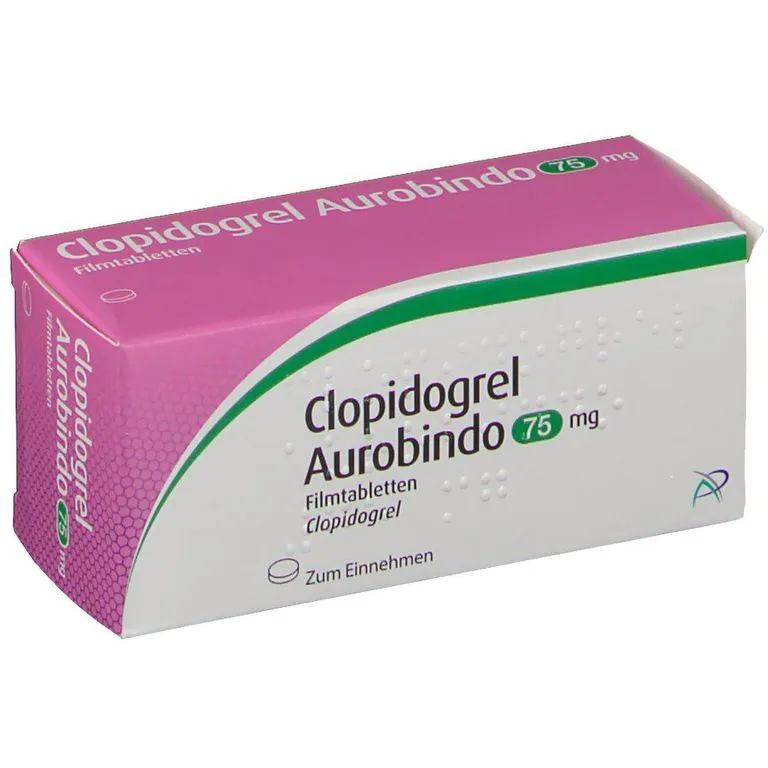
Table of Contents
- Package leaflet: Information for the user
- Clopidogrel Aurobindo 75 mg film-coated tablets
- 1. What Clopidogrel Aurobindo is and what it is used for
- 2. What you need to know before taking Clopidogrel Aurobindo
- 3. How to take Clopidogrel Aurobindo
- 4. Possible side effects
- 5. How to store Clopidogrel Aurobindo
- 6. Package contents and other information
Package leaflet: Information for the user
Clopidogrel Aurobindo 75 mg film-coated tablets
Generic medicine
Please read this leaflet carefully before taking this medicine because it contains important information for you.
- Keep this leaflet. You may need to read it again.
- If you have any questions, ask your doctor, pharmacist or nurse.
- This medicine has been prescribed for you only. Do not give it to other people, even if their symptoms are the same as yours, because it could be harmful.
- If you experience any side effects, including those not listed in this leaflet, tell your doctor, pharmacist or nurse. See section 4.
Contents of this leaflet:
- What Clopidogrel Aurobindo is and what it is used for
- What you need to know before taking Clopidogrel Aurobindo
- How to take Clopidogrel Aurobindo
- Possible side effects
- How to store Clopidogrel Aurobindo
- Contents of the pack and other information
1. What Clopidogrel Aurobindo is and what it is used for
Clopidogrel Aurobindo contains clopidogrel and belongs to a group of medicines called antiplatelet agents.
Platelets are very small components in the blood that clump together during blood clotting. Antiplatelet medicines reduce the chances of blood clots forming (a process known as thrombosis) by preventing this clumping.
Clopidogrel Aurobindo is taken by adults to help prevent blood clots (thrombi) from forming in hardened blood vessels (arteries), a process known as atherothrombosis, which can lead to atherothrombotic events (such as stroke, heart attack or death).
Clopidogrel Aurobindo has been prescribed for you to help prevent blood clots and thereby reduce the risk of these serious events because:
- you have a condition involving hardening of the arteries (also known as arteriosclerosis), and
- you have previously had a heart attack, stroke, or you suffer from a condition known as peripheral arterial disease, or
- you have experienced a severe type of chest pain known as “unstable angina” or “myocardial infarction” (heart attack). For the treatment of this condition, your doctor may have inserted a stent into the blocked or narrowed artery to restore blood flow. Your doctor should also be giving you acetylsalicylic acid (a substance found in many medicines used to relieve pain and reduce fever, as well as to prevent blood from clotting).
- you have an irregular heartbeat, a condition called “atrial fibrillation”, and you cannot take medicines known as “oral anticoagulants” (vitamin K antagonists) which prevent the formation of new clots and the progression of existing ones. You should have been informed that “oral anticoagulants” are more effective than acetylsalicylic acid or the combination of Clopidogrel Aurobindo and acetylsalicylic acid in treating this condition. Your doctor should have prescribed Clopidogrel Aurobindo plus acetylsalicylic acid if you cannot take “oral anticoagulants” and do not have an increased risk of bleeding.
2. What you need to know before taking Clopidogrel Aurobindo
Do not take Clopidogrel Aurobindo
- if you are allergic to clopidogrel or to any of the other ingredients of this medicine (listed in section 6);
- if you have a medical condition causing bleeding, such as a stomach ulcer or bleeding in the brain;
- if you have severe liver disease.
If you think any of these conditions apply to you, or if you have any doubts, consult your doctor before taking Clopidogrel Aurobindo.
Warnings and precautions
Tell your doctor before taking Clopidogrel Aurobindo if any of the following apply to you:
- if you are at risk of bleeding, for example:
- a medical condition that puts you at risk of internal bleeding (such as a stomach ulcer);
- a blood disorder that makes you prone to internal bleeding (bleeding inside any tissue, organ, or joint of the body);
- a recent severe injury;
- a recent surgical procedure (including dental surgery);
- a planned surgical procedure (including dental surgery) within the next 7 days;
- if you have had a blood clot in an artery of the brain (ischaemic stroke) within the last 7 days;
- if you have kidney or liver disease;
- if you have had an allergic reaction or adverse reaction to any medicine used to treat your condition.
While taking Clopidogrel Aurobindo:
- You must inform your doctor if you are planning a surgical procedure (including dental surgery).
- You must contact your doctor immediately if you develop a medical condition known as Thrombotic Thrombocytopenic Purpura (TTP), which includes fever and bruising under the skin, possibly appearing as red spots, with or without unexplained extreme fatigue, confusion, or yellowing of the skin or eyes (jaundice). (See section 4. "Possible side effects").
- If you are cut or injured, it may take longer than usual for the bleeding to stop. This is related to how the medicine works, as it prevents blood clots from forming. Minor cuts or injuries, such as shaving cuts, are generally not a concern. However, you must contact your doctor immediately if you are concerned about bleeding (see section 4. "Possible side effects").
- Your doctor may prescribe blood tests for you.
Children and adolescents
Do not give this medicine to children, as it is not effective.
Other medicines and Clopidogrel Aurobindo
Inform your doctor or pharmacist if you are taking, have recently taken, or might take any other medicines, including medicines without a prescription.
Some medicines may affect the use of Clopidogrel Aurobindo, or vice versa.
You must tell your doctor precisely if you are taking:
- Medicines that may increase your risk of bleeding, such as:
- oral anticoagulants, medicines used to reduce blood clotting;
- a non-steroidal anti-inflammatory drug, generally used to treat pain and/or inflammation of muscles or joints;
- heparin or any other medicine used to reduce blood clotting;
- ticlopidine, another antiplatelet agent;
- a selective serotonin reuptake inhibitor (including fluoxetine or fluvoxamine, but not limited to these), medicines usually used to treat depression;
- omeprazole or esomeprazole, medicines used to treat stomach problems;
- fluconazole or voriconazole, medicines used to treat fungal infections;
- efavirenz, a medicine used to treat HIV (human immunodeficiency virus) infection;
- carbamazepine, a medicine used to treat certain forms of epilepsy;
- moclobemide, a medicine used to treat depression;
- repaglinide, a medicine used to treat diabetes;
- paclitaxel, a medicine used to treat cancer.
If you have had severe chest pain (unstable angina or heart attack), you may have been prescribed Clopidogrel Aurobindo in combination with acetylsalicylic acid, a substance present in many medicines used to relieve pain or reduce fever. Occasional use of acetylsalicylic acid (not more than 1000 mg within 24 hours) should generally not cause problems, but prolonged use in other circumstances should be discussed with your doctor.
Taking Clopidogrel Aurobindo with food and drink
Clopidogrel Aurobindo can be taken with or without food.
Pregnancy, breastfeeding and fertility
It is preferable not to use this medicine during pregnancy.
If you are pregnant, suspect you may be pregnant, or are planning a pregnancy, consult your doctor or pharmacist before taking Clopidogrel Aurobindo. If you become pregnant while taking Clopidogrel Aurobindo, seek immediate medical advice, as the use of clopidogrel is not recommended during pregnancy.
You must not breastfeed while taking this medicine.
If you are breastfeeding or planning to breastfeed, speak with your doctor before taking this medicine.
Ask your doctor or pharmacist for advice before taking any medicine.
Driving and using machines
It is unlikely that Clopidogrel Aurobindo will affect your ability to drive or operate machinery.
Clopidogrel Aurobindo contains lactose
If your doctor has diagnosed you with an intolerance to certain sugars (e.g. lactose), contact your doctor before taking this medicine.
Clopidogrel Aurobindo contains hydrogenated castor oil
This may cause gastrointestinal disturbances or diarrhoea.
3. How to take Clopidogrel Aurobindo
Take this medicine exactly as instructed by your doctor or pharmacist. If you have
any doubts, consult your doctor or pharmacist.
The recommended dose, including for patients with a condition called “atrial fibrillation” (an irregular
heartbeat), is one 75 mg tablet of Clopidogrel Aurobindo daily, taken orally at the same time each day,
either during or apart from meals.
If you have had severe chest pain (unstable angina or heart attack), your doctor may prescribe an initial
single dose of 300 mg of clopidogrel (1 tablet of 300 mg or 4 tablets of 75 mg).
Afterwards, the recommended dose is one 75 mg tablet of Clopidogrel Aurobindo daily, taken as
described above.
You must continue taking Clopidogrel Aurobindo for as long as your doctor has prescribed it.
If you take more Clopidogrel Aurobindo than you should
Contact your doctor or go to the nearest emergency department immediately due to the increased risk of bleeding.
If you forget to take Clopidogrel Aurobindo
If you forget to take a dose of Clopidogrel Aurobindo but remember within 12 hours of your usual
dosing time, take the tablet immediately and then take the next dose at your regular time.
If you forget to take a dose for more than 12 hours, take the next single dose at your regular time. Do
not take a double dose to make up for the missed tablet.
If you stop taking Clopidogrel Aurobindo
Do not stop treatment unless your doctor tells you to do so. Ask your doctor or pharmacist for advice before stopping treatment.
If you have any doubts about how to use this medicine, consult your doctor, pharmacist, or nurse.
4. Possible side effects
Like all medicines, this medicine can cause side effects, although not everybody gets them.
Contact your doctor immediately if you experience:
- fever, signs of infection, or extreme tiredness. These symptoms may be caused by a rare decrease in certain blood cells.
- signs of liver problems such as yellowing of the skin or eyes (jaundice), which may or may not be associated with bleeding under the skin appearing as red spots and/or confusion (see section “2. Warnings and precautions”).
- swelling of the mouth or skin disorders such as rash and itching, blisters on the skin. These may be signs of an allergic reaction.
The most common side effect reported with clopidogrel use is bleeding.
Bleeding may occur as gastrointestinal bleeding (in the stomach or intestines), bruising, haematoma (unusual bleeding or bruising under the skin), nosebleeds, or blood in the urine. In a limited number of cases, bleeding into the eyes, brain, lungs, or joints has also been reported.
If you experience prolonged bleeding while taking Clopidogrel Aurobindo
If you cut or injure yourself, it may take longer than usual for the bleeding to stop. This is due to the way the medicine works, as it prevents blood clots from forming. For minor cuts or injuries, for example those caused by shaving, this is generally not a concern. However, if you are concerned about bleeding, contact your doctor immediately (see section “2. Warnings and precautions”).
Other side effects include:
Common side effects (may affect up to 1 in 10 people):
diarrhoea, abdominal pain, indigestion or heartburn.
Uncommon side effects (may affect up to 1 in 100 people):
headache, stomach ulcer, vomiting, nausea, constipation, excessive gas in the stomach or intestines, skin rash, itching, dizziness, tingling and numbness sensations.
Rare side effects (may affect up to 1 in 1,000 people):
dizziness, breast enlargement in men.
Very rare side effects (may affect up to 1 in 10,000 people):
vertigo, severe abdominal pain with or without back pain, fever, difficulty breathing, sometimes associated with cough, generalized allergic reactions (for example, widespread feeling of warmth with sudden general discomfort leading to fainting), swelling of the mouth, blisters on the skin, skin allergy, mouth pain (stomatitis), decrease in blood pressure, confusion, hallucinations, joint pain, muscle pain, taste disturbances.
In addition, your doctor may detect changes in blood or urine test results.
Reporting of side effects
If you experience any side effects, including those not listed in this leaflet, talk to your doctor or pharmacist. You can also report side effects directly via the national reporting system at www.agenziafarmaco.gov.it/it/responsabili. By reporting side effects, you can help provide more information on the safety of this medicine.
5. How to store Clopidogrel Aurobindo
Keep this medicine out of the sight and reach of children.
Do not use this medicine after the expiry date stated on the carton after EXP. The expiry date refers to the last day of that month.
Store below 30°C.
Bottle pack: use within 6 months after first opening of the bottle.
Do not dispose of any medicine via wastewater or household waste. Ask your pharmacist how to dispose of medicines no longer required. This will help protect the environment.
6. Package contents and other information
What Clopidogrel Aurobindo contains
- The active substance is clopidogrel. Each film-coated tablet contains 75 mg of clopidogrel (as clopidogrel bisulfate).
- The other ingredients are microcrystalline cellulose (type 113), mannitol, low-substituted hydroxypropyl cellulose, crospovidone (type A), macrogol 6000, hydrogenated castor oil, lactose monohydrate (see section 2, “Clopidogrel Aurobindo contains lactose”), hypromellose (15 cp), titanium dioxide (E171), triacetin, and red iron oxide (E172).
Description of the appearance of Clopidogrel Aurobindo and package contents
Film-coated tablet.
Pink, round, biconvex, film-coated tablets with bevelled edges, engraved with “E” on one side and “34” on the other.
Clopidogrel Aurobindo 75 mg film-coated tablets are available in blister packs made of PVC/Aclar/Aluminium containing 14, 28, 30, 50, 56, 84, 100 and 500 film-coated tablets, and in HDPE bottles containing 30, 100 and 500 film-coated tablets.
Not all pack sizes may be marketed.
Marketing Authorisation Holder
Aurobindo Pharma (Italia) S.r.l.
Via San Giuseppe 102
21047 Saronno (VA)
Italy
Manufacturers
APL Swift Services (Malta) Limited
HF26, Hal Far Industrial Estate, Hal Far,
Birzebbugia, BBG 3000
Malta
Milpharm Limited
Ares, Odyssey Business Park, West End Road,
South Ruislip HA4 6QD
United Kingdom
This medicinal product is authorised in the European Economic Area countries under the following names:
Denmark: Clopidogrel “Aurobindo”
France: CLOPIDOGREL ARROW 75 mg, comprimé pelliculé
Germany: Clopidogrel Aurobindo 75 mg Filmtabletten
Italy: Clopidogrel Aurobindo
Malta: Clopidogrel Aurobindo 75 mg film-coated tablets
Netherlands: Clopidogrel Aurobindo 75 mg filmomhulde tabletten
Norway: Clopidogrel Aurobindo 75 mg tabletter, filmdrasjerte
Portugal: Clopidogrel Aurobindo
Romania: Clopidogrel Aurobindo 75 mg comprimate filmate
Spain: CLOPIDOGREL AUROBINDO 75 mg comprimidos recubiertos con película
Sweden: Clopidogrel Aurobindo
United Kingdom: Clopidogrel 75 mg film-coated tablets