Clonidine hydrochloride Bioindustria L.I.M.
Italy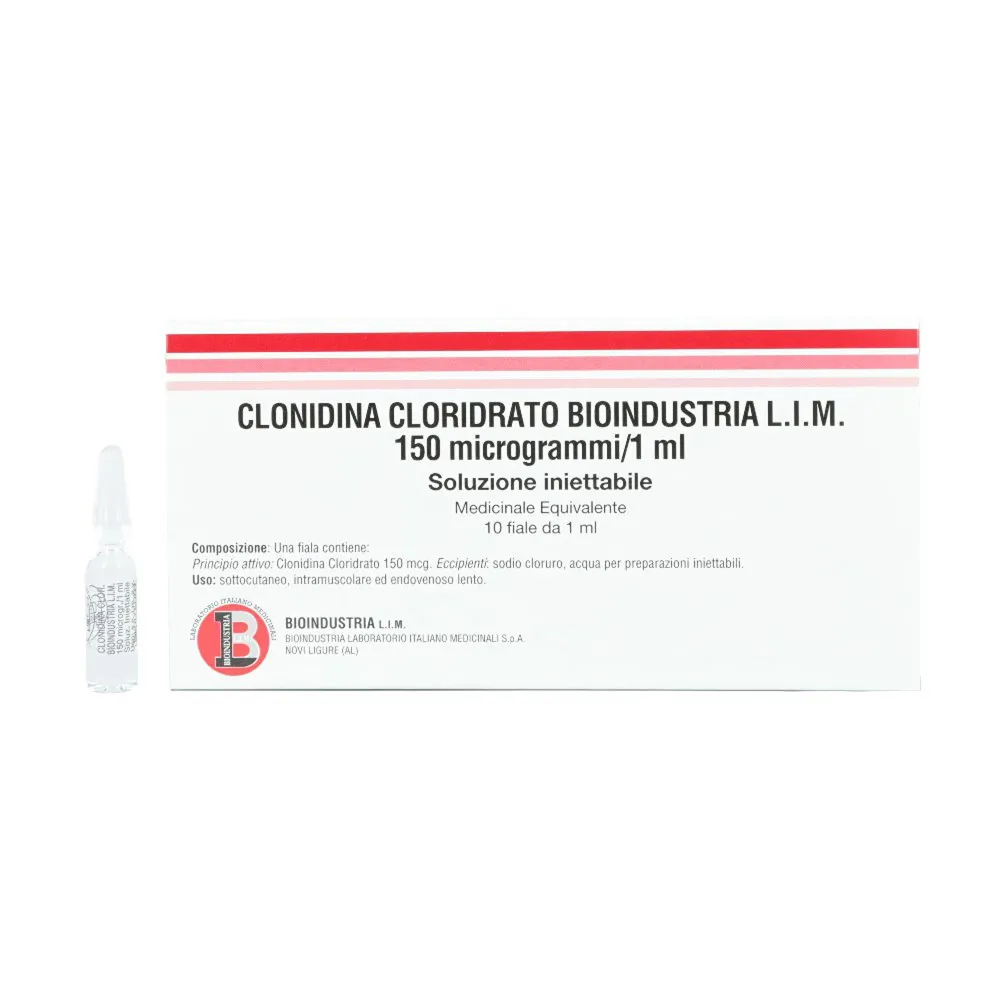
Table of Contents
- Package leaflet: Information for the user
- CLONIDINE HYDROCHLORIDE Bioindustria L.I.M. 150 micrograms/ml injection solution
- 1. What CLONIDINA CLORIDRATO Bioindustria L.I.M. is and what it is used for
- 2. What you need to know before using CLONIDINE HYDROCHLORIDE Bioindustria L.I.M.
- 3. How to use CLONIDINE HYDROCHLORIDE Bioindustria L.I.M.
- 4. Possible side effects
- 5. How to store CLONIDINE HYDROCHLORIDE Bioindustria L.I.M.
- 6. Pack contents and other information
- Package leaflet: information for the physician
- CLONIDINE HYDROCHLORIDE Bioindustria L.I.M. 150 micrograms/ml injectable solution
- The following information is intended exclusively for physicians or healthcare professionals
Package leaflet: Information for the user
CLONIDINE HYDROCHLORIDE Bioindustria L.I.M. 150 micrograms/ml injection solution
clonidine hydrochloride
equivalent medicine
Please read all of this leaflet carefully before you start using this medicine because it contains important information for you.
- Keep this leaflet. You may need to read it again.
- If you have any questions, ask your doctor, pharmacist, or nurse.
- If you get any side effects, talk to your doctor, pharmacist, or nurse. This includes any possible side effects not listed in this leaflet. See section 4.
Contents of this leaflet:
- What CLONIDINE HYDROCHLORIDE Bioindustria L.I.M. is and what it is used for
- What you need to know before you use CLONIDINE HYDROCHLORIDE Bioindustria L.I.M.
- How to use CLONIDINE HYDROCHLORIDE Bioindustria L.I.M.
- Possible side effects
- How to store CLONIDINE HYDROCHLORIDE Bioindustria L.I.M.
- Contents of the pack and other information
1. What CLONIDINA CLORIDRATO Bioindustria L.I.M. is and what it is used for
CLONIDINA CLORIDRATO Bioindustria L.I.M. contains the active substance clonidine hydrochloride, which belongs to a group of medicines called antihypertensives, used to lower blood pressure.
This medicine is used by injection in cases of rapid increase in blood pressure requiring immediate treatment (hypertensive crises) and in cases of high blood pressure (hypertension), when oral administration is not possible or proves insufficiently effective.
Administration of this medicine by injection (subcutaneous, intramuscular, and slow intravenous routes) is reserved for hospitalised patients.
2. What you need to know before using CLONIDINE HYDROCHLORIDE Bioindustria L.I.M.
Do not use CLONIDINE HYDROCHLORIDE Bioindustria L.I.M.:
- if you are allergic to clonidine or to any of the other ingredients of this medicine (listed in section 6);
- if you have a slow and irregular heartbeat due to heart problems (severe bradyarrhythmia), caused by heart disease (sick sinus syndrome or severe atrioventricular block).
Warnings and precautions
This medicine will be administered to you in hospital under close supervision by qualified healthcare personnel.
Talk to your doctor or nurse before CLONIDINE HYDROCHLORIDE Bioindustria L.I.M. is administered to you.
This medicine should be administered with caution:
- if you suffer from severe circulatory problems affecting the heart (severe coronary insufficiency) or brain (cerebrovascular diseases);
- if you have kidney problems (chronic renal failure) (see section 3);
- if you recently had a heart attack (myocardial infarction);
- if you have a slow heartbeat (mild or moderate bradyarrhythmia);
- if you suffer from constipation (stasis);
- if you have peripheral nerve diseases characterized by gradual and progressive loss of muscle strength and/or altered sensitivity in arms and legs (peripheral neuropathy);
- if you have blood circulation problems in the fingers of hands and feet (obstructive peripheral vascular disorders), such as Raynaud's disease and/or other disorders affecting blood flow in the body;
- if you are depressed or have suffered from depressive disorders (see section 4).
If you suffer from phaeochromocytoma
CLONIDINE HYDROCHLORIDE Bioindustria L.I.M. is not effective in hypertension caused by a disease characterized by the release into the body of substances that increase blood pressure.
If you have reduced kidney function (renal failure)
In case of renal failure, dose adjustment must be performed with particular care (see section 3).
If you have reduced heart function (heart failure or severe coronary disease)
If you have severe heart failure or severe coronary disease (serious heart conditions), treatment with CLONIDINE HYDROCHLORIDE Bioindustria L.I.M. must be closely monitored by your doctor, as with other medicines that lower blood pressure.
Contact lenses
Treatment with CLONIDINE HYDROCHLORIDE Bioindustria L.I.M. may reduce tear production; this should be taken into account if you wear contact lenses.
During the first week of treatment, the blood pressure-lowering effect of clonidine may be accompanied by drowsiness/sleepiness (sedative effect). Sedation usually decreases during continued therapy. If necessary, your doctor may reduce the dose.
Children and adolescents
This medicine must not be given to children and adolescents under 18 years of age, as safety and efficacy have not been established.
Severe adverse reactions, including death, have been observed when clonidine has been used for indications other than those listed, for example in combination with methylphenidate in children with ADHD (attention deficit hyperactivity disorder). Therefore, the use of clonidine in such combination is not recommended.
Other medicines and CLONIDINE HYDROCHLORIDE Bioindustria L.I.M.
Tell your doctor or nurse if you are taking, have recently taken, or might take any other medicines.
In particular, inform your doctor if you are taking any of the following medicines:
- other medicines that lower blood pressure (diuretics, vasodilators, ß-blockers, calcium antagonists, and ACE inhibitors but not α1-blockers), as this may enhance the blood pressure-lowering effect of CLONIDINE HYDROCHLORIDE Bioindustria L.I.M. Your doctor may use this interaction to lower your blood pressure;
- medicines that increase blood pressure, fluid retention, and sodium levels such as NSAIDs (medicines used for inflammation), which may reduce the effectiveness of clonidine;
- medicines with α2-blocking activity, such as phentolamine or tolazoline, which may cancel the effect of this medicine;
- medicines used to treat high blood pressure and heart problems (ß-blockers and digitalis glycosides) which, if administered together with clonidine, may cause or worsen heart rhythm disorders;
- ß-blockers, as they may cause or worsen blood vessel disorders occurring outside the heart and brain (peripheral vascular dysfunction);
- medicines used to treat depression (tricyclic antidepressants or neuroleptics with α-blocking activity), as they may reduce or cancel the antihypertensive effect of this medicine and cause or worsen blood pressure regulation when standing (orthostatic hypotension);
- other medicines that depress the central nervous system, such as opioid agonists, analgesics, barbiturates, sedatives, anesthetics, or alcohol, because clonidine may enhance their effects;
- high intravenous doses of haloperidol (an antipsychotic medicine), because clonidine administered intravenously at high doses may increase the risk of increased heart rate (arrhythmias).
CLONIDINE HYDROCHLORIDE Bioindustria L.I.M. and alcohol
This medicine may enhance the depressant effects of alcohol when taken together; therefore, alcohol consumption during treatment with clonidine is not recommended.
It has been observed that in cases of excessive alcohol intake and high intravenous doses of a medicine used to treat mental disorders (called haloperidol), high doses of clonidine may increase the risk of heart rhythm disturbances (cardiac arrhythmia).
Pregnancy, breastfeeding, and fertility
If you are pregnant, think you may be pregnant, planning to become pregnant, or breastfeeding, ask your doctor or nurse for advice before using this medicine.
Pregnancy
Available data on the use of clonidine in pregnant women are limited.
If you are pregnant, use this medicine only when clearly needed and under direct medical supervision. Close monitoring of both mother and baby is recommended.
Clonidine crosses the placental barrier and may reduce the fetal heart rate.
There is inadequate experience regarding long-term effects of exposure to the medicine before birth.
During pregnancy, oral forms of clonidine are preferred; intravenous administration should be avoided.
Animal studies have not shown harmful effects on the fetus.
After delivery, a temporary increase in the newborn's blood pressure may occur.
Breastfeeding
Clonidine passes into breast milk. Due to insufficient data on the effects of clonidine on newborns, the use of CLONIDINE HYDROCHLORIDE Bioindustria L.I.M. is not recommended during breastfeeding.
Fertility
No studies have been conducted on effects on human fertility. Available studies have not shown harmful effects on fertility.
Driving and using machines
No studies have been conducted to evaluate effects on the ability to drive vehicles or use machinery.
Use of CLONIDINE HYDROCHLORIDE Bioindustria L.I.M. may cause dizziness, physical and mental relaxation (sedation), and difficulty focusing vision (accommodation disorders) (see section 4, "Possible side effects").
Therefore, take particular care when driving a vehicle or operating machinery. If you experience any of the side effects listed above, avoid potentially dangerous activities such as driving or using machinery.
Your doctor will assess whether you should be accompanied when leaving the hospital.
CLONIDINE HYDROCHLORIDE Bioindustria L.I.M. contains sodium
This medicine contains less than 1 mmol of sodium (23 mg) per vial, i.e., it is practically "sodium-free".
3. How to use CLONIDINE HYDROCHLORIDE Bioindustria L.I.M.
Adults aged 18 years and over
CLONIDINE HYDROCHLORIDE Bioindustria L.I.M. is administered only in a hospital setting and under close supervision by trained medical staff via subcutaneous injection (under the skin), intramuscular injection (into a muscle), or slow intravenous injection (into a vein). If you have any doubts, consult your doctor or nurse.
Treatment of hypertension requires constant medical supervision, and your doctor will adjust the dosage according to your response to therapy.
Patients with kidney problems (renal impairment)
If you have kidney problems, your doctor will adjust the dosage of this medicine:
- according to your individual response to the medication;
- according to the degree of kidney function impairment.
Regular monitoring of kidney function by your doctor is necessary. The dialysis you usually undergo removes only small amounts of clonidine from the blood; therefore, no additional doses of clonidine are required after dialysis.
Use in children and adolescents
Use in children and adolescents under 18 years of age is not recommended, as safety and efficacy have not been established.
If you use more CLONIDINE HYDROCHLORIDE Bioindustria L.I.M. than you should
This medicine will be administered by a doctor or nurse, so it is unlikely that you will receive an excessive dose. However, if you think that you have been given too much CLONIDINE HYDROCHLORIDE Bioindustria L.I.M., inform your doctor or another healthcare professional immediately.
Symptoms
Clonidine poisoning is characterized by reduced activity of the sympathetic nervous system (sympathetic depression), with various symptoms such as reduced pupil size (pupillary constriction), deep drowsiness with reduced response to normal stimuli (lethargy), decreased heart rate (bradycardia), low blood pressure (hypotension), lowered body temperature (hypothermia), drowsiness progressing to coma, breathing difficulties including temporary cessation of breathing (apnea). Additionally, an unexpected increase in blood pressure (paradoxical hypertension) may occur.
Treatment
If you have received an excessive dose of CLONIDINE HYDROCHLORIDE Bioindustria L.I.M., gastric lavage will be performed and appropriate therapy will be administered.
If you stop treatment with CLONIDINE HYDROCHLORIDE Bioindustria L.I.M.
Since this medicine will be administered under strict medical supervision, it is unlikely that a dose will be missed. However, inform your doctor if you think a dose has been missed.
Do not abruptly stop treatment without first consulting your doctor.
Discontinuation of treatment must occur only under medical supervision and gradually, by progressively reducing the dose over a period of 2–4 days, to prevent a sudden increase in blood pressure, which may manifest, for example, as restlessness, increased heart rate (palpitations), nervousness, tremor, headache (cephalalgia), nausea, etc. In such cases, treatment may include intravenous administration of phentolamine or tolazoline (see section “Other medicines and CLONIDINE HYDROCHLORIDE Bioindustria L.I.M.”).
If you need to discontinue concomitant long-term treatment with β-blockers, it is advisable to stop the β-blocker several days before gradually discontinuing clonidine.
Contact your doctor immediately if you experience a significant increase in blood pressure after stopping treatment.
If you have any doubts about the use of CLONIDINE HYDROCHLORIDE Bioindustria L.I.M., consult your doctor or nurse.
4. Possible side effects
Like all medicines, this medicine can cause side effects, although not everyone experiences them.
Most side effects are mild and tend to decrease during the course of treatment.
The following side effects may occur:
Very common (may affect more than 1 in 10 people)
- dizziness (vertigo);
- physical and mental relaxation (sedation). Sedation may occur during the first week of treatment and usually diminishes with continued therapy. If necessary, consult your doctor, who may reduce the dose;
- sensation of dizziness/light-headedness when standing up due to a rapid drop in blood pressure (orthostatic hypotension);
- dry mouth.
Common (may affect up to 1 in 10 people)
- depression;
- sleep disturbances;
- headache (cephalalgia);
- constipation;
- nausea;
- pain in the glands located in the mouth, face, neck (salivary glands);
- vomiting;
- sexual disorders in men (erectile dysfunction);
- fatigue.
Uncommon (may affect up to 1 in 100 people)
- abnormal interpretation of reality (delusional perception);
- perception of things that do not exist in reality (hallucinations);
- nightmares;
- sensation of numbness and tingling in legs, arms, or other body parts (paraesthesia);
- slow and irregular heartbeat (sinus bradycardia);
- disease due to impaired blood circulation (Raynaud's syndrome);
- skin irritation (urticaria);
- itching;
- skin rashes (rash);
- feeling of general malaise.
Rare (may affect up to 1 in 1,000 people)
- dry eyes;
- heart difficulty in pumping blood to the body due to alteration of the heart's electrical conduction system (atrioventricular block);
- dryness of the nasal mucosa;
- intestinal disease characterized by slowed intestinal transit and reduced ability to move food through the intestine (pseudo-obstruction of the large intestine);
- hair loss (alopecia);
- breast enlargement in men (gynaecomastia);
- increased blood sugar levels (hyperglycaemia).
Frequency not known (frequency cannot be estimated from the available data)
- confusion;
- reduced sexual desire (reduced libido);
- difficulty focusing images (accommodation disorders);
- slow and irregular heartbeat (bradyarrhythmia).
Reporting of side effects
If you experience any side effect, including those not listed in this leaflet, please contact your doctor or nurse.
You can also report side effects directly via the national reporting system at the following website:
https://www.aifa.gov.it/content/segnalazioni-reazioni-avverse
By reporting side effects, you can help provide more information on the safety of this medicine.
5. How to store CLONIDINE HYDROCHLORIDE Bioindustria L.I.M.
Keep this medicine out of the sight and reach of children.
This medicine does not require any special storage conditions.
Do not use this medicine after the expiry date stated on the packaging after “Expiry”.
The expiry date refers to the last day of that month.
Do not dispose of any medicine via wastewater or household waste. Ask your pharmacist how to dispose of
medicines you no longer use. This will help protect the environment.
6. Pack contents and other information
What CLONIDINA CLORIDRATO Bioindustria L.I.M. contains
- The active substance is clonidine hydrochloride. Each vial contains 150 micrograms/ml of clonidine hydrochloride.
- The other ingredients (excipients) are: sodium chloride, hydrochloric acid 37% (pH regulator), water for injections.
Description of the appearance of CLONIDINA CLORIDRATO Bioindustria L.I.M. and pack contents
Injectable solution. Each pack contains 10 vials of colorless glass with 1 ml each.
Marketing Authorization Holder and Manufacturer
Bioindustria Laboratorio Italiano Medicinali S.p.A. (Bioindustria L.I.M. S.p.A.)
Via De Ambrosiis, 2
15067 Novi Ligure (AL)
Italy
Package leaflet: information for the physician
CLONIDINE HYDROCHLORIDE Bioindustria L.I.M. 150 micrograms/ml injectable solution
clonidine hydrochloride
The following information is intended exclusively for physicians or healthcare professionals
Therapeutic indications
Hypertensive crises and cases of hypertension where oral administration is temporarily impossible or proves insufficiently effective. The parenteral route is reserved for hospitalized patients.
Dosage and method of administration
The dose of CLONIDINE HYDROCHLORIDE BIOINDUSTRIA L.I.M. must be individualized according to the patient's blood pressure response.
In hypertensive crises and in hospitalized patients, CLONIDINE HYDROCHLORIDE BIOINDUSTRIA L.I.M. vials may be used.
Subcutaneous or intramuscular administration of CLONIDINE HYDROCHLORIDE BIOINDUSTRIA L.I.M. injectable solution must be performed with the patient lying in a supine position to avoid occasional orthostatic phenomena.
The injection may be administered subcutaneously, intramuscularly, or by slow intravenous injection (1 vial diluted in at least 10 ml of physiological saline solution, injection duration 10 minutes). For intravenous infusion, a dose of 0.2 micrograms/kg/min is recommended. The infusion rate must not exceed 0.5 micrograms/kg/min to avoid transient increases in blood pressure. The dose administered by infusion must not exceed 150 micrograms.
If necessary, vials may be administered parenterally up to four times daily.
The solution must be used immediately after opening the vials; any unused portion must be discarded. From a microbiological standpoint, the solution must be used immediately after dilution. When not used immediately, the conditions and duration of use are the responsibility of the user, who must take all necessary precautions to avoid contamination.
Renal impairment
Dosage adjustment is required:
- Based on the individual antihypertensive response, which may vary considerably in patients with renal impairment;
- Based on the degree of renal impairment. Careful monitoring is necessary. Since only a minimal fraction of clonidine is removed by routine hemodialysis, there is no need to administer additional doses after dialysis.
Overdose
Emergency treatment consists of gastric lavage and administration of analeptic and/or vasopressor agents.
Incompatibilities
This medicinal product must not be mixed with other products except those mentioned in the section "Dosage and method of administration".
For further information, consult the Summary of Product Characteristics.