Clodronic acid Doc Generici
Italy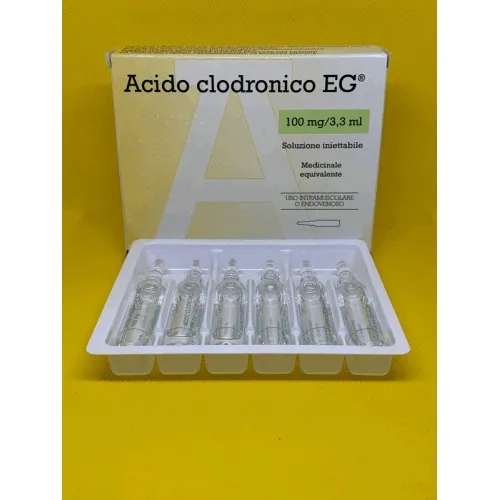
Table of Contents
- Package leaflet: Information for the patient
- CLODRONIC ACID DOC Generics 100 mg + 33 mg injectable solution with lidocaine, 200 mg + 40 mg injectable solution with lidocaine
- 1. What ACIDO CLODRONICO DOC Generici is and what it is used for
- 2. What you should know before using ACIDO CLODRONICO DOC Generici
- 3. How to use ACIDO CLODRONICO DOC Generici
- Package Leaflet
- 4. Possible side effects
- 5. How to store ACIDO CLODRONICO DOC Generici
- 6. Package contents and other information
Package leaflet: Information for the patient
CLODRONIC ACID DOC Generics 100 mg + 33 mg injectable solution with lidocaine, 200 mg + 40 mg injectable solution with lidocaine
Equivalent medicine
Please read this leaflet carefully before taking this medicine because it contains important information for you.
- Keep this leaflet. You may need to read it again.
- If you have any questions, consult your doctor or pharmacist.
- This medicine has been prescribed for you only. Do not give it to others, even if their symptoms are the same as yours, as it could be harmful.
- If you experience any adverse reactions, including those not listed in this leaflet, contact your doctor or pharmacist. See section 4.
Contents of this leaflet
- What CLODRONIC ACID DOC Generics is and what it is used for
- What you need to know before using CLODRONIC ACID DOC Generics
- How to use CLODRONIC ACID DOC Generics
- Possible side effects
- How to store CLODRONIC ACID DOC Generics
- Contents of the pack and other information
1. What ACIDO CLODRONICO DOC Generici is and what it is used for
ACIDO CLODRONICO DOC Generici is a medicine containing clodronic acid, an active substance that belongs to a group of drugs used to treat bone diseases, called bisphosphonates.
ACIDO CLODRONICO DOC Generici is used in adults to treat:
- bone thinning due to cancer (tumour-induced osteolysis);
- cancer of the bone marrow (multiple myeloma);
- overactivity of the parathyroid glands (primary hyperparathyroidism). It is also used in women for the prevention and treatment of bone thinning (osteoporosis) after the menopause (the period of permanent cessation of menstruation).
2. What you should know before using ACIDO CLODRONICO DOC Generici
Do not use ACIDO CLODRONICO DOC Generici
- If you are allergic to clodronic acid or to any of the other ingredients of this medicine (listed in section 6).
- If you are taking other bisphosphonates, medicines similar to ACIDO CLODRONICO DOC Generici.
- If you are allergic to lidocaine or to other amide-type local anesthetics such as, for example: bupivacaine, mepivacaine, ropivacaine, levobupivacaine.
- If you suffer from a heart condition causing loss of consciousness (Adam-Stokes syndrome).
- If you suffer from a heart rhythm disorder (Wolff-Parkinson-White syndrome, atrial fibrillation, sinoatrial, atrioventricular or intraventricular block).
- If you have a weak heart that is unable to supply sufficient blood to the body (acute heart failure).
- If you suffer from a condition of reduced blood volume (hypovolemia).
The medicine is intended for intramuscular use only (i.e., to be injected into a muscle) and must not be
administered into a blood vessel (intravenously). Accidental injection into a
vein increases the risk of serious adverse reactions due to high blood levels of the anesthetic lidocaine (see section 3. If you use more ACIDO CLODRONICO DOC Generici than you should).
Warnings and precautions
Talk to your doctor or pharmacist before using ACIDO CLODRONICO DOC Generici.
Before and during treatment, your doctor will ask you to undergo blood tests to monitor kidney and liver function (see section 4. Possible side effects). It is important that you maintain adequate fluid intake during treatment with this medicine, especially if you have kidney problems (see section 3. How to use ACIDO CLODRONICO DOC Generici).
In particular, inform your doctor:
- If you have high levels of calcium in your blood.
- If you suffer from kidney disease (renal insufficiency).
- If you are being treated with ACIDO CLODRONICO DOC Generici for cancer or osteoporosis and are undergoing dental treatment or need to undergo dental surgery. Also inform your dentist that you are being treated with ACIDO CLODRONICO DOC Generici (see section 4. Possible side effects), as preventive dental care may be necessary.
- If you suffer from heart diseases (particularly rhythm disorders with slow heart rate and heart failure) or if you have undergone heart surgery.
- If you suffer from liver disease.
- If you or a family member suffer from a condition causing a marked increase in body temperature following the use of local anesthetics such as lidocaine (familial malignant hyperthermia).
- If you experience weakness or pain in the thigh, hip, or groin during treatment, as this could be an early symptom of a possible femoral fracture (see section 4. Possible side effects).
- If you suffer from seizures (epilepsy). Your doctor will closely monitor you for the appearance of any symptoms.
- If you suffer from respiratory or pulmonary disorders.
- If you suffer from a disease causing muscle weakness (myasthenia gravis).
- If you have porphyria (a rare inherited blood cell disorder affecting the skin and nervous system).
Children and adolescents
The safety and efficacy of the medicine in pediatric patients have not been established.
Other medicines and ACIDO CLODRONICO DOC Generici
Inform your doctor or pharmacist if you are taking, have recently taken, or might take any other
medicines.
This is particularly important if:
- You are taking other bisphosphonates, medicines used to treat bone diseases, as concomitant use of ACIDO CLODRONICO DOC Generici with other bisphosphonates is contraindicated (see section 2. “Do not use ACIDO CLODRONICO DOC Generici”).
- You are taking non-steroidal anti-inflammatory drugs (NSAIDs), medicines used to treat inflammation (particularly diclofenac), as kidney problems may occur.
- You are taking aminoglycosides, medicines used to treat infections, as blood calcium levels may decrease (hypocalcemia).
- You are taking estramustine, a medicine used to treat prostate cancer (a gland in men that produces seminal fluid), as blood levels of estramustine may increase.
- You are taking medicines used to treat heart disorders, including irregular heartbeat, such as beta-blockers (e.g., propranolol), calcium channel blockers (e.g., amiodarone), or sodium channel blockers, as lidocaine may remain in circulation longer.
- You are taking cimetidine, a medicine mainly used to treat gastritis and gastric ulcer (a lesion of the stomach wall); fluvoxamine (a medicine used for depression); antiviral medicines such as ritonavir; antibiotics such as macrolides (erythromycin) or other antibiotics like ciprofloxacin; antifungal medicines such as ketoconazole, itraconazole, as this may lead to increased blood levels of lidocaine.
- You are taking barbiturates such as phenobarbital; medicines used to treat epilepsy such as carbamazepine; phenytoin; primidone; oral contraceptives or hormone replacement therapy, as this may lead to reduced blood levels of lidocaine.
- You are being treated with digitalis, medicines used to treat heart rhythm disorders, as this may increase the risk of heart rhythm disturbances.
- You are taking medicines used to relax muscles during general anesthesia, such as suxamethonium.
The solution is incompatible with alkaline solutions or oxidizing solutions.
Pregnancy, breastfeeding and fertility
If you are pregnant, think you may be pregnant, planning to become pregnant, or breastfeeding, ask your doctor or pharmacist for advice before using this medicine.
Pregnancy
Avoid using ACIDO CLODRONICO DOC Generici during pregnancy and if you are of childbearing age and not using effective contraception (medicines used to prevent pregnancy).
Breastfeeding
It is not known whether clodronic acid passes into breast milk, whereas lidocaine is excreted in breast milk in small amounts. Therefore, during treatment with ACIDO CLODRONICO DOC Generici, breastfeeding should be discontinued.
Fertility
It is not known whether clodronic acid and lidocaine have effects on human fertility.
Driving and using machines
ACIDO CLODRONICO DOC Generici may cause visual disturbances that could affect your ability to drive or use machinery.
If you experience one or more of the symptoms listed in section 4 or if you use more ACIDO CLODRONICO DOC Generici than you should, avoid driving and using machinery.
ACIDO CLODRONICO DOC Generici contains sodium
- ACIDO CLODRONICO DOC Generici 100 mg + 33 mg injectable solution with lidocaine contains less than 1 mmol (23 mg) of sodium per vial, i.e., essentially 'sodium-free'.
- ACIDO CLODRONICO DOC Generici 200 mg + 40 mg injectable solution with lidocaine contains 32.2 mg of sodium (main component of table salt) per vial. This corresponds to 1.6% of the maximum recommended daily dietary intake for an adult.
3. How to use ACIDO CLODRONICO DOC Generici
Use this medicine exactly as instructed by your doctor, who will indicate the correct dose for you based on the severity of your condition, as well as the duration of treatment. If you have any doubts, consult your doctor or pharmacist (see section DOSAGE, METHOD AND DURATION OF ADMINISTRATION at the end of the
Package Leaflet
Clodronic acid is eliminated mainly via the kidneys. Therefore, adequate fluid intake must be ensured during treatment with clodronic acid.
Method of administration
ACIDO CLODRONICO DOC Generici 100 mg + 33 mg injectable solution with lidocaine and ACIDO
CLODRONICO DOC Generici 200 mg + 40 mg injectable solution with lidocaine are for intramuscular use only (i.e. to be injected into a muscle). To avoid accidental injection into a blood vessel, it is recommended to aspirate before injecting the medicinal product.
Avoid massaging the injection site.
If you use more ACIDO CLODRONICO DOC Generici than you should
If you are administered an excessive dose of ACIDO CLODRONICO DOC Generici, contact your doctor or the nearest hospital immediately.
Symptoms of overdose may include:
- increased creatinine levels in the blood and kidney disease (renal dysfunction) (with high doses of clodronic acid administered intravenously)
- elevated blood nitrogen levels (uraemia)
- liver damage
- decreased calcium levels in the blood (hypocalcaemia).
In case of accidental injection into a blood vessel, the following symptoms of lidocaine overdose may occur:
- drowsiness,
- euphoria (state of excessive excitation),
- sedation (physical and mental relaxation),
- loss of sensation in certain parts of the body (paraesthesiae),
- muscle spasms, fasciculations (sudden, involuntary contractions of a muscle),
- uncontrolled body movements (convulsions),
- reduced blood flow to the body (cardiovascular collapse).
Treatment
The doctor will manage the symptoms with specific therapies.
If you forget to use ACIDO CLODRONICO DOC Generici
Do not use a double dose to make up for the forgotten dose.
If you stop treatment with ACIDO CLODRONICO DOC Generici
If you have any doubts about the use of this medicinal product, consult your doctor or pharmacist.
4. Possible side effects
Like all medicines, this medicine can cause side effects, although not everyone will experience them.
If you experience any eye or vision disturbances during treatment, STOP taking the medicine and consult an ophthalmologist.
Inform your doctor immediately if you experience:
- pain or sores in the mouth or jaw and/or maxilla (two facial bones), as these may be early signs of serious problems (bone death of the jaw and/or maxilla), generally associated with tooth extraction and/or local infection (see section 2. Warnings and precautions).
The possible side effects listed below are categorized by frequency:
Common (may affect up to 1 in 10 people)
- decrease in blood calcium levels without symptoms (asymptomatic hypocalcaemia),
- diarrhoea, nausea, vomiting (usually mild in intensity),
- increased levels of transaminases in the blood (a test to assess liver function), usually within normal ranges.
Rare (may affect up to 1 in 1,000 people)
- decrease in blood calcium levels with symptoms (symptomatic hypocalcaemia),
- increased levels of parathyroid hormone (a hormone regulating blood calcium levels), associated with low blood calcium,
- increased levels of alkaline phosphatase in the blood (a test to assess bone and liver condition),
- increased levels of transaminases in the blood (a test to assess liver function) more than twice the upper normal limit, without other abnormalities in liver function,
- allergic reactions manifesting as skin reactions,
- unusual femur fracture (thigh bone), particularly in patients receiving long-term treatment for osteoporosis. Contact your doctor if you experience pain or weakness in the thigh, hip, or groin, as this could be an early sign of a possible femur fracture.
Very rare (may affect up to 1 in 10,000 people)
- consult your doctor if you experience ear pain, ear discharge, and/or ear infection. These episodes could be signs of bone damage in the ear.
The following side effects may also occur, for which frequency cannot be determined:
- Effects related to the eyes
- inflammation of the conjunctiva, the membrane covering the eye and the inner surface of the eyelids (conjunctivitis);
- eye inflammation (episcleritis, scleritis, and uveitis). Episcleritis and scleritis have been reported with other drugs in the same class as clodronic acid (a class adverse reaction of bisphosphonates).
- Effects related to the lungs
- breathing difficulties in patients with asthma sensitive to acetylsalicylic acid (a medicine used to treat fever, pain, and inflammation);
- allergic reactions manifesting as respiratory problems.
- Effects related to the kidneys and urinary tract
- kidney disease (renal failure), severe kidney damage. Rarely, and especially in association with NSAIDs (medicines used to treat inflammation and pain), renal failure has led to death (more frequently with concomitant use of diclofenac). See section 2. Other medicines and ACIDO CLODRONICO DOC Generici.
- Effects related to bones and muscles
- severe bone, joint, and muscle pain. Onset of symptoms varies from days to several months after starting treatment with ACIDO CLODRONICO DOC Generici.
- pain or sores in the mouth or jaw and/or maxilla (two facial bones). These may be early signs of serious problems (bone tissue death of the jaw and/or maxilla), generally associated with tooth extraction and/or local infection (see section 2. Warnings and precautions). In most cases, this occurred in cancer patients.
- Effects related to the injection site
- pain at the injection site, particularly considering the duration of treatment.
Side effects specific to lidocaine
Below are the side effects associated with lidocaine. There are insufficient data to determine the frequency of the individual side effects listed. Side effects are generally due to either allergic reactions or excessively high blood concentrations resulting from accidental intravascular injection and/or overdose. This may occasionally cause central nervous system excitation and occasionally cardiovascular depression (see section 2. Warnings and precautions).
Immune system disorders
Severe allergic reaction (anaphylactoid), swelling of the larynx leading to breathing difficulty (bronchospasm), and drop in blood pressure (cardiorespiratory collapse) due to anaphylactic shock.
Nervous system disorders
Signs of excitation or depression associated with dizziness, drowsiness, visual disturbances, tremors, followed by changes in consciousness, seizures, coma, prolonged contraction of the jaw muscles leading to tight closure of the jaw and maxilla (trismus), altered sensation in limbs or other body parts (paraesthesia).
Psychiatric disorders
Anxiety, disorientation.
Cardiac disorders
Slowing of the heart rate (bradycardia), changes in heart rhythm (arrhythmias), myocardial depression up to cardiac arrest.
Eye disorders
Pupil dilation (mydriasis), blurred vision, double vision (diplopia).
Gastrointestinal disorders
Nausea, vomiting.
Respiratory, thoracic and mediastinal disorders
Difficulty breathing (dyspnoea), reduced breathing rate (respiratory depression).
Vascular disorders
Low blood pressure (hypotension), high blood pressure (hypertension), interruption of normal blood circulation due to cardiac arrest and reduced blood flow (circulatory collapse).
Skin and subcutaneous tissue disorders
Sudden reddening of the skin (various types of skin rashes), itchy rash with wheals (urticaria), itching.
Ear and labyrinth disorders
Ringing in the ears (tinnitus), increased sensitivity to relatively quiet sounds (hyperacusis).
Reporting of side effects
If you experience any side effect, including those not listed in this leaflet, talk to your doctor or pharmacist.
You can also report side effects directly via the national reporting system at https://www.aifa.gov.it/content/segnalazioni-reazioni-avverse .
By reporting side effects, you can help provide more information on the safety of this medicine.
5. How to store ACIDO CLODRONICO DOC Generici
This medicine does not require any special storage conditions.
Keep this medicine out of the sight and reach of children.
Do not use this medicine after the expiry date stated on the packaging after "Exp.". The expiry date refers to the last day of that month.
Do not dispose of any medicine via wastewater or household waste. Ask your pharmacist how to dispose of medicines you no longer use. This will help protect the environment.
6. Package contents and other information
What ACIDO CLODRONICO DOC Generici contains
ACIDO CLODRONICO DOC Generici 100 mg + 33 mg solution for injection with lidocaine
- The active substances are clodronic acid and lidocaine. One vial contains 124.9 mg of disodium clodronate tetrahydrate (equivalent to 100 mg of disodium clodronate) and 33 mg of lidocaine hydrochloride.
- The other components are: sodium bicarbonate, water for injections.
ACIDO CLODRONICO DOC Generici 200 mg + 40 mg solution for injection with lidocaine
- The active substances are clodronic acid and lidocaine. One vial contains 249.9 mg of disodium clodronate tetrahydrate (equivalent to 200 mg of disodium clodronate) and 40 mg of lidocaine hydrochloride.
- The other components are: sodium bicarbonate, water for injections.
Description of the appearance of ACIDO CLODRONICO DOC Generici and contents of the pack
ACIDO CLODRONICO DOC Generici 100 mg + 33 mg solution for injection with lidocaine
Solution for injection, pack containing 6 vials of 3.3 ml for intramuscular use.
ACIDO CLODRONICO DOC Generici 200 mg + 40 mg solution for injection with lidocaine
Solution for injection, pack containing 3 vials of 4 ml for intramuscular use.
Marketing Authorization Holder and Manufacturer
Marketing Authorization Holder
DOC Generici S.r.l. - Via Turati 40 - 20121 Milan – Italy.
Manufacturer
ACIDO CLODRONICO DOC Generici 100 mg + 33 mg solution for injection with lidocaine
Esseti Farmaceutici S.r.l. - Via Campobello 15 - 00071 Pomezia (Rome) - Italy.
ACIDO CLODRONICO DOC Generici 200 mg + 40 mg solution for injection with lidocaine
Biomedica Foscama Industria Chimico-Farmaceutica S.p.A. - Via Morolense 87 - 03013 Ferentino (FR) –
Italy.
The following information is intended exclusively for physicians or healthcare professionals:
DOSAGE, METHOD AND DURATION OF ADMINISTRATION
Tumoral osteolysis. Multiple myeloma. Primary hyperparathyroidism.
The dosing regimen below should be considered indicative and may therefore be adjusted according to the individual patient's needs.
a) Initial phase
The initial phase must be carried out using a clodronate formulation for intravenous infusion.
ACIDO CLODRONICO DOC Generici is available only in a formulation for intramuscular use. Therefore, for the initial phase, a medicinal product containing a formulation of clodronate suitable for intravenous infusion must be prescribed.
b) Maintenance phase
ACIDO CLODRONICO DOC Generici 100 mg + 33 mg solution for injection with lidocaine
100 mg daily by intramuscular injection for 2–3 weeks
or, alternatively,
a clodronate formulation for oral use may be considered.
ACIDO CLODRONICO DOC Generici is available only in a formulation for intramuscular use.
Therefore, for oral therapy, a medicinal product containing a formulation of clodronate for oral use must be prescribed.
Prevention and treatment of postmenopausal osteoporosis.
Dosage according to clinical condition and bone mineral density values may vary as follows:
Parenteral therapy
ACIDO CLODRONICO DOC Generici 100 mg + 33 mg solution for injection with lidocaine
100 mg by intramuscular injection every 7–14 days, for 1 year or longer depending on the patient's condition.
ACIDO CLODRONICO DOC Generici 200 mg + 40 mg solution for injection with lidocaine
200 mg by intramuscular injection every 14–28 days, for 1 year or longer depending on the patient's condition.
ACIDO CLODRONICO DOC Generici 200 mg + 40 mg solution for injection with lidocaine can be used in patients who have never previously started clodronate treatment.
When switching from administration of ACIDO CLODRONICO DOC Generici 100 mg + 33 mg to ACIDO CLODRONICO DOC Generici 200 mg + 40 mg, administration of one vial of ACIDO CLODRONICO DOC Generici 200 mg + 40 mg every 14 days may be used as an alternative dosing regimen in patients already being treated with one vial of 100 mg weekly.
Administration of one vial of ACIDO CLODRONICO DOC Generici 200 mg + 40 mg every 28 days may be used as an alternative dosing regimen in patients already being treated with one vial of 100 mg every two weeks.
Alternatively
Oral therapy
ACIDO CLODRONICO DOC Generici is available only in a formulation for intramuscular use. Therefore, for oral therapy, a medicinal product containing a formulation of clodronate for oral use must be prescribed.
The optimal duration of bisphosphonate treatment for osteoporosis has not been established. The need for continued treatment should be periodically reassessed for each individual patient based on potential benefits and risks, particularly after 5 years or more of use.
Special populations
- Children: The safety and efficacy of the drug in pediatric patients have not been established.
- Elderly: There are no specific dosage recommendations for elderly patients. Clinical studies have included patients over 65 years of age, and no age-specific adverse events have been reported.
- Patients with renal impairment: Clodronate is primarily eliminated via the kidneys. Therefore, it must be used with caution in patients with renal impairment.
Parenteral administration:
It is recommended to reduce the clodronate dosage as follows:
| Renal impairment degree: Creatinine clearance, ml/min | Dosage reduction, % |
| 50-80 | 25 |
| 12-50 | 25-50 |
| <12 | 50 |
It is recommended to administer clodronate before hemodialysis, to reduce the dose by 50% on dialysis-free days, and to limit the treatment regimen to 5 days. It should be noted that peritoneal dialysis removes clodronate poorly from the circulation.
The solution is incompatible with alkaline solutions or oxidizing solutions.