Clindamycin phosphate Hikma
Italy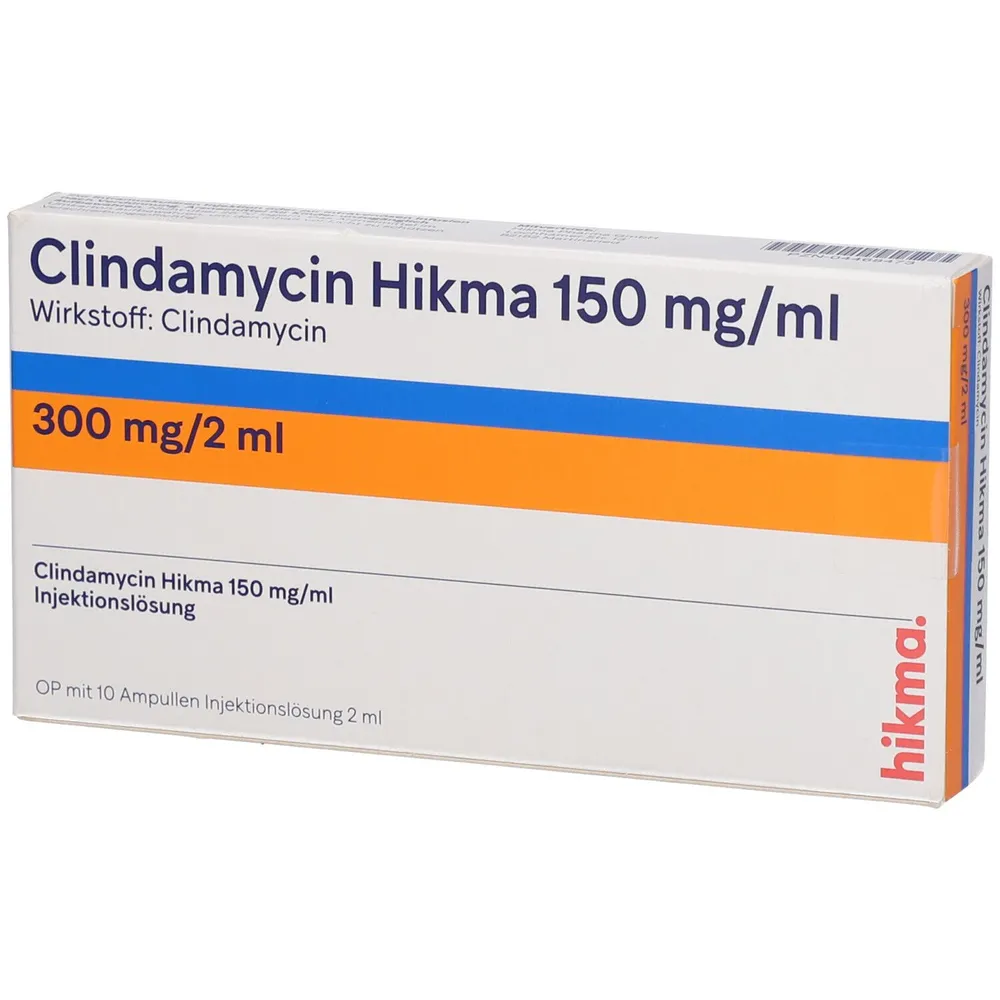
Table of Contents
- Package leaflet: Information for the patient
- CLINDAMYCIN PHOSPHATE HIKMA 300 mg/2 ml injection solution, 600 mg/4 ml injection solution
- 1. What Clindamicina Fosfato Hikma is and what it is used for
- 2. What you should know before taking Clindamicina Fosfato Hikma
- 3. How to take Clindamicina Fosfato Hikma
- 4. Possible side effects
- 5. How to store Clindamicina Fosfato Hikma
- 6. Package contents and other information
- The following information is intended exclusively for physicians or healthcare professionals
Package leaflet: Information for the patient
CLINDAMYCIN PHOSPHATE HIKMA 300 mg/2 ml injection solution, 600 mg/4 ml injection solution
Generic medicine
Read this leaflet carefully before using this medicine because it contains
important information for you.
- Keep this leaflet. You may need to read it again.
- If you have any questions, ask your doctor, pharmacist or nurse.
- This medicine has been prescribed for you only. Do not give it to other people, even if their symptoms are the same as yours, as it may be harmful.
- If you experience any side effect, including those not listed in this leaflet, tell your doctor, pharmacist or nurse. See section 4.
Contents of this leaflet:
- What Clindamycin Phosphate Hikma is and what it is used for
- What you need to know before using Clindamycin Phosphate Hikma
- How to use Clindamycin Phosphate Hikma
- Possible side effects
- How to store Clindamycin Phosphate Hikma
- Contents of the pack and other information
1. What Clindamicina Fosfato Hikma is and what it is used for
Clindamicina Fosfato Hikma contains the active substance clindamicina fosfato, which belongs to a group of medicines called "lincosamides", antibiotics that eliminate bacteria responsible for many types of infections.
Clindamicina Fosfato Hikma is indicated for the treatment of:
- serious infections caused by anaerobic microorganisms sensitive to this medicine;
- serious infections caused by staphylococcal, streptococcal and pneumococcal bacteria;
- female genital tract infections caused by the bacterium (Clamydia trachomatis), in combination with another antibiotic of the aminoglycoside class, when treatment with antibiotics known as tetracyclines is contraindicated;
- infections caused by bacteria (staphylococci) resistant to other antibiotic medicines; however, tests must be performed prior to using this medicine to determine its effectiveness against the microorganisms responsible for the infection.
- infections caused by specific microorganisms known as protozoa and fungi ( Toxoplasma gondii and Pneumocystis carinii ) in patients with a compromised immune system.
2. What you should know before taking Clindamicina Fosfato Hikma
Do not take Clindamicina Fosfato Hikma
- if you are allergic to clindamycin or to any of the other ingredients of this medicine (listed in section 6);
- if you are allergic to other medicines of the lincosamide class, such as lincomycin;
- if the treatment is for premature infants (newborns born before term) or newborns;
- if you are pregnant or breastfeeding (see "Pregnancy and breastfeeding").
Warnings and precautions
Talk to your doctor, pharmacist, or nurse before taking Clindamicina Fosfato Hikma:
- if you are elderly or seriously ill and have frequent bowel movements;
- if you suffer or have suffered from stomach or intestinal diseases, particularly inflammation of the intestine (colitis);
- if you suffer from frequent allergic reactions (atopic individual);
- if you develop a new infection in addition to the existing one (superinfection), as the use of clindamycin, like other antibiotics, may lead to the growth of resistant germs and bacteria, particularly fungi such as yeasts;
- if you are undergoing prolonged treatment with clindamycin; in this case, your doctor will monitor your liver and kidney function and perform blood tests;
- if you have inflammation of the membranes (meninges) surrounding the brain (meningitis).
The use of clindamycin should be reserved for patients allergic to penicillin or for patients
for whom, in the doctor's judgment, penicillin is not suitable.
Treatment with antibacterial antibiotics, including clindamycin, alters the population of
microorganisms and microbiota inhabiting the intestine, which contribute to the balance of various
biological functions such as feces production and the body's defenses (colonic bacterial flora),
and leads to the overgrowth of the bacterium Clostridium difficile. Clostridium difficile may cause
diarrhea (Clostridium difficile-associated diarrhea) and is one of the main causes of antibiotic-induced
intestinal inflammation (antibiotic-associated colitis).
If you develop diarrhea following antibiotic use, your doctor will evaluate you for possible
diagnosis of Clostridium difficile-related diarrhea. You may develop inflammation of the intestine (colitis), including pseudomembranous colitis, caused by the bacterium Clostridium difficile (see also "Possible side effects"). If your doctor suspects or confirms diarrhea (or intestinal inflammation due to antibiotic use [antibiotic-associated diarrhea and colitis]), treatment with antibiotics, including clindamycin, will be immediately discontinued and appropriate therapy initiated. In these cases, do not take any medicines. Medicines that reduce intestinal motility (peristalsis) are contraindicated.
Before prescribing Clindamicina Fosfato Hikma, your doctor will perform tests to determine whether
the germs are sensitive to treatment with this medicine.
Following administration of Clindamicina Fosfato Hikma, cases of mild diarrhea have been reported, which may resolve simply by stopping the treatment. Cases of persistent and severe diarrhea have also been reported. In association with diarrhea, blood and mucus in the stool have sometimes been observed, occasionally leading to life-threatening acute intestinal inflammation (acute colitis).
Colitis caused by antibiotic use may occur during treatment or even two to three weeks after completion of therapy.
Inform your doctor immediately if you experience moderate or severe colitis.
One of the main causes of antibiotic-related colitis is a toxin produced by bacteria called clostridia. Colitis is characterized by severe and persistent diarrhea with sudden, intense abdominal pain (abdominal cramps), and blood and mucus may be present in the stool. If colitis is not diagnosed and treated promptly, it may lead to inflammation of the peritoneum, the membrane lining the abdominal cavity (peritonitis), shock, and toxic megacolon, a chronic intestinal disease. Pseudomembranous colitis, intestinal inflammation caused by the bacterium Clostridium difficile, may also be diagnosed. Mild cases of colitis may resolve spontaneously upon discontinuation of Clindamicina Fosfato Hikma.
If you develop moderate or severe colitis, your doctor will initiate appropriate therapy (administration of electrolyte and protein solutions; in cases of pseudomembranous colitis, vancomycin has proven effective).
Acute kidney problems may occur. Inform your doctor about any medicines you are taking and any kidney problems. If you experience reduced urine output, fluid retention causing swelling of the legs, ankles, or feet, shortness of breath, or nausea, contact your doctor immediately.
Children and adolescents
The medicine contains benzyl alcohol (9.45 mg/ml).
Benzyl alcohol may cause a fatal condition (Gasping syndrome) in premature infants.
Benzyl alcohol may cause toxic and allergic reactions in newborns and children up to 3 years of age (see also "Clindamicina Fosfato Hikma contains benzyl alcohol"). The amount of benzyl alcohol at which toxicity may occur is not known.
Other medicines and Clindamicina Fosfato Hikma
Tell your doctor or pharmacist if you are taking, have recently taken, or might take any other medicines.
In particular, inform your doctor if you are taking the following medicines:
- neuromuscular blockers used during surgery to paralyze muscles, such as ether, tubocurarine, pancuronium, because clindamycin may enhance the effect of these medicines;
- antibiotics such as erythromycin, gentamicin, metronidazole, and antibiotics based on lincomycin, because clindamycin may increase or decrease their effects;
- warfarin or similar medicines used to thin the blood. You may be at increased risk of bleeding. Your doctor may need to perform regular blood tests to monitor your blood's ability to clot.
Pregnancy and breastfeeding
Pregnancy
Clindamicina Fosfato Hikma and the benzyl alcohol it contains cross the placenta.
Do not use this medicine if you are pregnant, as it is contraindicated.
Breastfeeding
Do not use Clindamicina Fosfato Hikma during breastfeeding, as the medicine is excreted in breast milk and is therefore contraindicated.
Driving and using machines
Clindamycin has no or negligible effect on the ability to drive vehicles or operate machinery.
Clindamicina Fosfato Hikma contains benzyl alcohol
This medicine contains benzyl alcohol and must not be given to premature infants or newborns.
It may cause toxic and allergic reactions in children up to 3 years of age.
3. How to take Clindamicina Fosfato Hikma
Take this medicine exactly as directed by your doctor, pharmacist, or nurse. If you have any doubts, consult your doctor, pharmacist, or nurse.
Your doctor will determine the dose and route of administration based on the severity of the infection, your health condition, and the sensitivity of the microorganism causing the infection.
If you take more Clindamicina Fosfato Hikma than you should
Since adverse effects are not dose-dependent, overdose is a rare problem, especially when the medicine is administered as indicated.
If you forget to take Clindamicina Fosfato Hikma
Do not take a double dose to make up for the forgotten dose.
If you have any doubts about how to use this medicine, consult your doctor or pharmacist.
4. Possible side effects
Like all medicines, this medicine can cause side effects, although not everybody gets them.
If you experience any of the following side effects, stop treatment with Clindamicina Fosfato Hikma and contact your doctor immediately:
- abdominal pain,
- nausea,
- vomiting,
- diarrhoea,
- yellowing of the skin and whites of the eyes due to liver disease (jaundice),
- altered liver function,
- red, raised skin spots (maculopapular rashes),
- red spots on the skin resembling measles (generalized morbilliform rashes), which are among the most frequent reactions;
- skin eruptions that may appear as blisters with a dark central area surrounded by a paler area and a dark ring around the edge (erythema multiforme),
- widespread skin rash with blistering and peeling of the skin, especially around the mouth, nose, eyes and genitals (Stevens-Johnson syndrome),
- severe allergic reactions (anaphylactoid reactions),
- fluid retention causing swelling of the legs, ankles or feet, breathlessness or nausea.
Although a direct cause has not been established, the following has been observed rarely:
- reduced kidney function (renal dysfunction) with increased nitrogen in the blood (azotemia), reduced urine production (oliguria) and/or presence of protein in the urine (proteinuria).
Following intramuscular administration, the following have been observed:
- irritation,
- pain,
- local inflammation with pus formation (abscess). Following intravenous administration:
- inflammation of a vein with blood clot formation (thrombophlebitis). These reactions can be avoided by administering intramuscular injections deeply into the gluteal muscle and by avoiding intravenous administration (infusion).
The following side effects may occur after administration of Clindamicina Fosfato Hikma:
Common (may affect up to 1 in 10 people):
- inflammation of a vein with blood clot formation (thrombophlebitis),
- inflammation of the bowel caused by the bacterium Clostridium difficile, leading to watery diarrhoea, usually with blood and mucus, stomach pain and/or fever (pseudomembranous colitis),
- altered liver function,
- severe skin irritation (maculopapular eruptions).
Uncommon (may affect up to 1 in 100 people):
- altered taste (dysgeusia),
- low blood pressure (hypotension) and cessation of heart and blood circulation (cardiocirculatory arrest),
- diarrhoea and nausea,
- skin eruptions that may appear as blisters with a dark central area surrounded by a paler area and a dark ring around the edge (erythema multiforme),
- itching,
- urticaria,
- pain and local inflammation with pus formation (abscess).
Not known (frequency cannot be estimated from the available data):
- vaginal infection, decreased number of white blood cells in the blood (neutropenia, leucopenia, eosinophilia and agranulocytosis) and reduced number of blood platelets (thrombocytopenia), severe allergic reaction (anaphylactic reaction), drug reaction with reduced white blood cells (eosinophilia) and systemic symptoms (DRESS syndrome),
- abdominal pain,
- vomiting,
- yellowing of the skin and whites of the eyes due to liver disease (jaundice),
- severe skin reaction with blistering and extensive skin detachment (toxic epidermal necrolysis),
- widespread skin rash with blisters and skin peeling, especially around the mouth, nose, eyes and genitals (Stevens-Johnson syndrome),
- skin rash, red with crusts and swellings under the skin and blisters (acute generalized exanthematous pustulosis),
- widespread red skin rash with pus-filled blisters (exfoliative dermatitis, bullous dermatitis and morbilliform rash),
- irritation at the injection site.
Reporting of side effects
If you experience any side effect, including those not listed in this leaflet, talk to your doctor or pharmacist. You can also report side effects directly via the national reporting system at www.aifa.gov.it/en/content/reporting-adverse-reactions.
By reporting side effects, you can help provide more information on the safety of this medicine.
5. How to store Clindamicina Fosfato Hikma
Keep this medicine out of the sight and reach of children.
Do not store above 25°C.
Do not use this medicine after the expiry date stated on the packaging after “Exp.”. The expiry date refers to the last day of that month.
Do not dispose of any medicine via wastewater or household waste. Ask your pharmacist how to dispose of medicines you no longer use. This will help protect the environment.
6. Package contents and other information
What Clindamicina Fosfato Hikma contains
Clindamicina Fosfato Hikma 300 mg/2 ml solution for injection
The active substance is clindamicina-2-dihydrogen phosphate 356.46 mg equivalent to 300 mg of
clindamicin.
The other components are benzyl alcohol, edetate sodium, sodium hydride, water for injections.
Clindamicina Fosfato Hikma 600 mg/4 ml solution for injection
The active substance is clindamicina-2-dihydrogen phosphate 712.92 mg equivalent to 600 mg of
clindamicin.
The other components are benzyl alcohol, edetate sodium, sodium hydride, water for injections.
Description of the appearance of Clindamicina Fosfato Hikma and contents of the pack
Solution for injection
Carton containing 5 vials of 2 ml (300 mg/2 ml)
Carton containing 5 vials of 4 ml (600 mg/4 ml)
Marketing Authorisation Holder and Manufacturer
Marketing Authorisation Holder
Hikma Italia SpA
Viale Certosa, 10 – 27100 Pavia (PV).
Manufacturer
Hikma Italia SpA
Viale Certosa, 10 – 27100 Pavia (PV)
The following information is intended exclusively for physicians or healthcare professionals
DOSAGE, ROUTE AND DURATION OF ADMINISTRATION
The drug's half-life has been found to be only slightly altered in patients with hepatic and renal impairment.
Therefore, in mild to moderate hepatic and renal disorders, dose reduction is generally not required,
although it may be necessary in cases of severe impairment of liver or kidney function.
Dosage and route of administration should be determined based on the severity of the infection,
the patient's condition, and the sensitivity of the causative microorganism.
ADULTS: administration by deep intramuscular injection or intravenous infusion.
Severe infections caused by aerobic Gram-positive cocci and more sensitive anaerobes (generally not including Bacteroides fragilis, Peptococci, or Clostridia other than Clostridium perfringens): 600–1200 mg/day divided into two, three, or four doses.
Very severe infections, particularly those due to confirmed or suspected Bacteroides fragilis, Peptococci, or Clostridia other than Clostridium perfringens: 1200–2700 mg/day divided into two, three, or four doses.
These doses may be increased, if necessary, up to 4800 mg/day administered by infusion in infections that may be life-threatening.
Do not administer single intramuscular doses exceeding 600 mg.
Clindamicina Fosfato Hikma must not be injected intravenously as an undiluted bolus; it must be infused over a period of at least 10–60 minutes.
The drug may be initially administered by rapid intravenous infusion, followed by slower infusions according to the following scheme:
| To achieve clindamycin blood concentrations higher than | Start with a rapid intravenous infusion of | Continue with |
| 4 mcg / ml | 10 mg/min x 30' | 0.75 mg/min |
| 5 mcg / ml | 15 mg/min x 30' | 1.00 mg/min |
| 6 mcg / ml | 20 mg/min x 30' | 1.25 mg/min |
In pelvic inflammatory disease: 900 mg every 8 hours by intravenous route in combination with an appropriate antibiotic active against gram-negative aerobes. Continue therapy for at least 4 days and, in any case, for 48 hours after clinical improvement is observed in the patient.
Cerebral toxoplasmosis in high-risk immunocompromised patients: 600–1200 mg of clindamycin phosphate by intravenous route.
Pneumocystis carinii pneumonia in high-risk immunocompromised patients: clindamycin phosphate 600 mg intravenously every 6 hours or 900 mg every 8 hours.
CHILDREN: above 2 years of age, administer by deep intramuscular injection or intravenous infusion.
Severe infections: 15–25 mg/kg/day divided into 3–4 doses.
Very severe infections: 25–40 mg/kg/day divided into 3–4 doses.
Alternatively, the pediatric dose may be calculated based on body surface area: 350 mg/m²/day for severe infections and 450 mg/m²/day for very severe infections.
If severe diarrhea occurs, discontinue the antibiotic.
In case of infections caused by beta-hemolytic streptococcus, continue treatment for at least 10 days.
Dilution and rate of administration
Do not administer intramuscular doses exceeding 600 mg as a single injection. The concentration of clindamycin in the infusion diluent must not exceed 18 mg/ml, and the infusion rate must not exceed 30 mg per minute. Clindamycin must not be administered as an undiluted intravenous bolus injection, but must be infused over a period of at least 10–60 minutes. The administration of Clindamycin Phosphate Hikma by intravenous infusion should follow the scheme below:
| Dose | Dilute in | Administration time |
| 300 mg | 50 ml | 10 minutes |
| 600 mg | 50 ml | 20 minutes |
| 900 mg | 50-100 ml | 30 minutes |
| 1200 mg | 100 ml | 40 minutes |
It is recommended not to administer more than 1200 mg in a single one-hour infusion.
Compatibility
Clindamycin phosphate has been found to be physically and chemically compatible for at least 24 hours in injectable solutions of 5% dextrose and sodium chloride containing the following antibiotics at commonly used concentrations: amikacin, aztreonam, cefamandole, cefazolin, cefotaxime, cefoxitin, ceftazidime, ceftriaxone, gentamicin, netilmicin, piperacillin, and tobramycin. Compatibility and stability duration of drug mixtures may vary depending on concentration and other conditions. However, it is incompatible with ampicillin, phenytoin, barbiturates, aminophylline, magnesium sulfate, and calcium gluconate.
OVERDOSE
Since adverse effects are not dose-related, overdose is a rare problem,
especially when the drug is administered as recommended.
Hemodialysis and peritoneal dialysis are not effective in removing clindamycin from serum.