Clindamycin phosphate Bioindustria Lim
Italy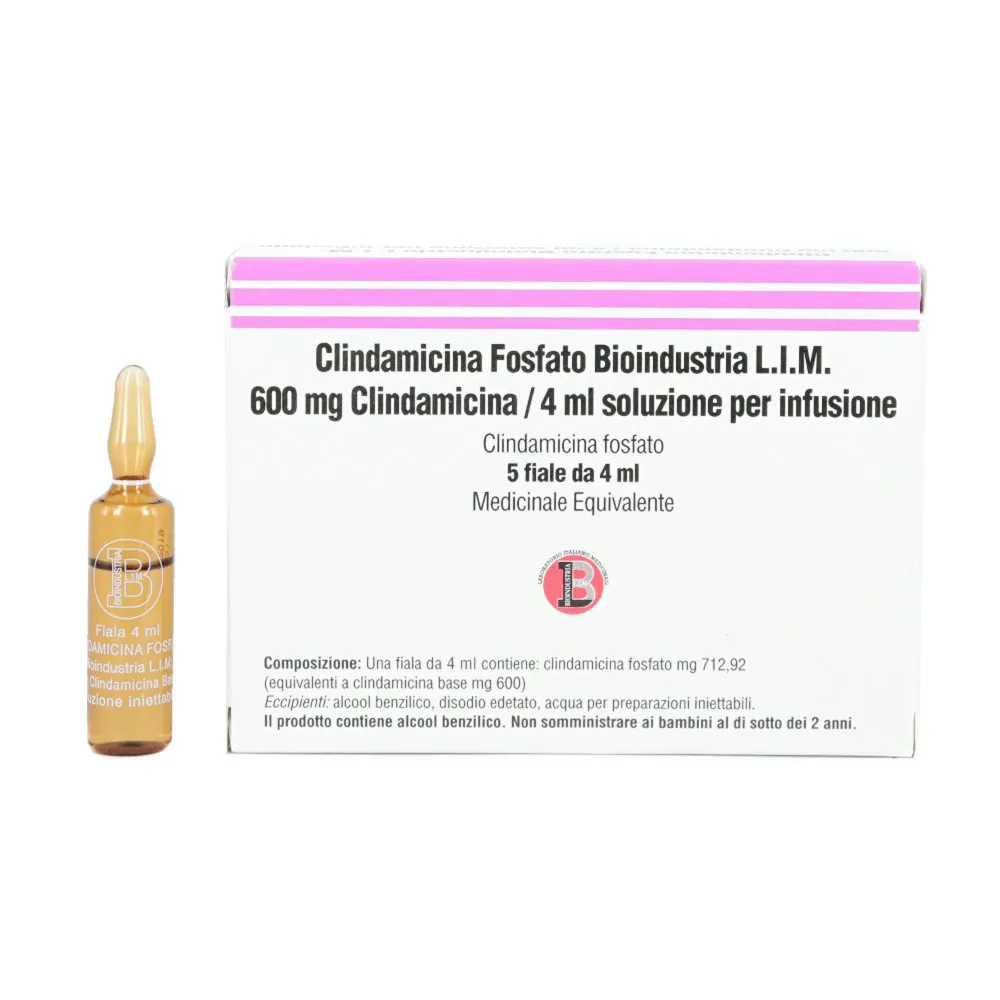
Table of Contents
- Package leaflet: Information for the user
- CLINDAMICINA FOSFATO Bioindustria L.I.M. 150 mg/ml injectable solution or solution for infusion
- 1. What CLINDAMICINA FOSFATO Bioindustria L.I.M. is and what it is used for
- 2. What you should know before CLINDAMICIN PHOSPHATE Bioindustria L.I.M. is administered to you and/or your child
- 3. How CLINDAMYCIN PHOSPHATE Bioindustria L.I.M. will be administered to you and/or your child
- 4. Possible side effects
- 5. How to store CLINDAMYCIN PHOSPHATE Bioindustria L.I.M.
- 6. Package contents and other information
- CLINDAMYCIN PHOSPHATE Bioindustria L.I.M. 150 mg/ml injectable solution or for infusion
- The following information is intended exclusively for physicians or healthcare professionals
Package leaflet: Information for the user
CLINDAMICINA FOSFATO Bioindustria L.I.M. 150 mg/ml injectable solution or solution for infusion
clindamycin phosphate
Generic medicine
Please read all of this leaflet carefully before this medicine is administered to you and/or your child, as it contains important information for you.
- Keep this leaflet. You may need to read it again.
- If you have any questions, consult your doctor, the doctor treating your child, or the nurse.
- If you experience any side effects, including those not listed in this leaflet, contact your doctor, the doctor treating your child, or the nurse. See section 4.
Contents of this leaflet
- What CLINDAMICINA FOSFATO Bioindustria L.I.M. is and what it is used for
- What you need to know before CLINDAMICINA FOSFATO Bioindustria L.I.M. is administered to you and/or your child
- How CLINDAMICINA FOSFATO Bioindustria L.I.M. will be administered to you and/or your child
- Possible side effects
- How to store CLINDAMICINA FOSFATO Bioindustria L.I.M.
- Contents of the pack and other information
1. What CLINDAMICINA FOSFATO Bioindustria L.I.M. is and what it is used for
CLINDAMICINA FOSFATO Bioindustria L.I.M. is a solution for injection into a vein (intravenous route) or into a muscle (intramuscular route). The solution contains clindamicin phosphate, a compound that kills bacteria (antibiotic), belonging to a group of medicines called lincosamides. Clindamicin is used in the treatment of serious bacterial infections (e.g. sensitive anaerobic organisms, staphylococci, streptococci and pneumococci).
CLINDAMICINA FOSFATO Bioindustria L.I.M. is used in adults and in children for the treatment of:
- serious infections caused by bacteria sensitive to this medicine (staphylococci, streptococci and pneumococci) that are resistant to other antibiotic medicines; however, tests must be performed before using this medicine to determine its effectiveness against the microorganisms causing the infection.
- acute gynecological and pelvic infections caused by the bacterium Chlamydia trachomatis (in combination with other antibiotics) when tetracyclines (other antibiotic medicines) are contraindicated;
- inflammation of the brain (encephalitis) caused by the parasite Toxoplasma gondii in people with compromised immune system;
- pneumonia caused by the fungus Pneumocystis jiroveci in people with compromised immune system.
2. What you should know before CLINDAMICIN PHOSPHATE Bioindustria L.I.M. is administered to you and/or your child
CLINDAMICIN PHOSPHATE Bioindustria L.I.M.
You will not be given CLINDAMICIN PHOSPHATE Bioindustria L.I.M.
- if you are allergic to clindamycin, to other similar medicines such as lincomycin, or to any of the other ingredients of this medicine (listed in section 6);
- if you are breastfeeding;
- if the person who is to use this medicine is a child under 2 years of age.
Warnings and precautions
Talk to your doctor, your child’s doctor, or nurse before receiving
CLINDAMICIN PHOSPHATE Bioindustria L.I.M.
This medicine can only be used in appropriate healthcare facilities (hospitals, clinics, nursing homes)
and by trained healthcare professionals.
Inform your doctor or your child’s doctor before receiving/administering this medicine to the
child if:
- you are elderly or you or your child are seriously ill;
- you have previously had stomach or intestinal disorders;
- you tend to develop allergic reactions easily;
- you have severe liver problems;
- you have severe kidney problems.
Acute kidney problems may occur. Inform your doctor about any medicines you are taking and any
kidney problems. If you experience reduced urine output, fluid retention causing swelling of the legs,
ankles or feet, shortness of breath, or nausea, contact your doctor immediately.
Inform your doctor or your child’s doctor if any of the following conditions appear or worsen during
treatment with CLINDAMICIN PHOSPHATE Bioindustria L.I.M.
(see also section 4 “Possible side effects”):
- onset of diarrhea. If you or your child experience abdominal cramps and severe, prolonged diarrhea with blood and mucus in the stool, stop treatment with this medicine and consult your doctor. These may be symptoms of an inflammation of the intestine (pseudomembranous colitis) caused by the use of antibiotics. Inform your doctor immediately if you or your child develop these symptoms even several months after stopping treatment with CLINDAMICIN PHOSPHATE Bioindustria L.I.M.;
- new infections or persistence of existing infections. This may be due to germs that are not sensitive to CLINDAMICIN PHOSPHATE Bioindustria L.I.M.;
- allergic reactions or severe skin reactions. In this case, stop treatment with this medicine and consult your doctor.
Laboratory tests
During treatment with CLINDAMICIN PHOSPHATE Bioindustria L.I.M., your doctor will perform regular
checks of liver and kidney function and blood tests, especially if you or your child are receiving long-term
treatment with this medicine.
Children
This product must not be given to premature infants or children under 2 years of age due to its content of
benzyl alcohol, which may cause toxic and anaphylactic reactions up to the age of 3 years.
In children and newborns (particularly premature newborns), benzyl alcohol, one of the components of this
medicine, may cause serious adverse effects, such as a condition called “gasping syndrome,” characterized
by reduced brain function and deterioration of the nervous system, accumulation of lactic acid in the body,
breathing difficulties, heart problems, and blood abnormalities (see section “CLINDAMICIN PHOSPHATE
Bioindustria L.I.M. contains benzyl alcohol”).
Other medicines and CLINDAMICIN PHOSPHATE Bioindustria L.I.M.
Inform your doctor, your child’s doctor, or nurse if you are taking, have recently taken, or might take any
other medicines.
The following medicines affect the effectiveness of CLINDAMICIN PHOSPHATE Bioindustria L.I.M. and vice
versa:
- vitamin K antagonists (e.g. warfarin, acenocoumarol, and phenindione), or similar medicines used to thin the blood;
- neuromuscular blockers used during surgery to relax muscles (e.g. ether, tubocurarine, pancuronium);
- certain antibiotics (medicines used against bacteria) such as metronidazole, gentamicin, erythromycin, lincomycin, and rifampicin;
Pregnancy and breastfeeding
If you are pregnant, think you may be pregnant, planning to become pregnant, or breastfeeding, consult
your doctor or nurse before this medicine is administered to you.
Pregnancy
This medicine should only be used during pregnancy if strictly necessary.
CLINDAMICIN PHOSPHATE Bioindustria L.I.M. contains benzyl alcohol (see “CLINDAMICIN PHOSPHATE
Bioindustria L.I.M. contains benzyl alcohol”)
Breastfeeding
CLINDAMICIN PHOSPHATE Bioindustria L.I.M. must not be administered during breastfeeding
(see section “Do not use CLINDAMICIN PHOSPHATE Bioindustria L.I.M.”) as it is excreted in breast milk and
may cause adverse effects in the infant, such as diarrhea, blood in the stool, fungal infections (candidiasis),
or skin rashes. Therefore, do not take CLINDAMICIN PHOSPHATE Bioindustria L.I.M. if you are breastfeeding
(see section “You will not be given CLINDAMICIN PHOSPHATE Bioindustria L.I.M.”)
CLINDAMICIN PHOSPHATE Bioindustria L.I.M. contains benzyl alcohol (see “CLINDAMICIN PHOSPHATE
Bioindustria L.I.M. contains benzyl alcohol”).
Driving and using machines
CLINDAMICIN PHOSPHATE Bioindustria L.I.M. does not affect, or has a negligible effect on, the ability to
drive vehicles or operate machinery.
CLINDAMICIN PHOSPHATE Bioindustria L.I.M. contains benzyl alcohol
This medicine contains 9.45 mg/ml of benzyl alcohol.
Benzyl alcohol may cause allergic reactions.
Benzyl alcohol has been associated with a risk of serious adverse effects, including breathing problems
(gasping syndrome), in young children.
It must not be administered to premature infants or children under 2 years of age.
This medicine should not be used for more than one week in young children (less than 3 years of age).
Ask your doctor for advice if you are pregnant or breastfeeding. This is because large amounts of benzyl
alcohol may accumulate in the body and cause adverse effects (such as metabolic acidosis).
Ask your doctor for advice if you have liver or kidney disease. This is because large amounts of benzyl
alcohol may accumulate in the body and cause adverse effects (such as metabolic acidosis).
CLINDAMICIN PHOSPHATE Bioindustria L.I.M. contains sodium
Clindamycin phosphate Bioindustria L.I.M. for intramuscular use contains less than 1 mmol (23 mg) of
sodium per dose, i.e., it is practically “sodium-free”.
Clindamycin phosphate Bioindustria L.I.M. for intravenous use contains 23.48 mg of sodium per 8 ml.
This corresponds to 1.17% of the maximum recommended daily dietary intake of sodium for an adult.
3. How CLINDAMYCIN PHOSPHATE Bioindustria L.I.M. will be administered to you and/or your child
L.I.M.
CLINDAMYCIN PHOSPHATE Bioindustria L.I.M. is administered only in a hospital setting and under the careful monitoring of trained medical personnel. If you have any doubts, consult your doctor or nurse.
CLINDAMYCIN PHOSPHATE Bioindustria L.I.M. must be administered by injection into a muscle (e.g., the buttock) or by injection into a vein. In the latter case, administration must be performed only by experienced healthcare professionals.
When your condition begins to improve, your doctor may decide to continue treatment with oral medications containing the same active substance.
-
Severe infections The recommended dose in adults is 600–1200 mg per day, divided into 2, 3, or 4 doses. The recommended dose in children is 15–25 mg per kg of body weight per day, divided into 3 or 4 doses.
-
Very severe infections The recommended dose in adults is 1200–2700 mg per day, divided into 2, 3, or 4 doses. The recommended dose in children is 25–40 mg per kg of body weight per day, divided into 3 or 4 doses. In infections caused by Streptococcus beta-haemolyticus (a bacterium), treatment with CLINDAMYCIN PHOSPHATE Bioindustria L.I.M. must last for at least 10 days.
-
Gynecological infections The recommended dose is 900 mg every 8 hours administered intravenously in combination with another appropriate antibiotic. Therapy should continue for at least 4 days and for at least 48 hours after clinical improvement is observed. Your doctor will continue treatment with 450 mg of clindamycin every 6 hours orally, until completing a total treatment course of 10–14 days.
-
Infections caused by Toxoplasma gondii in patients with low immune defenses.
The recommended dose is 600–1200 mg every 6 hours for 2 weeks. Afterwards, the dose may be reduced to 300–600 mg orally every 6 hours for 8–10 weeks.
Your doctor will determine whether to combine CLINDAMYCIN PHOSPHATE Bioindustria L.I.M. with other medications based on the severity of the infection. -
Infections caused by Pneumocystis jirovecii in patients with low immune defenses. The recommended dose is 600 mg every 6 hours or 900 mg every 8 hours for 21 days, combined with oral primaquine 15–30 mg once daily for 21 days.
If you receive more CLINDAMYCIN PHOSPHATE Bioindustria L.I.M. than you should
If you are concerned that you may have received an excessive dose of the medicine, inform your doctor or nurse immediately.
If you forget to use CLINDAMYCIN PHOSPHATE Bioindustria L.I.M.
Since this medicine will be administered under strict medical supervision, it is unlikely that a dose will be missed. However, inform your doctor or nurse if you think a dose has been missed.
If you stop treatment with CLINDAMYCIN PHOSPHATE Bioindustria L.I.M.
If you stop treatment too early, the infection may recur or worsen.
Do not stop treatment with CLINDAMYCIN PHOSPHATE Bioindustria L.I.M. unless instructed by your doctor.
If you have any questions about the use of this medicine, consult your doctor or nurse.
4. Possible side effects
Like all medicines, CLINDAMICINA FOSFATO Bioindustria L.I.M. can cause side effects,
although not everyone experiences them.
Stop using this medicine immediately and contact your doctor if you/your child experience:
- severe, persistent diarrhoea or diarrhoea containing blood and mucus in the stool (which may be associated with stomach pain or fever). These may be symptoms of a serious intestinal inflammation (pseudomembranous colitis) (see section 2 “Warnings and precautions”);
- severe allergic reaction characterized by swelling in various parts of the body and difficulty breathing;
- allergic reaction characterized by skin rash, fever and symptoms affecting multiple organs (drug reaction with eosinophilia and systemic symptoms: DRESS);
- severe acute hypersensitivity reactions affecting the skin and mucous membranes (Stevens-Johnson syndrome, toxic epidermal necrolysis, acute generalized exanthematous pustulosis, angioedema);
- cessation of heart and lung function (cardiorespiratory arrest);
- fluid retention causing swelling of the legs, ankles or feet, breathlessness or nausea.
Immediately inform your doctor if you/your child experience any of the following side effects:
Common (may affect up to 1 in 10 people):
- inflammation of blood vessels leading to blood clots (thrombophlebitis);
- abnormal liver function tests;
- skin rash characterized by red patches on the skin surrounded by small blisters (maculopapular rash).
Uncommon (may affect up to 1 in 100 people):
- altered taste (dysgeusia);
- low blood pressure (hypotension);
- diarrhoea;
- nausea;
- skin rash characterized by red spots and blisters on the skin;
- itching;
- urticaria;
- pain and formation of abscesses at the injection site.
Frequency not known (frequency cannot be estimated from the available data):
- vaginal infection;
- decrease in the number of white blood cells (leucopenia, eosinophilia, agranulocytosis, neutropenia) and decrease in platelets (thrombocytopenia) in the blood;
- increase in the number of eosinophils (a type of white blood cell) in the blood;
- abdominal pain;
- vomiting;
- yellowish discoloration of the skin and whites of the eyes due to liver disease (jaundice); skin and mucosal reactions characterized by blistering, pustules (pus-filled blisters), red patches and scaling (erythema, dermatitis);
- kidney dysfunction with increased blood nitrogen levels (azotemia), reduced urine output (oliguria) and/or presence of protein in the urine (proteinuria);
- irritation at the injection site.
Reporting of side effects
If you experience any side effect, including those not listed in this leaflet, please contact your doctor or pharmacist. You can also report side effects directly via
https://www.aifa.gov.it/content/segnalazioni-reazioni-avverse .
By reporting side effects, you can help provide more information on the safety of this medicine.
5. How to store CLINDAMYCIN PHOSPHATE Bioindustria L.I.M.
Keep this medicine out of the sight and reach of children.
Do not use this medicine after the expiry date stated on the label after "Expiry".
The expiry date refers to the last day of that month.
Store below 30°C, protected from light.
Do not dispose of medicines via wastewater or household waste. Ask your pharmacist how to
dispose of medicines you no longer use. This will help protect the environment.
6. Package contents and other information
What CLINDAMICINA FOSFATO Bioindustria L.I.M. contains
- The active substance is clindamycin phosphate. Each vial contains 712.92 mg of clindamycin phosphate equivalent to 600.0 mg of clindamycin base.
- The other components (excipients) are disodium edetate, benzyl alcohol, water for injections.
Description of the appearance of CLINDAMICINA FOSFATO Bioindustria L.I.M. and contents of the
pack
Each pack of CLINDAMICINA FOSFATO Bioindustria L.I.M. contains 5 vials of 4 ml of solution for
injection or infusion.
Marketing Authorisation Holder and Manufacturer
Bioindustria Laboratorio Italiano Medicinali S.p.A.
(Bioindustria L.I.M. S.p.A.)
Via de Ambrosiis 2, 15067 Novi Ligure (AL) - Italy
Package leaflet: information for the physician
CLINDAMYCIN PHOSPHATE Bioindustria L.I.M. 150 mg/ml injectable solution or for infusion
clindamycin phosphate
The following information is intended exclusively for physicians or healthcare professionals
Dosage and Administration
The dosage and route of administration should be determined based on the severity of the infection,
the patient's condition, and the sensitivity of the causative microorganism.
Dosage
Adults: administration by deep intramuscular injection or by intravenous infusion.
Severe infections caused by aerobic Gram-positive cocci and more sensitive anaerobes (generally not including
Bacteroides fragilis, Peptococci, and Clostridia other than Clostridium perfringens): 600–1200 mg/day,
divided into two, three, or four doses.
Very severe infections, particularly those due to confirmed or suspected Bacteroides fragilis, Peptococci,
or Clostridia other than Clostridium perfringens: 1200–2700 mg/day, divided into two, three, or four doses.
If necessary, these doses may be increased up to 4800 mg/day administered by infusion in life-threatening infections.
Clindamicina fosfato Bioindustria L.I.M. must not be injected intravenously as an undiluted bolus, but must be infused over a period of at least 10–60 minutes.
The drug may initially be administered via rapid intravenous infusion, followed by slower infusions according to the following scheme:
| To maintain clindamycin blood concentrations above: | Start with a rapid intravenous infusion of: | Then continue with: |
| 4 mcg/ml | 10 mg/min for 30' | 0.75 mg/min |
| g/5 mcg/ml | g/p15 mg/min for 30' | ,g/1.00 mg/min |
| g/6 mcg/ml | g/p20 mg/min for 30' | ,g/1.25 mg/min |
Pelvic inflammatory disease: 900 mg every 8 hours intravenously in combination with an appropriate antibiotic active against Gram-negative aerobes. Continue therapy for at least 4 days and, in any case, for 48 hours after clinical improvement is observed in the patient. Continue treatment with oral clindamycin at a dosage of 450 mg every 6 hours until completing the treatment course (10–14 days).
Cerebral toxoplasmosis in high-risk immunocompromised patients: 600–1200 mg of clindamycin phosphate intravenously or clindamycin hydrochloride orally every 6 hours for two weeks, followed by 300–600 mg of oral clindamycin hydrochloride every 6 hours until completing the 8–10 week treatment course.
When clindamycin is combined with pyrimethamine, the latter should be administered at a dosage of 25–75 mg orally for 8–10 weeks. With higher doses of pyrimethamine, administration of 10–20 mg/day of folinic acid is recommended.
Pneumocystis jiroveci pneumonia in high-risk immunocompromised patients: clindamycin phosphate 600 mg intravenously every 6 hours or 900 mg every 8 hours, or 300–450 mg of oral clindamycin hydrochloride every 6 hours, administered for 21 days, together with 15–30 mg of primaquine administered orally once daily for 21 days.
Pediatric population: above two years of age, administer by deep intramuscular injection or intravenous infusion.
Severe infections: 15–25 mg/kg/day divided into 3–4 doses.
Life-threatening infections: 25–40 mg/kg/day divided into 3–4 doses.
Alternatively, pediatric dosage may be calculated based on body surface area: 350 mg/m²/day for severe infections and 450 mg/m²/day for life-threatening infections.
If severe diarrhea occurs, discontinue the antibiotic. Parenteral therapy may be switched to oral therapy (capsules) when the patient's condition improves, at the physician’s discretion. In case of infections caused by beta-hemolytic streptococcus, continue treatment for at least 10 days.
Method of administration
Dilution and rate of administration
Do not administer single intramuscular doses exceeding 600 mg. The concentration of clindamycin in the infusion diluent must not exceed 18 mg/ml, and the infusion rate must not exceed 30 mg per minute. Administration of Clindamycin Phosphate Bioindustria L.I.M. by intravenous infusion should follow the scheme below:
| Dose | Dilute in | Administration time: |
| 300 mg | 50 ml | 10 minutes |
| 600 mg | 50 ml | 20 minutes |
| 900 mg | 50-100 ml | 30 minutes |
| 1200 mg | 100 ml | 40 minutes |
It is recommended not to administer more than 1200 mg in a single one-hour infusion.
Compatibility
Clindamicin phosphate Bioindustria L.I.M. is physically and chemically compatible for at least 24 hours in injectable solutions of 5% dextrose and 0.9% sodium chloride containing the following antibiotics at commonly used concentrations: amikacin, aztreonam, cefamandole, cefazolin, cefotaxime, cefoxitin, ceftazidime, ceftriaxone, gentamicin, netilmicin, piperacillin and tobramycin.
Compatibility and stability duration of drug mixtures vary depending on concentration and other conditions.
Incompatibilities
Clindamicin phosphate Bioindustria L.I.M. is incompatible with ampicillin, phenytoin, barbiturates, aminophylline, magnesium sulfate and calcium gluconate.
Warnings and precautions
Severe hypersensitivity reactions, including severe skin reactions such as drug reaction with eosinophilia and systemic symptoms (DRESS), Stevens-Johnson syndrome (SJS), toxic epidermal necrolysis (TEN) and acute generalized exanthematous pustulosis (AGEP), have been reported in patients receiving clindamycin therapy. If a hypersensitivity reaction or a severe skin reaction occurs, clindamycin treatment must be discontinued and appropriate therapy initiated.
This medicinal product contains benzyl alcohol (9.45 mg/ml) as a preservative.
The use of benzyl alcohol has been associated with serious adverse reactions, including "gasping syndrome" and death in patients; it must not be given to premature infants or neonates.
Although normal therapeutic doses of the product generally carry amounts of benzyl alcohol substantially lower than those associated with "gasping syndrome", the amount of benzyl alcohol at which toxicity may occur is unknown.
The risk of benzyl alcohol toxicity depends on the amount administered and the liver's ability to eliminate the substance. Premature and low birth weight neonates may be at higher risk of developing toxicity. Benzyl alcohol may cause toxic and anaphylactic reactions in neonates and children up to 3 years of age.
This medicinal product contains sodium
Clindamicin phosphate Bioindustria L.I.M. for intramuscular use contains less than 1 mmol (23 mg) of sodium per dose, i.e. it is practically "sodium-free".
Clindamicin phosphate Bioindustria L.I.M. for intravenous use contains 23.48 mg of sodium per 8 ml. This corresponds to 1.17% of the maximum recommended daily dietary intake for an adult.
The use of clindamycin should be reserved for patients allergic to penicillin or for patients for whom, in the physician's judgment, penicillin is not indicated.
Due to the possibility of colitis, the physician should evaluate the nature of the infection and the possibility of using less toxic drugs before prescribing clindamycin.
Antibiotic treatment alters the normal colonic flora and leads to overgrowth of Clostridium difficile. This has been reported with the use of nearly all antibiotics, including clindamycin. Clostridium difficile produces toxins A and B which contribute to the development of Clostridium difficile-associated diarrhea (CDAD) and is a primary cause of "antibiotic-associated colitis".
Careful medical history is necessary, as cases of C. difficile-associated diarrhea have been reported more than two months after antibiotic administration.
In patients who develop diarrhea after antibiotic administration, CDAD must be considered in the differential diagnosis. It may progress to colitis, including pseudomembranous colitis, the severity of which may range from mild to fatal. Colitis is usually characterized by severe and persistent diarrhea with abdominal cramps, and blood and mucus may be present in the stools. If not diagnosed and treated promptly, colitis may progress to peritonitis, shock and toxic megacolon.
Endoscopic examination may reveal pseudomembranous colitis. If colitis is suspected, rectosigmoidoscopy is recommended. The presence of colitis may be further confirmed by stool culture for Clostridium difficile on selective media and by assay for C. difficile toxin.
If antibiotic-associated diarrhea or antibiotic-associated colitis is suspected or confirmed, ongoing antibiotic treatment, including clindamycin, should be discontinued and appropriate therapeutic measures initiated immediately. In this situation, drugs that inhibit peristalsis are contraindicated.
Antiperistaltic agents, opioids and diphenoxylate with atropine may prolong and/or worsen the condition.
Vancomycin has proven effective in the treatment of Clostridium difficile-induced pseudomembranous antibiotic-associated colitis. The adult dosage is 500 mg to 2 g/day of oral vancomycin, divided into three to four doses for a period of 7–10 days.
Cholestyramine binds the toxin in vitro; however, this resin also binds vancomycin. Therefore, if cholestyramine and vancomycin are administered simultaneously, it is advisable to administer each drug at different times.
Rare cases of relapse after vancomycin treatment have been reported.
Available data indicate that elderly and/or severely ill patients tolerate diarrhea less well; if these patients are treated with clindamycin, particular attention should be paid to changes in bowel frequency.
Clindamicin phosphate Bioindustria L.I.M. should be prescribed with caution in individuals with a history of gastrointestinal disorders, particularly colitis, and in atopic individuals.
Occasionally, the use of antibiotics may lead to the development of resistant organisms, particularly yeasts. If superinfection occurs, appropriate therapeutic measures should be taken.
During prolonged therapy, periodic liver and kidney function tests and blood cell counts should be performed.
Impairment of liver and kidney function
The drug's half-life has been only slightly altered in patients with hepatic and renal impairment.
Therefore, in cases of mild to moderate impairment of liver and kidney function, dose reduction is generally not required, although it may be necessary in cases of severe deterioration of liver and kidney function.
In case of prolonged therapy, renal and hepatic function tests should be performed.
Acute traumatic renal injuries, including acute renal failure, have been reported infrequently. In patients with pre-existing renal impairment or those receiving concomitant nephrotoxic drugs, monitoring of renal function should be considered.
Since clindamycin does not adequately diffuse into the cerebrospinal fluid, the drug should not be used for the treatment of meningitis.
Data on the use of Clindamicin phosphate Bioindustria L.I.M. in pregnant women are limited; therefore, use should be restricted to cases where strictly necessary.
For further information, consult the Summary of Product Characteristics.