Clenilexx
ItalyTable of Contents
- Package leaflet: Information for the patient
- CLENILEXX 100 mcg pressurised inhalation solution
- 1. What CLENILEXX is and what it is used for
- 2. What you should know before taking CLENILEXX
- 3. How to take CLENILEXX
- 4. Possible side effects
- 5. How to store CLENILEXX
- 6. Package contents and other information
- INSTRUCTIONS FOR USING YOUR INHALER
- Patient information leaflet
- CLENILEXX 100 mcg pressurized inhalation solution with Autohaler inhaler
- 1. What CLENILEXX is and what it is used for
- 2. What you need to know before taking CLENILEXX
- 3. How to take CLENILEXX
- 4. Possible side effects
- 5. How to store CLENILEXX
- 6. Contents of the pack and other information
- INSTRUCTIONS FOR USE OF YOUR AUTOHALER DEVICE
Package leaflet: Information for the patient
CLENILEXX 100 mcg pressurised inhalation solution
Beclometasone dipropionate
Please read this leaflet carefully before using this medicine because it contains important information for you.
- Keep this leaflet. You may need to read it again.
- If you have any questions, ask your doctor or pharmacist.
- This medicine has been prescribed for you only. Do not give it to others, even if they have the same symptoms as yours, because it could be harmful.
- If you experience any side effect, including those not listed in this leaflet, talk to your doctor or pharmacist. See section 4.
Contents of this leaflet:
- What CLENILEXX is and what it is used for
- What you need to know before using CLENILEXX
- How to use CLENILEXX
- Possible side effects
- How to store CLENILEXX
- Contents of the pack and other information
1. What CLENILEXX is and what it is used for
CLENILEXX is a medicine containing beclometasone dipropionate, an active substance belonging to the group of corticosteroids that reduces swelling and inflammation of the airways.
CLENILEXX is used to prevent breathing difficulties caused by diseases that cause reversible obstruction of the airways and by asthma, but it does not work immediately and is not suitable for stopping an asthma attack that has already started. In such cases, a fast-acting bronchodilator, your "reliever inhaler", must be used, which you should always carry with you. Be careful not to confuse the two medicines.
2. What you should know before taking CLENILEXX
Do not take CLENILEXX if:
- you are allergic (hypersensitive) to beclometasone dipropionate or to any of the other ingredients of this medicine (listed in section 6);
- you are pregnant or breastfeeding (see section “Pregnancy and breastfeeding”).
CLENILEXX is not indicated for children.
Warnings and precautions
Talk to your doctor or pharmacist before taking CLENILEXX.
Pay particular attention if:
- you have lung diseases, for example active or latent pulmonary tuberculosis (a disease affecting the lungs caused by certain bacteria);
- your asthma worsens or does not improve during treatment with CLENILEXX, or you experience increasing breathing difficulties, for example, you need to use your “rescue inhaler” more frequently or it fails to relieve your symptoms;
- you are switching from systemic corticosteroid therapy (e.g. tablets) to inhaled therapy. Initially, your doctor will instruct you to continue both treatments and, after approximately one week, will gradually reduce the systemic corticosteroid;
- you are undergoing periods of stress (due to lung infections, serious illnesses, surgery, trauma, etc.) or experience a severe asthma attack, as additional systemic corticosteroid treatment may be required; this is particularly important if you have recently discontinued oral corticosteroids or have adrenal dysfunction;
- during withdrawal from systemic corticosteroid therapy, you do not feel well despite improvement in your respiratory condition. DO NOT STOP treatment with CLENILEXX;
- when switching from systemic corticosteroid therapy to inhaled therapy, you develop allergic symptoms such as nasal inflammation (rhinitis) or eczema;
- you experience psychological or behavioural effects such as psychomotor hyperactivity, sleep disorders, anxiety, depression, aggression, or behavioural disturbances (mainly in children). These effects are rare during inhaled corticosteroid therapy;
- you notice systemic effects, particularly when inhaled corticosteroids are prescribed at high doses for prolonged periods, such as Cushing's syndrome, Cushingoid appearance, adrenal suppression, growth retardation in children and adolescents, decreased bone mineral density, cataract, glaucoma;
- you develop symptoms such as anorexia, abdominal pain, weight loss, fatigue, headache, nausea, vomiting, hypoglycaemia with reduced level of consciousness and/or seizures. These symptoms have been observed in adolescents exposed to doses higher than recommended (approximately 1000 mcg/day) for prolonged periods (several months or years). These are symptoms of a possible adrenal crisis, which may be triggered by trauma, surgery, infections, or rapid dose reduction.
Contact your doctor if you experience blurred vision or other visual disturbances.
IN ALL THESE CASES, CONSULT YOUR DOCTOR, WHO MAY PRESCRIBE AN APPROPRIATE THERAPY.
Children
CLENILEXX is not indicated for children.
Other medicines and CLENILEXX
Inform your doctor if you are currently taking, or have recently taken, any other medicines, including those obtained without a prescription.
Some medicines may increase the effects of CLENILEXX, and your doctor may wish to monitor you closely if you are taking these medicines (including certain HIV treatments: ritonavir, cobicistat).
Pregnancy and breastfeeding
If you are pregnant, think you may be pregnant, planning to become pregnant, or breastfeeding, consult your doctor or pharmacist before taking this medicine.
Safety in women during pregnancy and breastfeeding has not been sufficiently established. Your doctor will assess the potential benefits for the patient against the potential risks for the unborn or breastfed child.
Driving and using machines
CLENILEXX does not impair the ability to drive vehicles or operate machinery.
CLENILEXX contains ethanol
This medicine contains 5 mg of alcohol (ethanol) per dose, equivalent to 2.7 mg/kg for a four-dose administration in adults. The amount in four doses of this medicine is equivalent to less than 1 mL of wine or beer. The small amount of alcohol in this medicine will not produce significant effects.
Caution for athletes: This product contains substances prohibited in doping. Any use differing from the therapeutic indications, dosage regimen, or route of administration specified is prohibited.
3. How to take CLENILEXX
Take this medicine exactly as directed by your doctor, who will determine the correct dose according to the severity of your condition and the duration of treatment, which may need to continue even during asymptomatic phases. If in doubt, consult your doctor or pharmacist.
The usual dose is 1–4 inhalations (= 100–400 mcg of active substance) per day in adults, divided into two doses.
In severe cases, your doctor may increase the number of inhalations up to 800 mcg of active substance per day, always divided into two doses. The maximum dose must not exceed 8 inhalations (800 mcg) per day in adults.
Method of administration
Use CLENILEXX by inhalation through the mouth; breathe in deeply to ensure the medicine reaches the lungs.
For correct use of this medicine, refer to the section “Instructions for use of your inhaler” at the end of this leaflet.
After using CLENILEXX, rinse your mouth thoroughly with water; this will reduce the risk of fungal infections. Do not swallow the rinsing water.
If you take more CLENILEXX than you should
If you accidentally take too high a dose of CLENILEXX, the risk of experiencing adverse effects increases.
In such cases, inform your doctor immediately, as appropriate measures may be necessary.
If you forget to take CLENILEXX
Continue your treatment regularly. Do not take a double dose to make up for the forgotten dose.
If you stop using CLENILEXX
This medicine must be used regularly, even if you feel well. Do not stop treatment without consulting your doctor.
4. Possible side effects
Like all medicines, this medicine can cause side effects, although not everyone gets them.
Following the instructions contained in this leaflet reduces the risk of side effects.
Stop taking CLENILEXX and contact your doctor immediately if you experience the following symptoms
indicating a severe allergic reaction: swelling (angioedema) of the face, eyes, lips, and throat, accompanied by
difficulty breathing.
As with other inhaled medicines, breathlessness, cough, shortness of breath, and wheezing ( paradoxical
bronchospasm ) may occur immediately after taking the dose. Although this side effect is rare, contact your
doctor if it occurs.
Other side effects
If you use CLENILEXX, especially at high doses and/or for prolonged periods, you may experience other
side effects. Inform your doctor if you notice:
- lowering of the voice (hoarseness) that resolves after discontinuation of treatment or voice rest (Frequency not known);
- fungal infections (candida) in the mouth (oral cavity and throat) (Frequency not known). In such cases, your doctor will prescribe antifungal therapy (antimycotic drugs);
- nausea (Rare side effect);
- adrenal suppression (with symptoms such as loss of appetite, hypotension, abdominal pain, weight loss, fatigue, headache, nausea, vomiting); decreased bone mineral density (Frequency not known);
- cataract; increased eye pressure with possible worsening of vision (glaucoma) (Frequency not known);
- more or less sudden onset of skin lesions, such as discolouration in patches or widespread (skin rashes); urticaria; pruritus; erythema (Frequency not known);
- psychomotor hyperactivity, sleep disturbances, anxiety, depression, aggression, behavioural disturbances (mainly in children) (Frequency not known);
- blurred vision (Frequency not known).
In children and adolescents taking inhaled corticosteroids, growth retardation has also been reported.
Reporting of side effects
If you experience any side effect, including those not listed in this leaflet, talk to your doctor or pharmacist.
You can also report side effects directly via the national reporting system at
www.aifa.gov.it/content/segnalazioni-reazioni-avverse. By reporting side effects, you can help provide more
information on the safety of this medicine.
5. How to store CLENILEXX
Keep this medicine out of the sight and reach of children.
Store at a temperature not exceeding 30°C.
The pressurised container must not be punctured, and must not be exposed, even when empty, to heat sources,
must not be frozen, and must not be exposed to direct sunlight.
Do not use this medicine after the expiry date stated on the packaging after the word EXP. The expiry date refers to the last day of that month. This date applies to the product when unopened and properly stored.
Do not dispose of medicines via wastewater or household waste. Ask your pharmacist how to dispose of medicines you no longer use. This will help protect the environment.
6. Package contents and other information
What CLENILEXX contains
The active substance is: beclometasone dipropionate.
Each actuation contains 100 micrograms of beclometasone dipropionate.
The other components are: HFC 134a (norflurane), ethanol.
This medicine contains fluorinated greenhouse gases. Each inhaler contains 13.13 g of norflurane (HFC-134a), equivalent to 0.019 tonnes of CO₂ (global warming potential = 1430).
Description of the appearance of CLENILEXX and contents of the pack
This medicine is a pressurized solution for inhalation, available in an aluminum pressurized container with a metering valve.
CLENILEXX provides 200 inhalations of 100 micrograms of beclometasone.
Marketing Authorization Holder
PROMEDICA s.r.l., Via Palermo 26/A, Parma
Manufacturer
Jenson R + (Ireland) Limited, Unit 15, Daingean Hall, N4 Axis Centre, Longford, N39 W6K0, Ireland
INSTRUCTIONS FOR USING YOUR INHALER
CLENILEXX is easy to use. Before using it, carefully read the following instructions, which indicate what
to do and what to pay attention to.
The success of your treatment depends on the correct use of the inhaler.
BEFORE USE
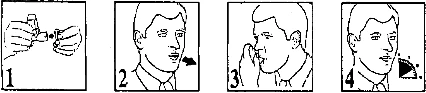
Inhaler function test: before using the inhaler for the first time, or if you have not used the inhaler for two or more weeks, remove the mouthpiece cover and release one puff into the air to make sure your inhaler works properly.
Taking a dose of CLENILEXX
Figure 1 Remove the protective cap from the inhaler mouthpiece.
Figure 2 Breathe out normally, then immediately place the mouthpiece in your mouth and close your lips tightly around it.
Figure 3 Breathe in slowly and deeply through the mouthpiece, and at the same time press down on the canister inside the inhaler. It is important to continue breathing in after the dose has been released.
Figure 4 Hold your breath for 10 seconds, then breathe out slowly.
If your doctor has prescribed more than one puff, repeat steps 2 to 4.
After use, replace the mouthpiece cover.
Cleaning
The mouthpiece should be cleaned weekly with a clean, dry cloth or tissue. Do not wash or immerse any part of the inhaler in water.
Patient information leaflet
CLENILEXX 100 mcg pressurized inhalation solution with Autohaler inhaler
Beclometasone dipropionate
Please read this leaflet carefully before using this medicine, as it contains important information for you.
- Keep this leaflet. You may need to read it again.
- If you have any questions, consult your doctor or pharmacist.
- This medicine has been prescribed for you only. Do not give it to others, even if their symptoms are the same as yours, as it may be harmful.
- If you experience any adverse reaction, including those not listed in this leaflet, consult your doctor or pharmacist. See section 4.
Contents of this leaflet:
- What CLENILEXX is and what it is used for
- What you need to know before using CLENILEXX
- How to use CLENILEXX
- Possible side effects
- How to store CLENILEXX
- Contents of the pack and other information
1. What CLENILEXX is and what it is used for
CLENILEXX is a medicine containing beclometasone dipropionate, an active substance belonging to the group of corticosteroids that reduces swelling and inflammation of the airways.
CLENILEXX is used to prevent breathing difficulties caused by diseases that cause reversible obstruction of the airways and by asthma, but it does not work immediately and is not effective in stopping an asthma attack that has already started. In such cases, a fast-acting bronchodilator, your "reliever inhaler", must be used, which you should always carry with you. Be careful not to confuse the two medicines.
2. What you need to know before taking CLENILEXX
Do not take CLENILEXX if:
- you are allergic (hypersensitive) to beclometasone dipropionate or to any of the other ingredients of this medicine (listed in section 6);
- you are pregnant or breastfeeding (see section “Pregnancy and breastfeeding”).
CLENILEXX is not indicated for children.
Warnings and precautions
Talk to your doctor or pharmacist before taking CLENILEXX.
Pay particular attention if:
- you have lung diseases, for example active or latent pulmonary tuberculosis (a disease affecting the lungs caused by certain bacteria);
- your asthma worsens during treatment with CLENILEXX, does not improve, or you experience increased breathing difficulties—for example, you need to use your “rescue inhaler” more frequently or it fails to relieve your symptoms;
- you are switching from systemic corticosteroid therapy (e.g., tablets) to inhaled therapy. Initially, your doctor will instruct you to continue both treatments, and after approximately one week, will begin gradually reducing the systemic corticosteroid;
- you are undergoing periods of stress (due to lung infections, serious illnesses, surgery, trauma, etc.) or experience a severe asthma attack, as additional systemic corticosteroid treatment may be required; this is particularly important if you have discontinued oral corticosteroids or have adrenal dysfunction;
- you do not feel well during the withdrawal of systemic corticosteroid treatment, even though your respiratory condition is improving. DO NOT STOP treatment with CLENILEXX;
- when switching from systemic corticosteroid therapy to inhaled therapy, you develop allergic symptoms such as nasal inflammation (rhinitis) or eczema;
- you experience psychological or behavioral effects such as psychomotor hyperactivity, sleep disturbances, anxiety, depression, aggression, or behavioral disorders (mainly in children). These effects are rare during inhaled corticosteroid therapy;
- you notice systemic effects, especially when inhaled corticosteroids are prescribed at high doses for prolonged periods, such as Cushing's syndrome, Cushingoid appearance, adrenal suppression, growth retardation in children and adolescents, decreased bone mineral density, cataract, or glaucoma;
- you develop symptoms such as anorexia, abdominal pain, weight loss, fatigue, headache, nausea, vomiting, hypoglycemia with reduced consciousness and/or seizures. These symptoms have been observed in adolescents exposed to doses higher than recommended (approximately 1000 mcg/day) for prolonged periods (several months or years). These may indicate possible adrenal crisis, which can be triggered by trauma, surgery, infections, or rapid dose reduction.
Contact your doctor if you experience blurred vision or other visual disturbances.
IN ALL THESE CASES, CONSULT YOUR DOCTOR, WHO MAY PRESCRIBE AN APPROPRIATE TREATMENT.
Children
CLENILEXX is not indicated for children.
Other medicines and CLENILEXX
Inform your doctor if you are taking or have recently taken any other medicines, including those obtained without a prescription.
Some medicines may increase the effects of CLENILEXX, and your doctor may decide to monitor you closely if you are taking these medicines (including certain HIV treatments: ritonavir, cobicistat).
Pregnancy and breastfeeding
If you are pregnant, suspect you may be pregnant, planning to become pregnant, or breastfeeding, consult your doctor or pharmacist before taking this medicine.
The safety of this medicine in pregnant and breastfeeding women has not been sufficiently established. Your doctor will assess the potential benefits for you against the potential risks for the baby.
Driving and using machines
CLENILEXX does not impair the ability to drive or operate machinery.
CLENILEXX contains ethanol
This medicine contains 5 mg of alcohol (ethanol) per dose, equivalent to 2.17 mg/kg for four doses in adults. The amount in four doses of this medicine is equivalent to less than 1 mL of wine or beer. The small amount of alcohol in this medicine will not produce significant effects.
Caution for athletes: This product contains substances prohibited for doping. Any use differing from the approved therapeutic indications, dosage regimen, or route of administration is prohibited.
3. How to take CLENILEXX
Take this medicine exactly as directed by your doctor, who will determine the correct dose for you based on the severity of your condition and the duration of treatment, which may continue even during symptom-free periods. If you have any doubts, consult your doctor or pharmacist.
The usual dose is 1–4 inhalations (= 100–400 mcg of active substance) per day in adults, divided into two doses.
In severe cases, your doctor may increase the number of inhalations up to 800 mcg of active substance per day, always divided into two doses. The maximum dose must not exceed 8 inhalations (800 mcg) per day in adults.
Method of administration
Use CLENILEXX by inhalation through the mouth; inhale deeply to ensure the medicine reaches the lungs.
For correct use of this medicine, refer to the section “Instructions for use of your Autohaler device” at the end of this leaflet.
After using CLENILEXX, rinse your mouth thoroughly with water; this will reduce the risk of fungal infections. Do not swallow the rinsing water.
If you take more CLENILEXX than you should
If you accidentally take too high a dose of CLENILEXX, the risk of experiencing side effects increases. In such cases, contact your doctor immediately, as appropriate measures may be necessary.
If you forget to take CLENILEXX
Continue your treatment as usual. Do not take a double dose to make up for a missed dose.
If you stop using CLENILEXX
This medicine must be used regularly, even if you feel well. Do not stop treatment without consulting your doctor.
4. Possible side effects
Like all medicines, this medicine can cause side effects, although not everybody will get them. Following the instructions contained in this leaflet reduces the risk of side effects.
Stop taking CLENILEXX and contact your doctor immediately if you experience the following symptoms associated with severe allergic reactions: swelling (angioedema) of the face, eyes, lips, and throat, accompanied by breathing difficulties.
As with other inhaled medicines, shortness of breath, cough, wheezing ( paradoxical bronchospasm ) may occur immediately after inhaling the dose. Although this side effect is rare, contact your doctor if it occurs.
Other side effects
If you use CLENILEXX, especially at high doses and/or for prolonged periods, you may experience other side effects. Inform your doctor if you notice:
- hoarseness (dysphonia) which resolves after stopping treatment or resting the voice (Frequency not known);
- fungal infections (candidiasis) in the mouth and throat (Fungal infections (candida) in the oral cavity (mouth and throat) (Frequency not known). In such cases, your doctor will prescribe antifungal therapy (with antifungal agents);
- nausea (Rare side effect);
- adrenal suppression (with symptoms such as loss of appetite, hypotension, abdominal pain, weight loss, fatigue, headache, nausea, vomiting); decreased bone mineral density (Frequency not known);
- cataract; increased intraocular pressure with possible worsening of vision (glaucoma) (Frequency not known);
- sudden or gradual appearance of skin lesions such as, for example, discolored spots or widespread rash (skin rashes); urticaria; pruritus; erythema (Frequency not known);
- psychomotor hyperactivity, sleep disorders, anxiety, depression, aggression, behavioural disturbances (mainly in children) (Frequency not known);
- blurred vision (Frequency not known).
In children and adolescents taking inhaled corticosteroids, growth retardation has also been reported.
Reporting of side effects
If you experience any side effects, including those not listed in this leaflet, talk to your doctor or pharmacist. You can also report side effects directly via the national reporting system at www.aifa.gov.it/content/segnalazioni-reazioni-avverse. By reporting side effects, you can help provide more information on the safety of this medicine.
5. How to store CLENILEXX
Keep this medicine out of the sight and reach of children.
Store at a temperature not exceeding 30°C.
The pressurized container must not be punctured, and even when empty, must not be exposed to heat sources, must not be frozen, and must not be exposed to direct sunlight.
Do not use this medicine after the expiry date stated on the packaging after the word EXP. The expiry date refers to the last day of that month. This date applies to the product in its original, undamaged packaging stored under the recommended conditions.
Do not dispose of any medicine via wastewater or household waste. Ask your pharmacist how to dispose of medicines no longer in use. This will help protect the environment.
6. Contents of the pack and other information
What CLENILEXX contains
The active substance is: beclometasone dipropionate.
Each actuation contains 100 micrograms of beclometasone dipropionate.
The other components are: HFC 134a (norflurane), ethanol.
This medicine contains fluorinated greenhouse gases. Each inhaler contains 13.13 g of norflurane
(HFC-134a), corresponding to 0.019 tonnes of CO2 equivalent (global warming potential =
1430).
Description of the appearance of CLENILEXX and contents of the pack
This medicine is a pressurized solution for inhalation, available in an aluminum pressurized container equipped with an Autohaler dispenser.
CLENILEXX provides sufficient medication for 200 inhalations containing 100 micrograms of beclometasone each.
Marketing Authorization Holder
PROMEDICA s.r.l., Via Palermo 26/A, Parma
Manufacturer
Jenson R + (Ireland) Limited, Unit 15, Daingean Hall, N4 Axis Centre, Longford, N39 W6K0, Ireland
INSTRUCTIONS FOR USE OF YOUR AUTOHALER DEVICE
CLENILEXX is easy to use. Before using it, carefully read the following instructions, which indicate what
to do and what to pay attention to.
The success of your treatment depends on the correct use of the Autohaler device.
CLENILEXX delivers each dose precisely:
- regardless of whether the canister is shaken before use;
- without requiring the patient to wait between one dose and the next;
- regardless of the position in which the canister has been stored or the duration of non-use (up to 14 days);
- even at temperatures as low as -10°C.
BEFORE USE
Before using the inhaler for the first time, or if it has not been used for two or more weeks, the Autohaler
must be primed as follows:
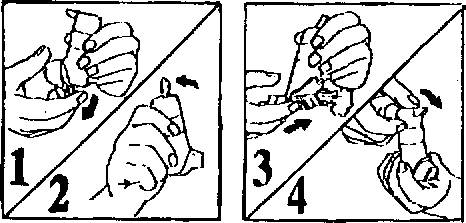
Fig. 1: remove the protective cap from the mouthpiece of the inhaler by using the designated notch;
Fig. 2: lift the lever upwards until it remains in the upright position.
Make sure to point the mouthpiece away from you so that the product is released into the air;
Fig. 3: release one dose by pressing down on the dose-release tab at the base of the inhaler in the direction
indicated by the arrow on the tab.
To release a second dose, lower the lever and repeat steps 2 and 3;
Fig. 4: after releasing the second dose, lower the lever again; the inhaler is now ready for use.
Do not use the dose-release tab located at the base of the device to inhale the medication.
The Autohaler device automatically releases the dose when you begin to inhale through the mouthpiece.
HOW TO INHALE A DOSE OF CLENILEXX USING THE AUTOHALER DEVICE
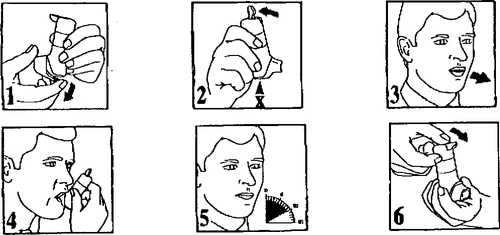
Figure 1: Remove the protective cap from the mouthpiece of the inhaler by using the designated notch.
Figure 2: Hold the Autohaler device in an upright position.
Lift the lever upwards until it remains in the upright position.
Be careful not to block the air vents (marked with X in Fig. 2) at the base of the inhaler with your hand.
Figure 3: Breathe out normally, then immediately place the mouthpiece in your mouth and close your lips tightly
around it.
Figure 4: Inhale slowly and deeply through the mouthpiece.
Do not stop inhaling when you hear a slight click or feel the dose in your mouth. It is important to continue
inhaling after the dose has been released.
Figure 5: Hold your breath for 10 seconds, then breathe out slowly.
Figure 6: After each dose, lower the lever.
If your doctor has prescribed more than one inhalation, repeat steps 2 to 6.
After use, replace the protective cap on the mouthpiece.
When the inhaler is completely empty, no medication will be felt or heard upon actuation.
The Autohaler device is not reusable. Therefore, when it is empty, it must be replaced with a new CLENILEXX
package.
CLEANING
The mouthpiece of the Autohaler device should be cleaned weekly with a clean, dry cloth or tissue.
Do not wash any part of the device and do not immerse it in water.
WARNING: do not insert tissues or other objects to dry any part of the Autohaler device, as this may damage
its functioning.
Do not disassemble the Autohaler device.