Claversal
Italy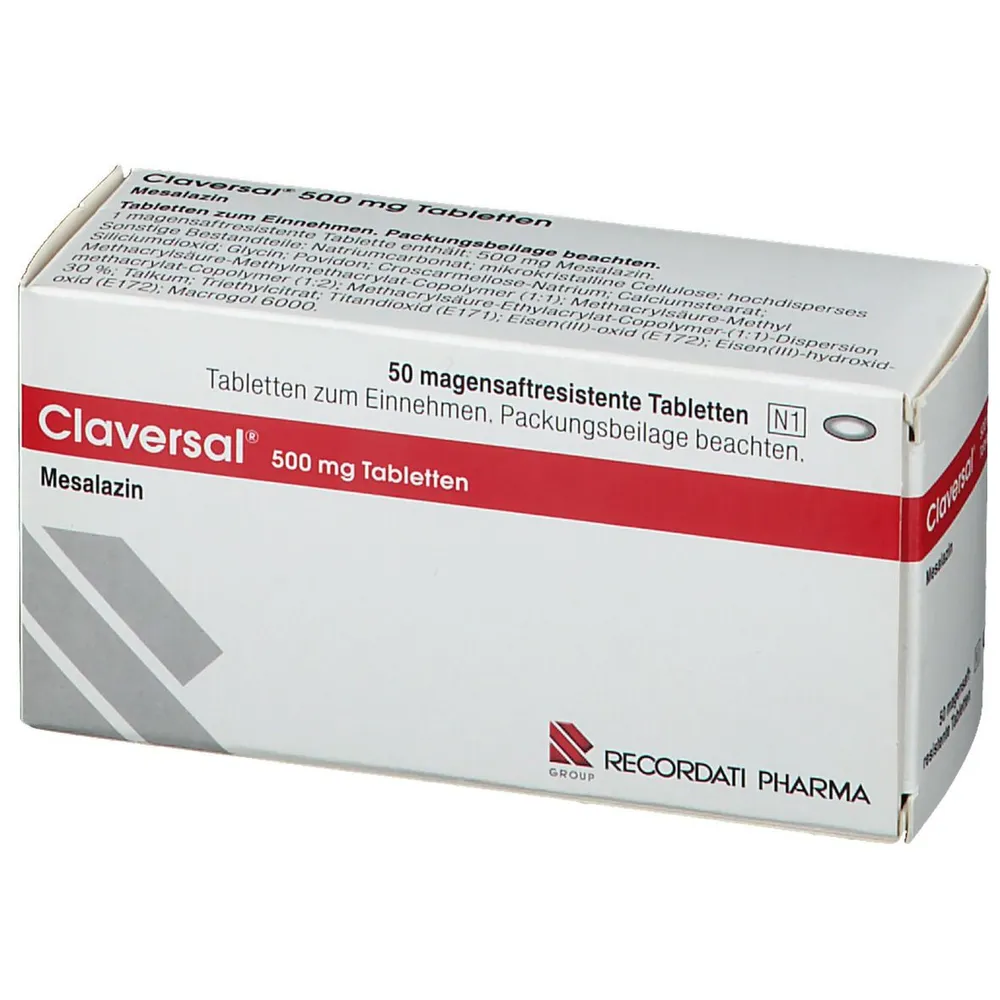
Table of Contents
- Package leaflet: Information for the patient
- CLAVERSAL 500 mg enteric-coated tablets
- 1. What Claversal is and what it is used for
- 2. What you should know before taking/giving Claversal to the child
- 3. How to take/give Claversal to the child
- 4. Possible side effects
- 5. How to store Claversal
- 6. Package contents and other information
Package leaflet: Information for the patient
CLAVERSAL 500 mg enteric-coated tablets
Mesalazine
Please read all of this leaflet carefully before you/your child take this medicine because it contains important information for you.
- Keep this leaflet. You may need to read it again.
- If you have any questions, consult your doctor or pharmacist.
- This medicine has been prescribed for you only. Do not give it to other people, even if their symptoms are the same as yours, as it could be harmful.
- If you experience any side effects, including those not listed in this leaflet, consult your doctor or pharmacist. See section 4.
Contents of this leaflet:
- What Claversal is and what it is used for
- What you need to know before taking/giving Claversal to your child
- How to take/give Claversal to your child
- Possible side effects
- How to store Claversal
- Contents of the pack and other information
1. What Claversal is and what it is used for
Claversal contains mesalazine, an anti-inflammatory medicine for the intestine.
Claversal is indicated in adults and children from the age of 6 years for the treatment of intestinal inflammation (ulcerative colitis and Crohn's disease), both during the active phase of the disease and for the prevention of relapses.
However, in cases of severe intestinal inflammation, your doctor may also prescribe treatment with corticosteroids (cortisone).
If you do not feel better or feel worse, talk to your doctor.
2. What you should know before taking/giving Claversal to the child
Do not take/give Claversal to the child
- if you or the child are allergic to mesalazine or to any of the other ingredients of this medicine (listed in section 6)
- if you or the child are allergic to salicylates (medicines belonging to the class of non-steroidal anti-inflammatory drugs, NSAIDs)
- if you or the child suffer from gastric or duodenal ulcers (stomach or intestinal sores)
- if the child is under six years of age
- if you or the child have a tendency or predisposition to bleeding (haemorrhagic diathesis)
- if you or the child have severe impairment of kidney or liver function
- if you or the child suffer from severe nephropathies.
Inform your doctor before using mesalazine:
- if you have ever developed a severe skin rash or skin peeling, blisters and/or mouth ulcers after taking mesalazine.
Warnings and precautions
Talk to your doctor or pharmacist before taking/giving Claversal to the child.
In particular, inform your doctor if you and/or the child:
- suffer from severe kidney disorders (severe renal failure)
- suffer from severe liver disorders (severe hepatic failure)
- are being treated with oral hypoglycaemics, diuretics, coumarins, or corticosteroids
- suffer from lung diseases, particularly asthma
- have previously suffered from an allergy to sulfasalazine (a medicine used in chronic inflammatory bowel diseases, similar to Claversal)
- suffer from slow digestion
- suffer from pyloric stenosis (a stomach and intestinal disease characterized by narrowing of the pylorus, the valve between the stomach and the intestine that allows food to pass into the intestine. Symptoms may include, for example: vomiting, bloating in the right side of the abdomen, weight loss).
Mesalazine may cause a red-brown discoloration of urine after contact with sodium hypochlorite contained in bleach present in toilet water. This is due to a harmless chemical reaction occurring between mesalazine and bleach.
Exercise particular caution with mesalazine:
Serious cutaneous adverse reactions, including drug reaction with eosinophilia and systemic symptoms (DRESS), Stevens-Johnson syndrome (SJS), and toxic epidermal necrolysis (TEN), have been reported in association with mesalazine treatment. Discontinue use of mesalazine and contact your doctor immediately if you notice any of the symptoms related to these serious skin reactions described in section 4.
Use of mesalazine may lead to the formation of kidney stones. Symptoms may include pain in the sides of the abdomen and blood in the urine. It is recommended to drink an adequate amount of fluids during treatment with mesalazine.
If you and/or the child suffer from kidney disorders or are at risk of developing kidney disorders
If you and/or the child suffer from kidney disorders or are at risk of developing kidney disorders (due to the use of medicines harmful to the kidneys or if you suffer from other diseases), your doctor will monitor you/the child closely throughout the duration of Claversal therapy, especially during the first months of treatment. In case of severe reduction in kidney function, your doctor will discontinue treatment (see "Possible side effects"). Furthermore, during active phases of the disease, your doctor will ensure adequate hydration.
Kidney function monitoring before and during treatment with Claversal
Before starting treatment, your doctor will check kidney function through appropriate tests, even if you and/or the child do not suffer from kidney disorders. If your doctor has prescribed Claversal treatment for a prolonged period, kidney function will be monitored periodically during treatment. In case of severe reduction in kidney function, your doctor will discontinue treatment (see "Possible side effects").
Children and adolescents
Do not give Claversal to children under six years of age.
Other medicines and Claversal
Inform your doctor or pharmacist if you and/or the child are taking, have recently taken, or might take any other medicines.
In particular, inform your doctor if you and/or the child are taking:
- sulfonylureas (medicines to lower blood sugar levels)
- coumarin derivatives (medicines to prevent blood clotting)
- probenecid and sulfinpyrazone (medicines used to treat gout)
- spironolactone and furosemide (diuretic medicines that work by increasing the amount of urine produced by the kidneys)
- rifampicin (an antibiotic)
- methotrexate (a medicine used to treat certain cancers and immune system disorders)
- azathioprine, 6-mercaptopurine, or thioguanine (medicines used to treat certain cancers and immune system disorders)
- corticosteroids (medicines used to treat inflammation), as they may increase unwanted effects affecting the stomach. However, in cases of severe intestinal inflammation, your doctor may prescribe corticosteroid treatment (cortisone) as well.
- lactulose or similar preparations. Do not take this medicine with lactulose, as concomitant use of Claversal with lactulose may reduce the effect of mesalazine.
- non-steroidal anti-inflammatory drugs (NSAIDs)
Pregnancy and breastfeeding
If you are pregnant, suspect you may be pregnant, planning to become pregnant, or are breastfeeding, consult your doctor or pharmacist before taking this medicine.
Pregnancy
Avoid taking Claversal during the last weeks of pregnancy.
During the first part of pregnancy, take this medicine only if clearly needed, after your doctor has carefully assessed that potential benefits outweigh possible risks.
Breastfeeding
If you are breastfeeding, take this medicine only if clearly needed, after your doctor has carefully assessed that potential benefits outweigh possible risks. If the newborn develops diarrhoea, breastfeeding must be discontinued.
Driving and using machines
Claversal does not impair the ability to drive vehicles or operate machinery.
Claversal contains sodium
This medicine contains 46 mg of sodium (the main component of table salt) per tablet. This corresponds to 2.3% of the maximum daily dietary intake recommended for an adult. This should be taken into consideration in individuals with reduced kidney function or those on a low-sodium diet.
3. How to take/give Claversal to the child
Take/give this medicine to the child exactly as directed by the doctor or pharmacist.
If you have any doubts, consult the doctor or pharmacist.
Adults
Active phases of the disease and prevention of relapses
- The recommended dose is 1 tablet three times a day (3 tablets per day, corresponding to 1.5 grams of mesalazine per day), taken before meals with plenty of fluid, unless otherwise prescribed by the doctor.
- The maximum dose is 8 tablets per day (corresponding to 4 grams of mesalazine per day), in cases of severe intestinal inflammation.
Children
Do not give Claversal to children under six years of age.
Children aged 6 years and older
Active phases of the disease
- The recommended initial dose is 30–50 mg/kg per day, divided into several doses throughout the day as directed by the doctor. The doctor will adjust the dose for the individual patient.
- The maximum dose is 75 mg/kg per day and must not exceed 4 grams per day (the adult maximum dose, corresponding to 8 tablets per day).
Prevention of relapses
- The recommended initial dose is 15–30 mg/kg per day, divided into doses throughout the day as directed by the doctor. The doctor will adjust the dose for the individual patient.
- The maximum dose is 2 grams per day.
Generally, if the child weighs less than 40 kg, the doctor will prescribe half the recommended adult dose; if the child weighs 40 kg or more, the doctor will prescribe the full adult dose.
Duration of treatment
The duration of treatment is determined by the doctor, both during active phases of the disease and for maintenance therapy to prevent relapses.
If you take/give the child more Claversal than you should
In case of accidental ingestion/overdose of Claversal, contact your doctor immediately or go to the nearest hospital, where appropriate supportive treatment will be administered (gastric lavage/emesis, together with supportive therapy).
If you forget to use/give Claversal to your child
Do not use/give a double dose to make up for the forgotten tablet.
If you stop treatment with Claversal
After stopping treatment with Claversal or during inadequate maintenance therapy, symptoms of the disease may recur. Always follow the doctor's instructions carefully.
If you have any questions about the use of this medicine, consult your doctor or pharmacist.
4. Possible side effects
Like all medicines, this medicine can cause side effects, although not everyone gets them.
Contact your doctor immediately if you or your child experience allergic reactions during treatment with Claversal, as the doctor will STOP treatment with Claversal. Allergic reactions include:
- fever
- muscle pain (myalgia)
- joint pain (arthralgia)
- breathing problems (alveolitis)
- inflammation of the heart and its surrounding membrane (myocarditis and pericarditis)
- reddish, non-raised patches on the trunk, target-shaped or circular in appearance, often with central blisters, skin peeling, mouth, throat, nose, genital, and eye ulcers, widespread rash, fever, and swollen lymph nodes. These serious skin rashes may be preceded by fever and flu-like symptoms.
The possible side effects are listed below:
Disorders of the blood and lymphatic system:
Frequency: very rare
- decreased number of white blood cells in the blood (leucopenia/neutropenia)
- decreased number of platelets in the blood (thrombocytopenia)
- disease due to deficiency of red blood cells caused by failure of the bone marrow to produce them (aplastic anaemia)
- decreased number of granulocytes in the blood (agranulocytosis)
- decreased number of all blood cells (pancytopenia)
Immune system disorders:
Frequency: very rare
- allergic rash, drug fever, lupus-like syndrome, pancolitis
Nervous system disorders:
Frequency: common
- headache
Frequency: uncommon
- drowsiness, tremor
Frequency: rare
- dizziness
Frequency: very rare
- disease of the peripheral nervous system (neuropathy)
Cardiac disorders:
Frequency: uncommon
- increased heart rate (tachycardia)
Frequency: very rare
- inflammation of the heart and its surrounding membrane (myocarditis and pericarditis)
Vascular disorders:
Frequency: common
- increased blood pressure (hypertension)
Frequency: uncommon
- decreased blood pressure (hypotension)
Respiratory, thoracic and mediastinal disorders:
Frequency: very rare
- allergic and fibrotic lung reactions (including dyspnoea, cough, bronchospasm, alveolitis, pulmonary eosinophilia, lung infiltration, pneumonia)
Gastrointestinal disorders:
Frequency: common
- nausea, diarrhoea, abdominal swelling (abdominal distension)
Frequency: uncommon
- abdominal pain
Frequency: rare
- flatulence, vomiting
Frequency: very rare
- inflammation of the pancreas (pancreatitis, acute pancreatitis)
- worsening of colitis symptoms
Hepatobiliary disorders:
Frequency: very rare
- inflammation of the liver (hepatitis, cholestatic hepatitis)
- transient abnormalities in liver function tests
- presence of gallstones in the bile ducts or gallbladder (cholelithiasis)
Skin and subcutaneous tissue disorders:
Frequency: common
- rash
Frequency: uncommon
- itching (pruritus)
Frequency: rare
- increased skin sensitivity to sunlight and ultraviolet light (photosensitivity)
Frequency: very rare
- alopecia
Frequency: not known
- angioedema
Musculoskeletal and connective tissue disorders:
Frequency: very rare
- muscle pain (myalgia)
- joint pain (arthralgia)
Renal and urinary disorders:
Frequency: very rare
- kidney disorders (including acute and chronic interstitial nephritis and renal failure)
Frequency: not known
- kidney stones and associated renal pain (see also section 2)
Reproductive system and breast disorders:
Frequency: very rare
- reduced number of sperm in semen (oligospermia)
General disorders and administration site conditions:
Frequency: common
- asthenia
- fever (pyrexia)
Frequency: uncommon
- fatigue
- facial oedema
Reporting of side effects
If you or your child experience any side effects, including those not listed in this leaflet, talk to your doctor or pharmacist. You can also report side effects directly via the national reporting system at the following website:
www.agenziafarmaco.gov.it/content/come-segnalare-una-sospetta-reazione-avversa
By reporting side effects, you can help provide more information on the safety of this medicine.
5. How to store Claversal
Keep this medicine out of the sight and reach of children.
Store below 25°C.
Do not use this medicine after the expiry date stated on the packaging after "Exp.". The expiry date refers to the last day of that month.
Do not dispose of medicines via wastewater or household waste. Ask your pharmacist how to dispose of medicines no longer required. This will help protect the environment.
6. Package contents and other information
What Claversal contains
- The active substance is mesalazine. Each tablet contains 500 mg of mesalazine.
- The other components are: anhydrous sodium carbonate, sodium carmellose (see section “Claversal contains sodium”), glycine, povidone, microcrystalline cellulose, anhydrous colloidal silica, calcium stearate, methacrylic acid copolymer, talc, titanium dioxide, yellow iron oxide (E 172), red iron oxide (E 172), macrogol 6000, dibutyl sebacate.
Description of the appearance of Claversal and contents of the pack
Claversal is available as tablets packed in opaque blisters, in a carton containing 50 tablets.
Marketing Authorization Holder
Teofarma S.r.l. – Via F.lli Cervi, 8 – 27010 Valle Salimbene (PV).
Manufacturer
Teofarma S.r.l.
Viale Certosa, 8/A – 27100 Pavia