Clarithromycin Teva
Italy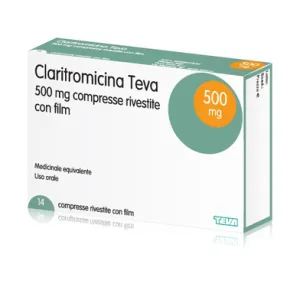
Table of Contents
- Package Leaflet: Information for the User
- Clarithromycin Teva 250 mg film-coated tablets, 500 mg film-coated tablets
- 1. What Claritromycin Teva is and what it is used for
- 2. What you need to know before taking Clarithromycin Teva
- 3. How to take Claritromycin Teva
- 4. Possible side effects
- 5. How to store Claritromycin Teva
- 6. Contents of the pack and other information
Package Leaflet: Information for the User
Clarithromycin Teva 250 mg film-coated tablets, 500 mg film-coated tablets
Generic medicine
Please read this leaflet carefully before taking this medicine, because
it contains important information for you.
- Keep this leaflet. You may need to read it again.
- If you have any questions, ask your doctor or pharmacist.
- This medicine has been prescribed for you only. Do not give it to other people, even if they have the same symptoms as you, because it could be harmful.
- If you experience any side effects, including those not listed in this leaflet, consult your doctor or pharmacist. See section 4.
Contents of this leaflet
- What Clarithromycin Teva is and what it is used for
- What you need to know before taking Clarithromycin Teva
- How to take Clarithromycin Teva
- Possible side effects
- How to store Clarithromycin Teva
- Contents of the pack and other information
1. What Claritromycin Teva is and what it is used for
Claritromycin Teva belongs to a group of medicines called macrolide antibiotics.
These inhibit the growth of certain bacteria.
Claritromycin Teva is used to treat a range of infections such as:
- chest infections, such as bronchitis and pneumonia.
- throat and sinus infections, such as sinusitis and pharyngitis.
- skin and soft tissue infections.
- Helicobacter pylori infection associated with duodenal ulcer.
Claritromycin Teva is indicated in adults and children over 12 years of age.
2. What you need to know before taking Clarithromycin Teva
Do not take Clarithromycin Teva
-
if you are allergic to clarithromycin, to other macrolide antibiotics (such as erythromycin, azithromycin), or to any of the other ingredients of this medicine (listed in section 6);
-
if you are taking any of the following medicines:
-
astemizole or terfenadine (for hay fever or allergies), cisapride or
domperidone (for stomach problems) or pimozide (to treat certain mental
conditions), as taking these medicines with Clarithromycin Teva may
cause serious disturbances in heart rhythm. Consult your doctor for advice
on alternative medicines. -
other medicines known to cause serious disturbances in heart rhythm.
-
lomitapide (used to lower cholesterol).
-
ticagrelor (a medicine to thin the blood).
-
ranolazine (used to treat angina pectoris).
-
ergot alkaloids, for example ergotamine or dihydroergotamine tablets or if you are using ergotamine inhalers for migraine. Consult your doctor who will advise you on alternative medicines.
-
simvastatin or lovastatin (used to reduce elevated blood fats such as cholesterol and triglycerides).
-
colchicine (used to treat gout).
-
oral midazolam (for anxiety or to help sleep).
-
if you or someone in your family has a history of heart rhythm disturbances (ventricular cardiac arrhythmia, including torsades de pointes) or abnormalities on the electrocardiogram (ECG) known as "long QT syndrome";
-
if you have abnormally low levels of potassium or magnesium in the blood (hypokalaemia or hypomagnesaemia);
-
if you have severe liver problems associated with kidney problems.
Warnings and precautions
Talk to your doctor or pharmacist before taking Clarithromycin Teva if you:
- are allergic to lincomycin or clindamycin antibiotics;
- have liver problems;
- have kidney problems;
- have certain heart conditions (coronary heart disease, severe heart failure, abnormal heart rhythm or clinically significant slow heart rate);
- have or are prone to fungal infections (e.g. thrush);
- have muscle disorders such as myasthenia gravis;
- are taking medicines that lower blood sugar levels (oral hypoglycaemic agents) or insulin;
- need to receive midazolam intravenously or oromucosally (absorbed through the mouth);
- are taking other macrolide antibiotics, as well as lincomycin or clindamycin;
- suffer from recurrent infections with bacteria and fungi. Consult your doctor for advice;
- are pregnant or breastfeeding.
If you develop any symptoms of liver dysfunction such as anorexia (loss of appetite), yellowing of the skin or whites of the eyes, dark urine, itching or abdominal pain, stop taking Clarithromycin Teva and inform your doctor immediately.
If you develop severe or prolonged diarrhoea during or after treatment with Clarithromycin Teva, inform your doctor immediately, as this may be a sign of a more serious condition such as pseudomembranous colitis and/or Clostridioides difficile-associated diarrhoea.
If you experience an allergic reaction (e.g. difficulty breathing, dizziness, swelling of the face or throat, skin rash, hives, blisters), stop taking Clarithromycin Teva and contact a doctor immediately.
Treatment with clarithromycin for Helicobacter pylori infections may lead to the selection of bacteria against which clarithromycin is ineffective.
Long-term use of antibiotics may lead to reinfection (superinfection) by organisms not sensitive to the antibiotic. Symptoms of possible secondary infection include fever and worsening general condition. If superinfection occurs, contact your doctor immediately.
Children
This medicine is not suitable for use in children under 12 years of age (weighing less than 30 kg). Other dosage forms are more appropriate for these patients.
Other medicines and Clarithromycin Teva
Inform your doctor or pharmacist if you are taking, have recently taken or might take any other medicines.
Do not take Clarithromycin Teva if you are taking:
- ergotamine or dihydroergotamine (used to treat migraine);
- terfenadine or astemizole (used to treat hay fever and other allergies);
- pimozide (used to treat mental disorders);
- cisapride or domperidone (used to treat stomach problems);
- simvastatin, lovastatin or lomitapide (used to reduce cholesterol);
- colchicine (used to treat gout);
- ticagrelor (a medicine to thin the blood);
- ranolazina (used to treat angina pectoris);
- oral midazolam (used for anxiety or to help sleep).
Tell your doctor if you are taking any of the following medicines:
- warfarin or any other anticoagulant, such as dabigatran, rivaroxaban, apixaban (used to thin the blood).
- disopyramide or quinidine (used to treat irregular heartbeat).
- digoxin (used to treat heart failure).
- carbamazepine, valproate, phenobarbital or phenytoin (used to treat epilepsy or bipolar disorder (manic depression)).
- theophylline (used to treat asthma).
- benzodiazepines used as sedative medicines, such as midazolam, triazolam or alprazolam.
- rifabutin, rifampicin, rifapentine or aminoglycosides (e.g. gentamicin) (used to treat certain infections).
- ciclosporin, tacrolimus or sirolimus (used after organ transplantation).
- atorvastatin or rosuvastatin (used to reduce cholesterol).
- efavirenz, nevirapine, atazanavir, saquinavir, ritonavir, zidovudine or etravirine (used to treat HIV-infected patients).
- St John’s wort (Hypericum perforatum) (a herbal product used to treat depression).
- fluconazole, itraconazole or ketoconazole (used for fungal infections).
- sildenafil, tadalafil or vardenafil (used to treat erectile dysfunction in men and pulmonary hypertension).
- omeprazole (for stomach problems).
- insulin, glibenclamide, repaglinide or nateglinide (used to treat diabetes).
- cilostazol (used to treat leg cramp pain).
- eletriptan (used to treat migraine).
- aprepitant (used to treat nausea and vomiting during chemotherapy).
- halofantrine (used to treat malaria).
- quetiapine or ziprasidone (used to treat mental disorders).
- methylprednisolone (a corticosteroid used to treat inflammation).
- ibrutinib or vinblastine (used to treat cancer).
- verapamil, amlodipine or diltiazem (used to treat heart conditions).
- tolterodine (a medicine to treat an overactive bladder).
Pregnancy and breastfeeding
If you are pregnant, breastfeeding, suspect you may be pregnant or are planning to become pregnant, ask your doctor or pharmacist for advice before taking this medicine.
Clarithromycin Teva must not be given to pregnant or breastfeeding women unless the benefits to the mother outweigh the risks to the infant.
Small amounts of clarithromycin may pass into breast milk.
Driving and using machines
This medicine may cause drowsiness, dizziness or confusion. Do not drive or operate machinery if you experience these symptoms.
Clarithromycin Teva contains tartrazine lake, allura red aluminium lake and sodium
This medicine contains tartrazine lake (E102) and allura red aluminium lake (E129), which may cause allergic reactions.
This medicine contains less than 1 mmol (23 mg) of sodium per coated tablet, i.e. essentially "sodium-free".
3. How to take Claritromycin Teva
Take this medicine exactly as prescribed by your doctor. If you are unsure, consult your doctor or pharmacist.
The tablets should preferably be taken with a glass of water. You may take Claritromycin Teva with or without food, as you prefer.
Unless otherwise prescribed by your doctor, the recommended dose is:
Adults, including the elderly
For chest, throat or sinus infections, and for skin and soft tissue infections
The recommended dose is 250 mg of clarithromycin twice daily. Your doctor may increase the dose to 500 mg of clarithromycin twice daily in severe infections.
The usual duration of treatment is between 6 and 14 days. Treatment should continue for at least 2 days after symptoms have disappeared.
Adults
For the treatment of Helicobacter pylori infection associated with duodenal ulcers
Clarithromycin should be taken at a dose of 500 mg twice daily in combination with other medicines for the treatment of Helicobacter pylori.
Your doctor will decide the most appropriate combination therapy for you. If you are unsure which medicines to take and when to take them, speak to your doctor.
Patients with liver or kidney problems
If you have liver problems or severe kidney problems, your doctor may need to reduce your dose. If you have such conditions, Claritromycin Teva should not be taken for longer than 14 days.
Use in children under 12 years of age
Claritromycin Teva is not recommended for use in children under 12 years of age. However, other pharmaceutical forms, e.g. oral suspension, are available and may be prescribed by your doctor for children under 12 years of age.
Use in children and adolescents from 12 years of age
For chest, throat or sinus infections, and for skin and soft tissue infections:
The recommended dose is 250 mg of clarithromycin twice daily. Your doctor may increase the dose to 500 mg of clarithromycin twice daily in case of severe infections. The usual duration of treatment is between 6 and 14 days. Treatment should continue for at least 2 days after symptoms have disappeared.
If you take more Claritromycin Teva than you should
If you (or someone else) take too many tablets at once, or if you suspect that a child has swallowed some tablets, contact immediately the nearest hospital emergency department or your doctor.
An overdose is likely to cause vomiting and stomach pain.
Take this patient information leaflet, any remaining tablets, and the medicine container with you to the hospital or doctor, so they can determine which and how many tablets have been taken.
If you forget to take Claritromycin Teva
If you forget to take a tablet, you may take it as soon as you remember, unless it is almost time for your next dose. Do not take a double dose to make up for a forgotten tablet. Take the remaining doses at the correct time.
If you stop taking Claritromycin Teva
Do not stop taking this medicine just because you feel better. It is important that you complete the prescribed course of treatment; otherwise, symptoms may return and the medicine may be less effective the next time it is used.
If you have any questions about the use of this medicine, ask your doctor or pharmacist.
4. Possible side effects
Like all medicines, this medicine can cause side effects, although
not everyone will experience them.
If you notice any of the following serious side effects, stop taking
Clarithromycin Teva and contact your doctor immediately:
Uncommon (may affect up to 1 in 100 people):
- skin rash, breathing difficulties, fainting, or swelling of the face and throat. This may be a sign of an allergic reaction. The frequency of angioedema (swelling of the face and/or throat) and severe acute allergic reaction (anaphylactic reaction) is unknown. Not known (frequency cannot be estimated from available data):
- severe or prolonged diarrhoea, which may contain blood or mucus. Diarrhoea may occur more than two months after treatment with clarithromycin; in such cases, you must contact your doctor.
- yellowing of the skin (jaundice), skin irritation, pale stools, dark urine, abdominal pain, or loss of appetite. These may be signs that your liver is not functioning properly.
- severe abdominal and back pain caused by inflammation of the pancreas.
- severe skin reaction such as blisters on the skin, mouth, lips, eyes, and genitals (symptoms of a rare allergic reaction called Stevens-Johnson syndrome/toxic epidermal necrolysis).
- severe skin reaction such as redness, scaly rash with lumps under the skin and blisters (exanthematous pustulosis).
- severe skin reaction causing severe rash, fever, and inflammation of internal organs (DRESS).
- a potentially fatal irregular heartbeat (torsade de pointes).
- muscle pain or weakness known as rhabdomyolysis (a condition that causes breakdown of muscle tissue which may lead to kidney damage).
Other side effects
Common (may affect up to 1 in 10 people)
- sleep disturbances (insomnia).
- changes in taste sensation.
- headache.
- dilation of blood vessels.
- stomach disturbances such as nausea, vomiting, abdominal pain, indigestion, diarrhoea.
- abnormal liver function (seen in blood test results).
- skin rash, increased sweating.
Uncommon (may affect up to 1 in 100 people)
- infections such as stomach and intestinal infections, skin inflammation due to infections, oral or vaginal "thrush" (a fungal infection), bacterial vaginal infection.
- low levels of white blood cells (neutropenia and leucopenia) and other white blood cell disorders (eosinophilia).
- loss of appetite, decreased appetite.
- anxiety, nervousness.
- fainting, dizziness, drowsiness, tremor, involuntary movements of the tongue, face, lips, or limbs.
- sensation of dizziness (vertigo), ringing in the ears (tinnitus), impaired hearing.
- fast or pounding heartbeat (palpitations), change in heart rhythm, or cardiac arrest.
- breathing problems (asthma), nosebleeds (epistaxis).
- blood clot in the lungs.
- stomach problems such as bloating, constipation, burping, flatulence, heartburn.
- inflammation of the lining of the stomach (gastritis) or oesophagus (the tube connecting the mouth to the stomach), rectal pain (proctalgia), inflammation of the mouth or tongue, dry mouth.
- increased liver enzymes, liver problems such as liver inflammation (hepatitis) or disturbed bile flow (cholestasis), which may cause yellowing of the skin (jaundice), pale stools, or dark urine.
- itching, hives.
- red areas of skin covered with small merging blisters (maculopapular erythema).
- blisters on the skin filled with fluid (bullous dermatitis).
- stiffness, muscle pain, muscle cramps, joint pain.
- kidney problems such as increased levels of proteins normally excreted by the kidneys or increased levels of kidney enzymes.
- fever, chills, weakness, fatigue, chest pain, or general feeling of discomfort.
- abnormal blood test results.
Not known (frequency cannot be estimated from available data)
- bacterial skin infections (erysipelas or erythrasma).
- severe decrease in the number of certain types of white blood cells (agranulocytosis); symptoms may include high fever, chills, sore throat, difficulty swallowing, and inflammation of the mouth, nose, throat, or genital or anal area.
- reduction in blood platelets (thrombocytopenia); symptoms may include increased tendency to bleed and petechiae (pinpoint bleeding in the skin and mucous membranes).
- low blood sugar levels in diabetic patients.
- psychotic disorder, confusion, altered perception of reality, depression, disorientation, hallucinations (seeing things that are not real), abnormal dreams.
- feeling euphoric or overexcited, leading to unusual behaviour (mania).
- seizures.
- changes or loss of taste and/or smell.
- tingling and burning sensation in the skin, numbness, "pins and needles" sensation (paraesthesia).
- loss of hearing.
- increased heart rate, uncoordinated contraction of the heart muscle (ventricular fibrillation).
- bleeding.
- discoloration of the tongue and teeth.
- acne.
- muscle weakness (myopathy).
- kidney inflammation or inability of the kidney to function properly (you may notice fatigue, swelling or puffiness of the face, abdomen, thighs, or ankles, or problems with urination), or kidney failure.
- abnormal urine colour.
- prolonged blood clotting time (increased INR and prothrombin time).
Reporting of side effects
If you experience any side effect, including those not listed in this leaflet,
please consult your doctor or pharmacist. You may also report side effects
directly via the national reporting system at
www.aifa.gov.it/content/segnalazioni-reazioni-avverse. By reporting side effects, you can
help provide more information on the safety of this medicine.
5. How to store Claritromycin Teva
Keep this medicine out of the sight and reach of children.
Do not store above 25°C. Keep the blister pack in the outer packaging.
Do not use this medicine after the expiry date which is stated on the blister and the outer packaging after EXP. The expiry date refers to the last day of that month.
Do not dispose of medicines via wastewater or household waste. Ask your pharmacist how to dispose of medicines you no longer use. This will help protect the environment.
6. Contents of the pack and other information
What Claritromycin Teva contains
- The active substance is clarithromycin. Each tablet contains 250 mg or 500 mg of clarithromycin.
- The other components are sodium starch glycolate, microcrystalline cellulose, povidone (PVP K-30), magnesium hydroxide, croscarmellose sodium, anhydrous colloidal silica, stearic acid, magnesium stearate, hypromellose (E464), titanium dioxide (E171), macrogol 400, tartrazine lake (E102), Allura red aluminium lake (E129), indigo carmine (E132) and vanillin.
Description of the appearance of Claritromycin Teva and contents of the pack:
- The 250 mg tablet is film-coated, oval-shaped, yellow in colour, with the number “93” printed on one side and the number “7157” on the other.
- The 500 mg tablet is film-coated, oval-shaped, light yellow in colour, with the number “93” printed on one side and the number “7158” on the other.
- Claritromycin Teva 250 mg is available in packs of 7, 8, 10, 12, 14, calendar pack of 14, 16, 20, 30, 100 and 120 tablets.
- Claritromycin Teva 500 mg is available in packs of 7, 8, 10, 14, calendar pack of 14, 16, 20, 21, 30, 42 and 100 tablets.
Not all pack sizes may be marketed.
Marketing Authorisation Holder and Manufacturer
Marketing Authorisation Holder
Teva Italia S.r.l. – Piazzale Luigi Cadorna, 4 - 20123 Milan, Italy
Manufacturer
Pharmachemie B.V. – Swensweg, 5 – P.O. Box 552 - 2003 RN Haarlem (The Netherlands)
Teva Pharmaceutical Works Private Limited Company - Pallagi st. 13 - H-4042 Debrecen (Hungary)
Merckle GmbH, Ludwig-Merckle-Str. 3, 89143 Blaubeuren (Germany)