Clarithromycin Sandoz GmbH
Italy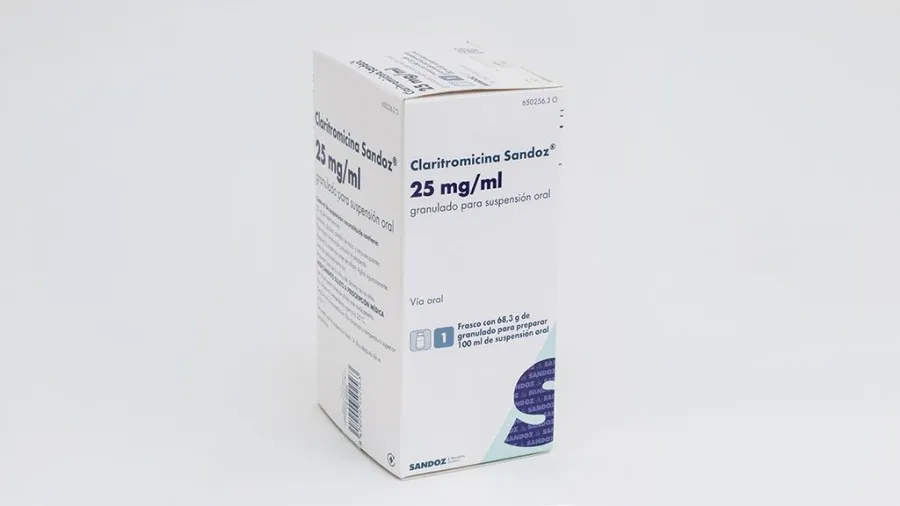
Table of Contents
- Package leaflet: Information for the patient
- Clarithromycin Sandoz GmbH 125 mg/5 ml granules for oral suspension, 250 mg/5 ml granules for oral suspension
- 1. What Claritromicina Sandoz GmbH is and what it is used for
- 2. What you need to know before taking Claritromycin Sandoz GmbH
- 3. How to take Clarithromycin Sandoz GmbH
- 4. Possible side effects
- 5. How to store Claritromycin Sandoz GmbH
- 6. Package Contents and Other Information
Package leaflet: Information for the patient
Clarithromycin Sandoz GmbH 125 mg/5 ml granules for oral suspension, 250 mg/5 ml granules for oral suspension
clarithromycin
Generic medicine
Please read this leaflet carefully before taking this medicine because it contains important information for you.
- Keep this leaflet. You may need to read it again.
- If you have any questions, ask your doctor or pharmacist.
- This medicine has been prescribed for you only. Do not give it to other people, even if their symptoms are the same as yours, as it could be harmful.
- If you experience any side effects, including those not listed in this leaflet, tell your doctor or pharmacist. See section 4.
Contents of this leaflet:
- What Clarithromycin Sandoz GmbH is and what it is used for
- What you need to know before taking Clarithromycin Sandoz GmbH
- How to take Clarithromycin Sandoz GmbH
- Possible side effects
- How to store Clarithromycin Sandoz GmbH
- Contents of the pack and other information
1. What Claritromicina Sandoz GmbH is and what it is used for
Claritromicina is an antibiotic belonging to the macrolide group of antibiotics. Claritromicina stops the
growth of certain bacteria.
Claritromicina Sandoz GmbH is used to treat:
- infections of the throat and sinuses
- middle ear infections in children
- chest infections, such as bronchitis and pneumonia
- skin and soft tissue infections
- gastric ulcers caused by the bacterium Helicobacter pylori.
2. What you need to know before taking Claritromycin Sandoz GmbH
Do not take Claritromycin Sandoz GmbH
- if you are allergic to clarithromycin, to other macrolide antibiotics, or to any of the other ingredients of this medicine (listed in section 6);
- if you or someone in your family has a history of cardiac rhythm disorders (ventricular arrhythmia, including torsades de pointes) or electrocardiogram (ECG) abnormalities known as "long QT syndrome";
- if you currently suffer from severe hepatic and renal impairment;
- if you have abnormally low potassium levels in your blood (hypokalaemia);
- if you are taking:
o ticagrelor (to prevent blood clots) or
o ranolazine (used to treat angina pectoris) or
o ergotamine, dihydroergotamine (medicines for migraine treatment) or
o oral midazolam (for anxiety and to help sleep) or
o cisapride and domperidone (a gastrointestinal medicine) or
o pimozide (an antipsychotic)
o terfenadine or
o astemizole (hay fever, antihistamines)
o lovastatin, simvastatin (cholesterol-lowering medicines)
o colchicine (for treating gout)
o or other medicines known to cause serious cardiac rhythm disturbances.
Warnings and precautions
Talk to your doctor or pharmacist before taking Claritromycin Sandoz GmbH:
- if you have reduced liver or kidney function;
- if you develop severe or prolonged diarrhoea (pseudomembranous colitis) during or after treatment with Claritromycin Sandoz GmbH, contact your doctor immediately. Inflammation of the colon (pseudomembranous colitis) has been reported with nearly all antibacterial medicines, including clarithromycin;
- if you have myasthenia gravis, a rare condition causing muscle weakness;
- if you are diabetic;
- if you have or have previously had heart problems;
- if you have abnormally low magnesium levels in your blood (hypomagnesaemia);
- if you have previously taken clarithromycin on multiple occasions or for a prolonged period.
Other medicines and Claritromycin Sandoz GmbH
Inform your doctor or pharmacist if you are taking, have recently taken, or might take any other medicine, including those obtained without a prescription.
Claritromycin Sandoz GmbH must not be taken together with ergot alkaloids, astemizole, terfenadine, cisapride, domperidone, pimozide, ticagrelor, ranolazine, colchicine, certain medicines for high cholesterol, and medicines known to cause serious cardiac rhythm disturbances (see also "Do not take Claritromycin Sandoz GmbH").
It is certain that other medicines may interfere with the effectiveness of Claritromycin Sandoz GmbH or vice versa. These include:
Claritromycin Sandoz GmbH may increase the effect of the following medicines:
- ibrutinib (chronic lymphocytic leukaemia);
- alprazolam, triazolam, intravenous or oral (oromucosal) midazolam (for anxiety and to help sleep);
- digoxin, verapamil, amlodipine, diltiazem (heart medicines);
- theophylline (anti-asthmatic);
- warfarin (used to thin the blood);
- atorvastatin, rosuvastatin (cholesterol-lowering agents);
- cyclosporine, sirolimus, tacrolimus (immunosuppressants);
- carbamazepine, phenytoin, valproate (medicines used to treat epilepsy);
- cilostazol (used to improve circulation in the lower limbs);
- insulin and other medicines for the treatment of diabetes (such as nateglinide or repaglinide);
- methylprednisolone (a cortisone used to treat inflammation);
- omeprazole (a gastrointestinal medicine);
- sildenafil, tadalafil, vardenafil (medicines used to treat erectile dysfunction);
- tolterodine (used to treat overactive bladder syndrome);
- vinblastine (used in cancer therapy);
- medicines that may impair hearing, particularly aminoglycosides such as gentamicin or neomycin (a group of antibiotics).
When administered concomitantly, both the effect of Claritromycin Sandoz GmbH and the effect of the following medicines may increase:
- atazanavir, saquinavir (medicines used to treat HIV);
- itraconazole (a medicine used to treat fungal infections).
2/9
If your doctor has specifically advised you to take Claritromycin Sandoz GmbH together with one of the above medicines, they may decide to monitor you more closely.
The following medicines may reduce the effect of Claritromycin Sandoz GmbH:
- rifampicin, rifabutin, rifapentine (antibiotics);
- efavirenz, etravirine, nevirapine (medicines used to treat HIV);
- phenytoin, carbamazepine, phenobarbital (antiepileptics);
- St John's wort (Hypericum perforatum).
Important note
Ritonavir (an antiviral) and fluconazole (a medicine used to treat fungal infections) may increase the effect of Claritromycin Sandoz GmbH.
Claritromycin Sandoz GmbH may reduce the effect of zidovudine (an antiviral). To avoid this, take the two medicines 4 hours apart.
The use of Claritromycin Sandoz GmbH together with digoxin, quinidine, disopyramide, or verapamil (heart medicines) or other macrolide antibiotics may cause cardiac arrhythmia.
Concomitant use of Claritromycin Sandoz GmbH and disopyramide may cause low blood sugar levels (hypoglycaemia).
Pregnancy and breastfeeding
If you are pregnant, think you might be pregnant, are planning to become pregnant, or are breastfeeding, consult your doctor or pharmacist before taking this medicine.
Driving and using machines
Generally, Claritromycin Sandoz GmbH does not affect the ability to drive or operate machinery. However, it may cause side effects such as dizziness, confusion, and disorientation. If you experience these effects, you should not drive, operate machinery, or perform any potentially dangerous activities for yourself or others.
Visual impairment and blurred vision may affect your ability to drive and use machinery.
Claritromycin Sandoz GmbH contains sucrose and sodium
This medicine contains 2.4 g of sucrose per 5 ml of ready-to-use suspension.
This should be taken into account by patients with diabetes mellitus.
If you have been diagnosed with intolerance to certain sugars, contact your doctor before taking this medicine.
This medicine contains less than 1 mmol (23 mg) of sodium per dose, i.e. essentially "sodium-free".
3. How to take Clarithromycin Sandoz GmbH
Take this medicine exactly as directed by your doctor or pharmacist. If you have
any doubts, consult your doctor or pharmacist.
Your doctor's prescription specifies the amount of medicine you should take and how often to take it:
please read it carefully. The prescribed dose depends on the type and severity of the infection, as well
as on your kidney function. Your doctor will explain this to you.
Adults and adolescents
The usual dose is 250 mg twice daily.
For severe infections or gastric ulcers caused by Helicobacter pylori, the usual dose is 500 mg twice
daily.
3/9
Children from 6 months to 12 years of age
The daily dose is calculated according to the child's body weight.
The following table provides a guide to the usual doses:
125 mg/5 ml granules for oral suspension
| Body weight (kg) | Age (years) | Dosage (ml) to be administered twice daily |
| 8–11 | 1–2 | 2.5 |
| 12–19 | 2–4 | 5 |
| 20–29 | 4–8 | 7.5 |
| 30–40 | 8–12 | 10 |
250 mg/5 ml oral suspension granules
| Body weight (kg) | Age (years) | Dosage (ml) to be administered twice daily |
| 12–19 | 2–4 | 2.5 |
| 20–29 | 4–8 | 3.75 |
| 30–40 | 8–12 | 5 |
Children weighing less than 8 kg should receive a dose of 7.5 mg/kg twice daily.
Duration of treatment
Your doctor will tell you how long to take Claritromycin Sandoz GmbH, usually between 5 and 14 days. Do not stop the treatment on your own initiative, for example because you or your child feel better. If treatment is stopped too early, the infection may recur.
Method of administration
This medicine is usually administered twice daily, one dose in the morning and a second dose in the early evening.
You may take this medicine with or without food.
This medicine may cause a bitter aftertaste if it remains in the mouth. This can be avoided by eating or drinking something immediately after taking the suspension.
How to measure the dose
This medicine comes with a 5 ml syringe, graduated at 2.5, 3.75 and 5 ml, and equipped with an adapter that fits onto the bottle. To measure the medicine:
- shake the bottle
- attach the adapter to the neck of the bottle
- insert the tip of the syringe into the adapter
- turn the bottle upside down
- slowly pull back the plunger of the syringe to the graduation mark corresponding to the required dose
- return the bottle to upright position, remove the syringe, leave the adapter on the bottle, and close the bottle. Always remember to shake the bottle before measuring each dose.
How to administer the medicine using the syringe:
- Ensure the child is in an upright position
- Gently insert the tip of the syringe into the child's mouth. Direct the tip of the syringe towards the inside of the cheek
- Slowly push the plunger of the syringe: do not rapidly squirt out the medicine
- Allow the child time to swallow the medicine.
4/9
Alternatively, the measured dose of medicine may be poured from the dropper into a spoon, which can then be used to administer the medicine to the child.
How to prepare this medicine
A doctor or pharmacist will prepare the medicine for you. To open the bottle, press down on the top part of the child-resistant cap and then turn the cap.
If you need to prepare the medicine yourself, fill the bottle with cold water up to just below the reference line marked on the bottle. After shaking well, add more water exactly up to the graduation line marked on the bottle and shake the bottle again.
The suspension should be prepared only once, at the beginning of the treatment course.
If you take more Claritromycin Sandoz GmbH than you should
If you have taken an excessive amount of this medicine, contact your doctor or a hospital as soon as possible.
Symptoms of overdose may be gastrointestinal in nature.
If you forget to take Claritromycin Sandoz GmbH
If you forget to take this medicine, continue treatment following the normal dosing schedule as prescribed by your doctor. Do not take a double dose to make up for the missed dose.
If you stop taking Claritromycin Sandoz GmbH
It is important to take this medicine as directed by your doctor. Do not suddenly stop taking this medicine without first consulting your doctor. Otherwise, symptoms may recur.
If you have any doubts about how to use this medicine, consult your doctor or pharmacist.
4. Possible side effects
Like all medicines, this medicine can cause side effects, although not everyone gets them.
Serious side effects
If you experience any of the following effects, stop taking the medicine immediately and contact your doctor or go to the nearest hospital emergency department.
Uncommon serious side effects (may affect up to 1 in 100 people):
- allergic reactions, such as sudden difficulty breathing, speaking or swallowing, swelling of the lips, face and neck, extreme dizziness or collapse, itching, raised skin rashes
- irregular heartbeat (change in the heart's electrical activity)
- risk of blood clotting due to high platelet levels
- blistering dermatitis
Serious side effects of unknown frequency:
- fever, sore throat, more frequent infections, caused by a severe lack of white blood cells (agranulocytosis)
- rash, fever, blood abnormalities (which may be signs of a hypersensitivity syndrome called DRESS)
- yellowing of the skin and eyes, nausea, loss of appetite, abnormal liver function tests (signs of liver inflammation)
- severe, persistent diarrhoea or diarrhoea containing blood, with stomach pain or fever. This may be a sign of serious intestinal inflammation. Your doctor may stop treatment. Do not take medicines that reduce intestinal motility
- severe pain in the abdomen and back, caused by inflammation of the pancreas
- excessive or reduced urination, drowsiness, confusion and nausea, caused by kidney inflammation
- severe or itchy skin rash, especially if accompanied by blisters and irritation of the eyes, mouth or genital organs
- unusual bleeding or bruising, caused by low platelet count
- fast or irregular heartbeat
- a widespread red, scaly rash with pustules and blisters (acute generalized exanthematous pustulosis)
These are all serious side effects. You may need urgent medical attention.
Other possible side effects
If you develop any of the following symptoms, inform your doctor immediately.
Common (may affect up to 1 in 10 people):
- headache
- disturbances in taste sensation (e.g. a metallic or bitter taste)
- abdominal pain, feeling unwell or malaise, diarrhoea, indigestion
- difficulty sleeping
- abnormal liver function tests
- rash
- excessive sweating
- dilation of blood vessels
Uncommon (may affect up to 1 in 100 people):
- low white blood cell count
- inflammation of the stomach and intestine
- increased liver enzymes in the blood
- decrease in neutrophils (neutropenia)
- increase in eosinophils (white blood cells involved in immunity)
- yeast infections (candidiasis)
- infections, for example of the vagina
- loss or reduction of appetite
- anxiety, nervousness, shouting
- involuntary muscle movements
- drowsiness, dizziness, tremors, drowsiness, agitation, fainting
- sensation of dizziness, hearing impairment, ringing in the ears (tinnitus)
- chest pain or changes in heart rhythm such as palpitations or irregular heartbeat
- awareness of your own heartbeat
- inflammation of the stomach lining, constipation, flatulence, dryness of the oral mucosa, belching
- itching, hives, raised red rash
- muscle spasms
- fever, weakness
- muscle spasms, muscle pain or loss of muscle tissue. If your child has myasthenia gravis (a condition in which muscles become weak and you tire easily), clarithromycin may worsen these symptoms
- anal pain
6/9
- asthma: a lung disease associated with narrowing of the airways making breathing difficult
- nosebleeds
- blood clot causing a sudden blockage in a lung artery (pulmonary embolism)
- inflammation of the lining of the throat (oesophagus) and stomach lining
- abnormally increased blood tests for kidney and liver function and increased blood tests
Unknown frequency (frequency cannot be determined from available data):
- discoloration of teeth and tongue
- certain specific bacterial infections of the skin and underlying tissues
- disturbances in the sense of smell, loss of smell or taste
- deafness
- acne
- depression
- muscle pain or weakness
- abnormal urine colour
- nightmares, disorientation, confusion, disorientation, seeing, feeling or hearing sensations/things that are not real, loss of contact with reality, feeling of loss of identity, mania (feeling of euphoria and over-excitement)
- seizures, tingling and numbness of the skin
- bleeding
- vision problems (blurred vision)
- visual impairment
Reporting of side effects
If you experience any side effect, including those not listed in this leaflet, talk to your doctor or pharmacist. You can also report side effects directly via the national reporting system at https://www.aifa.gov.it/content/segnalazioni-reazioni-avverse.
By reporting side effects, you can help provide more information on the safety of this medicine.
5. How to store Claritromycin Sandoz GmbH
Keep this medicine out of the sight and reach of children.
Do not use this medicine after the expiry date stated on the outer packaging and on the bottle,
following the word EXP. The expiry date refers to the last day of that month.
Do not store above 25°C.
After reconstitution: do not store above 25°C.
The suspension must be used within 14 days of preparation.
Do not dispose of any medicine via wastewater or household waste. Ask your pharmacist how to dispose
of medicines no longer required. This will help protect the environment.
6. Package Contents and Other Information
What Claritromycin Sandoz GmbH Contains
- The active substance is clarithromycin.
After reconstitution, 1 ml of oral suspension contains 25 mg of clarithromycin; 5 ml of oral suspension contains 125 mg of clarithromycin.
After reconstitution, 1 ml of oral suspension contains 50 mg of clarithromycin; 5 ml of oral suspension contains 250 mg of clarithromycin.
- The excipients are: poloxamer 188, povidone K 30 (E1201), hypromellose (E464), macrogol 6000, titanium dioxide (E171), methacrylic acid-ethyl acrylate copolymer (1:1), triethyl citrate (E1505), glycerol monostearate, polysorbate 80 (E433), sucrose, maltodextrin, potassium sorbate (E202), anhydrous colloidal silica (E551), xanthan gum (E415), fruit flavouring (natural and artificial flavouring substances, including maltodextrin, modified starch, sodium and maltol).
Description of the Appearance of Claritromycin Sandoz GmbH and Contents of the Container
Granules for oral suspension:
White or beige granules contained in HDPE bottles of 60 ml, 120 ml and 240 ml with child-resistant screw caps made of PP, and an oral dosing syringe made of PE/PP (5 ml) graduated at 2.5, 3.75 and 5.0 ml and/or a PE/PP dosing spoon with fill markings at 1.25 ml, 2.5 ml and 5.0 ml.
Claritromycin Sandoz GmbH 125 mg/5 ml granules for oral suspension
Pack sizes:
1 bottle containing 34.1 g of granules for oral suspension to prepare 50 ml of ready-to-use suspension (amount of water required: 29.5 ml), or
41.0 g of granules for oral suspension to prepare 60 ml of ready-to-use suspension (amount of water required: 35.4 ml), or
54.6 g of granules for oral suspension to prepare 80 ml of ready-to-use suspension (amount of water required: 47.2 ml), or
68.3 g of granules for oral suspension to prepare 100 ml of ready-to-use suspension (amount of water required: 59.0 ml), or
81.9 g of granules for oral suspension to prepare 120 ml of ready-to-use suspension (amount of water required: 70.8 ml).
Claritromycin Sandoz GmbH 250 mg/5 ml granules for oral suspension
Pack sizes:
1 bottle containing 34.1 g of granules for oral suspension to prepare 50 ml of ready-to-use suspension (amount of water required: 28.5 ml), or
41.0 g of granules for oral suspension to prepare 60 ml of ready-to-use suspension (amount of water required: 34.2 ml), or
54.6 g of granules for oral suspension to prepare 80 ml of ready-to-use suspension (amount of water required: 45.6 ml), or
68.3 g of granules for oral suspension to prepare 100 ml of ready-to-use suspension (amount of water required: 57.0 ml).
Not all pack sizes may be marketed.
Marketing Authorization Holder and Manufacturer
Marketing Authorization Holder
Sandoz GmbH
Biochemiestrasse 10
6250 Kundl
Austria
Representative in Italy
Sandoz Spa
Largo U. Boccioni, 1
21040 Origgio (VA)
Italy
Manufacturer Responsible for Batch Release
Lek Pharmaceuticals d.d.
Verovškova 57, 1526 Ljubljana
Slovenia
Salutas Pharma GmbH
Otto-von-Guericke-Allee 1, 39179 Barleben
Germany
S.C. Sandoz, S.R.L.
Str. Livezeni nr. 7A, RO-540472 Targu-Mures
Romania
Lek S.A.
ul. Domaniewska 50 C, 02-672 Warszawa
Poland
The following information is intended for healthcare professionals only
125 mg/5 ml granules for oral suspension
To prepare the suspension, fill the bottle with the following amounts of water:
- for the 50 ml bottle, add 29.5 ml of water
- for the 60 ml bottle, add 35.4 ml of water
- for the 80 ml bottle, add 47.2 ml of water
- for the 100 ml bottle, add 59.0 ml of water
- for the 120 ml bottle, add 70.8 ml of water
250 mg/5 ml granules for oral suspension
To prepare the suspension, fill the bottle with the following amounts of water:
- for the 50 ml bottle, add 28.5 ml of water
- for the 60 ml bottle, add 34.2 ml of water
- for the 80 ml bottle, add 45.6 ml of water
- for the 100 ml bottle, add 57.0 ml of water
Shake the bottle well immediately after adding water. After reconstitution with water, the medicinal product appears as a white to beige suspension.
9/9