Cimzia
Italy
Table of Contents
- Package leaflet: Information for the user
- Cimzia 200 mg solution for injection in pre-filled syringe
- 1. What Cimzia is and what it is used for
- 2. What you should know before taking Cimzia
- 3. How to take Cimzia
- 4. Possible side effects
- 5. How to store Cimzia
- 6. Package contents and other information
- 1. Preparation
- 2. Choosing and preparing the injection site
- 3. Injection
- 4. After use
- Patient Information Leaflet: Information for the User
- Cimzia 200 mg solution for injection in pre-filled syringe
- 1. What Cimzia is and what it is used for
- 2. What you should know before taking Cimzia
- 3. How Cimzia will be administered
- 4. Possible side effects
- 5. How to store Cimzia
- 6. Package contents and other information
- INSTRUCTIONS FOR USE FOR THE PREPARATION AND ADMINISTRATION OF CIMZIA
- 1. Preparation
- 2. Choosing and preparing the injection site
- 3. Injection
- 4. After use
- Package leaflet: Information for the user
- Cimzia 200 mg solution for injection in a pre-filled pen
- 1. What Cimzia is and what it is used for
- 2. What you should know before taking Cimzia
- 3. How to take Cimzia
- 4. Possible side effects
- 5. How to store Cimzia
- 6. Package contents and other information
- 1. Preparation
- 2. Choosing and preparing the injection site
- 3. Injection
- 4. After use
- Package leaflet: information for the user
- Cimzia 200 mg solution for injection in cartridge for administration device
- 1. What Cimzia is and what it is used for
- 2. What you should know before taking Cimzia
- 3. How to take Cimzia
- 4. Possible side effects
- 5. How to store Cimzia
- 6. Package contents and other information
- 1. Preparation
- 2. Choosing and preparing the injection site
- 3. Injection
- 4. After use
Package leaflet: Information for the user
Cimzia 200 mg solution for injection in pre-filled syringe
certolizumab pegol
Please read all of this leaflet carefully before you start using this medicine because it contains important information for you.
- Keep this leaflet. You may need to read it again.
- If you have any questions, ask your doctor, pharmacist or nurse.
- This medicine has been prescribed for you only. Do not pass it on to other people, even if their symptoms are the same as yours, as it may be harmful.
- If you experience any side effects, including any not listed in this leaflet, tell your doctor, pharmacist or nurse. See section 4. Contents of this leaflet:
- What Cimzia is and what it is used for
- What you need to know before using Cimzia
- How to use Cimzia
- Possible side effects
- How to store Cimzia
- Contents of the pack and other information Your doctor will also provide you with a Patient Reminder Card containing important safety information that you should know before starting and during treatment with Cimzia. Always carry this Patient Reminder Card with you.
1. What Cimzia is and what it is used for
Cimzia contains the active substance certolizumab pegol, a human antibody fragment.
Antibodies are proteins that specifically recognize and bind to other proteins. Cimzia binds to a
specific protein called tumour necrosis factor α (TNFα). By binding to TNFα, Cimzia blocks its activity, thereby reducing inflammatory diseases such as rheumatoid arthritis,
axial spondyloarthritis, psoriatic arthritis and psoriasis. Medicines that bind to TNFα are also known as TNF blockers.
Cimzia is used in adults for the following inflammatory diseases:
- rheumatoid arthritis,
- axial spondyloarthritis (which includes ankylosing spondylitis and non-radiographic axial spondyloarthritis),
- psoriatic arthritis,
- plaque psoriasis.
Rheumatoid arthritis
Cimzia is used to treat rheumatoid arthritis. Rheumatoid arthritis is an inflammatory disease of the joints. If you have moderate to severe rheumatoid arthritis, you may first be given other medicines, usually methotrexate. If you do not respond adequately to these medicines, Cimzia will be given to you in combination with methotrexate. If your doctor considers methotrexate to be inappropriate, Cimzia may be given alone. Cimzia in combination with methotrexate may also be used to treat severe, active and progressive rheumatoid arthritis without prior treatment with methotrexate or other disease-modifying antirheumatic drugs. Cimzia, taken in combination with methotrexate, is used to:
- reduce the signs and symptoms of the disease,
- slow down joint cartilage and bone damage caused by the disease,
- improve physical function and the ability to perform daily activities.
Ankylosing spondylitis and non-radiographic axial spondyloarthritis
Cimzia is used to treat active, severe ankylosing spondylitis and non-radiographic axial spondyloarthritis (sometimes called non-radiographic axial spondyloarthritis). These diseases are inflammatory conditions of the spine. If you have ankylosing spondylitis or non-radiographic axial spondyloarthritis, you will first be given other medicines. If you do not respond adequately to these medicines, Cimzia will be given to you to:
- reduce the signs and symptoms of the disease,
- improve physical function and the ability to perform daily activities.
Psoriatic arthritis
Cimzia is used to treat active psoriatic arthritis. Psoriatic arthritis is an inflammatory joint disease, usually associated with psoriasis. If you have active psoriatic arthritis, you will first be given other medicines, usually methotrexate. If you do not respond adequately to these medicines, Cimzia will be given to you in combination with methotrexate to:
- reduce the signs and symptoms of the disease,
- improve physical function and the ability to perform daily activities.
If your doctor considers methotrexate to be inappropriate, Cimzia may be given alone.
Plaque psoriasis
Cimzia is used to treat moderate to severe plaque psoriasis. Plaque psoriasis is an inflammatory skin disease and may also affect the scalp and nails. Cimzia is used to reduce skin inflammation and other signs and symptoms of the disease.
2. What you should know before taking Cimzia
DO NOT take Cimzia
- If you are ALLERGIC (hypersensitive) to certolizumab pegol or to any of the other ingredients of this medicine (listed in section 6).
- If you have a serious infection, including active TUBERCULOSIS (TB).
- If you have moderate to severe HEART FAILURE. Tell your doctor if you have or have ever had serious heart disease. Warnings and precautions Before treatment with Cimzia, tell your doctor if any of the following apply to you: Allergic reactions
- If you develop ALLERGIC REACTIONS such as chest tightness, wheezing, dizziness, swelling or rash, stop using Cimzia and contact your doctor IMMEDIATELY. Some of these reactions may occur after the first dose of Cimzia.
- If you have ever had an allergic reaction to latex. Infections
- If you have had previous episodes of RECURRENT OR OPPORTUNISTIC INFECTIONS or other conditions that increase your risk of infections (such as treatment with immunosuppressive medicines, which are drugs that may reduce your ability to fight infections).
- If you currently have an infection, or if you develop symptoms such as fever, sores, fatigue or dental problems. You may be more likely to develop an infection while being treated with Cimzia, including serious infections or, in rare cases, life-threatening infections.
- Cases of TUBERCULOSIS (TB) have been reported in patients treated with Cimzia; your doctor will carefully evaluate any signs and symptoms of tuberculosis before starting treatment with Cimzia. This will include a thorough medical history (collection of information about your medical background),
chest X-ray, and a tuberculin skin test. These tests must
be recorded on your Patient Reminder Card. If latent (inactive)
tuberculosis is diagnosed, you may be asked to undergo appropriate
anti-tuberculosis treatment before starting Cimzia. In rare cases,
tuberculosis may develop during therapy even if you have received
prophylactic treatment for tuberculosis. It is very important that you
tell your doctor if you have ever had tuberculosis or if you have been
in close contact with someone who had tuberculosis. If symptoms of
tuberculosis (persistent cough, weight loss, lack of energy, low-grade
fever) or any other infection occur during or after treatment with
Cimzia, you must contact your doctor immediately.
- If you are at risk, are a carrier, or have an active HEPATITIS B VIRUS (HBV) infection, the use of Cimzia may increase the risk of reactivation of HBV in individuals carrying this virus. If this occurs, you must stop using Cimzia. Your doctor must assess whether you have hepatitis B virus before starting treatment with Cimzia. Heart failure
- If you have mild HEART FAILURE and are being treated with Cimzia, your heart failure must be closely monitored by your doctor. It is important that you tell your doctor if you have had or currently have serious heart disease. If you develop new heart failure or if symptoms of existing heart failure worsen (e.g. shortness of breath or swelling in the feet), contact your doctor immediately, as they may decide to stop treatment with Cimzia. Cancer
- Although uncommon, cases of certain types of CANCER have been reported in patients treated with Cimzia or other TNF blockers. People with more severe rheumatoid arthritis and long-standing disease may have a moderately increased risk of developing a type of cancer affecting the lymphatic system, called lymphoma. If you take Cimzia, your risk of developing lymphomas or other types of cancer may increase. In addition, uncommon cases of non-melanoma skin cancers have been observed in patients taking Cimzia. Tell your doctor if new skin lesions appear or if existing skin lesions change in appearance during or after treatment with Cimzia.
- In children and adolescents receiving TNF blockers, cases of cancer, including uncommon types, some of which were fatal, have occurred (see below “Children and adolescents”). Other diseases
- Patients with chronic obstructive pulmonary disease (COPD) or who are heavy smokers may be at increased risk of developing cancer following treatment with Cimzia. If you have chronic obstructive pulmonary disease (COPD) or are a heavy smoker, discuss with your doctor whether starting treatment with a TNF blocker is appropriate.
- If you suffer from a neurological disease, such as multiple sclerosis, your doctor will decide whether you should use Cimzia.
- In some patients, the body may not produce enough blood cells, which help fight infections or stop bleeding. If you develop persistent fever, bruising, bleeding easily, or look very pale, contact your doctor immediately. Your doctor may decide to stop treatment with Cimzia.
- Although uncommon, symptoms of a disease called lupus (e.g. persistent rash, fever, joint pain, and fatigue) may appear. If you experience these symptoms, contact your doctor. Your doctor may decide to stop treatment with Cimzia. Vaccinations
- Talk to your doctor if you have been vaccinated or if you need to receive a vaccination. You should not be given certain types of vaccines (live vaccines) while being treated with Cimzia.
- Some vaccines may cause infections. If you took Cimzia during pregnancy, your baby may be at higher risk of developing an infection for up to about five months after your last dose during pregnancy. It is important that you inform the doctors caring for
your baby and other healthcare providers about your use of Cimzia so they can decide
when your baby should be vaccinated.
Dental procedures
- Talk to your doctor if you are scheduled to undergo any dental procedure. Inform the surgeon or dentist performing the procedure that you are being treated with Cimzia by showing your Patient Reminder Card. Children and adolescents Cimzia is not recommended for use in children and adolescents under 18 years of age. Other medicines and Cimzia You MUST NOT take Cimzia if you are using any of the following medicines used to treat rheumatoid arthritis:
- anakinra
- abatacept If you have any questions, speak to your doctor. Cimzia may be taken together with:
- methotrexate
- corticosteroids, or
- pain medicines including non-steroidal anti-inflammatory drugs (also called NSAIDs). Inform your doctor or pharmacist if you are taking, have recently taken, or might take any other medicines. Pregnancy and breastfeeding If you are pregnant, think you may be pregnant or are planning to become pregnant, or if you are breastfeeding, ask your doctor or pharmacist for advice before taking this medicine. Cimzia should only be used during pregnancy if strictly necessary. If you are a woman of childbearing potential, discuss with your doctor the use of an adequate contraceptive method while using Cimzia. For women planning pregnancy, a contraceptive method may be considered for 5 months after the last dose of Cimzia. If you took Cimzia during pregnancy, your baby may be at higher risk of developing an infection. It is important that you inform the doctors caring for your baby and other healthcare providers about your use of Cimzia before vaccinating your baby (for more information see the section on vaccinations). Cimzia may be used during breastfeeding. Driving and using machines Cimzia may have a minor influence on the ability to drive and use machines. Dizziness (including spinning sensation, blurred vision, and fatigue) may occur after taking Cimzia. Cimzia contains sodium acetate and sodium chloride This medicine contains less than 1 mmol of sodium (23 mg) per 400 mg, i.e. essentially “sodium-free”.
3. How to take Cimzia
Take this medicine exactly as directed by your doctor or pharmacist. If you have any doubts, consult your doctor or pharmacist.
Rheumatoid arthritis
- The initial dose for adults with rheumatoid arthritis is 400 mg administered at weeks 0, 2 and 4.
- This is followed by a maintenance dose of 200 mg every 2 weeks. If you respond to treatment, your doctor may prescribe an alternative maintenance dose of 400 mg every 4 weeks.
- Methotrexate therapy is continued while using Cimzia. If your doctor considers methotrexate treatment inappropriate, Cimzia may be given alone.
Axial spondyloarthritis
- The initial dose for adults with axial spondyloarthritis is 400 mg administered at weeks 0, 2 and 4.
- This is followed by a maintenance dose of 200 mg every 2 weeks (starting at week 6) or 400 mg every 4 weeks (starting at week 8), as directed by your doctor. If you have taken Cimzia for at least 1 year and are responding to the medicine, your doctor may prescribe a reduced maintenance dose of 200 mg every 4 weeks.
Psoriatic arthritis
- The initial dose for adults with psoriatic arthritis is 400 mg administered at weeks 0, 2 and 4.
- This is followed by a maintenance dose of 200 mg every 2 weeks. If you respond to treatment, your doctor may prescribe an alternative maintenance dose of 400 mg every 4 weeks.
- Methotrexate therapy is continued while using Cimzia. If your doctor considers methotrexate treatment inappropriate, Cimzia may be given alone.
Plaque psoriasis
- The initial dose for adults with plaque psoriasis is 400 mg administered every 2 weeks at weeks 0, 2 and 4.
- This is followed by a maintenance dose of 200 mg every 2 weeks or 400 mg every 2 weeks, as directed by your doctor.
Administration of Cimzia
Cimzia will normally be administered by a specialist doctor or qualified healthcare professional. Cimzia is given as a single injection (200 mg dose) or two injections (400 mg dose) under the skin (subcutaneous use, abbreviated: s.c.). The injection is usually given in the abdomen or thigh. However, do not inject in an area where the skin is red, bruised, or hard.
Instructions for self-injection of Cimzia
After appropriate training, your doctor may allow you to self-inject Cimzia. Read the instructions on how to inject Cimzia provided at the end of this leaflet. If your doctor has allowed you to self-inject Cimzia, you must see your doctor again before continuing self-injection:
- after 12 weeks if you have rheumatoid arthritis, axial spondyloarthritis, or psoriatic arthritis, or
- after 16 weeks if you have plaque psoriasis.
This will allow your doctor to assess whether Cimzia is working for you or whether another treatment should be considered.
If you use more Cimzia than you should
If your doctor has allowed you to self-inject Cimzia and you accidentally administer it more frequently than prescribed, inform your doctor. Always carry your Patient Reminder Card and the outer packaging of Cimzia, even if it is empty.
If you forget to take Cimzia
If your doctor has allowed you to self-inject Cimzia and you accidentally forget to inject it, inject the next dose as soon as you remember. Afterwards, contact your doctor and continue injecting subsequent doses as instructed.
If you stop using Cimzia
Do not stop using Cimzia without first talking to your doctor.
If you have any questions about the use of Cimzia, consult your doctor, pharmacist, or nurse.
4. Possible side effects
Like all medicines, this medicine can cause side effects, although not everybody gets them.
Contact your doctor IMMEDIATELY if you experience any of the following side effects:
- severe rash, hives or other signs of allergic reaction (urticaria)
- swelling of the face, hands or feet (angioedema)
- difficulty breathing or swallowing (these symptoms may have various causes)
- shortness of breath during exertion or at rest (while lying down), or swelling in the feet (heart failure)
- symptoms of blood disorders such as persistent fever, bruising, bleeding, paleness (pancytopenia, anemia, low platelet count, low white blood cell count)
- severe skin rashes. These may appear as reddish spots or circular patches, often with central blisters on the trunk, skin peeling, mouth, throat, nose, genital or eye ulcers, and may be preceded by fever and flu-like symptoms (Stevens-Johnson syndrome)
Contact your doctor AS SOON AS POSSIBLE if you experience any of the following side effects:
- signs of infection such as fever, feeling unwell, wounds, dental problems, burning sensation when urinating
- feeling weak or tired
- cough
- tingling
- numbness
- double vision
- weakness in arms or legs
- swelling or open wound that does not heal
The symptoms described above may be caused by some of the side effects listed below, which have been observed during the use of Cimzia:
Common (may affect up to 1 in 10 people):
- bacterial infections at any site (pus formation)
- viral infections (including cold, shingles, and influenza)
- fever
- hypertension (high blood pressure)
- rash or itching
- headache (including migraine)
- sensory disturbances such as numbness, tingling, burning sensation
- feeling weak and generally unwell
- pain
- blood abnormalities
- liver problems
- injection site reactions
- nausea
Uncommon (may affect up to 1 in 100 people):
- allergic reactions including allergic rhinitis and drug allergies (including anaphylactic shock)
- antibodies directed against normal tissue
- blood and lymphatic system tumors such as lymphoma and leukemia
- solid tumors
- skin tumors, pre-cancerous skin lesions
- benign non-cancerous tumors and cysts (including those of the skin)
- heart problems including weakening of the heart muscle, heart failure, heart attack, chest discomfort or chest tightness, abnormal heart rhythm including irregular heartbeat
- edema (swelling of the face or legs)
- symptoms (joint pain, rash, photosensitivity, and fever) of lupus (immune/connective tissue disease)
- inflammation of blood vessels
- sepsis (serious infection that may lead to organ damage, shock, or death)
- tuberculosis
- fungal infections (occur when the ability to defend against infections is reduced)
- respiratory disorders and inflammation (including asthma, shortness of breath, cough, sinus congestion, pleuritis, difficulty breathing)
- stomach problems including fluid accumulation in the abdomen, ulcers (including oral ulcers), perforation, distension, inflammation, heartburn, stomach upset, dry mouth
- bile-related problems
- muscle problems, including increased muscle enzymes
- changes in levels of various salts in the blood
- changes in cholesterol and lipid levels in the blood
- blood clot formation in veins or lungs
- bleeding or bruising
- changes in blood cell counts, including low red blood cell count (anemia), low platelet count, increased platelet count
- swollen lymph nodes
- flu-like symptoms, chills, altered temperature perception, night sweats, hot flushes
- anxiety and mood disorders such as depression, appetite disturbances, weight changes
- ringing in the ears
- dizziness
- feeling faint, including loss of consciousness
- sensory disturbances in extremities including numbness, tingling, burning sensation, dizziness, tremors
- skin disorders such as new onset or worsening of psoriasis, skin inflammation (such as eczema), sweat gland disorders, ulcers, photosensitivity, acne, hair loss, depigmentation (loss of skin color), nail detachment, dry skin, and wounds
- impaired wound healing
- kidney and urinary problems including reduced kidney function, blood in urine, and urinary disorders
- menstrual cycle disorders including absence of bleeding or heavy or irregular bleeding
- breast disorders
- eye and eyelid inflammation, vision disorders, tear production problems
- increase in certain blood parameters (elevated blood alkaline phosphatase)
- prolonged coagulation test times
Rare (may affect up to 1 in 1,000 people):
- gastrointestinal cancer, melanoma
- lung inflammation (interstitial lung disease, pneumonia)
- stroke, blood vessel blockage (arteriosclerosis), poor blood circulation causing numbness and paleness in fingers of hands and feet (Raynaud's phenomenon), mottled purple skin discoloration, small veins near the skin surface becoming visible
- pericarditis (inflammation of the pericardium)
- cardiac arrhythmia
- enlarged spleen
- increased red blood cell mass
- abnormal white blood cell morphology
- gallstone formation
- kidney problems (including nephritis)
- immune disorders such as sarcoidosis (skin rash, joint pain, fever), serum sickness, inflammation of fatty tissue, angioneurotic edema (swelling of lips, face, throat)
- thyroid disorders (goiter, fatigue, weight loss)
- increased iron levels in the body
- increased uric acid levels in the blood
- suicide attempt, mental confusion, delirium
- inflammation of auditory, optic, or facial nerves, decreased coordination or balance
- increased gastrointestinal motility
- fistula (abnormal passage connecting one organ to another) (at any site)
- oral cavity disorders including pain or swelling
- skin peeling, blister formation, changes in hair structure
- sexual dysfunction
- epileptic seizure
- worsening of a condition called dermatomyositis (characterized by skin rash accompanied by muscle weakness)
- Stevens-Johnson syndrome (a serious skin condition including early symptoms such as malaise, fever, headache, and rash)
- inflammatory skin rash (erythema multiforme)
- lichenoid reactions (itchy reddish-purple rash and/or whitish-gray thread-like lines on mucous membranes)
Not known (frequency cannot be estimated from the available data):
- multiple sclerosis*
- Guillain-Barré syndrome*
- Merkel cell carcinoma (a type of skin cancer)*
- Kaposi's sarcoma (a rare cancer associated with human herpesvirus 8 infection; Kaposi's sarcoma most commonly presents with purple skin lesions)*
*These events have been associated with this class of medicines, but their incidence with Cimzia is not known.
Other side effects
When Cimzia has been used to treat other conditions, the following uncommon side effects have occurred:
- gastrointestinal stenosis (narrowing of part of the digestive tract)
- gastrointestinal obstruction (blockage of the digestive tract)
- worsening of general health condition
- spontaneous abortion
- azoospermia (lack of sperm production)
Reporting of side effects
If you experience any side effect, including those not listed in this leaflet, talk to your doctor, pharmacist, or nurse. You can also report side effects directly via the national reporting system listed in Annex V. By reporting side effects, you can help provide more information on the safety of this medicine.
5. How to store Cimzia
Keep this medicine out of the sight and reach of children.
Do not use this medicine after the expiry date which is stated on the carton and on the prefilled syringe after
Exp. or EXP. The expiry date refers to the last day of that month.
Store in a refrigerator (2°C - 8°C).
Do not freeze.
Keep the prefilled syringe in its outer packaging to protect the medicine from light.
Prefilled syringes may be stored at room temperature (up to 25°C), protected from light, for a single period not exceeding 10 days. After this period, the prefilled syringes
must be used or discarded.
Do not use this medicine if the solution has changed colour, is cloudy, or if you notice particles in it.
Do not dispose of any medicine via wastewater or household waste. Ask your pharmacist how to dispose of medicines you no longer use. This will help protect the environment.
6. Package contents and other information
What Cimzia contains
- The active substance is certolizumab pegol. Each pre-filled syringe contains 200 mg of certolizumab pegol in one mL.
- The other components are: sodium acetate, sodium chloride and water for injections (see “Cimzia contains sodium acetate and sodium chloride” in section 2). Description of the appearance of Cimzia and contents of the pack Cimzia is supplied as an injectable solution in a ready-to-use pre-filled syringe. The solution is from clear to opalescent, colourless to yellow. A pack of Cimzia contains:
- two pre-filled syringes of solution and
- two alcohol swabs (to disinfect the skin at the injection site). Packs containing 2 pre-filled syringes and 2 alcohol swabs, multiple packs containing 6 (3 packs of 2) pre-filled syringes and 6 (3 packs of 2) alcohol swabs, and multiple packs containing 10 (5 packs of 2) pre-filled syringes and 10 (5 packs of 2) alcohol swabs are available. Not all pack sizes may be marketed. Marketing Authorisation Holder UCB Pharma S.A. Allée de la Recherche 60 B-1070 Brussels Belgium Manufacturer UCB Pharma S.A. Chemin du Foriest B-1420 Braine l’Alleud Belgium
For further information about this medicinal product, contact the local representative of the Marketing Authorisation Holder:
België/Belgique/Belgien Lietuva
UCB Pharma S.A./NV UCB Pharma Oy Finland
Tel/Tél: + 32 / (0)2 559 92 00 Tel: + 358 9 2514 4221 (Suomija)
България Luxembourg/Luxemburg
Ю СИ БИ България ЕООД UCB Pharma S.A./NV
Teл.: + 359 (0) 2 962 30 49 Tél/Tel: + 32 / (0)2 559 92 00
(Belgique/Belgien)
Česká republika Magyarország
UCB s.r.o. UCB Magyarország Kft.
Tel: + 420 221 773 411 Tel.: + 36-(1) 391 0060
Danmark Malta
UCB Nordic A/S Pharmasud Ltd.
Tlf.: + 45 / 32 46 24 00 Tel: + 356 / 21 37 64 36
Deutschland Nederland
UCB Pharma GmbH UCB Pharma B.V.
Tel: + 49 /(0) 2173 48 4848 Tel.: + 31 / (0)76-573 11 40
Eesti Norge
UCB Pharma Oy Finland UCB Nordic A/S
Tel: + 358 9 2514 4221 (Soome) Tlf: + 47 / 67 16 5880
Ελλάδα Österreich
UCB Α.Ε. UCB Pharma GmbH
Τηλ: + 30 / 2109974000 Tel: + 43-(0)1 291 80 00
España Polska
UCB Pharma S.A. UCB Pharma Sp. z o.o. / VEDIM Sp. z o.o.
Tel: + 34 / 91 570 34 44 Tel.: + 48 22 696 99 20
France Portugal
UCB Pharma S.A. UCB Pharma (Produtos Farmacêuticos), Lda
Tél: + 33 / (0)1 47 29 44 35 Tel: + 351 / 21 302 5300
Hrvatska România
Medis Adria d.o.o. UCB Pharma Romania S.R.L.
Tel: +385 (0) 1 230 34 46 Tel: + 40 21 300 29 04
Ireland Slovenija
UCB (Pharma) Ireland Ltd. Medis, d.o.o.
Tel: + 353 / (0)1-46 37 395 Tel: + 386 1 589 69 00
Ísland Slovenská republika
UCB Nordic A/S UCB s.r.o., organizačná zložka
Sími: + 45 / 32 46 24 00 Tel: + 421 (0) 2 5920 2020
Italia Suomi/Finland
UCB Pharma S.p.A. UCB Pharma Oy Finland
Tel: + 39 / 02 300 791 Puh/Tel: + 358 9 2514 422
Κύπρος Sverige
Lifepharma (Z.A.M.) Ltd UCB Nordic A/S
Τηλ: + 357 22 056300 Tel: + 46 / (0) 40 29 49 00
Latvija
UCB Pharma Oy Finland
Tel: + 358 9 2514 4221
Further sources of information
More detailed information on this medicinal product is available on the website of the European Medicines Agency: http://www.ema.europa.eu .
INSTRUCTIONS FOR USE FOR THE PREPARATION AND ADMINISTRATION OF CIMZIA
USING A PRE-FILLED SYRINGE
After appropriate training, the injection may be self-administered or administered by another person, such as a family member or friend. The following instructions explain how to inject Cimzia. Read the instructions carefully and follow them step by step. You will receive instructions on the self-injection technique from your doctor or a qualified healthcare professional. Do not attempt to self-inject the medicine until you are sure you fully understand how to prepare and administer the injection.
This injection must not be mixed with any other medicine in the same syringe.
1. Preparation
- Remove the Cimzia package from the refrigerator.
- If the seal is missing or damaged - do not use the contents and contact your pharmacist.
- Remove the following items from the Cimzia package and place them on a clean, flat surface:
- One or two pre-filled syringes, depending on your prescribed dose
- One or two alcohol wipes
- Check the expiration date on the syringe and the packaging. Do not use Cimzia after the expiration date stated on the packaging and syringe following “Scad.” or “EXP.”. The expiration date refers to the last day of the month indicated.
- Allow the pre-filled syringe to reach room temperature. This will take approximately 30 minutes. This helps reduce discomfort during injection.
- Do not heat the pre-filled syringe – let it warm to room temperature on its own.
- Do not remove the needle cap until you are ready to administer the injection.
- Wash your hands thoroughly.
2. Choosing and preparing the injection site
- Choose a spot on the thigh or abdomen.
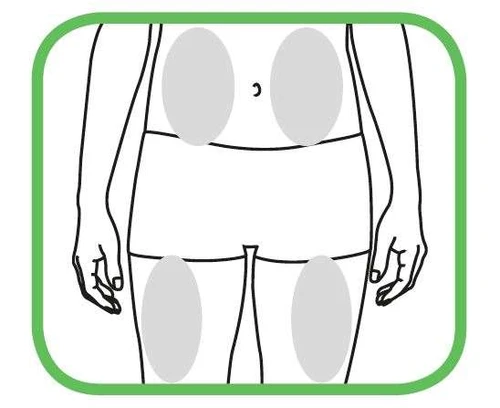
- Each new injection must be administered at a different site from the previous injection.
- Do not inject into areas where the skin is red, bruised, or hard.
- Disinfect the injection site using the alcohol wipe, using circular motions from the inside outward.
- Do not touch this area of skin again before the injection.
3. Injection
- Do not shake the syringe.

Check the medicine inside the syringe.
- Do not use the solution if you notice a change in colour, if it is cloudy, or if you see particles in it.
- Air bubbles may be visible – this is normal. It is not dangerous to inject a solution containing air bubbles subcutaneously.
- Remove the needle cap straight off, taking care not to touch the needle or let it come into contact with any other surface. Do not bend the needle.
- Inject within 5 minutes after removing the needle cap.
- Gently pinch the disinfected area of skin with one hand and hold it firmly.
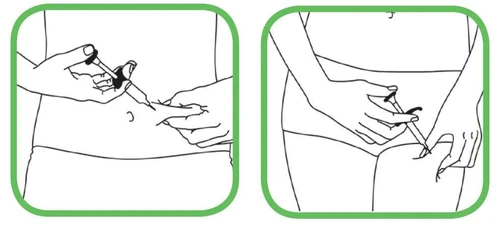
- With the other hand, hold the syringe at a 45° angle to the skin.
- With a quick and firm motion, push the needle completely under the skin.
- Push the plunger to inject the solution. It may take up to 10 seconds to empty the syringe.
- When the syringe is empty, carefully remove the needle from the skin, keeping the same angle as during insertion.
- Release the skin with the other hand.
- Using a piece of gauze, apply gentle pressure to the injection site for a few seconds.
- Do not rub.
- If needed, you may cover the injection site with a small plaster.
4. After use
- Do not reuse the syringe or recap the needle.
- Immediately after injection, dispose of used syringes in a designated container according to the instructions provided by your doctor, nurse, or pharmacist.
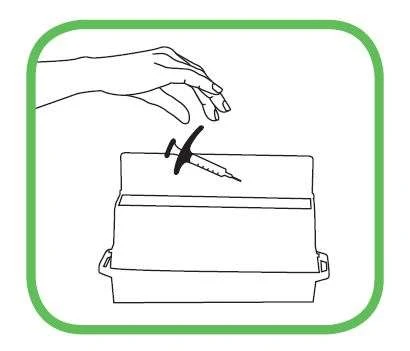
- Keep the container out of sight and reach of children.
- If you need to perform a second injection as prescribed by your doctor, repeat the injection process from point 2.
Patient Information Leaflet: Information for the User
Cimzia 200 mg solution for injection in pre-filled syringe
Pre-filled syringe with needle protection device
certolizumab pegol
Please read this entire leaflet carefully before using this medicine, because it contains
important information for you.
- Keep this leaflet. You may need to read it again.
- If you have any questions, consult your doctor, pharmacist, or nurse.
- This medicine has been prescribed for you only. Do not give it to others, even if their symptoms are the same as yours, as it could be harmful.
- If you experience any adverse reaction, including those not listed in this leaflet, contact your doctor, pharmacist, or nurse. See section 4. Contents of this leaflet:
- What Cimzia is and what it is used for
- What you need to know before using Cimzia
- How Cimzia will be administered
- Possible side effects
- How to store Cimzia
- Contents of the pack and other information Your doctor will also provide you with a Patient Reminder Card containing important safety information that you must be aware of before starting and during treatment with Cimzia. Always carry this Patient Reminder Card with you.
1. What Cimzia is and what it is used for
Cimzia contains the active substance certolizumab pegol, a human antibody fragment. Antibodies are proteins that specifically recognize and bind to other proteins. Cimzia binds to a specific protein called tumor necrosis factor α (TNFα). By binding to TNFα, Cimzia blocks its activity, thereby reducing inflammatory diseases such as rheumatoid arthritis, axial spondyloarthritis, psoriatic arthritis, and psoriasis. Medicines that bind to TNFα are also known as TNF blockers.
Cimzia is used in adults for the following inflammatory conditions:
- Rheumatoid arthritis,
- Axial spondyloarthritis (which includes ankylosing spondylitis and non-radiographic axial spondyloarthritis),
- Psoriatic arthritis,
- Plaque psoriasis.
Rheumatoid arthritis
Cimzia is used to treat rheumatoid arthritis. Rheumatoid arthritis is an inflammatory disease affecting the joints. If you have moderate to severe rheumatoid arthritis, you may first be treated with other medicines, usually methotrexate. If you do not respond adequately to these treatments, Cimzia will be given in combination with methotrexate. If your doctor considers methotrexate inappropriate, Cimzia may be given alone. Cimzia in combination with methotrexate may also be used to treat severe, active, and progressive rheumatoid arthritis without prior treatment with methotrexate or other disease-modifying therapies. When taken in combination with methotrexate, Cimzia is used to:
- reduce the signs and symptoms of the disease,
- slow down joint cartilage and bone damage caused by the disease,
- improve physical function and the ability to perform daily activities.
Ankylosing spondylitis and non-radiographic axial spondyloarthritis
Cimzia is used to treat active, severe ankylosing spondylitis and non-radiographic axial spondyloarthritis (sometimes called non-radiographic axial spondyloarthritis). These are inflammatory diseases of the spine. If you have ankylosing spondylitis or non-radiographic axial spondyloarthritis, you will usually first be treated with other medicines. If you do not respond adequately to these treatments, Cimzia will be given to:
- reduce the signs and symptoms of the disease,
- improve physical function and the ability to perform daily activities.
Psoriatic arthritis
Cimzia is used to treat active psoriatic arthritis. Psoriatic arthritis is an inflammatory joint disease, usually associated with psoriasis. If you have active psoriatic arthritis, you will usually first be treated with other medicines, typically methotrexate. If you do not respond adequately to these treatments, Cimzia will be given in combination with methotrexate to:
- reduce the signs and symptoms of the disease,
- improve physical function and the ability to perform daily activities.
If your doctor considers methotrexate inappropriate, Cimzia may be given alone.
Plaque psoriasis
Cimzia is used to treat moderate to severe plaque psoriasis. Plaque psoriasis is an inflammatory skin disease that may also affect the scalp and nails. Cimzia is used to reduce skin inflammation and other signs and symptoms of the disease.
2. What you should know before taking Cimzia
DO NOT take Cimzia
- If you are ALLERGIC (hypersensitive) to certolizumab pegol or to any of the other ingredients of this medicine (listed in section 6).
- If you have a serious infection, including active TUBERCULOSIS (TB).
- If you have moderate to severe HEART FAILURE. Tell your doctor if you have or have ever had serious heart disease. Warnings and precautions Before starting treatment with Cimzia, tell your doctor if any of the following apply to you: Allergic reactions
- If you develop ALLERGIC REACTIONS such as chest tightness, wheezing, dizziness, swelling, or skin rash, stop using Cimzia and contact your doctor IMMEDIATELY. Some of these reactions may occur after the first dose of Cimzia.
- If you have ever had an allergic reaction to latex. Infections
- If you have had previous episodes of RECURRENT or OPPORTUNISTIC INFECTIONS or other conditions that increase the risk of infections (such as treatment with immunosuppressive medicines, which are drugs that may reduce your ability to fight infections).
- If you currently have an infection, or if you develop symptoms such as fever, sores, fatigue, or dental problems. You may be more likely to develop an infection while being treated with Cimzia, including serious infections or, in rare cases, life-threatening infections.
- Cases of TUBERCULOSIS (TB) have been reported in patients treated with Cimzia; your doctor will carefully evaluate any signs and symptoms of tuberculosis before starting treatment with Cimzia. This will include a thorough medical history, a chest X-ray, and a tuberculin skin test. The results of these tests must be recorded on your Patient Reminder Card. If latent (inactive) tuberculosis is diagnosed, you may be asked to undergo appropriate anti-tuberculosis treatment before starting Cimzia. In rare cases, tuberculosis may develop during therapy even if you have received preventive treatment for tuberculosis. It is very important that you tell your doctor if you have ever had tuberculosis or if you have been in close contact with someone who had tuberculosis. If symptoms of tuberculosis (persistent cough, weight loss, lack of energy, low-grade fever) or any other infection occur during or after treatment with Cimzia, you must contact your doctor immediately.
- If you are at risk, are a carrier, or have an active HEPATITIS B VIRUS (HBV) infection, the use of Cimzia may increase the risk of reactivation of HBV in carriers of this virus. If this happens, you must stop using Cimzia. Your doctor must assess whether you have hepatitis B virus before starting treatment with Cimzia. Heart failure
- If you have mild HEART FAILURE and are being treated with Cimzia, your heart failure must be closely monitored by your doctor. It is important that you tell your doctor if you have had or currently have serious heart disease. If you develop new heart failure or if symptoms of existing heart failure worsen (e.g. shortness of breath or swelling in the feet), you must contact your doctor immediately, who may decide to stop treatment with Cimzia. Cancer
- It is not common, but cases of certain types of CANCER have been reported in patients treated with Cimzia or other TNF blockers. People with more severe rheumatoid arthritis and long-standing disease may have a moderately increased risk of developing a type of cancer affecting the lymphatic system, called lymphoma. If you take Cimzia, your risk of developing lymphomas or other types of cancer may increase. In addition, uncommon cases of non-melanoma skin cancers have been observed in patients taking Cimzia. Tell your doctor if new skin lesions appear during or after treatment with Cimzia, or if existing skin lesions change in appearance.
- In children and adolescents taking TNF blockers, there have been cases of cancer, including uncommon types, which have sometimes been fatal (see below “Children and adolescents”). Other diseases
- Patients with chronic obstructive pulmonary disease (COPD) or who are heavy smokers may be at increased risk of developing cancer after taking Cimzia. If you have chronic obstructive pulmonary disease (COPD) or are a heavy smoker, discuss with your doctor whether starting treatment with a TNF blocker is appropriate.
- If you have a neurological disease, such as multiple sclerosis, your doctor will decide whether you should use Cimzia.
- In some patients, the body may not produce enough blood cells, which help fight infections or stop bleeding. If you develop persistent fever, bruising, easy bleeding, or look very pale, contact your doctor immediately. Your doctor may decide to stop treatment with Cimzia.
- It is not common, but symptoms of a disease called lupus (e.g. persistent skin rash, fever, joint pain, and fatigue) may appear. If you experience these symptoms, contact your doctor. Your doctor may decide to stop treatment with Cimzia.
Vaccinations
- Talk to your doctor if you have been vaccinated or if you need to receive a vaccination. Certain types of vaccines (live vaccines) must not be given while you are being treated with Cimzia.
- Some vaccines may cause infections. If you took Cimzia during pregnancy, your baby may be at higher risk of developing an infection for up to about five months after your last dose during pregnancy. It is important that you inform the doctors caring for your baby and other healthcare providers about your use of Cimzia so they can decide when your baby should be vaccinated. Dental procedures
- Talk to your doctor if you are about to undergo any dental procedure. Inform the surgeon or dentist performing the procedure that you are being treated with Cimzia by showing them your Patient Reminder Card. Children and adolescents Cimzia is not recommended for use in children and adolescents under 18 years of age. Other medicines and Cimzia You MUST NOT take Cimzia if you are using any of the following medicines for the treatment of rheumatoid arthritis:
- anakinra
- abatacept If you have any questions, consult your doctor. Cimzia may be taken together with:
- methotrexate
- corticosteroids, or
- pain medicines including non-steroidal anti-inflammatory drugs (also called NSAIDs). Inform your doctor or pharmacist if you are taking, have recently taken, or might take any other medicines. Pregnancy and breastfeeding If you are pregnant, think you may be pregnant, are planning to become pregnant, or are breastfeeding, ask your doctor or pharmacist for advice before taking this medicine. Cimzia should be used during pregnancy only if strictly necessary. If you are a woman of childbearing age, discuss with your doctor the use of an adequate contraceptive method while using Cimzia. For women who are planning pregnancy, a contraceptive method may be considered for 5 months after the last dose of Cimzia. If you took Cimzia during pregnancy, your baby may be at higher risk of developing an infection. It is important that you inform the doctors caring for your baby and other healthcare providers about your use of Cimzia before vaccinating your baby (for more information, see the section on vaccinations). Cimzia may be used during breastfeeding. Driving and using machines Cimzia may have a minor influence on the ability to drive and use machines. Dizziness (including a sensation of spinning, blurred vision, and fatigue) may occur after taking Cimzia. Cimzia contains sodium acetate and sodium chloride This medicine contains less than 1 mmol of sodium (23 mg) per 400 mg dose, i.e. it is essentially “sodium-free”.
3. How Cimzia will be administered
Cimzia will be administered to you by a doctor or nurse in a hospital or clinic setting.
Rheumatoid arthritis
- The initial dose for adults with rheumatoid arthritis is 400 mg administered at weeks 0, 2, and 4.
- This is followed by a maintenance dose of 200 mg every 2 weeks. If you respond to treatment, your doctor may prescribe an alternative maintenance dose of 400 mg every 4 weeks.
- Methotrexate therapy should be continued during treatment with Cimzia. If your doctor considers methotrexate treatment inappropriate, Cimzia may be given alone.
Axial spondyloarthritis - The initial dose for adults with axial spondyloarthritis is 400 mg administered at weeks 0, 2, and 4.
- This is followed by a maintenance dose of 200 mg every 2 weeks (starting at week 6) or 400 mg every 4 weeks (starting at week 8), as directed by your doctor. If you have been taking Cimzia for at least 1 year and are responding to the medicine, your doctor may prescribe a reduced maintenance dose of 200 mg every 4 weeks.
Psoriatic arthritis - The initial dose for adults with psoriatic arthritis is 400 mg administered at weeks 0, 2, and 4.
- This is followed by a maintenance dose of 200 mg every 2 weeks. If you respond to treatment, your doctor may prescribe an alternative maintenance dose of 400 mg every 4 weeks.
- Methotrexate therapy should be continued during treatment with Cimzia. If your doctor considers methotrexate treatment inappropriate, Cimzia may be given alone.
Plaque psoriasis - The initial dose for adults with plaque psoriasis is 400 mg administered every 2 weeks at weeks 0, 2, and 4.
- This is followed by a maintenance dose of 200 mg every 2 weeks or 400 mg every 2 weeks, as directed by your doctor.
Administration method of Cimzia
Cimzia will normally be administered by a specialist doctor or qualified healthcare professional. Cimzia will be given as a single injection (200 mg dose) or as two injections (400 mg dose) under the skin (subcutaneous use, abbreviated as s.c.). The injection is usually given in the abdomen or thigh. However, avoid injecting in areas where the skin is red, bruised, or hard.
If you are given more Cimzia than you should
Since this medicine will be administered by a doctor or nurse, it is unlikely that you will receive more than the prescribed amount. Always carry your Patient Reminder Card with you.
If you miss a dose of Cimzia
If you forget or miss your appointment for Cimzia administration, schedule another appointment as soon as possible. If you have any questions about the use of Cimzia, consult your doctor, pharmacist, or nurse.
4. Possible side effects
Like all medicines, this medicine can cause side effects, although not everybody gets them.
Contact your doctor IMMEDIATELY if you experience any of the following side effects:
- severe rash, hives, or other signs of allergic reaction (urticaria)
- swelling of the face, hands, or feet (angioedema)
- difficulty breathing or swallowing (these symptoms may have various causes)
- shortness of breath during exertion or at rest (especially when lying down), or swelling in the feet (heart failure)
- symptoms of blood disorders such as persistent fever, bruising, bleeding, or paleness (pancytopenia, anemia, low platelet count, low white blood cell count)
- severe skin rashes. These may appear as reddish spots or circular patches, often with central blisters on the trunk, skin peeling, mouth, throat, nose, genital or eye ulcers, and may be preceded by fever and flu-like symptoms (Stevens-Johnson syndrome)
Contact your doctor AS SOON AS POSSIBLE if you experience any of the following side effects:
- signs of infection such as fever, feeling unwell, wounds, dental problems, or burning during urination
- feeling weak or tired
- cough
- tingling
- numbness
- double vision
- weakness in arms or legs
- swelling or open sores that do not heal
The symptoms described above may be caused by some of the side effects listed below, which have been observed during the use of Cimzia:
Common (may affect up to 1 in 10 people):
- bacterial infections at any site (pus formation)
- viral infections (including common cold, shingles, and influenza)
- fever
- hypertension (high blood pressure)
- rash or itching
- headache (including migraine)
- sensory disturbances such as numbness, tingling, burning sensation
- feeling of weakness and general malaise
- pain
- blood abnormalities
- liver problems
- injection site reactions
- nausea
Uncommon (may affect up to 1 in 100 people):
- allergic reactions including allergic rhinitis and drug allergies (including anaphylactic shock)
- antibodies directed against normal tissue
- blood and lymphatic system tumors such as lymphoma and leukemia
- solid tumors
- skin tumors, pre-cancerous skin lesions
- benign non-cancerous tumors and cysts (including those of the skin)
- heart problems including weakened heart muscle, heart failure, heart attack, chest discomfort or tightness, abnormal heart rhythm including irregular heartbeat
- edema (swelling of the face or legs)
- symptoms (joint pain, rash, photosensitivity, and fever) of lupus (an immune/connective tissue disease)
- inflammation of blood vessels
- sepsis (serious infection that may lead to organ damage, shock, or death)
- tuberculosis
- fungal infections (occur when the ability to fight infections is reduced)
- respiratory disorders and inflammation (including asthma, shortness of breath, cough, sinus congestion, pleurisy, difficulty breathing)
- stomach problems including fluid accumulation in the abdomen, ulcers (including oral ulcers), perforation, bloating, inflammation, heartburn, stomach upset, dry mouth
- bile-related problems
- muscle problems, including increased muscle enzymes
- changes in levels of various salts in the blood
- changes in cholesterol and lipid levels in the blood
- formation of blood clots in veins or lungs
- bleeding or bruising
- changes in blood cell counts, including low red blood cell count (anemia), low platelet count, increased platelet count
- swollen lymph nodes
- flu-like symptoms, chills, altered temperature perception, night sweats, hot flushes
- anxiety and mood disorders such as depression, appetite disturbances, weight changes
- ringing in the ears
- dizziness (vertigo)
- feeling faint, including loss of consciousness
- sensory disturbances in extremities including numbness, tingling, burning sensation, dizziness, tremors
- skin disorders such as new onset or worsening of psoriasis, skin inflammation (such as eczema), sweat gland disorders, ulcers, photosensitivity, acne, hair loss, depigmentation (loss of skin color), nail detachment, dry skin, and wounds
- impaired wound healing
- kidney and urinary problems including reduced kidney function, blood in urine, and urinary disorders
- menstrual cycle disorders including absence of bleeding or heavy or irregular bleeding
- breast disorders
- eye and eyelid inflammation, vision disturbances, tear production problems
- increase in certain blood parameters (elevated blood alkaline phosphatase)
- prolonged clotting times in coagulation tests
Rare (may affect up to 1 in 1000 people):
- gastrointestinal cancer, melanoma
- lung inflammation (interstitial lung disease, pneumonia)
- stroke, blood vessel blockage (arteriosclerosis), poor blood circulation causing numbness and paleness in fingers of hands and feet (Raynaud’s phenomenon), patchy purple discoloration of the skin, small veins near the skin surface becoming visible
- pericarditis (inflammation of the pericardium)
- cardiac arrhythmia
- enlarged spleen
- increased red blood cell mass
- abnormal white blood cell morphology
- gallstone formation
- kidney problems (including nephritis)
- immune disorders such as sarcoidosis (skin rash, joint pain, fever), serum sickness, inflammation of fatty tissue, angioneurotic edema (swelling of lips, face, throat)
- thyroid disorders (goiter, fatigue, weight loss)
- increased iron levels in the body
- increased uric acid levels in the blood
- suicide attempt, mental confusion, delirium
- inflammation of auditory, optic, or facial nerves, decreased coordination or balance
- increased gastrointestinal motility
- fistula (abnormal passage between organs) (at any site)
- oral cavity disorders including pain or swelling
- skin peeling, blister formation, changes in hair structure
- sexual dysfunction
- epileptic seizure
- worsening of a condition called dermatomyositis (characterized by skin rash accompanied by muscle weakness)
- Stevens-Johnson syndrome (a serious skin condition including early symptoms such as malaise, fever, headache, and rash)
- inflammatory skin rash (erythema multiforme)
- lichenoid reactions (itchy reddish/violet rash and/or whitish-grey thread-like lines on mucous membranes)
Not known (frequency cannot be determined from available data):
- multiple sclerosis*
- Guillain-Barré syndrome*
- Merkel cell carcinoma (a type of skin cancer)*
- Kaposi’s sarcoma (a rare cancer associated with human herpesvirus 8 infection; Kaposi’s sarcoma typically presents with purple skin lesions)*
*These events have been associated with this class of medicines, but the incidence with Cimzia is not known.
Other side effects
When Cimzia has been used to treat other conditions, the following uncommon side effects have occurred:
- gastrointestinal stenosis (narrowing of part of the digestive tract)
- gastrointestinal obstruction (blockage of the digestive tract)
- worsening of general health condition
- spontaneous abortion
- azoospermia (lack of sperm production)
Reporting of side effects
If you experience any side effect, including those not listed in this leaflet, talk to your doctor, pharmacist, or nurse. You can also report side effects directly via the national reporting system detailed in Annex V. By reporting side effects, you can help provide more information on the safety of this medicine.
5. How to store Cimzia
Keep this medicine out of the sight and reach of children.
Do not use this medicine after the expiry date stated on the carton and on the syringe after
Exp. or EXP. The expiry date refers to the last day of that month.
Store in a refrigerator (2°C - 8°C).
Do not freeze.
Keep the pre-filled syringe in the outer packaging to protect the medicine from light.
Pre-filled syringes may be stored at room temperature (up to 25°C), protected from light, for a single period not exceeding 10 days. After this period, pre-filled syringes must be used or discarded.
Do not use this medicine if the solution has changed colour, is cloudy, or if you notice particles in it.
Do not dispose of medicines via wastewater or household waste. Ask your pharmacist how to dispose of medicines no longer in use. This will help protect the environment.
6. Package contents and other information
What Cimzia contains
- The active substance is certolizumab pegol. Each pre-filled syringe contains 200 mg of certolizumab pegol in one mL.
- The other components are: sodium acetate, sodium chloride and water for injections (see “Cimzia contains sodium acetate and sodium chloride” in section 2).
Description of the appearance of Cimzia and package contents
Cimzia is supplied as an injectable solution in a ready-to-use pre-filled syringe. The solution is from clear to opalescent, colourless to yellow. A package of Cimzia contains:
- two pre-filled syringes of solution with needle protection device, and
- two alcohol-impregnated wipes (for disinfecting the skin at the injection site).
Pack size: 2 pre-filled syringes and 2 alcohol-impregnated wipes.
Marketing Authorisation Holder
UCB Pharma S.A.
Allée de la Recherche 60
B-1070 Brussels
Belgium
Manufacturer
UCB Pharma S.A.
Chemin du Foriest
B-1420 Braine l’Alleud
Belgium
For further information about this medicinal product, please contact the local representative of the Marketing Authorisation Holder:
België/Belgique/Belgien
Lietuva
UCB Pharma S.A./NV
UCB Pharma Oy Finland
Tel/Tél: +32/(0)2 559 92 00
Tel: +358 9 2514 4221 (Suomija)
България
Luxembourg/Luxemburg
Ю СИ БИ България ЕООД
UCB Pharma S.A./NV
Tel: +359 (0)2 962 30 49
Tél/Tel: +32/(0)2 559 92 00 (Belgique/Belgien)
Česká republika
Magyarország
UCB s.r.o.
UCB Magyarország Kft.
Tel: +420 221 773 411
Tel: +36-(1) 391 0060
Danmark
Malta
UCB Nordic A/S
Pharmasud Ltd.
Tlf: +45 32 46 24 00
Tel: +356 21 37 64 36
Deutschland
Nederland
UCB Pharma GmbH
UCB Pharma B.V.
Tel: +49/(0)2173 48 4848
Tel: +31/(0)76-573 11 40
Eesti
Norge
UCB Pharma Oy Finland
UCB Nordic A/S
Tel: +358 9 2514 4221 (Soome)
Tlf: +47 67 16 5880
Ελλάδα
Österreich
UCB Α.Ε.
UCB Pharma GmbH
Τηλ: +30 2109974000
Tel: +43-(0)1 291 80 00
España
Polska
UCB Pharma S.A.
UCB Pharma Sp. z o.o. / VEDIM Sp. z o.o.
Tel: +34 91 570 34 44
Tel: +48 22 696 99 20
France
Portugal
UCB Pharma S.A.
UCB Pharma (Produtos Farmacêuticos), Lda
Tél: +33/(0)1 47 29 44 35
Tel: +351 21 302 5300
Hrvatska
România
Medis Adria d.o.o.
UCB Pharma Romania S.R.L.
Tel: +385 (0)1 230 34 46
Tel: +40 21 300 29 04
Ireland
Slovenija
UCB (Pharma) Ireland Ltd.
Medis, d.o.o.
Tel: +353 (0)1-4637 395
Tel: +386 1 589 69 00
Ísland
Slovenská republika
UCB Nordic A/S
UCB s.r.o., organizačná zložka
Sími: +45 32 46 24 00
Tel: +421 (0)2 5920 2020
Italia
Suomi/Finland
UCB Pharma S.p.A.
UCB Pharma Oy Finland
Tel: +39 02 300 791
Puh/Tel: +358 9 2514 422
Κύπρος
Sverige
Lifepharma (Z.A.M.) Ltd
UCB Nordic A/S
Τηλ: +357 22 056300
Tel: +46 (0)40 29 49 00
Latvija
UCB Pharma Oy Finland
Tel: +358 9 2514 4221
Other sources of information
More detailed information on this medicinal product is available on the website of the European Medicines Agency: http://www.ema.europa.eu.
The following information is intended for healthcare professionals only:
INSTRUCTIONS FOR USE FOR THE PREPARATION AND ADMINISTRATION OF CIMZIA
USING THE PRE-FILLED SYRINGE WITH NEEDLE GUARD DEVICE
The following instructions explain how to inject Cimzia. Read the instructions carefully and follow them step by step.
This injection must not be mixed with any other medicine in the same syringe.
Below is a diagram of the pre-filled syringe with needle guard device:
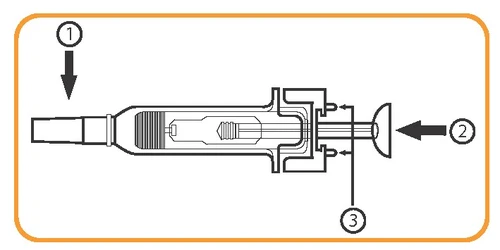
Figure 1
1: Needle cap
2: Plunger head
3: Needle guard activation clip
For each injection, you will need:
- 1 pre-filled syringe with needle guard device
- 1 alcohol wipe
1. Preparation
- Remove the Cimzia package from the refrigerator.
- If the seal is missing or damaged - do not use the contents and contact your pharmacist.
- Remove the following items from the Cimzia package and place them on a clean, flat surface:
- One or two prefilled syringes, depending on your prescribed dose
- One or two alcohol wipes
- Check the expiry date on the package and on the tray. Do not use Cimzia after the expiry date stated on the package and tray after Exp. The expiry date refers to the last day of the month indicated.
- Allow the prefilled syringe to reach room temperature. This will take approximately 30 minutes. This helps reduce discomfort during injection.
- Do not heat the prefilled syringe – let it warm to room temperature on its own.
- Remove the prefilled syringe from the tray by holding the body of the syringe as shown in Figure 2. DO NOT touch the needle guard activation clips (indicated as 3 in Figure 1) when removing the syringe (as shown in Figure 3) to avoid premature covering of the needle by the needle guard.
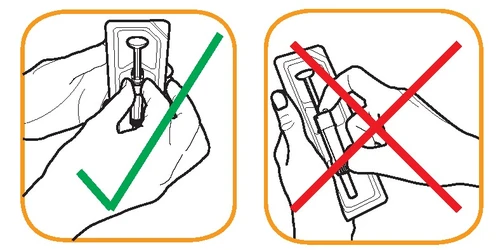
Figure 2 Figure 3
- Do not use the syringe if it has been dropped while still in its packaging.
- Do not remove the needle cap until you are ready to administer the injection.
- Wash your hands thoroughly.
2. Choosing and preparing the injection site
- Choose a spot on the thigh or abdomen.
- Each new injection must be administered at a different site from the previous injection.
- Do not inject into areas where the skin is red, bruised, or hard.
- Disinfect the injection site using the alcohol swab, using circular motions from the inside outward.
- Do not touch this area of skin again before the injection.
- Do not inject until the skin is completely dry.
3. Injection
- Do not shake the syringe.

Check the medicine inside the syringe.
- Do not use the solution if you notice any change in colour, if it is cloudy, or if you see particles in it.
- You may see air bubbles – this is normal. It is not dangerous to inject the solution subcutaneously with air bubbles.
- Remove the needle cap by pulling it straight off. Be careful not to touch the needle or let it come into contact with any other surface. DO NOT touch the activation clips of the needle safety device (shown as 3 in Figure 1) to avoid premature covering of the needle by the safety device.
- Inject within 5 minutes after removing the needle cap.
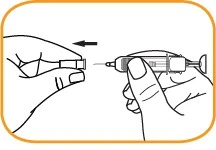
- Gently pinch the disinfected area of skin with one hand and hold it firmly.
- With the other hand, hold the syringe at a 45° angle to the skin.
- With a quick and firm motion, push the needle completely under the skin.
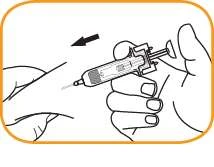
- Release the skin with the other hand.
- Push the plunger head all the way down until the entire dose has been administered and the plunger head is between the activation clips of the needle safety device. It may take up to 10 seconds to empty the syringe.
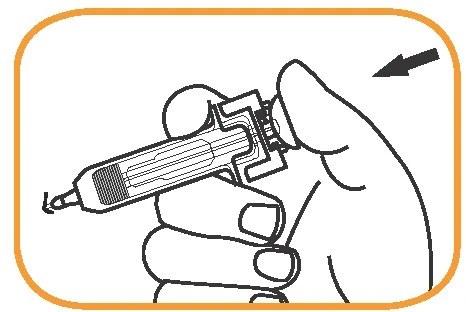
- When the syringe is empty, carefully remove the needle from the skin, maintaining the same angle used for insertion.
- Remove your thumb from the plunger head. The empty syringe and needle will automatically move backward into the safety device housing and lock in place.
- The needle safety device will not activate until the full dose has been injected.
- Use a piece of gauze to apply light pressure to the injection site for a few seconds:
- Do not rub the injection site.
- If needed, you may cover the injection site with a small plaster.
4. After use
- Do not reuse the syringe.
- Unused medicine and waste material from this medicine must be disposed of in accordance with local regulations.
- If a second injection is required as prescribed by your doctor, repeat the injection process from step 2.
Package leaflet: Information for the user
Cimzia 200 mg solution for injection in a pre-filled pen
certolizumab pegol
Please read this entire leaflet carefully before taking this medicine, as it contains important information for you.
- Keep this leaflet. You may need to read it again.
- If you have any questions, ask your doctor, pharmacist, or nurse.
- This medicine has been prescribed for you only. Do not give it to others, even if they have the same symptoms as you, because it could be harmful.
- If you experience any side effects, including those not listed in this leaflet, contact your doctor, pharmacist, or nurse. See section 4. Contents of this leaflet:
- What Cimzia is and what it is used for
- What you need to know before taking Cimzia
- How to take Cimzia
- Possible side effects
- How to store Cimzia
- Contents of the pack and other information
Your doctor will also provide you with a Patient Reminder Card containing important safety information that you must be aware of before starting and during treatment with Cimzia. Always carry this Patient Reminder Card with you.
1. What Cimzia is and what it is used for
Cimzia contains the active substance certolizumab pegol, a human antibody fragment.
Antibodies are proteins that specifically recognize and bind to other proteins. Cimzia binds to a
specific protein called tumour necrosis factor α (TNFα). By binding to TNFα, Cimzia blocks its activity, thereby reducing inflammatory diseases such as rheumatoid arthritis, axial spondyloarthritis, psoriatic arthritis, and psoriasis. Medicines that bind to TNFα are also known as TNF blockers.
Cimzia is used in adults for the following inflammatory conditions:
- rheumatoid arthritis,
- axial spondyloarthritis (which includes ankylosing spondylitis and non-radiographic axial spondyloarthritis),
- psoriatic arthritis,
- plaque psoriasis.
Rheumatoid arthritis
Cimzia is used to treat rheumatoid arthritis. Rheumatoid arthritis is an inflammatory disease of the joints. If you have moderate to severe rheumatoid arthritis, you may first be given other medicines, usually methotrexate. If you do not respond adequately to these medicines, Cimzia will be given in combination with methotrexate to treat your rheumatoid arthritis. If your doctor considers methotrexate to be inappropriate, Cimzia may be given alone. Cimzia in combination with methotrexate may also be used to treat severe, active and progressive rheumatoid arthritis without prior treatment with methotrexate or other disease-modifying therapies. Cimzia, taken in combination with methotrexate, is used to:
- reduce the signs and symptoms of the disease,
- slow down joint cartilage and bone damage caused by the disease,
- improve physical function and ability to perform daily activities.
Ankylosing spondylitis and non-radiographic axial spondyloarthritis
Cimzia is used to treat active, severe ankylosing spondylitis and non-radiographic axial spondyloarthritis (sometimes called non-radiographic axial spondyloarthritis). These are inflammatory diseases of the spine. If you have ankylosing spondylitis or non-radiographic axial spondyloarthritis, you will first be given other medicines. If you do not respond adequately to these treatments, Cimzia will be given to:
- reduce the signs and symptoms of the disease,
- improve physical function and ability to perform daily activities.
Psoriatic arthritis
Cimzia is used to treat active psoriatic arthritis. Psoriatic arthritis is an inflammatory joint disease, usually associated with psoriasis. If you have active psoriatic arthritis, you will first be given other medicines, usually methotrexate. If you do not respond adequately to these medicines, Cimzia will be given in combination with methotrexate to:
- reduce the signs and symptoms of the disease,
- improve physical function and ability to perform daily activities.
If your doctor considers methotrexate to be inappropriate, Cimzia may be given alone.
Plaque psoriasis
Cimzia is used to treat moderate to severe plaque psoriasis. Plaque psoriasis is an inflammatory skin disease, which may also affect the scalp and nails. Cimzia is used to reduce skin inflammation and other signs and symptoms of the disease.
2. What you should know before taking Cimzia
DO NOT take Cimzia
- If you are ALLERGIC (hypersensitive) to certolizumab pegol or to any of the other ingredients of this medicine (listed in section 6).
- If you have a serious infection, including active TUBERCULOSIS (TB).
- If you have moderate to severe HEART FAILURE. Tell your doctor if you have or have had serious heart disease. Warnings and precautions Before treatment with Cimzia, tell your doctor if any of the following apply to you: Allergic reactions
- If you develop ALLERGIC REACTIONS such as chest tightness, wheezing, dizziness, swelling or rash, stop using Cimzia and contact your doctor IMMEDIATELY. Some of these reactions may occur after the first dose of Cimzia.
- If you have ever had an allergic reaction to latex. Infections
- If you have had previous episodes of RECURRENT OR OPPORTUNISTIC INFECTIONS or other conditions that increase the risk of infections (for example, treatment with immunosuppressive medicines, which are drugs that may reduce your ability to fight infections).
- If you have an infection, or if you develop symptoms such as fever, sores, fatigue or dental problems. You may be more likely to develop an infection while being treated with Cimzia, including serious infections or, in rare cases, life-threatening infections.
- Cases of TUBERCULOSIS (TB) have been reported in patients treated with Cimzia; your doctor will carefully evaluate any signs and symptoms of tuberculosis before starting treatment with Cimzia. This will include a thorough medical history, a chest X-ray and a tuberculin skin test. The results of these tests must be recorded on your Patient Reminder Card. If latent (inactive) tuberculosis is diagnosed, you may be asked to undergo appropriate anti-tuberculosis treatment before starting Cimzia. In rare cases, tuberculosis may develop during therapy even if you received preventive treatment for tuberculosis. It is very important that you tell your doctor if you have ever had tuberculosis or if you have been in close contact with someone who had tuberculosis. If symptoms of tuberculosis (persistent cough, weight loss, lack of energy, low-grade fever) or any other infection occur during or after treatment with Cimzia, you must contact your doctor immediately.
- If you are at risk, are a carrier, or have an active HEPATITIS B VIRUS (HBV) infection, using Cimzia may increase the risk of HBV reactivation in carriers of this virus. If this happens, you must stop using Cimzia. Your doctor must check whether you have hepatitis B virus before starting treatment with Cimzia. Heart failure
- If you have mild HEART FAILURE and are being treated with Cimzia, your heart failure must be closely monitored by your doctor. It is important that you tell your doctor if you have had or currently have serious heart disease. If you develop new heart failure or worsening symptoms of existing heart failure (e.g. shortness of breath or swelling in the feet), contact your doctor immediately, who may decide to stop treatment with Cimzia. Cancer
- It is not common, but cases of certain types of CANCER have been reported in patients treated with Cimzia or other TNF blockers. People with more severe rheumatoid arthritis and who have had the disease for a long time may have a moderately increased risk of developing a type of cancer affecting the lymphatic system, called lymphoma. If you take Cimzia, your risk of developing lymphomas or other types of cancer may increase. In addition, non-common cases of non-melanoma skin cancers have been observed in patients taking Cimzia. Tell your doctor if new skin lesions appear or if existing skin lesions change in appearance during or after treatment with Cimzia.
- In children and adolescents taking TNF blockers, cases of cancer, including uncommon types, some of which have been fatal, have occurred (see below “Children and adolescents”). Other diseases
- Patients with chronic obstructive pulmonary disease (COPD) or who are heavy smokers may be at increased risk of developing cancer following treatment with Cimzia. If you have chronic obstructive pulmonary disease (COPD) or are a heavy smoker, discuss with your doctor whether starting treatment with a TNF blocker is appropriate.
- If you suffer from a neurological disease, such as multiple sclerosis, your doctor will decide whether you should use Cimzia.
- In some patients, the body may not produce enough blood cells, which help fight infections or stop bleeding. If you develop persistent fever, bruising, easy bleeding or look very pale, contact your doctor immediately. Your doctor may decide to stop treatment with Cimzia.
- It is not common, but symptoms of a disease called lupus (e.g. persistent rash, fever, joint pain and fatigue) may occur. If you experience these symptoms, contact your doctor. Your doctor may decide to stop treatment with Cimzia.
Vaccinations
- Talk to your doctor if you have been vaccinated or if you need to receive a vaccination. You should not be given certain types of vaccines (live vaccines) while being treated with Cimzia.
- Some vaccines may cause infections. If you took Cimzia during pregnancy, your baby may be at higher risk of infection for up to about five months after your last dose during pregnancy. It is important that you inform the doctors caring for your baby and other healthcare providers about your use of Cimzia so they can decide when your baby should be vaccinated. Dental procedures
- Talk to your doctor if you are about to undergo any dental procedure. Inform the surgeon or dentist performing the procedure that you are being treated with Cimzia by showing your Patient Reminder Card. Children and adolescents Cimzia is not recommended for use in children and adolescents under 18 years of age. Other medicines and Cimzia DO NOT take Cimzia if you are using any of the following medicines used to treat rheumatoid arthritis:
- anakinra
- abatacept If you have any questions, speak to your doctor. Cimzia may be taken together with:
- methotrexate
- corticosteroids, or
- pain medicines including non-steroidal anti-inflammatory drugs (also called NSAIDs). Tell your doctor or pharmacist if you are taking, have recently taken or might take any other medicines. Pregnancy and breastfeeding If you are pregnant, think you may be pregnant or are planning to become pregnant, or if you are breastfeeding, ask your doctor or pharmacist for advice before taking this medicine. Cimzia should be used during pregnancy only if clearly necessary. If you are a woman of childbearing potential, discuss with your doctor the use of an effective contraceptive method while using Cimzia. For women who are planning pregnancy, an effective contraceptive method may be considered for 5 months after the last dose of Cimzia. If you took Cimzia during pregnancy, your baby may be at higher risk of infection. It is important that you inform the doctors caring for your baby and other healthcare providers about your use of Cimzia before your baby is vaccinated (for more information, see the vaccination section). Cimzia may be used during breastfeeding. Driving and using machines Cimzia may have a slight influence on the ability to drive and use machines. Dizziness (including a sensation of room spinning, blurred vision and fatigue) may occur after taking Cimzia. Cimzia contains sodium acetate and sodium chloride This medicine contains less than 1 mmol of sodium (23 mg) per 400 mg, i.e. is essentially “sodium-free”.
3. How to take Cimzia
Take this medicine exactly as directed by your doctor or pharmacist. If you have any doubts, consult your doctor or pharmacist.
Rheumatoid arthritis
- The initial dose for adults with rheumatoid arthritis is 400 mg administered at weeks 0, 2, and 4.
- This is followed by a maintenance dose of 200 mg every 2 weeks. If you respond to treatment, your doctor may prescribe an alternative maintenance dose of 400 mg every 4 weeks.
- Methotrexate therapy should be continued during treatment with Cimzia. If your doctor considers methotrexate treatment inappropriate, Cimzia may be given alone.
Axial spondyloarthritis
- The initial dose for adults with axial spondyloarthritis is 400 mg administered at weeks 0, 2, and 4.
- This is followed by a maintenance dose of 200 mg every 2 weeks (starting at week 6) or 400 mg every 4 weeks (starting at week 8), as directed by your doctor. If you have been taking Cimzia for at least 1 year and are responding to the medicine, your doctor may prescribe a reduced maintenance dose of 200 mg every 4 weeks.
Psoriatic arthritis
- The initial dose for adults with psoriatic arthritis is 400 mg administered at weeks 0, 2, and 4.
- This is followed by a maintenance dose of 200 mg every 2 weeks. If you respond to treatment, your doctor may prescribe an alternative maintenance dose of 400 mg every 4 weeks.
- Methotrexate therapy should be continued during treatment with Cimzia. If your doctor considers methotrexate treatment inappropriate, Cimzia may be given alone.
Plaque psoriasis
- The initial dose for adults with plaque psoriasis is 400 mg administered every 2 weeks at weeks 0, 2, and 4.
- This is followed by a maintenance dose of 200 mg every 2 weeks or 400 mg every 2 weeks, as directed by your doctor.
Administration method for Cimzia
Cimzia is normally administered by a specialist doctor or qualified healthcare professional. Cimzia will be given as a single injection (200 mg dose) or two injections (400 mg dose) under the skin (subcutaneous use, abbreviated: s.c.). The injection is usually given in the abdomen or thigh. However, do not inject into an area where the skin is red, bruised, or hard.
Instructions for self-injection of Cimzia
After appropriate training, your doctor may allow you to self-inject Cimzia. Read the instructions on how to inject Cimzia provided at the end of this leaflet. If your doctor has allowed you to self-inject Cimzia, you must consult your doctor before continuing self-injection:
- after 12 weeks in the case of rheumatoid arthritis, axial spondyloarthritis, or psoriatic arthritis, or
- after 16 weeks in the case of plaque psoriasis.
This will allow your doctor to assess whether Cimzia is working for you or whether another treatment should be considered.
If you take more Cimzia than you should
If your doctor has allowed you to self-inject Cimzia and you accidentally administer it more frequently than prescribed, inform your doctor. Always carry your Patient Reminder Card and the outer packaging of Cimzia with you, even if it is empty.
If you forget to take Cimzia
If your doctor has allowed you to self-inject Cimzia and you accidentally forget to inject it, administer the next dose as soon as you remember. Then continue with the following doses as instructed. Contact your doctor and follow their instructions for subsequent doses.
If you stop taking Cimzia
Do not stop using Cimzia without first talking to your doctor.
If you have any questions about the use of Cimzia, consult your doctor, pharmacist, or nurse.
4. Possible side effects
Like all medicines, this medicine can cause side effects, although not everybody gets them.
Contact your doctor IMMEDIATELY if you experience any of the following side effects:
- severe rash, hives, or other signs of allergic reaction (urticaria)
- swelling of the face, hands, or feet (angioedema)
- difficulty breathing or swallowing (these symptoms may have various causes)
- shortness of breath during exertion or at rest (especially when lying down), or swelling in the feet (heart failure)
- symptoms of blood disorders such as persistent fever, bruising, bleeding, or paleness (pancytopenia, anemia, low platelet count, low white blood cell count)
- severe skin rashes. These may present as reddish spots or circular patches, often with central blisters on the trunk, skin peeling, mouth ulcers, or sores in the throat, nose, genitals, and eyes, and may be preceded by fever and flu-like symptoms (Stevens-Johnson syndrome)
Contact your doctor AS SOON AS POSSIBLE if you experience any of the following side effects:
- signs of infection such as fever, malaise, wounds, dental problems, or burning sensation when urinating
- feeling weak or tired
- cough
- tingling
- numbness
- double vision
- weakness in arms or legs
- swelling or open sores that do not heal
The symptoms described above may be caused by some of the side effects listed below, which have been observed during the use of Cimzia:
Common (may affect up to 1 in 10 people):
- bacterial infections at any site (pus formation)
- viral infections (including common cold, shingles, and influenza)
- fever
- hypertension (high blood pressure)
- skin rash or itching
- sensory disturbances such as numbness, tingling, or burning sensations
- feeling of weakness and general malaise
- pain
- blood abnormalities
- liver problems
- injection site reactions
- nausea
Uncommon (may affect up to 1 in 100 people):
- allergic reactions, including allergic rhinitis and drug allergies (including anaphylactic shock)
- antibodies directed against normal tissue
- blood and lymphatic system tumors such as lymphoma and leukemia
- solid tumors
- skin tumors, precancerous skin lesions
- benign, non-cancerous tumors and cysts (including those of the skin)
- heart problems including weakening of the heart muscle, heart failure, heart attack, chest discomfort or tightness, abnormal heart rhythms including irregular heartbeat
- edema (swelling of the face or legs)
- symptoms (joint pain, rash, photosensitivity, and fever) of lupus (an immune/connective tissue disease)
- inflammation of blood vessels
- sepsis (serious infection that may lead to organ damage, shock, or death)
- tuberculosis
- fungal infections (occur when the ability to fight infections is reduced)
- respiratory disorders and inflammation (including asthma, shortness of breath, cough, sinus congestion, pleuritis, difficulty breathing)
- stomach problems including fluid accumulation in the abdomen, ulcers (including oral ulcers), perforation, distension, inflammation, heartburn, stomach discomfort, dry mouth
- bile-related problems
- muscle problems, including increased muscle enzymes
- changes in levels of various salts in the blood
- changes in cholesterol and lipid levels in the blood
- formation of blood clots in veins or lungs
- bleeding or bruising
- changes in blood cell counts, including low red blood cell count (anemia), low platelet count, increased platelet count
- swollen lymph nodes
- flu-like symptoms, chills, altered temperature perception, night sweats, hot flushes
- anxiety and mood disorders such as depression, appetite disturbances, weight changes
- ringing in the ears
- dizziness (vertigo)
- feeling faint, including loss of consciousness
- sensory disturbances in the extremities including numbness, tingling, burning sensations, dizziness, tremors
- skin disorders such as new onset or worsening of psoriasis, skin inflammation (e.g., eczema), sweat gland disorders, ulcers, photosensitivity, acne, hair loss, depigmentation (loss of skin color), nail separation, dry skin, and wounds
- impaired wound healing
- kidney and urinary problems including reduced kidney function, blood in urine, and urinary disorders
- menstrual cycle disorders including absence of bleeding or heavy or irregular bleeding
- breast disorders
- eye and eyelid inflammation, vision disturbances, tear production problems
- increase in certain blood parameters (elevated blood alkaline phosphatase)
- prolonged coagulation test times
Rare (may affect up to 1 in 1,000 people):
- gastrointestinal cancer, melanoma
- lung inflammation (interstitial lung disease, pneumonia)
- stroke, blood vessel blockage (arteriosclerosis), poor blood circulation causing numbness and paleness in fingers and toes (Raynaud's phenomenon), mottled purple skin discoloration, visible small veins near the skin surface
- pericarditis (inflammation of the pericardium)
- cardiac arrhythmia
- enlarged spleen
- increased red blood cell mass
- abnormal white blood cell morphology
- gallstone formation
- kidney problems (including nephritis)
- immune disorders such as sarcoidosis (skin rash, joint pain, fever), serum sickness, inflammation of fatty tissue, angioneurotic edema (swelling of lips, face, throat)
- thyroid disorders (goiter, fatigue, weight loss)
- increased iron levels in the body
- increased uric acid levels in the blood
- suicidal attempt, mental confusion, delirium
- inflammation of auditory, optic, or facial nerves, decreased coordination or balance
- increased gastrointestinal motility
- fistula (an abnormal passage connecting organs) (any site)
- oral cavity disorders including pain or swelling
- skin peeling, blister formation, changes in hair structure
- sexual dysfunction
- epileptic seizure
- worsening of a condition called dermatomyositis (characterized by skin rash and muscle weakness)
- Stevens-Johnson syndrome (a serious skin condition with early symptoms including malaise, fever, headache, and rash)
- inflammatory skin rash (erythema multiforme)
- lichenoid reactions (reddish/violaceous itchy rash and/or white-grey thread-like lines on mucous membranes)
Not known (frequency cannot be estimated from available data):
- multiple sclerosis*
- Guillain-Barré syndrome*
- Merkel cell carcinoma (a type of skin cancer)*
- Kaposi's sarcoma (a rare cancer associated with human herpesvirus 8 infection; Kaposi's sarcoma typically presents with purple skin lesions)*
*These events have been associated with this class of medicines, but their incidence with Cimzia is unknown.
Other side effects
When Cimzia has been used to treat other conditions, the following uncommon side effects have been observed:
- gastrointestinal stenosis (narrowing of part of the digestive tract)
- gastrointestinal obstruction (blockage of the digestive tract)
- worsening of general health condition
- spontaneous abortion
- azoospermia (lack of sperm production)
Reporting of side effects
If you experience any side effect, including those not listed in this leaflet, please inform your doctor, pharmacist, or nurse. You can also report side effects directly via the national reporting system listed in Annex V. By reporting side effects, you can help provide more information on the safety of this medicine.
5. How to store Cimzia
Keep this medicine out of the sight and reach of children.
Do not use this medicine after the expiry date stated on the carton and on the prefilled pen after
Exp. or EXP. The expiry date refers to the last day of that month.
Store in a refrigerator (2°C - 8°C).
Do not freeze.
Keep the prefilled pen in the outer packaging to protect the medicine from light.
Prefilled pens may be stored at room temperature (up to 25°C), protected from light, for a single period not exceeding 10 days. After this period, the prefilled pens must be used or discarded.
Do not use this medicine if the solution has changed colour, become cloudy, or if you notice particles in it.
Do not dispose of any medicine via wastewater or household waste. Ask your pharmacist how to dispose of medicines no longer required. This will help protect the environment.
6. Package contents and other information
What Cimzia contains
- The active substance is certolizumab pegol. Each pre-filled pen contains 200 mg of certolizumab pegol in one mL.
- The other components are: sodium acetate, sodium chloride and water for injections (see “Cimzia contains sodium acetate and sodium chloride” in section 2).
Description of the appearance of Cimzia and contents of the pack
Cimzia is supplied as an injectable solution in a ready-to-use pre-filled pen (AutoClicks). The solution is from clear to opalescent, from colourless to yellow. A Cimzia pack contains:
- two pre-filled AutoClicks pens with solution, and
- two alcohol swabs (for disinfecting the skin at the injection site).
Packs containing 2 pre-filled pens and 2 alcohol swabs, multiple packs containing 6 (3 packs of 2) pre-filled pens and 6 (3 packs of 2) alcohol swabs, and multiple packs containing 10 (5 packs of 2) pre-filled pens and 10 (5 packs of 2) alcohol swabs are available. Not all pack sizes may be marketed.
Marketing Authorisation Holder
UCB Pharma S.A.
Allée de la Recherche 60
B-1070 Brussels
Belgium
Manufacturer
UCB Pharma S.A.
Chemin du Foriest
B-1420 Braine l’Alleud
Belgium
For further information about this medicinal product, please contact the local representative of the Marketing Authorisation Holder:
België/Belgique/Belgien
UCB Pharma S.A./NV
Tel/Tél: + 32 / (0)2 559 92 00
Lietuva
UCB Pharma Oy Finland
Tel: + 358 9 2514 4221 (Suomija)
България
Ю СИ БИ България ЕООД
Teл.: + 359 (0) 2 962 30 49
Luxembourg/Luxemburg
UCB Pharma S.A./NV
Tél/Tel: + 32 / (0)2 559 92 00 (Belgique/Belgien)
Česká republika
UCB s.r.o.
Tel: + 420 221 773 411
Magyarország
UCB Magyarország Kft.
Tel.: + 36-(1) 391 0060
Danmark
UCB Nordic A/S
Tlf.: + 45 / 32 46 24 00
Malta
Pharmasud Ltd.
Tel: + 356 / 21 37 64 36
Deutschland
UCB Pharma GmbH
Tel: + 49 /(0) 2173 48 4848
Nederland
UCB Pharma B.V.
Tel.: + 31 / (0)76-573 11 40
Eesti
UCB Pharma Oy Finland
Tel: + 358 9 2514 4221 (Soome)
Norge
UCB Nordic A/S
Tlf: + 47 / 67 16 5880
Ελλάδα
UCB Α.Ε.
Τηλ: + 30 / 2109974000
Österreich
UCB Pharma GmbH
Tel: + 43-(0)1 291 80 00
España
UCB Pharma S.A.
Tel: + 34 / 91 570 34 44
Polska
UCB Pharma Sp. z o.o. / VEDIM Sp. z o.o.
Tel.: + 48 22 696 99 20
France
UCB Pharma S.A.
Tél: + 33 / (0)1 47 29 44 35
Portugal
UCB Pharma (Produtos Farmacêuticos), Lda
Tel: + 351 / 21 302 5300
Hrvatska
Medis Adria d.o.o.
Tel: +385 (0) 1 230 34 46
România
UCB Pharma Romania S.R.L.
Tel: + 40 21 300 29 04
Ireland
UCB (Pharma) Ireland Ltd.
Tel: + 353 / (0)1-46 37 395
Slovenija
Medis, d.o.o.
Tel: + 386 1 589 69 00
Ísland
UCB Nordic A/S
Sími: + 45 / 32 46 24 00
Slovenská republika
UCB s.r.o., organizačná zložka
Tel: + 421 (0) 2 5920 2020
Italia
UCB Pharma S.p.A.
Tel: + 39 / 02 300 791
Suomi/Finland
UCB Pharma Oy Finland
Puh/Tel: + 358 9 2514 422
Κύπρος
Lifepharma (Z.A.M.) Ltd
Τηλ: + 357 22 056300
Sverige
UCB Nordic A/S
Tel: + 46 / (0) 40 29 49 00
Latvija
UCB Pharma Oy Finland
Tel: + 358 9 2514 4221
Other sources of information
More detailed information on this medicinal product is available on the European Medicines Agency website: http://www.ema.europa.eu.
INSTRUCTIONS FOR USE: PREPARATION AND ADMINISTRATION OF CIMZIA USING THE PRE-FILLED PEN
After appropriate training, the injection may be self-administered or administered by another person, for example a family member or friend. The following instructions explain how to use the pre-filled pen (AutoClicks) to inject Cimzia. Read the instructions carefully and follow them step by step. You will receive instructions on the self-injection technique from your doctor or a qualified healthcare professional. Do not attempt to self-inject the medicine until you are sure you fully understand how to prepare and administer the injection.
Below is a diagram of the pre-filled AutoClicks pen.
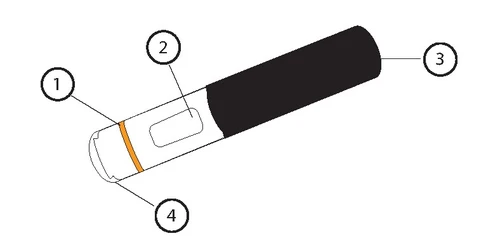
1: Orange-coloured band
2: Observation window
3: Black-coloured grip
4: Transparent cap
1. Preparation
- Remove the Cimzia package from the refrigerator.
- If the seal is missing or damaged – do not use the contents and contact your pharmacist.
- Remove the following items from the Cimzia package and place them on a clean, flat surface:
- One or two AutoClicks pre-filled pens, depending on your prescribed dose
- One or two alcohol wipes.
- Check the expiration date on the pre-filled pen and on the packaging. Do not use Cimzia after the expiration date stated on the packaging and on the pre-filled pen after "Scad." or "EXP." The expiration date refers to the last day of the month indicated.
- Allow the AutoClicks pre-filled pen to reach room temperature. This will take 30 to 45 minutes. This helps reduce discomfort during injection.
- Do not heat the medicine – allow it to reach room temperature on its own.
- Do not remove the needle cap until you are ready to perform the injection.
- Wash your hands thoroughly.
2. Choosing and preparing the injection site
- Choose a spot on your thigh or abdomen.
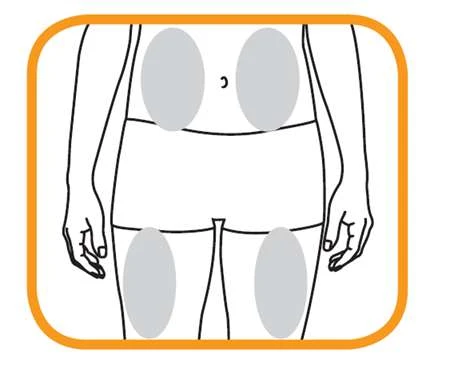
- Each new injection must be given at a different site from the previous injection.
- Do not inject into skin that is red, bruised, or hard.
- Clean the injection site with the alcohol wipe, using circular motions from the inside outward.
- Do not touch this area of skin again before the injection.
3. Injection
- The pre-filled pen AutoClicks has been designed to operate accurately and safely. However, if you make a mistake in any of the following steps and/or have any doubts about the injection process, contact your doctor or pharmacist.
- Do not shake the pre-filled pen.

Check the medication inside the pen through the viewing window.
- Do not use the pre-filled pen if you notice any change in the colour of the solution, if it is cloudy, or if you see particles in it.
- Air bubbles may be visible – this is normal. It is not dangerous to inject subcutaneously a solution containing air bubbles.
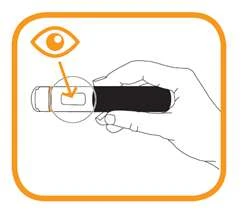
- Hold the pre-filled pen firmly with one hand around the black grip.
- With the other hand, grasp the transparent cap and remove it by pulling straight off. Do not rotate the cap during removal to avoid jamming the internal mechanism.
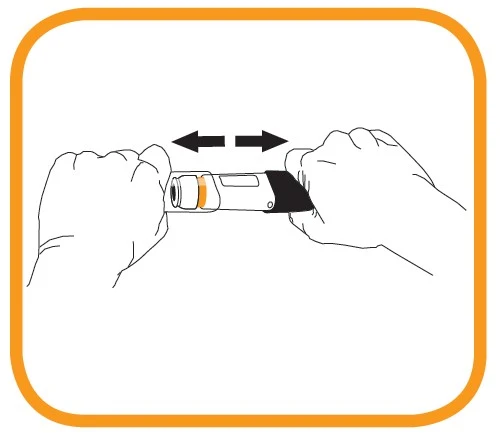
- Inject within 5 minutes after removing the cap. Do not reattach the cap.
- The needle tip is now exposed, although not visible. Do not touch the needle as this may activate the pre-filled pen.
- Hold the pre-filled pen straight (at a 90° angle) against the previously disinfected skin (injection site).
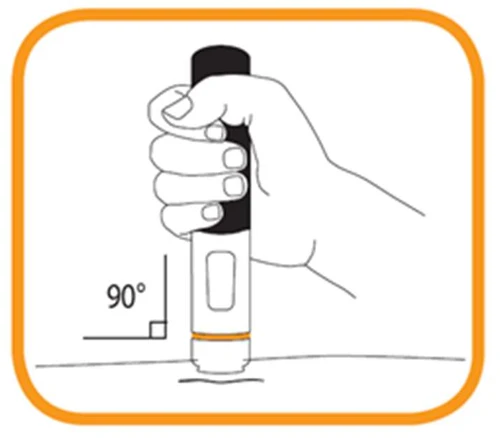
- Press firmly with the pre-filled pen against the skin. The injection starts when you hear a first "click" and when the orange-coloured band at the base of the pen is no longer visible.
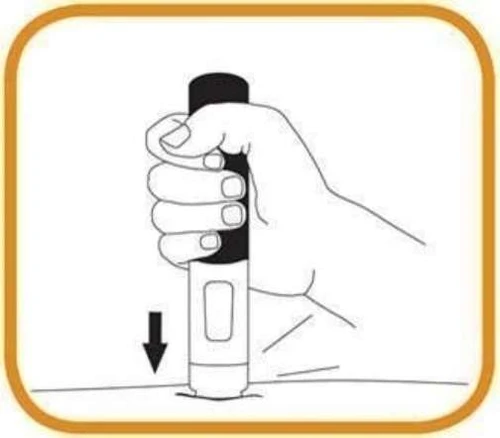

- Continue to hold the pre-filled pen firmly against the skin until you hear a second "click" and the viewing window turns orange. This may take up to 15 seconds. At this point, the injection will be complete. If the viewing window turns orange and you hear a second "click", this indicates that the injection has been completed. If you have any doubts about the injection process, contact your doctor or pharmacist. Do not attempt to repeat the injection without first contacting your doctor or pharmacist.
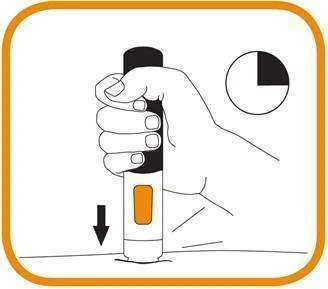

15 s
- The needle will automatically retract into the empty pen. Do not attempt to touch the needle.
- You may now gently remove the used pen from the skin by pulling it upward.
- Using a piece of gauze, apply light pressure to the injection site for a few seconds:
- Do not rub.
- If needed, you may cover the injection site with a small plaster.
4. After use
- The pen is not reusable. There is no need to recap the needle.
- Immediately after the injection, dispose of the used pen in a designated container according to the instructions provided by your doctor, nurse, or pharmacist.
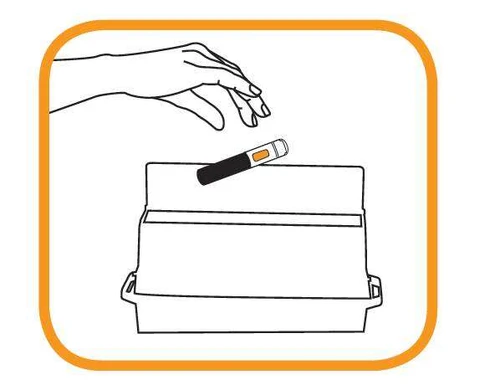
- Keep the container out of sight and reach of children.
- If a second injection is required as prescribed by your doctor, repeat the injection process from step 2.
Package leaflet: information for the user
Cimzia 200 mg solution for injection in cartridge for administration device
certolizumab pegol
Please read this leaflet carefully before using this medicine because it contains important information for you.
- Keep this leaflet. You may need to read it again.
- If you have any questions, ask your doctor, pharmacist, or nurse.
- This medicine has been prescribed for you only. Do not give it to other people, even if they have the same symptoms as you, because it could be harmful.
- If you experience any side effects, including those not listed in this leaflet, contact your doctor, pharmacist, or nurse. See section 4. Contents of this leaflet:
- What Cimzia is and what it is used for
- What you need to know before using Cimzia
- How to use Cimzia
- Possible side effects
- How to store Cimzia
- Contents of the pack and other information
Your doctor will also provide you with a Patient Reminder Card containing important safety information that you must be aware of before starting and during treatment with Cimzia. Always carry this Patient Reminder Card with you.
1. What Cimzia is and what it is used for
Cimzia contains the active substance certolizumab pegol, a human antibody fragment.
Antibodies are proteins that specifically recognize and bind to other proteins. Cimzia binds to a specific protein called tumour necrosis factor alpha (TNFα). By binding to TNFα, Cimzia blocks its activity, thereby reducing inflammatory diseases such as rheumatoid arthritis, axial spondyloarthritis, psoriatic arthritis, and psoriasis. Medicines that bind to TNFα are also known as TNF blockers.
Cimzia is used in adults for the following inflammatory conditions:
- rheumatoid arthritis,
- axial spondyloarthritis (which includes ankylosing spondylitis and non-radiographic axial spondyloarthritis),
- psoriatic arthritis,
- plaque psoriasis.
Rheumatoid arthritis
Cimzia is used to treat rheumatoid arthritis. Rheumatoid arthritis is an inflammatory disease affecting the joints. If you have moderate to severe rheumatoid arthritis, you may have first been given other medicines, usually methotrexate. If you do not respond adequately to these medicines, Cimzia will be given to you in combination with methotrexate for the treatment of rheumatoid arthritis. If your doctor considers methotrexate to be inappropriate, Cimzia may be given alone. Cimzia in combination with methotrexate may also be used to treat severe, active and progressive rheumatoid arthritis without prior use of methotrexate or other disease-modifying medicines.
Cimzia, taken in combination with methotrexate, is used to:
- reduce the signs and symptoms of the disease,
- slow down joint damage to cartilage and bone caused by the disease,
- improve physical function and the ability to perform daily activities.
Ankylosing spondylitis and non-radiographic axial spondyloarthritis
Cimzia is used to treat active, severe ankylosing spondylitis and non-radiographic axial spondyloarthritis (sometimes called non-radiographic axial spondyloarthritis). These are inflammatory diseases of the spine. If you have ankylosing spondylitis or non-radiographic axial spondyloarthritis, you will usually have first been given other medicines. If you do not respond adequately to these medicines, Cimzia will be given to you to:
- reduce the signs and symptoms of the disease,
- improve physical function and the ability to perform daily activities.
Psoriatic arthritis
Cimzia is used to treat active psoriatic arthritis. Psoriatic arthritis is an inflammatory joint disease, usually accompanied by psoriasis. If you have active psoriatic arthritis, you will usually have first been given other medicines, typically methotrexate. If you do not respond adequately to these medicines, Cimzia will be given to you in combination with methotrexate to:
- reduce the signs and symptoms of the disease,
- improve physical function and the ability to perform daily activities.
If your doctor considers methotrexate to be inappropriate, Cimzia may be given alone.
Plaque psoriasis
Cimzia is used to treat moderate to severe plaque psoriasis. Plaque psoriasis is an inflammatory skin disease, which may also affect the scalp and nails. Cimzia is used to reduce skin inflammation and other signs and symptoms of the disease.
2. What you should know before taking Cimzia
DO NOT take Cimzia
- If you are ALLERGIC (hypersensitive) to certolizumab pegol or to any of the other ingredients of this medicine (listed in section 6).
- If you have a serious infection, including active TUBERCULOSIS (TB).
- If you have moderate to severe HEART FAILURE. Tell your doctor if you have or have had serious heart disease. Warnings and precautions Before treatment with Cimzia, tell your doctor, pharmacist, or nurse if any of the following apply to you: Allergic reactions
- If you develop ALLERGIC REACTIONS such as chest tightness, wheezing, dizziness, swelling, or rash, stop using Cimzia and contact your doctor IMMEDIATELY. Some of these reactions may occur after the first dose of Cimzia.
- If you have ever had an allergic reaction to latex. Infections
- If you have had previous episodes of RECURRENT OR OPPORTUNISTIC INFECTIONS or other conditions that increase the risk of infections (for example, treatment with
immunosuppressive medicines, which are medicines that may reduce the ability to
fight infections).
- If you have an infection, or if you develop symptoms such as fever, sores, fatigue, or dental problems. You may be more likely to develop an infection while being treated with Cimzia, including serious infections or, in rare cases, life-threatening infections.
- Cases of TUBERCULOSIS (TB) have been reported in patients treated with Cimzia; your doctor will carefully evaluate any signs and symptoms of tuberculosis before starting treatment with Cimzia. This will include a thorough medical history, a chest X-ray, and a tuberculin skin test. The results of these tests must be recorded on your Patient Reminder Card. If latent (inactive) tuberculosis is diagnosed, you may be asked to undergo appropriate anti-tuberculosis treatment before starting Cimzia. In rare cases, tuberculosis may develop during therapy even if you have received preventive treatment for tuberculosis. It is very important that you tell your doctor if you have ever had tuberculosis or if you have been in close contact with someone who had tuberculosis. If symptoms of tuberculosis (persistent cough, weight loss, lack of energy, low-grade fever) or any other infection occur during or after treatment with Cimzia, you must contact your doctor immediately.
- If you are at risk, are a carrier, or have an active HEPATITIS B VIRUS (HBV) infection, the use of Cimzia could increase the risk of reactivation of the HBV virus in carriers. If this occurs, you must stop using Cimzia. Your doctor must assess whether you have hepatitis B virus before starting treatment with Cimzia. Heart failure
- If you have mild HEART FAILURE and are being treated with Cimzia, your heart failure must be closely monitored by your doctor. It is important that you tell your doctor if you have had or currently have serious heart disease. If you develop new heart failure or if symptoms of existing heart failure worsen (e.g., shortness of breath or swelling in the feet), contact your doctor immediately, as they may decide to stop treatment with Cimzia. Cancer
- Although uncommon, cases of certain types of CANCER have been reported in patients treated with Cimzia or other TNF blockers. People with more severe rheumatoid arthritis and those who have had the disease for a long time may have a moderately increased risk of developing a type of cancer affecting the lymphatic system, called lymphoma. If you take Cimzia, your risk of developing lymphomas or other types of cancer may increase. In addition, uncommon cases of non-melanoma skin cancers have been observed in patients taking Cimzia. Tell your doctor if new skin lesions appear or if existing skin lesions change in appearance during or after treatment with Cimzia.
- In children and adolescents taking TNF blockers, there have been cases of cancer, including uncommon types, which have sometimes been fatal (see below “Children and adolescents”). Other diseases
- Patients with chronic obstructive pulmonary disease (COPD) or who are heavy smokers may be at increased risk of developing cancer after taking Cimzia. If you have chronic obstructive pulmonary disease (COPD) or are a heavy smoker, discuss with your doctor whether starting treatment with a TNF blocker is appropriate.
- If you have a nervous system disorder, such as multiple sclerosis, your doctor will decide whether you should use Cimzia.
- In some patients, the body may not produce enough blood cells, which help fight infections or prevent bleeding. If you develop persistent fever, bruising, easy bleeding, or look very pale, contact your doctor immediately. Your doctor may decide to stop treatment with Cimzia.
- Although uncommon, symptoms of a disease called lupus (e.g., persistent rash, fever, joint pain, and fatigue) may appear. If you experience these symptoms, contact your doctor. Your doctor may decide to stop treatment with Cimzia.
Vaccinations
- Consult your doctor if you have been vaccinated or if you need to receive a vaccination. Certain types of vaccines (live vaccines) should not be given while you are being treated with Cimzia.
- Some vaccines may cause infections. If you took Cimzia during pregnancy, your baby may be at higher risk of developing an infection up to about five months after your last dose during pregnancy. It is important that you inform the doctors caring for your baby and other healthcare providers about your use of Cimzia so they can decide when your baby should be vaccinated. Dental procedures
- Talk to your doctor if you are scheduled for any dental procedure. Inform the surgeon or dentist performing the procedure that you are being treated with Cimzia by showing your Patient Reminder Card. Children and adolescents Cimzia is not recommended for use in children and adolescents under 18 years of age. Other medicines and Cimzia DO NOT take Cimzia if you are using any of the following medicines used to treat rheumatoid arthritis:
- anakinra
- abatacept If you have any questions, consult your doctor. Cimzia may be taken together with:
- methotrexate
- corticosteroids, or
- pain medicines including non-steroidal anti-inflammatory drugs (also known as NSAIDs). Inform your doctor or pharmacist if you are taking, have recently taken, or might take any other medicines. Pregnancy and breastfeeding If you are pregnant, think you may be pregnant, are planning to become pregnant, or are breastfeeding, consult your doctor or pharmacist before taking this medicine. Cimzia should be used during pregnancy only if strictly necessary. If you are a woman of childbearing age, discuss with your doctor the use of an adequate contraceptive method while using Cimzia. For women planning pregnancy, a contraceptive method may be considered for 5 months after the last dose of Cimzia. If you took Cimzia during pregnancy, your baby may be at higher risk of developing an infection. It is important that you inform the doctors caring for your baby and other healthcare providers about your use of Cimzia before vaccinating your baby (for more information, see the section on vaccinations). Cimzia may be used during breastfeeding. Driving and using machines Cimzia may have a slight influence on the ability to drive and use machines. Dizziness (including a sensation of room spinning, blurred vision, and fatigue) may occur after taking Cimzia.
Cimzia contains sodium acetate and sodium chloride
This medicine contains less than 1 mmol of sodium (23 mg) per 400 mg, i.e., it is essentially
“sodium-free”.
3. How to take Cimzia
Take this medicine exactly as directed by your doctor or pharmacist. If you have any doubts, consult your doctor or pharmacist.
Rheumatoid arthritis
- The initial dose for adults with rheumatoid arthritis is 400 mg administered at weeks 0, 2, and 4.
- This is followed by a maintenance dose of 200 mg every 2 weeks. If you respond to treatment, your doctor may prescribe you an alternative maintenance dose of 400 mg every 4 weeks.
- Methotrexate therapy should be continued while using Cimzia. If your doctor considers methotrexate treatment inappropriate, Cimzia may be given alone.
Axial spondyloarthritis
- The initial dose for adults with axial spondyloarthritis is 400 mg administered at weeks 0, 2, and 4.
- This is followed by a maintenance dose of 200 mg every 2 weeks (starting at week 6) or 400 mg every 4 weeks (starting at week 8), as directed by your doctor. If you have taken Cimzia for at least 1 year and are responding to the medicine, your doctor may prescribe you a reduced maintenance dose of 200 mg every 4 weeks.
Psoriatic arthritis
- The initial dose for adults with psoriatic arthritis is 400 mg administered at weeks 0, 2, and 4.
- This is followed by a maintenance dose of 200 mg every 2 weeks. If you respond to treatment, your doctor may prescribe you an alternative maintenance dose of 400 mg every 4 weeks.
- Methotrexate therapy should be continued while using Cimzia. If your doctor considers methotrexate treatment inappropriate, Cimzia may be given alone.
Plaque psoriasis
- The initial dose for adults with plaque psoriasis is 400 mg administered every 2 weeks at weeks 0, 2, and 4.
- This is followed by a maintenance dose of 200 mg every 2 weeks or 400 mg every 4 weeks, as directed by your doctor.
Administration method of Cimzia
Cimzia will normally be administered by a specialist doctor or qualified healthcare professional. Cimzia is given as a single injection (200 mg dose) or two injections (400 mg dose) under the skin (subcutaneous use, abbreviated: s.c.). Injections are usually given in the abdomen or thigh. However, do not inject into an area where the skin is red, bruised, or hard.
Instructions for self-injection of Cimzia
Cimzia injectable solution in a cartridge for injection device (also referred to as "medicine") is intended for single use with the electronic injection device called ava. After proper training, your doctor may allow you to self-inject Cimzia. Read the instructions on how to inject Cimzia provided at the end of this leaflet and in the user manual supplied with the ava injection device. Follow these instructions carefully.
If your doctor has allowed you to self-inject Cimzia, you must consult your doctor before continuing self-injection:
- after 12 weeks in case of rheumatoid arthritis, axial spondyloarthritis, or psoriatic arthritis, or
- after 16 weeks in case of plaque psoriasis.
This will allow your doctor to assess whether Cimzia is working for you or whether another treatment should be considered.
If you take more Cimzia than you should
If your doctor has allowed you to self-inject Cimzia and you accidentally administer it more frequently than prescribed, inform your doctor. Always carry your Patient Reminder Card and the outer packaging of Cimzia with you, even if it is empty.
If you forget to take Cimzia
If your doctor has allowed you to self-inject Cimzia and you accidentally forget to inject it, inject the next dose as soon as you remember and contact your doctor for further advice. Afterwards, continue injecting subsequent doses as instructed. Then contact your doctor and continue injecting subsequent doses according to the instructions.
If you stop using Cimzia
Do not stop using Cimzia without first talking to your doctor. If you have any questions about using Cimzia, consult your doctor, pharmacist, or nurse.
4. Possible side effects
Like all medicines, this medicine can cause side effects, although not everybody gets them.
Contact your doctor IMMEDIATELY if you experience any of the following side effects:
- severe rash, hives or other signs of allergic reaction (urticaria)
- swelling of the face, hands or feet (angioedema)
- difficulty breathing or swallowing (these symptoms may have various causes)
- shortness of breath during exertion or at rest (especially when lying down), or swelling in the feet (heart failure)
- symptoms of blood disorders such as persistent fever, bruising, bleeding, paleness (pancytopenia, anaemia, low platelet count, low white blood cell count)
- severe skin rashes. These may appear as reddish spots or circular patches, often with central blisters on the trunk, skin peeling, mouth, throat, nose, genital or eye ulcers, and may be preceded by fever and flu-like symptoms (Stevens-Johnson syndrome)
Contact your doctor AS SOON AS POSSIBLE if you experience any of the following side effects:
- signs of infection such as fever, feeling unwell, wounds, dental problems, burning sensation when urinating
- feeling weak or tired
- cough
- tingling
- numbness
- double vision
- weakness in arms or legs
- swelling or open sores that do not heal
The symptoms described above may be caused by some of the side effects listed below, which have been observed during the use of Cimzia:
Common (may affect up to 1 in 10 people):
- bacterial infections at any site (pus formation)
- viral infections (including common cold, shingles and influenza)
- fever
- hypertension (high blood pressure)
- skin rash or itching
- headache (including migraine)
- sensory disturbances such as numbness, tingling, burning sensation
- feeling weak or generally unwell
- pain
- blood abnormalities
- liver problems
- injection site reactions
- nausea
Uncommon (may affect up to 1 in 100 people):
- allergic reactions including allergic rhinitis and drug allergy (including anaphylactic shock)
- antibodies directed against normal tissue
- blood and lymphatic system tumours such as lymphoma and leukaemia
- solid tumours
- skin tumours, pre-cancerous skin lesions
- benign (non-cancerous) tumours and cysts (including those of the skin)
- heart problems including weakening of the heart muscle, heart failure, heart attack, chest discomfort or chest tightness, abnormal heart rhythm including irregular heartbeat
- oedema (swelling of the face or legs)
- symptoms (joint pain, skin rash, photosensitivity and fever) of lupus (an immune/connective tissue disease)
- inflammation of blood vessels
- sepsis (serious infection that may lead to organ damage, shock or death)
- tuberculosis
- fungal infections (occur when the ability to fight infections is reduced)
- respiratory disorders and inflammation (including asthma, shortness of breath, cough, sinus congestion, pleuritis, difficulty breathing)
- stomach problems including fluid accumulation in the abdomen, ulcers (including oral ulcers), perforation, distension, inflammation, heartburn, stomach discomfort, dry mouth
- bile-related problems
- muscle problems, including increased muscle enzymes
- changes in levels of various salts in the blood
- changes in cholesterol and lipid levels in the blood
- blood clot formation in veins or lungs
- bleeding or bruising
- changes in blood cell counts, including low red blood cell count (anaemia), low platelet count, increased platelet count
- swollen lymph nodes
- flu-like symptoms, chills, altered temperature perception, night sweats, hot flushes
- anxiety and mood disorders such as depression, appetite disturbances, weight changes
- ringing in the ears
- dizziness
- feeling faint, including loss of consciousness
- sensory disturbances in the extremities including numbness, tingling, burning sensation, dizziness, tremors
- skin disorders such as new onset or worsening of psoriasis, skin inflammation (such as eczema), sweat gland disorders, ulcers, photosensitivity, acne, hair loss, depigmentation (discoloration), nail detachment, dry skin and wounds
- impaired wound healing
- kidney and urinary problems including reduced kidney function, blood in urine, urinary disorders
- menstrual cycle disorders including absence of bleeding or heavy or irregular bleeding
- breast disorders
- eye and eyelid inflammation, vision disturbances, tear production problems
- increase in certain blood parameters (elevated blood alkaline phosphatase)
- prolonged coagulation test times
Rare (may affect up to 1 in 1,000 people):
- gastrointestinal cancer, melanoma
- lung inflammation (interstitial lung disease, pneumonia)
- stroke, blood vessel blockage (arteriosclerosis), poor blood circulation causing numbness and paleness in fingers of hands and feet (Raynaud's phenomenon), mottled purple skin discoloration, small veins near the skin surface becoming visible
- pericarditis (inflammation of the pericardium)
- cardiac arrhythmia
- enlarged spleen
- increased red blood cell mass
- abnormal white blood cell morphology
- gallstone formation
- kidney problems (including nephritis)
- immune disorders such as sarcoidosis (skin rash, joint pain, fever), serum sickness, inflammation of fatty tissue, angioneurotic oedema (swelling of lips, face, throat)
- thyroid disorders (goitre, fatigue, weight loss)
- increased iron levels in the body
- increased uric acid levels in the blood
- suicide attempt, mental confusion, delirium
- inflammation of auditory, optic or facial nerves, decreased coordination or balance
- increased gastrointestinal motility
- fistula (abnormal passage from one organ to another) (at any site)
- oral cavity disorders including pain or swelling
- skin peeling, blister formation, changes in hair structure
- sexual dysfunction
- epileptic seizure
- worsening of a condition called dermatomyositis (manifesting as skin rash accompanied by muscle weakness)
- Stevens-Johnson syndrome (a serious skin condition including early symptoms such as malaise, fever, headache and rash)
- inflammatory skin rash (erythema multiforme)
- lichenoid reactions (itchy reddish/violet rash and/or white-greyish linear streaks on mucous membranes)
Not known (frequency cannot be estimated from the available data):
- multiple sclerosis*
- Guillain-Barré syndrome*
- Merkel cell carcinoma (a type of skin cancer)*
- Kaposi's sarcoma (a rare cancer associated with human herpesvirus 8 infection; Kaposi's sarcoma most commonly presents with purple skin lesions)*
*These events have been associated with this class of medicines, but the incidence with Cimzia is not known.
Other side effects
When Cimzia has been used to treat other conditions, the following uncommon side effects have been reported:
- gastrointestinal stenosis (narrowing of part of the digestive tract)
- gastrointestinal obstruction (blockage of the digestive tract)
- worsening of general health condition
- spontaneous abortion
- azoospermia (lack of sperm production)
Reporting of side effects
If you get any side effects, including those not listed in this leaflet, talk to your doctor, pharmacist or nurse.
You can also report side effects directly via the national reporting system detailed in Annex V.
By reporting side effects, you can help provide more information on the safety of this medicine.
5. How to store Cimzia
Keep this medicine out of the sight and reach of children.
Do not use this medicine after the expiry date stated on the box and on the administration device cartridge after "Exp." or "EXP". The expiry date refers to the last day of that month.
Store in a refrigerator (2°C - 8°C).
Do not freeze.
Keep the administration device cartridge in the outer packaging to protect the medicine from light.
Administration device cartridges may be stored at room temperature (up to 25°C), protected from light, for a single period of up to 10 days. After this period, the administration device cartridges must be used or discarded.
Do not use this medicine if the solution changes colour, becomes cloudy, or if particles are visible.
Do not dispose of any medicine via wastewater or household waste. Ask your pharmacist how to dispose of medicines no longer required. This will help protect the environment.
6. Package contents and other information
What Cimzia contains
- The active substance is certolizumab pegol. Each cartridge for the administration device contains 200 mg of certolizumab pegol in one mL.
- The other components are: sodium acetate, sodium chloride, and water for injections (see “Cimzia contains sodium acetate and sodium chloride” in section 2).
Description of the appearance of Cimzia and contents of the pack
Cimzia is supplied as an injectable solution in a ready-to-use cartridge for the administration device. The cartridge for the administration device must be used with the electronic injection device ava. The device is supplied separately. The solution is from clear to opalescent, colourless to yellow. A Cimzia pack contains:
- two cartridges for the administration device containing the solution, and
- two alcohol-impregnated wipes (for disinfecting the skin at the injection site).
Packs containing 2 cartridges for the administration device and 2 alcohol-impregnated wipes, multiple packs containing 6 (3 packs of 2) cartridges for the administration device and 6 (3 packs of 2) alcohol-impregnated wipes, and multiple packs containing 10 (5 packs of 2) cartridges for the administration device and 10 (5 packs of 2) alcohol-impregnated wipes are available.
Not all pack sizes may be marketed.
Marketing Authorisation Holder
UCB Pharma S.A.
Allée de la Recherche 60
B-1070 Bruxelles
Belgium
Manufacturer
UCB Pharma S.A.
Chemin du Foriest
B-1420 Braine l’Alleud
Belgium
For further information about this medicinal product, please contact the local representative of the Marketing Authorisation Holder:
België/Belgique/Belgien Lietuva
UCB Pharma S.A./NV UCB Pharma Oy Finland
Tel/Tél: + 32 / (0)2 559 92 00 Tel: + 358 9 2514 4221 (Suomija)
България Luxembourg/Luxemburg
Ю СИ БИ България ЕООД UCB Pharma S.A./NV
Teл.: + 359 (0) 2 962 30 49 Tél/Tel: + 32 / (0)2 559 92 00 (Belgique/Belgien)
Česká republika Magyarország
UCB s.r.o. UCB Magyarország Kft.
Tel: + 420 221 773 411 Tel.: + 36-(1) 391 0060
Danmark Malta
UCB Nordic A/S Pharmasud Ltd.
Tlf.: + 45 / 32 46 24 00 Tel: + 356 / 21 37 64 36
Deutschland Nederland
UCB Pharma GmbH UCB Pharma B.V.
Tel: + 49 /(0) 2173 48 4848 Tel.: + 31 / (0)76-573 11 40
Eesti Norge
UCB Pharma Oy Finland UCB Nordic A/S
Tel: + 358 9 2514 4221 (Soome) Tlf: + 47 / 67 16 5880
Ελλάδα Österreich
UCB Α.Ε. UCB Pharma GmbH
Τηλ: + 30 / 2109974000 Tel: + 43-(0)1 291 80 00
España Polska
UCB Pharma S.A. UCB Pharma Sp. z o.o. / VEDIM Sp. z o.o.
Tel: + 34 / 91 570 34 44 Tel.: + 48 22 696 99 20
France Portugal
UCB Pharma S.A. UCB Pharma (Produtos Farmacêuticos), Lda
Tél: + 33 / (0)1 47 29 44 35 Tel: + 351 / 21 302 5300
Hrvatska România
Medis Adria d.o.o. UCB Pharma Romania S.R.L.
Tel: +385 (0) 1 230 34 46 Tel: + 40 21 300 29 04
Ireland Slovenija
UCB (Pharma) Ireland Ltd. Medis, d.o.o.
Tel: + 353 / (0)1-46 37 395 Tel: + 386 1 589 69 00
Ísland Slovenská republika
UCB Nordic A/S UCB s.r.o., organizačná zložka
Sími: + 45 / 32 46 24 00 Tel: + 421 (0) 2 5920 2020
Italia Suomi/Finland
UCB Pharma S.p.A. UCB Pharma Oy Finland
Tel: + 39 / 02 300 791 Puh/Tel: + 358 9 2514 422
Κύπρος Sverige
Lifepharma (Z.A.M.) Ltd UCB Nordic A/S
Τηλ: + 357 22 056300 Tel: + 46 / (0) 40 29 49 00
Latvija
UCB Pharma Oy Finland
Tel: + 358 9 2514 4221
Other sources of information
More detailed information on this medicinal product is available on the website of the European Medicines Agency: http://www.ema.europa.eu.
INSTRUCTIONS FOR USE FOR THE PREPARATION AND ADMINISTRATION OF CIMZIA
USING THE CARTRIDGE FOR THE ADMINISTRATION DEVICE
Important information
Read these instructions carefully – they explain how to inject Cimzia using the cartridge for the administration device. The cartridge for the administration device is also referred to as “medicinal product”.
- The medicinal product must be used with the electronic injection device called “ava”, which is supplied separately.
- You must also read carefully the instructions provided in the ava User Manual.
- You may administer the injection yourself, or someone caring for you may administer it. If your doctor has allowed you to self-inject Cimzia, you must first receive adequate training.
- Your doctor or healthcare professional will explain how to inject the medicinal product.
- Ask your doctor or pharmacist if anything is unclear.
Medicinal product: Cartridge for administration device
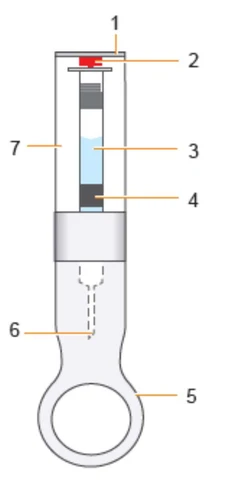
- Closure cap
- Medicinal product level indicator
- Syringe
- Medicinal product information chip
- Needle cap
- Needle (inside the cap)
- Cartridge body
Injection device: ava
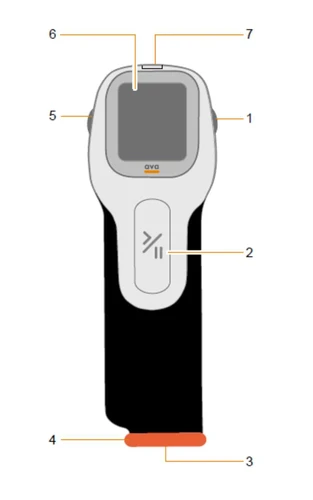

- Power on/off button

- Start/pause button
- Cartridge/Injection port
- Skin sensor (the skin sensor detects when the injection port is fully in contact with the skin)
- Scroll wheel (to adjust injection speed)
- Display screen
- Micro-USB port
1. Preparation
- Remove the Cimzia package from the refrigerator.
- If the seal is missing or damaged – do not use the contents and contact your pharmacist.
- Remove the following items from the Cimzia package and place them on a clean, flat surface:
- One or two medicine cartridges, depending on your prescribed dose.
- One or two alcohol wipes.
- Check the expiration date on the medicine and the package. Do not use Cimzia after the expiration date stated on the packaging and cartridge after “Scad.” or “EXP.” The expiration date refers to the last day of the month indicated.
- Allow the medicine to reach room temperature. This will take 30 to 45 minutes. This helps reduce discomfort during injection.
- Do not heat the medicine – allow it to warm to room temperature naturally.
- Use a clean, dry cloth to dry any condensation on the outside of the cartridge.
- Do not remove the needle cap until the instructions indicate how to do so.
- Wash your hands thoroughly.
2. Choosing and preparing the injection site
- Choose a spot on the thigh or abdomen.
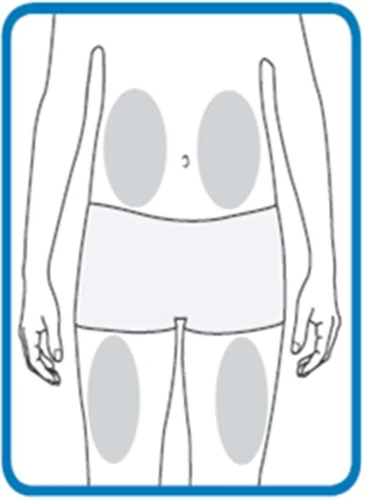
- Each new injection must be administered at a different site from the previous injection.
- Do not inject into an area where the skin is red, bruised, or hard.
- Disinfect the injection site using the alcohol swab, wiping in circular motions from the inside out.
- Do not touch this area of skin again before the injection.
3. Injection
- If you have any doubts about the injection process, contact your doctor or pharmacist.
- Do not shake the cartridge.
- Do not use the cartridge if it has been damaged after removal from the packaging.
- Turn on ava:

- Press the button (power on/off) for 1 second or until the screen turns on and you hear a sound.
- The screen displays “Hello” for 2 seconds – this means ava is turned on.
- ava will then display:
- Your current dose and frequency of injections,
- Followed by the message “Check and insert cartridge”.

Check the medication through the body of the cartridge.
- Do not use the solution if you notice a change in colour, if it is cloudy, or if you see particles in it.
- Air bubbles may be visible – this is normal. It is not dangerous to inject a solution containing air bubbles subcutaneously.

Ensure that the “medication level indicator”, coloured red, is located at the top
of the cartridge.
- The cartridge contains 1 mL of Cimzia and is not completely full – this is normal.
- Do not remove the needle cap from the medication yet.
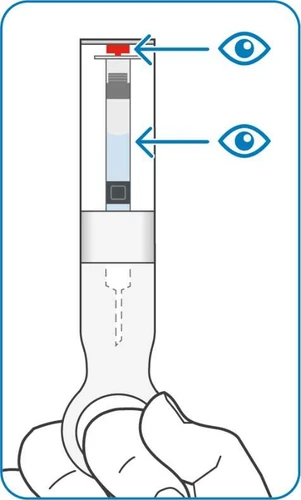
- Firmly push the flat end of the closure cap into the cartridge port/injection port at the bottom of ava – push until you hear a click.
- Do not rotate the administration device cartridge – it has a special shape that allows it to be inserted only in the correct way.
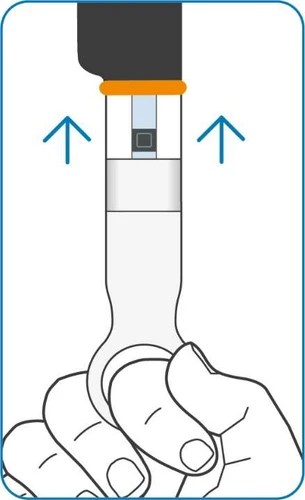
- Leave the needle cap in place – this allows ava to check whether the medication is suitable for use. Do not remove the needle cap.
- If correct, the message “Cartridge accepted” will be displayed.
- After a brief pause, ava will automatically pull the cartridge in.
- The currently selected injection speed (rate of medication delivery) is displayed.
- You can adjust the speed using the “scroll wheel” on the side of ava.
- You can select “slower”, “slow”, “fast”, or “faster” – this allows you to control how quickly the medication is injected and to select (and adjust) the speed according to your personal preference. Your doctor can provide advice.
- The message “Remove and keep needle cap” is displayed.
- Remove the needle cap only when you are ready to perform the injection.
- When ready, remove the needle cap by firmly pulling it downward.
- Once the needle cap has been removed, perform the injection within 5 minutes. However, there is no need to rush – 5 minutes is sufficient time. The remaining time is displayed on the screen.
- Keep the needle cap – you will need it later to remove the used cartridge from ava.
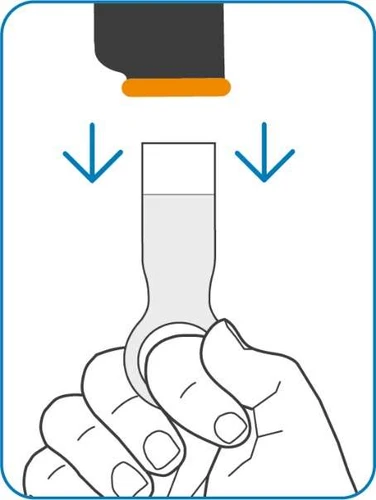
- To perform the injection, find a comfortable position and sit down.
- Try to relax, as this makes the injection more comfortable.
- Place the orange skin sensor on the injection site where you are about to inject.
- Position ava on the skin at the correct angle with the screen facing toward you. This allows you to ensure the injection is performed correctly.

- Position ava as shown so you can comfortably reach the button (Start/Pause button) without moving ava.
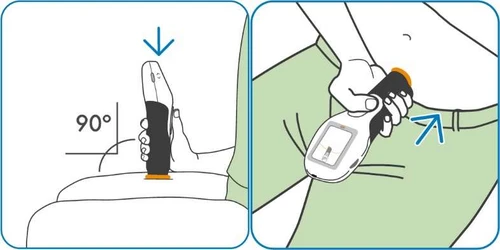
- When ava is firmly pressed against the skin, the message “When ready, press > once” appears.

- Press the button (Start/Pause button).
- Hold ava firmly against the skin, as the injection has started.
- Avoid removing ava from the skin during the injection to ensure you receive the full dose.
- If ava is accidentally removed from the skin during injection, the process will automatically stop and the needle will retract into ava. To complete the injection: either Repeat step 2 (Choosing and preparing the injection site), using a different injection site, or Press ava firmly against the skin to restart the injection, and then

or Press the button (Start/Pause button)
- If you have any doubts about the injection process, contact your doctor or pharmacist. Do not attempt to repeat the injection process without first contacting your doctor or pharmacist.
- At the end of the injection, ava’s screen displays the message “Injection completed. Remove from skin.” – you may now remove ava from the skin.
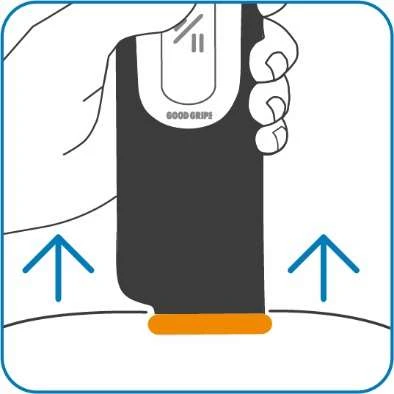
- Using a piece of gauze, apply gentle pressure to the injection site for a few seconds:
- Do not rub the injection site.
- If needed, you may cover the injection site with a small plaster.
- The messages “Needle without cap! Handle with care!” and “Replace needle cap” are displayed until the cap is replaced.
- Replace the needle cap.
- Leave the needle cap in place so that ava can release the used cartridge.
- When the message “Remove and dispose of used cartridge” appears, remove the cartridge using the needle cap.

Check that the medication level indicator, coloured red, is located at the bottom
of the cartridge – this means the full injection has been administered. If the indicator is not at the
bottom, contact your pharmacist.
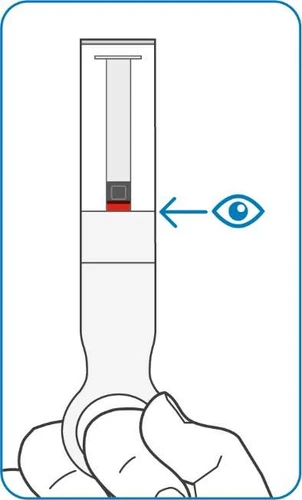
4. After use
- Do not reuse the cartridge.
- Immediately after the injection, dispose of the used cartridge into a designated container according to the instructions provided by your doctor, nurse, or pharmacist.
- Keep the container out of sight and reach of children.
- If you need to perform a second injection as prescribed by your doctor:
- The message "1 injection remaining" will appear on the screen.
- Repeat the injection process from step 2.
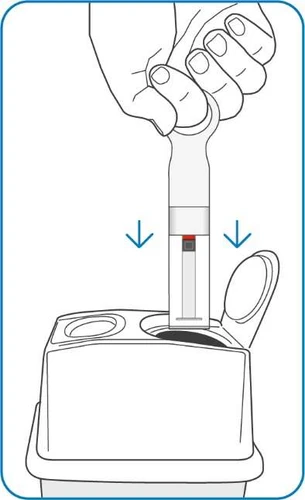
- Store ava in its carrier after use.