Cibalgina Due
Italy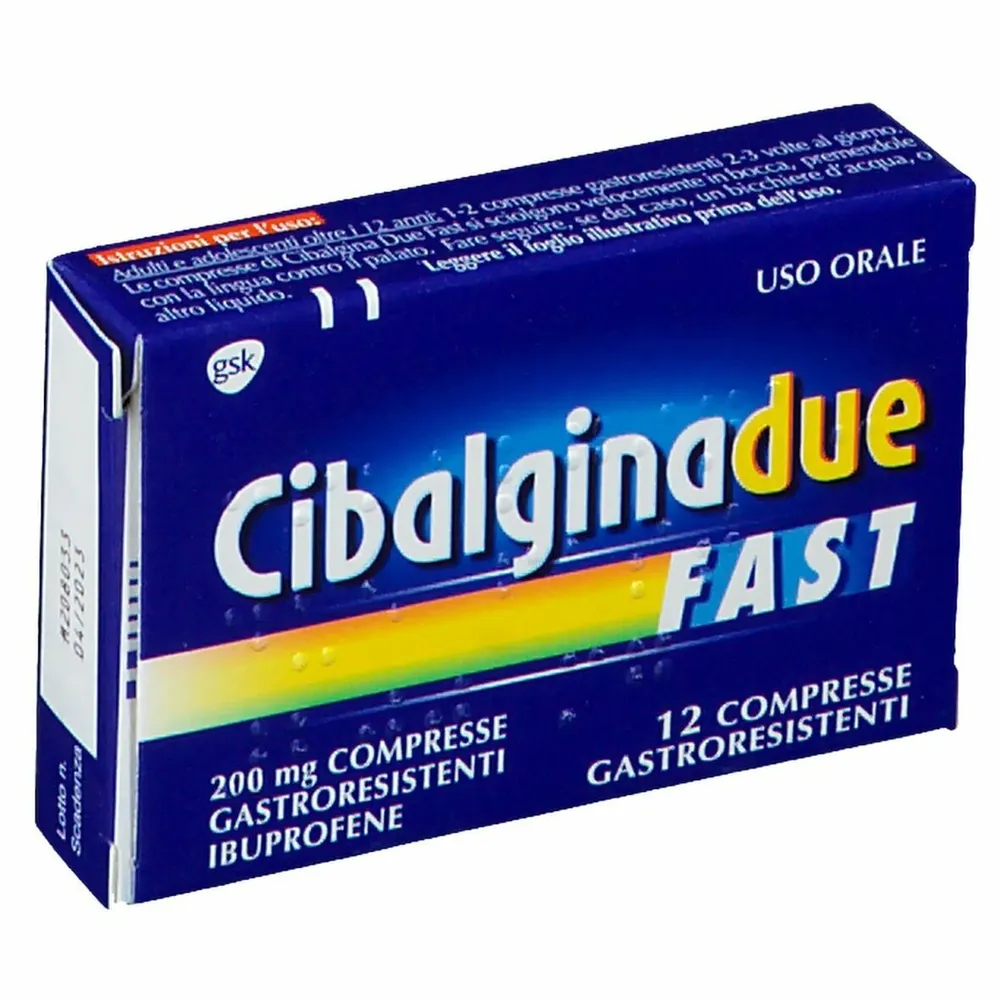
Table of Contents
- Package leaflet: Information for the patient
- Cibalgina Due Fast 200 mg gastro-resistant tablets
- 1. What Cibalgina Due Fast is and what it is used for
- 2. What you need to know before taking Cibalgina Due Fast
- 3. How to take Cibalgina Due Fast
- 4. Possible side effects
- 5. How to store Cibalgina Due Fast
- 6. Contents of the pack and other information
Package leaflet: Information for the patient
Cibalgina Due Fast 200 mg gastro-resistant tablets
ibuprofen
Please read all of this leaflet carefully before taking this medicine because it contains important information for you.
Always take this medicine exactly as described in this leaflet or as your doctor or pharmacist has told you to do.
- Keep this leaflet. You may need to read it again.
- If you need more information or advice, contact your pharmacist.
- If you experience any side effects, including those not listed in this leaflet, contact your doctor or pharmacist. See section 4.
- Contact your doctor if you do not notice any improvement or if your symptoms worsen after 2-3 days of treatment.
Contents of this leaflet:
- What Cibalgina Due Fast is and what it is used for
- What you need to know before taking Cibalgina Due Fast
- How to take Cibalgina Due Fast
- Possible side effects
- How to store Cibalgina Due Fast
- Contents of the pack and other information
1. What Cibalgina Due Fast is and what it is used for
Cibalgina Due Fast contains the active substance ibuprofen, which belongs to a class of medicines known as non-steroidal anti-inflammatory drugs (NSAIDs). Cibalgina Due Fast works by reducing pain, inflammation, and fever.
Cibalgina Due Fast is indicated for the treatment of various types of pain, including:
- headache
- toothache
- neuralgia
- bone and joint pain
- muscle pain
- menstrual pain
The medicine is also indicated as an additional therapy in the treatment of symptoms of fever and influenza. Consult your doctor if you do not feel better or if you feel worse after 2-3 days of treatment.
2. What you need to know before taking Cibalgina Due Fast
Do not take Cibalgina Due Fast
- if you are allergic to ibuprofen, or to any of the other ingredients of this medicine (listed in section 6);
- if you are allergic to acetylsalicylic acid or to other medicines used to relieve pain (analgesics), fever (antipyretics), such as non-steroidal anti-inflammatory drugs (NSAIDs), particularly when the allergy is associated with swelling of the nasal mucosa (nasal polyps), asthma, and swelling generally affecting eyes, lips, tongue, throat, and presenting as an asthmatic reaction (bronchospasm), urticaria or severe cold (acute rhinitis) (see section “Warnings and precautions”);
- if you have had a severe stomach or duodenal ulcer;
- if you currently have an active ulcer;
- if you have had repeated episodes of bleeding or ulceration (two or more distinct episodes of proven ulceration or bleeding);
- if you have had stomach and/or intestinal bleeding or perforation following previous treatment with other medicines;
- if you have bleeding in the brain (cerebrovascular haemorrhage) or other types of bleeding;
- if you have severe liver or kidney failure;
- if you have severe heart failure;
- if you have a blood cell production disorder of unknown cause;
- if you are in the last 3 months of pregnancy (see section “Pregnancy, breastfeeding and fertility”);
- if the patient is a child under 12 years of age.
Warnings and precautions
Talk to your doctor or pharmacist before taking Cibalgina Due Fast.
Anti-inflammatory/pain-relieving medicines such as ibuprofen may be associated with a small increased risk of heart attack or stroke, especially when used at high doses. Do not exceed the recommended dose or duration of treatment.
You should discuss treatment with your doctor or pharmacist before taking Cibalgina Due Fast if you:
- have heart problems including heart attack, angina (chest pain), or if you have a history of heart attack, coronary bypass surgery, peripheral arterial disease (poor circulation in legs or feet due to narrowed or blocked arteries), or any type of stroke (including 'mini-stroke' or TIA, transient ischaemic attack);
- have high blood pressure, diabetes, high cholesterol, a family history of heart disease or stroke, or if you are a smoker.
Exercise particular caution and consult your doctor or pharmacist:
- if you are a woman planning pregnancy;
- if you are a woman with fertility problems or undergoing fertility investigations, because you should discontinue treatment with Cibalgina Due Fast;
- if the patient is an adolescent with dehydration problems, as the medicine may cause kidney problems in this case;
- if you have asthma;
- if you have seasonal allergic rhinitis, swelling of the nasal mucosa (e.g. nasal polyps);
- if you experience breathing difficulties (bronchospasm);
- if you have chronic obstructive pulmonary disease or chronic respiratory tract infections;
- if you have liver, kidney, or heart problems, except in cases of severe liver, kidney, or heart failure, in which cases you must not take Cibalgina Due Fast (see section 2 “Do not take Cibalgina Due Fast”). If in doubt, consult your doctor;
- if you have hepatic porphyria;
- if you have or have had ulcerative colitis or Crohn’s disease, as these conditions may worsen;
- if you are taking medicines that increase urine production (diuretics) or other medicines that may affect kidney function;
- if you have reduced body fluid volume (e.g. before or after major surgery);
- if you are undergoing or have recently undergone major surgery;
- if you have stomach or intestinal problems, except in cases where you have one or more conditions that contraindicate Cibalgina Due Fast (see section “Do not take Cibalgina Due Fast”);
- if you are taking medicines that may increase the risk of bleeding, ulceration, and perforation, such as acetylsalicylic acid (e.g. aspirin) and other NSAIDs, corticosteroids administered orally, by injection, or rectally (e.g. cortisone), anticoagulants (e.g. warfarin), selective serotonin reuptake inhibitors (antidepressants) (see section “Other medicines and Cibalgina Due Fast”);
- if you have an autoimmune disease such as systemic lupus erythematosus or connective tissue disorders;
- if you have an infection – see section «Infections» below.
In these cases, your doctor will monitor you closely and periodically reassess the need for treatment with Cibalgina Due Fast. Additionally, your doctor may recommend periodic tests (such as monitoring kidney function) to evaluate your condition during treatment with Cibalgina Due Fast.
Skin reactions
Severe skin reactions have been reported in association with treatment with Cibalgina Due Fast.
Stop taking Cibalgina Due Fast and consult your doctor immediately if you develop a rash, mucosal lesions, blisters, or other signs of allergy, as these may be early signs of a very serious skin reaction. See section 4.
Infections
Cibalgina Due Fast may mask symptoms of infections such as fever and pain. Therefore, Cibalgina Due Fast could delay appropriate treatment of the infection, increasing the risk of complications. This has been observed in bacterial pneumonia and bacterial skin infections related to chickenpox. If you take this medicine while having an infection and infection symptoms persist or worsen, contact your doctor immediately.
Stop treatment and inform your doctor if, during treatment with Cibalgina Due Fast,
you develop:
- gastrointestinal bleeding or ulceration;
- sudden or severe skin reactions, because very rare but serious skin reactions, potentially fatal, have been reported;
- mucosal lesions or any other sign of allergic reaction;
- fluid retention and swelling due to fluid accumulation (oedema);
- signs and symptoms of liver problems or abnormal liver function test results (visible in blood tests);
- unusual stomach or intestinal symptoms, especially at the beginning of treatment with Cibalgina Due Fast;
- fever, sore throat, superficial mouth ulcers, flu-like symptoms, profound fatigue, unexplained bruising or bleeding, as you may have reduced white blood cells in the blood (agranulocytosis);
- neck stiffness, headache, nausea, vomiting, fever, disorientation, as you may have aseptic meningitis. Patients with autoimmune diseases (Systemic Lupus Erythematosus, connective tissue disease) appear more predisposed to developing aseptic meningitis;
- signs of infection (e.g. headache, fever) or worsening of an infection, as Cibalgina Due Fast may mask signs and symptoms of infection.
In these cases, your doctor will assess whether to continue or discontinue treatment with Cibalgina Due Fast.
Other important information:
- During treatment with NSAIDs, including ibuprofen, gastrointestinal bleeding, ulceration, or perforation may occur, which can be fatal, and may happen at any time during treatment, with or without warning symptoms or previous history of serious gastrointestinal events. You should take the lowest effective dose of ibuprofen to reduce the risk of gastrointestinal toxicity, and your doctor may prescribe medicines (e.g. misoprostol or proton pump inhibitors) to protect the gastrointestinal mucosa.
- Side effects can be minimized by using the lowest effective dose for the shortest possible time (see section 3 “How to take Cibalgina Due Fast”).
- Avoid using ibuprofen during treatment with other NSAIDs taken orally, by injection, or rectally, including selective cyclo-oxygenase-2 inhibitors, as this increases the likelihood of adverse effects.
- Cases of aseptic meningitis have been reported during treatment with ibuprofen, although they are more likely in patients with systemic lupus erythematosus or connective tissue disorders.
Children
Cibalgina Due Fast is contraindicated in children under 12 years of age.
Elderly patients
Elderly patients have a higher risk of adverse reactions, particularly gastrointestinal bleeding or perforation, which are generally more severe and may be fatal.
If you are elderly, you should take the lowest dosage of Cibalgina Due Fast.
As a precaution, your doctor may monitor your kidney function and prescribe medicines that protect the gastrointestinal mucosa, such as misoprostol or proton pump inhibitors.
Inform your doctor of any unusual stomach or intestinal symptoms, especially at the beginning of treatment with this medicine.
Other medicines and Cibalgina Due Fast
Inform your doctor or pharmacist if you are taking, have recently taken, or might take any other medicines.
Exercise particular caution and inform your doctor if you are taking Cibalgina Due Fast and are already taking one or more of the following medicines; your doctor will monitor you and may recommend tests.
Cibalgina Due Fast may interact with or be affected by other medicines. For example:
- acetylsalicylic acid (e.g. aspirin) or other anti-inflammatory medicines (non-steroidal anti-inflammatory drugs, including cyclo-oxygenase-2 inhibitors, corticosteroids);
- lithium (a medicine for mood disorders);
- digoxin (a heart medicine);
- medicines with anticoagulant effects (i.e. substances that thin the blood to prevent clotting, e.g. aspirin/acetylsalicylic acid, warfarin, ticlopidine);
- medicines that lower high blood pressure (ACE inhibitors such as captopril, beta-blockers such as atenolol, angiotensin II receptor antagonists such as losartan);
- diuretics, including potassium-sparing diuretics, especially if you have kidney problems;
- antidepressants such as selective serotonin reuptake inhibitors (medicines for depression);
- sulfonylureas (medicines for diabetes), in which case your doctor may recommend monitoring blood glucose levels;
- methotrexate (a medicine for cancer);
- cyclosporine and tacrolimus (immunosuppressants used to modify the body's immune response);
- medicines for bacterial infections of the quinolone class;
- phenytoin (a medicine for epilepsy);
- colestipol and cholestyramine (medicines to lower cholesterol);
- sulfinpyrazone, fluconazole and voriconazole;
- zidovudine (a medicine for the treatment of AIDS);
- aminoglycosides (a class of antibiotics).
Other medicines may also affect or be affected by treatment with Cibalgina Due Fast. Therefore, always consult your doctor or pharmacist before using Cibalgina Due Fast with other medicines.
Pregnancy, breastfeeding and fertility
If you are pregnant, suspect you may be pregnant, planning a pregnancy, or breastfeeding, consult your doctor or pharmacist before taking this medicine.
- Do not take Cibalgina Due Fast during the last 3 months of pregnancy, as it may harm the fetus or cause problems during delivery. It may cause kidney and heart problems in the fetus. It may affect your and your baby’s tendency to bleed and delay or prolong labour beyond expected duration. You should not take Cibalgina Due Fast during the first 6 months of pregnancy unless absolutely necessary and under medical advice. If treatment is required during this period or during attempts to conceive, the lowest possible dose for the shortest possible time should be used. From week 20 of pregnancy, Cibalgina Due Fast may cause kidney problems in the fetus if taken for more than a few days, thereby reducing levels of amniotic fluid surrounding the baby (oligohydramnios) or narrowing a blood vessel (ductus arteriosus) in the baby’s heart. If treatment is required for more than a few days, your doctor may recommend additional monitoring.
Breastfeeding
Ibuprofen passes into breast milk in small amounts, but no effects on the infant are currently known. However, do not use Cibalgina Due Fast during breastfeeding without first consulting your doctor.
Fertility
Anti-inflammatory medicines, including Cibalgina Due Fast, may cause reduced fertility in women, which returns to normal after stopping treatment. Women planning pregnancy should be cautious.
Driving and using machines
Cibalgina Due Fast may cause dizziness, fatigue, and visual disturbances that may affect the ability to drive or operate machinery.
If you experience these symptoms, avoid driving or operating machinery.
Cibalgina Due Fast contains sodium
Cibalgina Due Fast contains less than 1 mmol (23 mg) of sodium per tablet, i.e. essentially ‘sodium-free’.
3. How to take Cibalgina Due Fast
Take this medicine exactly as stated in this leaflet or as instructed by your doctor or pharmacist. If you have any doubts, consult your doctor or pharmacist.
Use in adults, elderly patients, and adolescents over 12 years of age
- The recommended dose is 1-2 gastro-resistant tablets 2-3 times a day.
- Take the tablets during or after meals, especially if you have stomach problems. The Cibalgina Due Fast tablets dissolve quickly in the mouth without leaving an unpleasant taste, by pressing them with the tongue against the palate. If desired, you may drink water or another liquid after taking them. Be careful not to exceed the recommended dose, and in no case exceed the maximum daily dose of 6 tablets (1200 mg). Use this medicine only for short periods of time. If you are elderly, use the lowest possible dose among those listed above. The lowest effective dose for the shortest duration necessary to relieve symptoms should be used. If you have an infection, contact your doctor immediately if symptoms (e.g. fever and pain) persist or worsen (see section 2). Consult your doctor:
- if after 2-3 consecutive days of treatment with Cibalgina Due Fast you do not notice any significant improvement
- if the patient is an adolescent who has taken Cibalgina Due Fast for 3 days and further treatment is needed
- if you notice a worsening of the disease symptoms
Contact your doctor if you do not feel better or if you feel worse after 2-3 days of treatment.
If you take more Cibalgina Due Fast than you should
If you have taken more Cibalgina Due Fast than recommended, or if your child has accidentally taken this medicine, always contact a doctor or the nearest hospital for advice on the potential risk and actions to take.
If you take an excessive dose (overdose) of ibuprofen, you may commonly experience the following symptoms: nausea, stomach ache, vomiting (possibly with traces of blood), abdominal pain, deep drowsiness with reduced response to normal stimuli (lethargy), drowsiness, headache, dizziness, confusion, uncontrolled eye movements (nystagmus), ringing in the ears (tinnitus), uncontrolled body movements (seizures, especially in children), dizziness, and loss of consciousness.
Rarely, you may experience: increased acidity in the blood (metabolic acidosis), reduced blood clotting time, lowered body temperature (hypothermia), kidney-related effects, gastrointestinal bleeding, deep loss of consciousness (coma), temporary interruption of breathing (apnea), bluish discoloration of the skin and mucous membranes (cyanosis), diarrhoea, reduced activity of the nervous system (central nervous system depression), and reduced respiratory activity (respiratory depression).
In addition, you may also experience: disorientation, state of excitement, fainting, lowered blood pressure (hypotension), decreased or increased heart rate (bradycardia or tachycardia), chest pain, palpitations, weakness, blood in the urine, feeling cold, breathing difficulties, or worsening of a pre-existing respiratory condition (asthma).
Taking excessive doses of ibuprofen may cause serious kidney and liver damage.
Symptoms of overdose may appear within 4 to 6 hours after taking ibuprofen.
If you have any doubts about the use of Cibalgina Due Fast, consult your doctor or pharmacist.
If you forget to take Cibalgina Due Fast
Do not take a double dose to make up for the missed dose.
If you have any doubts about using this medicine, consult your doctor or pharmacist.
4. Possible side effects
Like all medicines, this medicine can cause side effects, although not everyone will experience them.
Side effects can be minimized by using the lowest effective dose for the shortest duration necessary to control symptoms.
Side effects are dose-dependent and may vary from patient to patient.
If any of these side effects occur during treatment with Cibalgina Due Fast, it is recommended to discontinue use of the medicine and consult your doctor.
The most commonly observed adverse events affect the stomach and/or intestine. Stomach or duodenal ulcers (peptic ulcer), perforation or bleeding from the stomach and/or intestine may occur, which can even be fatal, particularly in the elderly.
The risk of gastrointestinal bleeding is dose- and duration-dependent.
In addition to the side effects listed below, dark, blood-containing stools (melena) and vomiting blood (haematemesis) due to bleeding from the stomach, oesophagus or duodenum have been reported after administration of Cibalgina Due Fast.
Drug reaction with eosinophilia and systemic symptoms (DRESS):
A severe skin reaction known as DRESS (Drug Reaction with Eosinophilia and Systemic Symptoms) may occur. DRESS symptoms include: skin rash, fever, swollen lymph nodes and increased eosinophils (a type of white blood cells).
Medicines such as Cibalgina Due Fast may be associated with a small increased risk of heart attack (myocardial infarction) or stroke (see section “Warnings and precautions”).
Common side effects (may affect up to 1 in 10 people)
- difficulty digesting (dyspepsia)
- abdominal pain
- nausea
- vomiting
- drowsiness
Uncommon side effects (may affect up to 1 in 100 people)
- allergic reactions including skin rash, urticaria, itching, and asthma attacks
- headache
- dizziness
- insomnia
- agitation
- irritability
- fatigue
- skin rash
Rare side effects (may affect up to 1 in 1,000 people)
- ringing or buzzing in the ears (tinnitus)
- hearing impairment
- stomach or duodenal ulcer (peptic ulcer)
- perforation or bleeding from the stomach and/or intestine
- inflammation of the mouth lining with ulceration (ulcerative stomatitis)
- inflammation of the stomach (gastritis)
- worsening of colon inflammation (colitis)
- worsening of chronic inflammatory bowel disease (Crohn's disease)
- kidney failure
- kidney tissue damage (papillary necrosis) (particularly with long-term therapy)
- increased blood levels of uric acid
Very rare side effects (may affect up to 1 in 10,000 people)
- worsening of infection-related inflammation (e.g. development of necrotizing fasciitis)
- reduced platelet count in the blood (thrombocytopenia)
- anaemia
- reduced white blood cell count (leucopenia, agranulocytosis)
- reduced count of all blood cells (pancytopenia)
- severe allergic reaction (anaphylactic reaction)
- swelling due to fluid accumulation (angioedema)
- aseptic meningitis (infection of the meninges, membranes surrounding the brain)
- abnormalities in liver function tests
- liver problems, for example inflammation of the liver (hepatitis) and yellowing of the skin, mucous membranes and eyes (jaundice)
- liver damage, particularly with long-term therapy
- skin and mucous membrane reactions, including severe ones (bullous dermatitis, Stevens-Johnson syndrome, toxic epidermal necrolysis)
Side effects not known (frequency cannot be estimated from available data)
- mental disturbances (psychotic reactions)
- depression
- visual disturbances
- irregular heartbeat (palpitations)
- swelling (oedema)
- heart failure
- heart attack (myocardial infarction)
- high blood pressure (hypertension)
- inflammation of the oesophagus (oesophagitis)
- inflammation of the pancreas (pancreatitis)
- small intestine obstruction due to formation of a thin membrane
- gas release (flatulence)
- diarrhoea
- constipation (stipsis)
- development of oedema, particularly in patients with high blood pressure or kidney problems (renal failure, nephrotic syndrome, interstitial nephritis), which may be accompanied by acute kidney failure
- widespread, red, scaly rash with formation of pustules under the skin and blisters mainly located in skin folds, trunk and upper limbs, accompanied by fever at the beginning of treatment (generalized pustular eruption). Stop using Cibalgina Due Fast if you develop these symptoms and contact your doctor immediately. See also section 2.
- skin becomes light-sensitive
Reporting of side effects
If you experience any side effect, including those not listed in this leaflet, talk to your doctor or pharmacist. You can also report side effects directly via the national reporting system at https://www.aifa.gov.it/content/segnalazioni-reazioni-avverse.
By reporting side effects, you can help provide more information on the safety of this medicine.
5. How to store Cibalgina Due Fast
This medicine does not require any special storage conditions.
Keep this medicine out of the sight and reach of children.
Do not use this medicine after the expiry date stated on the carton and blister after "Exp.". The expiry date refers to the last day of that month.
Do not dispose of any medicine via wastewater or household waste. Ask your pharmacist how to dispose of medicines you no longer use. This will help protect the environment.
6. Contents of the pack and other information
What Cibalgina Due Fast contains
- The active substance is ibuprofen. Each tablet contains 200 mg of ibuprofen.
- The other components are ethylcellulose, cellulose acetate phthalate, maize starch, microcrystalline cellulose, saccharin, sodium croscarmellose, strawberry flavour, fumaric acid, silicon dioxide, magnesium stearate, anhydrous dicalcium phosphate.
Description of the appearance of Cibalgina Due Fast and contents of the pack
Each pack of Cibalgina Due Fast contains 12 or 24 gastro-resistant tablets in blisters.
Marketing Authorisation Holder and Manufacturer
Marketing Authorisation Holder
Vemedia Manufacturing B.V.
Verrijn Stuartweg 60
1112 AX Diemen (The Netherlands)
Manufacturer
Adare Pharmaceuticals S.r.l.
via Martin Luther King 13
Pessano con Bornago (MI)
(batch number identified by the letter D)
Doppel Farmaceutici S.r.l.
via Volturno 48
Rozzano (MI)
(batch number identified by the letter M)