Cholib
Italy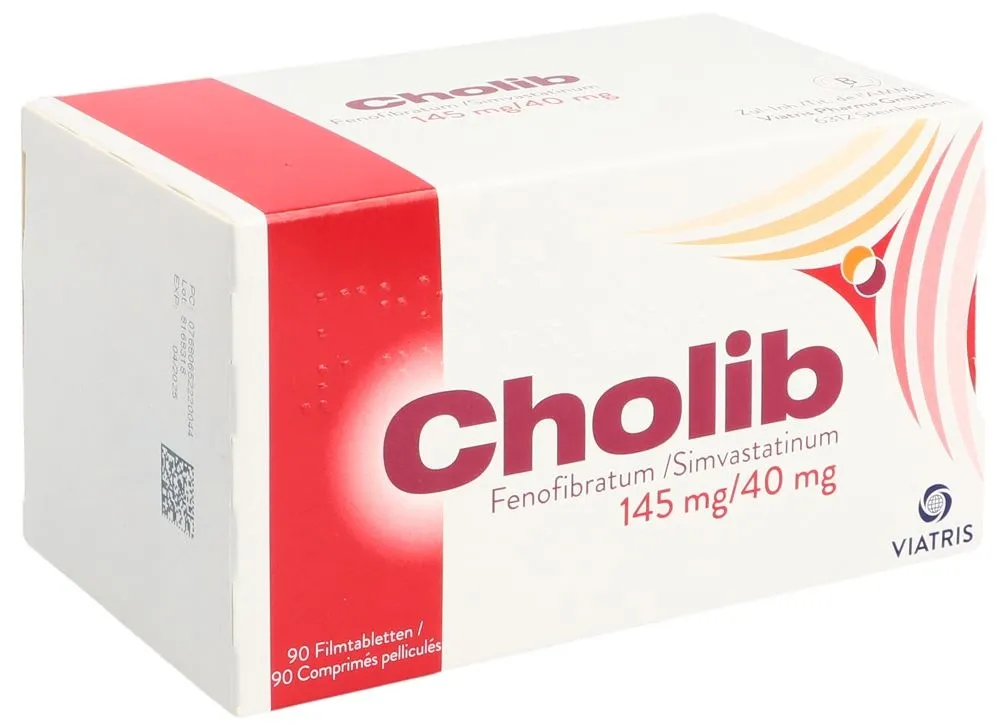
Table of Contents
- Patient Information Leaflet: Information for the User
- Cholib 145 mg/20 mg film-coated tablets
- 1. What Cholib is and what it is used for
- 2. What you should know before taking Cholib
- 3. How to take Cholib
- 4. Possible side effects
- 5. How to store Cholib
- 6. Package contents and other information
- Package leaflet: Information for the user
- Cholib 145 mg/40 mg film-coated tablets
- 1. What Cholib is and what it is used for
- 2. What you need to know before taking Cholib
- 3. How to take Cholib
- 4. Possible side effects
- 5. How to store Cholib
- 6. Package contents and other information
Patient Information Leaflet: Information for the User
Cholib 145 mg/20 mg film-coated tablets
fenofibrate/simvastatin
Please read this leaflet carefully before taking this medicine as it contains
important information for you.
- Keep this leaflet. You may need to read it again.
- If you have any questions, ask your doctor or pharmacist.
- This medicine has been prescribed for you only. Do not give it to other people, even if they have the same symptoms as you, as it may be harmful.
- If you experience any side effects, including those not listed in this leaflet, please contact your doctor or pharmacist. See section 4.
Contents of this leaflet:
- What Cholib is and what it is used for
- What you need to know before taking Cholib
- How to take Cholib
- Possible side effects
- How to store Cholib
- Contents of the pack and other information
1. What Cholib is and what it is used for
Cholib contains two different active substances: fenofibrate (which belongs to the class of medicines called 'fibrates') and simvastatin (which belongs to the class of 'statins'). Both are used to reduce levels of total cholesterol in the blood, "bad" cholesterol (LDL), and fatty substances called triglycerides. In addition, both increase levels of "good" cholesterol (HDL).
What should I know about cholesterol and triglycerides?
Cholesterol is one of many fats found in the blood. Total cholesterol is made up mainly of LDL and HDL cholesterol.
LDL cholesterol is commonly known as "bad" cholesterol because it can build up in the walls of arteries and form plaques. Over time, these plaques grow larger and eventually block the arteries. HDL cholesterol is commonly known as "good" cholesterol because it helps prevent "bad" cholesterol from building up in the arteries and protects against heart disease.
Triglycerides are another type of fat in the blood. High levels may increase the risk of heart problems.
In most people, there are initially no signs indicating high cholesterol or triglyceride levels. Your doctor can measure lipid levels with a simple blood test. Visit your doctor regularly to monitor your lipid levels.
Cholib is used in adults at high risk of cardiovascular events such as heart attack and stroke, who have high levels of two types of fats (triglycerides and LDL cholesterol) in the blood. It is given to reduce triglycerides and increase HDL cholesterol in patients whose LDL cholesterol is already controlled with simvastatin 20 mg alone.
This medicine is administered to treat elevated fat levels by reducing the total amount of triglycerides (fatty substances) and LDL cholesterol, as well as increasing HDL cholesterol.
While being treated with Cholib, you must continue to follow a low-fat diet or other measures (e.g., physical exercise, weight reduction).
2. What you should know before taking Cholib
Do not take Cholib:
- If you are allergic to fenofibrate or simvastatin or to any of the other ingredients of Cholib (listed in section 6)
- If you are allergic to peanuts, peanut oil, soybean lecithin, or related substances
- If you have previously experienced an allergic reaction or photosensitivity (skin damage due to sunlight or UV rays) while taking other medicines (such medicines include other fibrates and a medicine used for inflammation called "ketoprofen")
- If you have liver or gallbladder problems
- If you have pancreatitis (inflammation of the pancreas causing abdominal pain) not caused by high levels of fats in the blood
- If you have moderate or severe kidney problems
- If you have previously experienced muscle problems during treatment to lower blood fat levels with the active substances contained in this medicine or with other statins (such as atorvastatin, pravastatin, or rosuvastatin) or with fibrates (such as bezafibrate or gemfibrozil)
- If you are currently taking any of the following medicines: danazol (a synthetic hormone used to treat endometriosis), cyclosporine (a medicine commonly used in organ transplant patients), itraconazole, ketoconazole, fluconazole, or posaconazole (medicines for fungal infections), HIV protease inhibitors such as indinavir, nelfinavir, ritonavir, or saquinavir (medicines used for HIV and AIDS), cobicistat (a medicine used for HIV infection), glecaprevir or pibrentasvir (used to treat hepatitis C virus infection), erythromycin, clarithromycin, or telithromycin (medicines for bacterial infections), or nefazodone (a medicine for depression)
- If you are already being treated and will continue treatment with: a fibrate (e.g. gemfibrozil) or a statin (medicines to lower blood fat levels, e.g. simvastatin, atorvastatin)
- If you are under 18 years of age
- If you are pregnant or breastfeeding
Do not take Cholib if any of the above conditions apply to you. If you have any doubts, consult your doctor or pharmacist.
Warnings and precautions:
Talk to your doctor or pharmacist before taking Cholib:
- If you have an underactive thyroid gland (hypothyroidism)
- If you are due to undergo surgery. You may need to temporarily stop taking Cholib.
- If you consume large amounts of alcohol (more than 21 units [210 ml] of pure alcohol per week)
- If you experience chest pain or shortness of breath. These could be signs of a blood clot in the lungs (pulmonary embolism)
- If you have a serious lung disease
- If you have a kidney disease
- If you or a close family member has a familial history of muscle disorders
- If you are currently taking or have taken within the last 7 days or have been administered a medicine called fusidic acid (a medicine for bacterial infections)
- If you are taking antiviral agents for hepatitis C such as elbasvir or grazoprevir (used to treat hepatitis C virus infection)
- If you have or have had myasthenia (a disease characterized by generalized muscle weakness, including in some cases the muscles used for breathing) or ocular myasthenia (a disease causing weakness of the eye muscles), as statins may sometimes worsen myasthenia or trigger its onset (see section 4)
If any of the above conditions apply to you, talk to your doctor or pharmacist before taking Cholib. If you have any doubts, consult your doctor or pharmacist.
Additionally, inform your doctor or pharmacist if you have persistent muscle weakness. Further tests and medications may be needed to diagnose and treat this condition.
Before starting Cholib, your doctor should perform a blood test to check your liver function.
Your doctor may also perform blood tests to monitor your liver function after you start taking Cholib.
If you have diabetes or are at risk of developing diabetes, your doctor will monitor you closely during treatment with this medicine. You are likely at increased risk of developing diabetes if you have high levels of sugar and fats in your blood, are overweight, or have high blood pressure.
Before and after starting treatment, your doctor may perform a blood test to monitor your muscles.
Children and adolescents
Cholib must not be given to children and adolescents (under 18 years of age).
Other medicines and Cholib
It is particularly important that you inform your doctor or pharmacist if you are taking, have recently taken, or might take any other medicines, including those available without a prescription and herbal remedies.
Inform your doctor or pharmacist if you are taking any of the following medicines:
- Danazol (a synthetic hormone used to treat endometriosis)
- Cyclosporine (a medicine commonly used in organ transplant patients)
- Itraconazole, ketoconazole, fluconazole, or posaconazole (medicines for fungal infections)
- HIV protease inhibitors such as indinavir, nelfinavir, ritonavir, or saquinavir (medicines used for HIV and AIDS)
- Cobicistat (a medicine used for HIV infection)
- Glecaprevir or pibrentasvir (used to treat hepatitis C virus infection)
- Erythromycin, clarithromycin, or telithromycin (medicines for bacterial infections)
- Nefazodone (a medicine for depression)
- A fibrate (e.g. fenofibrate, gemfibrozil)
- A statin (e.g. simvastatin, atorvastatin)
Do not take Cholib if any of the above conditions apply to you. If you have any doubts, consult your doctor or pharmacist.
Specifically, inform your doctor or pharmacist if you are taking any of the following medicines (taking Cholib with these medicines may increase the risk of muscle problems):
- High doses of at least 1 gram per day of niacin (nicotinic acid) or a niacin-containing treatment (a medicine to lower blood fat levels)
- Colchicine (a medicine used to treat gout)
Do not take fusidic acid (a medicine for bacterial infections) while using this medicine.
In addition to the medicines listed above, inform your doctor or pharmacist if you are taking, have recently taken, or might take any of the following medicines:
- Anticoagulants such as warfarin, fluindione, phenprocoumon, or acenocoumarol (medicines to prevent blood clots)
- Pioglitazone (a specific class of medicines for the treatment of diabetes)
- Rifampicin (a medicine used to treat tuberculosis)
- Elbasvir or grazoprevir (used to treat hepatitis C virus infection)
If any of the above conditions apply to you, talk to your doctor or pharmacist before taking Cholib. If you have any doubts, consult your doctor or pharmacist.
Cholib with food and drinks
Grapefruit juice contains one or more components that alter how Cholib is processed in the body. Do not consume grapefruit juice with Cholib, as grapefruit juice may increase the risk of muscle problems.
Pregnancy and breastfeeding
- Do not take Cholib if you are pregnant, suspect you may be pregnant, or are planning a pregnancy. If you become pregnant while taking Cholib, stop taking it immediately and consult your doctor.
- Do not take Cholib if you are breastfeeding or plan to breastfeed, as it is not known whether the medicine passes into breast milk.
If you are pregnant, suspect you may be pregnant, are planning a pregnancy, or are breastfeeding, ask your doctor or pharmacist for advice before taking this medicine.
Driving and using machines
Cholib is not expected to affect your ability to drive or use tools and machines. However, you should be aware that some people may experience dizziness after taking Cholib.
Important information about some of the excipients in Cholib
Cholib contains certain types of sugars called lactose and sucrose. If you have been diagnosed with an intolerance to any sugar, consult your doctor before taking this medicine.
Cholib contains soybean lecithin. If you are allergic to peanuts, soy, or peanut oil, do not use Cholib.
Cholib contains sunset yellow FCF (E110), which may cause allergic reactions.
3. How to take Cholib
Take this medicine exactly as directed by your doctor or pharmacist. If you have any doubts, consult your doctor or pharmacist.
Your doctor will determine the appropriate dose for you, depending on your condition, your current treatment, and your individual risk status.
The usual dose is one tablet daily.
You may take Cholib with or without food.
Swallow the tablet with a glass of water.
Do not break or chew the tablet.
During treatment with Cholib, you must continue to follow a low-fat diet or other measures (e.g. exercise, weight reduction).
If you take more Cholib than you should
If you have taken more Cholib than you should, or if someone else has taken the medicine, contact your doctor, pharmacist, or the nearest hospital.
If you forget to take Cholib
Do not take a double dose to make up for the missed tablet. Take the next tablet at your usual time the following day. If you are concerned, consult your doctor or pharmacist.
If you have any doubts about how to use this medicine, consult your doctor or pharmacist.
4. Possible side effects
Like all medicines, Cholib can cause side effects, although not everyone gets them.
- Unexplained muscle pain, tenderness or weakness could be signs of muscle problems. If you experience these symptoms, contact your doctor immediately, as in rare cases serious muscle problems have occurred, including muscle breakdown leading to kidney damage; very rarely, cases of death have been reported. The risk of muscle breakdown is higher when taking both a fibrate and a statin together, as in Cholib, compared to taking either a fibrate or a statin alone. The risk is higher in women or in patients aged 65 years or older.
Some patients have experienced the following serious side effects while taking fenofibrate or simvastatin (both active substances in Cholib):
- hypersensitivity reactions (allergies) including: swelling of the face, tongue and throat which may cause breathing difficulties (angioedema) (rare)
- a severe allergic reaction causing breathing difficulties or dizziness (anaphylaxis) (very rare)
- hypersensitivity reaction to Cholib with symptoms such as: joint pain or inflammation, inflammation of blood vessels, unusual bruising, skin rashes and swelling, hives, skin sensitivity to sunlight, fever, hot flushes, shortness of breath and feeling unwell, lupus-like illnesses (including skin rash, joint disorders and effects on white blood cells)
- cramps or muscle pain, tenderness or weakness, muscle breakdown: these could be signs of inflammation or breakdown of muscles, which may lead to kidney damage or even death
- stomach pain: this could be a sign of inflammation of the pancreas (pancreatitis)
- chest pain and shortness of breath: these could be signs of a blood clot in the lungs (pulmonary embolism)
- pain, redness or swelling in the legs: these could be signs of a blood clot in the leg (deep vein thrombosis)
- yellowing of the skin and whites of the eyes (jaundice) or increased liver enzymes: these could be signs of liver inflammation (hepatitis and liver failure)
- increased skin sensitivity to sunlight, sunlamps and solariums
- skin rash which may occur on the skin or mouth ulcers (drug-induced lichenoid eruptions)
If you experience any of the serious side effects listed above, stop taking Cholib and contact your doctor or go immediately to the nearest hospital emergency department, as you may require urgent medical treatment.
Some patients have experienced the following side effects during treatment with Cholib, fenofibrate or simvastatin:
Very common side effects (may affect more than 1 in 10 people):
- increased blood levels of “creatinine” (a substance excreted by the kidneys)
- increased blood levels of “homocysteine” (elevated levels of this amino acid in the blood are associated with an increased risk of coronary heart disease, stroke and peripheral vascular disease, although a causal relationship has not been established)
Common side effects (may affect up to 1 in 10 people):
- increased number of platelets in the blood
- increased liver function test values (transaminases) in blood tests
- digestive disorders (stomach discomfort, nausea, vomiting, diarrhoea and flatulence)
- upper respiratory tract infection
Uncommon side effects (may affect up to 1 in 100 people):
- muscle problems
- gallstones
- skin rashes, itching, red patches on the skin
- headache
- sexual dysfunction
Rare side effects (may affect up to 1 in 1,000 people):
- low number of red blood cells (anaemia)
- numbness or weakness in arms and legs
- confusion
- dizziness
- feeling of extreme tiredness (asthenia)
- increased “urea” (produced by the kidneys), detectable in blood tests
- increased “gamma-glutamyl transferase” (produced by the liver), detectable in blood tests
- increased “alkaline phosphatase” (produced by the biliary system), detectable in blood tests
- increased “creatine phosphokinase” (produced by muscles), detectable in blood tests
- decreased haemoglobin (carries oxygen in the blood) and white blood cells, detectable in blood tests
- sleep problems
- memory impairment or memory loss
- hair loss
- constipation
- indigestion
- blurred vision and visual disturbances
Very rare side effects (may affect up to 1 in 10,000 people):
- gynaecomastia (enlargement of breast tissue in men)
The following side effects have also been reported, but their frequency cannot be estimated from the available data (frequency not known):
- severe allergic skin rash with blistering
- complications of gallstones such as biliary colic due to gallstones in the bile duct, infection of the bile duct or gallbladder
- diabetes mellitus
- erectile dysfunction
- feeling of depression
- sleep disorders, including nightmares
- specific lung disease with breathing difficulties (called interstitial lung disease)
- persistent muscle weakness
- increased “glycated haemoglobin” and blood glucose levels (markers for monitoring blood glucose in diabetes mellitus), detectable in blood tests
- Myasthenia gravis (a disease causing generalized muscle weakness, including in some cases the muscles used for breathing). Ocular myasthenia (a disease causing weakness of the eye muscles). Contact your doctor if you experience weakness in arms or legs that worsens after periods of activity, double vision or drooping eyelids, difficulty swallowing or shortness of breath.
Reporting of side effects
If you experience any side effect, including those not listed in this leaflet, talk to your doctor or pharmacist. You can also report side effects directly via the national reporting system listed in Annex V. By reporting side effects, you can help provide more information on the safety of this medicine.
5. How to store Cholib
Keep this medicine out of the sight and reach of children.
Do not use Cholib after the expiry date stated on the carton and blister after EXP. The expiry date refers to the last day of that month.
Store below 30°C.
Do not dispose of any medicine via wastewater or household waste. Ask your pharmacist how to dispose of medicines you no longer use. This will help protect the environment.
6. Package contents and other information
What Cholib contains
The active substances are fenofibrate and simvastatin. Each tablet contains 145 mg of fenofibrate
and 20 mg of simvastatin.
This medicinal product contains less than 1 mmol of sodium (23 mg) per tablet, i.e. essentially
"sodium-free".
The other components are:
Tablet core:
Butylhydroxyanisole (E320), monohydrate lactose, sodium lauryl sulfate, starch, pregelatinized (maize),
sodium docusate, sucrose, citric acid monohydrate (E330), hypromellose (E464), crospovidone
(E1202), magnesium stearate (E572), silicified microcrystalline cellulose (composed of microcrystalline
cellulose and anhydrous colloidal silica), ascorbic acid (E300).
Film coating:
Partially hydrolysed polyvinyl alcohol (E1203), titanium dioxide (E171), talc (E553b), lecithin
(derived from soya [E322]), xanthan gum (E415), red iron oxide (E172), yellow iron oxide (E172),
sunset yellow FCF (E110).
Description of the appearance of Cholib and contents of the pack
Film-coated oval, biconvex tablet, light brown in colour, with bevelled edges and the imprint 145/20
engraved on one side. The tablet dimensions are approximately 19.3 x 9.3 mm and the tablet weight is about 734 mg.
The tablets are supplied in blisters containing 10, 30 or 90 tablets, packaged in cardboard boxes.
Not all pack sizes may be marketed.
Marketing Authorisation Holder and Manufacturer
Marketing Authorisation Holder:
Viatris Healthcare Limited, Damastown Industrial Park, Mulhuddart, Dublin 15, Dublin, Ireland
Manufacturer:
Mylan Laboratories SAS, Route de Belleville - Lieu-dit Maillard, 01400 Châtillon-sur-Chalaronne -
France.
Mylan Hungary Kft., Mylan utca 1, Komárom 2900, Hungary
For further information on this medicinal product, please contact the local representative of the
Marketing Authorisation Holder.
België/Belgique/Belgien Ireland Norge
Viatris Mylan Ireland Limited Viatris AS
Tel/Tél: + 32 2 658 61 00 Tel: +353 1 8711600 Tlf: + 47 66 75 33 00
България Ísland Österreich
Майлан EOOД Icepharma hf. Arcana Arzneimittel GmbH
Teл.: + 359 2 4455 400 Sími: +354 540 8000 Tel: + 43 1 416 2418
Česká republika Italia Polska
Viatris CZ s.r.o. Viatris Italia S.r.l. Mylan Healthcare Sp. z o.o.
Tel: +420 222 004 400 Tel: + 39 (0) 2 612 46921 Tel: +48 22 546 64 00
Danmark Κύπρος Portugal
Viatris ApS Varnavas Hadjipanayis Ltd Viatris Healthcare, Lda.
Tlf. +45 28 11 69 32 Τηλ: +357 22207700 Tel : +351 214 127 200
Deutschland Latvija România
Viatris Healthcare GmbH Mylan Healthcare SIA BGP Products S.R.L.
Tel: +49 800 0700 800 Tel: + 371 67 605 580 Tel: +40 372 579 000
Eesti Lietuva Slovenija
BGP Products Switzerland GmbH Mylan Healthcare UAB Viatris d.o.o.
Eesti filiaal Tel: +370 52 051 288 Tel: + 386 (0)123 63 180
Tel: + 372 6363052
Ελλάδα Luxembourg/Luxemburg Slovenská republika
Viatris Hellas Ltd Viatris Viatris Slovakia s.r.o.
Τηλ.: +30 2100 100 002 Tel/Tél: + 32 2 658 6100 Tel: +421 2 32 199 100
España Magyarország Suomi/Finland
Viatris Pharmaceuticals, S.L.U. Viatris Healthcare Kft Viatris Oy
+34 900 102 712 Tel: +36 1 465 2100 Puh/Tel: +358 20 720 9555
France Malta Sverige
Viatris Santé V.J. Salomone Pharma Ltd. Viatris AB
Tél: + 33 (0)1 40 80 15 55 Tel: +356-21 22 01 74 Tel: +46 8 630 19 00
Hrvatska Nederland United Kingdom (Northern
Viatris Hrvatska d.o.o. Mylan B.V. Ireland)
Tel: + 385 1 23 50 599 Tel: +31 (0)20 426 33 00 Mylan IRE Healthcare Ltd
Tel: +353 18711600
Other sources of information
More detailed information on this medicinal product is available on the website of the European Medicines Agency: http://www.ema.europa.eu
Package leaflet: Information for the user
Cholib 145 mg/40 mg film-coated tablets
fenofibrate/simvastatin
Please read this leaflet carefully before taking this medicine because it contains
important information for you.
- Keep this leaflet. You may need to read it again.
- If you have any questions, ask your doctor or pharmacist.
- This medicine has been prescribed for you only. Do not give it to others, even if their symptoms are the same as yours, as it could be harmful.
- If you experience any side effects, including those not listed in this leaflet, contact your doctor or pharmacist. See section 4.
Contents of this leaflet:
- What Cholib is and what it is used for
- What you need to know before taking Cholib
- How to take Cholib
- Possible side effects
- How to store Cholib
- Contents of the pack and other information
1. What Cholib is and what it is used for
Cholib contains two different active substances: fenofibrate (which belongs to the class of medicines called 'fibrates') and simvastatin (which belongs to the class of 'statins'). Both are used to reduce levels of total cholesterol in the blood, "bad" cholesterol (LDL), and fatty substances called triglycerides. In addition, both increase levels of "good" cholesterol (HDL).
What should I know about cholesterol and triglycerides?
Cholesterol is one of many fats found in the blood. Total cholesterol is made up mainly of LDL and HDL cholesterol.
LDL cholesterol is commonly known as "bad" cholesterol because it can build up in the walls of arteries and form plaques. Over time, these plaques grow larger and eventually block the arteries. HDL cholesterol is commonly known as "good" cholesterol because it helps prevent "bad" cholesterol from building up in the arteries and protects against heart disease.
Triglycerides are another type of fat in the blood. High levels can increase the risk of heart problems.
In most people, there are initially no signs indicating high cholesterol or triglyceride levels. Your doctor can measure lipid levels with a simple blood test. Visit your doctor regularly to monitor your lipid levels.
Cholib is used in adults at high risk of cardiovascular events such as heart attack and stroke who have high levels of two types of fats (triglycerides and LDL cholesterol) in the blood. It is given to reduce triglyceride levels and increase HDL cholesterol in patients whose LDL cholesterol is already controlled with simvastatin 40 mg alone.
This medicine is administered to treat elevated fat levels by reducing the total amount of triglycerides (fatty substances) and LDL cholesterol, as well as increasing HDL cholesterol.
While being treated with Cholib, you must continue to follow a low-fat diet or other measures (e.g. physical exercise, weight reduction).
2. What you need to know before taking Cholib
Do not take Cholib:
- If you are allergic to fenofibrate or simvastatin or to any of the other ingredients of Cholib (listed in section 6)
- If you are allergic to peanuts, peanut oil, soy lecithin or related substances
- If, while taking other medicines, you experienced an allergic reaction or skin damage caused by sunlight or UV rays (such medicines include other fibrates and a medicine called "ketoprofen" used for inflammation)
- If you have liver or gallbladder problems
- If you suffer from pancreatitis (inflammation of the pancreas causing abdominal pain) not caused by high levels of fats in the blood
- If you have moderate or severe kidney problems
- If you have previously experienced muscle problems during treatment to lower blood fat levels with active substances contained in this medicine or with other statins (such as atorvastatin, pravastatin or rosuvastatin) or with fibrates (such as bezafibrate or gemfibrozil)
- If you are currently taking any of the following medicines: danazol (a synthetic hormone used to treat endometriosis), cyclosporine (a medicine often used in organ transplant patients), itraconazole, ketoconazole, fluconazole or posaconazole (medicines for fungal infections), protease inhibitors of HIV such as indinavir, nelfinavir, ritonavir and saquinavir (medicines used for HIV and AIDS infections), cobicistat (a medicine used for HIV infection), erythromycin, clarithromycin or telithromycin (medicines for bacterial infections), nefazodone (a medicine for depression), amiodarone (a medicine for irregular heartbeat), verapamil (a medicine for high blood pressure, chest pain associated with heart disease or other heart conditions), antiviral agents against hepatitis C such as elbasvir, grazoprevir, glecaprevir or pibrentasvir (used to treat hepatitis C virus infection)
- If you are already being treated and will continue treatment with: a fibrate (e.g. gemfibrozil) or a statin (medicines to lower blood fat levels, e.g. simvastatin, atorvastatin)
- If you are under 18 years of age
- If you are pregnant or breastfeeding
Do not take Cholib if any of the above conditions apply to you. If in doubt, consult your doctor or pharmacist.
Warnings and precautions:
Talk to your doctor or pharmacist before taking Cholib:
- If you have an underactive thyroid gland (hypothyroidism)
- If you are due to undergo surgery. You may need to temporarily stop taking Cholib.
- If you consume large amounts of alcohol (more than 21 units [210 ml] of pure alcohol per week)
- If you experience chest pain and shortness of breath. These could be signs of a blood clot in the lungs (pulmonary embolism)
- If you suffer from a serious lung disease
- If you suffer from kidney disease
- If you or a close family member have a familial history of muscle disorders
- If you are currently taking or have taken within the last 7 days or have been administered a medicine called fusidic acid (a medicine for bacterial infections)
- If you are taking antiviral agents against hepatitis C such as elbasvir or grazoprevir (used to treat hepatitis C virus infection)
- If you have or have had myasthenia (a disease characterized by generalized muscle weakness, including in some cases the muscles used for breathing) or ocular myasthenia (a disease causing weakness of the eye muscles), as statins may sometimes worsen myasthenia or trigger its onset (see section 4).
If any of the above conditions apply to you, consult your doctor or pharmacist before taking Cholib. If in doubt, consult your doctor or pharmacist.
Additionally, inform your doctor or pharmacist if you have persistent muscle weakness. Further tests and treatments may be needed to diagnose and manage this condition.
Before starting Cholib, your doctor should perform a blood test to check your liver function.
Your doctor may also perform blood tests to monitor your liver function after you start taking Cholib.
If you have diabetes or are at risk of developing diabetes, your doctor will closely monitor you during treatment with this medicine. You are likely at increased risk of developing diabetes if you have high levels of sugar and fats in your blood, are overweight, or have high blood pressure.
Before and after starting treatment, your doctor may perform blood tests to monitor your muscles.
Children and adolescents
Cholib must not be given to children and adolescents (under 18 years of age).
Other medicines and Cholib
It is particularly important that you inform your doctor or pharmacist if you are taking, have recently taken, or might take any other medicines, including those without a prescription and herbal medicines.
Inform your doctor or pharmacist if you are taking any of the following medicines:
- Danazol (a synthetic hormone used to treat endometriosis)
- Cyclosporine (a medicine often used in organ transplant patients)
- Itraconazole, ketoconazole, fluconazole or posaconazole (medicines for fungal infections)
- HIV protease inhibitors such as indinavir, nelfinavir, ritonavir and saquinavir (medicines used for HIV and AIDS infections)
- Cobicistat (a medicine used for HIV infection)
- Elbasvir, grazoprevir, glecaprevir or pibrentasvir (used to treat hepatitis C virus infection)
- Erythromycin, clarithromycin or telithromycin (medicines for bacterial infections)
- Nefazodone (a medicine for depression)
- Amiodarone (a medicine for irregular heartbeat) or verapamil (a medicine for high blood pressure, chest pain associated with heart disease or other heart conditions)
- A fibrate (e.g. fenofibrate, gemfibrozil)
- A statin (e.g. simvastatin, atorvastatin)
Do not take Cholib if any of the above conditions apply to you. If in doubt, consult your doctor or pharmacist.
In particular, inform your doctor or pharmacist if you are taking any of the following medicines (taking Cholib with these medicines may increase the risk of muscle problems):
- High doses of at least 1 gram per day of niacin (nicotinic acid) or a niacin-containing treatment (a medicine to reduce blood fat levels)
- Colchicine (a medicine used to treat gout)
Do not take fusidic acid (a medicine for bacterial infections) while using this medicine.
In addition to the medicines listed above, inform your doctor or pharmacist if you are taking, have recently taken, or might take any of the following medicines:
- Anticoagulants such as warfarin, fluindione, phenprocoumon or acenocoumarol (medicines to prevent blood clots)
- Pioglitazone (a specific class of medicines for the treatment of diabetes)
- Rifampicin (a medicine used to treat tuberculosis)
If any of the above conditions apply to you, consult your doctor or pharmacist before taking Cholib. If in doubt, consult your doctor or pharmacist.
Cholib with food and drinks
Grapefruit juice contains one or more components that alter how Cholib is processed in the body. Do not consume grapefruit juice with Cholib, as grapefruit juice may increase the risk of muscle problems.
Pregnancy and breastfeeding
- Do not take Cholib if you are pregnant, suspect you may be pregnant, or are planning a pregnancy. If you become pregnant while taking Cholib, stop taking it immediately and contact your doctor.
- Do not take Cholib if you are breastfeeding or plan to breastfeed, as it is not known whether the medicine passes into breast milk.
If you are pregnant, suspect you may be pregnant, are planning a pregnancy, or are breastfeeding, ask your doctor or pharmacist for advice before taking this medicine.
Driving and using machines:
Cholib is not expected to affect your ability to drive or use tools and machines. However, be aware that some people may experience dizziness after taking Cholib.
Important information about some excipients of Cholib
Cholib contains certain types of sugars called lactose and sucrose. If you have been diagnosed with an intolerance to certain sugars, consult your doctor before taking this medicine.
Cholib contains soy lecithin. If you are allergic to peanuts, soy or peanut oil, do not use Cholib.
3. How to take Cholib
Take this medicine exactly as instructed by your doctor or pharmacist. If you
have any doubts, consult your doctor or pharmacist.
Your doctor will determine the appropriate dose for you, depending on your condition, current
treatment, and personal risk factors.
The usual dose is one tablet daily.
You may take Cholib with or without food.
Swallow the tablet with a glass of water.
Do not break or chew the tablet.
While taking Cholib, you should continue following a low-fat diet or other measures (e.g. physical exercise, weight reduction).
If you take more Cholib than you should
If you have taken more Cholib than you should have, or if someone else has taken the medicine, contact your
doctor, pharmacist, or nearest hospital.
If you forget to take Cholib
Do not take a double dose to make up for the missed tablet. Take the next tablet at your usual time the following day. If you are concerned, consult your doctor or
pharmacist.
If you have any doubts about how to use this medicine, consult your doctor or pharmacist.
4. Possible side effects
Like all medicines, Cholib can cause side effects, although not everybody gets them.
- Unexplained muscle pain, tenderness, or weakness could be signs of muscle problems. If you experience these symptoms, contact your doctor immediately, as in rare cases, serious muscle problems have occurred, including muscle breakdown leading to kidney damage; very rarely, cases of death have been reported. The risk of muscle breakdown is higher with Cholib (which contains both a fibrate and a statin) than with either a fibrate or a statin taken alone. This risk is higher in women or in patients aged 65 years or older.
Some patients have experienced the following serious side effects while taking fenofibrate or simvastatin (both active substances in Cholib):
- hypersensitivity reactions (allergies) including: swelling of the face, tongue, and throat which may cause breathing difficulties (angioedema) (rare)
- a severe allergic reaction causing breathing difficulties or dizziness (anaphylaxis) (very rare)
- hypersensitivity reaction to Cholib with symptoms such as: joint pain or inflammation, inflammation of blood vessels, unusual bruising, skin rashes and swelling, hives, skin sensitivity to sunlight, fever, hot flushes, shortness of breath, and feeling unwell, lupus-like illnesses (including skin rash, joint disorders, and effects on white blood cells)
- muscle cramps or pain, tenderness, or weakness, muscle breakdown: these could be signs of inflammation or breakdown of muscles, which may lead to kidney damage or even death
- stomach pain: this could be a sign of inflammation of the pancreas (pancreatitis)
- chest pain and shortness of breath: these could be signs of a blood clot in the lungs (pulmonary embolism)
- pain, redness, or swelling in the legs: these could be signs of a blood clot in the leg (deep vein thrombosis)
- yellowing of the skin and whites of the eyes (jaundice) or increased liver enzymes: these could be signs of liver inflammation (hepatitis and liver failure)
- increased skin sensitivity to sunlight, sunlamps, and solariums
- skin rash, which may appear on the skin or ulcers in the mouth (drug-induced lichenoid eruptions)
If you experience any of the serious side effects listed above, stop taking Cholib and contact your doctor immediately or go to the nearest hospital emergency department, as you may require urgent medical treatment.
Some patients have experienced the following side effects during treatment with Cholib, fenofibrate, or simvastatin:
Very common side effects (may affect more than 1 in 10 people):
- increased levels of “creatinine” (a substance excreted by the kidneys) in the blood
- increased levels of “homocysteine” in the blood (elevated levels of this amino acid in the blood are associated with an increased risk of coronary heart disease, stroke, and peripheral vascular disease, although a causal relationship has not been established)
Common side effects (may affect up to 1 in 10 people):
- increased number of platelets in the blood
- increased liver function test values (transaminases) in blood tests
- digestive disorders (stomach discomfort, nausea, vomiting, diarrhoea, and flatulence)
- upper respiratory tract infection
Uncommon side effects (may affect up to 1 in 100 people):
- muscle problems
- gallstones
- skin rashes, itching, red patches on the skin
- headache
- sexual difficulties
Rare side effects (may affect up to 1 in 1,000 people):
- low number of red blood cells (anaemia)
- numbness or weakness in arms and legs
- confusion
- dizziness
- feeling of extreme tiredness (asthenia)
- increased “urea” (produced by the kidneys), detected in blood tests
- increased “gamma-glutamyl transferase” (produced by the liver), detected in blood tests
- increased “alkaline phosphatase” (produced by the biliary system), detected in blood tests
- increased “creatine phosphokinase” (produced by muscles), detected in blood tests
- decreased haemoglobin (which carries oxygen in the blood) and white blood cells, detected in blood tests
- sleep problems
- memory impairment or memory loss
- hair loss
- constipation
- indigestion
- blurred vision and visual disturbances
Very rare side effects (may affect up to 1 in 10,000 people):
- gynaecomastia (enlargement of breast tissue in men)
The following side effects have also been reported, but their frequency cannot be estimated from the available data (frequency not known):
- severe allergic skin rash with blistering
- complications of gallstones such as biliary colic caused by gallstones in the bile duct, infection of the bile duct or gallbladder
- type 2 diabetes mellitus
- erectile dysfunction
- feeling of depression
- sleep disorders, including nightmares
- specific lung disease with breathing difficulties (known as interstitial lung disease)
- persistent muscle weakness
- increased “glycated haemoglobin” and blood glucose levels (markers for monitoring blood glucose in type 2 diabetes), detected in blood tests
- Myasthenia gravis (a disease causing generalized muscle weakness, including in some cases the muscles used for breathing). Ocular myasthenia (a disease causing weakness of the eye muscles). Contact your doctor if you experience muscle weakness in arms or legs that worsens after periods of activity, double vision or drooping eyelids, difficulty swallowing, or shortness of breath.
Reporting of side effects
If you experience any side effect, including those not listed in this leaflet, talk to your doctor or pharmacist. You can also report side effects directly via the national reporting system listed in Annex V. By reporting side effects, you can help provide more information on the safety of this medicine.
5. How to store Cholib
Keep this medicine out of the sight and reach of children.
Do not use Cholib after the expiry date stated on the carton and blister after EXP. The expiry date refers to the last day of that month.
Store below 30°C.
Do not dispose of any medicine via wastewater or household waste. Ask your pharmacist how to dispose of medicines you no longer use. This will help protect the environment.
6. Package contents and other information
What Cholib contains
The active substances are fenofibrate and simvastatin. Each tablet contains 145 mg of fenofibrate
and 40 mg of simvastatin.
This medicine contains less than 1 mmol of sodium (23 mg) per tablet, i.e. it is essentially
"sodium-free".
The other components are:
Tablet core:
Butylhydroxyanisole (E320), lactose monohydrate, sodium lauryl sulfate, starch, pregelatinized (from maize),
sodium docusate, sucrose, citric acid monohydrate (E330), hypromellose (E464), crospovidone
(E1202), magnesium stearate (E572), silicified microcrystalline cellulose (composed of microcrystalline
cellulose and anhydrous colloidal silica), ascorbic acid (E300).
Film coating:
Partially hydrolysed polyvinyl alcohol (E1203), titanium dioxide (E171), talc (E553b), lecithin
(soy-derived [E322]), xanthan gum (E415), red iron oxide (E172).
Description of the appearance of Cholib and package contents
Film-coated, oval, biconvex, brick-red tablet with bevelled edges and the imprint "145/40" on one side.
The approximate dimensions are 19.3 x 9.3 mm in diameter, and the tablet weighs about 840 mg.
The tablets are supplied in blisters containing 10, 30 or 90 tablets, packaged in cardboard boxes.
Not all pack sizes may be marketed.
Marketing Authorisation Holder and Manufacturer
Marketing Authorisation Holder:
Viatris Healthcare Limited, Damastown Industrial Park, Mulhuddart, Dublin 15, Dublin, Ireland
Manufacturer:
Mylan Laboratories SAS, Route de Belleville - Lieu-dit Maillard, 01400 Châtillon-sur-Chalaronne -
France.
Mylan Hungary Kft., Mylan utca 1, Komárom 2900, Hungary
For further information on this medicine, please contact the local representative of the Marketing
Authorisation Holder.
België/Belgique/Belgien Ireland Norge
Viatris Mylan Ireland Limited Viatris AS
Tel/Tél: +32 2 658 61 00 Tel: 353 1 8711600 Tlf: +47 66 75 33 00
България Ísland Österreich
Mylan EAD Icepharma hf. Arcana ArzneimittelGmbH
Tel: +359 2 4455 400 Sími: +354 540 8000 Tel: +43 1 416 2418
Česká republika Italia Polska
Viatris CZ s.r.o. Viatris Italia S.r.l. Mylan Healthcare Sp. z o.o.
Tel: +420 222 004 400 Tel: +39 (0)2 61246921 Tel: +48 22 546 64 00
Danmark Κύπρος Portugal
Viatris ApS Varnavas Hadjipanayis Ltd Viatris Healthcare, Lda.
Tlf: +45 28 11 69 32 Τηλ: +357 22207700 Tel: +351 214 127 200
Deutschland Latvija România
Viatris Healthcare GmbH Mylan Healthcare SIA BGP Products S.R.L.
Tel: +49 800 0700 800 Tel: +371 67 605 580 Tel: +40 372 579 000
Eesti Lietuva Slovenija
BGP Products Switzerland GmbH Mylan Healthcare UAB Viatris d.o.o.
Eesti filiaal Tel: +370 52 051 288 Tel: +386 (0)123 63 180
Tel: +372 6363052
Ελλάδα Luxembourg/Luxemburg Slovenská republika
Viatris Hellas Ltd Viatris Viatris Slovakia s.r.o.
Tel: +30 2100 100 002 Tel/Tél: +32 2 658 6100 Tel: +421 32 199 100
España Magyarország Suomi/Finland
Viatris Pharmaceuticals, S.L.U. Viatris Healthcare Kft Viatris Oy
Tel: +34 900 102 712 Tel: +36 1 465 2100 Puh/Tel: +358 20 720 9555
France Malta Sverige
Viatris Santé V.J. Salomone Pharma Ltd Viatris AB
Tél: +33 (0)1 40 80 15 55 Tel: +356-21 22 01 74 Tel: +46 8 630 19 00
Hrvatska Nederland United Kingdom (Northern
Ireland)
Viatris Hrvatska d.o.o. Mylan B.V.
Tel: +385 1 23 50 599 Tel: +31 (0)20 426 33 00 Mylan IRE Healthcare Ltd
Tel: +353 18711600
Other sources of information
More detailed information on this medicine is available on the website of the European Medicines Agency: http://www.ema.europa.eu.