Cequa
Italy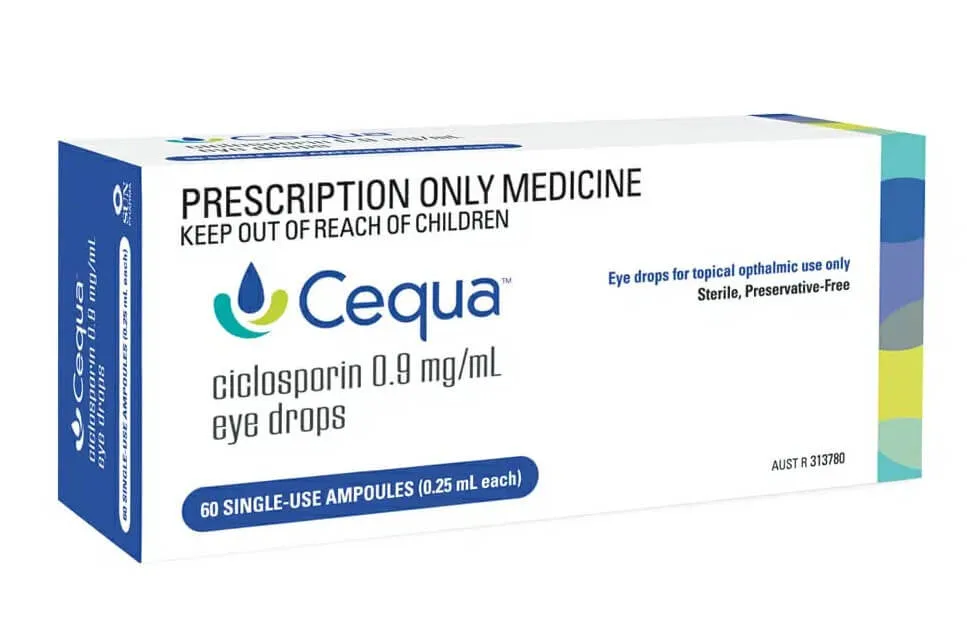
Instructions for Use
PACKAGE LEAFLET
PACKAGE LEAFLET: INFORMATION FOR THE USER
Cequa 0.9 mg/ml eye drops, solution in single-dose container
ciclosporin
Please read this leaflet carefully before using this medicine.
- Keep this leaflet. You may need to read it again.
- If you have any questions, ask your doctor or pharmacist.
- This medicine has been prescribed for you. Never give it to others, even if their symptoms are the same as yours, as it may be harmful.
- If you experience any side effects, consult your doctor or pharmacist. This includes any possible side effect not listed in this leaflet. See section 4.
Contents of this leaflet:
- What Cequa is and what it is used for
- Before you use Cequa
- How to use Cequa
- Possible side effects
- How to store Cequa
- Contents of the pack and other information
1. What Cequa is and what it is used for
Cequa contains the active substance ciclosporine. Ciclosporine belongs to a group of medicines known as immunosuppressive agents used to reduce inflammation.
Cequa is used to treat moderate to severe dry eye disease (keratoconjunctivitis sicca) in adult patients who have not responded adequately to artificial tears.
Talk to your doctor if you do not feel better or if you feel worse.
Visit your doctor at least every 3 months to assess the effect of Cequa.
2. Before using Cequa
Do not take Cequa
- if you are allergic to ciclosporin or to any of the other ingredients of this medicine (listed in section 6);
- if you have had or currently have cancer inside or around the eye;
- if you have an eye infection.
Warnings and precautions
Use Cequa only in the eyes.
Talk to your doctor or pharmacist before using Cequa
- if you have had an eye infection caused by the herpes virus which may have damaged the clear front part of the eye (cornea);
- if you are taking medicines containing steroids;
- if you are taking medicines for the treatment of glaucoma.
Remove contact lenses before using Cequa; you may reinsert them 15 minutes after administration of Cequa.
Children and adolescents
Cequa must not be used in children and adolescents under 18 years of age.
Other medicines and Cequa
Inform your doctor or pharmacist if you are using, have recently used, or might use any other medicines.
Talk to your doctor if you are using eye drops containing steroids, as these may increase the risk of side effects.
Cequa eye drops should be used at least 15 minutes after using any other eye drops.
Pregnancy and breastfeeding
If you are pregnant, think you may be pregnant or are planning to become pregnant, or if you are breastfeeding, consult your doctor or pharmacist before taking this medicine.
Cequa must not be used during pregnancy.
If you could become pregnant, you should use a contraceptive method while using this medicine.
Cequa is likely to pass into breast milk in very small amounts. If you are breastfeeding, consult your doctor before using this medicine.
Driving and using machines
Your vision may become blurred immediately after using Cequa eye drops, solution in single-dose container. If this occurs, wait until your vision clears before driving or operating machinery.
Cequa contains phosphates
This medicine contains 0.0159 mg of phosphates per drop. If you suffer from severe damage to the transparent layer at the front of the eye (the cornea), phosphates may, in very rare cases, cause cloudy spots on the cornea due to calcium accumulation during treatment.
3. How to use Cequa
Always use this medicine exactly as instructed by your doctor or pharmacist. If you are
unsure, consult your doctor or pharmacist.
The recommended dose is one drop in each affected eye, twice daily, approximately 12 hours apart.
Instructions for use
Follow these instructions carefully and ask your doctor or pharmacist if anything is unclear.
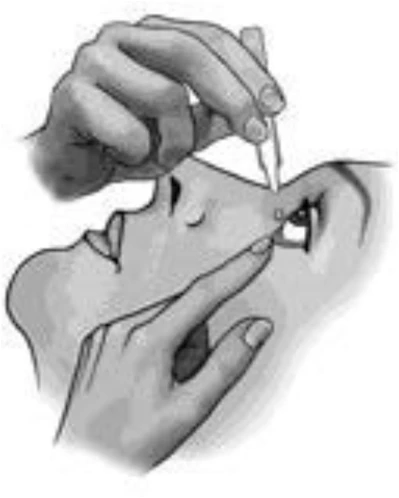
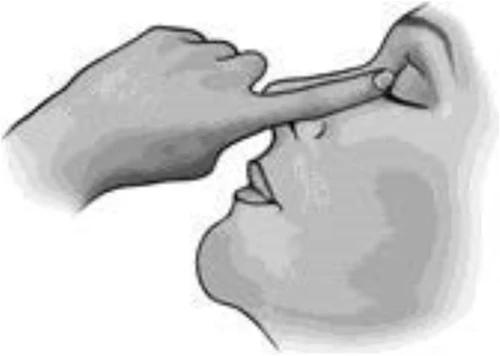
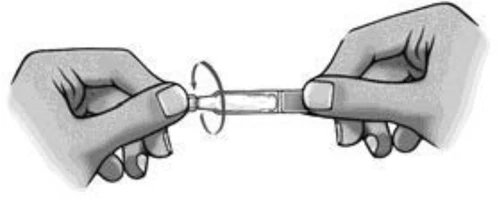
1 2 3
- Wash your hands.
- If you wear contact lenses, remove them before using the drops; you may reinsert them 15 minutes after administering the eye drops.
- Open the aluminium pouch, remove one single-dose container, and return the remaining single-dose containers to the pouch.
- Unscrew the cap (image 1).
- Pull down the lower eyelid (image 2).
- Tilt your head backward and look at the ceiling.
- Gently squeeze out one drop of the medicine into the eye, making sure not to touch the eyes with the tip of the single-dose container.
- Blink several times to distribute the eye drops over the eye.
- After applying the drop, press a finger against the corner of the eye near the nose and gently close the eyelids for about 2 minutes (image 3) (this helps enhance the local effect).
- If you are using drops in both eyes, repeat the steps for the other eye.
- Dispose of the single-dose container immediately after use, even if there is still some liquid remaining inside.
- The remaining single-dose containers must be stored in the aluminium pouch.
If a drop misses the eye, try again.
If you use more Cequa than you should, rinse your eyes with water. Do not insert additional drops until the time of your next regular dose.
If you forget to use Cequa, continue with the next dose as scheduled.
Do not take a double dose to make up for a forgotten dose. Do not use more than one drop at a time in the affected eye(s).
If you stop using Cequa, talk to your doctor.
If you have further questions about the use of this medicine, consult your doctor or pharmacist.
4. Possible side effects
Like all medicines, this medicine can cause side effects, although not everybody gets them.
The following side effects have been reported:
The most common side effects occur in and around the eyes.
Very common (may affect up to 1 in 10 people): pain or discomfort when putting in a drop for the first time.
Common (may affect up to 1 in 100 people): eye redness, eye irritation, watery eyes, eye irritation.
Uncommon (may affect up to 1 in 100 people): increased eye tearing, increased sensitivity to light, eye pain, swelling of the conjunctiva (the membrane covering the white part of the eye), inflammation of the eyelid margins, eye and periocular infections, headache, and throat irritation.
Reporting of side effects
If you experience any adverse reactions, including those not listed in this leaflet, please inform your doctor or pharmacist. You can also report adverse reactions directly via the national reporting system at https://www.aifa.gov.it/content/segnalazioni-reazioni-avverse.
By reporting side effects, you can help provide more information on the safety of this medicine.
5. How to store Cequa
Keep this medicine out of the sight and reach of children.
Do not use this medicine after the expiry date stated on the outer carton, on the aluminium pouch, and on the single-dose containers after "Exp.". The expiry date refers to the last day of that month.
Do not store above 25°C. Do not freeze. After opening the aluminium pouches, the single-dose containers must be stored within the pouches to prevent evaporation. Period of validity after first opening of the aluminium pouch: 5 days. Discard any opened single-dose container with remaining solution immediately after use.
Do not use this medicine if you notice visible particles.
Do not dispose of any medicine via wastewater or household waste. Ask your pharmacist how to dispose of medicines no longer required. These measures will help protect the environment.
6. Package contents and other information
What Cequa contains
The active substance is cyclosporine. One mL of Cequa contains 0.9 mg of cyclosporine.
The other ingredients are:
Macrogol glycerol hydroxystearate, octoxynol-40, disodium hydrogen phosphate dihydrate (E339), sodium phosphate dibasic (E339), sodium chloride, povidone (E1201), hydrochloric acid (for pH adjustment) (E507),
sodium hydroxide (for pH adjustment) (E524) and water for injections.
Description of the appearance of Cequa and contents of the pack
Cequa is a clear, colourless solution in a single-dose container.
It is supplied in single-dose containers made of low-density polyethylene (LDPE).
Each single-dose container holds 0.25 mL of eye drops, solution.
The single-dose containers are individually wrapped in sealed polyfoil aluminium pouches.
Pack sizes: 60 single-dose containers.
Not all pack sizes may be marketed.
Marketing Authorisation Holder
Sun Pharmaceutical Industries Europe B.V.
Polaris Avenue 87
2132 JH Hoofddorp
The Netherlands
Local Representative
SUN Pharma Italia S.r.l.
Viale Giulio Richard, 3
20143 Milan
Italy
Manufacturer responsible for batch release
Laboratoire Unither
1 Rue De L'Arquerie
Coutances 50200
France
This medicinal product is authorised in EEA Member States under the following names:
Netherlands: Cequa 0.9 mg/mL eye drops, solution in single dose container
Austria: Cequa 0.9 mg/mL eye drops, solution in single dose container
Germany: Cequa 0.9 mg/ml Augentropfen, Lösung im Einzeldosisbehältnis
Denmark: Sekua 0.9 mg/mL eye drops, solution in single dose container
Spain: Cequa 0.9 mg/mL eye drops, solution in single dose container
Finland: Cequa 0.9 mg/mL eye drops, solution in single dose container
France: Cequa 0.9 mg/mL, collyre en solution en récipient unidose
Italy: Cequa
Norway: Cequa 0.9 mg/mL eye drops, solution in single dose container
Sweden: Cequa 0.9 mg/mL eye drops, solution in single dose container
This leaflet was last approved on
This page has been machine-translated and may contain inaccuracies. The original data is available in the manufacturing country's language.
Last data check: May 11, 2026 · Data source: Agenzia Italiana del Farmaco (AIFA)